Saints: May 2009 Archives

St Augustine of Canterbury.jpg

O God, Who by the preaching and wondrous deeds of blessed Augustine, Thy Confessor and Bishop, did vouchsafe to enlighten the English nation with the light of true faith; grant that his intercession the hearts  of the erring may return to the unity of Thy truth, and that we may be one mind in doing Thy holy will.


Saint Augustine of Canterbury (d. 604), was the first bishop of Canterbury, sent by Pope Saint Gregory the Great to evangelize the pagan English peoples.

Saint Augustine had been a monk of Saint Gregory's monastery on the Caelian Hill in Rome. In 595/596  he was sent to England first as the abbot of a group of monks. He established himself at Canterbury, the capital of the then powerful Kingdom of Kent, and in time baptized King Ethelbert.

Augustine is credited for laying the very foundation of the Ecclesia Anglicana because of his pastoral vision. That he was a close associate to Gregory the Great one thinks that the friendship had some role in the former's zeal for the Kingdom. Augustine's method of evangelizing England was not notable: he sent missionaries to all parts of England --how else would you preach the Gospel. But what was notable was his establishing Benedictine monastic life there, especially adjacent to the cathedral. So, looking at English ecclesial life you will notice the pattern of cathedrals have abbeys attached to them.

Saint Philip Neri

| | Comments (0)
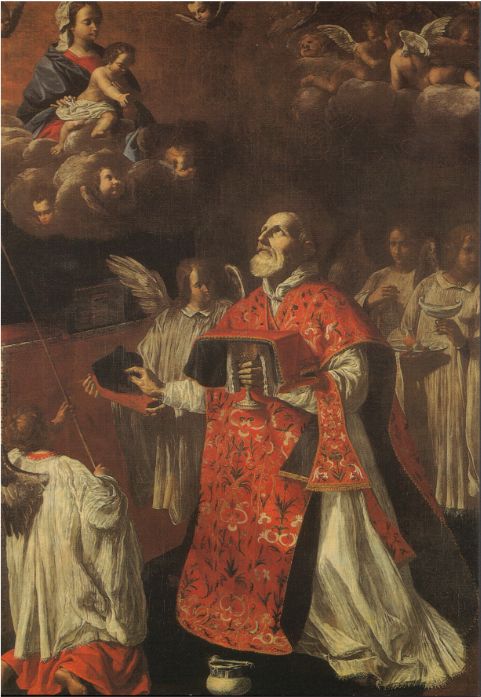
Paolo Domenico Finoglio, Abbazia di Montserrat, Spain.jpg

Rejoice in the Lord always; again I will say, Rejoice. Let all men know your forbearance. The Lord is at hand.


Father, You continually raise up Your faithful to the glory of holiness. In Your love kindle in us the fire of the Holy Spirit who so filled the heart of Philip Neri.


More information about the charism of Saint Philip Neri and the Oratorians may be found here and here.

O God, Who has glorified Thy Church by the learning of blessed Bede, Thy Confessor and Doctor; mercifully grant to Thy servants that they may ever be enlightened by his wisdom and aided by his merits.

Catholics in America are generally unfamiliar with Saint Bede the Venerable. The Venerable Bede as he is often called, is rightly known as the "Father of English History" and his lasting work, History of the English Church and People, remains the basis of modern knowledge of the early period of the Church in England. Church has honored Bede with the titles of Confessor and Doctor of the Church.

St Bede.jpg

Bede's History is a decisive synthesis of the Celtic, Gregorian and 'Benedictine' heritage.

The medieval scholar Mary R. Price said: 'Under Bede's eyes, as he toiled away in his cell,the divided peoples of the "island lying in the sea" were being welded into a nation, and through his eyes and by his pen we can see this happening. We see also the fusion of the free-lance monasticism of the Celtic monks with the more regular discipline of the Benedictine rule, of the Celtic Church with the Roman.'

Another scholar who knows Bede's work well says: 'The centuries on which Bede concentrates are a crucial and formative period in our island history, during which the future shape and pattern of the English Church and nation were beginning to emerge.'

The Church universal is grateful for Bede's interpretative and synthesizing work that these key formative centuries are coherent and present to us as they give us a light on the form, life and significance without parallel.

The rigorous approach to the facts of history in his narration is widely acknowledged. He explicitly offers his own theological interpretation of the history he is treating, and clearly offers a monastic reading ecclesial history in the light of salvation history. But what else would you expect of a monk?

Saint Rita of Cascia

| | Comments (0)

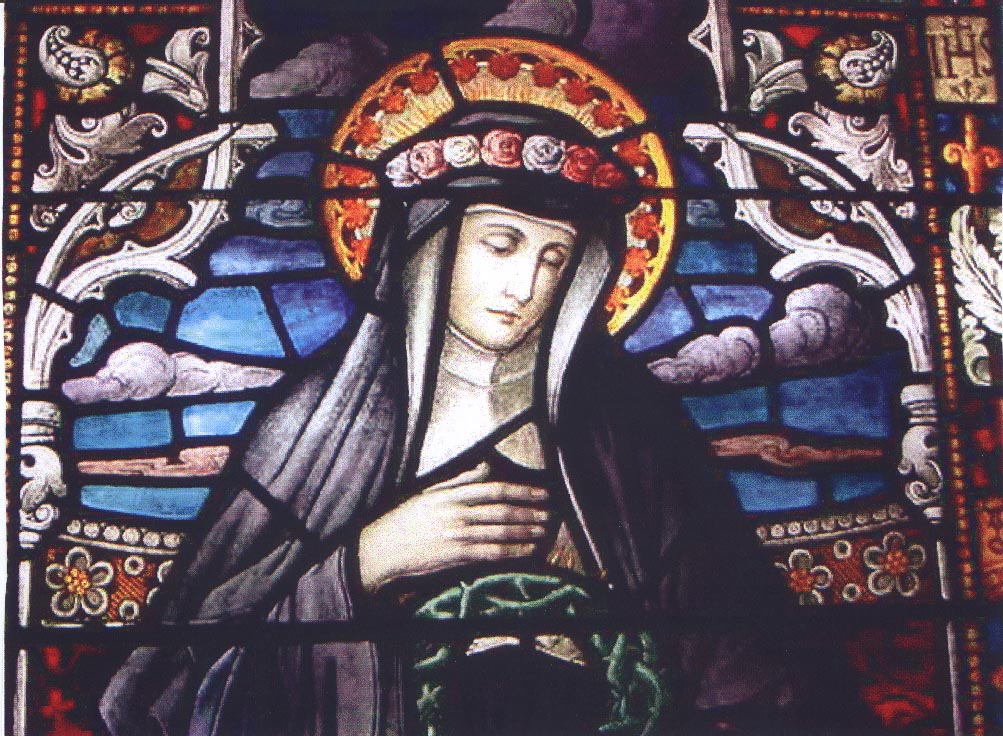
"Please let me suffer like You, Divine Savior," was Saint Rita's prayer.

Saint Rita of Cascia (d. 1457) is the well-known saint and patron of the desperate, seemingly impossible causes and situations. She assists Saint Jude and others before the Throne of Grace. The reputation of Saint Rita is such because she had been involved in so many stages of life as a - wife, mother, widow, and Augustinian nun, she buried her family, helped bring peace to her city Unmbria in Italy, saw her dreams denied and fulfilled - and never lost her faith in God, or her desire to be with Him. The shrine where her relics are venerated in Cascia (Italy) is well-visited.

St Rita of Casciajpg.jpg

Holy Patroness of those in need, Saint Rita, you were humble, pure and patient. Your pleadings with your divine Spouse are irresistible, so please obtain for me from our risen Jesus the request I make of you: (mention your petition). Be kind to me for the greater glory of God, and I shall honor you and sing your praise forever.

Glorious Saint Rita, you miraculously participated in the sorrowful passion of our Lord Jesus Christ. Obtain for me now the grace to suffer with resignation the troubles of this life, and protect me in all my needs. Amen.


Visit the National Shrine of Saint Rita of Cascia

Just as the man who thinks only of this world does everything possible to make life here easier and better, so must we, too, who believe in the eternal kingdom, risk everything in order to receive a great reward there. (Franz Jägerstätter)

franz-jagerstatter.jpg

Franz Jägerstätter (1907-1943) married Franziska Schwaninger in 1936 and honeymooned in Rome receiving a blessing from Pope Pius XI after which he maintained it was a spiritual awakening. He was a daily communicant and a Secular Franciscan.

At the time of his death at age 36, Blessed Jägerstätter left behind a widow and 3 small daughters. Interestingly both his priest and his bishop urged him to give up his conscientious objection, and join the army; his sacrifice was regarded as folly by his neighbors. The chaplain who saw Jägerstätter to his death related that Jägerstätter said, "I am completely bound in inner union with the Lord."

Reflecting upon the context of his life he said:

The situation in which we Christians of Germany find ourselves today is much more bewildering than that faced by the Christians of the early centuries at the time of their bloodiest persecution ... We are not dealing with a small matter, but the great (apocalyptic) life and death struggle has already begun. Yet in the midst of it there are many who still go on living their lives as though nothing had changed ... That we Catholics must make ourselves told of the worst and most dangerous anti-Christian power that has ever existed is something that I cannot and never will believe ... Many actually believe quite simply that things have to be the way they are. If this should happen to mean that they are obliged to commit injustice, then they believe that others are responsible. ... I am convinced that it is still best that I speak the truth even though it costs me my life. For you will not find it written in any of the commandments of God or of the Church that a man is obliged under pain of sin to take an oath committing him to obey whatever might be commanded him by his secular ruler. We need no rifles or pistols for our battle, but instead spiritual weapons, and the foremost of these is prayer.

The Common for Martyrs: One Martyr in Easter Time

Read William Diono's First Things article, "Franz Jägerstätter: Martyr and Model

For another essay on Blessed Franz Jägerstätter read... 

His biography, In Solitary Witness, can be purchased from Amazon

Erna Putz' biography, Franz Jägerstätter-Martyr: A Shining Example in Dark Times can be read here

The Houston Catholic Worker's article on the witness of Blessed Franz Jägerstätter 

St Bernardine.jpg

No other name under heaven has been given to men by which we can be saved.

Father, You gave Saint Bernardine a special love for the holy name of Jesus. By the help of his prayers, may we always be alive with the spirit of your love.

Many people think the IHS symbol originated with and belongs exclusively with the Society of Jesus. The typical Jesuit use of IHS is slightly different from the one used by Bernardine in that the 3 nails are included in the Jesuit monogram. Historically the IHS is an ancient symbol and it was popularized by today's Saint Bernardine of Siena, the Apostle of Italy or alternatively called the Apostle of the Holy Name.

As a monograph for the name of Jesus Christ it became more popular after the 12th century. We know that Saint Bernard of Clairvaux had a devotion to the Holy Name of Jesus as well as other notable other churchmen and women. Let's remember that Bernardine suffered great opposition at the hands of the Church for his use devotion and propagation of the Name of Jesus because it was seen as idolatry. By 1530, the Church approved of the Mass text for the feast of the Triumph of the Holy Name of Jesus, celebrated today on January 3, restored to the Roman Missal by Pope John Paul II in 2002. Moreover, there is a long tradition of celebrating the second Sunday of each month as Holy Name Sunday (we did so growing up at St. Stanislaus Church, New Haven, CT).

I would like to recommend membership in The Holy Name Society

One Saint Bernardine's famous homilies:

The name of Jesus is the glory of preachers, because the shining splendor of that name causes his word to be proclaimed and heard. And how do you think such an immense, sudden and dazzling light of faith came into the world, if not because Jesus was preached? Was it not through the brilliance and sweet savor of this name that God called us into his marvelous light? When we have been enlightened, and in that same light behold the light of heaven, rightly may the apostle Paul say to us: Once you were darkness, but now you are light in the Lord; walk as children of light. 

So this name must be proclaimed, that it may shine out and never be suppressed. But it must not be preached by someone with sullied mind or unclean lips, but stored up and poured out from a chosen vessel. That is why our Lord said of Saint Paul: He is a chosen instrument of mine, the vessel of my choice, to carry my name before the Gentiles and kings and the sons of Israel. In this chosen vessel there was to be a drink more pleasing than earth ever knew, offered to all mankind for a price they could pay, so that they would be drawn to taste of it. Poured into other chosen vessels, it would grow and radiate splendor. For our Lord said: He is to carry my name.

When a fire is lit to clear a field, it burns off all the dry and useless weeds and thorns. When the sun rises and darkness is dispelled, robbers, night-prowlers and burglars hide away. So when Paul's voice was raised to preach the Gospel to the nations, like a great clap of thunder in the sky, his preaching was a blazing fire carrying all before it. It was the sun rising in full glory. Infidelity was consumed by it, false beliefs fled away, and the truth appeared like a great candle lighting the whole world with its brilliant flame.

IHS Siena.JPG

By word of mouth, by letters, by miracles and by the example of his own life, Saint Paul bore the name of Jesus wherever he went. He praised the name of Jesus at all times, but never more than when bearing witness to his faith. Moreover, the Apostle did indeed carry this name before the Gentiles and kings and the sons of Israel as a light to enlighten all nations. And this was his cry wherever he journeyed: The night is passing away, the day is at hand. Let us then cast off the works of darkness and put on the armor of light; let us conduct ourselves honorably as in the day. Paul himself showed forth the burning and shining light set upon a candlestick, everywhere proclaiming Jesus, and him crucified.

And so the Church, the bride of Christ strengthened by his testimony, rejoices with the psalmist, singing: "God, from my youth you have taught me, and I still proclaim your wondrous deeds. The psalmist exhorts her to do this, as he says: Sing to the Lord, and bless his name, proclaim his salvation day after day. And this salvation is Jesus, her savior."

From a sermon by Saint Bernardine of Siena (Sermo 49, De glorioso Nomine Iesu Christi, cap 2: Opera omnia, 4. 505-506)

Saint Isidore

| | Comments (0)

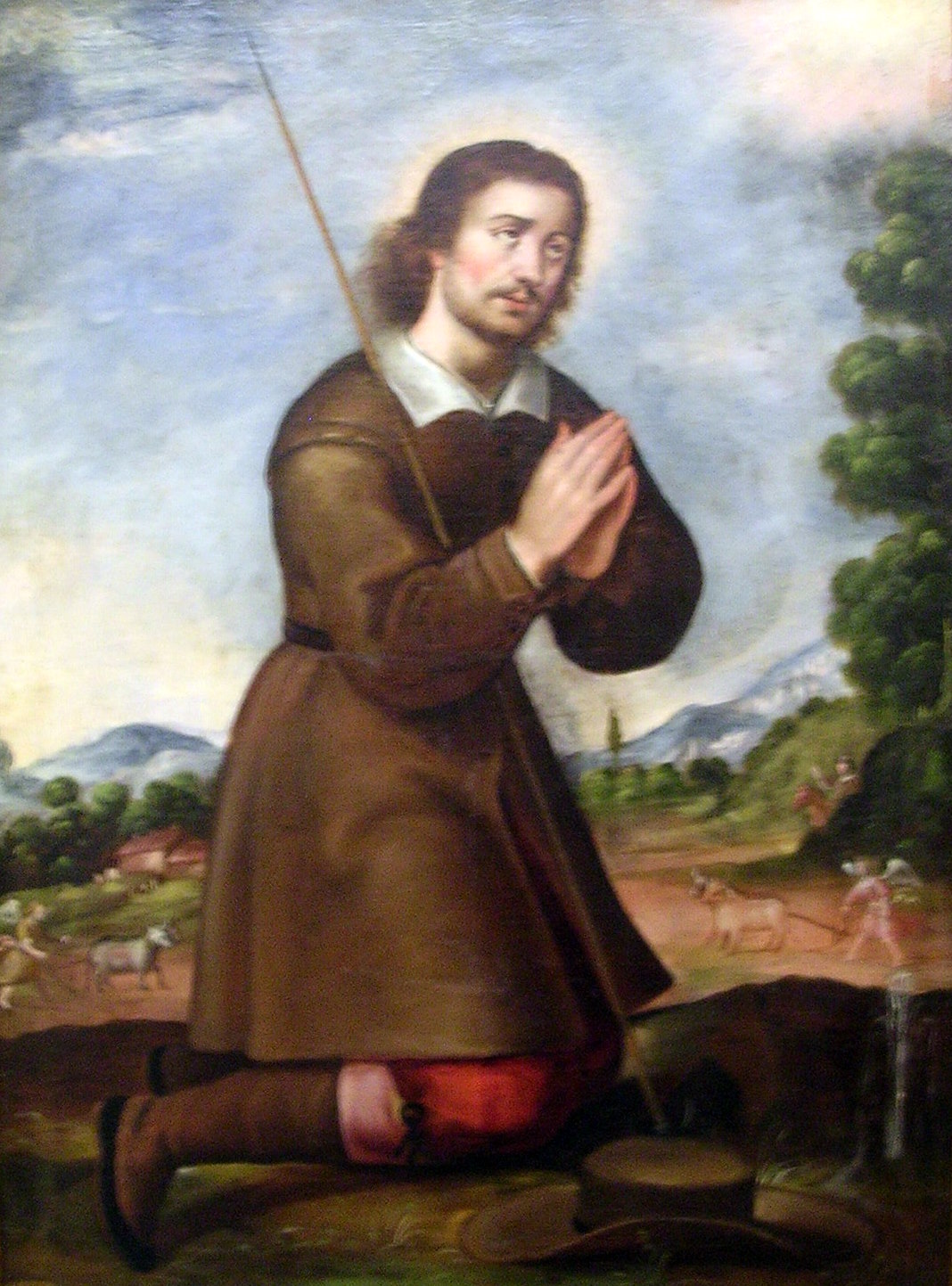
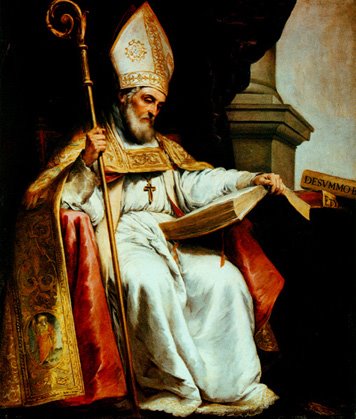
St Isidore the Farmer.jpgWell done, good and faithful servant; because thou hast been faithful over a few things, I will place thee over many things, saith the Lord.


O God, Who didst give Thy people blessed Isidore as a minister of eternal salvation, we beseech Thee; grant that we may deserve to have him as an intercessor in heaven, whom we had as a teacher of life on earth.


Saint Isidore was married to a religious woman named, Maria Torribia. She, too is a saint of the Church. The couple had one son who died unexpectedly as a child. After the son's death Isidore and Maria vowed to live a life of perfect continence. We ought to remember that Isidore came from a family of saints.

It is known that Isidore frequented Mass every morning making him late to work, which likely made his employer a bit annoyed, except that his work as a plowman was done by angels resulting in three times more productivity. His boss witnessed such miraculous events and accorded Isidore with great respect. Keep this info in the back your head next time you're late to work due to attendance at Mass.

Saint Isidore loved the poor and the animals. The miracle of the multiplication of food occurred when he fed a flock of starving birds and at another time he shared his food with a large group of beggars.

Isidore died on May 15, 1120 at 60 years of age and was canonized in 1622 along with four very notable Spanish saints. The joke at the time of his canonization was that there were four Spaniards and a saint. The famous group was Saints Ignatius of Loyola, Teresa of Avila, Francis Xavier, Phillip Neri, and Isidore. His body has been found incorrupt.

A biography on our bishop and doctor saint.

Saint Matthias

| | Comments (0)
St Matthias.jpgYou have not chosen me; I have chosen you. Go and bear fruit that will last, alleluia.


O God, Who did associate blessed Matthias to the company of Thine Apostles, grant, we beseech Thee, that by his intercession we may ever experience Thy tender mercy towards us.


A brief biography of the Apostle Matthias.


Saint Isaiah

| | Comments (0)
St Isaie.jpg

With a great voice like that of a trumpet,

You proclaimed the coming of Christ to the world.

You were revealed as a swiftly-writing scribe of the things to come;

Therefore, we acclaim you with hymns,

Most illustrious prophet Isaiah. (Troparion, Tone 4)


Endowed with the gift of prophecy,

Prophet-martyr Isaiah, herald of God,

You made clear to all the incarnation of Christ

By proclaiming with a great voice:

"Behold, the Virgin shall conceive in her womb." (Kontakion, Tone 2)

Pray for us, Saint Joseph, alleluia.

Thou faithful protector of all our work, alleluia.


St Jospeh GReni.jpg

Work was the daily expression of love in the life of the Family of Nazareth. The Gospel specifies the kind of work Joseph did in order to support his family: he was a carpenter. This simple word sums up Joseph's entire life. For Jesus, these were hidden years, the years to which Luke refers after recounting the episode that occurred in the Temple: "And he went down with them and came to Nazareth, and was obedient to them" (Lk 2:51). This "submission" or obedience of Jesus in the house of Nazareth should be understood as a sharing in the work of Joseph. Having learned the work of his presumed father, he was known as "the carpenter's son." If the Family of Nazareth is an example and model for human families, in the order of salvation and holiness, so too, by analogy, is Jesus' work at the side of Joseph the carpenter. In our own day, the Church has emphasized this by instituting the liturgical memorial of St. Joseph the Worker on May 1. Human work, and especially manual labor, receive special prominence in the Gospel. Along with the humanity of the Son of God, work too has been taken up in the mystery of the Incarnation, and has also been redeemed in a special way. At the workbench where he plied his trade together with Jesus, Joseph brought human work closer to the mystery of the Redemption.

In the human growth of Jesus "in wisdom, age and grace," the virtue of industriousness played a notable role, since "work is a human good" which "transforms nature" and makes man "in a sense, more human."

The importance of work in human life demands that its meaning be known and assimilated in order to "help all people to come closer to God, the Creator and Redeemer, to participate in his salvific plan for man and the world, and to deepen...friendship with Christ in their lives, by accepting, through faith, a living participation in his threefold mission as Priest, Prophet and King."

What is crucially important here is the sanctification of daily life, a sanctification which each person must acquire according to his or her own state, and one which can be promoted according to a model accessible to all people: "St. Joseph is the model of those humble ones that Christianity raises up to great destinies; ...he is the proof that in order to be a good and genuine follower of Christ, there is no need of great things-it is enough to have the common, simple and human virtues, but they need to be true and authentic."

Pope John Paul II, Redemptoris Custos, 1989
About the author

Paul A. Zalonski is from New Haven, CT. After years of study, work and trying to find meaning in life, he still has a sense of humor. Paul is discerning God's plan and is preparing for ordination to the priesthood. Contact Paul at paulzalonski(at)yahoo.com.

Pages

Humanities Blog Directory

About this Archive

This page is a archive of entries in the Saints category from May 2009.

Saints: April 2009 is the previous archive.

Saints: June 2009 is the next archive.

Find recent content on the main index or look in the archives to find all content.