Recently in Religious Freedom Category
What is at stake in this moment of our history is not just the possibility for religious groups to continue to give their own original contribution to American society, but also the possibility for any man or woman to gain access to the truth of life. For this reason, we will not give up the right to publicly witness to the world, through our lives and our work, what we hold most dear. With the words of the Russian writer Vladimir Soloviev, we repeat today what Christians have been repeating for 2,000 years."In the grieved voice the Emperor addressed them: 'Tell me yourselves, you strange people...you Christians, deserted by the majority of your brothers and leaders: what do you hold most dear in Christianity?' At this Elder John rose up and said in a quiet voice: 'Great sovereign! What we hold the most dear in Christianity is Christ Himself - He in His person. All the rest comes from Him, for we know that in Him dwells bodily the whole fullness of Divinity.'"
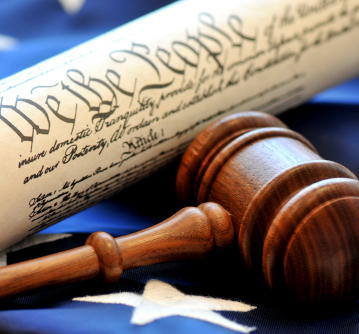
Today, the US bishops issued a call to action to defend religious liberty and urged laity to protect the First Freedom of the Bill of Rights. No doubt there is considerable consternation surrounding the proposed usurpation of our legal freedom of religion: clearly the US President has forgotten the first clause of the Bill of Rights: "Congress shall make no law respecting an establishment of religion, or prohibiting the free exercise thereof...."
The statement, "Our First, Most Cherished Freedom," aims to inform and to encourage the entire Christian Church in North America -and beyond--in understanding what the Church teaches on religious liberty. Moreover, the US bishops want to encourage a rightful role in defending the first of our American liberties. Being Catholic -or a person of faith- does not mean that we give up a sense of reasonableness and citizenship. The bishops published this work in order to reassert their voice in the public square, thus bridging the gap of faith and reason for a coherent national debate on matters of concern. Religion cannot be relegated to the closet. Like most documents of the Church, this one also hopes not only to impart information but also to form Catholics (indeed, all Christians) as faithful citizens. It is our Christian belief that religious liberty is God-given and is not imparted by our elected officials. "Our First, Most Cherished Freedom" is a document of the Bishops' Ad Hoc Committee on Religious Liberty.
Rallies will be taking place all over the country this Friday, March 23rd, to voice concerns over the HHS mandate. Visit online: Stand Up for Religious Freedom.
Thousands of Americans of all faiths will be participating in these peaceful rallies, organized by the Pro-Life Action League and Citizens for a Pro-Life Society to oppose the new mandate from the U.S. Department of Health and Human Services (HHS) which is requiring all employers provide free contraceptives, sterilization and abortion-inducing drugs through their health plans, even in violation of their consciences.
Locally, Connecticut as two notable rallies: New Haven and Hartford beginning at noon and will last approximately one hour.
Women are invited to voice their concern and support for freedom at Women Speak for Themselves.
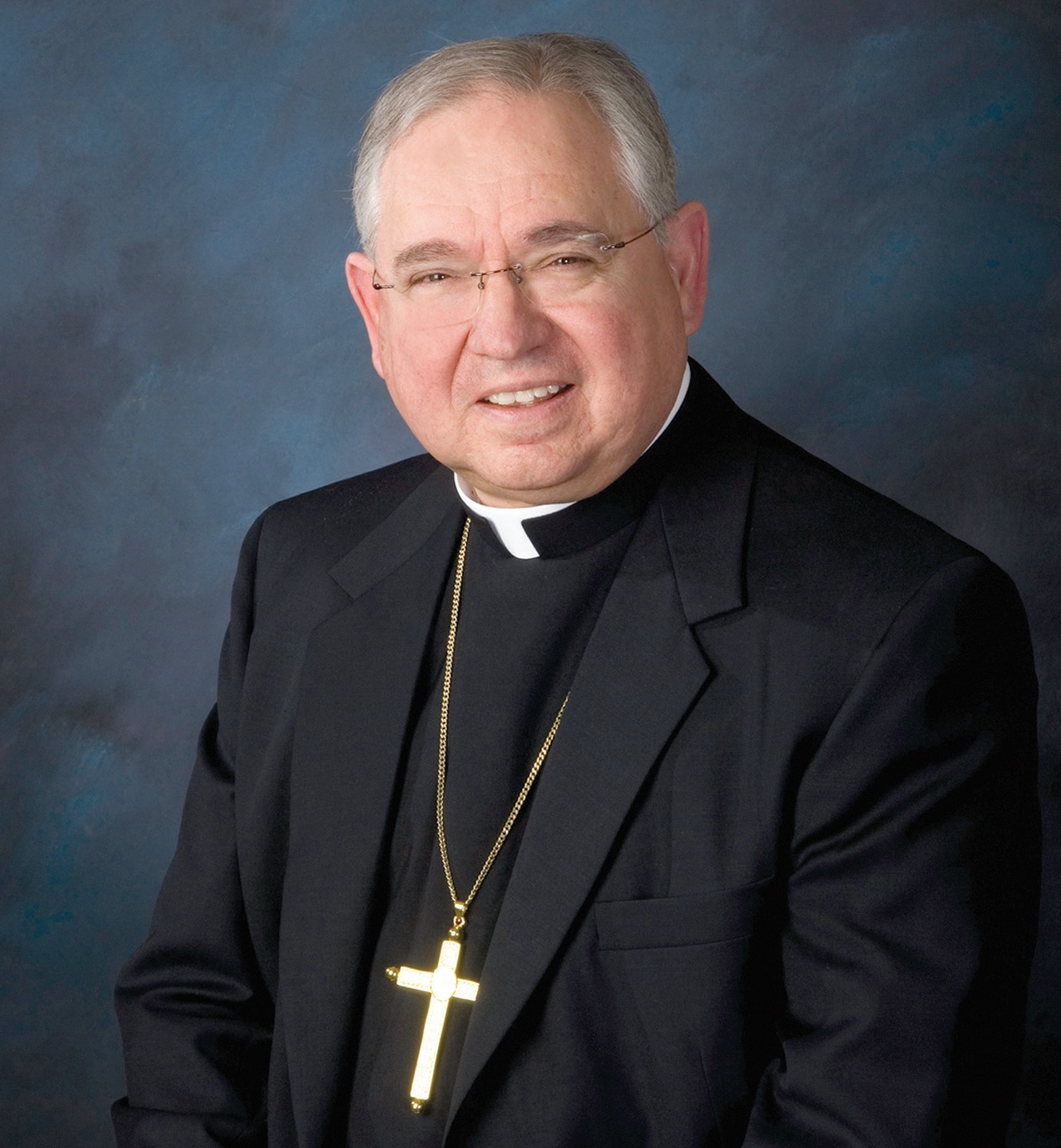
On 25 October 2011, Los Angelus Archbishop José H. Gomez, STD, 60, spoke on the slow loss of America's first freedom. On March 1, 2011, Archbishop Gomez became the Archbishop of Los Angelus, after being the Archbishop of San Antonio; he's been a bishop for nearly 11 years. A stellar article follows:
There is much evidence to suggest that our society no longer values the public role of religion or recognizes the importance of religious freedom as a basic right. As scholars like Harvard's Mary Ann Glendon and Michael Sandel have observed, our courts and government agencies increasingly treat the right to hold and express religious beliefs as only one of many private lifestyle options. And, they observe, this right is often "trumped" in the face of challenges from competing rights or interests deemed to be more important.
These are among the reasons the U.S. Catholic bishops recently established a new Ad Hoc Committee for Religious Liberty. My brother bishops and I are deeply concerned that believers' liberties--and the Church's freedom to carry out her mission--are threatened today, as they never have been before in our country's history.
Catholics have always believed that we serve our country best as citizens when we are trying to be totally faithful to the teachings of Jesus Christ and his Church. And since before the founding of the American Republic, Catholics--individually and institutionally--have worked with government agencies at all levels to provide vital social services, education, and health care.
A timely piece to think seriously about daily is the notion of religious freedom not only around the globe, but also and significantly here in the USA. Today, the Most Reverend William E. Lori addressed the Judiciary Committee of the United States House of Representatives, Subcommittee on the Constitution. Here are a few paragraphs (the link to the full text is noted below):
Religious liberty is not merely one right among others, but enjoys a certain primacy. As the Holy Father, Pope Benedict XVI recently explained: "It is indeed the first of human rights, not only because it was historically the first to be recognized but also because it touches the constitutive dimension of man, his relation with his Creator." (Pope Benedict XVI, Address to Diplomatic Corps, 10 Jan. 2011.) The late Pope John Paul II taught that "the most fundamental human freedom [is] that of practicing one's faith openly, which for human beings is their reason for living." (Pope John Paul II, Address to Diplomatic Corps, 13 Jan. 1996, No. 9.) Not coincidentally, religious liberty is first on the list in the Bill of Rights, the charter of our Nation's most cherished and fundamental freedoms. The First Amendment begins: "Congress shall make no law respecting an establishment of religion, or prohibiting the free exercise thereof...." It is commonly, and with justice, called our "First Freedom."
The regular cycle of the Pope's work is addressing those groups that advise him on a variety of subjects like theology, law, science, politics, life issues, etc. Benedict's address to Professor Mary Ann Glendon, President of the Pontifical Academy of Social Sciences, talks about the theme of "Universal Rights in a World of Diversity: the Case of Religious Freedom." He reminds not only the head of this academy about the deep roots of Western culture being Christian, but it was Christianity that gave humanity the awareness of the various freedoms we know and love, that contribute to human flourishing and many time even take for granted. It was the Christian gospel that upheld and promoted the dignity of the human person, protected women and children, that organized labor freedom of worship, and other social systems. Most notably, the Pope reminds us, that the freedoms spoken of in the United Nations' Universal Declaration of Human Rights have their roots in our belief and life in Christ. However, we can't become smug --too satisfied-- with what we've been given, even freedom. The Pope's talk is not long but here are some germaine points for us to consider:
Deeply inscribed in our human nature are a yearning for truth and meaning and an openness to the transcendent; we are prompted by our nature to pursue questions of the greatest importance to our existence. Many centuries ago, Tertullian coined the term libertas religionis (cf. Apologeticum, 24:6). He emphasized that God must be worshipped freely, and that it is in the nature of religion not to admit coercion, "nec religionis est cogere religionem" (Ad Scapulam, 2:2). Since man enjoys the capacity for a free personal choice in truth, and since God expects of man a free response to his call, the right to religious freedom should be viewed as innate to the fundamental dignity of every human person, in keeping with the innate openness of the human heart to God. In fact, authentic freedom of religion will permit the human person to attain fulfilment and will thus contribute to the common good of society.