Recently in Ecumenism Category

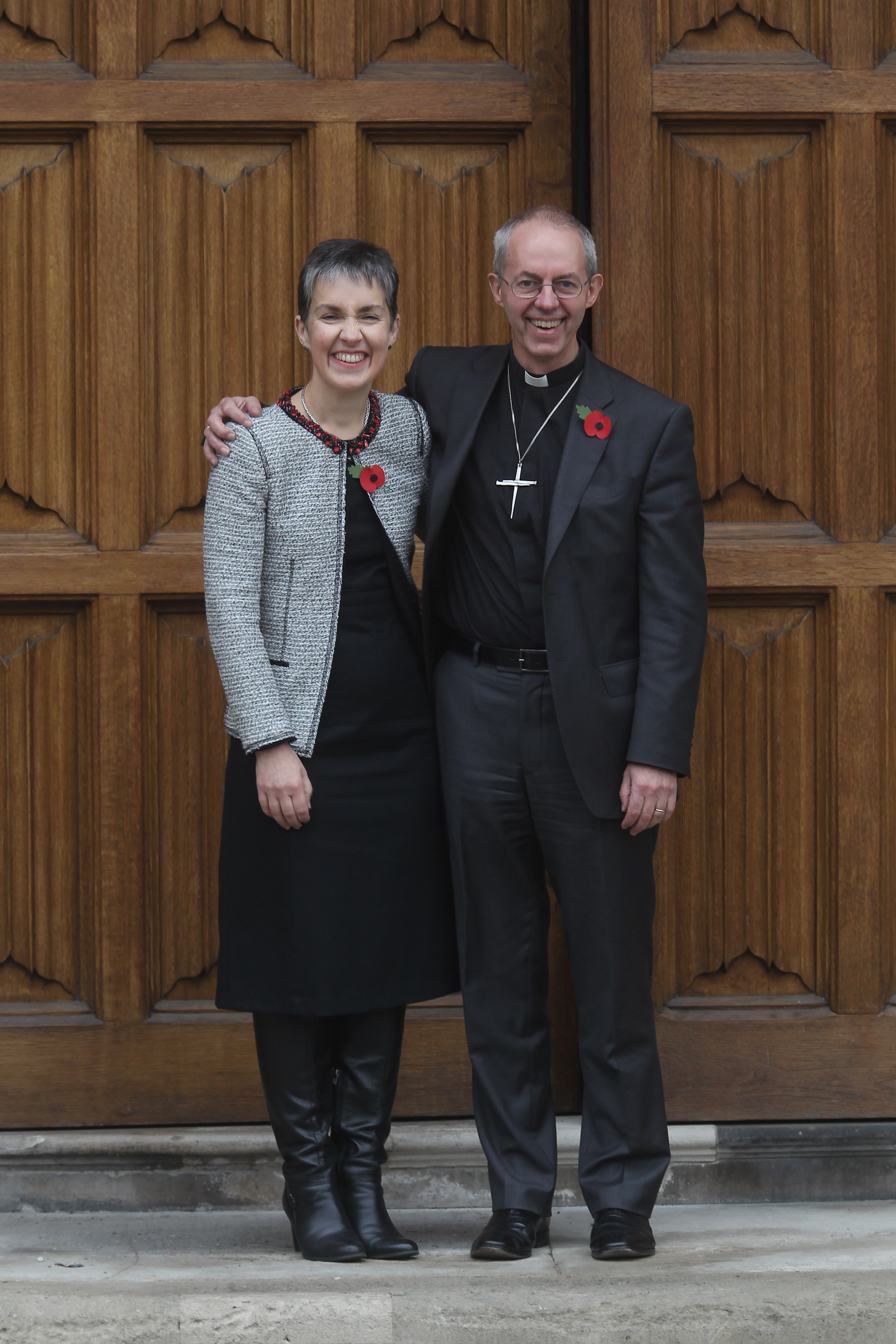
Edward Pentin of the National Catholic Register penned a piece "Cardinal Kasper on Anglicanorum Coetibus" which dispels much of the misinformation found in both the secular and Catholic media, including certain blogs, about the recent events between Canterbury and Rome. Hopefully, L'Osservatore Romano will provide an English translation of the article they published as a referenced by Mr. Pentin; I am curious to know more. One thing to remember is to interpret these things with charity and understanding. Pray, too, for a profitable meeting between Archbishop Williams and Pope Benedict on Saturday.

Moscow & Rome to meet soon?

| | Comments (0)
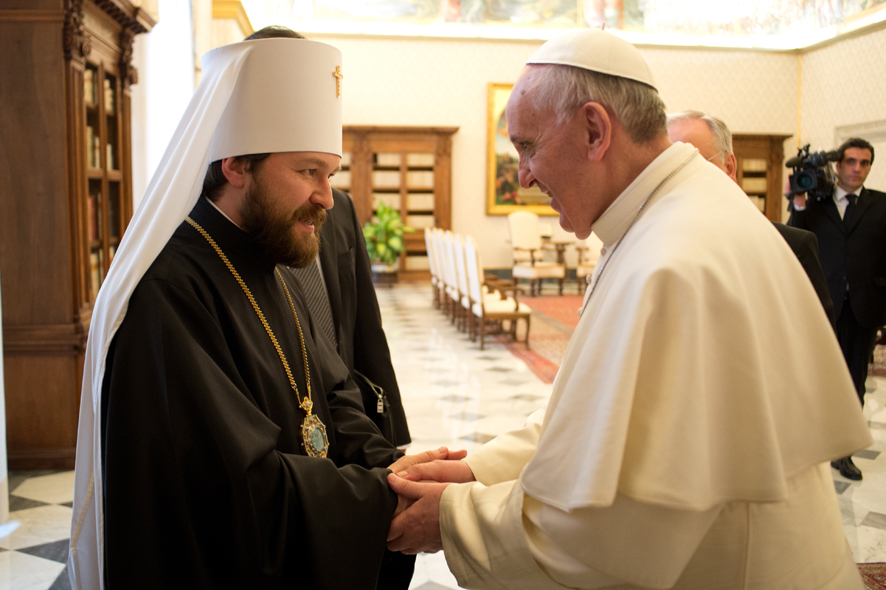
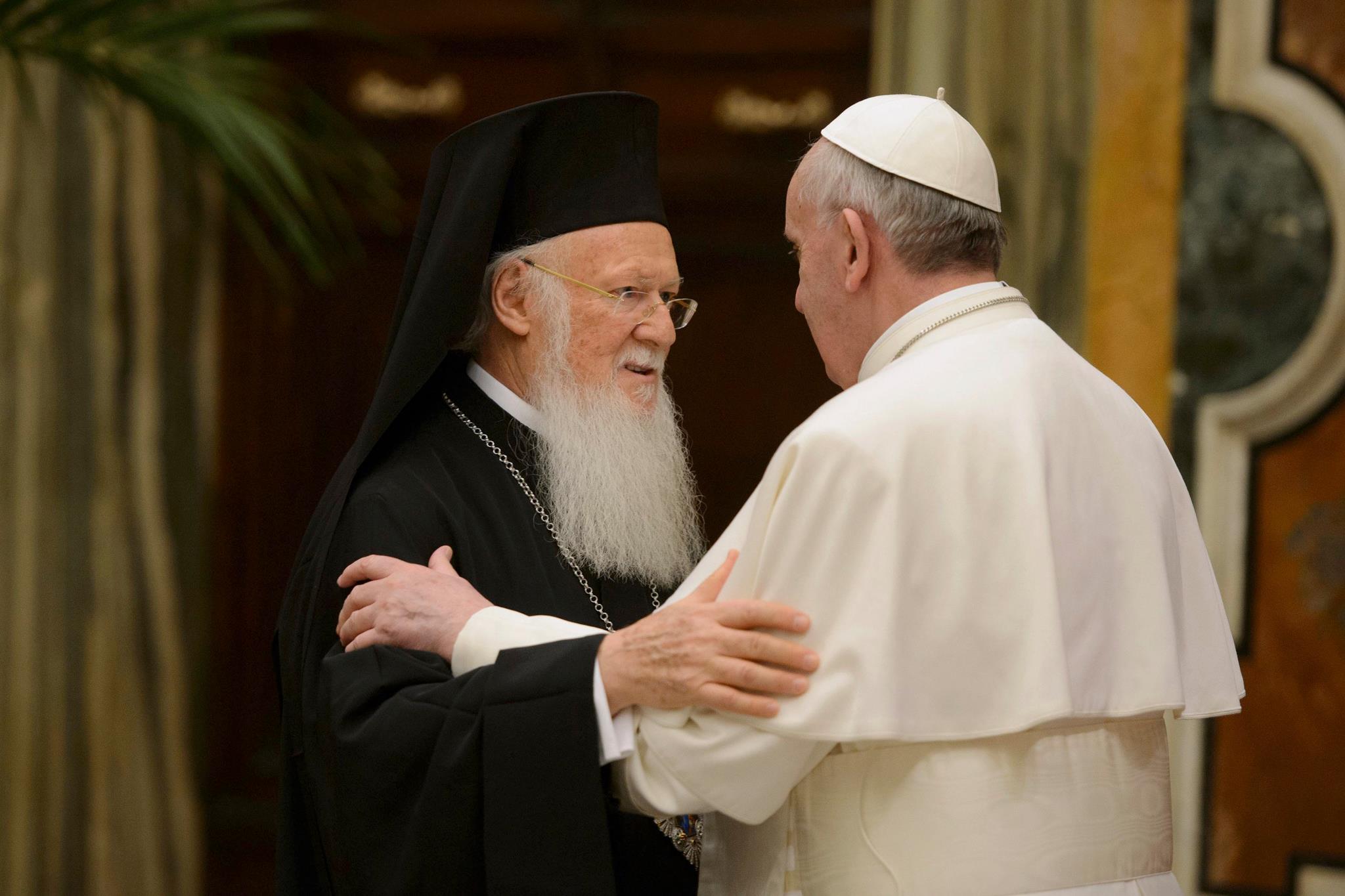
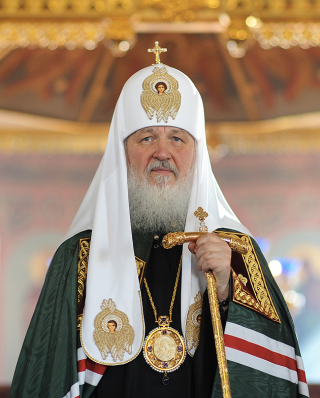
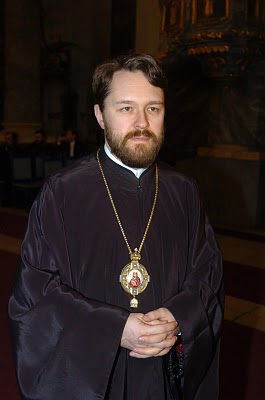
Patriarch & Pope.jpgDo you read the Interfax news agency from Moscow. Every now-and-again you should just to keep up with news not seemingly connected with own. Today, Interfax is reporting that Archbishop Hilarion has indicated that a meeting between Russian Orthodox Patriarch Kyrill and Pope Benedict XVI is on the table. No definite plans appear to have been made but there seem to be significant discussions pointing to a meeting. Interesting that this announcement is on the liturgical memorial of Saint Josaphat, brutally martyred by the Ordthodx (on the Latin calendar).
This morning the Holy See published the Apostolic Constitution Anglicanorum Coetibus which provides a structure for Anglicans coming into full, visible communion with the Bishop of Rome.
The Pope's press officer, Jesuit Father Federico Lombardi, addressed issues regarding the forthcoming Apostolic Constitution on Personal Ordinariates for the Anglicans entering full communion with the Catholic Church this today:

There has been widespread speculation, based on supposedly knowledgeable remarks by an Italian correspondent Andrea Tornielli, that the delay in publication of the Apostolic Constitution regarding Personal Ordinariates for Anglicans entering into full communion with the Catholic Church, announced on October 20, 2009, by Cardinal William Levada, Prefect of the Congregation for the Doctrine of the Faith, is due to more than "technical" reasons. According to this speculation, there is a serious substantial issue at the basis of the delay, namely, disagreement about whether celibacy will be the norm for the future clergy of the Provision.

Cardinal Levada offered the following comments on this speculation: "Had I been asked I would happily have clarified any doubt about my remarks at the press conference. There is no substance to such speculation. No one at the Vatican has mentioned any such issue to me. The delay is purely technical in the sense of ensuring consistency in canonical language and references. The translation issues are secondary; the decision not to delay publication in order to wait for the 'official' Latin text to be published in Acta Apostolicae Sedis was made some time ago.

The drafts prepared by the working group, and submitted for study and approval through the usual process followed by the Congregation, have all included the following statement, currently Article VI of the Constitution:

§1 Those who ministered as Anglican deacons, priests, or bishops, and who fulfill the requisites established by canon law and are not impeded by irregularities or other impediments may be accepted by the Ordinary as candidates for Holy Orders in the Catholic Church. In the case of married ministers, the norms established in the Encyclical Letter of Pope Paul VI Sacerdotalis coelibatus, n. 42 and in the Statement "In June" are to be observed. Unmarried ministers must submit to the norm of clerical celibacy of CIC can. 277, §1.

§2. The Ordinary, in full observance of the discipline of celibate clergy in the Latin Church, as a rule (pro regula) will admit only celibate men to the order of presbyter. He may also petition the Roman Pontiff, as a derogation from can. 277, §1, for the admission of married men to the order of presbyter on a case by case basis, according to objective criteria approved by the Holy See.

This article is to be understood as consistent with the current practice of the Church, in which married former Anglican ministers may be admitted to priestly ministry in the Catholic Church on a case by case basis. With regard to future seminarians, it was considered purely speculative whether there might be some cases in which a dispensation from the celibacy rule might be petitioned. For this reason, objective criteria about any such possibilities (e.g. married seminarians already in preparation) are to be developed jointly by the Personal Ordinariate and the Episcopal Conference, and submitted for approval of the Holy See."

Cardinal Levada said he anticipates the technical work on the Constitution and Norms will be completed by the end of the first week of November.
Wm Stetson.jpg

Zenit ran an interview the other about the recent development of possibilities of full communion of the Anglicans with Rome. The details of how this gesture of the Church has yet to be revealed by the Magisterium. Here is part of Karna Sawanson's interview with Monsignor William Stetson, secretary to the Ecclesiastical Delegate of the Congregation for the Doctrine of the Faith for the Pastoral Provision for former Episcopal priests. This part of the interview has to do with "personal ordinariates," the ecclesial structure proposed for living in the context of Anglican ways.


ZENIT: What is the aim of establishing the personal ordinariates? Why was the pastoral provision not sufficient?

Msgr. Stetson: The pastoral provision is merely an administrative process for preparing married, former Episcopal priests to be ordained as Catholic priests at the request of diocesan bishops. The new ordinariate will provide a canonical structure similar to a diocese for the pastoral care of lay faithful who convert from the Episcopal church

ZENIT: This canonical structure seems to respond directly to a petition made two years ago by the Traditional Anglican Communion, which has about 400,000 members worldwide. Do you see many or most of these members entering into communion with the Catholic Church through the personal ordinariate?

CanterburyCathedral.jpg

Msgr. Stetson: The Traditional Anglican Communion is in reality a confederation of so-called dioceses located in many different countries; it is made up of priests and lay people and bishops. The Traditional Anglican Communion as such has never been part of the Anglican Communion under the Archbishop of Canterbury. What will happen to the dioceses in particular countries will depend on the decisions reached by the Catholic hierarchy in the respective countries together with the Congregation for the Doctrine of the Faith. Their numbers are greater in Africa and Asia.

ZENIT: What will the process look like for Anglicans, especially priests and bishops, entering the Church through the ordinariate?

Msgr. Stetson: The Apostolic Constitution allowing for the creation of ordinariates in each country has not yet been issued. For this reason we do not know the nature of the process. I would anticipate that it will be similar to that used for the last 27 years by the Pastoral Provision here in the United States, and its counterpart in England (that did not, however, provide for parishes and liturgy, as in the United States.)

ZENIT: The Vatican announcement provided for the possibility of an Anglican ordinariate having seminarians, who are to be prepared alongside Catholic seminarians, "though the ordinariate may establish a house of formation to address the particular needs of formation in the Anglican patrimony." Would this include the possibility of marriage for these Anglican seminarians?

Msgr. Stetson: The specifics have not yet been made known on this question. At the very least I would assume that the seminarians would have to be both married and studying in an Anglican seminary at the time they sought to enter into full communion, and then continue studying for the priesthood in a Catholic seminary. They would have to be dispensed from the norm of celibacy on a case-by-case basis by the Holy See. Future seminarians would have to be celibate.

ZENIT: What other traditions will the Anglicans retain when they enter the Catholic Church by way of the personal ordinariate?

St Peter's Bas.jpg

Msgr. Stetson: Small parishes that allow for greater cohesion together. A rich tradition of liturgical expression (language, music, vestments, space, etc.) in English, dating back to the 16th century. This would also include a great tradition of the use of sacred Scripture in preaching, love for the Fathers of the Church and theological expression beyond that of Roman Catholic scholasticism.

ZENIT: Why is the Vatican able to offer this concession only to Anglicans, and not Lutherans, Presbyterians, etc., who would like to enter the Church?

Msgr. Stetson: Anglicans have always enjoyed a special place in Roman Catholic attitudes toward the rupture of Christian unity in the West after the 16th century. The Church of England sought to retain many elements of the Catholic Church while at the same time being Protestant. The Church of England maintained a greater unity within itself and thus could be dealt with as a single entity in conversations with Rome.

It is a dramatic slap-down of liberal Anglicanism and a total repudiation of the ordination of women, homosexual marriage and the general neglect of doctrine in Anglicanism. Indeed, it is a final rejection of Anglicanism. It basically interprets Anglicanism as a spiritual patrimony based on ethnic tradition rather than substantial doctrine and makes clear that it is not a historic "church" but rather an "ecclesial community" that strayed and now is invited to return to communion with the Pope as Successor of Peter.

The Vatican was careful to schedule simultaneously with the Vatican announcement, a press conference of the Catholic Archbishop of Westminster and the deeply humiliated Anglican Archbishop of Canterbury to enable the Anglicans to save some face by saying that this recognizes the spiritual patrimony of Anglicanism and that ecumenical dialogue goes ahead. That is like George Washington at Yorktown saying that he recognizes the cultural contributions of Britain and hopes diplomatic relations flourish. The Apostolic Constitution is not a retraction of ecumenical desires, but rather is the fulfillment of ecumenical aspirations, albeit not the way most Anglican leaders had envisioned it.

The press, uninformed and always tabloid in matters of religion, will zoom in on the permission for married priests. They will miss the most important point: that this reiterates the Catholic Church's insistence that Anglican Holy Orders are invalid, and perforce so is their Eucharist. These married Anglican priests have to be fully and validly ordained by a Catholic bishop. Following Orthodox custom, they are allowed to marry only before ordination and not after. And no married man may become a bishop. (Thus, any Anglican bishop joining one of these "ordinariates" would no longer be recognized as a bishop. Under special provision, Anglican bishops would have some right to pastoral authority, but would not be bishops.)

It remains to be seen how many Anglicans (Episcopalians in the USA) will be received into the Catholic Church under these provisions, but it is a final nail in the coffin of the rapidly disintegrating Anglicanism at least in the West and will radically challenge Anglicans in other parts of the world. Perhaps most importantly, it sets a precedent for reunion with Orthodox churches whose Holy Orders the Catholic Church already recognizes as valid. I should not be surprised if the Anglican Archbishop of Canterbury eventually is received into the Catholic Church, at least when he retires and gets a patent of nobility and a pension.


Fr George Rutler.jpg


Fr. George Rutler is pastor of The Church of Our Saviour in New York City and is a convert to Catholicism from the Anglican Communion.

St Andrew.jpg
The Ecumenical Patriarch, Bartholomew I, is making a pastoral visit to the US these next two weeks that is taking him on a multi-city tour, doing some wide ranging things like speaking about the environment, to meet with church leaders and faithful, lunching with the Fordham University President to breakfasting with schoolmates.

Patriarch Bartholomew has been a key figure in naming environmental concerns while making the faith an interpretative key for understanding and action. On the website noted below there are a number of items to sink your teeth into regarding this topic.

Bartholomew has been the Ecumenical Patriarch since 1991 looking after 250 million world-wide Orthodox Christians.

For more information the Patriarch's 2009 US visit see the website.
The Congregation for the Doctrine of the Faith, in the name of Pope Benedict, is providing a formal way (a canonical structure) of allowing Anglicans to enter in Full Communion with the Catholic that sets up a structure similar to that of Opus Dei. Instead of calling the structure a "prelature" it is being called a "Personal Ordinariat." Many things attributed to the Anglican Communion may be brought into their being Catholic including the Liturgy, married clergy, and other customs not in conflict with the Roman faith.

This step is a concrete realization of the hard work done in the ecumenical dialogues the goal of which is full, visible union in the Church of Christ.

Read the CDF's statement
Read the joint statement of the Archbishops of Westminster and Canterbury

About the author

Paul A. Zalonski is from New Haven, CT. After years of study, work and trying to find meaning in life, he still has a sense of humor. Paul is discerning God's plan and is preparing for ordination to the priesthood. Contact Paul at paulzalonski(at)yahoo.com.

Pages

Humanities Blog Directory

About this Archive

This page is a archive of recent entries in the Ecumenism category.

Ecology & Faith is the previous category.

Eucharist is the next category.

Find recent content on the main index or look in the archives to find all content.