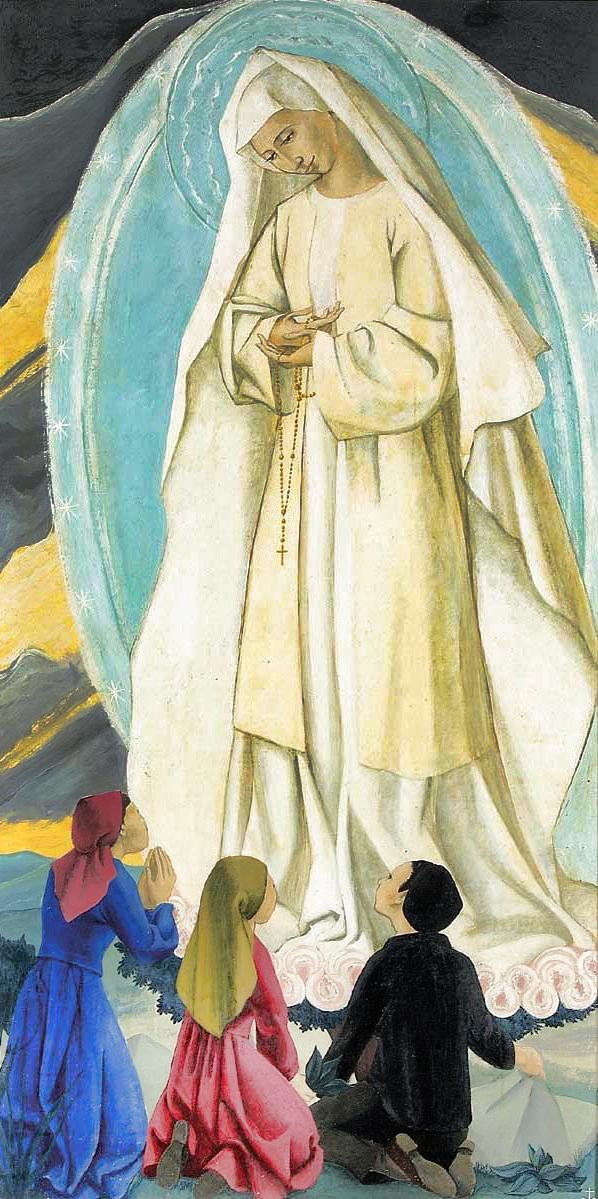
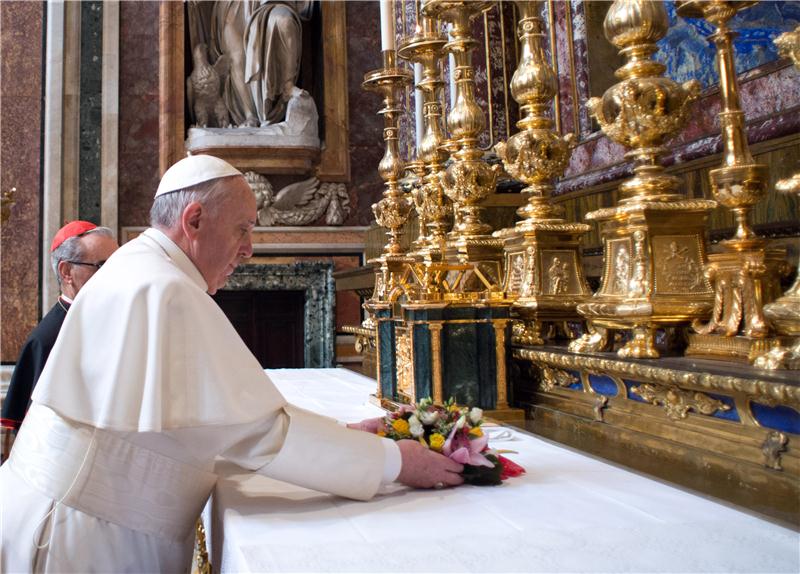
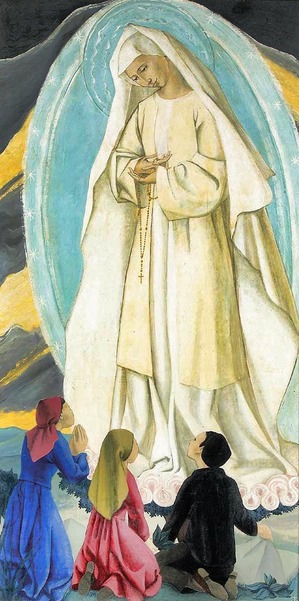
Today is the feast of Our Lady of Fatima. Cardinal Polycarpo and the bishops of Portugal join together at the famous shrine to the Blessed Mother to dedicate the papacy of Pope Francis to her. This gesture of devotion has been done for the last several popes entrusting all things of the papal office to the Maternal guidance and protection of the Mother of God. Today is also the anniversary of the attempt on the life of Pope John Paul II in 1981. Let's add the intention of peace and charity to those of the Pope, the bishop, the pastor of our parish and family. Here is an Act of Consecration to the Immaculate Heart of Mary (do it today).
O Mary, Virgin most powerful and Mother of mercy, Queen of Heaven and Refuge of sinners, we consecrate ourselves to thine Immaculate Heart.
We consecrate to thee our very being and our whole life; all that we have, all that we love, all that we are.
To thee we give our bodies, our hearts and our souls; to thee we give our homes, our families, our country.
We desire that all that is in us and around us may belong to thee, and may share in the benefits of thy motherly benediction.
And that this act of consecration may be truly efficacious and lasting, we renew this day at thy feet the promises of our Baptism and our first Holy Communion.
We pledge ourselves to profess courageously and at all times the truths of our holy Faith, and to live as befits Catholics who are duly submissive to all the directions of the Pope and the Bishops in communion with him.
We pledge ourselves to keep the commandments of God and His Church, in particular to keep holy the Lord's Day.
We likewise pledge ourselves to make the consoling practices of the Christian religion, and above all, Holy Communion, an integral part of our lives, in so far as we shall be able so to do.
Finally, we promise thee, O glorious Mother of God and loving Mother of men, to devote ourselves whole-heartedly to the service of thy blessed cult, in order to hasten and assure, through the sovereignty of thine Immaculate Heart, the coming of the kingdom of the Sacred Heart of thine adorable Son, in our own hearts and in those of all men, in our country and in all the world, as in heaven, so on earth. Amen.