Recently in John Henry Newman Category
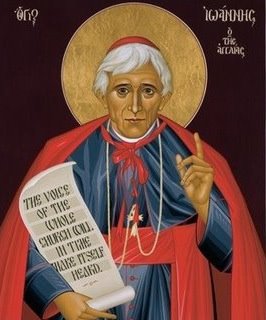
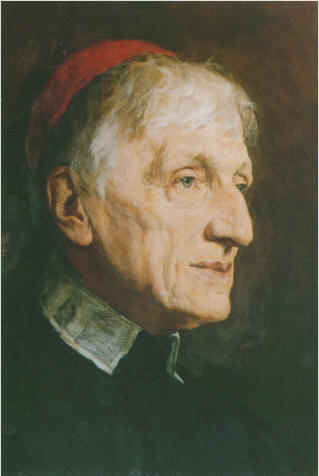
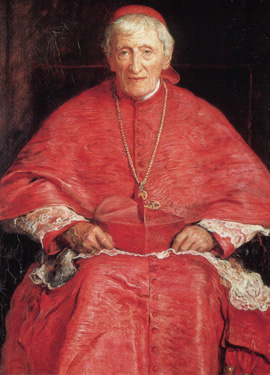
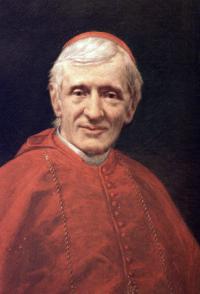
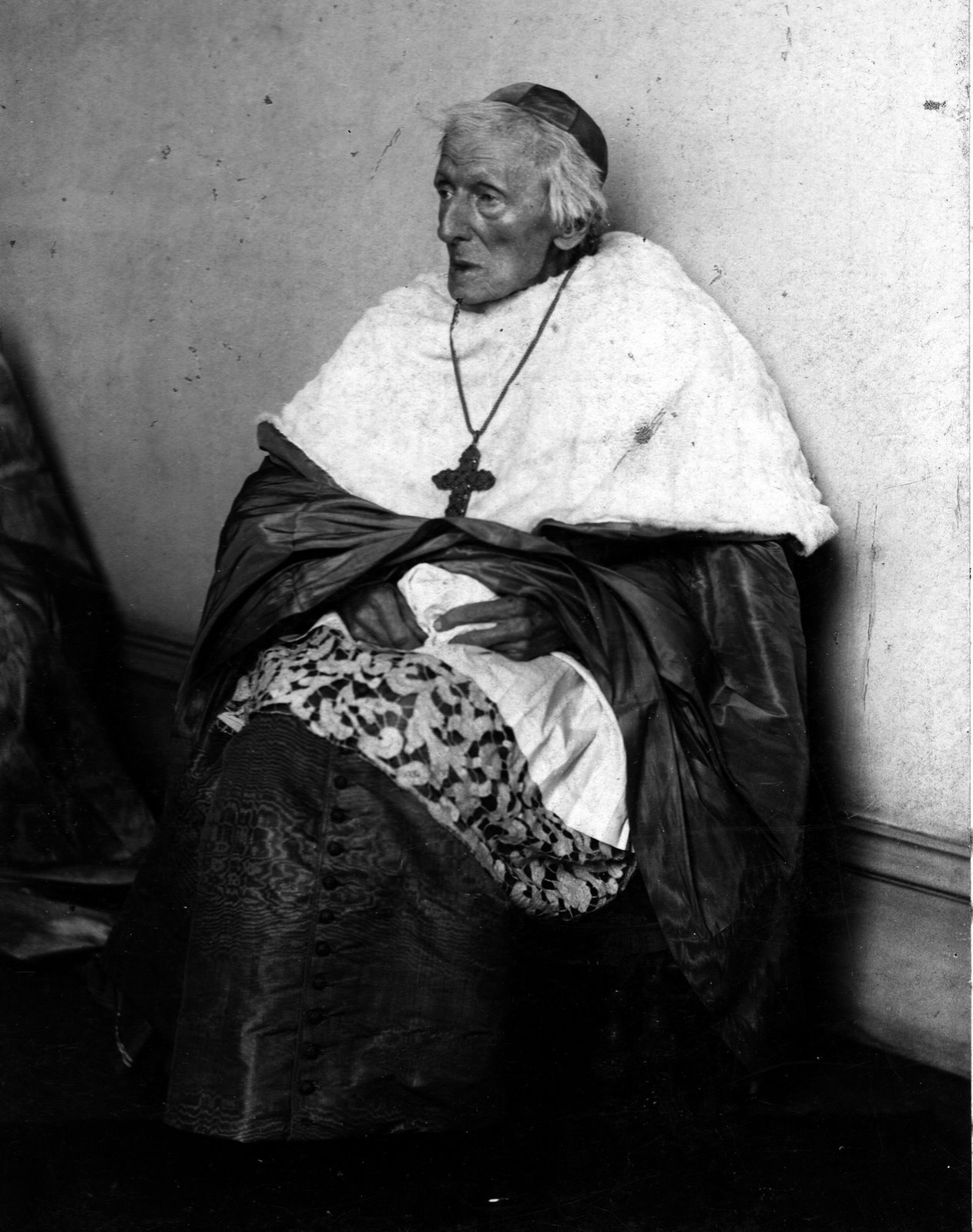
On this day in 1991, Pope John Paul the Great recognized John Henry Cardinal Newman was indeed a man who possessed heroic virtue. This recognition carried with it an ecclesial title of "Venerable Servant of God." Henceforth, we say "Venerable Servant of God John Henry Newman."
The process of determining whether Cardinal Newman is a saint continues along. To assist our understanding of the process of canonization and to have a better appreciation for the great work of Newman, a new website was recently launched. Visit the JHN website here.
Read John Henry Newman one step closer to sainthood
The Prayer for John Henry Newman's Beatification
God, our father, your servant John Henry Newman upheld the faith by his teaching and example. May his loyalty to Christ and the Church, his love for the Immaculate Mother of God, and his compassion for the perplexed give guidance to Christian people today. We beg you to grant the favors we ask through his intercession so that his holiness may be recognized by all and the Church may proclaim him a Saint. We ask this through Christ our Lord. Amen.
- Church, dogma and certainty
- There is but one rule of faith for all; and it would be a greater difficulty to allow of an uncertain rule of faith, than (if that was the alternative, as it is not), to impose upon uneducated minds a profession which they cannot understand. But it is not the necessary result of unity of profession, nor is it the fact, that the Church imposes dogmatic statements on the interior assent of those who cannot apprehend them. The difficulty is removed by the dogma of the Church's infallibility, and of the consequent duty of "implicit faith" in her word. The "One Holy Catholic and Apostolic Church" is an article of the Creed, and an article, which, inclusive of her infallibility, all men, high and low, can easily master and accept with a real and operative assent. It stands in the place of all abstruse propositions in a Catholic's mind, for to believe in her word is virtually to believe in them all. Even what he cannot understand, at least he can believe to be true; and he believes it to be true because he believes in the Church.
- A Grammar of Assent, Garden City, NY: Doubleday Image, 1955 (orig. 1870), p. 129.
A few paragraphs of a homily from a Mass at the Birmingham Oratory for transfer of remains of Cardinal Newman
It is surely the lesson the month of November speaks to us about: it is the lesson that our
common end, be we who we may, is death and decay and the dissolution of all things. The month begins with All Saints and All Souls: we will all be swept up into that great mass of all the faithful departed, and we hope to become, sooner or later, one with the saints of God. But November ends with the Feast of Christ the King to remind us who it is we must love and serve, to remind us whose is the Kingdom to which we truly belong, to remind us whose gentle and all persuasive rule calls us from the transitoriness of this life to the glory of the life of the Resurrection. That path to the Kingdom is not always easy: as Cardinal Newman himself wrote: "All God's providences, all God's dealings with us, all his judgments, mercies, warnings, deliverances, tend to peace and repose as their ultimate issue ... after our souls' anxious travail; after the birth of the spirit; after trial and temptation; after sorrow and pain; after daily dyings to the world; after daily risings unto holiness; at length comes that 'rest which remaineth unto the people of God'. After the fever; after weariness and sicknesses; fightings and despondings, languor and fretfulness; struggling and failing, struggling and succeeding; after all the changes and chances of this troubled unhealthy state, at length comes death, at length the white throne of God, at length the Beatific Vision."
The lesson we must learn is that, as the Cardinal also said: "He knows what He is about", and that life's trials and difficulties, its joys and its beauty all have the object of shaping us to be friends with God, to be at one with Our Lord: this is the aim and purpose of life. That is what John Henry Newman put into practice his whole life-long; it is what he taught others to do, it is what he is calling us to do today.
Cardinal Newman has left us but few earthly remains as focal points for our devotion, as if, and quite explicitly, to point us to that higher goal as a son of St Philip should to lead us away from himself and, as he put it in his hymn to St Philip, "towards the bright palace where our God is present throned in high heaven." That is what we would want for us as for himself, and the poignancy of his all but empty grave speaks loudly of it.
The Very Reverend Father Paul Chavasse, Provost of the Birmingham Oratory and Postulator for the Cause for the Beatification and Canonisation of the Venerable John Henry Cardinal Newman, delivered this homily on Sunday, November 2, 2008. For the full text see it here.