Recently in Benedictine saints & blesseds Category

St Hildegard of Bingen.jpg

This morning the Holy Father had received in a private audience Angelo Cardinal Amato, SDB, Prefect of the Congregation of the Causes of Saints, who presented the cases for sainthood that his office has been working on.

Among the many important things decided, the Pope has given us the liturgical memorial of and inscribed in the catalog of Saints of the Universal Church, the model of holiness in the person of Saint Hildegard of Bingen, a German Benedictine nun born in Bermershein in 1089 and who died in Rupertsberg on 17 Septemeber 1179.

What is interesting here is that Hildegard never really went through the same process of canonization that's done nowadays so you can say the Church is recognizing her sanctity and place with God without the rigorous investigation that is being done for the Venerable Servant of God Michael J. McGivney. In part, this is because through the centuries the Church has changed several times, the process by which it is judged a person is a blessed or saint. Previously, people used the title "saint" with Hildegard as "popular theology and cult of the saints."

So, with this ecclesial recognition Saint Hildegard of Bingen may be honored officially as a saint of the Church. She may be considered the Church's newest Benedictine saint.

Enhanced by Zemanta
Bookmark and Share

Saint Anselm

| | Comments (0)
St Anselm Photo by Tony Bowden.jpg

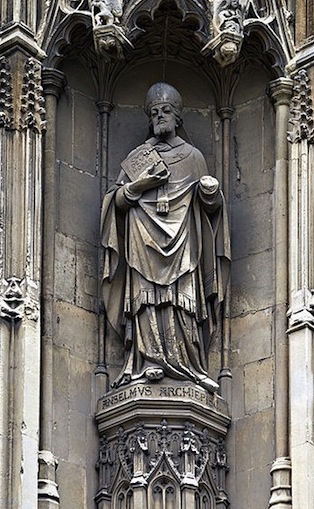
Saint Anselm (1033-1109) is famous for saying many things, one that is easily recalled is "I do not seek to understand that I may believe, but I believe in order to understand." We can easily say that the Lord has give us in the person of Saint Anselm one of the most eminent figures of the Middle Ages who harmonized faith and reason. To what might we attribute this harmonization? I and some others would say it was his radical mystical experience, finely attuned sense of communio with the Trinity that oriented his thought and his action. Anselm's contemplation and action were in sync; there was no distraction in him. 


Saint Anselm knew and taught us, according to Pope Benedict,  that  "a true theologian's work is divided into three stages: faith, God's gratuitous gift to be welcomed with humility; experience, which consists in incarnating the Word of God into daily life; and true knowledge, which is never the fruit of sterile reasoning but of contemplative intuition."


photo: Tony Bowden

Bookmark and Share

Saint Benedict

| | Comments (0)
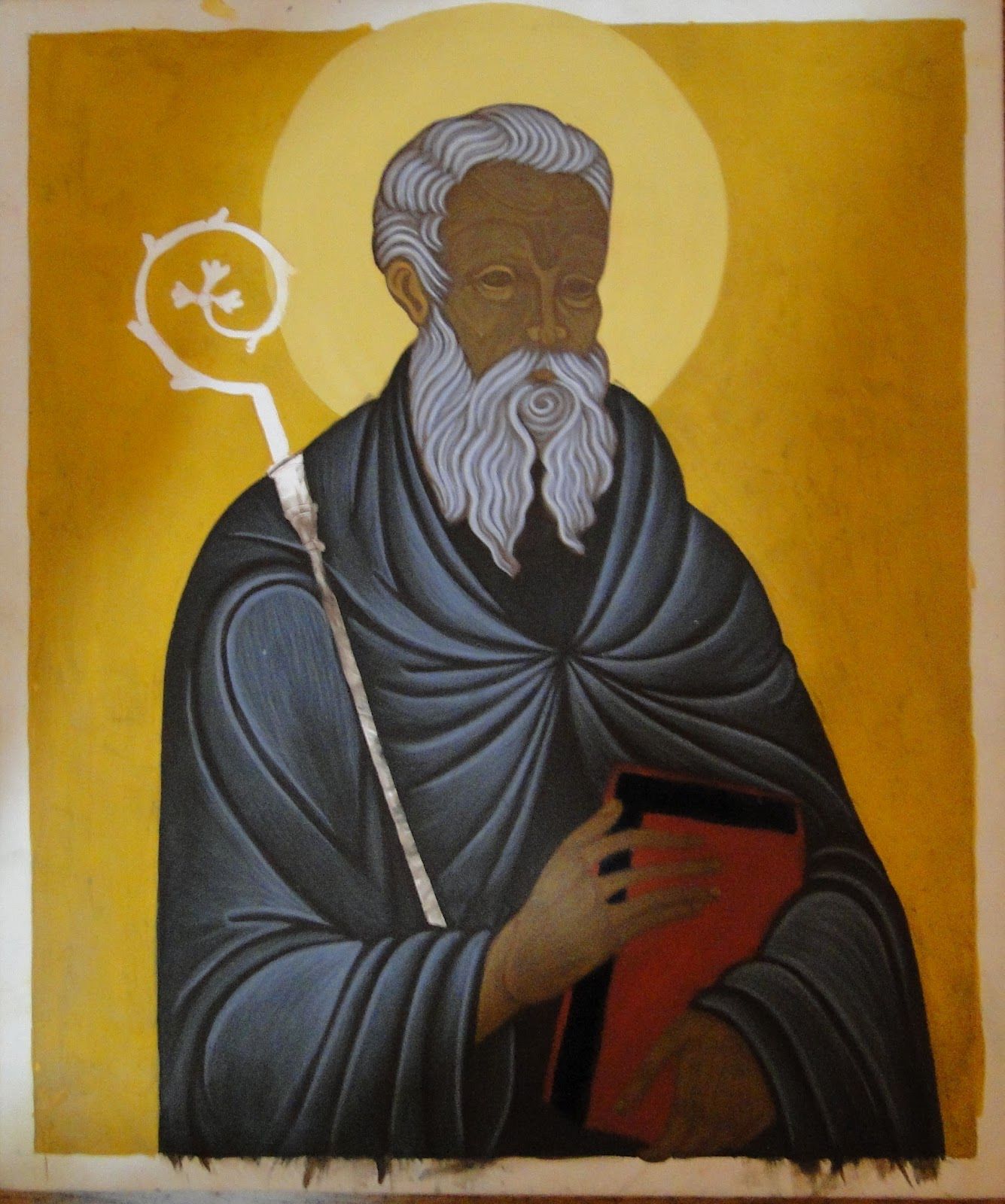
St Benedict pPerugino.jpg

Stir up in your Church, O Lord, the spirit that animated our Father Saint Benedict, that filled with this spirit we may learn to love what he loved and practice what he taught.

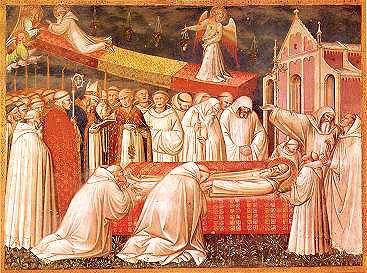
Today is the commemoration of the passing of Saint Benedict (known also as the Transitus of Saint Benedict). The monks of Montecassino noted the serenity of his death making him a patron, an advocate for the dying. We attribute something similar to Saint Joseph, whom we celebrated on the 19th.  

Those who wear the "St Benedict Medal" will notice on the margin encircling the image of Benedict the Latin words: Eius in obitu nostro præsentia muniamur (May we be strengthened by his presence in the hour of our death)!

I might note, the Medal of Saint Benedict is THE most indulgenced medal the church has and the proper blessing of the medal contains an exorcism. Because of the Saint's love of the Cross and his fighting of Satan, the medal has been known to protect against evil.


Tradition holds, 

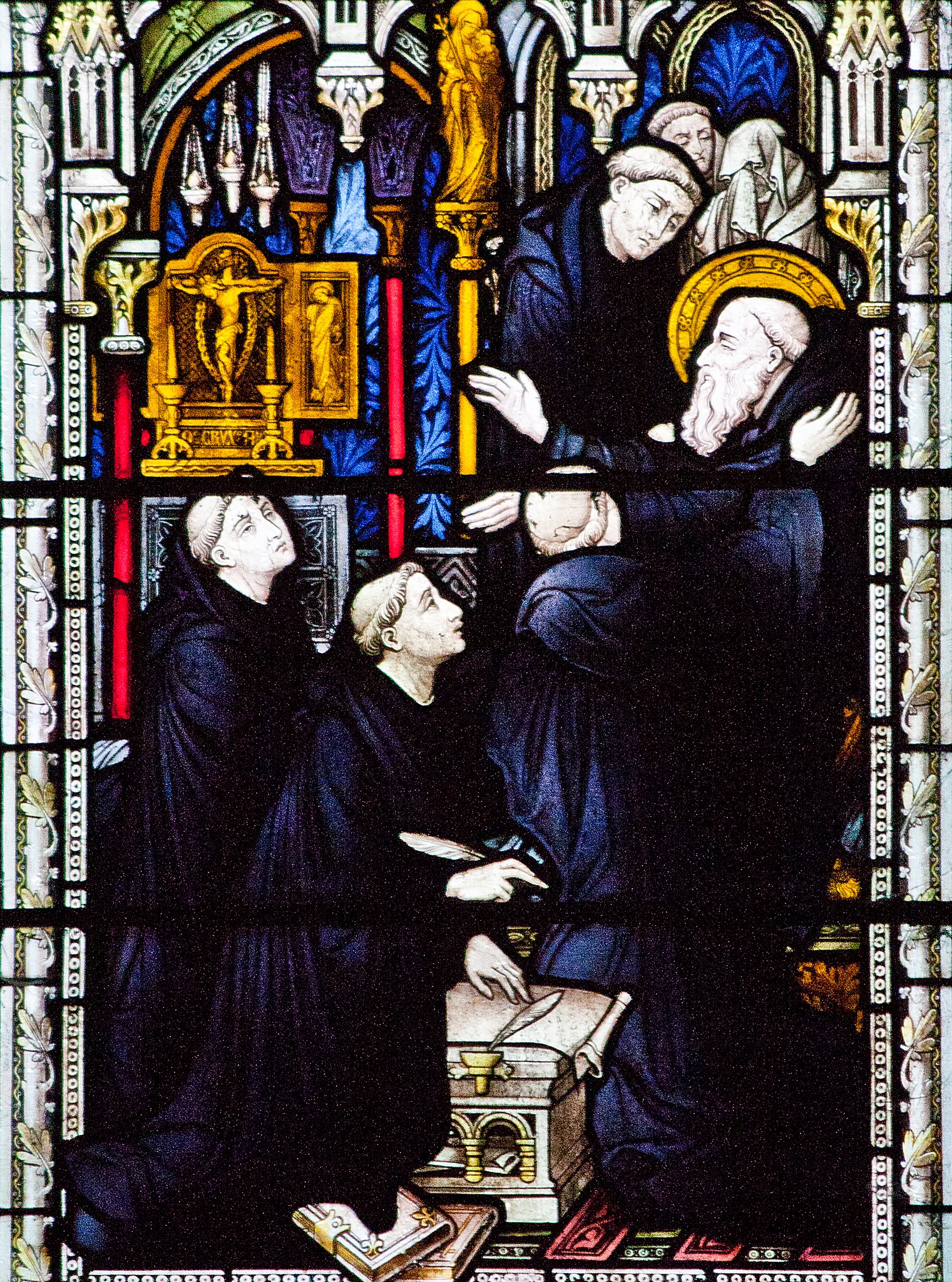
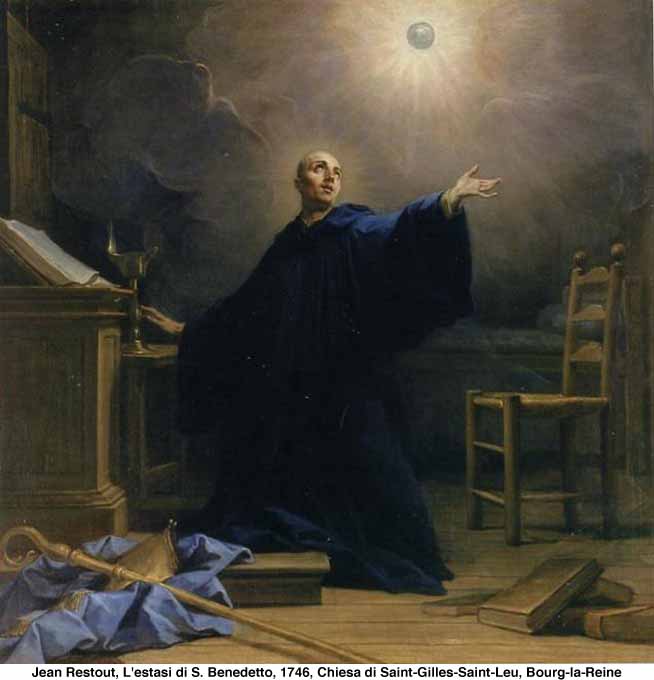
Six days before he died, Benedict gave orders for his tomb to be opened. Almost immediately he was seized with a violent fever that rapidly wasted his remaining energy. Each day his condition grew worse until finally, on the sixth day, he had his disciples carry him into the chapel where he received the Body and Blood of our Lord to gain strength for his approaching end.

Then, supporting his weakened body on the arms of his brethren, he stood with his hands raised to heaven and, as he prayed, breathed his last.

Pope Saint Gregory the Great, Dialogues, book 2, c. 37.

The feast celebrate today is not so much a feast about the advocacy of a good death --an important aspect of our Christian life life-- as much as it is to hold before our eyes an authentic witness to Jesus Christ and His Gospel. No other saint of the Church as affected the world as Saint Benedict has.

Most holy confessor of the Lord, Saint Benedict, Father of monks and nuns, guide and intercede for the salvation of us all.
Bookmark and Share
OSB nun posing as St Scholastica.jpgAs we celebrate anew the Memorial of the Virgin Saint Scholastica, we pray, O Lord, that, following her example, we may serve you with pure love and happily receive what comes from loving you.

Scholastica according to the tradition of the Church, was the twin sister of Saint Benedict having been born in 480 in Nursia. As twins do, Saint Scholastica followed her sibling. One could say that poor Benedict couldn't dodge his sister but the love they had for one another was intense and natural that nothing else would suffice. 

The Saint went to Monte Cassino (just south of Rome) known today as the Arch-Coenobium and died there in 547. Scholastica founded a monastery for women following the Rule compiled by her brother.

As the Mass collect above says, let's follow Scholastica's example of service of the Lord with a love that is pure and receive what the Lord gives happily.

Let us pray for the intentions of the Benedictine nuns in the USA, particularly nuns of the monasteries of Regina Laudis (Bethlehem, CT), the Glorious Cross (Branford, CT), St Emma (Pittsburgh, PA), St Walburga (Virginia Dale, CO), Immaculate Heart of Mary (Westfield, VT) and Our Lady of Ephesus (Kansas City, MO).

Re-read a post on keeping focus on Christ...
Bookmark and Share
Sixty-seven people who are being proposed for sainthood had their causes advanced today when Angelo Cardinal Amato, SDB, Prefect of the Congregation for the Causes of Saints presented the respective cases to His Holiness, Pope Benedict XVI.

Several were recognized as martyrs for the Faith; their witness to Christ resulted in their being killed in hatred of the faith (odium fidei).

7 who were identified as living a life of heroic virtue were women who founded religious congregations of sisters. 

Others were diocesan and religious priests, nuns, sisters and lay people. The martyrs came from Spain having died in the mid-1930s.

Of note to me was...

Madre Prosperi.JPG
~the recognition of the miracle attributed to the intercession of the Servant of God Maria Luisa (nee Gertrude Prosperi; 1799-1847) an Abbess of the Benedictine Abbey in Trevi;

~the recognition of the miracle attributed to the intercession of the Blessed Kateri Tekakwitha (1654-1672), an American lay woman and first Native American;

~the recognition of the miracle attributed to the intercession of the Blessed Marianne Cope (nee Barbara; 1838-1918), a Franciscan sister who worked with Saint Damian of Molokai.

The Filipino community gets its second saint with the acceptance of the miracle attributed to Blessed Pedro Calungsod (1654-1672), a lay catechist.
Enhanced by Zemanta
Bookmark and Share

Saint Mechtilde

| | Comments (0)
St Mechtilde2.jpgThe Benedictine liturgical calendar and some diocesan calendars observes the memorial of Saint Mechtilde today.

Bookmark and Share

Saint Gregory the Great

| | Comments (0)

Gregory the Great Matthew Aldreman.jpgFor Gregory the Great, a hinge figure between the ancient world -- the Senate of Rome last met while Gregory was the city's bishop -- a hinge between the ancient world and the grand experiment called Christendom, for Gregory this awareness that to look upon the face of Christ brought knowledge of God inspired an extensive exploration of Scripture to discern how God would have us live, how the Church and its leaders could best serve those seeking to know Christ Jesus and the Father. Since rightful authority comes from God, Gregory reasoned, its exercise must ever include a pastoral intent.


Father James Flint, OSB

Saint Procopius Abbey

3 September 2011


Let us pray for the Benedictine monks of Portsmouth Abbey, Portsmouth, Rhode Island, on this their abbey's patronal feast day. May God prosper the work of their hands!


You may also be interested in the 2010 blog post that has a hymn to Saint Gregory the Great by J. Michael Thompson. 

Bookmark and Share

Saint Bernard of Clairvaux

| | Comments (0)
St Bernard.jpgI consider that the blessing of a fuller sanctification descended upon her [Mary, the Mother of God], so as not only to sanctify her birth, but also to keep her life pure from all sin; which gift is believed to have been bestowed upon none other born of woman. This singular privilege of sanctity, to lead her life without any sin, entirely benefited the queen of virgins, who should bear the Destroyer of sin and death, who should obtain the gift of life and righteousness for all. 


Saint Bernard of Clairvaux, 1090-1153, Cistercian, Abbot and Doctor of the Church
Bookmark and Share
St Henry II crowned by Christ.jpgThe Church recalls the witness of an emperor and a Benedictine Oblate, Saint Henry (972-1024), Duke of Bavaria. Henry was crowned king in Rome by Pope Benedict VIII in 1014. It is said that Henry was assisted by the saints throughout his life but especially at Mass when he was anointed king. He was an insightful leader, lay man who had concern for the discipline of the Church and who had love for the Benedictine monastic life. He was a supporter of Cluny's reforms. It was through Saint Henry that the King of Hungary and later saint, Stephen, met Christ and was baptized.

Benedictine history tells us that he made a vow to the Abbot of Saint-Vanne in Verdun, thus, the tradition of Henry being an Oblate. (For more of what a Benedictine Oblate is, read this post).

Both he and his wife, Cunegunda were canonized by the Church and revered as saints.
Bookmark and Share
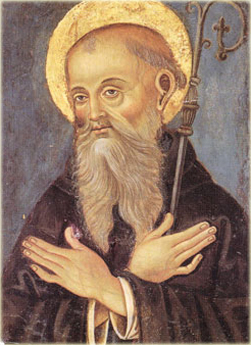
San Benedetto.jpg"St. Benedict's is best understood as the spirituality of ordinary life... The Benedictine is a spirituality of work: man's by labor, God's by prayer." (John Senior)


Saint Benedict (480-543) "If one wishes to understand in depth his personality and life, he can find in the disposition of the Rule the exact image of all the actions of the master, because this saintly man is incapable of teaching other than he lived." (Saint Gregory)
Bookmark and Share

CL logo.jpgToday is the 31st anniversary of the foundation of Fraternity of Communion and Liberation. The narrative of the Fraternity's founding is told in "The Greatest Grace in the History of the Movement" by Giorgio Feliciani (Traces, February 2007). Here's the story.

A priest in the direct service of the Holy See, Monsignor Mariano De Nicolò, currently Bishop of Rimini, happened to review, as part of his official duties, a file that illustrated and documented the Movement's desiderata. Feeling that these aspirations deserved attention and further study, he suggested to Father Francesco Ricci, who at the time was sharing responsibility for the Movement with Father Giussani [for more about this priest, who died in 1991, see Francesco Ricci. Una passione, cento passioni, San Martino in Strada, Lit. Citienne, 1996], that he consult with Monsignor Giuseppe Lobina, an expert in Canon Law who, along with a solid formal training, had an unusual amount of experience with ecclesiastical praxis.

This advice was promptly taken and, only a few months later, Monsignor Lobina, after acquiring all the necessary information in various meetings with CL figures and Father Giussani himself, was drawing up what would soon be the Statute of the Fraternity, which has remained largely unchanged up to now.

Monsignor Lobina also undertook to find the ecclesiastical authority willing to approve the Movement, and found him in Abbot Martino Matronola, who, as provost of the monastery of Montecassino, had the same powers over the surrounding territory as the bishop of a diocese. This acceptance was even more welcome because Father Giussani felt that the concept of his Movement was very close to that of the Benedictines (see Giussani, op.cit., pp. 74-75).

The formal establishment of the Fraternity came shortly thereafter in a very discreet, unassuming way. On July 11, 1980-the solemnity of Saint Benedict, Patron of Europe, on the fifteenth centenary of his birth-a small group of twelve stood together with Father Giussani in front of the Abbot to be constituted as a canonical association. On that same day, Monsignor Matronola,* by a specific formal decree, granted juridical status in the Church to the ecclesial movement called "Fraternity of Communion and Liberation" and approved its statutes and "works of apostolate and individual and social formation," placing it under the "protection of the Immaculate Virgin and our Patron Saint Benedict" (see the Bollettino Diocesano di Montecassino, no. 3, 1980, pp. 223-224).

Bookmark and Share
St Benedict with the Raven.jpg

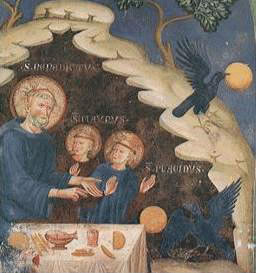
One of my favorite parts of the Saint Benedict's hagiography (iconography) is the narrative of the "man of God" (Benedict) and the raven. It is related by Saint Gregory the Great (+603) that in the wilderness Benedict fed a raven with some a portion of his bread.  When a jealous and wicked priest tried to kill Benedict with poisoned bread, Benedict coached the raven to take the deadly bread to place where it couldn't harm another. The raven complied.

In his Dialogues Gregory writes, "Then the raven, opening its beak wide and spreading its wings, began to run around the bread, cawing, as if to indicate that it wanted to obey but was unable to carry out the order. Again and again the man of God told him to do it, saying, 'Pick it up, pick it up. Do not be afraid. Just drop it where it cannot be found.' After hesitating a long time, the raven took the bread in its beak, picked it up and flew away. Three hours later it came back, after having thrown the bread away, and received its usual ration from the hands of the man of God."

Bookmark and Share

Saint Robert of Molesme

| | Comments (0)
St Robert of Molesme welcomes Bernard.jpgApril 17, 2011 marks the 900th anniversary of the death of St. Robert of Molesme, which, this year, is Palm Sunday. This anniversary of death of Saint Robert coincides with the historic beginning of the Cistercians with Robert's arrival with his group of monks first arrived at Cîteaux on Palm Sunday (March 21, 1098). Along with Saints Alberic and Stephen, Saint Robert is one of the founders of Cîteaux.

The text of the Life of Saint Robert is available hereYou'll find the rather lengthy article referred to at: Life of St. Robert of Molesme.  A shorter version of Saint Robert's life can be found on Wikipedia.
Bookmark and Share

About the author

Paul A. Zalonski is from New Haven, CT. After years of study, work and trying to find meaning in life, he still has a sense of humor. He is a member of the Fraternity of Communion and Liberation, a Catholic lay ecclesial movement and an Oblate of Saint Benedict. Contact Paul at paulzalonski[at]yahoo.com.

Categories

Archives

Humanities Blog Directory

About this Archive

This page is a archive of recent entries in the Benedictine saints & blesseds category.

Benedictine Oblate is the previous category.

Benedictines is the next category.

Find recent content on the main index or look in the archives to find all content.