Recently in Eastern Church Category
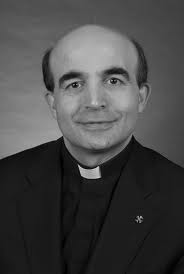
Great News! Today, the Holy Father nominated Reverend Father Cyril Vasil, SJ, until now the rector of the Pontifical Oriental Institute, as the Secretary to the Congregation for Eastern Churches, raising him to the dignity of archbishop.
Archbishop-elect Cyril Vasil was born in 1965 (in Slovakia), ordained a priest in 1987, entered the Society of Jesus in 1990 taking solemn vows in 2001. In 1994 he earned a doctorate in Canon Law from the Pontifical Oriental Institute. He has a working knowledge of 11 languages.
In 2002, Cyril Vasil was elected dean of the faculty of Oriental Canon Law and in 2007 he was named rector of the Pontifical Oriental Institute. He is the first rector of the PIO to be of the Byzantine Catholic Church.
Among his responsibilities for the Church he is a consultor for the Congregations of Eastern Churches, Doctrine of the Faith and Pastoral Care of Migrants. Moreover, he was an expert for the 2005 Synod of Bishops on the Eucharist. And he's been active in the International Union of Scouts of Europe being named a spiritual advisor in 2003.
I can say that this is an excellent choice for the Church: he's affable and competent. With Archbishop Vasil's appointment there are now two Jesuits in prominent positions in the Roman Curia, both are archbishop secretaries.
The President of Fordham University, Fr. Joseph M. McShane, S.J. announced Tuesday Feb. 17, a Jaharis Family Foundation gift establishing the Archbishop Demetrios Chair in Orthodox Theology and Culture as part of the Orthodox Christian Studies Program of this renowned Roman-Catholic Jesuit University.
The announcement came at the conclusion of the Sixth Annual Orthodoxy in America Lecture given this year by Fr. Stanley Harakas, ThD, who is the Archbishop Iakovos Professor of Orthodox Theology Emeritus at Holy Cross Greek Orthodox School of Theology. Fr. Harakas' topic "The Future of Orthodox Christianity in
Following the lecture President McShane announced the establishment of the Archbishop Demetrios Chair in Orthodox Theology and Culture through a generous donation of two million dollars by the Jaharis Family Foundation. Fr. McShane welcomed Michael and Mary Jaharis as he expressed his great joy and gratitude. He further said that naming the chair after Archbishop Demetrios is a most deserving honor and that the University was "thrilled that his name (the Archbishop's) and the name of the Jaharis family will forever be associated with Fordham."
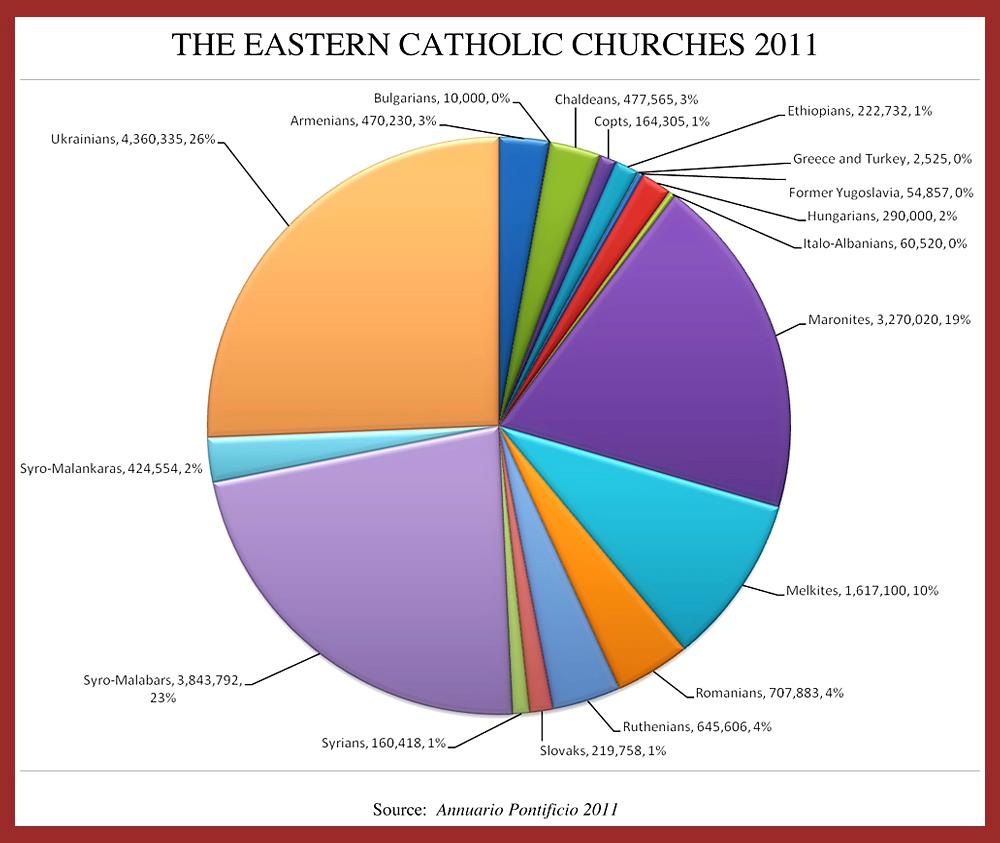
The new Syrian Patriarch, Ignace Joseph III Younan, elected on January 22nd was enthroned on February 15th in Beirut. The story of the event is here and here. It is interesting to note the theological and liturgical differences between Western & Eastern Catholics. The Patriarch was enthroned, not installed. The proper term is enthroned; one installs computer software and a new dishwasher, not a bishop. To enthrone a bishop means that he is led to his chair and seated. Of course there's more to the rite but that's it essentially. Worldwide the Syrian Catholics number about 200, 000.
The point of this note isn't the size of a bishop's chair as it was to draw attention to a new Eastern Catholic Patriarch. That said, for some, parsing the difference between enthronement vs. installation may be overly picky. The liturgical theology of the Church says that bishops sit on cathedras (substantial looking chairs), not thrones even if some look more like thrones than mere a big chair. That some bishops may look like plenipotentiaries, even act like them, they're not. But to say that a bishop is led to a choir stall, like an abbot is upon his election, is not quiet correct either. How long has the word "installation" been used to denote the act of inaugurating a bishop's ministry? I think some people who claim to be liturgists tend to force a new agenda on the Church using inaccurate jargon. But I defer to a great authority.
After this the Lord appointed seventy others, and sent them on ahead of Him, two by two, into every town and place where He Himself was about to come. And He said to them, "The harvest is plentiful, but the laborers are few; pray therefore the Lord of the harvest to send out laborers into His harvest.
Father, You brought the light of the Gospel to the Slavic nations through Saint Cyril and his brother Saint Methodius. Open our hearts to understanding Your teaching and help us to become one in faith and praise.
Writing about today's saints Pope John Paul II said:
[Saints Cyril and Methodius made a] generous decision to identify themselves with those peoples' life and traditions, once having purified and enlightened them by Revelation, make Cyril and Methodius true models for all the missionaries who in every period have accepted Saint Paul's invitation to become all things to all people in order to redeem all. And in particular for the missionaries who, from ancient times until the present day, from Europe to Asia and today in every continent, have labored to translate the Bible and the texts of the liturgy into the living languages of the various peoples, so as to bring them the one word of God, thus made accessible in each civilization's own forms of expression.
Perfect communion in love preserves the Church from all forms of particularism, ethnic exclusivism or racial prejudice, and from any nationalistic arrogance. This communion must elevate and sublimate every purely natural legitimate sentiment of the human heart. (Slavorum apostoli, 11, 1985)
A song of ascents. I raise my eyes toward the mountains. From where will my help come? My help comes from the Lord, the maker of heaven and earth. (Ps. 121:1-2)
February 9th the Maronite Church in Lebanon (and in the diaspora) celebrated the liturgical feast of the founder their Church, Saint Maron. It is commonly known that Saint Maron was a 4th/5th century Syriac Christian monk. Maron moved to the mountains of ancient Syria to what is known today as Lebanon. His spirituality, as would be expected of a monk, was penitential and centered on the sacred Liturgy. Studying the liturgical texts you would notice the influence of semitic forms of thinking, praying and discipline. There is a keen appreciation for Old Testament typology in Maronite theology, spirituality and Liturgy. One clear acknowledgement needs to be made: the monks (indeed, all the disciples of Saint Maron) held to the truth taught by the Council of Chalcedon (AD 451). They even suffered for their orthodox Christian faith.
This is already too much information to introduce you to the fact that in Rome there is a Maronite College founded in the 16th century. Here seminarians and priests of the worldwide Maronite Church come to study the sacred sciences at the heart of the Catholic Church.
In the autumn of 2008 the Diocese of Rome and the Holy See established a parish for the Maronites living in Rome centered at the Maronite College. This news video gives a brief introduction to this new work of the Maronite Church.
ALSO, if you are interested in knowing more about Eastern Christianity, the Catholic Information Service at the Knights of Columbus published a brand new booklet on what the Eastern Christian Churches are, and the place they hold in Christianity. Read Jesuit Father Steven Hawkes-Teeples' work Eastern Christians and Their Churches.
In the USA there are two eparchies (dioceses) of Maronites, The Eparchy of Saint Maron of Brookkyn and Our Lady of Lebanon. Between the two eparches, the Maronite Voice is published.