<?xml version="1.0" encoding="utf-8"?>
<feed xmlns="http://www.w3.org/2005/Atom">
    <title>Communio</title>
    <link rel="alternate" type="text/html" href="http://communio.stblogs.org/" />
    <link rel="self" type="application/atom+xml" href="http://communio.stblogs.org/atom.xml" />
    <id>tag:communio.stblogs.org,2008-07-22://23</id>
    <updated>2008-11-18T13:27:31Z</updated>
    <subtitle>...bearing with one another in love, making every effort to maintain the unity of the Spirit in the bond of peace.</subtitle>
    <generator uri="http://www.sixapart.com/movabletype/">Movable Type Open Source 4.12</generator>

<entry>
    <title>Lectio Divina</title>
    <link rel="alternate" type="text/html" href="http://communio.stblogs.org/2008/11/lectio-divina-1.html" />
    <id>tag:communio.stblogs.org,2008://23.32081</id>

    <published>2008-11-19T15:44:02Z</published>
    <updated>2008-11-18T13:27:31Z</updated>

    <summary><![CDATA[This article by Jesuit Father John Belmonte on lectio divina is helpful for coming to know the Lord. Lectio is a place of encounter with the Lord and it is in lectio we come to know and love&nbsp;Him in whom...]]></summary>
    <author>
        <name>Paul Zalonski</name>
        <uri>http://communio.stblogs.org</uri>
    </author>
    
        <category term="Benedictines" scheme="http://www.sixapart.com/ns/types#category" />
    
        <category term="Sacred Scripture" scheme="http://www.sixapart.com/ns/types#category" />
    
        <category term="Spiritual Life" scheme="http://www.sixapart.com/ns/types#category" />
    
    
    <content type="html" xml:lang="en-us" xml:base="http://communio.stblogs.org/">
        <![CDATA[<p class="MsoNormal" style="MARGIN: 0in 0in 0pt"><span style="FONT-SIZE: 12pt; FONT-FAMILY: 'Times New Roman','serif'"><font color="#000000"><em>This article by Jesuit Father John Belmonte on lectio divina is helpful for coming to know the Lord. Lectio is a place of encounter with the Lord and it is in lectio we come to know and love&nbsp;Him in whom and by whom we are saved.</em></font></span></p>
<p class="MsoNormal" style="MARGIN: 0in 0in 0pt"><span style="FONT-SIZE: 12pt; FONT-FAMILY: 'Times New Roman','serif'"><o:p><font color="#000000">&nbsp;</font></o:p></span></p>
<p class="MsoNormal" style="MARGIN: 0in 0in 0pt"><span style="FONT-SIZE: 12pt; FONT-FAMILY: 'Times New Roman','serif'"><font color="#000000">Talk show host Jay Leno has a very funny segment on his "Tonight Show" where he interviews the "man on the street," testing people's knowledge in a given subject matter. Rare is the person who does well. On one occasion, he asked questions about a topic that keenly interests me: the Bible. While the survey was hardly scientific, the questions were very basic. No historical-critical method here. "Name one of the Ten Commandments," Jay asked. "Freedom of speech," a man unhesitatingly responded. "Name the four Gospels," Jay asked. With a befuddled look, a woman was unable to answer. "Name the four Beatles," Jay asked. Without any hesitation and a relieved smile, the woman responded, "John, Paul, George, and Ringo." My personal favorite </font></span><span style="FONT-SIZE: 12pt; FONT-FAMILY: 'Times New Roman','serif'"><font color="#000000">was the man whom he asked, "In the Old Testament, who was swallowed by the whale?" He looked directly into the camera and, as serious as death, said, "Pinocchio."<o:p></o:p></font></span></p>
<p class="MsoNormal" style="MARGIN: 0in 0in 0pt"><span style="FONT-SIZE: 12pt; FONT-FAMILY: 'Times New Roman','serif'"><o:p><font color="#000000">&nbsp;</font></o:p></span></p>
<p class="MsoNormal" style="MARGIN: 0in 0in 0pt"><span style="FONT-SIZE: 12pt; FONT-FAMILY: 'Times New Roman','serif'"><font color="#000000">As someone who has taught Scripture to high school students, these answers did not surprise me. Religious educators and biblical scholars regularly decry a growing lack of familiarity with Scripture. Catholic ignorance of the Bible is proverbial. A study of 508 teenagers by the Princeton Religion Research Center confirmed that Catholic young people are much less familiar with Scripture than their Protestant counterparts. Even more distressing is the finding that </font></span><span style="FONT-SIZE: 12pt; FONT-FAMILY: 'Times New Roman','serif'"><font color="#000000">thirty percent said that they never even opened the Bible. If Saint Jerome's axiom, "Ignorance of the Scriptures is ignorance of Christ," is true, then those of us who are full members of the Catholic Christian community have a serious situation on our hands. Isn't it incumbent upon us to pass on the tradition, to introduce others to the living God, to dispel ignorance of the Word of God? If not us, then who?<o:p></o:p></font></span></p>
<p class="MsoNormal" style="MARGIN: 0in 0in 0pt"><span style="FONT-SIZE: 12pt; FONT-FAMILY: 'Times New Roman','serif'"><o:p><font color="#000000">&nbsp;</font></o:p></span></p>
<p class="MsoNormal" style="MARGIN: 0in 0in 0pt"><span style="FONT-SIZE: 12pt; FONT-FAMILY: 'Times New Roman','serif'"><font color="#000000">
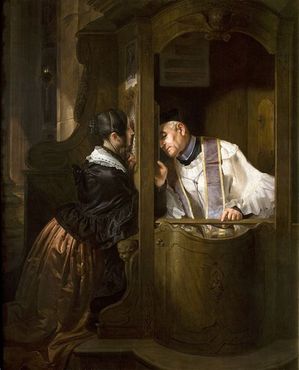
<span class="mt-enclosure mt-enclosure-image" style="DISPLAY: inline"><a href="http://communio.stblogs.org/monks1.jpg"><img class="mt-image-right" style="FLOAT: right; MARGIN: 0px 0px 20px 20px" height="296" alt="monks1.jpg" src="http://communio.stblogs.org/monks1-thumb-250x296.jpg" width="250" /></a></span>Even amid the decline in elementary biblical knowledge, help is on the way. Vatican II did much to help revive interest in Scripture, and one method that may help bridge the gap Mr. Leno so cleverly pointed out is the ancient monastic method of reading the Bible called lectio divina. The Latin expression lectio divina does not translate into English with great accuracy. Literally, it means "holy reading within the monastic tradition, and in Saint Benedict's rule in particular, its meaning is obvious. Lectio divina is an attentive and in-depth reading of the sacred Scriptures intended not simply to satisfy one's curiosity but to nourish one's faith. Benedict's monks were to nourish themselves with the divine food of Scripture in order to have sufficient resources for the journey of faith. In the <i style="mso-bidi-font-style: normal">Rule of Saint Benedict</i>, the monk is exhorted to listen carefully and willingly to holy readings, the <i style="mso-bidi-font-style: normal">lectiones sanctae</i>. The reading is holy because its object is the </font></span><span style="FONT-SIZE: 12pt; FONT-FAMILY: 'Times New Roman','serif'"><font color="#000000">word of God. Scripture is approached not for scientific or technical reasons but in order to deepen one's personal commitment to God and God's Son.<o:p></o:p></font></span></p>
<p class="MsoNormal" style="MARGIN: 0in 0in 0pt"><span style="FONT-SIZE: 12pt; FONT-FAMILY: 'Times New Roman','serif'"><o:p><font color="#000000">&nbsp;</font></o:p></span></p>
<p class="MsoNormal" style="MARGIN: 0in 0in 0pt"><span style="FONT-SIZE: 12pt; FONT-FAMILY: 'Times New Roman','serif'"><font color="#000000">Lectio Divina from the Monastery to the Marketplace<o:p></o:p></font></span></p>
<p class="MsoNormal" style="MARGIN: 0in 0in 0pt"><span style="FONT-SIZE: 12pt; FONT-FAMILY: 'Times New Roman','serif'"><o:p><font color="#000000">&nbsp;</font></o:p></span></p>
<p class="MsoNormal" style="MARGIN: 0in 0in 0pt"><span style="FONT-SIZE: 12pt; FONT-FAMILY: 'Times New Roman','serif'"><font color="#000000">All quarters of the church, from official pronouncements to informal movements, have in recent times repeatedly affirmed the need for and effectiveness of lectio divina. There are many ways in which one can encounter God through the biblical word. Yet, the rich history, significant connection to tradition, genuine spirituality, and pastoral applicability of lectio divina make it a particularly attractive method. <o:p></o:p></font></span></p>
<p class="MsoNormal" style="MARGIN: 0in 0in 0pt"><span style="FONT-SIZE: 12pt; FONT-FAMILY: 'Times New Roman','serif'"><font color="#000000"></font></span>&nbsp;</p>
<p class="MsoNormal" style="MARGIN: 0in 0in 0pt"><span style="FONT-SIZE: 12pt; FONT-FAMILY: 'Times New Roman','serif'"><font color="#000000">
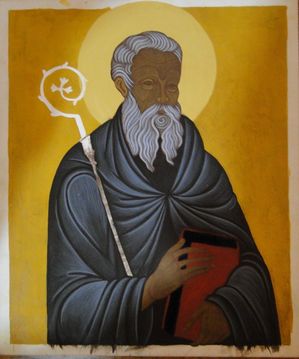
<span class="mt-enclosure mt-enclosure-image" style="DISPLAY: inline"><a href="http://communio.stblogs.org/St%20Ignatius%20%26%20Paul%20III.jpg"><img class="mt-image-left" style="FLOAT: left; MARGIN: 0px 20px 20px 0px" height="296" alt="St Ignatius &amp; Paul III.jpg" src="http://communio.stblogs.org/St%20Ignatius%20&amp;%20Paul%20III-thumb-250x296.jpg" width="250" /></a></span>Lectio divina is one instrument of grace by which we encounter Christ in the Scriptures. When practiced every day, lectio divina fosters the kind of contact with God's word that, over the course of a lifetime, promises a life of prayer lived out in faithful love. To suggest that a specific method for lectio divina might be necessary carries with it a risk. In our practice of this method, we might be tempted to follow rigidly the proposals offered as rules and not as suggestions. To do so would be a mistake. What lectio divina demands in the first place is an openness to the </font></span><span style="FONT-SIZE: 12pt; FONT-FAMILY: 'Times New Roman','serif'"><font color="#000000">Spirit, which any master of the spiritual life would see as a prerequisite to prayer. Ignatius of Loyola's instruction in his <i style="mso-bidi-font-style: normal">Spiritual Exercises</i> to those who intend to pray is a good example. He suggests that believers must always pray "with great spirit and generosity toward their Creator and Lord." Balance and flexibility are very important as one begins to practice lectio divina. We should always avoid rigidity, excessive formalism, or forcing things. My intention is not that the suggested schema that follows be realized as a fixed program; lectio divina is a way to encounter God, and we should always feel free to utilize it according to our own rhythms, gifts, and desires.<o:p></o:p></font></span></p>
<p class="MsoNormal" style="MARGIN: 0in 0in 0pt"><span style="FONT-SIZE: 12pt; FONT-FAMILY: 'Times New Roman','serif'"><o:p><font color="#000000">&nbsp;</font></o:p></span></p>
<p class="MsoNormal" style="MARGIN: 0in 0in 0pt"><span style="FONT-SIZE: 12pt; FONT-FAMILY: 'Times New Roman','serif'"><font color="#000000">Having pointed out the importance of some prerequisites to lectio divina, such as balance, 
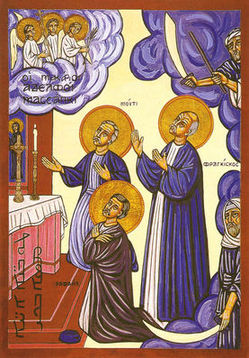
<span class="mt-enclosure mt-enclosure-image" style="DISPLAY: inline"><a href="http://communio.stblogs.org/Monks2.jpg"><img class="mt-image-right" style="FLOAT: right; MARGIN: 0px 0px 20px 20px" height="333" alt="Monks2.jpg" src="http://communio.stblogs.org/Monks2-thumb-250x333.jpg" width="250" /></a></span>openness, and flexibility, a word is in order about the structure or steps that this ancient practice usually takes. Much has been written about these steps, but the most exhaustive and perhaps </font></span><span style="FONT-SIZE: 12pt; FONT-FAMILY: 'Times New Roman','serif'"><font color="#000000">best-known example comes from Guigo II (1115-1198), the Cistercian prior at Chartres from 1173 to 1180. In his "Letter on the Contemplative Life," also known as <i style="mso-bidi-font-style: normal">Scala Claustralium</i>, Guigo gives the classic four-part expression to the lectio divina: <i style="mso-bidi-font-style: normal">lectio</i>, <i style="mso-bidi-font-style: normal">meditatio</i>, <i style="mso-bidi-font-style: normal">oratio</i>, and <i style="mso-bidi-font-style: normal">contemplatio</i>. Since Guigo's text has become a nearly obligatory point of reference </font></span><span style="FONT-SIZE: 12pt; FONT-FAMILY: 'Times New Roman','serif'"><font color="#000000">for someone considering lectio divina, it seems appropriate to reproduce here a brief summary citation from the letter:<o:p></o:p></font></span></p>
<p class="MsoNormal" style="MARGIN: 0in 0in 0pt"><span style="FONT-SIZE: 12pt; FONT-FAMILY: 'Times New Roman','serif'"><o:p><font color="#000000">&nbsp;</font></o:p></span></p>
<p class="MsoNormal" style="MARGIN: 0in 0in 0pt"><i style="mso-bidi-font-style: normal"><span style="FONT-SIZE: 12pt; FONT-FAMILY: 'Times New Roman','serif'"><font color="#000000">One day during manual labor, as I was beginning to reflect on the spiritual exercise of man, suddenly four spiritual steps appeared to my mind: reading, meditation, prayer, and contemplation. This is the ladder of the monks by which they are elevated from the earth to heaven and even though it may be formed by only a few steps, nevertheless it appears in immense and incredible greatness. The lower part rests on the earth; however, the higher part </font></span></i><i style="mso-bidi-font-style: normal"><span style="FONT-SIZE: 12pt; FONT-FAMILY: 'Times New Roman','serif'"><font color="#000000">penetrates the clouds and scrutinizes the secrets of the heavens.<o:p></o:p></font></span></i></p>
<p class="MsoNormal" style="MARGIN: 0in 0in 0pt"><i style="mso-bidi-font-style: normal"><span style="FONT-SIZE: 12pt; FONT-FAMILY: 'Times New Roman','serif'"><o:p><font color="#000000">&nbsp;</font></o:p></span></i></p>
<p class="MsoNormal" style="MARGIN: 0in 0in 0pt"><i style="mso-bidi-font-style: normal"><span style="FONT-SIZE: 12pt; FONT-FAMILY: 'Times New Roman','serif'"><font color="#000000">Now the reading consists in the attentive observation of the Scriptures with one's spirit applied. The meditation is the studious action of the mind, which seeks the discovery of hidden truth by means of one's own intelligence. The prayer consists in a religious application of the heart </font></span></i><i style="mso-bidi-font-style: normal"><span style="FONT-SIZE: 12pt; FONT-FAMILY: 'Times New Roman','serif'"><font color="#000000">of God in order to dispel evil and obtain favors. The contemplation is an elevation into God, from the mind attracted beyond itself, savoring the joys of eternal sweetness....<o:p></o:p></font></span></i></p>
<p class="MsoNormal" style="MARGIN: 0in 0in 0pt"><span style="FONT-SIZE: 12pt; FONT-FAMILY: 'Times New Roman','serif'"><o:p><font color="#000000">&nbsp;</font></o:p></span></p>
<p class="MsoNormal" style="MARGIN: 0in 0in 0pt"><span style="FONT-SIZE: 12pt; FONT-FAMILY: 'Times New Roman','serif'"><font color="#000000">Reading seeks the sweetness of the blessed life, while meditation finds it. Prayer asks for it and contemplation tastes it. Reading, in a certain way, brings solid food to the mouth, meditation chews and breaks it up, prayer obtains its seasoning, contemplation is the same sweetness </font></span><span style="FONT-SIZE: 12pt; FONT-FAMILY: 'Times New Roman','serif'"><font color="#000000">which refreshes and brings joy.</font></span></p>
<p class="MsoNormal" style="MARGIN: 0in 0in 0pt"><span style="FONT-SIZE: 12pt; FONT-FAMILY: 'Times New Roman','serif'"><o:p><font color="#000000">&nbsp;</font></o:p></span></p>
<p class="MsoNormal" style="MARGIN: 0in 0in 0pt"><span style="FONT-SIZE: 12pt; FONT-FAMILY: 'Times New Roman','serif'"><font color="#000000">Guigo sets down a four-part method, but for our purposes we will reduce that structure to three: <i style="mso-bidi-font-style: normal">lectio, meditatio</i>, and <i style="mso-bidi-font-style: normal">orati</i>o. The reason for collapsing the final two steps into one is simple. Prayer is at the core of the way the two final steps are conceived. By collapsing them into a third phase, we respect the progression that naturally develops from the first two steps. However, we leave open the possibility of expanding on the process of prayer by adding three more steps: </font></span><font color="#000000"><i style="mso-bidi-font-style: normal"><span style="FONT-SIZE: 12pt; FONT-FAMILY: 'Times New Roman','serif'">discretio, deliberatio</span></i><span style="FONT-SIZE: 12pt; FONT-FAMILY: 'Times New Roman','serif'">, and <i style="mso-bidi-font-style: normal">actio</i>. Some critics object to any tinkering with the traditional structure of lectio divina. Even so, a brief look at the historical development of the method over the centuries shows that one can understand Guigo's four steps as an expression of the monastic world of his time. Our minor change should be viewed in the same light.<o:p></o:p></span></font></p>
<p class="MsoNormal" style="MARGIN: 0in 0in 0pt"><span style="FONT-SIZE: 12pt; FONT-FAMILY: 'Times New Roman','serif'"><o:p><font color="#000000">&nbsp;</font></o:p></span></p>
<p class="MsoNormal" style="MARGIN: 0in 0in 0pt"><span style="FONT-SIZE: 12pt; FONT-FAMILY: 'Times New Roman','serif'"><font color="#000000">The Practice of Lectio Divina<o:p></o:p></font></span></p>
<p class="MsoNormal" style="MARGIN: 0in 0in 0pt"><span style="FONT-SIZE: 12pt; FONT-FAMILY: 'Times New Roman','serif'"><o:p><font color="#000000">&nbsp;</font></o:p></span></p>
<p class="MsoNormal" style="MARGIN: 0in 0in 0pt"><span style="FONT-SIZE: 12pt; FONT-FAMILY: 'Times New Roman','serif'"><font color="#000000">The first thing necessary to practice lectio divina should be obvious: time. As with anything worth doing or any relationship worth maintaining, the practice of lectio divina must be worth spending time doing. While we should avoid the kind of rigidity described above, the spiritual life does demand a certain amount of healthy discipline. Whether we want to fix a regular time, a certain period, or the most effective time, regularity is important. Our time is a precious thing, and offering it to God is a very simple and concrete first step toward our meeting God in prayer. <o:p></o:p></font></span></p>
<p class="MsoNormal" style="MARGIN: 0in 0in 0pt"><span style="FONT-SIZE: 12pt; FONT-FAMILY: 'Times New Roman','serif'"><o:p><font color="#000000">&nbsp;</font></o:p></span></p>
<p class="MsoNormal" style="MARGIN: 0in 0in 0pt"><span style="FONT-SIZE: 12pt; FONT-FAMILY: 'Times New Roman','serif'"><font color="#000000">
<span class="mt-enclosure mt-enclosure-image" style="DISPLAY: inline"><a href="http://communio.stblogs.org/St%20Jerome.jpg"><img class="mt-image-right" style="FLOAT: right; MARGIN: 0px 0px 20px 20px" height="145" alt="St Jerome.jpg" src="http://communio.stblogs.org/St%20Jerome-thumb-200x145.jpg" width="200" /></a></span>Equally obvious but also quite necessary to consider is which text to use for lectio divina. Our emphasis in lectio divina remains squarely with the biblical text. It is possible to substitute other texts for biblical texts; however, we should not lightly forfeit the surpassing value of reading, meditating, and praying with what the Fathers called the <i style="mso-bidi-font-style: normal">sacra pagina</i>. Jerome himself reminds </font></span><span style="FONT-SIZE: 12pt; FONT-FAMILY: 'Times New Roman','serif'"><font color="#000000">us that "the text presents itself simply and easily in words, but in the greatness of its meaning, </font></span><span style="FONT-SIZE: 12pt; FONT-FAMILY: 'Times New Roman','serif'"><font color="#000000">its depth is unfathomable."</font></span></p>
<p class="MsoNormal" style="MARGIN: 0in 0in 0pt"><span style="FONT-SIZE: 12pt; FONT-FAMILY: 'Times New Roman','serif'"><o:p><font color="#000000">&nbsp;</font></o:p></span></p>
<p class="MsoNormal" style="MARGIN: 0in 0in 0pt"><span style="FONT-SIZE: 12pt; FONT-FAMILY: 'Times New Roman','serif'"><font color="#000000">Related to our emphasis on the biblical text itself is the presupposition that lectio divina is a continuous reading of the whole Bible. In our practice of lectio divina, we should avoid the temptation to select texts well suited to topics chosen in advance. By attending to the whole of Scripture, as the liturgy does in the lectionary, we preserve the context of biblical revelation, both the Old and New Testament. We must avoid the risk of allowing the lectio to "overflow the </font></span><span style="FONT-SIZE: 12pt; FONT-FAMILY: 'Times New Roman','serif'"><font color="#000000">riverbanks of the tradition and the church," as Cardinal Martini has written. Practicing lectio divina within the context of the whole of biblical revelation emphasizes the unity of Scripture and our belief in the Bible's inspiration by God. Moreover, emphasis on the unity of Scripture allows us to avoid the temptation of placing Scripture at the service of ideology or subjectivism.<o:p></o:p></font></span></p>
<p class="MsoNormal" style="MARGIN: 0in 0in 0pt"><span style="FONT-SIZE: 12pt; FONT-FAMILY: 'Times New Roman','serif'"><o:p><font color="#000000">&nbsp;</font></o:p></span></p>
<p class="MsoNormal" style="MARGIN: 0in 0in 0pt"><span style="FONT-SIZE: 12pt; FONT-FAMILY: 'Times New Roman','serif'"><font color="#000000">
<span class="mt-enclosure mt-enclosure-image" style="DISPLAY: inline"><a href="http://communio.stblogs.org/bible3.jpg"><img class="mt-image-left" style="FLOAT: left; MARGIN: 0px 20px 20px 0px" height="133" alt="bible3.jpg" src="http://communio.stblogs.org/bible3-thumb-200x133.jpg" width="200" /></a></span>Time set aside for God should take on a dimension different from the rest of one's day. To help mark that moment, most spiritual masters suggest that the person who sets out to pray begin by making some kind of epiclesis, which is an invocation or "calling down" of the Holy Spirit to consecrate. In the Eucharist, we call down the Spirit upon the bread and wine to transform them into the body and blood of Christ. As we begin lectio divina, we should remind ourselves that it is through the work of God in the Spirit that the written word is transformed in our lives into the living word.<o:p></o:p></font></span></p>
<p class="MsoNormal" style="MARGIN: 0in 0in 0pt"><span style="FONT-SIZE: 12pt; FONT-FAMILY: 'Times New Roman','serif'"><o:p><font color="#000000">&nbsp;</font></o:p></span></p>
<p class="MsoNormal" style="MARGIN: 0in 0in 0pt"><span style="FONT-SIZE: 12pt; FONT-FAMILY: 'Times New Roman','serif'"><font color="#000000">The Four Steps of Lectio Divina: Lectio, Meditatio, Oratio, Actio<o:p></o:p></font></span></p>
<p class="MsoNormal" style="MARGIN: 0in 0in 0pt"><span style="FONT-SIZE: 12pt; FONT-FAMILY: 'Times New Roman','serif'"><o:p><font color="#000000">&nbsp;</font></o:p></span></p>
<p class="MsoNormal" style="MARGIN: 0in 0in 0pt"><span style="FONT-SIZE: 12pt; FONT-FAMILY: 'Times New Roman','serif'"><font color="#000000">Having set aside the time, "selected" the text, and invoked the Spirit, we are ready to begin the first formal step of lectio divina, called the lectio. This is the moment in which we read and reread a passage from the Old or New Testament, alert to its most important elements. The operative question is, What does the text say? Patient attentiveness to what the text has to say characterizes our stance before it. We should read the text for itself, not to get something out of it, like a homily, a conference, or a catechism lesson. The word of God should be allowed to emerge from the written word.<o:p></o:p></font></span></p>
<p class="MsoNormal" style="MARGIN: 0in 0in 0pt"><span style="FONT-SIZE: 12pt; FONT-FAMILY: 'Times New Roman','serif'"><o:p><font color="#000000">&nbsp;</font></o:p></span></p>
<p class="MsoNormal" style="MARGIN: 0in 0in 0pt"><span style="FONT-SIZE: 12pt; FONT-FAMILY: 'Times New Roman','serif'"><font color="#000000">In lectio, each person's experiences and talents before the text come into play. The more experience or education one has, the more one will potentially bring to the text. Knowledge of biblical languages or an understanding of theology can also enrich one's reading. Consultation of available biblical commentaries or dictionaries can be especially helpful as we attempt to expand our understanding about what the text is saying. Paying attention to grammar, the usage of words, and the relationships of verbs to nouns or of subjects to objects can make the text begin to take on new and unexpected significance.<o:p></o:p></font></span></p>
<p class="MsoNormal" style="MARGIN: 0in 0in 0pt"><span style="FONT-SIZE: 12pt; FONT-FAMILY: 'Times New Roman','serif'"><o:p><font color="#000000">&nbsp;</font></o:p></span></p>
<p class="MsoNormal" style="MARGIN: 0in 0in 0pt"><span style="FONT-SIZE: 12pt; FONT-FAMILY: 'Times New Roman','serif'"><font color="#000000">
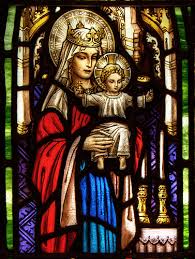
<span class="mt-enclosure mt-enclosure-image" style="DISPLAY: inline"><a href="http://communio.stblogs.org/contemplation.jpg"><img class="mt-image-left" style="FLOAT: left; MARGIN: 0px 20px 20px 0px" height="333" alt="contemplation.jpg" src="http://communio.stblogs.org/contemplation-thumb-250x333.jpg" width="250" /></a></span>The second step, called the meditatio, is equally important. We leave behind the specifics of the text and focus instead on what is behind it, on the "interior intelligence" of the text, as Guigo puts it.&nbsp;The meditatio is a reflection on the values which one finds behind the text. Here, one must consider the values behind the actions, the words, the things, and the feelings which one finds in a particular scriptural passage. Anyone who honestly seeks God and one's authentic self in prayer will hear the echoes of joy, fear, hope, and desire coming from the sacred page. The operant question for this stage doesn't stop at what the text says, but asks, What does the text say to me? We seek to make emerge from history and context the specific message of the text. The shift from external forms to internal content makes this stage an important one.<o:p></o:p></font></span></p>
<p class="MsoNormal" style="MARGIN: 0in 0in 0pt"><span style="FONT-SIZE: 12pt; FONT-FAMILY: 'Times New Roman','serif'"><o:p><font color="#000000">&nbsp;</font></o:p></span></p>
<p class="MsoNormal" style="MARGIN: 0in 0in 0pt"><span style="FONT-SIZE: 12pt; FONT-FAMILY: 'Times New Roman','serif'"><font color="#000000">The meditatio is an activity that engages our intellect. As we pass from the second to the third stage of lectio divina, we move more into the realm of religious emotions. Remaining on an intellectual level can be safe and comfortable, but the goal of prayer is not knowledge about God, but God himself. In the oratio, our imagination, will, and desires are engaged as we seek union with God. Oratio in its most fundamental sense is dialogue with God. Gregory the Great called it "the spontaneous meeting of the heart of God with the heart of God's beloved creature through the word of God."<sup> </sup><o:p></o:p></font></span></p>
<p class="MsoNormal" style="MARGIN: 0in 0in 0pt"><span style="FONT-SIZE: 12pt; FONT-FAMILY: 'Times New Roman','serif'"><o:p><font color="#000000">&nbsp;</font></o:p></span></p>
<p class="MsoNormal" style="MARGIN: 0in 0in 0pt"><span style="FONT-SIZE: 12pt; FONT-FAMILY: 'Times New Roman','serif'"><font color="#000000">When we progress from meditatio to oratio, an immediate experience of infused mysticism is hardly to be expected. Mystical union with God is not necessarily an ordinary part of Christian life. Nevertheless, the passage from meditatio to oratio is the vital and decisive moment of Christian experience. The more deeply we enter the oratio, the more we move beyond the text, beyond words and thoughts. The lectio is useful and the meditatio is important since they lead us to the oratio, which is life in its fullest sense, the life of Christ that he lives in the one who contemplates him. Oratio is the passage from the values behind the text to adoration of the person of Jesus Christ, the one who brings together and reveals every value. Unlike the lectio and meditatio, there is no operant question in the oratio. At its core, oratio is the silent adoration of the creature before the Creator, a rare and miraculous gift.<o:p></o:p></font></span></p>
<p class="MsoNormal" style="MARGIN: 0in 0in 0pt"><span style="FONT-SIZE: 12pt; FONT-FAMILY: 'Times New Roman','serif'"><o:p><font color="#000000">&nbsp;</font></o:p></span></p>
<p class="MsoNormal" style="MARGIN: 0in 0in 0pt"><span style="FONT-SIZE: 12pt; FONT-FAMILY: 'Times New Roman','serif'"><font color="#000000">When the person who practices lectio divina reaches the level of oratio, it would seem that that moment would be conclusive. However, the dynamism of prayer that began during the epiclesis </font></span><span style="FONT-SIZE: 12pt; FONT-FAMILY: 'Times New Roman','serif'"><font color="#000000">before the lectio is not interrupted here. To the contrary, it naturally continues and the oratio, as we are proposing it here following Cardinal Martini's insight, possesses its own steps, called discretio, deliberatio, and actio. These three steps represent the way lectio divina is lived out in daily life. Given the growing dissociation of the faith from daily life, these three successive moments take on great significance.<o:p></o:p></font></span></p>
<p class="MsoNormal" style="MARGIN: 0in 0in 0pt"><span style="FONT-SIZE: 12pt; FONT-FAMILY: 'Times New Roman','serif'"><o:p><font color="#000000">&nbsp;</font></o:p></span></p>
<p class="MsoNormal" style="MARGIN: 0in 0in 0pt"><span style="FONT-SIZE: 12pt; FONT-FAMILY: 'Times New Roman','serif'"><font color="#000000">Since the meditatio intends to put one in contact with the values of Christ, to encourage our identification with those things that are important to Christ, we naturally come to moments of decision. The discretio is the capacity that the Christian acquires through grace to make the same choices as Christ. Cardinal Martini describes discretion like this: "It is the discernment of that which, in a determined historical moment, is best for oneself, for others, and for the church."</font></span></p>
<p class="MsoNormal" style="MARGIN: 0in 0in 0pt"><span style="FONT-SIZE: 12pt; FONT-FAMILY: 'Times New Roman','serif'"><o:p><font color="#000000">&nbsp;</font></o:p></span></p>
<p class="MsoNormal" style="MARGIN: 0in 0in 0pt"><span style="FONT-SIZE: 12pt; FONT-FAMILY: 'Times New Roman','serif'"><font color="#000000">The second moment of the oratio is called the deliberatio. It is an interior act by which one decides in favor of the values of the gospel. One chooses to associate oneself with Christ and everything that association represents--in a word, discipleship. If the discretio is described as the capacity of a person to choose, then the deliberatio is the choice itself.<o:p></o:p></font></span></p>
<p class="MsoNormal" style="MARGIN: 0in 0in 0pt"><span style="FONT-SIZE: 12pt; FONT-FAMILY: 'Times New Roman','serif'"><o:p><font color="#000000">&nbsp;</font></o:p></span></p>
<p class="MsoNormal" style="MARGIN: 0in 0in 0pt"><span style="FONT-SIZE: 12pt; FONT-FAMILY: 'Times New Roman','serif'"><font color="#000000">The final moment is called actio. In this final step, the choice we make in the deliberatio is given form and substance. Prayer becomes something more than simply setting aside time for God or an attempt to better ourselves. Our lives begin to take shape from the choices we have made as a result of prayer. The actio is the integration of a kind of apostolic consciousness that informs our choices so that we have made and lived our choices from our encounter with the living God.<o:p></o:p></font></span></p>
<p class="MsoNormal" style="MARGIN: 0in 0in 0pt"><span style="FONT-SIZE: 12pt; FONT-FAMILY: 'Times New Roman','serif'"><font color="#000000"><span style="mso-spacerun: yes">&nbsp;</span><o:p></o:p></font></span></p>
<p class="MsoNormal" style="MARGIN: 0in 0in 0pt"><span style="FONT-SIZE: 12pt; FONT-FAMILY: 'Times New Roman','serif'"><font color="#000000">
<span class="mt-enclosure mt-enclosure-image" style="DISPLAY: inline"><a href="http://communio.stblogs.org/Christ%20washing%20the%20feet.jpg"><img class="mt-image-right" style="FLOAT: right; MARGIN: 0px 0px 20px 20px" height="168" alt="Christ washing the feet.jpg" src="http://communio.stblogs.org/Christ%20washing%20the%20feet-thumb-250x168.jpg" width="250" /></a></span>Some critics would leave these last steps, particularly the actio, out of any proposed lectio divina. The addition of an extra step suggests perhaps overzealousness or even the influence of an "ideology of efficacy" regarding one's prayer. Too often we feel we need to make prayer into something. However, in the face of a modern world in which the outward signs of the mystery of </font></span><span style="FONT-SIZE: 12pt; FONT-FAMILY: 'Times New Roman','serif'"><font color="#000000">God are ever more difficult to recognize, where a daily experience of gospel or even <span style="mso-spacerun: yes">&nbsp;</span>transcendent values becomes harder to find, and where choices besiege one's conscience and stifle rather than uplift the Spirit, this criticism is unconvincing. If anything, the connection between prayer and our life choices should become more explicit, not less. The faith, hope, and love made manifest in the choices our lives become must be nourished by contact with the word of God.<o:p></o:p></font></span></p>
<p class="MsoNormal" style="MARGIN: 0in 0in 0pt"><span style="FONT-SIZE: 12pt; FONT-FAMILY: 'Times New Roman','serif'"><o:p><font color="#000000">&nbsp;</font></o:p></span></p>
<p class="MsoNormal" style="MARGIN: 0in 0in 0pt"><span style="FONT-SIZE: 12pt; FONT-FAMILY: 'Times New Roman','serif'"><font color="#000000">Conclusion<o:p></o:p></font></span></p>
<p class="MsoNormal" style="MARGIN: 0in 0in 0pt"><span style="FONT-SIZE: 12pt; FONT-FAMILY: 'Times New Roman','serif'"><o:p><font color="#000000">&nbsp;</font></o:p></span></p>
<p class="MsoNormal" style="MARGIN: 0in 0in 0pt"><span style="FONT-SIZE: 12pt; FONT-FAMILY: 'Times New Roman','serif'"><font color="#000000">
<span class="mt-enclosure mt-enclosure-image" style="DISPLAY: inline"><a href="http://communio.stblogs.org/Daily%20Bread.jpg"><img class="mt-image-left" style="FLOAT: left; MARGIN: 0px 20px 20px 0px" height="234" alt="Daily Bread.jpg" src="http://communio.stblogs.org/Daily%20Bread-thumb-300x234.jpg" width="300" /></a></span>Lectio divina is one graced instrument to bridge the gap that exists between our hearts and God's. As the faith risks being further dissociated from daily life, the simplicity and potential of a method like lectio divina take on greater significance. Firmly rooted in the church's tradition, it presumes careful attention to what biblical specialists are thinking and teaching. Rigorous study is complemented by disciplined meditation and prayerful contemplation of the word of God. Far from being an objective or rigid technique whereby one produces religious experience, lectio </font></span><span style="FONT-SIZE: 12pt; FONT-FAMILY: 'Times New Roman','serif'"><font color="#000000">divina represents daily contact with God's word that occurs within a lifetime's engagement with the Living God. The principal aim of such engagement is to foster living prayer in faithful love. Lectio divina unfolds more than it proceeds; progresses and develops more than it advances.<o:p></o:p></font></span></p>
<p class="MsoNormal" style="MARGIN: 0in 0in 0pt"><span style="FONT-SIZE: 12pt; FONT-FAMILY: 'Times New Roman','serif'"><font color="#000000"></font></span>&nbsp;</p>
<p class="MsoNormal" style="MARGIN: 0in 0in 0pt"><span style="FONT-SIZE: 12pt; FONT-FAMILY: 'Times New Roman','serif'"><font color="#000000">Dedicated practice engages the whole person--the intellect as well as the imagination, the will as well as the affect. It promises contact with God that is the normal fulfillment of prayer. Lectio divina is open to every person and not the exclusive property of a select few. Those who practice lectio divina reaffirm the belief that the proper place for the word of God is in the hands of the faithful.<o:p></o:p></font></span></p>
<p class="MsoNormal" style="MARGIN: 0in 0in 0pt"><span style="FONT-SIZE: 12pt; FONT-FAMILY: 'Times New Roman','serif'"><o:p><font color="#000000">&nbsp;</font></o:p></span></p>
<p class="MsoNormal" style="MARGIN: 0in 0in 0pt"><span style="FONT-SIZE: 12pt; FONT-FAMILY: 'Times New Roman','serif'"><font color="#000000">Wouldn't Geppetto have been pleased if, instead of his firm response, "Pinocchio," that young man had looked into Jay Leno's TV camera and answered with conviction, "Jonah"?<o:p></o:p></font></span></p>
<p class="MsoNormal" style="MARGIN: 0in 0in 0pt"><span style="FONT-SIZE: 12pt; FONT-FAMILY: 'Times New Roman','serif'"><o:p><font color="#000000">&nbsp;</font></o:p></span></p>
<p class="MsoNormal" style="MARGIN: 0in 0in 0pt"><span style="FONT-SIZE: 12pt; FONT-FAMILY: 'Times New Roman','serif'"><font color="#000000">Reprinted from <i style="mso-bidi-font-style: normal">Chicago Studies</i> 39 (2000): 211-19.<o:p></o:p></font></span></p>]]>
        
    </content>
</entry>

<entry>
    <title>Saint Mechtild of Helfta (also known to be of Hackeborn)</title>
    <link rel="alternate" type="text/html" href="http://communio.stblogs.org/2008/11/saint-mechtild-of-helfta-also.html" />
    <id>tag:communio.stblogs.org,2008://23.32076</id>

    <published>2008-11-19T10:45:00Z</published>
    <updated>2008-11-19T11:32:31Z</updated>

    <summary><![CDATA[Lord our God, through Your loving favor, You revealed to blessed Mechtild, your virgin, the hidden secrets of your providence. May we who know You now through faith rejoice hereafter to see You face to face. &nbsp; Grant this through...]]></summary>
    <author>
        <name>Paul Zalonski</name>
        <uri>http://communio.stblogs.org</uri>
    </author>
    
        <category term="Saints" scheme="http://www.sixapart.com/ns/types#category" />
    
    
    <content type="html" xml:lang="en-us" xml:base="http://communio.stblogs.org/">
        <![CDATA[<p class="MsoNormal" style="MARGIN: 0in 0in 0pt"><font face="Garamond" color="#000000" size="3">Lord our God,</font></p>
<p class="MsoNormal" style="MARGIN: 0in 0in 0pt"><font face="Garamond" color="#000000" size="3">
<span class="mt-enclosure mt-enclosure-image" style="DISPLAY: inline"><a href="http://communio.stblogs.org/St%20Mechtild.jpg"><img class="mt-image-right" style="FLOAT: right; MARGIN: 0px 0px 20px 20px" height="337" alt="St Mechtild.jpg" src="http://communio.stblogs.org/St%20Mechtild-thumb-263x337.jpg" width="263" /></a></span>through Your loving favor,</font></p>
<p class="MsoNormal" style="MARGIN: 0in 0in 0pt"><font face="Garamond" color="#000000" size="3">You revealed to blessed Mechtild, </font><font face="Garamond" color="#000000" size="3">your virgin, </font><font face="Garamond" color="#000000" size="3">the hidden secrets of your providence. </font><font face="Garamond" color="#000000" size="3">May we who know You now through faith </font><font face="Garamond" color="#000000" size="3">rejoice hereafter to see You face to face.</font></p>
<p class="MsoNormal" style="MARGIN: 0in 0in 0pt"><font face="Garamond" color="#000000" size="3"></font>&nbsp;</p>
<p class="MsoNormal" style="MARGIN: 0in 0in 0pt"><font face="Garamond" color="#000000" size="3">Grant this through our Lord Jesus Christ, Your Son, </font><font face="Garamond" color="#000000" size="3">who lives and reigns with you and the Holy Spirit, </font><font face="Garamond" color="#000000" size="3">one God, for ever and ever. </font></p>
<p class="MsoNormal" style="MARGIN: 0in 0in 0pt"><font face="Garamond" color="#000000" size="3"></font>&nbsp;</p>
<p class="MsoNormal" style="MARGIN: 0in 0in 0pt"><font face="Garamond" color="#000000" size="3">A brief biography can be read <a href="http://www.newadvent.org/cathen/10105b.htm">here</a>. One key point in the life of Saint Mechtild is that she was the dear friend of Saint Gertrude the Great and who had a spiritual daughter in the other&nbsp;Mechtild, that of Magdeburg, who lived at the same time.</font></p>]]>
        
    </content>
</entry>

<entry>
    <title>Mom&apos;s 66th birthday!</title>
    <link rel="alternate" type="text/html" href="http://communio.stblogs.org/2008/11/moms-66th-birthday.html" />
    <id>tag:communio.stblogs.org,2008://23.32093</id>

    <published>2008-11-19T01:03:01Z</published>
    <updated>2008-11-19T01:31:19Z</updated>

    <summary><![CDATA[Yep! Mom is 66 today! I was able to come to New Haven for dinner with the family to properly celebrate with Mom. God's blessings. A few recent pics. &nbsp; (Here's 3 of 4 us.) &nbsp; (Here's Mom and me.)...]]></summary>
    <author>
        <name>Paul Zalonski</name>
        <uri>http://communio.stblogs.org</uri>
    </author>
    
        <category term="The Family" scheme="http://www.sixapart.com/ns/types#category" />
    
    
    <content type="html" xml:lang="en-us" xml:base="http://communio.stblogs.org/">
        <![CDATA[<p>Yep! <em><strong>Mom is 66 today!</strong></em> I was able to come to New Haven for dinner with the family to properly celebrate with Mom. God's blessings. A few recent pics.</p>
<p>&nbsp;</p>
<p>
<span class="mt-enclosure mt-enclosure-image" style="DISPLAY: inline"><a href="http://communio.stblogs.org/M%2C%20D%20%26%20PAZ2%2018%20Nov%2008.JPG"><img class="mt-image-center" style="DISPLAY: block; MARGIN: 0px auto 20px; TEXT-ALIGN: center" height="225" alt="M, D &amp; PAZ2 18 Nov 08.JPG" src="http://communio.stblogs.org/M,%20D%20&amp;%20PAZ2%2018%20Nov%2008-thumb-300x225.jpg" width="300" /></a></span></p>
<p align="center">(Here's 3 of 4 us.)</p>
<p align="center">&nbsp;</p>
<p>
<span class="mt-enclosure mt-enclosure-image" style="DISPLAY: inline"><a href="http://communio.stblogs.org/Mom%20%26%20PAZ%2018%20Nov%2008.JPG"><img class="mt-image-center" style="DISPLAY: block; MARGIN: 0px auto 20px; TEXT-ALIGN: center" height="225" alt="Mom &amp; PAZ 18 Nov 08.JPG" src="http://communio.stblogs.org/Mom%20&amp;%20PAZ%2018%20Nov%2008-thumb-300x225.jpg" width="300" /></a></span></p>
<p align="center">(Here's Mom and me.)</p>
<p>&nbsp;</p>
<p>
<span class="mt-enclosure mt-enclosure-image" style="DISPLAY: inline"><a href="http://communio.stblogs.org/PAZ%20with%20Aunt%20Gloria%2018%20Nov%2008.JPG"><img class="mt-image-center" style="DISPLAY: block; MARGIN: 0px auto 20px; TEXT-ALIGN: center" height="225" alt="PAZ with Aunt Gloria 18 Nov 08.JPG" src="http://communio.stblogs.org/PAZ%20with%20Aunt%20Gloria%2018%20Nov%2008-thumb-300x225.jpg" width="300" /></a></span></p>
<p align="center">(Here's me with Aunt Gloria.)</p>
<p>&nbsp;</p>
<p>
<span class="mt-enclosure mt-enclosure-image" style="DISPLAY: inline"><a href="http://communio.stblogs.org/Mom%20with%20LAZ%20%26%20Brooke.jpg"><img class="mt-image-center" style="DISPLAY: block; MARGIN: 0px auto 20px; TEXT-ALIGN: center" height="225" alt="Mom with LAZ &amp; Brooke.jpg" src="http://communio.stblogs.org/Mom%20with%20LAZ%20&amp;%20Brooke-thumb-300x225.jpg" width="300" /></a></span></p>
<p align="center">(Mom, Lauren and Aunt Gloria on a recent trip to Rome.)</p>
<p>And tomorrow is the 42nd wedding anniversary of my parents. May God grant many years!</p>]]>
        
    </content>
</entry>

<entry>
    <title>Explaining the Clash in the Holy Sepulchre</title>
    <link rel="alternate" type="text/html" href="http://communio.stblogs.org/2008/11/explaining-the-clash-in-the-ho.html" />
    <id>tag:communio.stblogs.org,2008://23.32079</id>

    <published>2008-11-18T16:00:35Z</published>
    <updated>2008-11-18T12:42:15Z</updated>

    <summary>Edward Pentin writing for Terrasanta.net tries to contextualize the rather distasteful events among &quot;Christians&quot; at the Church of the Holy Sepulchre earlier in the month. I am still trying to wrap my mind around the complexities that exist in the...</summary>
    <author>
        <name>Paul Zalonski</name>
        <uri>http://communio.stblogs.org</uri>
    </author>
    
        <category term="Culture" scheme="http://www.sixapart.com/ns/types#category" />
    
        <category term="Eastern Church" scheme="http://www.sixapart.com/ns/types#category" />
    
    
    <content type="html" xml:lang="en-us" xml:base="http://communio.stblogs.org/">
        <![CDATA[<p class="MsoNormal" style="MARGIN: 0in 0in 0pt"><span style="FONT-SIZE: 12pt; FONT-FAMILY: 'Times New Roman','serif'"><font color="#000000"><em>Edward Pentin writing for</em> Terrasanta.net<em> tries to contextualize the rather distasteful events among "Christians" at the Church of the Holy Sepulchre earlier in the month. I am still trying to wrap my mind around the complexities that exist in the Holy Land. Certainly, there are many and not easy to sort out. But the scandal of these "ecclesial acts" by betray the fragility of faith and lack of engagement in the spiritual life. For the life me I can't help but think these monks have abandoned faith and salvation in Christ and yet persist in living as monks, at least on the superficial level.<o:p></o:p></em></font></span></p>
<p class="MsoNormal" style="MARGIN: 0in 0in 0pt"><span style="FONT-SIZE: 12pt; FONT-FAMILY: 'Times New Roman','serif'"><o:p><font color="#000000">&nbsp;</font></o:p></span></p>
<p>
<table class="MsoNormalTable" style="mso-cellspacing: 0in; mso-table-layout-alt: fixed; mso-yfti-tbllook: 1184; mso-padding-alt: 7.5pt 7.5pt 7.5pt 7.5pt" cellspacing="0" cellpadding="0" width="100%" border="0">
<tbody>
<tr style="mso-yfti-irow: 0; mso-yfti-firstrow: yes; mso-yfti-lastrow: yes">
<td style="BORDER-RIGHT: #d4d0c8; PADDING-RIGHT: 0in; BORDER-TOP: #d4d0c8; PADDING-LEFT: 0in; PADDING-BOTTOM: 0in; BORDER-LEFT: #d4d0c8; WIDTH: 6.5in; PADDING-TOP: 0in; BORDER-BOTTOM: #d4d0c8; BACKGROUND-COLOR: transparent" width="624">
<p class="MsoNormal" style="MARGIN: 0in 0in 0pt"><span style="FONT-SIZE: 12pt; FONT-FAMILY: 'Times New Roman','serif'"><font color="#000000">
<span class="mt-enclosure mt-enclosure-image" style="DISPLAY: inline"><a href="http://communio.stblogs.org/fight-thumb-300x200.jpg"><img class="mt-image-left" style="FLOAT: left; MARGIN: 0px 20px 20px 0px" height="200" alt="Thumbnail image for fight.jpg" src="http://communio.stblogs.org/assets_c/2008/11/fight-thumb-300x200-thumb-300x200.jpg" width="300" /></a></span>Armenian and Greek Orthodox monks clashed violently in the Church of the Holy Sepulchre on Sunday 9th November. Fighting erupted when Greek Orthodox monks blocked a procession of Armenian clergymen. The two Orthodox churches and the Custody of the Holy Land are resident in the Church under the terms of the 'Status Quo' agreement. Father Athanasius Macora (46, an US citizen) monitors the agreement on behalf of the Custody. He spoke with Terrasanta.net about the underlying reasons behind the clash, and what can be done to resolve long-standing tensions in the Church built over the place of Christ's Crucifixion and Resurrection. <o:p></o:p></font></span></p>
<p class="MsoNormal" style="MARGIN: 0in 0in 0pt"><span style="FONT-SIZE: 12pt; FONT-FAMILY: 'Times New Roman','serif'"><o:p><font color="#000000">&nbsp;</font></o:p></span></p>
<p class="MsoNormal" style="MARGIN: 0in 0in 0pt"><span style="FONT-SIZE: 12pt; FONT-FAMILY: 'Times New Roman','serif'"><font color="#000000">What are your reflections on the recent clashes in the Church of the Holy Sepulchre?<br /><br />The representatives of the Three Major Communities (the Custody of the Holy Land, the Greek Orthodox Patriarchate and the Armenian Patriarchate) have been meeting regularly about once a week or every ten days. In these meetings I negotiate on behalf of the Custody of the Holy Land all matters pertaining to the Status Quo, so I know exactly why it [the fight] happened. Now it's not in my interest to say who was right and who was wrong. What set it off was that the Armenians have a Pontifical Procession and they objected to the presence of a Greek Sacristan inside the tomb during the procession. The Greeks claim to have the right to put a Greek Sacristan there. <o:p></o:p></font></span></p>
<p class="MsoNormal" style="MARGIN: 0in 0in 0pt"><span style="FONT-SIZE: 12pt; FONT-FAMILY: 'Times New Roman','serif'"><o:p><font color="#000000">&nbsp;</font></o:p></span></p>
<p class="MsoNormal" style="MARGIN: 0in 0in 0pt"><span style="FONT-SIZE: 12pt; FONT-FAMILY: 'Times New Roman','serif'"><font color="#000000">Is this something that happens every year?<br /><br />No it started one year ago. Since then, of course, there have been four such Armenian Pontifical Processions; there were problems with each one, but in this one, things kind of came to a head.</font></span></p>
<p class="MsoNormal" style="MARGIN: 0in 0in 0pt"><span style="FONT-SIZE: 12pt; FONT-FAMILY: 'Times New Roman','serif'"><font color="#000000"></font></span>&nbsp;</p>
<p class="MsoNormal" style="MARGIN: 0in 0in 0pt"><span style="FONT-SIZE: 12pt; FONT-FAMILY: 'Times New Roman','serif'"><font color="#000000">Why this one in particular?<br /><br />The pressure had built up, because the problem was unresolved.&nbsp; There was no 
<span class="mt-enclosure mt-enclosure-image" style="DISPLAY: inline"><a href="http://communio.stblogs.org/fight2.jpg"><img class="mt-image-right" style="FLOAT: right; MARGIN: 0px 0px 20px 20px" height="205" alt="fight2.jpg" src="http://communio.stblogs.org/fight2-thumb-300x205.jpg" width="300" /></a></span>compromise by the two parties - whether the Greek sacristan should or shouldn't be inside the Tomb. Here, what rules is the custom, what was happening before - in other words, what the practice was. Is there a Greek Sacristan inside or not? That is the question. So the Armenians blocked the tomb to prevent the Greeks from putting a guy inside, and the Greeks tried to put a guy inside and that's when the fighting started. <o:p></o:p></font></span></p>
<p class="MsoNormal" style="MARGIN: 0in 0in 0pt"><span style="FONT-SIZE: 12pt; FONT-FAMILY: 'Times New Roman','serif'"><o:p><font color="#000000">&nbsp;</font></o:p></span></p>
<p class="MsoNormal" style="MARGIN: 0in 0in 0pt"><span style="FONT-SIZE: 12pt; FONT-FAMILY: 'Times New Roman','serif'"><font color="#000000">What are the chances of this being resolved now, even after the fight?<br /><br />We had a problem four years ago. We were attacked by the Greeks, quite a big attack. They also attacked the Police over something they had no right to do. After things settled down and there was another Greek procession in the near future, we presented our proofs in the presence of the Greeks to representatives of the Israeli government and police. The government has the obligation to enforce the prevailing Status Quo. We're not necessarily asking the government to arbitrate. We're asking the government to enforce. I provided sufficient proof: three video tapes from previous years showing how the Greek Procession was meant to take place, not through the Chapel of St. Mary Magdalen but by its side. The government then told the Greeks they had to do it in the proper way, and ever since then they have. &nbsp;Now both the Armenians and Greeks will have to furnish evidence to the government. There should be a meeting with all of them in the same room. &nbsp;It is not always easy however, to determine what is the prevailing status quo. You can demand that the government make a decision on it, to curtail the party that's violating the Status Quo.<o:p></o:p></font></span></p>
<p class="MsoNormal" style="MARGIN: 0in 0in 0pt"><span style="FONT-SIZE: 12pt; FONT-FAMILY: 'Times New Roman','serif'"><o:p><font color="#000000">&nbsp;</font></o:p></span></p>
<p class="MsoNormal" style="MARGIN: 0in 0in 0pt"><span style="FONT-SIZE: 12pt; FONT-FAMILY: 'Times New Roman','serif'"><font color="#000000">So that's one way forward, you think?<br style="mso-special-character: line-break" /><br style="mso-special-character: line-break" /><o:p></o:p></font></span></p>
<p class="MsoNormal" style="MARGIN: 0in 0in 0pt"><span style="FONT-SIZE: 12pt; FONT-FAMILY: 'Times New Roman','serif'"><font color="#000000">What has to be understood is that for these communities every little thing is symbolic for them. So they don't want to lose anything in the church. There's a fear of compromise, everybody has maximal positions. I want to be fair here that this may not apply exactly to this situation, but both sides think they're absolutely right.<o:p></o:p></font></span></p>
<p class="MsoNormal" style="MARGIN: 0in 0in 0pt"><span style="FONT-SIZE: 12pt; FONT-FAMILY: 'Times New Roman','serif'"><o:p><font color="#000000">&nbsp;</font></o:p></span></p>
<p class="MsoNormal" style="MARGIN: 0in 0in 0pt"><span style="FONT-SIZE: 12pt; FONT-FAMILY: 'Times New Roman','serif'"><font color="#000000">
<p class="MsoNormal" style="MARGIN: 0in 0in 0pt"><a href="http://communio.stblogs.org/Holy-Sepulchre%20icon.jpg"><img class="mt-image-left" style="FLOAT: left; MARGIN: 0px 20px 20px 0px" height="200" alt="Holy-Sepulchre icon.jpg" src="http://communio.stblogs.org/Holy-Sepulchre%20icon-thumb-300x200.jpg" width="300" /></a>These kinds of tensions have been going on for years, as you say. But why is it such a difficult place for these different denominations to worship together in the Holy Sepulchre? </p>
<p class="MsoNormal" style="MARGIN: 0in 0in 0pt"><br />The problem is this: the Status Quo is an imperial decree that was imposed by the Ottoman Turks on the communities. It's not a code and this means there's no clarity on certain issues. It's a long story, but basically France was attempting to regain Catholic predominance in certain places such as the Holy Sepulchre. France was attempting to pressure the Ottomans while the Russians were pressuring the Ottomans on behalf of the Greeks. The Ottomans couldn't deal with the situation. If they took France's position or Russia's position, they were in big trouble. So what they did was, they simply declared the Status Quo: everybody stays in his place. It's a very short decree, maybe three pages long. It doesn't define things, it simply says everyone has to stay in his place. Now because there were a lot of areas that were vague, the communities would enter into conflict over who got to clean, or repair something. These things indicated rights. For instance, we often object if the Coptic Orthodox go on too long during their prayers. If one of the communities prays over its allotted time, we object to it because it causes us to lose time in our schedule. <o:p></o:p></font></span></p>
<p></p>
<p class="MsoNormal" style="MARGIN: 0in 0in 0pt"><span style="FONT-SIZE: 12pt; FONT-FAMILY: 'Times New Roman','serif'"><o:p><font color="#000000">&nbsp;</font></o:p></span></p>
<p class="MsoNormal" style="MARGIN: 0in 0in 0pt"><span style="FONT-SIZE: 12pt; FONT-FAMILY: 'Times New Roman','serif'"><font color="#000000">But it is, as you know, such a counter-witness isn't it?<br style="mso-special-character: line-break" /><br style="mso-special-character: line-break" /><o:p></o:p></font></span></p>
<p class="MsoNormal" style="MARGIN: 0in 0in 0pt"><span style="FONT-SIZE: 12pt; FONT-FAMILY: 'Times New Roman','serif'"><font color="#000000">I've gotten to the point where I don't like talking about it. There's a good book out on the subject called <em>Saving the Holy Sepulchre</em> by Raymond Cohen. It's a very good book and talks about very positive things, that basically since 1957 until 1997, the communities undertook extensive renovations and that more or less, let's say, a strategic decision was taken on the part of the Greeks to work with the other communities. So the Three Major Communities did hammer out a lot of agreements, and a lot of things have been settled permanently. What happened on Sunday is really an anomaly. If you know the Status Quo well, and let's say if I know it well, I'm going to insist where it's my right to insist, and I'm not going to insist when I don't have a right to insist. If one of the communities doesn't know the way it works, then we're going to have problems.<o:p></o:p></font></span></p>
<p class="MsoNormal" style="MARGIN: 0in 0in 0pt"><span style="FONT-SIZE: 12pt; FONT-FAMILY: 'Times New Roman','serif'"><o:p><font color="#000000">&nbsp;</font></o:p></span></p>
<p class="MsoNormal" style="MARGIN: 0in 0in 0pt"><span style="FONT-SIZE: 12pt; FONT-FAMILY: 'Times New Roman','serif'"><font color="#000000">Do you foresee in the future that everyone will get along if perhaps there's a Code that's written up and people know where they stand?<br style="mso-special-character: line-break" /><br style="mso-special-character: line-break" /><o:p></o:p></font></span></p>
<p class="MsoNormal" style="MARGIN: 0in 0in 0pt"><span style="FONT-SIZE: 12pt; FONT-FAMILY: 'Times New Roman','serif'"><font color="#000000">I'm quoted in this book on the Holy Sepulchre as saying that my approach would be to codify everything. If you codify everything then you end disputes, everyone knows where they're supposed to be. If they make a mistake then OK, it's understood, it's written down.<o:p></o:p></font></span></p>
<p class="MsoNormal" style="MARGIN: 0in 0in 0pt"><span style="FONT-SIZE: 12pt; FONT-FAMILY: 'Times New Roman','serif'"><o:p><font color="#000000">&nbsp;</font></o:p></span></p>
<p class="MsoNormal" style="MARGIN: 0in 0in 0pt"><span style="FONT-SIZE: 12pt; FONT-FAMILY: 'Times New Roman','serif'"><font color="#000000">And what are the chances of that happening?<br /><br />It's not going to happen anytime soon. There was a chance of it happening a few years ago, but it depends on who the players are now. <o:p></o:p></font></span></p>
<p class="MsoNormal" style="MARGIN: 0in 0in 0pt"><span style="FONT-SIZE: 12pt; FONT-FAMILY: 'Times New Roman','serif'"><o:p><font color="#000000">&nbsp;</font></o:p></span></p>
<p class="MsoNormal" style="MARGIN: 0in 0in 0pt"><span style="FONT-SIZE: 12pt; FONT-FAMILY: 'Times New Roman','serif'"><font color="#000000">
<span class="mt-enclosure mt-enclosure-image" style="DISPLAY: inline"><a href="http://communio.stblogs.org/HS2.jpg"><img class="mt-image-left" style="FLOAT: left; MARGIN: 0px 20px 20px 0px" height="197" alt="HS2.jpg" src="http://communio.stblogs.org/HS2-thumb-300x197.jpg" width="300" /></a></span>With the Franciscans having this great reputation of peace-making, do you think there is way that you could be the real protagonists of bringing peace to the Holy Sepulchre?<br style="mso-special-character: line-break" /><br style="mso-special-character: line-break" /><o:p></o:p></font></span></p>
<p class="MsoNormal" style="MARGIN: 0in 0in 0pt"><span style="FONT-SIZE: 12pt; FONT-FAMILY: 'Times New Roman','serif'"><font color="#000000">I think that we can serve, we can help, but to make peace you need political will. You need to have the desire for peace. In the case of the Custody, we have a desire for it, but for the others, they have to see what is at stake. It's better for us to finish with all these issues and be a proper witness rather than continue fighting over this - I mean one sacristan in or out of the Tomb is a relatively small issue if it only happens four times a year. It doesn't change significantly one's rights but because everything in the Church is so highly symbolic, every a tiny thing becomes a major issue.<br /><br />As Franciscans we basically enjoy good relations with both sides. We hope to get back to work, we hope they can reconcile and move on, and we hope this doesn't happen again because it's very negative. It got a lot of press. It was extremely damaging what happened. <o:p></o:p></font></span></p>
<p class="MsoNormal" style="MARGIN: 0in 0in 0pt"><span style="FONT-SIZE: 12pt; FONT-FAMILY: 'Times New Roman','serif'"><o:p><font color="#000000">&nbsp;</font></o:p></span></p>
<p class="MsoNormal" style="MARGIN: 0in 0in 0pt"><span style="FONT-SIZE: 12pt; FONT-FAMILY: 'Times New Roman','serif'"><font color="#000000">But you're hopeful all sides can come together in the long run?<br /><br />Yes, we have common projects going on. We're actually working on things right now, so we are cooperating but this was something that was unfortunate. <o:p></o:p></font></span></p>
<p class="MsoNormal" style="MARGIN: 0in 0in 0pt"><span style="FONT-SIZE: 12pt; FONT-FAMILY: 'Times New Roman','serif'"><font color="#000000">&nbsp;<o:p></o:p></font></span></p>
<p class="MsoNormal" style="MARGIN: 0in 0in 0pt"><span style="FONT-SIZE: 12pt; FONT-FAMILY: 'Times New Roman','serif'"><font color="#000000">(courtesy of Terrasanta.net)<o:p></o:p></font></span></p></td></tr></tbody></table></p>]]>
        
    </content>
</entry>

<entry>
    <title>Saint Rose Philippine Duchesne</title>
    <link rel="alternate" type="text/html" href="http://communio.stblogs.org/2008/11/saint-rose-philippine-duchesne.html" />
    <id>tag:communio.stblogs.org,2008://23.32077</id>

    <published>2008-11-18T10:45:00Z</published>
    <updated>2008-11-18T01:57:07Z</updated>

    <summary> Gracious God, You filled the heart of Rose Philippine Duchesne with charity and missionary zeal, and gave her the desire to make you known among all peoples. Fill us, who honor her memory today, with that same love and...</summary>
    <author>
        <name>Paul Zalonski</name>
        <uri>http://communio.stblogs.org</uri>
    </author>
    
        <category term="Saints" scheme="http://www.sixapart.com/ns/types#category" />
    
    
    <content type="html" xml:lang="en-us" xml:base="http://communio.stblogs.org/">
        <![CDATA[<p class="MsoNormal" style="MARGIN: 0in 0in 0pt"><span style="FONT-SIZE: 12pt; FONT-FAMILY: 'Times New Roman','serif'"><font color="#000000">
<span class="mt-enclosure mt-enclosure-image" style="DISPLAY: inline"><a href="http://communio.stblogs.org/St%20Rose%20Philippine%20Duchesne.jpg"><img class="mt-image-left" style="FLOAT: left; MARGIN: 0px 20px 20px 0px" height="375" alt="St Rose Philippine Duchesne.jpg" src="http://communio.stblogs.org/St%20Rose%20Philippine%20Duchesne-thumb-300x375.jpg" width="300" /></a></span>Gracious God, </font></span><span style="FONT-SIZE: 12pt; FONT-FAMILY: 'Times New Roman','serif'"><font color="#000000">You filled the heart of Rose Philippine Duchesne </font></span><span style="FONT-SIZE: 12pt; FONT-FAMILY: 'Times New Roman','serif'"><font color="#000000">with charity and missionary zeal, </font></span><span style="FONT-SIZE: 12pt; FONT-FAMILY: 'Times New Roman','serif'"><font color="#000000">and gave her the desire </font></span><span style="FONT-SIZE: 12pt; FONT-FAMILY: 'Times New Roman','serif'"><font color="#000000">to make you known among all peoples. </font></span><span style="FONT-SIZE: 12pt; FONT-FAMILY: 'Times New Roman','serif'"><font color="#000000">Fill us, who honor her memory today, </font></span><span style="FONT-SIZE: 12pt; FONT-FAMILY: 'Times New Roman','serif'"><font color="#000000">with that same love and zeal </font></span><span style="FONT-SIZE: 12pt; FONT-FAMILY: 'Times New Roman','serif'"><font color="#000000">to extend your kingdom to the ends of the earth.</font></span></p>
<p class="MsoNormal" style="MARGIN: 0in 0in 0pt"><span style="FONT-SIZE: 12pt; FONT-FAMILY: 'Times New Roman','serif'"><font color="#000000"></font></span>&nbsp;</p>
<p class="MsoNormal" style="MARGIN: 0in 0in 0pt"><span style="FONT-SIZE: 12pt; FONT-FAMILY: 'Times New Roman','serif'"><font color="#000000">Saint Rose Philippine immigrated to the USA and was a missionary on the North American frontier. As a member of the Society of the Sacred Heart she founded convents of her order, schools and ministered to a variety of peoples. If it weren't for her help the Jesuits would not have succeeded&nbsp;in settling in Missouri. Her shrine is near St. Louis, MO.</font></span></p>
<p class="MsoNormal" style="MARGIN: 0in 0in 0pt"><span style="FONT-SIZE: 12pt; FONT-FAMILY: 'Times New Roman','serif'"><font color="#000000"></font></span>&nbsp;</p>
<p class="MsoNormal" style="MARGIN: 0in 0in 0pt"><span style="FONT-SIZE: 12pt; FONT-FAMILY: 'Times New Roman','serif'"><font color="#000000">A brief note is read <a href="http://www.vatican.va/news_services/liturgy/saints/ns_lit_doc_19880703_duchesne_en.html">here.</a></font></span></p>]]>
        
    </content>
</entry>

<entry>
    <title>Advent in the Maronite Church</title>
    <link rel="alternate" type="text/html" href="http://communio.stblogs.org/2008/11/advent-in-the-maronite-church.html" />
    <id>tag:communio.stblogs.org,2008://23.32062</id>

    <published>2008-11-17T01:02:29Z</published>
    <updated>2008-11-17T01:17:20Z</updated>

    <summary><![CDATA[Do you know if Advent's begun? It has if you are a Maronite Catholic. The typical 4 week Advent season for many Catholics is not the norm for all Catholics. &nbsp; Season of the Glorious Birth of the Lord (Season...]]></summary>
    <author>
        <name>Paul Zalonski</name>
        <uri>http://communio.stblogs.org</uri>
    </author>
    
        <category term="Eastern Church" scheme="http://www.sixapart.com/ns/types#category" />
    
        <category term="Sacred Liturgy" scheme="http://www.sixapart.com/ns/types#category" />
    
    
    <content type="html" xml:lang="en-us" xml:base="http://communio.stblogs.org/">
        <![CDATA[<p class="MsoNormal" style="MARGIN: 0in 0in 0pt; mso-layout-grid-align: none" align="left"><font color="#000000"><span style="FONT-SIZE: 12pt; FONT-FAMILY: 'Garamond','serif'; mso-bidi-font-family: Garamond">Do you know if Advent's begun? It has if you are a Maronite Catholic. The typical 4 week Advent season for many Catholics is not the norm for all Catholics. </span></font></p>
<p class="MsoNormal" style="MARGIN: 0in 0in 0pt; mso-layout-grid-align: none" align="left"><font color="#000000"><span style="FONT-SIZE: 12pt; FONT-FAMILY: 'Garamond','serif'; mso-bidi-font-family: Garamond"></span></font>&nbsp;</p>
<p class="MsoNormal" style="MARGIN: 0in 0in 0pt; mso-layout-grid-align: none" align="center"><font color="#000000"><span style="FONT-SIZE: 12pt; FONT-FAMILY: 'Garamond','serif'; mso-bidi-font-family: Garamond"></span></font><font color="#000000"><span style="FONT-SIZE: 12pt; FONT-FAMILY: 'Garamond','serif'; mso-bidi-font-family: Garamond"><em>
<span class="mt-enclosure mt-enclosure-image" style="DISPLAY: inline"><a href="http://communio.stblogs.org/qoorbono.jpg"><img class="mt-image-center" style="DISPLAY: block; MARGIN: 0px auto 20px; TEXT-ALIGN: center" height="100" alt="qoorbono.jpg" src="http://communio.stblogs.org/qoorbono-thumb-100x100.jpg" width="100" /></a></span>Season of the Glorious Birth of the Lord</em></span></font></p>
<p class="MsoNormal" style="MARGIN: 0in 0in 0pt; mso-layout-grid-align: none" align="center"><font color="#000000"><span style="FONT-SIZE: 12pt; FONT-FAMILY: 'Garamond','serif'; mso-bidi-font-family: Garamond">(Season of </span><i><span style="FONT-SIZE: 12pt; FONT-FAMILY: 'Garamond,Italic','serif'; mso-bidi-font-family: 'Garamond,Italic'">soboorey</span></i><span style="FONT-SIZE: 12pt; FONT-FAMILY: 'Garamond','serif'; mso-bidi-font-family: Garamond">, or "Happy Announcements")<o:p></o:p></span></font></p>
<p class="MsoNormal" style="MARGIN: 0in 0in 0pt; mso-layout-grid-align: none" align="center"><span style="FONT-SIZE: 12pt; FONT-FAMILY: 'Garamond','serif'; mso-bidi-font-family: Garamond"><font color="#000000"></font></span>&nbsp;</p>
<p class="MsoNormal" style="MARGIN: 0in 0in 0pt; mso-layout-grid-align: none"><span style="FONT-SIZE: 12pt; FONT-FAMILY: 'Garamond','serif'; mso-bidi-font-family: Garamond"><font color="#000000">
<span class="mt-enclosure mt-enclosure-image" style="DISPLAY: inline"><a href="http://communio.stblogs.org/Visitation1.jpg"><img class="mt-image-left" style="FLOAT: left; MARGIN: 0px 20px 20px 0px" height="305" alt="Visitation1.jpg" src="http://communio.stblogs.org/Visitation1-thumb-250x305.jpg" width="250" /></a></span>The pre-Christmas Cycle has six Sundays, which all focus on the unfolding revelation of the Birth of the Messiah. This is done in the context of the immediate family of Jesus, centering on Mary and Joseph (Matthew 1, 2; Luke 1, 2). This is certainly in line with the Antiochene emphasis on the humanity of Jesus and its appreciation of the historical aspect of Scripture. The greatest Announcement, of course, is that of the angels on Christmas.<o:p></o:p></font></span></p>
<p class="MsoNormal" style="MARGIN: 0in 0in 0pt; mso-layout-grid-align: none"><span style="FONT-SIZE: 12pt; FONT-FAMILY: 'Garamond','serif'; mso-bidi-font-family: Garamond"><o:p><font color="#000000">&nbsp;</font></o:p></span></p>
<p class="MsoNormal" style="MARGIN: 0in 0in 0pt; mso-layout-grid-align: none"><span style="FONT-SIZE: 12pt; FONT-FAMILY: 'Garamond','serif'; mso-bidi-font-family: Garamond"><font color="#000000">There are one or two Sundays after Christmas (depending upon the day of the week that Christmas occurs), one of which is always celebrated: the Finding in the Temple. On 1 January the liturgical commemoration is Feast of the Circumcision (Naming) of the Child Jesus, with a second commemoration of the common Eastern observance of Saint Basil.<o:p></o:p></font></span></p>
<p class="MsoNormal" style="MARGIN: 0in 0in 0pt; mso-layout-grid-align: none"><span style="FONT-SIZE: 12pt; FONT-FAMILY: 'Garamond','serif'; mso-bidi-font-family: Garamond"><o:p><font color="#000000">&nbsp;</font></o:p></span></p>
<p class="MsoNormal" style="MARGIN: 0in 0in 0pt; mso-layout-grid-align: none"><span style="FONT-SIZE: 12pt; FONT-FAMILY: 'Garamond','serif'; mso-bidi-font-family: Garamond"><font color="#000000">The Sundays of this Season are:<o:p></o:p></font></span></p>
<p class="MsoNormal" style="MARGIN: 0in 0in 0pt; mso-layout-grid-align: none"><span style="FONT-SIZE: 12pt; FONT-FAMILY: 'Garamond','serif'; mso-bidi-font-family: Garamond"><o:p><font color="#000000">&nbsp;</font></o:p></span></p>
<p class="MsoNormal" style="MARGIN: 0in 0in 0pt; mso-layout-grid-align: none"><span style="FONT-SIZE: 12pt; FONT-FAMILY: 'Garamond','serif'; mso-bidi-font-family: Garamond"><font color="#000000">Announcement to Zechariah<o:p></o:p></font></span></p>
<p class="MsoNormal" style="MARGIN: 0in 0in 0pt; mso-layout-grid-align: none"><span style="FONT-SIZE: 12pt; FONT-FAMILY: 'Garamond','serif'; mso-bidi-font-family: Garamond"><font color="#000000">Announcement to the Virgin Mary<o:p></o:p></font></span></p>
<p class="MsoNormal" style="MARGIN: 0in 0in 0pt; mso-layout-grid-align: none"><span style="FONT-SIZE: 12pt; FONT-FAMILY: 'Garamond','serif'; mso-bidi-font-family: Garamond"><font color="#000000">Visitation to Elizabeth<o:p></o:p></font></span></p>
<p class="MsoNormal" style="MARGIN: 0in 0in 0pt; mso-layout-grid-align: none"><span style="FONT-SIZE: 12pt; FONT-FAMILY: 'Garamond','serif'; mso-bidi-font-family: Garamond"><font color="#000000">Birth of John the Baptizer<o:p></o:p></font></span></p>
<p class="MsoNormal" style="MARGIN: 0in 0in 0pt; mso-layout-grid-align: none"><span style="FONT-SIZE: 12pt; FONT-FAMILY: 'Garamond','serif'; mso-bidi-font-family: Garamond"><font color="#000000">Revelation to Joseph<o:p></o:p></font></span></p>
<p class="MsoNormal" style="MARGIN: 0in 0in 0pt; mso-layout-grid-align: none"><span style="FONT-SIZE: 12pt; FONT-FAMILY: 'Garamond','serif'; mso-bidi-font-family: Garamond"><font color="#000000">Genealogy Sunday<o:p></o:p></font></span></p>
<p class="MsoNormal" style="MARGIN: 0in 0in 0pt; mso-layout-grid-align: none"><span style="FONT-SIZE: 12pt; FONT-FAMILY: 'Garamond','serif'; mso-bidi-font-family: Garamond"><font color="#000000">The Finding in the Temple<o:p></o:p></font></span></p>
<p class="MsoNormal" style="MARGIN: 0in 0in 0pt; mso-layout-grid-align: none"><span style="FONT-SIZE: 12pt; FONT-FAMILY: 'Garamond','serif'; mso-bidi-font-family: Garamond"><o:p><font color="#000000">&nbsp;</font></o:p></span></p>
<p class="MsoNormal" style="MARGIN: 0in 0in 0pt; mso-layout-grid-align: none"><span style="FONT-SIZE: 12pt; FONT-FAMILY: 'Garamond','serif'; mso-bidi-font-family: Garamond"><font color="#000000">In celebrating the Finding in the Temple (Sunday after Christmas) the Maronite Church uses the 3rd Infancy Narrative of Luke (chapter 2) to parallel closely the Gospel development of Jesus' own growth. He is seen in the Temple, recognizing his true "Father" (his divine Origin) and preparing himself for his Baptism and public life. In addition, Joseph disappears from all the Gospel narratives: Joseph's earthly fathering is done, and Jesus will now proclaim the heavenly Father. The Twelve Days of Christmas take us to the Feast of the Epiphany (Theophany).<o:p></o:p></font></span></p>
<p class="MsoNormal" style="MARGIN: 0in 0in 0pt; mso-layout-grid-align: none"><span style="FONT-SIZE: 12pt; FONT-FAMILY: 'Garamond','serif'; mso-bidi-font-family: Garamond"><o:p><font color="#000000">&nbsp;</font></o:p></span></p>
<p class="MsoNormal" style="MARGIN: 0in 0in 0pt; mso-layout-grid-align: none"><span style="FONT-SIZE: 12pt; FONT-FAMILY: 'Garamond','serif'; mso-bidi-font-family: Garamond"><font color="#000000">Season of Epiphany (in Syriac this feast is called Denho)<o:p></o:p></font></span></p>
<p class="MsoNormal" style="MARGIN: 0in 0in 0pt; mso-layout-grid-align: none"><span style="FONT-SIZE: 12pt; FONT-FAMILY: 'Garamond','serif'; mso-bidi-font-family: Garamond"><o:p><font color="#000000">&nbsp;</font></o:p></span></p>
<p class="MsoNormal" style="MARGIN: 0in 0in 0pt; mso-layout-grid-align: none"><span style="FONT-SIZE: 12pt; FONT-FAMILY: 'Garamond','serif'; mso-bidi-font-family: Garamond"><font color="#000000">
<span class="mt-enclosure mt-enclosure-image" style="DISPLAY: inline"><a href="http://communio.stblogs.org/Jesus%20lover%20of%20humanity.jpg"><img class="mt-image-right" style="FLOAT: right; MARGIN: 0px 0px 20px 20px" height="274" alt="Jesus lover of humanity.jpg" src="http://communio.stblogs.org/Jesus%20lover%20of%20humanity-thumb-250x274.jpg" width="250" /></a></span>Taking the Baptism of Jesus (6 January) as the model, the Maronite Church celebrates our new life of Baptism and Chrismation in this Season. In Syriac it is called denho. For some Syriac Churches, this season is the traditional time of reception of catechumens into the Church. But for all Syriac Christians, denho is a time to reflect on our baptism. During the first three days of the Sixth Week of Epiphany (Monday-Wednesday) the Maronite Church observes "Nineveh Days." These three days are penitential and serve to anticipate the Season of Great Lent. In one form or another, these days are observed by all the Syriac Churches, East and West.</font></span></p>
<p class="MsoNormal" style="MARGIN: 0in 0in 0pt; mso-layout-grid-align: none"><span style="FONT-SIZE: 12pt; FONT-FAMILY: 'Garamond','serif'; mso-bidi-font-family: Garamond"><font color="#000000"></font></span>&nbsp;</p>
<p class="MsoNormal" style="MARGIN: 0in 0in 0pt; mso-layout-grid-align: none"><span style="FONT-SIZE: 12pt; FONT-FAMILY: 'Garamond','serif'; mso-bidi-font-family: Garamond"><font style="FONT-SIZE: 0.8em" color="#000000">(Thanks to R. Dom Bartholomew Leon, OSB, <a href="http://www.saintrafka.net/">Saint Rafka Mission</a>, Greenville, SC)</font></span></p>]]>
        
    </content>
</entry>

<entry>
    <title>Saint Gertrude the Great</title>
    <link rel="alternate" type="text/html" href="http://communio.stblogs.org/2008/11/saint-gertrude-the-great.html" />
    <id>tag:communio.stblogs.org,2008://23.32057</id>

    <published>2008-11-16T15:04:01Z</published>
    <updated>2008-11-16T15:09:05Z</updated>

    <summary> O God, Who in the most pure heart of blessed Gertrude Thy Virgin did prepare for Thyself a well-pleasing dwelling, mercifully efface all stains from our hearts, so that they may merit worthily to be made the dwelling place...</summary>
    <author>
        <name>Paul Zalonski</name>
        <uri>http://communio.stblogs.org</uri>
    </author>
    
        <category term="Saints" scheme="http://www.sixapart.com/ns/types#category" />
    
    
    <content type="html" xml:lang="en-us" xml:base="http://communio.stblogs.org/">
        <![CDATA[<p class="MsoNormal" style="MARGIN: 0in 0in 0pt"><span style="FONT-SIZE: 12pt; FONT-FAMILY: 'Times New Roman','serif'"><font color="#000000"><em>
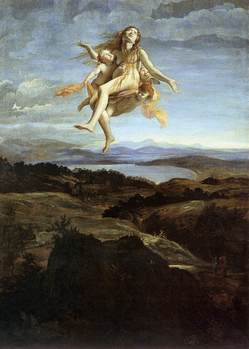
<span class="mt-enclosure mt-enclosure-image" style="DISPLAY: inline"><a href="http://communio.stblogs.org/St%20Gertrude3.jpg"><img class="mt-image-left" style="FLOAT: left; MARGIN: 0px 20px 20px 0px" height="384" alt="St Gertrude3.jpg" src="http://communio.stblogs.org/St%20Gertrude3-thumb-250x384.jpg" width="250" /></a></span>O God, Who in the most pure heart of blessed Gertrude Thy Virgin did prepare for Thyself a well-pleasing dwelling, mercifully efface all stains from our hearts, so that they may merit worthily to be made the dwelling place of Thy divine majesty.<o:p></o:p></em></font></span></p>
<p class="MsoNormal" style="MARGIN: 0in 0in 0pt"><span style="FONT-SIZE: 12pt; FONT-FAMILY: 'Times New Roman','serif'"><o:p><font color="#000000">&nbsp;</font></o:p></span></p>
<p class="MsoNormal" style="MARGIN: 0in 0in 0pt"><span style="FONT-SIZE: 12pt; FONT-FAMILY: 'Times New Roman','serif'"><font color="#000000"><a href="http://www.federationofstgertrude.org/Gertrude.htm">Saint Gertrude</a> was not drawn to the Heart of Jesus as much as through the Heart of Jesus, to the Father, in the Holy Spirit. Her prayer is essentially Trinitarian. Her whole being is <i style="mso-bidi-font-style: normal">oriented ad Patrem</i>, and this because she is united to the Son, because she has entered through the pierced Heart of the Son as through an open door, oriented and carried as it were, by the breath of the Holy Spirit.<o:p></o:p></font></span></p>
<p class="MsoNormal" style="MARGIN: 0in 0in 0pt"><span style="FONT-SIZE: 12pt; FONT-FAMILY: 'Times New Roman','serif'"><o:p><font color="#000000">&nbsp;</font></o:p></span></p>
<p class="MsoNormal" style="MARGIN: 0in 0in 0pt"><span style="FONT-SIZE: 12pt; FONT-FAMILY: 'Times New Roman','serif'"><font color="#000000">Saint Gertrude reminds us that the entire liturgy is Trinitarian: every detail, the smallest word or gesture in the sacred liturgy is a contact with Christ. In the liturgy, nothing is insignificant. Everything is invested with sacramentality, that is, with the potential to unite us to Christ, so that through Him and with Him we might pass into the fiery embrace of the Holy Spirit and the bosom of the Father. Saint Gertrude reminds us that the liturgy -- the Eucharist and other the sacraments, but also the Liturgy of the Hours -- is more than a complex of words and chants, rites and gestures. (courtesy of MDMK)<o:p></o:p></font></span></p>
<p class="MsoNormal" style="MARGIN: 0in 0in 0pt"><o:p><font face="Calibri" color="#000000" size="3">&nbsp;</font></o:p></p>
<p class="MsoNormal" style="MARGIN: 0in 0in 0pt"><font color="#000000"><span style="FONT-SIZE: 12pt; FONT-FAMILY: 'Times New Roman','serif'; mso-bidi-font-family: 'Times New Roman'; mso-bidi-theme-font: minor-bidi">
<p class="MsoNormal" style="MARGIN: 0in 0in 0pt"><a href="http://communio.stblogs.org/Sacred%20Heart2.jpg"><img class="mt-image-right" style="FLOAT: right; MARGIN: 0px 0px 20px 20px" height="362" alt="Sacred Heart2.jpg" src="http://communio.stblogs.org/Sacred%20Heart2-thumb-250x362.jpg" width="250" /></a><strong>Saint Gertrude's Prayer to the Sacred Heart of Jesus</strong> <br /><br /></span><span style="FONT-SIZE: 12pt; FONT-FAMILY: 'Times New Roman','serif'"><em>Hail! O Sacred Heart of Jesus, living and quickening source of eternal life, infinite treasure of the Divinity, and burning furnace of divine love. You are my refuge and my sanctuary, O my amiable Savior. </em></span></p>
<p class="MsoNormal" style="MARGIN: 0in 0in 0pt"><span style="FONT-SIZE: 12pt; FONT-FAMILY: 'Times New Roman','serif'"><em></em></span>&nbsp;</p>
<p class="MsoNormal" style="MARGIN: 0in 0in 0pt"><span style="FONT-SIZE: 12pt; FONT-FAMILY: 'Times New Roman','serif'"><em>Consume my heart with that burning fire with which Yours is ever inflamed. Pour down on my soul those graces which flow from Your love, and let my heart be so united with Yours, that our wills may be one, and mine in all things, be conformed to Yours. May Your divine will be equally the standard and rule of all my desires and of all my actions. Amen.<o:p></o:p></em></span></font></p>
<p></p>
<p class="MsoNormal" style="MARGIN: 0in 0in 0pt"><span style="FONT-SIZE: 12pt; FONT-FAMILY: 'Times New Roman','serif'"><br style="mso-special-character: line-break" /></span></p>
<p class="MsoNormal" style="MARGIN: 0in 0in 0pt"><span style="FONT-SIZE: 12pt; FONT-FAMILY: 'Times New Roman','serif'"><font color="#000000"><strong>Saint Gertrude on friendship<o:p></o:p></strong></font></span></p>
<p class="MsoNormal" style="MARGIN: 0in 0in 0pt"><span style="FONT-SIZE: 12pt; FONT-FAMILY: 'Times New Roman','serif'"><o:p><font color="#000000">&nbsp;</font></o:p></span></p>
<p class="MsoNormal" style="MARGIN: 0in 0in 0pt"><span style="FONT-SIZE: 12pt; FONT-FAMILY: 'Times New Roman','serif'"><font color="#000000">One day between Easter and Ascension I went into the garden before [Office of] Prime, and sitting down beside the pond, I began to consider what a pleasant place it was. I was charmed by the clear water and flowing streams, the fresh green of the surrounding trees, the birds flying so freely about, especially the doves. But most of all, I loved the quiet, hidden peace of this secluded retreat.<o:p></o:p></font></span></p>
<p class="MsoNormal" style="MARGIN: 0in 0in 0pt"><span style="FONT-SIZE: 12pt; FONT-FAMILY: 'Times New Roman','serif'"><o:p><font color="#000000">&nbsp;</font></o:p></span></p>
<p class="MsoNormal" style="MARGIN: 0in 0in 0pt"><span style="FONT-SIZE: 12pt; FONT-FAMILY: 'Times New Roman','serif'"><font color="#000000">I asked myself what more was needed to complete my happiness in a place that seemed to me so perfect, and I reflected that it was the presence of a friend, intimate, affectionate, wise, and companionable, to share my solitude<o:p></o:p></font></span></p>
<p class="MsoNormal" style="MARGIN: 0in 0in 0pt"><span style="FONT-SIZE: 12pt; FONT-FAMILY: 'Times New Roman','serif'"><o:p><font color="#000000">&nbsp;</font></o:p></span></p>]]>
        
    </content>
</entry>

<entry>
    <title>From the Heart of God: Vatican 2 &amp; Pope John Paul II</title>
    <link rel="alternate" type="text/html" href="http://communio.stblogs.org/2008/11/from-the-heart-of-god-vatican.html" />
    <id>tag:communio.stblogs.org,2008://23.32056</id>

    <published>2008-11-15T18:54:18Z</published>
    <updated>2008-11-15T19:02:34Z</updated>

    <summary> On October 28th, Pope Benedict wrote to Most Reverend Father Marco Tasca Minister General of the Friars Minor Conventual and Grand Chancellor of The Pontifical Theological Faculty of St Bonaventure Seraphicum on the occasion of an institute dealing with...</summary>
    <author>
        <name>Paul Zalonski</name>
        <uri>http://communio.stblogs.org</uri>
    </author>
    
        <category term="Pope John Paul II" scheme="http://www.sixapart.com/ns/types#category" />
    
        <category term="Vatican II" scheme="http://www.sixapart.com/ns/types#category" />
    
    
    <content type="html" xml:lang="en-us" xml:base="http://communio.stblogs.org/">
        <![CDATA[<p class="MsoNormal" style="MARGIN: 0in 0in 0pt"><span style="FONT-SIZE: 12pt; FONT-FAMILY: 'Times New Roman','serif'"><font color="#000000"><em>
<span class="mt-enclosure mt-enclosure-image" style="DISPLAY: inline"><a href="http://communio.stblogs.org/123.jpg"><img class="mt-image-left" style="FLOAT: left; MARGIN: 0px 20px 20px 0px" height="217" alt="123.jpg" src="http://communio.stblogs.org/123-thumb-134x217.jpg" width="134" /></a></span>On October 28th, Pope Benedict wrote to Most Reverend Father Marco Tasca Minister General of the Friars Minor Conventual and Grand Chancellor of The <a href="http://www.seraphicum.org/">Pontifical Theological Faculty of St Bonaventure Seraphicum</a> on the occasion of an institute dealing with the theme of "<a href="http://www.seraphicum.org/convegno/IndexEnglish.htm">The Second Vatican Council in the Pontificate of John Paul II</a>." Here are a few relevant paragraphs from His Holiness</em>:<o:p></o:p></font></span></p>
<p class="MsoNormal" style="MARGIN: 0in 0in 0pt"><span style="FONT-SIZE: 12pt; FONT-FAMILY: 'Times New Roman','serif'"><o:p><font color="#000000">&nbsp;</font></o:p></span></p><span style="FONT-SIZE: 12pt; FONT-FAMILY: 'Times New Roman','serif'; mso-fareast-font-family: Calibri; mso-fareast-theme-font: minor-latin; mso-ansi-language: EN-US; mso-fareast-language: EN-US; mso-bidi-language: AR-SA"><font color="#000000">I can only rejoice at the choice of a theme that unites two topics of quite special interest to me: on the one hand, the Second Vatican Council, in which I had the honour of taking part as an expert and on the other, the figure of my beloved Predecessor John Paul II who made a significant personal contribution to that Council as a Council Father and subsequently, by God's will, became its first executor during the years of his Pontificate. In this context it seems only right also to recall that the Council sprang from the great heart of Pope John XXIII, the 50th anniversary of whose election to the Chair of Peter we are commemorating today, 28 October. I said that the Council sprang from John XXIII's heart, yet it would be more accurate to say that ultimately, like all the great events in the Church's history, it came from the Heart of God, from his saving will: "God so loved the world that he gave his only Son, that whoever believes in him should not perish but have eternal life" (Jn 3: 16). To make divine salvation accessible to contemporary man was Pope John XXIII's main reason for convoking the Council, and the Fathers worked with this in mind. For this very reason, "As the years have passed, the Conciliar Documents" as I recalled on 20 April 2005, the day after my election to the Pontificate, "have lost none of their timeliness; indeed, their teachings are proving particularly relevant to the new situation of the Church and the current globalized society" (Message to Cardinals, 20 April 2005).<br /><br />
<span class="mt-enclosure mt-enclosure-image" style="DISPLAY: inline"><a href="http://communio.stblogs.org/12.jpg"><img class="mt-image-left" style="FLOAT: left; MARGIN: 0px 20px 20px 0px" height="214" alt="12.jpg" src="http://communio.stblogs.org/12-thumb-200x214.jpg" width="200" /></a></span>In practically all his documents, and especially in his decisions and his behaviour as Pontiff, John Paul II accepted the fundamental petitions of the Second Vatican Council, thus becoming a qualified interpreter and coherent witness of it. His constant concern was to make known to all the advantages that could stem from acceptance of the Conciliar vision, not only for the good of the Church but also for that of civil society itself and of the people working in it. "We have contracted a debt to the Holy Spirit", he said in his Reflection prior to the Angelus on 6 October 1985, referring to the extraordinary session of the Synod of Bishops which was about to be celebrated precisely in order to reflect on the Church's response during the 20 years that had passed since the conclusion of the Second Vatican Council. "We have contracted a debt to the Spirit of Christ.... This, in fact, is the Spirit who speaks to the Churches (cf. Rv 2: 7); during the Council and by means of it, his word has become particularly expressive and decisive for the Church" (ore, 14 October 1985, p. 12).<br /><br />
<span class="mt-enclosure mt-enclosure-image" style="DISPLAY: inline"><a href="http://communio.stblogs.org/KW%20with%20bps%20at%20V2.jpg"><img class="mt-image-center" style="DISPLAY: block; MARGIN: 0px auto 20px; TEXT-ALIGN: center" height="280" alt="KW with bps at V2.jpg" src="http://communio.stblogs.org/KW%20with%20bps%20at%20V2-thumb-400x280.jpg" width="400" /></a></span>We are all truly indebted to him for this extraordinary ecclesial event. The multiple doctrinal legacy that we find in its Dogmatic Constitutions, Declarations and Decrees still stimulates us to deepen our knowledge of the Word of God in order to apply it to the Church in the present day, keeping clearly in mind the many needs of the men and women of the contemporary world who are extremely in need of knowing and experiencing the light of Christian hope. The Synod of Bishops that has just ended placed these needs at the centre of its own rich and fruitful reflections, reaffirming the hope expressed in the past by the Constitution <em>Dei Verbum</em>: "So may it come that, by the reading and study of the sacred books, "the Word of God may speed on and triumph' (2 Thes 3: 1), and the treasure of the Revelation entrusted to the Church may more and more fill the hearts of men" (n. 26), bringing them the salvation of God and with it authentic happiness.<br /><br />This is a commitment that I am pleased to entrust in particular to you, dear Professors of the Pontifical Theological Faculty, who venerate the Seraphic Doctor St Bonaventure as its heavenly Patron. In the wealth of his thought, St Bonaventure can offer interpretative keys which are still up-to-date and with which you may approach the Conciliar Documents to seek in them satisfactory answers to the many questions of our time. The anxiety for humanity's salvation which motivated the Council Fathers, guiding their commitment in the search for solutions to the numerous problems of the day was equally alive in St Bonaventure's heart as he faced the hopes and anguish of the people of his own time. On the other hand, since the basic questions that man carries in his heart do not change with the changing of times, the answers the Seraphic Doctor attained have remained substantially applicable also in our day. In particular, the <em>Itinerarium mentis in Deum</em> that St Bonaventure composed in 1259 has remained valid. Although it is a guide to the heights of mystical theology, this precious little book also speaks to all Christians of what is essential in their lives. The ultimate goal of all our activities must be communion with the living God. Thus, for the Fathers of the Second Vatican Council too, the ultimate aim of all the individual aspects of the Church's renewal was to lead the faithful to the living God revealed in Jesus Christ.</font></span>]]>
        
    </content>
</entry>

<entry>
    <title>International Meeting of Prayer for Peace sponsored by the Community of Sant&apos;Egidio</title>
    <link rel="alternate" type="text/html" href="http://communio.stblogs.org/2008/11/international-meeting-of-praye.html" />
    <id>tag:communio.stblogs.org,2008://23.32054</id>

    <published>2008-11-15T16:04:50Z</published>
    <updated>2008-11-15T16:08:07Z</updated>

    <summary><![CDATA[The Civilization of Peace: Faiths and Cultures in Dialogue &nbsp; The meeting, which has been promoted by the Community of Sant'Egidio and the Church of Cyprus, takes place in Nicosia from 16 to 18 November. The Cyprus date is a...]]></summary>
    <author>
        <name>Paul Zalonski</name>
        <uri>http://communio.stblogs.org</uri>
    </author>
    
        <category term="Culture" scheme="http://www.sixapart.com/ns/types#category" />
    
        <category term="Eastern Church" scheme="http://www.sixapart.com/ns/types#category" />
    
        <category term="Interfaith Dialogue" scheme="http://www.sixapart.com/ns/types#category" />
    
    
    <content type="html" xml:lang="en-us" xml:base="http://communio.stblogs.org/">
        <![CDATA[<p class="MsoNormal" style="MARGIN: 0in 0in 0pt" align="center"><span style="FONT-SIZE: 12pt; FONT-FAMILY: 'Times New Roman','serif'"><font style="FONT-SIZE: 1.25em" color="#000000">The Civilization of Peace: Faiths and Cultures in Dialogue</font></span></p>
<p class="MsoNormal" style="MARGIN: 0in 0in 0pt"><span style="FONT-SIZE: 12pt; FONT-FAMILY: 'Times New Roman','serif'"><o:p><font color="#000000">&nbsp;</font></o:p></span></p>
<p class="MsoNormal" style="MARGIN: 0in 0in 0pt"><span style="FONT-SIZE: 12pt; FONT-FAMILY: 'Times New Roman','serif'"><font color="#000000">
<span class="mt-enclosure mt-enclosure-image" style="DISPLAY: inline"><a href="http://communio.stblogs.org/cipro2008.jpg"><img class="mt-image-left" style="FLOAT: left; MARGIN: 0px 20px 20px 0px" height="173" alt="cipro2008.jpg" src="http://communio.stblogs.org/cipro2008-thumb-172x173.jpg" width="172" /></a></span>The meeting, which has been promoted by the Community of Sant'Egidio and the Church of Cyprus, takes place in Nicosia from 16 to 18 November.<br style="mso-special-character: line-break" /><br style="mso-special-character: line-break" /><o:p></o:p></font></span></p>
<p class="MsoNormal" style="MARGIN: 0in 0in 0pt"><span style="FONT-SIZE: 12pt; FONT-FAMILY: 'Times New Roman','serif'"><font color="#000000">The Cyprus date is a further leg of the pilgrimage undertaken by the Community of Sant'Egidio to carry forward the legacy of the historic World Day of Prayer for Peace convened in Assisi by Pope John Paul II on October 27, 1986.<br style="mso-special-character: line-break" /><br style="mso-special-character: line-break" /><o:p></o:p></font></span></p>
<p class="MsoNormal" style="MARGIN: 0in 0in 0pt"><span style="FONT-SIZE: 12pt; FONT-FAMILY: 'Times New Roman','serif'"><font color="#000000">Over these twenty-two years, invitations from the Community have led men and women from diverse cultures and religions onto the pathway of encounter, dialogue and prayer for peace. The pilgrimage has called on various locations around the world, spreading the "Spirit of Assisi", creating ties of friendship and cooperation, testifying to a common will to create a culture of coexistence. <br style="mso-special-character: line-break" /><br style="mso-special-character: line-break" /><o:p></o:p></font></span></p>
<p class="MsoNormal" style="MARGIN: 0in 0in 0pt"><span style="FONT-SIZE: 12pt; FONT-FAMILY: 'Times New Roman','serif'"><font color="#000000">On opening the last meeting, held in Naples in October 2007, Pope Benedict 16th stated: "In respecting the differences between the various faiths, we are all called upon to work for peace and to make a concrete effort to further reconciliation between nations. This is the authentic "Spirit of Assisi"... religions can and must offer a precious resource for constructing a peaceful humanity, because they speak of peace being at the heart of humankind".<br style="mso-special-character: line-break" /><br style="mso-special-character: line-break" /><o:p></o:p></font></span></p>
<p class="MsoNormal" style="MARGIN: 0in 0in 0pt"><span style="FONT-SIZE: 12pt; FONT-FAMILY: 'Times New Roman','serif'"><font color="#000000">The Cyprus Meeting constitutes part of this commitment. <br style="mso-special-character: line-break" /><br style="mso-special-character: line-break" /><o:p></o:p></font></span></p>
<p class="MsoNormal" style="MARGIN: 0in 0in 0pt"><span style="FONT-SIZE: 12pt; FONT-FAMILY: 'Times New Roman','serif'"><font color="#000000">The island, lying at the heart of the Mediterranean, touched on by the preaching of St Paul the Apostle, place of encounter between a variety of cultures and religions, will host several hundred figures from every part of the world: representatives of the worlds of religion, of culture and of politics. They will enliven around 20 "round tables", open - as is the tradition at these encounters - to participation by the public.<br style="mso-special-character: line-break" /><br style="mso-special-character: line-break" /><o:p></o:p></font></span></p>
<p class="MsoNormal" style="MARGIN: 0in 0in 0pt"><span style="FONT-SIZE: 12pt; FONT-FAMILY: 'Times New Roman','serif'"><font color="#000000">The Closing Ceremony will take place on November 18 in the heart of the capital, Nicosia; it will feature the proclamation the Appeal for Peace. <br style="mso-special-character: line-break" /><br style="mso-special-character: line-break" /><o:p></o:p></font></span></p>
<p class="MsoNormal" style="MARGIN: 0in 0in 0pt"><span style="FONT-SIZE: 12pt; FONT-FAMILY: 'Times New Roman','serif'"><font color="#000000">As in previous years, this site will follow the event via a live video web-link.</font></span></p>
<p class="MsoNormal" style="MARGIN: 0in 0in 0pt"><span style="FONT-SIZE: 12pt; FONT-FAMILY: 'Times New Roman','serif'"><font color="#000000"></font></span>&nbsp;</p><span style="FONT-SIZE: 12pt; FONT-FAMILY: 'Times New Roman','serif'"><font color="#000000">
<p class="MsoNormal" style="MARGIN: 0in 0in 0pt"><span style="FONT-SIZE: 12pt; FONT-FAMILY: 'Times New Roman','serif'"><a href="http://www.santegidio.org/index.php?&amp;pageID=123&amp;idLng=1064&amp;res=1">The Program</a></span></p><o:p></o:p></font></span>
<p class="MsoNormal" style="MARGIN: 0in 0in 0pt"><o:p><font face="Calibri" color="#000000" size="3">&nbsp;</font></o:p></p>]]>
        
    </content>
</entry>

<entry>
    <title>Christian-Muslim dialogue: working toward a common destiny or a waste of time?</title>
    <link rel="alternate" type="text/html" href="http://communio.stblogs.org/2008/11/christianmuslim-dialogue-worki.html" />
    <id>tag:communio.stblogs.org,2008://23.32040</id>

    <published>2008-11-14T18:00:00Z</published>
    <updated>2008-11-13T18:42:41Z</updated>

    <summary>The (C.I.S.R.O.) is a network of contacts that gives Christians and Muslims a chance to meet and promote mutual knowledge and understanding. Founded in September 2004 by the Patriarch of Venice, Angelo Cardinal Scola, as part of the Studium Generale...</summary>
    <author>
        <name>Paul Zalonski</name>
        <uri>http://communio.stblogs.org</uri>
    </author>
    
        <category term="Interfaith Dialogue" scheme="http://www.sixapart.com/ns/types#category" />
    
    
    <content type="html" xml:lang="en-us" xml:base="http://communio.stblogs.org/">
        <![CDATA[<p class="MsoNormal" style="MARGIN: 0in 0in 0pt"><i style="mso-bidi-font-style: normal"><span style="FONT-SIZE: 12pt; FONT-FAMILY: 'Times New Roman','serif'"><font color="#000000">The (C.I.S.R.O.) is a network of 
<span class="mt-enclosure mt-enclosure-image" style="DISPLAY: inline"><a href="http://communio.stblogs.org/Angelo%20Scola.jpg"><img class="mt-image-right" style="FLOAT: right; MARGIN: 0px 0px 20px 20px" height="194" alt="Angelo Scola.jpg" src="http://communio.stblogs.org/Angelo%20Scola-thumb-200x194.jpg" width="200" /></a></span>contacts that gives Christians and Muslims a chance to meet and promote mutual knowledge and understanding. Founded in September 2004 by the Patriarch of Venice, </font></span></i><span style="FONT-SIZE: 12pt; FONT-FAMILY: 'Times New Roman','serif'"><font color="#000000">Angelo Cardinal Scola</font><i style="mso-bidi-font-style: normal"><font color="#000000">, as part of the </font><a href="http://www.marcianum.it/">Studium Generale Marcianum</a><font color="#000000">, the Centre sees itself as a venue for the exchange of experiences and points of view between people from different ecclesial realities (some churches in Europe and some Christian communities in predominantly-Muslim countries) and Muslims from various backgrounds.<br style="mso-special-character: line-break" /><br style="mso-special-character: line-break" /><o:p></o:p></font></i></span></p>
<p class="MsoNormal" style="MARGIN: 0in 0in 0pt"><i style="mso-bidi-font-style: normal"><font color="#000000"><span style="FONT-SIZE: 12pt; FONT-FAMILY: 'Times New Roman','serif'">The Centre's main field of interest is to examine how Christian and Muslim believers actually relate to and interact with one another for the purpose of building the "good life" in personal and social terms in a world like today's world that is characterised by cross-cultural and intra-civilisational métissage</span><font size="3"><font face="Calibri">.<o:p></o:p></font></font></font></i></p>
<p class="MsoNormal" style="MARGIN: 0in 0in 0pt"><o:p><font face="Calibri" color="#000000" size="3">&nbsp;</font></o:p></p>
<p class="MsoNormal" style="MARGIN: 0in 0in 0pt"><span style="FONT-SIZE: 12pt; FONT-FAMILY: 'Times New Roman','serif'"><font color="#000000">A recent introduction to the <a href="http://www.cisro.org/pages/home_en.html">Oasis</a> journal read:<o:p></o:p></font></span></p>
<p class="MsoNormal" style="MARGIN: 0in 0in 0pt"><span style="FONT-SIZE: 12pt; FONT-FAMILY: 'Times New Roman','serif'"><o:p><font color="#000000">&nbsp;</font></o:p></span></p>
<p class="MsoNormal" style="MARGIN: 0in 0in 0pt"><span style="FONT-SIZE: 12pt; FONT-FAMILY: 'Times New Roman','serif'"><font color="#000000">The first seminar of the Catholic-Muslim Forum belongs to a long line of meetings that have been promoted above all since the Declaration of the Second Vatican Council <i style="mso-bidi-font-style: normal">Nostra Aetate</i>, a point of reference for inter-religious dialogue. The visit of John Paul II to the mosque of Damascus and the visit of prayer of Benedict XVI to the Blue Mosque of Istanbul remain emblematic. <br style="mso-special-character: line-break" /><br style="mso-special-character: line-break" /><o:p></o:p></font></span></p>
<p class="MsoNormal" style="MARGIN: 0in 0in 0pt"><span style="FONT-SIZE: 12pt; FONT-FAMILY: 'Times New Roman','serif'"><font color="#000000">
<span class="mt-enclosure mt-enclosure-image" style="DISPLAY: inline"><a href="http://communio.stblogs.org/Blue%20mosque%20visit%20of%20B16.jpg"><img class="mt-image-center" style="DISPLAY: block; MARGIN: 0px auto 20px; TEXT-ALIGN: center" height="288" alt="Blue mosque visit of B16.jpg" src="http://communio.stblogs.org/Blue%20mosque%20visit%20of%20B16-thumb-400x288.jpg" width="400" /></a></span>But the meeting of these days has two new features - one relating to method and the other to contents. At the level of method, the Forum appears on the Muslim side no longer as an initiative of individual personalities or States but as the expression of a general agreement. From the initial response to the Ratisborn address with its 38 signatories to the subsequent declaration A Common Word with the adherence of 138 personalities, which was subsequently expanded, the tendency on the Muslim side has been to achieve basic agreement to dialogue with Christians. This is not a secondary question because agreement for a large part of Muslim theology is one of the sources of the elaboration of doctrine.&nbsp; &nbsp;<br style="mso-special-character: line-break" /><br style="mso-special-character: line-break" /><o:p></o:p></font></span></p>
<p class="MsoNormal" style="MARGIN: 0in 0in 0pt"><span style="FONT-SIZE: 12pt; FONT-FAMILY: 'Times New Roman','serif'"><font color="#000000">The second new feature is that in this Forum, as in the open letter, the emphasis has been placed in a decisive way on the religious dimension, if not even on the strictly theological dimension. In the communiqué that preceded this event one reads that the composition of the delegations is 'religious and not political', 'is separate from the diplomatic relations of States and was constituted on the basis of sapiential authority'. Indeed, it is evident that the statement of principle contained in the open letter must be verified in the light of its concrete translation into a context which is increasingly difficult for Christian minorities, as the continuing exodus of Christians from the Middle East demonstrates. However, the wish of the two parties is not to dissolve the specificity of the religious fact into, albeit important, geopolitical considerations.<br style="mso-special-character: line-break" /><br style="mso-special-character: line-break" /><o:p></o:p></font></span></p>
<p class="MsoNormal" style="MARGIN: 0in 0in 0pt"><span style="FONT-SIZE: 12pt; FONT-FAMILY: 'Times New Roman','serif'"><font color="#000000">One of the moving spirits of Islamic-Christian dialogue, Father Georges Anawati, loved to repeat that in this field it was necessary to arm oneself with 'geological patience'. It would, therefore, be illusory to imagine that wounds that go back more than a thousand years can be healed in the space of a few months. The aim of the Forum is to explore the affirmation of love of God and neighbour in its theological and spiritual aspects but also in relation to its practical consequences for the defence of the dignity of the human person and the defence of religious freedom. The fifteen points of the final document offer different points of departure in this direction. It is certainly the case that today there are many questions which must be answered, but for a believer the most burning question is perhaps the simplest one: do Muslims and Christians worship the same God? Without this mutual recognition everything becomes more difficult. The answer on the Catholic side is clear and was proposed by <i style="mso-bidi-font-style: normal">Lumen Gentium</i>, in n. 16: 'But the plan of salvation also includes those who acknowledge the Creator. In the first place amongst these there are the Mohamedans, who, professing to hold the faith of Abraham, along with us adore the one and merciful God, who on the last day will judge mankind'. This was an answer emphasised yesterday by Benedict XVI in his audience to the participants: 'I am well aware that Muslims and Christians have different approaches in matters regarding God. Yet we can and must be worshippers of the one God who created us and is concerned about each person in every corner of the world'<br style="mso-special-character: line-break" /><br style="mso-special-character: line-break" /><o:p></o:p></font></span></p>
<p class="MsoNormal" style="MARGIN: 0in 0in 0pt"><span style="FONT-SIZE: 12pt; FONT-FAMILY: 'Times New Roman','serif'"><font color="#000000">On the Muslim side Seyyed Hossein Nasr stated: 'For both us and you, God is at once transcendent and immanent, creator and sustainer of the world... the lover whose love embraces the whole of the created order'. This is the basic belief that inspires the continuation of dialogue.</font></span></p>
<p class="MsoNormal" style="MARGIN: 0in 0in 0pt"><span style="FONT-SIZE: 12pt; FONT-FAMILY: 'Times New Roman','serif'"><font color="#000000"></font></span>&nbsp;</p>
<p class="MsoNormal" style="MARGIN: 0in 0in 0pt"><span style="FONT-SIZE: 12pt; FONT-FAMILY: 'Times New Roman','serif'"><font color="#000000">All the articles and other documentation is <a href="http://www.cisro.org/index.php?page=36&amp;lang=en">archived here</a>.</font></span></p>
<p class="MsoNormal" style="MARGIN: 0in 0in 0pt"><span style="FONT-SIZE: 12pt; FONT-FAMILY: 'Times New Roman','serif'"><font color="#000000"></font></span>&nbsp;</p>
<p class="MsoNormal" style="MARGIN: 0in 0in 0pt"><span style="FONT-SIZE: 12pt; FONT-FAMILY: 'Times New Roman','serif'"><font color="#000000">
<span class="mt-enclosure mt-enclosure-image" style="DISPLAY: inline"><a href="http://communio.stblogs.org/cis%20317.JPG"><img class="mt-image-left" style="FLOAT: left; MARGIN: 0px 20px 20px 0px" height="140" alt="cis 317.JPG" src="http://communio.stblogs.org/cis%20317-thumb-100x140.jpg" width="100" /></a></span>Also, you might want to read a good, brief introduction to the field of Catholic-Muslim theology, <a href="http://www.kofc.org/un/eb/en/resources/cis/CIS317a.pdf"><em>What Catholics Should Know about Islam</em></a> by Dr. Sandra T. Keating published by the <a href="http://www.kofc.org/cis">Catholic Information Service</a>.</font></span></p>]]>
        
    </content>
</entry>

<entry>
    <title>Benedictine All Souls</title>
    <link rel="alternate" type="text/html" href="http://communio.stblogs.org/2008/11/benedictine-all-souls.html" />
    <id>tag:communio.stblogs.org,2008://23.32012</id>

    <published>2008-11-14T10:45:00Z</published>
    <updated>2008-11-11T02:05:09Z</updated>

    <summary>It is a treasured monastic tradition to pray for the dead, to visit the cemetery and to recall lives of those who have gone ahead of us to receive the Lord&apos;s mercy. Some groups of monks have the custom of...</summary>
    <author>
        <name>Paul Zalonski</name>
        <uri>http://communio.stblogs.org</uri>
    </author>
    
        <category term="Sacred Liturgy" scheme="http://www.sixapart.com/ns/types#category" />
    
    
    <content type="html" xml:lang="en-us" xml:base="http://communio.stblogs.org/">
        <![CDATA[<p class="MsoNormal" style="MARGIN: 0in 0in 0pt"><span style="FONT-SIZE: 12pt; FONT-FAMILY: 'Times New Roman','serif'"><font color="#000000">It is a treasured monastic tradition to pray for the dead, to visit the cemetery and to recall 
<span class="mt-enclosure mt-enclosure-image" style="DISPLAY: inline"><a href="http://communio.stblogs.org/triumph%20of%20death.jpg"><img class="mt-image-left" style="FLOAT: left; MARGIN: 0px 20px 20px 0px" height="429" alt="triumph of death.jpg" src="http://communio.stblogs.org/triumph%20of%20death-thumb-300x429.jpg" width="300" /></a></span>lives of those who have gone ahead of us to receive the Lord's mercy. Some groups of monks have the custom of praying an entire Psalter for their deceased confreres, concluding each psalm with the verse, "Eternal rest grant unto them, O Lord, and let perpetual light shine upon them." Generally the Mass and private devotions are all that mark the day in many monasteries.</font></span></p>
<p class="MsoNormal" style="MARGIN: 0in 0in 0pt"><span style="FONT-SIZE: 12pt; FONT-FAMILY: 'Times New Roman','serif'"><o:p><font color="#000000">&nbsp;</font></o:p></span></p>
<p class="MsoNormal" style="MARGIN: 0in 0in 0pt"><span style="FONT-SIZE: 12pt; FONT-FAMILY: 'Times New Roman','serif'"><font color="#000000">The Mass offered today is offered for all the departed monks, nuns, sisters and oblates who persevered in their consecration under Saint Benedict's guidance. After death, the monks, nuns, sisters and oblates buried in the monastery's cemetery are not abandoned, not forgotten by their monastic family who remain on earth. The Mass, psalmody, and other prayers, like the rosary or particular litanies to effect in God's plan their purification and obtain the beatific vision.<o:p></o:p></font></span></p>
<p class="MsoNormal" style="MARGIN: 0in 0in 0pt"><span style="FONT-SIZE: 12pt; FONT-FAMILY: 'Times New Roman','serif'"><o:p><font color="#000000">&nbsp;</font></o:p></span></p><i style="mso-bidi-font-style: normal"><span style="FONT-SIZE: 12pt; FONT-FAMILY: 'Times New Roman','serif'; mso-fareast-font-family: Calibri; mso-fareast-theme-font: minor-latin; mso-ansi-language: EN-US; mso-fareast-language: EN-US; mso-bidi-language: AR-SA"><font color="#000000">O God, giver of pardon and lover of humankind, we beseech your mercy that through the intercession of blessed Mary ever-virgin, and of all the Benedictine saints, our brothers and sisters, relatives and benefactors who have passed out of this life, may be admitted into the fellowship of everlasting bliss.</font></span></i>]]>
        
    </content>
</entry>

<entry>
    <title>Faith broadens reason and the virtue of poverty key to Christian life</title>
    <link rel="alternate" type="text/html" href="http://communio.stblogs.org/2008/11/faith-broadens-reason-and-the.html" />
    <id>tag:communio.stblogs.org,2008://23.32045</id>

    <published>2008-11-13T22:10:45Z</published>
    <updated>2008-11-14T00:55:49Z</updated>

    <summary>NEW YORK (CNS) -- Msgr. Lorenzo Albacete told a recent gathering at Columbia University that faith broadens reason, making &quot;it more powerful, wider in scope and, in fact, stronger in courage.&quot; &quot;This &apos;broadening of reason&apos; achieves its highest expression in...</summary>
    <author>
        <name>Paul Zalonski</name>
        <uri>http://communio.stblogs.org</uri>
    </author>
    
        <category term="Communion &amp; Liberation" scheme="http://www.sixapart.com/ns/types#category" />
    
    
    <content type="html" xml:lang="en-us" xml:base="http://communio.stblogs.org/">
        <![CDATA[<font face="Verdana"><font size="2">NEW YORK (CNS) -- Msgr. Lorenzo Albacete told a recent gathering at Columbia University that faith broadens reason, making "it more powerful, wider in scope and, in fact, stronger in courage." "This 'broadening of reason' achieves its highest expression in what (Msgr. Luigi) <strong>Giussani </strong>called <em>'the virtue of poverty</em>.' And this is the proposal we make to the world, to people concerned about economic justice," the New York priest said in a talk on "Faith &amp; Money: Do They Add Up?" But "the virtue of poverty doesn't create a bunch of idealists running around," he said. "If we know history, (we know) people who had been called to a life of poverty ... created the great institutions of Western civilization -- hospitals, universities, works for the poor, refuges, schools." <em>Msgr. Giussani, to whom Msgr. Albacete referred, is the late Italian clergyman who founded the Catholic lay movement Communion and Liberation in 1954</em>. A theologian and an author, Msgr. Albacete is the national director of the Communion and Liberation movement in the U.S.</font></font><br />]]>
        
    </content>
</entry>

<entry>
    <title>Saint Frances Xavier Cabrini</title>
    <link rel="alternate" type="text/html" href="http://communio.stblogs.org/2008/11/saint-frances-xavier-cabrini.html" />
    <id>tag:communio.stblogs.org,2008://23.32041</id>

    <published>2008-11-13T21:00:00Z</published>
    <updated>2008-11-13T19:15:56Z</updated>

    <summary><![CDATA[The first American citizen canonized a saint in 1946, Mother Cabrini founded the Missionary Sisters of the Sacred Heart. Her shrine is in Washington Heights, New York City. &nbsp; Inspired by the grace of God, we join the saints in...]]></summary>
    <author>
        <name>Paul Zalonski</name>
        <uri>http://communio.stblogs.org</uri>
    </author>
    
        <category term="Saints" scheme="http://www.sixapart.com/ns/types#category" />
    
    
    <content type="html" xml:lang="en-us" xml:base="http://communio.stblogs.org/">
        <![CDATA[<p class="MsoNormal" style="MARGIN: 0in 0in 0pt"><span style="FONT-SIZE: 12pt; FONT-FAMILY: 'Times New Roman','serif'"><font color="#000000"><em>The first American citizen canonized a saint in 1946, Mother Cabrini founded the <a href="http://www.mothercabrini.com/index.asp">Missionary Sisters of the Sacred Heart</a>. Her shrine is in Washington Heights, New York City.</em></font></span></p>
<p class="MsoNormal" style="MARGIN: 0in 0in 0pt"><span style="FONT-SIZE: 12pt; FONT-FAMILY: 'Times New Roman','serif'"><o:p><font color="#000000">&nbsp;</font></o:p></span></p>
<p class="MsoNormal" style="MARGIN: 0in 0in 0pt"><span style="FONT-SIZE: 12pt; FONT-FAMILY: 'Times New Roman','serif'"><font color="#000000">
<span class="mt-enclosure mt-enclosure-image" style="DISPLAY: inline"><a href="http://communio.stblogs.org/St%20Frances%20Xavier%20Cabrini.jpg"><img class="mt-image-left" style="FLOAT: left; MARGIN: 0px 20px 20px 0px" height="368" alt="St Frances Xavier Cabrini.jpg" src="http://communio.stblogs.org/St%20Frances%20Xavier%20Cabrini-thumb-293x368.jpg" width="293" /></a></span>Inspired by the grace of God, we join the saints in honoring the holy virgin Frances Xavier Cabrini. She was a humble woman who became outstanding not because she was famous or rich or powerful, but because she lived a virtuous life. From the tender years of her youth, she kept her innocence as white as a lily and preserved it carefully with the thorns of penitence; as the years progressed, she was moved by a certain instinct and supernatural zeal to dedicate her whole life to the service and greater glory of God. <br /><br />She welcomed delinquent youths into safe homes, and taught them to live upright and holy lives. She consoled those who were in prison, and recalled to them the hope of eternal life. She encouraged prisoners to reform themselves, and to live honest lives. <br /><br />She comforted the sick and the infirm in the hospitals, and diligently cared for them. She extended a friendly and helping hand especially to immigrants, and offered them necessary shelter and relief, for having left their homeland behind, they were wandering about in a foreign land with no place to turn for help. Because of their condition, she saw that they were in danger of deserting the practice of Christian virtues and their Catholic faith. <br /><br />Undoubtedly she accomplished all this through the faith which was always so vibrant and alive in her heart; through the divine love which burned within her; and finally, through constant prayer by which she was so closely united with God from whom she humbly asked and obtained whatever her human weakness could not obtain. Although her constitution was very frail, her spirit was endowed with such singular strength that, knowing the will of God in her regard, she permitted nothing to impede her from accomplishing what seemed beyond her strength. <br /><br /><em><font style="FONT-SIZE: 0.8em">From a homily at the canonization of Saint Frances Xavier Cabrini by Pope Pius XII <o:p></o:p></font></em></font></span></p>
<p class="MsoNormal" style="MARGIN: 0in 0in 0pt"><span style="FONT-SIZE: 12pt; FONT-FAMILY: 'Times New Roman','serif'"><o:p><font style="FONT-SIZE: 0.8em" color="#000000"><em>&nbsp;</em></font></o:p></span></p>
<p class="MsoNormal" style="MARGIN: 0in 0in 0pt"><span style="FONT-SIZE: 12pt; FONT-FAMILY: 'Times New Roman','serif'"><o:p><font color="#000000"></font></o:p></span></p>
<p class="MsoNormal" style="MARGIN: 0in 0in 0pt"><span style="FONT-SIZE: 12pt; FONT-FAMILY: 'Times New Roman','serif'"><font color="#000000"><em>God our Father, you called Frances Xavier Cabrini from Italy to serve the immigrants of America. By her example teach us concern for the stranger, the sick, and the frustrated. By her prayers help us to see Christ in all the men and women we meet</em>.<o:p></o:p></font></span></p>]]>
        
    </content>
</entry>

<entry>
    <title>Faith, Always a New Act</title>
    <link rel="alternate" type="text/html" href="http://communio.stblogs.org/2008/11/faith-always-a-new-act.html" />
    <id>tag:communio.stblogs.org,2008://23.32038</id>

    <published>2008-11-13T16:11:35Z</published>
    <updated>2008-11-13T16:33:14Z</updated>

    <summary><![CDATA[This 1995 essay by Cardinal Joseph Ratzinger (now Pope Benedict XVI) is a marvelous piece to meditate on today. Faith and communion, freedom and personal integration in God are&nbsp;relevant topics in our era where there is a lack of understanding...]]></summary>
    <author>
        <name>Paul Zalonski</name>
        <uri>http://communio.stblogs.org</uri>
    </author>
    
        <category term="Communion &amp; Liberation" scheme="http://www.sixapart.com/ns/types#category" />
    
        <category term="Faith &amp; Reason" scheme="http://www.sixapart.com/ns/types#category" />
    
        <category term="Luigi Giussani" scheme="http://www.sixapart.com/ns/types#category" />
    
        <category term="Pope Benedict XVI" scheme="http://www.sixapart.com/ns/types#category" />
    
    
    <content type="html" xml:lang="en-us" xml:base="http://communio.stblogs.org/">
        <![CDATA[<p class="MsoNormal" style="MARGIN: 0in 0in 0pt"><span style="FONT-SIZE: 12pt; FONT-FAMILY: 'Times New Roman','serif'"><font color="#000000"><em>This 1995 essay by</em> Cardinal Joseph Ratzinger<em> (now Pope Benedict XVI) is a marvelous piece to meditate on today. Faith and communion, freedom and personal integration in God are&nbsp;relevant topics in our era where there is a lack of understanding of the basics of Christian faith. Without mentioning his name and his work, the author points to Msgr. Giussani's Communion and Liberation&nbsp;and other ecclesial movements.</em></font></span></p>
<p class="MsoNormal" style="MARGIN: 0in 0in 0pt"><span style="FONT-SIZE: 12pt; FONT-FAMILY: 'Times New Roman','serif'"><o:p><font color="#000000">&nbsp;</font></o:p></span></p>
<p class="MsoNormal" style="MARGIN: 0in 0in 0pt"><span style="FONT-SIZE: 12pt; FONT-FAMILY: 'Times New Roman','serif'"><font color="#000000">Let me begin with a brief story from the early postconciliar period. The Council documents - particularly the <em>Constitution on the Church in the Modern World</em>, but also the decrees on ecumenism, on mission, on non-Christian religions, and on freedom of religion - had opened up broad vistas of dialogue for the Church and theology. New issues were appearing on the horizon, and it was becoming necessary to find new methods. It seemed self-evident that a theologian who wanted to be up to date and who rightly understood his task should temporarily suspend the old discussions and devote all of his energies to the new questions pressing in from every side.<o:p></o:p></font></span></p>
<p class="MsoNormal" style="MARGIN: 0in 0in 0pt"><span style="FONT-SIZE: 12pt; FONT-FAMILY: 'Times New Roman','serif'"><font color="#000000"></font></span>&nbsp;</p>
<p class="MsoNormal" style="MARGIN: 0in 0in 0pt"><span style="FONT-SIZE: 12pt; FONT-FAMILY: 'Times New Roman','serif'"><font color="#000000">At about this time, I sent a small piece of mine to Hans Urs von Balthasar. Balthasar 
<span class="mt-enclosure mt-enclosure-image" style="DISPLAY: inline"><a href="http://communio.stblogs.org/HUB.jpg"><img class="mt-image-right" style="FLOAT: right; MARGIN: 0px 0px 20px 20px" height="304" alt="HUB.jpg" src="http://communio.stblogs.org/HUB-thumb-200x304.jpg" width="200" /></a></span>replied by return mail on a correspondence card, as he always did, and, after expressing his thanks, added a terse sentence that made an indelible impression on me: Do not presuppose the faith but propose it. This was an imperative that hit home. Wide-ranging exploration of new fields was good and necessary, but only so long as it issued from, and was sustained by, the central light of faith. <o:p></o:p></font></span></p>
<p class="MsoNormal" style="MARGIN: 0in 0in 0pt"><span style="FONT-SIZE: 12pt; FONT-FAMILY: 'Times New Roman','serif'"><o:p><font color="#000000">&nbsp;</font></o:p></span></p>
<p class="MsoNormal" style="MARGIN: 0in 0in 0pt"><span style="FONT-SIZE: 12pt; FONT-FAMILY: 'Times New Roman','serif'"><font color="#000000">Faith is not maintained automatically. It is not a "finished business" that we can simply take for granted. The life of faith has to be constantly renewed. And since faith is an act that comprehends all the dimensions of our existence, it also requires constantly renewed reflection and witness. It follows that the chief points of faith - God, Christ, the Holy Spirit, grace and sin, sacraments and Church, death and eternal life -are never outmoded. They are always the issues that affect us most profoundly. They must be the permanent center of preaching and therefore of theological reflection. The bishops present at the 1985 Synod called for a universal catechism of the whole Church because they sensed precisely what Balthasar had put into words in his note to me. Their experience as shepherds had shown them that the various new pastoral activities have no solid basis unless they are irradiations and applications of the message of faith. Faith cannot be presupposed; it must be proposed. This is the purpose of the <em>Catechism</em>. It aims to propose the faith in its fullness and wealth, but also in its unity and simplicity. <o:p></o:p></font></span></p>
<p class="MsoNormal" style="MARGIN: 0in 0in 0pt"><span style="FONT-SIZE: 12pt; FONT-FAMILY: 'Times New Roman','serif'"><o:p><font color="#000000">&nbsp;</font></o:p></span></p>
<p class="MsoNormal" style="MARGIN: 0in 0in 0pt"><span style="FONT-SIZE: 12pt; FONT-FAMILY: 'Times New Roman','serif'"><font color="#000000">What does the Church believe? This question implies another: Who believes, and how does someone believe? The <em>Catechism</em> treats these two main questions, which concern, respectively, the "what" and the "who" of faith, as an intrinsic unity. Expressed in other terms, the <em>Catechism</em> displays the act of faith and the content of faith in their indivisible unity. This may sound somewhat abstract, so let us try to unfold a bit what it means. We find in the creeds two formulas: "I believe" and "We believe." We speak of the faith of the Church, of the personal character of faith and finally of faith as a gift of God, as a "theological act", as contemporary theology likes to put it. What does all of this mean?<o:p></o:p></font></span></p>
<p class="MsoNormal" style="MARGIN: 0in 0in 0pt"><span style="FONT-SIZE: 12pt; FONT-FAMILY: 'Times New Roman','serif'"><o:p><font color="#000000">&nbsp;</font></o:p></span></p>
<p class="MsoNormal" style="MARGIN: 0in 0in 0pt"><span style="FONT-SIZE: 12pt; FONT-FAMILY: 'Times New Roman','serif'"><font color="#000000">Faith is an orientation of our existence as a whole. It is a fundamental option that affects every domain of our existence. Nor can it be realized unless all the energies of our existence go into maintaining it. Faith is not a merely intellectual, or merely volitional, or merely emotional activity -it is all of these things together. It is an act of the whole self, of the whole person in his concentrated unity. The Bible describes faith in this sense as an act of the "heart" [Romans 10:9].<o:p></o:p></font></span></p>
<p class="MsoNormal" style="MARGIN: 0in 0in 0pt"><span style="FONT-SIZE: 12pt; FONT-FAMILY: 'Times New Roman','serif'"><font color="#000000"></font></span>&nbsp;</p>
<p class="MsoNormal" style="MARGIN: 0in 0in 0pt"><span style="FONT-SIZE: 12pt; FONT-FAMILY: 'Times New Roman','serif'"><font color="#000000">Faith is a supremely personal act. But precisely because it is supremely personal, it 
<span class="mt-enclosure mt-enclosure-image" style="DISPLAY: inline"><a href="http://communio.stblogs.org/St%20Augustine6.jpg"><img class="mt-image-right" style="FLOAT: right; MARGIN: 0px 0px 20px 20px" height="407" alt="St Augustine6.jpg" src="http://communio.stblogs.org/St%20Augustine6-thumb-250x407.jpg" width="250" /></a></span>transcends the self, the limits of the individual. Augustine remarks that nothing is so little ours as our self. Where man as a whole comes into play, he transcends himself; an act of the whole self is at the same time always an opening to others, hence, an act of being together with others (Mitsein). What is more, we cannot perform this act without touching our deepest ground, the living God who is present in the depths of our existence as its sustaining foundation. <o:p></o:p></font></span></p>
<p class="MsoNormal" style="MARGIN: 0in 0in 0pt"><span style="FONT-SIZE: 12pt; FONT-FAMILY: 'Times New Roman','serif'"><o:p><font color="#000000">&nbsp;</font></o:p></span></p>
<p class="MsoNormal" style="MARGIN: 0in 0in 0pt"><span style="FONT-SIZE: 12pt; FONT-FAMILY: 'Times New Roman','serif'"><font color="#000000">Any act that involves the whole man also involves, not just the self, but the we-dimension, indeed, the wholly other "Thou", God, together with the self. But this also means that such an act transcends the reach of what I can do alone. Since man is a created being, the deepest truth about him is never just action but always passion as well; man is not only a giver but also a receiver. The <em>Catechism</em> expresses this point in the following words: "No one can believe alone, just as no one can live alone. You have not given yourself faith as you have not given yourself life." Paul's description of his experience of conversion and baptism alludes to faith's radical character: "It is no longer I who live, but Christ lives in me" [Galatians 2,20]. Faith is a perishing of the mere self and precisely thus a resurrection of the true self. To believe is to become oneself through liberation from the mere self, a liberation that brings us into communion with God mediated by communion with Christ. <o:p></o:p></font></span></p>
<p class="MsoNormal" style="MARGIN: 0in 0in 0pt"><span style="FONT-SIZE: 12pt; FONT-FAMILY: 'Times New Roman','serif'"><o:p><font color="#000000">&nbsp;</font></o:p></span></p>
<p class="MsoNormal" style="MARGIN: 0in 0in 0pt"><span style="FONT-SIZE: 12pt; FONT-FAMILY: 'Times New Roman','serif'"><font color="#000000">So far, we have attempted, with the help of the <i style="mso-bidi-font-style: normal">Catechism</i>, to analyze "who" believes, hence, to identify the structure of the act of faith. But in so doing we have already caught sight of the outlines of the essential content of faith. In its core, Christian faith is an encounter with the living God. God is, in the proper and ultimate sense, the content of our faith. Looked at in this way, the content of faith is absolutely simple: I believe in God. But this absolute simplicity is also absolutely deep and encompassing. We can believe in God because he can touch us, because he is in us, and because he also comes to us from the outside. We can believe in him because of the one whom he has sent "Because he has 'seen the Father,' " says the <em>Catechism</em>, referring to John 6:56, "Jesus Christ is the only one who knows him and can reveal him". We could say that to believe is to be granted a share in Jesus' vision. He lets us see with him in faith what he has seen.<o:p></o:p></font></span></p>
<p class="MsoNormal" style="MARGIN: 0in 0in 0pt"><span style="FONT-SIZE: 12pt; FONT-FAMILY: 'Times New Roman','serif'"><font color="#000000"></font></span>&nbsp;</p>
<p class="MsoNormal" style="MARGIN: 0in 0in 0pt"><span style="FONT-SIZE: 12pt; FONT-FAMILY: 'Times New Roman','serif'"><font color="#000000">This statement implies both the divinity of Jesus Christ and his humanity. Because Jesus is the Son, he has an unceasing vision of the Father. Because he is man, we can share this vision. Because he is both God and man at once, he is neither merely a historical person nor simply removed from all time in eternity. Rather, he is in the midst of time, always alive, always present.<o:p></o:p></font></span></p>
<p class="MsoNormal" style="MARGIN: 0in 0in 0pt"><span style="FONT-SIZE: 12pt; FONT-FAMILY: 'Times New Roman','serif'"><o:p><font color="#000000">&nbsp;</font></o:p></span></p>
<p class="MsoNormal" style="MARGIN: 0in 0in 0pt"><span style="FONT-SIZE: 12pt; FONT-FAMILY: 'Times New Roman','serif'"><font color="#000000">
<span class="mt-enclosure mt-enclosure-image" style="DISPLAY: inline"><a href="http://communio.stblogs.org/Trinity%20Rublev.jpg"><img class="mt-image-left" style="FLOAT: left; MARGIN: 0px 20px 20px 0px" height="311" alt="Trinity Rublev.jpg" src="http://communio.stblogs.org/Trinity%20Rublev-thumb-250x311.jpg" width="250" /></a></span>But in saying this, we also touch upon the mystery of the Trinity. The Lord becomes present to us through the Holy Spirit. Let us listen once more to the <em>Catechism</em>: "One cannot believe in Jesus Christ without sharing in his Spirit . . . Only God knows God completely: we believe in the Holy Spirit because he is God." It follows from what we have said that, when we see the act of faith correctly, the single articles of faith unfold by themselves. God becomes