Saints: August 2008 Archives

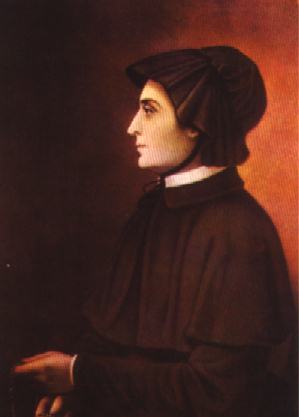
The September 1st issue of America Magazine, the Jesuit weekly, there is a good article seton.jpgto read on America's first canonized saint, Elizabeth Ann Seton. Sister of Charity Regina Bechtle's article "An American Daughter: Elizabeth Ann Seton and the birth of the U.S. Church" is a good read for those generally interested in matters pertaining to Catholicism in America. Who wouldn't be thrilled to know that Saint Elizabeth Ann Seton is the first American born canonized a saint by Pope Paul VI in 1975?


What's the point of this "stuff" about Seton in late August when her feast day is in January? Well, for one, August 28th marked her 234th birthday and mid-September marks 33 years since Seton was canonized. Too, this year is the 200th anniversary of Pope Pius VII named Baltimore an "archdiocese" along with 4 other Catholic dioceses.


We might also consider the possibility of making a pilgrimage to one of the shrines dedicated to Seton. In a real sense it is less important that we end up at a holy spot just for doing it than it is to take stock of our spiritual lives with God's grace and with assistance of a particularly singular saint, Elizabeth Ann Seton, who made a deliberate choice to follow Christ through His sacrament, the Catholic Church. (BTW, she was a believing Christian but she did not possess the fullness of Truth as we know it in Catholicism.) A pilgrimage, therefore, may open for us an opportunity to acknowledge the exceptional Presence before us like we've never understood before now. So, what happens to us on the way to a holy shrine is very important indeed. Hence, we follow Christ!


In case you want to visit the shrines of Saint Elizabeth Ann Seton on the east coast there Seton Shrine.jpgare two:


1. The National Shrine of Saint Elizabeth Ann Seton, Emmitsburg, Maryland


2. The Shrine of Saint Elizabeth Ann Seton at Our Lady of the Rosary Parish, New York City


Lord God, you blessed Elizabeth Ann Seton with gifts of grace as wife and mother, educator and foundress, so that she might spend her life in service to your people. Through her example and prayers, may we, whose Faith Community is dedicated in her honor, learn to express our love for you in our love for all your children. We ask this through Christ, Our Lord. Amen.

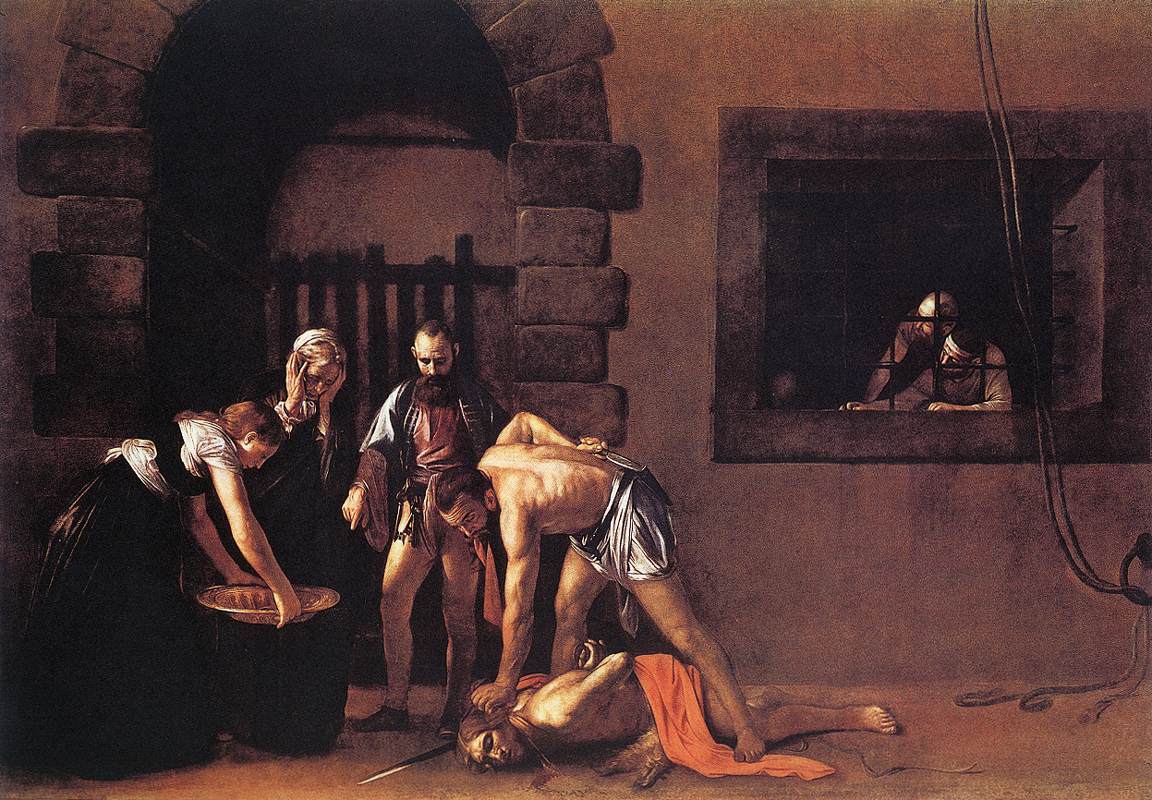
Martyrdom of St John Baptist.jpg"This great man after a long agony of captivity, ended his life on earth with the shedding of his blood. He who preached the freedom of heavenly peace was thrown into captivity by wicked men. He who was called a burning and shining light by Christ the light, was imprisoned in darkness: he who was granted the privilege of baptizing the Redeemer of the world was given baptism in his own blood" (Saint Bede the Venerable).


We beseech Thee, O Lord, may the holy festival of Saint John the Baptist, Thy Precursor and Martyr, obtain for us help unto salvation.

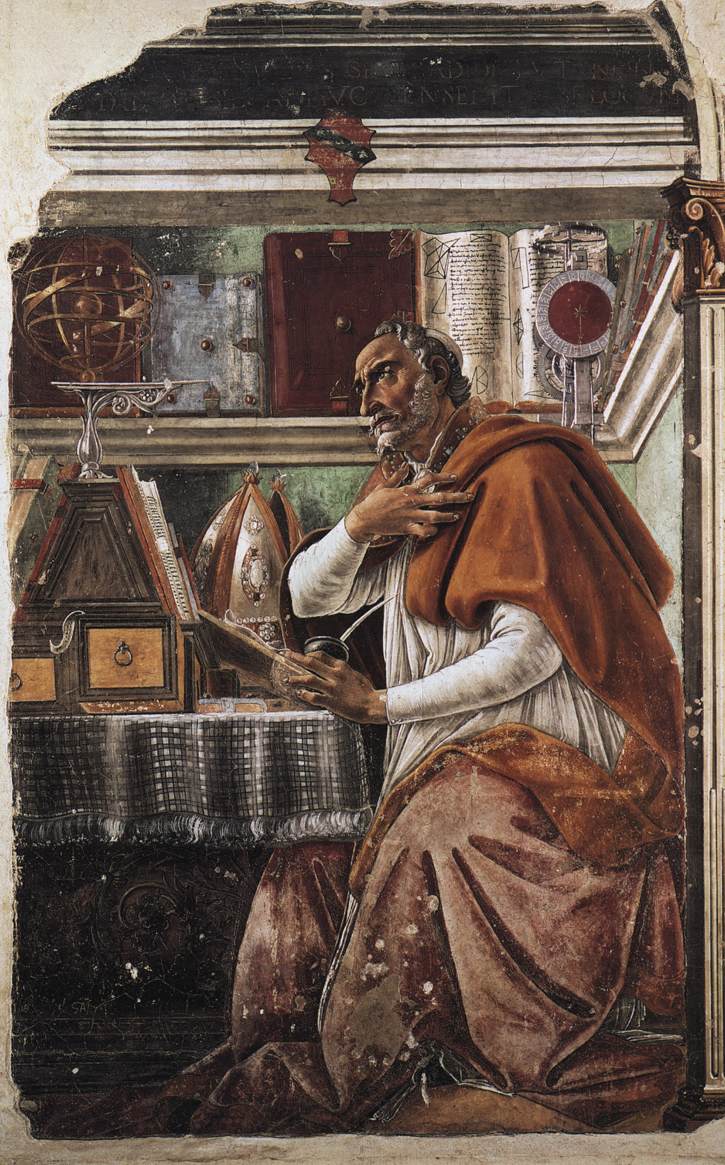
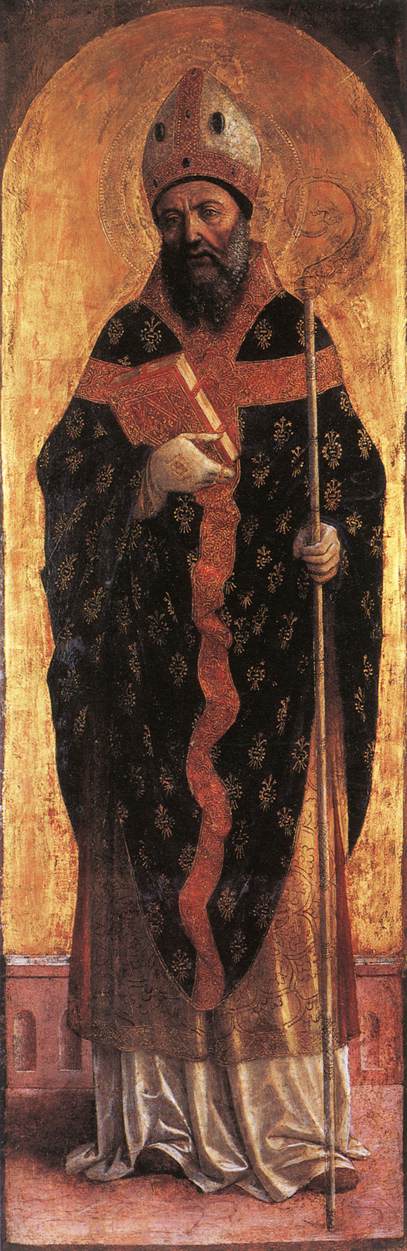
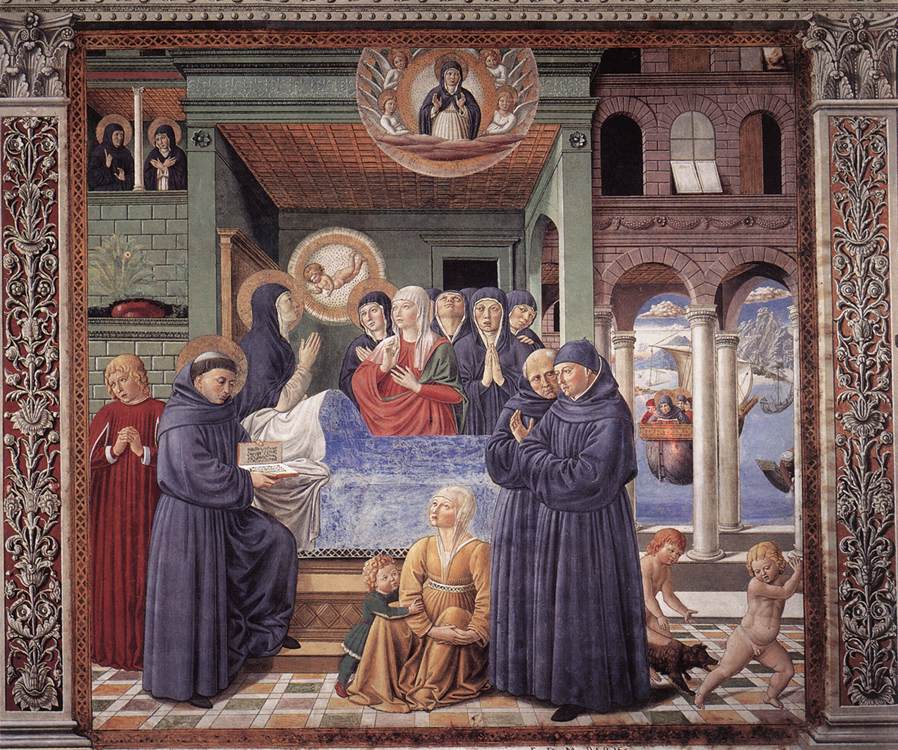
Today is the great feast of Augustine, the convert (at age 32 at the hands of St. Ambrose in Milan) who was ordained a priest in 391 and elected bishop of Hippo in 395. His life and work are remarkable to say the least. In addition to Saint St Augustine1.jpgThomas Aquinas, Saint Augustine is one of the Church's most significant theologians.
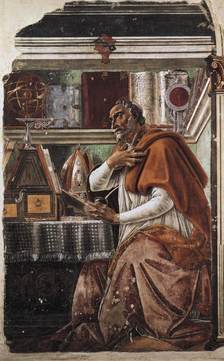
 

Calling Augustine "the greatest Father of the Latin Church," Pope Benedict spoke on three occasions in January 2008 to the gathered people in Vatican City about Augustine's life, his thought and his pastoral ministries. The texts of the Pope are found here:


In the meantime, I offer a 1930 text by Pope Pius XI on Augustine together for our reading pleasure right now.


For to begin with the queen of all the virtues, our Saint, leaving all else aside, made the love of God so completely the goal of his desires and efforts, and fed its flame so steadfastly in his soul, that he is fittingly portrayed as holding in his hand a burning heart. No one, who has even once turned the pages of the "confessions," can forget the conversion between mother and son, at the window of the house in Ostia. The narrative, with its lifelike charm, makes us feel that we see Augustine and Monica there, side by side, absorbed in the contemplation of heavenly things. He writes: "Alone together we held most sweet converse. Forgetting the things that lay behind and stretching out to those that were before, we questioned each other, in the presence of Truth, which Thou art, about the nature of the eternal life of the Saints, which eye has not seen, nor ear heard, nor hath it entered into the mind of man to conceive. Mentally with parted lips we hung over the supernal rills of Thy fountain--the fountain of life with Thee--if happily we might be refreshed, so far as our condition would allow, and in some sort ponder so profound a mystery... And while we conversed with eager longing, with the heart's supreme effort we made some approach thereto. We sighed and there left fettered the firstlings of the spirit, then to return to the sound of our voices, where the word begins and ends. Yet what bears any likeness to Thy Word, who is our Lord, who abides within Himself and ages not, who makes all things new?"

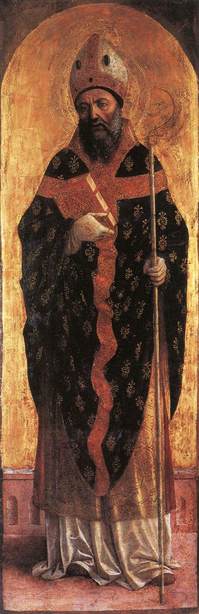
St Augustine.jpgWe must not imagine that it was an exceptional thing for Augustine thus to lift mind and heart above the life of the body. Any time he could spare from his daily duties and tasks, he devoted to meditation on the Sacred Scriptures he knew so well, that he might draw thence the relish and the light of truth. Rising on thought's pinions from a consideration of the works and mysteries that reveal God's surpassing love for us, he was borne aloft little by little to the Divine perfections themselves, into which he plunged--if we may so speak--as deeply as the heavenly grace given him allowed.


"Often I do this [he says, sharing with us his secret], this is my delight, and withdrawing from such activity as necessity imposes, I take refuge in this kind of pleasure. In all the things traversed by my mind, while I confer with Thee, I find no safe place for my soul except in Thee. In Thee are linked in unison my wandering strains. From Thee may nothing of mine depart. Sometimes, too, Thou dost admit me to a deep and unwonted interior emotion, to an indescribable sweetness. If that he brought to its perfection within me, I know of nothing which that life will not contain."

Hence it was that he cried: "Too late have I loved Thee, O beauty so ancient, yet so new! Too late have I loved Thee!"

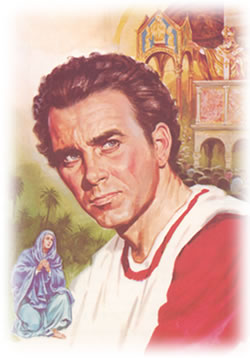
Again, how lovingly he contemplated the life of Christ, striving to reproduce an ever more St Augustine4.jpgperfect image of it in himself and to repay love with love. In his counsel to virgins, he impressed on them the same lesson: "Let Him be fixed deep in your heart, who for you was fastened to the cross." As his love of God burned with a more ardent flame as days went on, so too did he make incredible progress in the rest of the virtues. No one can refuse his admiration to a man--whom all venerated, extolled, consulted, hearkened to for his lofty genius and sanctity--both in his writings destined for publication and in his letters, making it his great concern not only to refer to the Author of all good the praise offered himself, as being due to God alone, and to encourage and praise others, as far as truth allowed, but also to lavish honor and reverence on his colleagues in the episcopate. These were especially his mighty forerunners, such as Cyprian and Gregory of Nazianzus, Hilary and John Chrysostom, Ambrose--his master in the Faith--whom he revered as a father and whose teaching and life he was wont to recall. But especially there shone with luster in our Saint the love of souls, a love inseparable from love of God, of those souls particularly who were committed to his pastoral care.
 

Pope Pius XI, Ad Salutem Humani  (On Saint Augustine), 20 April 1930
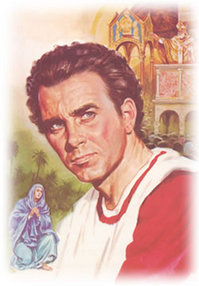
Death of St Monica.jpg[Monica] is the unflagging prayer, the piety that does not fall asleep. She knows no great fluctuations in prayer. She is very much surrendered to God and also to the Church. The intensive dimension of her prayer lies above all in its perseverance. She is able to repeat one and the same prayer for the longest time with the same energy. Vocal prayer, for her, never becomes merely something mouthed with the lips. She possesses in fact the prayer of children, those who are able to pray in a very intensive way, but without knowing an answer will come from God, without even expecting such an answer, but also without at all thinking that no answer will come. One simply brings before God what one has to say to him, with the greatest possible love. There is not much more to it than this. (Adrienne von Speyer, Book of All Saints.)


Let us pray. O God, the comforter of the sorrowful and the salvation of them that hope in Thee, Who had merciful regard to the pious tears of blessed Monica in bringing about the conversion of her son Augustine: grant us by their united intercession to grieve over our sins and obtain Thy merciful pardon. Through Christ our Lord.

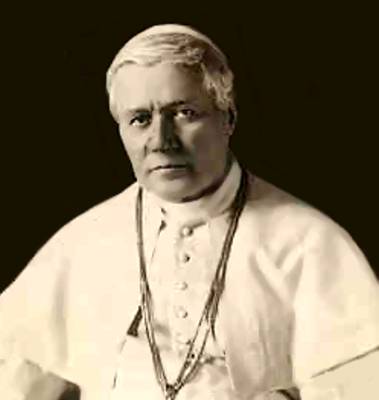
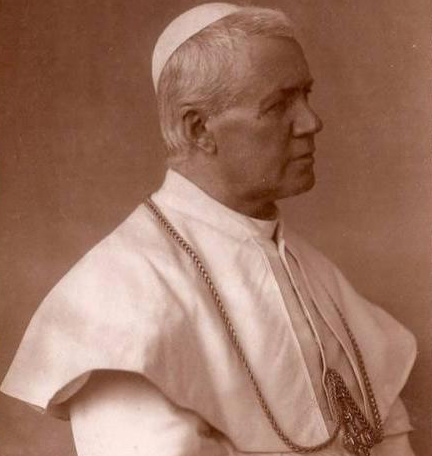
O God, who for the defense of the Catholic faith and to restore all things in Christ, filled saint Pius, the supreme Pontiff, with heavenly wisdom and apostolic strength; mercifully grant that following his teaching and example, we may attain to our eternal reward. Through Christ our Lord.


Pius Xa.jpg


Born    2 June 1835

Ordained priest       18 September 1858

Ordained bishop     20 November 1884

Created cardinal  12 June 1983

Appointed to Venice  15 June 1893

Elected Pope   4 August 1903

Died    20 August 1914

Beatified         3 June 1951

Canonized       29 May 1954


A beautiful, but brief description of the person of Saint Pius was written by Adrienne von Speyer, in Book of All Saints. This book was recently published by Ignatius Press and it would make a great addition to your library.

bern130.jpg

Truly it is right and just, our duty and our salvation,

always and everywhere to give you thanks,
Lord, holy Father, almighty and eternal God,
through Christ our Lord.


Christ is the Word
whom Saint Bernard held in the silence of his heart;
Christ is the Bridegroom
whom he desired with all the ardor of his soul;
Christ is the Son of the Virgin Mary
whose sweetness was his comfort and delight.


In the holy abbot Bernard you have given your Church
a teacher in the school of charity,
a prophet burning with the fire of the Holy Spirit,
a poet to sing the praises of the Virgin Mother,
a servant of unity and peace.

Even today, his words fill us with wonder,
inflame us with longing for the wedding of the Lamb,
and inspire us to sing your praise with joy.


Therefore, with the angels and the great company of saints,
we exalt your glory forever.


(Preface of the Mass of Saint Bernard)

Bernard Tolomei

| | Comments (0)

Today in Benedictine monasteries the liturgical memorial observed is that of Blessed Bernardo Tolomei2.jpgBernard Tolomei (sometimes he is already referred to as a saint but he won't be canonized by the church later this year). From the region of Siena, Blessed Bernard was the 14th century founder of the Olivetan congregation of Benedictine monks. Bernard and his spiritual sons are known for living a life of solitude and austerity while introducing a new form of monastic observance with a congregation structure (i.e., with an elected abbot general). The Olivetan monks wear white habits in honor of Our Lady and have a special devotion to the Paschal Mystery. The congregation was founded and continues to thrive at the Archabbey of Monte Oliveto Maggiore  (or here); congregation is present in the USA at the Abbey of Our Lady of Guadalupe (aka Pecos).


olivetan monk.jpgFamiliarize yourself with Bernard's influence. The charism and witness of this monastic tradition is manifested in Pope John Paul's Letter to the Olivetan Benedictines. An Italian artistic and cultural society is fostered in the Bernard Tolomei Foundation.


The Mass collects for today are help for our prayer:


Introit

I will give you shepherds after my own heart, and they shall feed you on knowledge and sound teaching. (Jer. 3:15)


Opening Prayer

Lord our God, through blessed abbot Bernard, you enriched Your Church with a new cross in Rome.jpgform of monastic observance. Strengthened by his help and example, may we gain the good things prepared for those who believe in You. We ask this through our Lord Jesus Christ, your Son, who lives and reigns with you and the Holy Spirit, one God, for ever and ever.


Prayer Over the Gifts

Lord, accept these gifts from your people. May the Eucharist we offer to Your glory in honor of Blessed Bernard help us on our way to salvation. Grant this in the name of Jesus the Lord.


Communion antiphon

The Son of Man did not come to be served, but to serve, and to give his life as a ransom for many. (Mt. 20:28)


Prayer after Communion

Lord, we receive the bread of heaven as we honor the memory of [Blessed] St. Bernard. May the Eucharist we now celebrate lead us to eternal joys. Grant this in the name of Jesus the Lord.

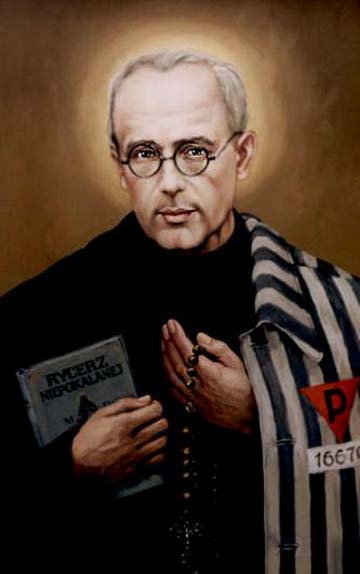
Today's the feast of the martyr Saint Maximilian Kolbe (January 8, 1894-August 14, Kolbe.jpg 1941), the Apostle of Consecration to Mary. Pope Benedict reminded us recently that the death of Kolbe was a witness of the love which "defeats the darkness of egoism and hatred." The Holy Father recalled words attributed Saint Maximilian Kolbe: "Hatred is not a creative force: only love is." On August 14, 1941, the saint died in place of Franciszek Gajowniczek.


When Pope John Paul II canonized Kolbe in the presence of Franciszek Gajowniczek he said that Saint Maximilian Kolbe was not a confessor, but a martyr. He is one of ten 20th-century martyrs from across the world who are depicted in statues above the Great West Door of Westminster Abbey, London.


Saint Maximilian is the patron saint for those living with drug addictions, the imprisoned people, journalists, political prisoners, prisoners, and the pro-life movement.


Kolbe is a special saint for me because from my school days his image and story were imprinted in my mind and heart by the Nazareth sisters. How could the story of Fr. Kolbe not move you? When I visited the Nazi concentration camps in 1996, and prayed in Kolbe's cell, his offering was very present to me. Through Kolbe's intercession before the Throne of Grace we ask for world peace and peace in our hearts.


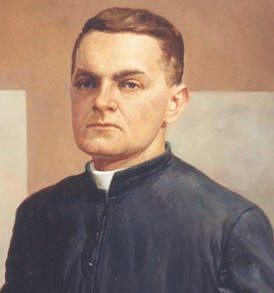
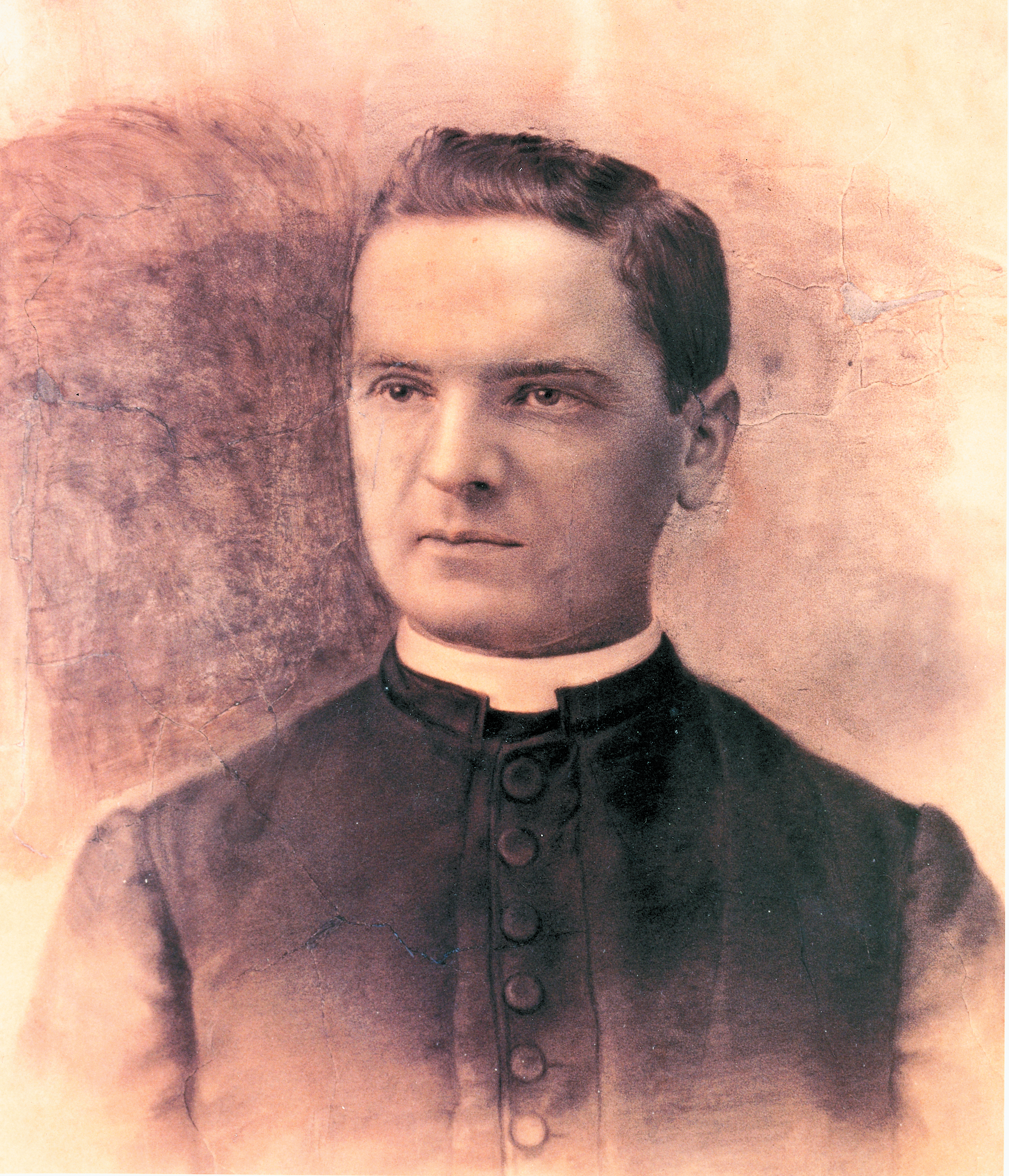
michaeljmcgivney.jpg118 years ago the Venerable Servant of God Michael J. McGivney died at the age of 38. A diocesan priest of the Hartford Diocese and founder of the Knights of Columbus, McGivney urged holiness and missionary activity with the Knights and his parishioners. The only way to manage this is to adhere 100% to Jesus Christ.


The prayer for canonization is an excellent summary of McGivney's work and a challenge for us to similarly respond to God and service of neighbor. The McGivney Guild which promotes McGivney's cause for sainthood by giving relevant information on Fr. McGivney and it has a number of devotional items to encourage devotion to him. The Guild publishes a newsletter 6 times per year. Membership is open to all people and free.


Prayer for the Canonization of

Father Michael J. McGivney


God, our Father, protector of the poor and defender of the widow and orphan, you called your priest, Father Michael J. McGivney, to be an apostle of Christian family life and to lead the young to the generous service of their neighbor.


Through the example of his life and virtue may we follow your Son, Jesus Christ, more closely, fulfilling his commandment of charity and building up his Body which is the Church. Let the inspiration of your servant prompt us to greater confidence in your love so that we may continue his work of caring for the needy and the outcast.


We humbly ask that you glorify your servant Father Michael J. McGivney on earth according to the design of your holy will.


Through his intercession, grant the favor I now present (here make your request).


Through Christ our Lord. Amen.


Today's Catholic News Service reports that Cardinal Newman's body will be moved


LONDON (CNS) -- The British government has agreed to allow the exhumation of the Thumbnail image for jhnewman.jpgbody of a 19th-century cardinal whose cause for sainthood widely is expected to progress soon to beatification. The Ministry of Justice granted a license to allow undertakers to dig up the body of Cardinal John Henry Newman from a grave in a small cemetery in the suburbs of Birmingham, England, and transfer it to a marble sarcophagus in a church in the city, where it can be venerated by pilgrims. The license was expected to arrive Aug. 11, the 118th anniversary of the cardinal's death in 1890. Approval had been delayed by several months because of a 19th-century law that forbids the transfer of bodies from graves to church tombs. But Sir Suma Chakrabarti, permanent secretary to the Ministry of Justice, finally decided to make a special exception to allow the exhumation to go ahead. Born in London in 1801, Cardinal Newman was an Anglican priest who led the Oxford movement in the 1830s to draw Anglicans to their Catholic roots. He converted to Catholicism at the age of 44 after a succession of clashes with Anglican bishops made him a virtual outcast from the Church of England.


The Venerable Servant of God John Henry Newman


The Venerable Servant of God John Henry Newman was born in London, 21 February JHN.jpg1801, and died Birmingham, 11 August 1890. As Vicar of Saint Mary's Oxford he exerted a profound spiritual influence on the Church of England. Accepting true faith as professed and taught by the Catholic Church in 1845, he founded Oratories of Saint Philip Neri in Birmingham (1848) and later in London (1849) and was the first rector of the Catholic University in Dublin. Newman was made a Cardinal by Pope Leo XIII in 1879. Through his published writings and private correspondence he created a greater understanding of the Catholic Church and her teachings, helping many persons with their religious difficulties. At his death he was praised for his unworldliness, humility, and prayerful contact with God. Pope John Paul II declared Newman a "Venerable Servant of God" on 22 January 1991. At the 2nd century of the Cardinal's birth Pope John Paul wrote:


For his [Newman] tomb he chose the inscription: Ex umbris et imaginibus in veritatem; and it was clear at the end of his life's journey that Christ was the truth he had found. But Newman's search was shot through with pain. Once he had come to that unshakeable sense of the mission entrusted to him by God, he declared: "Therefore, I will trust Him... If I am in sickness, my sickness may serve Him, in perplexity, my perplexity may serve Him... He does nothing in vain... He may take away my friends. He may throw me among strangers. He may make me feel desolate, make my spirits sink, hide the future from me. Still, He knows what He is about"  (Meditations and Devotions). All these trials he knew in his life; but rather than diminish or destroy him they paradoxically strengthened his faith in the God who had called him, and confirmed him in the conviction that God "does nothing in vain". In the end, therefore, what shines forth in Newman is the mystery of the Lord's Cross: this was the heart of his mission, the absolute truth which he contemplated, the "kindly light" which led him on.


Prayer for Canonization John Henry Newman

Eternal Father, You led John Henry Newman to follow the kindly light of Truth, and he obediently responded to your heavenly calls at any cost. As writer, preacher, counsellor and educator, as pastor, Oratorian, and servant of the poor he labored to build up your Kingdom.


Grant that through your Vicar on Earth we may hear the words, 'Well done, thou good and faithful servant, enter into the company of the canonized saints.'


May you manifest your Servant's power of intercession by even extraordinary answers to the prayers of the faithful throughout the world. We pray particularly for our intentions in his name and in the name of Jesus Christ your Son our Lord.  Amen.

The summer provides us with many notable opportunities to honor some great saints: Benedict, Ignatius, Peter Emyard, Augustine and the Lancaster Martyrs. Today the Church remembers Saint Dominic, a 13th century friar who set the world ablaze in the love of Christ.


On Saint Dominic's deathbed he gave his brothers his last will and testament: "Have Thumbnail image for Fra Angelico St Dominic Detail of Crucifixion.jpgcharity, guard humility, hold fast to voluntary poverty." Dominic promised them that he would be of more use to them in heaven than on Earth--a promise I believe he keeps even today but he has a lot of work to do yet. Our beloved father was buried according to his wishes, "under the feet of his brethren." Saint Dominic was canonized in 1234 by Pope Gregory IX.


Following is a letter by Robert Kilwardby, an English friar of the Order of Preachers. He was Oxford educated, a popular teacher, held numerous positions in the Order, was the archbishop of Canterbury, he crowned Edward I as King of England, and he is known to publically oppose the works of his fellow friar, Saint Thomas Aquinas because of his use of Aristotle. This "Letter to Novices" provides an insight into heart of the Order of Preachers and thus into person of Saint Dominic.


Brother Robert, to the novices of the Order of Preachers, beloved in Christ: May you be enlightened by the grace of the sevenfold Spirit through your pursuit of holiness.

            Consider your calling and notice its characteristics, so that you may magnify the Lord and exult in God our Savior.

            First of all, you should know that, before our Order arose, certain holy people were vouchsafed revelations from God, which we now have in writing, showing that the prayer of the glorious Virgin obtained this Order from her Son, when he was angry at the sins of the world, for the reconciliation of sinners. And it is not unreasonable to believe that it is from her too that the Order's progress and advancement and its guidance and preservation come. This has often been revealed from on high. So let us embrace our state of life all the more carefully, seeing how devotedly we ought to love such a patron, guardian and guide as we have in her, and how keenly we ought to honor her and how humbly we ought to reverence her.

            Then you should know that this Order resembles the state of life the apostles, and that which our Savior deigned to display in his earthly life. Of him it is written, "Jesus began to preach and to teach, 'Do penance, for the kingdom of heaven has come close.'" And again: "Jesus went about all the towns round about, teaching.'" Then he also laid his this job upon his disciples, saying, "Go into the world and preach the gospel." And the apostle says, "He has put in us the word of reconciliation," beseeching people for the sake of Christ, "Be reconciled to God."  Now what else, I ask you, does the Order of Preachers do, as it goes round so solicitously preaching the gospel and reconciling sinners?

            So those who are called by a divine prompting to such a state of life ought rightly to boast in Christ, seeing that they desire to apply themselves to carrying out the very job of Christ himself and his apostles.

            But some, who profess other states of life, say, "We too are likewise preachers, just as much as the members of the Order of Preachers." To them we reply, in accordance with the truth, that there are indeed people in other states of life who preach, but they do not do it in the same way. For the friars of the Order of Preachers do it by virtue of the institution of their Order, by virtue of their job which gives them their name; others do it, certainly, but in imitation of them, because they cannot find anything better or more useful that they could do. So what our Order does essentially by virtue of its original institution, others try to do in imitation, incidentally and beside their formal profession. So we, who have been chosen precisely for this purpose, should rejoice that we are right, in virtue of our foundation, what others imitate out of devotion.

OP arms.gif            Then you should notice the usefulness of our state of life, my beloved novices. In this, unless I am mistaken, our state of life ought, on any true calculation, to be preferred to all others. For all our Chapters and discussions and debates and all the Order's study aim at nothing else than to prepare people and to make them fit for the salvation of souls, and, when they are prepared and equipped in their way of life and in knowledge, to direct them to the task of converting sinners. So I reckon that no other Order works as hard in its concern for this as ours does, or achieves so much by its work.

            Therefore, those who have such a vocation ought rightly to rejoice, since it is well known that at the last judgment the reward is to be meted out in accordance with what a man merits by his useful labor.

            In addition to this, please look thoroughly at the special arrangements made in this Order about penance and austerity. The brethren of this Order are not prevented from edifying their neighbors in the fierce cold by the torment of having to go barefooted, nor, on the other hand, do they receive the comfort of going barefooted in the heat of summer. Also when they go out they do not enjoy the luxuries and delicacies of worldly cuisine. We believe that they reason for the first point, in God's plan, is to avoid being prevented in any way from teaching people. The second and third points are to given an example of the austerity involved in salutary penance and of the perseverance in it. The one is necessary of truth is to be made known, the other is give an example of how to live.

            Who would not cleave to such a state of life, once he had tasted its savor in his spirit?

            If a question arises about poverty, on which many people vaunt themselves, I consider that our state is the one which is truly to be praised. Who would dare deny that the poverty of Christ and his disciples was more perfect than that of any other? Well, we read that most perfectly holy company of Christ and his disciples had purses and carried in them what they were given for their livelihood and brought food for them. We know that the Order of Preachers lives in just the same way, with the addition that they own houses and gardens and schools to hold their teaching in.

            At this point some people claim that they possess nothing at all, either in common or individually, they hold no cash or money either in their own persons or through intermediaries, which is a far higher degree of poverty than the one I have been describing, which I said belonged to the company of the apostles. To this we reply that we do not wish nor should we wish to engage in quarrels, so we readily grant that their profession is as they say it is; may they do well in keeping it thoroughly! But it is enough for us in this regard not to go beyond the perfection of that apostolic poverty which Christ taught in the gospel.

opsts1.gif            In addition, I would point out that nobody ought to regard himself as superior to the rest because of his material poverty, unless he is conscious of being more poor in spirit than the rest. It does not say, "Blessed are the poor in things," but "Blessed are the poor in spirit." If there are any who regard themselves as better than the rest because of their state of poverty because of this make less of others or reduce them in the eyes of men, then they ought to ask themselves whether they can reasonably be said to possess that poverty of spirit, in which humility resides, without seeking to make itself public, and in which humility resides, without charity too principally resides, which seeks always to commend other people.

            And, finally, since neither receiving nor possessing is a vice, nor is non-possession or non-receiving a virtue -it is the use of things which matters: if it is intemperate it is vicious, if it is temperate it is virtuous -what good is it boastfully to regard yourself as better than anyone else just on the strength of not receiving or not possessing anything, as if this constituted a more excellent state, when it is in fact indifferent, as far as vice and virtue are concerned?

            So if anyone is to boast, it should be people who reckon that they excel in poverty because of their more sparing and temperate use of things, always provided that they attribute this to Christ and do not wish to be known in order to be praised, nor to be preferred to others in such a way that the others are despised; for it is the case, not only have they not won their reward, but because they have jettisoned humility and charity, they will actually be in a state of sin.

            So let Christ's poor receive and possess what is necessary for this mortal life, saving always the apostolic principle, which the Savior and his disciples observed, "Having food and enough clothing to cover them, with this let them be content."

            Maybe some wag will say, "Why, then, do you possess books and church furnishings, which are neither food nor clothing"? to this the answer is that the text of the apostle, "Having food, etc," refers to people's bodily life but this objection raises a matter of a person's own spiritual benefit and that of his neighbor. The apostle did not neglect his books. And the primitive church established the principle of the faithful living together and having things in common, the first of which is necessary if the truth is to be preached, the second to give form to charity; for the first, there is no doubt that books are needed, and for the second, where men live together in a common life, church furnishings are needed.

            Having said all this, to foster love of our state of life, we must go on to say that we should despise nobody and no state of life; it is profitless to fuss over human statutes and neglect the command of God which bids us love our neighbor as ourselves -on which St. Augustine teaches that "neighbor" must be taken to mean everybody. So let no individual person or state of life be found to be debarred from our love, which we have in God, because in commanding us to love even our enemies, he plainly showed that he wanted no one at all to be excluded from love. So, far from us be all detraction, criticism, insult, gossip or cursing, whether of people or any state of life, far from us be all comparisons at the expense of others. If we hear anyone telling stories of this kind or insinuating criticisms, we should rebuke him and deny him our attention, turning our faces sadly away from him. For, though we are bound by charity to commend our state in accordance with truth, we cannot detract from any other state. 


From The Early Dominicans, Paulist Press

Sometimes you can get inspired by reading the blogs. Today, Fr. Mark posted on his blog the Apostolic Exhortation Haerent Animo by Saint Pius X. papa pio x.jpgGiven that today is the 100th anniversary of the exhortation's publication and the feast of Saint John Baptist Mary Vianney, reading Haerent Animo was excellent spiritual reading. It took me the better of the morning to ponder what the saintly pontiff was saying, not because the prose was difficult, or the concepts too mysterious but because I kept stopping to reflect on my concrete experience of priestly formation and thinking of the lives of priests I know. I was sadly dwelling on the problems the priesthood has had in recent years.


In writing this exhortation on the occasion of his 50th anniversary of priesthood, the Pope is taking seriously his "responsibility of forming Christ in others." So, what's revolutionary about Haerent Animo? Nothing! AND that's the point. We already know what we have to do to be men of God, holy priests, men of "high dignity" called to be priests, i.e., servants of the Lord and the Church. A good reminder is helpful. Therefore, objectivity the pope presents in Haerent Animo relates to the following work one has to do if a holy priesthood is to exist. The Pope re-proposes:


Thumbnail image for St Pius X.jpg-daily meditation

-daily examination of conscience

-daily celebration of the august rites of the Church with beauty by proper preparation spiritually and intellectually

-daily prayer, particularly the Divine Office

-frequent confession of mortal and venial sins

-self denial

-seeking the Lord's clemency

-yearly retreat with others

-Lectio Divina (attentive reading of sacred Scripture)

-develop good friendships


The point is that the priest's conduct must be stellar for fear of causing scandal in others. But fear of causing scandal ought not be the criterion for doing what the Pope re-proposes: the encounter with honesty, faithfulness, love and Christ ought to be included. Say it another way, an overgrown plant will bear no fruit. So our responsibility is to be watchful, be vigilant, and pray. This work will lead us closer to Christ in His words and in His actions; this work will lead to a deeper friendship with the Lord; doing this work will lead to holiness of life.


One thing the pope mentions is forming priestly associations to create a closer union among priests, to help one another in difficult times, to develop a taste of sacred learning, to have a solicitude for each other's vocation, and to identify the skills needed to effectively preach the Gospel.  It is a fact if one wants to be "good priest" then it being a part of such associations from the first day of one's ordination. Either join a group or found one: But do something. Seminarians in the Archdioceses of Denver Saint Paul-Minneapolis recently founded priestly associations of type such as Saint Pius recommends.


I recommend that you read Haerent Animo soon. It will be good for you!

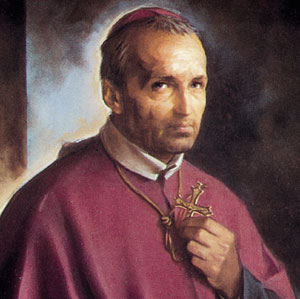
Today is the feast of a great bishop, founder and doctor of the Church, Saint Alphonsus St Alphonsus.jpgLigouri (1696-1787). The saint's spiritual, dogmatic, liturgical and systematic writings are remarkable sources of inspiration and challenge. Little recognized but nontheless true is Saint Alphonsus was a poet and a musician. After all, the saint is from Naples! It is reported that Giuseppe Verdi said of St. Alphonsus' great Christmas carol: "Christmas without 'Tu Scendi Dalle Stelle' is not Christmas." 


Among the writings that you'll find helpful are his Way of the Cross, Visits to the Blessed Sacrament, The Moral Theology and The Glories of Mary.


For our lectio I propose the following:


Perfection is founded entirely on the love of God: "Charity is the bond of perfection"; and perfect love of God means the complete union of our will with God's: "The principal effect of love is so to unite the wills of those who love each other as to make them will the same things." It follows then, that the more one unites his will with the divine will, the greater will be his love of God. Mortification, meditation, receiving Holy Communion, acts of fraternal charity are all certainly pleasing to God -- but only when they are in accordance with his will. When they do not accord with God's will, he not only finds no pleasure in them, but he even rejects them utterly and punishes them.


Conformity to God's Will
St. Alphonsus Maria de Ligouri


O God, Who did inflame blessed Alphonsus Your confessor and Bishop with a burning zeal for the salvation of souls and through him did enrich Your Church with new offspring; grant we beseech You, that imbued with his wholesome precepts and strengthened by his example, we may come happily unto You.

About the author

Paul A. Zalonski is from New Haven, CT. After years of study, work and trying to find meaning in life, he still has a sense of humor. Paul is discerning God's plan and is preparing for ordination to the priesthood. Contact Paul at paulzalonski(at)yahoo.com.

Pages

Humanities Blog Directory

About this Archive

This page is a archive of entries in the Saints category from August 2008.

Saints: July 2008 is the previous archive.

Saints: September 2008 is the next archive.

Find recent content on the main index or look in the archives to find all content.