Saints: November 2008 Archives

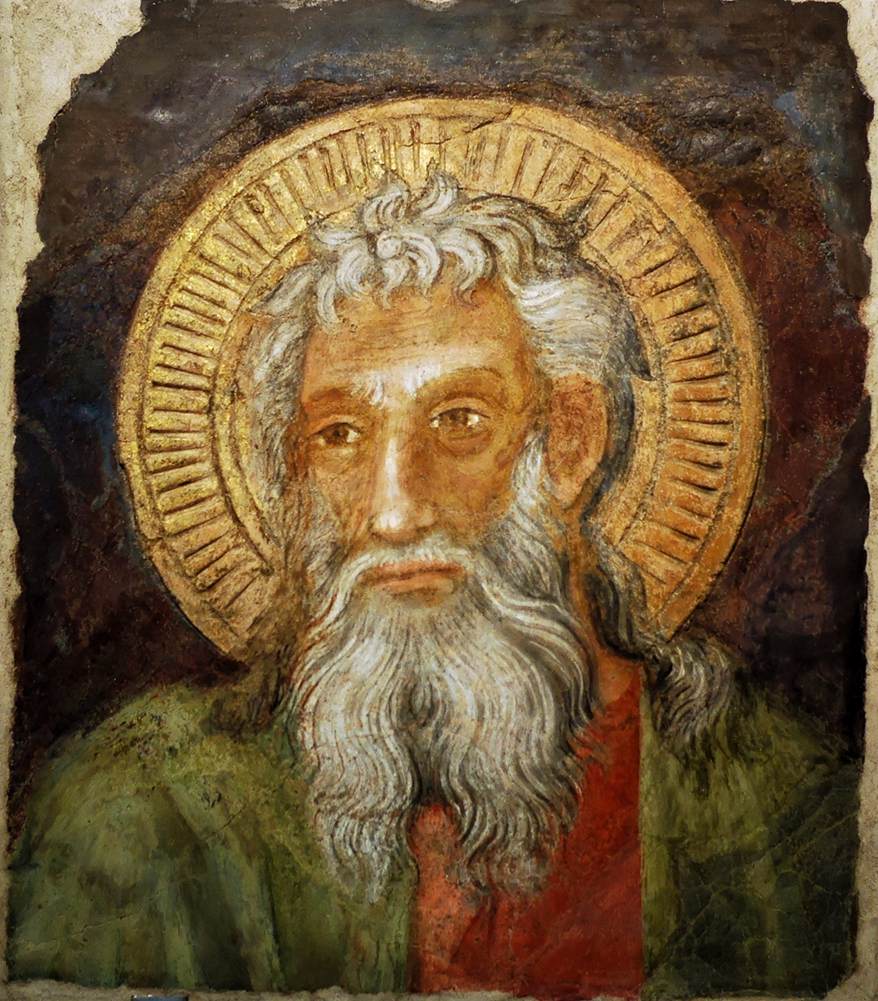
Saint Andrew

| | Comments (0)

St Andrew2.jpgOne of the two who followed the Lord was Andrew, the brother of Simon Peter, alleluia.


V. Their sound goes forth to all the earth.


R. And their speech to the end of the world.


We humbly beseech Thy majesty, O Lord, that blessed Andrew the Apostle was both a preacher and ruler of Thy Church, so that he may unceasingly intercede for us with Thee.


Let pray, on this feast of Saint Andrew, for the unity of the Christian Churches, for the See of Constantinople and the See of Rome!

Saint Sylvester, abbot

| | Comments (0)

St Sylvester abbot2.jpgMost merciful God, Who, when the holy abbot Sylvester stood by the side of an open tomb meditating on the vanity of the things of this world, did vouchsafe to call him into the wilderness and there to adorn him with the merits of a most holy life; we humbly beseech Thee, that following his example and despising earthly things, we may enjoy eternal fellowship with Thee.


The Sylvestrine Benedictine charism has a constant devotion to the passion of Christ, a special relationship to Mary, the Mother of God. What Saint Sylvester gave his followers was the blessing of being true spiritual father with a genuine ability to attract and to form his disciples according to God's own ways. The monks of this congregation seriously lived the vocation in simplicity and poverty for Christ and the Church.


In speaking to the venerable Sylvestrine Benedictines, Pope John Paul II said:


A contemplative and anxious to be consistent with the Gospel, Sylvester became a hermit, practicing a strict ascetical life and growing in a deep and vigorous spirituality. For his disciples he chose Saint Benedict's Rule, wishing to build a community that would be dedicated to contemplation but would not ignore the surrounding social reality. In fact, he himself united a life of recollection, with the ministry of an esteemed spiritual fatherhood and the proclamation of the Gospel to the people of the region.

Saint Catherine of Alexandria

| | Comments (0)

Born of a noble family, Catherine was committed to her faith in Christ and made the claim she was his bride; she therefore refused the marriage proposal of the emperor. Defending her decision before 50 philosophers by making a superior argument, she was tortured by being splayed on a wheel and then beheaded.


St Catherine of Alexandria2.jpg

The kingdom of heaven is like a merchant seeking good pearls, who, when he had found one of great price, gave all that he had and bought it.


O God, Who did give the law to Moses from the top of Mount Sinai and did  miraculously convey there by Thy holy Angles the body of blessed Catherine, Thy Virgin and Martyr; we beseech Thee, grant  that by virtue  of her merits and intercession, we may attain to that mount which is Christ.


In Praise of Virginity
by Saint Ephrem of Edessa, deacon & Doctor of the Church


Blessed are you, virgin, with whom 
the comely name of virginity grows old. 
In your branches chastity built a nest; 
may your womb be a nest for her dwelling place. 
May the power of mercy preserve your temple.


Blessed are you, heavenly sparrow 
whose nest was on the cross of light. 
You did not want to build a nest on earth 
lest the serpent enter and destroy your offspring.


Blessed are your wings that were able to fly. 
May you come with the holy eagles 
that took flight and soared from the earth below 
to the bridal couch of delights.


Blessed are you, O shoot that Truth cultivated; 
He engrafted your medicine into the Tree of Life. 
Your fruit exults and rejoices at all times 
to drink the drink of the Book of Life. 
Blessed are your branches.


Blessed are you, O bride, espoused to the Living One, 
you who do not long for a mortal man. 
Foolish is the bride who is proud 
of the ephemeral crown that will be gone tomorrow.


Blessed is your heart, captivated by love 
of a beauty portrayed in your mind. 
You have exchanged the transitory bridal couch 
for the bridal couch whose blessings are unceasing.


Blessed are you, free woman, who sold yourself 
to the Lord who became a servant for your sake! 

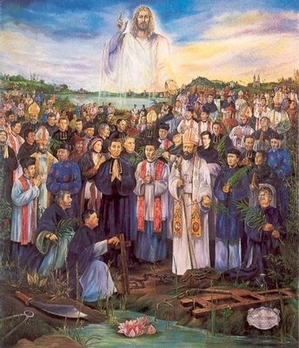
Thumbnail image for St Andrew Dung-lac & comp.JPGO God, the source and origin of all fatherhood, you kept the blessed martyrs Andrew and his companions faithful to the cross of your Son even to the shedding of their blood. Through their intercession enable us to spread your love among our brothers and sisters, that we may be called and may truly be your children.


An excerpt of a letter written 1843 by Paul Le-Bao-Tinh, shortly before his martyrdom:


I, Paul, chained for the name of Christ, wish to tell you the tribulations in which I am immersed every day, so that you, inflamed with love for God, may also lift up your praise to God, 'for his mercy endures forever'. This prison is truly the image of the eternal Hell: to the cruelest tortures of all types, such as fetters, iron chains and bonds, are added hate, vindictiveness, calumny, indecent words, interrogations, bad acts, unjust oaths, curses and finally difficulties and sorrow. But God, who once freed the three boys from the path of the flames, is always with me and has freed me from these tribulations and converted them into sweetness, 'for his mercy endures forever...


Assist me with your prayers so that I may struggle according to the law, and indeed 'fight the good fight' and that I may be worthy to fight until the end, finishing my course happily; if we do not see each other again in this life, in the future age, nonetheless, this will be our joy, when standing before the throne of the spotless Lamb, with one voice we sing his praises, exulting in the joy of eternal victory. Amen.

Blessed Miguel Pro

| | Comments (0)

Bl Miguel Augustin Pro.jpgToday is the liturgical memorial of Blessed Miguel Pro, a fitting connection with today's  Solemnity of Christ the King, and the devotion to the Sacred Heart. The memorable line of Pro's is his last: Long live Christ the King. With that he was killed. Blessed Miguel Pro teaches us to serve Christ the King all that we do and remain close to the mercy of God. He wrote:


I believe, O Lord, but strengthen my faith... Heart of Jesus, I love Thee; but increase my love. Heart of Jesus, I trust in Thee; but give greater vigor to my confidence. Heart of Jesus, I give my heart to Thee; but so enclose it in Thee that it may never be separated from Thee. Heart of Jesus, I am all Thine; but take care of my promise so that I may be able to put it in practice even unto the complete sacrifice of my life.


Chaplet of Blessed Miguel Pro, SJ


Blessed Miguel, before your death, you told your friend to ask you for favors when you were in Heaven. I beg you to intercede for me and in union with Our Lady and all the angels and saints, to ask Our Lord to grant my petition, provided that it be God's Will. {mention the request}

We honor and adore the triune God. The Gloria.
We ask the Holy Spirit for guidance. Come Holy Ghost.
We pray as Jesus taught us to pray. The Our Father.
We venerate with love the Virgin Mary. The Hail Mary.
All you angels, bless you the Lord forever.
Saint Joseph, Saint {name of your patron}, and all the saints, pray for us.

Blessed Miguel, high spirited youth, pray for us. Viva Christo Rey.
Blessed Miguel, loving son and brother, pray for us. Viva Christo Rey.
Blessed Miguel, patient novice, pray for us. Viva Christo Rey.
Blessed Miguel, exile from your homeland, pray for us. Viva Christo Rey.
Blessed Miguel, prayerful religious, pray for us. Viva Christo Rey.
Blessed Miguel, sick and suffering, pray for us. Viva Christo Rey.
Blessed Miguel, defender of workers, pray for us. Viva Christo Rey.
Blessed Miguel, courageous priest in hiding, pray for us. Viva Christo Rey.
Blessed Miguel, prisoner in jail, pray for us. Viva Christo Rey.
Blessed Miguel, forgiver of persecutors, pray for us. Viva Christo Rey.
Blessed Miguel, holy martyr, pray for us. Viva Christo Rey.

Imprimatur: Joseph A. Fiorenza, Bishop of Galveston - Houston, August 13, 1995


Saint Cecilia

| | Comments (0)

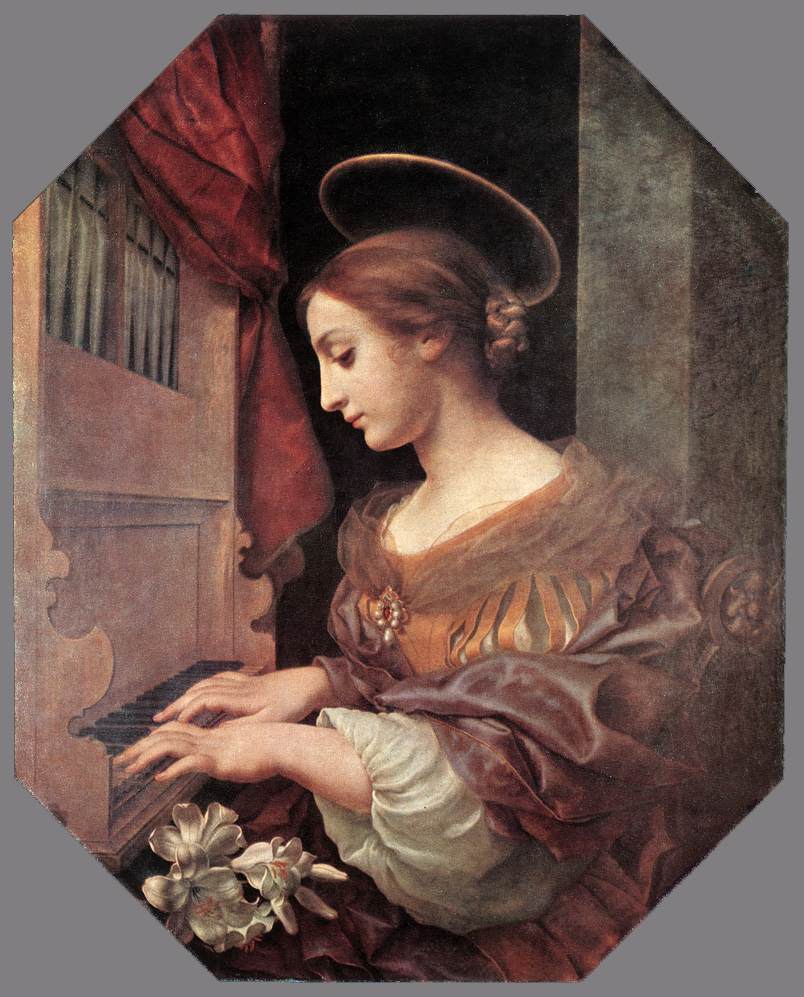
While musical instruments were playing,

Cecilia sang to the Lord, saying:

St Cecilia at organ.jpgLet my heart be undefiled, that I be not confounded.


O God, Who does gladden us by the annual solemnity of blessed Cecilia, Thy Virgin and Martyr, grant that as we venerate her by this festival we may also follow in the example of her holy life.


But Oh! What Art Can Teach,
What Human Voice Can Reach

The Sacred Organ's Praise?

Notes Inspiring Holy Love,

Notes That Wing Their Heavenly Ways
To Mend The Choirs Above


(John Dreyden, Song for St. Cecilia's Day, 1687.)

Blessed art thou, O may, who did believe; those things shall be fulfilled in thee which were spoken to thee by the Lord, alleluia.


Presentation of the BVM3.jpgO God, Who did will that the blessed Mary ever Virgin, the dwelling place of the Holy Spirit, should this day be presented in the temple; we beseech Thee, grant that through her intercession we may be found worthy to be present in the temple of Thy glory.


Mater Amabilis

Mother most lovable


WHY is she "Amabilis" thus specially? It is because she was without sin. Sin is something odious in its very nature, and grace is something bright, beautiful, attractive.


However, it may be said that sinlessness was not enough to make others love her, or to make her dear to others, and that for two reasons: first, because we cannot like anyone that is not like ourselves, and we are sinners; and next, because her being holy would not make her pleasant and winning, because holy persons whom we fall in with, are not always agreeable, and we cannot like them, however we may revere them and look up to them.


Now as to the first of these two questions, we may grant that bad men do not, cannot like good men; but our Blessed Virgin Mary is called Amabilis, or lovable, as being such to the children of the Church, not to those outside of it, who know nothing about her; and no child of Holy Church but has some remains of God's grace in his soul which makes him sufficiently like her, however greatly wanting he may be, to allow of his being able to love her. So we may let this question pass.


But as to the second question, viz., How are we sure that our Lady, when she was on earth, attracted people round her, and made them love her merely because she was holy? -- considering that holy people sometimes have not that gift of drawing others to them.


To explain this point we must recollect that there is a vast difference between the state of a soul such as that of the Blessed Virgin, which has never sinned, and a soul, however holy, which has once had upon it Adam's sin; for, even after baptism and repentance, it suffers necessarily from the spiritual wounds which are the consequence of that sin. Holy men, indeed, never commit mortal sin; nay, sometimes have never committed even one mortal sin in the whole course of their lives. But Mary's holiness went beyond this. She never committed even a venial sin, and this special privilege is not known to belong to anyone but Mary.


Now, whatever want of amiableness, sweetness, attractiveness, really exists in holy men arises from the remains of sin in them, or again from the want of a holiness powerful enough to overcome the defects of nature, whether of soul or body; but, as to Mary, her holiness was such, that if we saw her, and heard her, we should not be able to tell to those who asked us anything about her except simply that she was angelic and heavenly.


Of course her face was most beautiful; but we should not be able to recollect whether it BVM.jpgwas beautiful or not; we should not recollect any of her features, because it was her beautiful sinless soul, which looked through her eyes, and spoke through her mouth, and was heard in her voice, and compassed her all about; when she was still, or when she walked, whether she smiled, or was sad, her sinless soul, this it was which would draw all those to her who had any grace in them, any remains of grace, any love of holy things. There was a divine music in all she said and did -- in her mien, her air, her deportment, that charmed every true heart that came near her. Her innocence, her humility and modesty, her simplicity, sincerity, and truthfulness, her unselfishness, her unaffected interest in every one who came to her, her purity -- it was these qualities which made her so lovable; and were we to see her now, neither our first thought nor our second thought would be what she could do for us with her Son (though she can do so much), but our first thought would be, "Oh, how beautiful!" and our second thought would be, "Oh, what ugly hateful creatures are we!"


(taken from Card. John Henry Newman's "Discourses to Mixed Congregations", 1849)

St Edmund.jpg

We have heard of many wonders in the popular talk about the holy Edmund, which we will not set down here in writing; but every one knows them. By this saint is it manifest and by others like him, that Almighty God can raise man again, in the day of judgment, incorruptible from the earth, He who preserves Edmund whole in his body until the great day, though he was made of earth. Worthy is the place for the sake of the venerable saint that men should venerate it and well provide it with God's pure servants, to Christ's service, because the saint is greater than men may imagine.


The English nation is not without the Lord's saints, since in England lie such saints as this holy king, and the blessed Cuthbert, and saint Æthelthryth in Ely, and also her sister, incorrupt in body, for the confirmation of the faith. There are also many other saints among the English who work many miracles, as is widely known, to the praise of the Almighty in whom they believed. Christ shows to men, through His illustrious saints, that He is Almighty God who causes such wonders... No wonders are wrought at their sepulchres because they believe not in the living Christ; but Christ manifests to men where the true faith is, since He works such miracles by His saints widely throughout the earth; wherefore to Him be Glory ever with His Heavenly Father, and with the Holy Ghost, for ever and ever. Amen.       (an excerpt from Aelfric's Life of Saint Edmund)


A brief biography can be read here and here.


Lord our God,

St Mechtild.jpgthrough Your loving favor,

You revealed to blessed Mechtild, your virgin, the hidden secrets of your providence. May we who know You now through faith rejoice hereafter to see You face to face.


Grant this through our Lord Jesus Christ, Your Son, who lives and reigns with you and the Holy Spirit, one God, for ever and ever.


A brief biography can be read here. One key point in the life of Saint Mechtild is that she was the dear friend of Saint Gertrude the Great and who had a spiritual daughter in the other Mechtild, that of Magdeburg, who lived at the same time.

Saint Rose Philippine Duchesne

| | Comments (0)

St Rose Philippine Duchesne.jpgGracious God, You filled the heart of Rose Philippine Duchesne with charity and missionary zeal, and gave her the desire to make you known among all peoples. Fill us, who honor her memory today, with that same love and zeal to extend your kingdom to the ends of the earth.


Saint Rose Philippine immigrated to the USA and was a missionary on the North American frontier. As a member of the Society of the Sacred Heart she founded convents of her order, schools and ministered to a variety of peoples. If it weren't for her help the Jesuits would not have succeeded in settling in Missouri. Her shrine is near St. Louis, MO.


A brief note is read here.

Saint Gertrude the Great

| | Comments (0)

St Gertrude3.jpgO God, Who in the most pure heart of blessed Gertrude Thy Virgin did prepare for Thyself a well-pleasing dwelling, mercifully efface all stains from our hearts, so that they may merit worthily to be made the dwelling place of Thy divine majesty.


Saint Gertrude was not drawn to the Heart of Jesus as much as through the Heart of Jesus, to the Father, in the Holy Spirit. Her prayer is essentially Trinitarian. Her whole being is oriented ad Patrem, and this because she is united to the Son, because she has entered through the pierced Heart of the Son as through an open door, oriented and carried as it were, by the breath of the Holy Spirit.


Saint Gertrude reminds us that the entire liturgy is Trinitarian: every detail, the smallest word or gesture in the sacred liturgy is a contact with Christ. In the liturgy, nothing is insignificant. Everything is invested with sacramentality, that is, with the potential to unite us to Christ, so that through Him and with Him we might pass into the fiery embrace of the Holy Spirit and the bosom of the Father. Saint Gertrude reminds us that the liturgy -- the Eucharist and other the sacraments, but also the Liturgy of the Hours -- is more than a complex of words and chants, rites and gestures. (courtesy of MDMK)


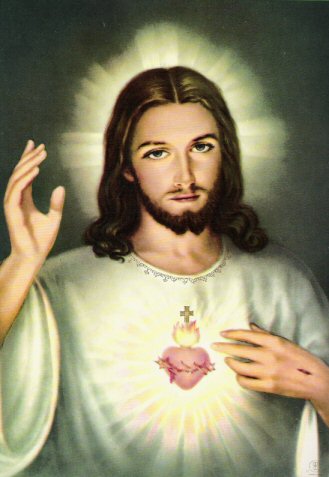
Sacred Heart2.jpgSaint Gertrude's Prayer to the Sacred Heart of Jesus

Hail! O Sacred Heart of Jesus, living and quickening source of eternal life, infinite treasure of the Divinity, and burning furnace of divine love. You are my refuge and my sanctuary, O my amiable Savior.


Consume my heart with that burning fire with which Yours is ever inflamed. Pour down on my soul those graces which flow from Your love, and let my heart be so united with Yours, that our wills may be one, and mine in all things, be conformed to Yours. May Your divine will be equally the standard and rule of all my desires and of all my actions. Amen.


Saint Gertrude on friendship


One day between Easter and Ascension I went into the garden before [Office of] Prime, and sitting down beside the pond, I began to consider what a pleasant place it was. I was charmed by the clear water and flowing streams, the fresh green of the surrounding trees, the birds flying so freely about, especially the doves. But most of all, I loved the quiet, hidden peace of this secluded retreat.


I asked myself what more was needed to complete my happiness in a place that seemed to me so perfect, and I reflected that it was the presence of a friend, intimate, affectionate, wise, and companionable, to share my solitude


Saint Frances Xavier Cabrini

| | Comments (0)

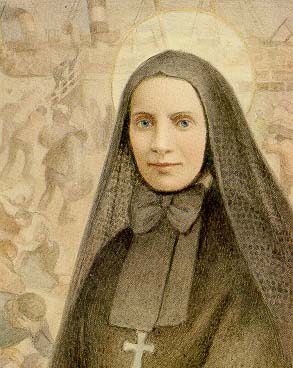
The first American citizen canonized a saint in 1946, Mother Cabrini founded the Missionary Sisters of the Sacred Heart. Her shrine is in Washington Heights, New York City.


St Frances Xavier Cabrini.jpgInspired by the grace of God, we join the saints in honoring the holy virgin Frances Xavier Cabrini. She was a humble woman who became outstanding not because she was famous or rich or powerful, but because she lived a virtuous life. From the tender years of her youth, she kept her innocence as white as a lily and preserved it carefully with the thorns of penitence; as the years progressed, she was moved by a certain instinct and supernatural zeal to dedicate her whole life to the service and greater glory of God.

She welcomed delinquent youths into safe homes, and taught them to live upright and holy lives. She consoled those who were in prison, and recalled to them the hope of eternal life. She encouraged prisoners to reform themselves, and to live honest lives.

She comforted the sick and the infirm in the hospitals, and diligently cared for them. She extended a friendly and helping hand especially to immigrants, and offered them necessary shelter and relief, for having left their homeland behind, they were wandering about in a foreign land with no place to turn for help. Because of their condition, she saw that they were in danger of deserting the practice of Christian virtues and their Catholic faith.

Undoubtedly she accomplished all this through the faith which was always so vibrant and alive in her heart; through the divine love which burned within her; and finally, through constant prayer by which she was so closely united with God from whom she humbly asked and obtained whatever her human weakness could not obtain. Although her constitution was very frail, her spirit was endowed with such singular strength that, knowing the will of God in her regard, she permitted nothing to impede her from accomplishing what seemed beyond her strength.

From a homily at the canonization of Saint Frances Xavier Cabrini by Pope Pius XII


God our Father, you called Frances Xavier Cabrini from Italy to serve the immigrants of America. By her example teach us concern for the stranger, the sick, and the frustrated. By her prayers help us to see Christ in all the men and women we meet.

Benedictine All Saints

| | Comments (0)

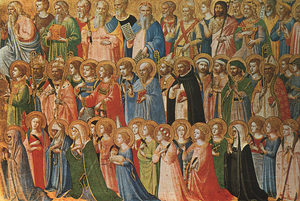
Christ and saints.jpgToday we celebrate the feast of All Saints who persevered under the Rule of Saint Benedict are now with God as intercessors for us at the Throne of Grace.


Let us all rejoice in the Lord, celebrating a festival in honor of all the saints who did battle under the Rule of Saint Benedict, at whose solemnity the Angels rejoice and all together praise the Son of God.


Almighty and ever-faithful God, who ceaselessly bestow the gift of monastic life upon your Church, grant us, we beseech you,   perseverance in that same vocation that we may advance full of gratitude for those who have gone before us on this path, holding nothing more dear than Christ.

Saint Theodore of Studis

| | Comments (0)

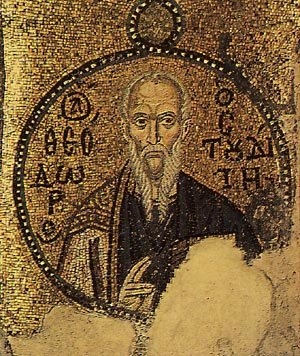
I solemnly tell you: those who have left everything and followed me will be repaid a St Theodore of Studios.JPGhundredfold and will gain eternal life. (Matthew 19:27-29)


Lord our God, through the blessed abbot Theodore, You restored the beauty and discipline of monastic observance. By his help and example may we conformed to the sufferings of Christ through endurance also share in his glory.


Saint Martin of Tours

| | Comments (0)

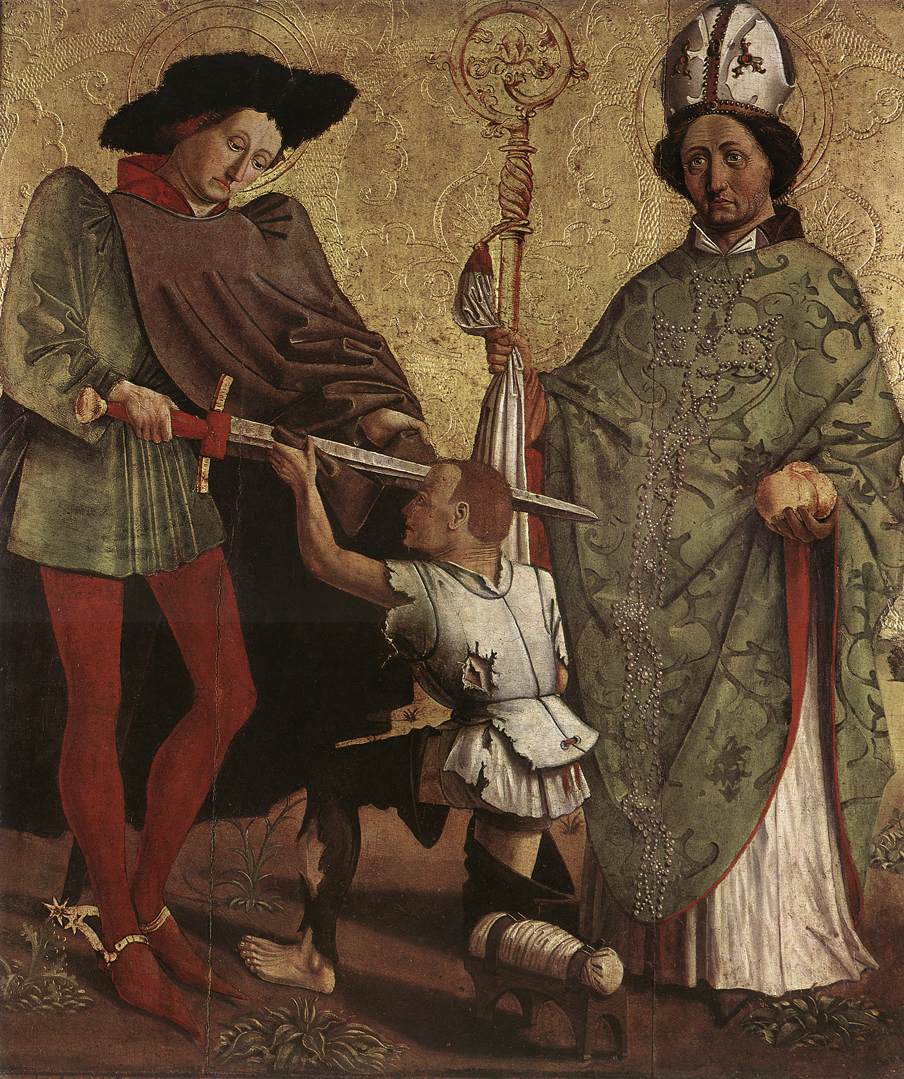
Ss Martin of Tours and Nicholas of Bari.jpgO God, who were magnified in the life of Saint Martin as in his death, renew the wonders of your grace in our hearts, so that neither death nor life may separate us from your love.


Adrienne von Speyr's vision of Saint Martin of Tours (a.d. 316-400) ...


His soul is childlike and good and has something so immediately genuine about it, above all so unspoiled, it is as if he had preserved the faith he had as a child, as if he had never had any bad experiences as all in his life. To be sure, he has experience with sin; he knows how bad people are, but he sees them so much in the light of the Lord's offer of grace that grace is more visible to him than sin is, and he is moved more profoundly by grace than by the possibility of sin. He is like the child in the fairytale who can see only the good fairies and overlooks everything with others and does not even consider the possibility that someone might refuse his offer to share. Like a child who plays around with someone, tells him stories, and is certain his will delight his hearer as much as they delighted him. Thus, he brings all his concerns before God with the awareness that God will hear them. And God constantly hears him, because Christ regards him as one of the little ones whom he invites and calls to himself. He cannot turn down a single request of his. His prayer is good and full of love, and he does not have to lead himself into prayer or be led; his entire life is prayer. His vocal prayer and his contemplation are only sections of this life, which as a whole is a prayer. When he pauses in his work and prays, then it is as if he wanted to rest for a bit and gather a few directions for the next section of life. Even his work in the Church is a labor of love, of love for God and for his neighbor. He occasionally suffers because of the Church, but almost in an impersonal way, that is, not in the sense that certain particular occasions cause it, but from the outset within the Lord's suffering. And he always imagines that the Lord suffers much more from the thing than Martin himself suffers at the moment.


(And what is his death like?) I see anxieties regarding death. And afterward, in the midst of dying, perfect surrender. Perhaps it is also the case that these anxieties in part are a substitute for the anxieties of which he otherwise had so little experience in his life.


(Book of Saints, 2008)


Saint Leo the Great

| | Comments (0)

Saint Leo makes the link that encourages us to link the Beatitudes with the health of one's interior life and the adherence to the will of God. Here, humility of spirit is given as a key to living in the kingdom of God.


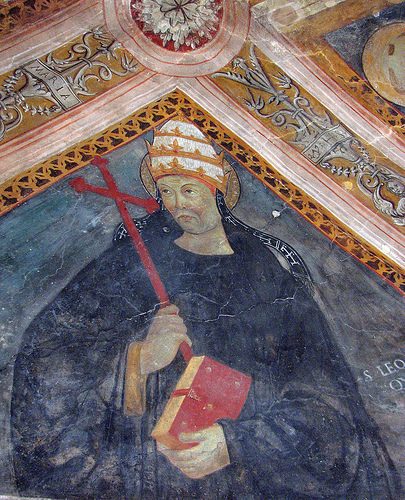
St Leo the Great.jpgWhen our Lord Jesus Christ, beloved, was preaching the gospel of the Kingdom, and was healing various sicknesses through the whole of Galilee, the fame of His mighty works had spread into all Syria: large crowds too from all parts of Judæa were flocking to the heavenly Physician (Matthew 4:23-24). For as human ignorance is slow in believing what it does not see, and in hoping for what it does not know, those who were to be instructed in the divine lore, needed to be aroused by bodily benefits and visible miracles: so that they might have no doubt as to the wholesomeness of His teaching when they actually experienced His benignant power. And therefore that the Lord might use outward healings as an introduction to inward remedies, and after healing bodies might work cures in the soul.


Then He separated Himself from the surrounding crowd, ascended into the retirement of a neighboring mountain, and called His apostles to Him there, that from the height of that mystic seat He might instruct them in the loftier doctrines, signifying from the very nature of the place and act that He it was who had once honored Moses by speaking to him: then indeed with a more terrifying justice, but now with a holier mercifulness, that what had been promised might be fulfilled when the Prophet Jeremiah says: behold the days come when I will complete a new covenant for the house of Israel and for the house of Judah. After those days, says the Lord, "I will put my laws in their minds, and in their heart will I write them." He therefore who had spoken to Moses, spoke also to the apostles, and the swift hand of the Word wrote and deposited the secrets of the new covenant in the disciples' hearts. There were no thick clouds surrounding Him as of old, nor were the people frightened off from approaching the mountain by frightful sounds and lightning, but quietly and freely His discourse reached the ears of those who stood by: that the harshness of the law might give way before the gentleness of grace, and the spirit of adoption might dispel the terrors of bondage.


The nature then of Christ's teaching is attested by His own holy statements: that they who St Leo the Great2.jpgwish to arrive at eternal blessedness may understand the steps of ascent to that high happiness. "Blessed," He says, "are the poor in spirit, for theirs is the kingdom of heaven" (Matthew 5:3). It would perhaps be doubtful what poor He was speaking of, if in saying blessed are the poor He had added nothing which would explain the sort of poor: and then that poverty by itself would appear sufficient to win the kingdom of heaven which many suffer from hard and heavy necessity. But when He says blessed are the poor in spirit, He shows that the kingdom of heaven must be assigned to those who are recommended by the humility of their spirits rather than by the smallness of their means. Yet it cannot be doubted that this possession of humility is more easily acquired by the poor than the rich: for submissiveness is the companion of those that want, while loftiness of mind dwells with riches. Notwithstanding, even in many of the rich is found that spirit which uses its abundance not for the increasing of its pride but on works of kindness, and counts that for the greatest gain which it expends in the relief of others' hardships. It is given to every kind and rank of men to share in this virtue, because men may be equal in will, though unequal in fortune: and it does not matter how different they are in earthly means, who are found equal in spiritual possessions. Blessed, therefore, is poverty which is not possessed with a love of temporal things, and does not seek to be increased with the riches of the world, but is eager to amass heavenly possessions.


Eternal Shepherd, graciously guard Thy flock, and through blessed Leo, Thy Supreme Pontiff, whom Thou did appoint pastor of the universal Church, keep it under Thy continual protection.

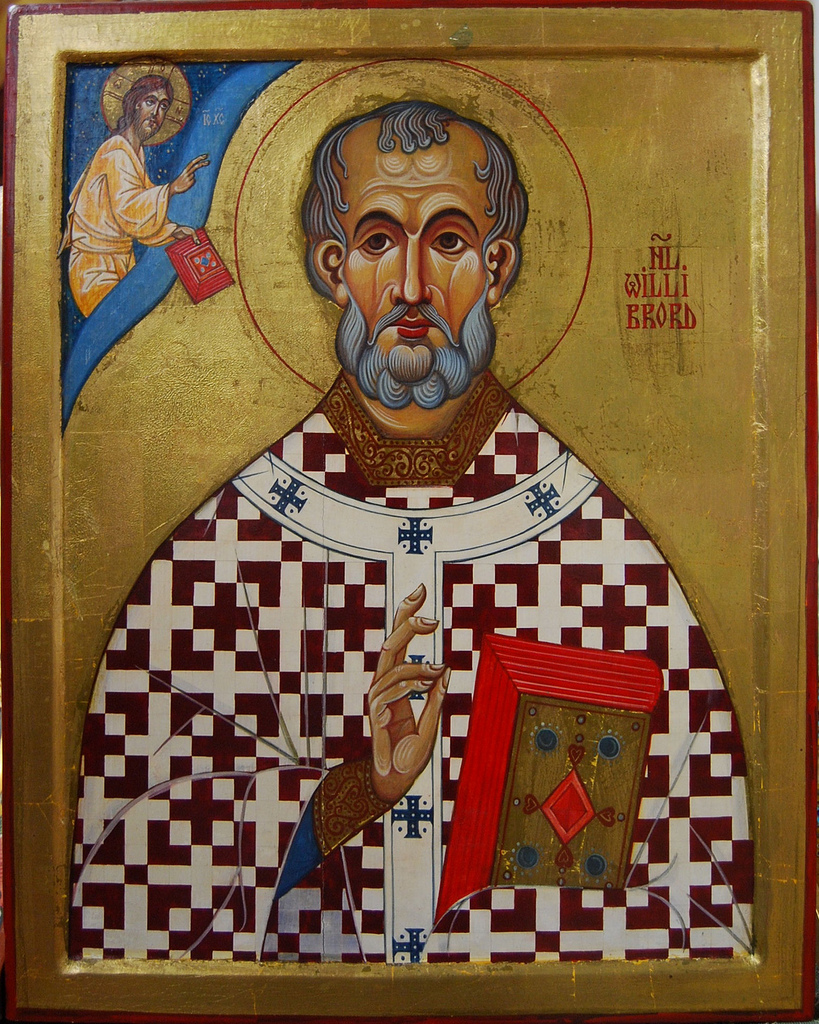
Saint Willibrord

| | Comments (0)

St Willibrord2.jpgLord our God,

You inspired blessed Willibrord, your bishop,

to be a pilgrim for Christ

in preaching his Word.

By his intercession,

may we stand firm in faith

and be steadfast in the promise of the Gospel.


Read a little bit about this patron saint of Holland at Vultus Christi.


And if you can find a priest to bless water using the prayer that honors Saint Willibrord be sure to get it done. It's in Fr. Weller's book of blessings volume 2.

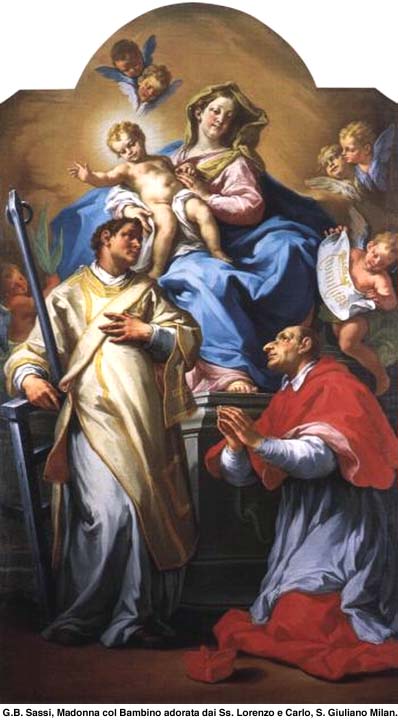
Saint Charles Borromeo

| | Comments (0)

"The Lord led the just in right paths. And the Lord showed him the kingdom of God."

St Charles Borromeo2.jpg


[Saint Charles Borromeo's (1538-1584)] love is good, simple, and at the same time intense. He loves God like a child, and he takes it for granted that one ought to bring everything to God. But then he has a certain system of love, which is certainly beautiful but also a bit complicated. He brings all his worries and everything that occupies him, and lays it before God. And he often commends it to him with vehemence. He also often simply allows it to ripen under God's gaze. And at first he leaves it to his own intuition how he ought to treat the things he brought before God in order for God to accept them (emphasis mine; von Speyr, Book of All Saints, 2008).


We beseech Thee, O Lord, keep Thy Church under the continual protection of Saint Charles Thy Confessor and Bishop; and as his pastoral care made him glorious, so may we through his intercession every grow in fervor of love for Thee.

Saint Martin de Porres

| | Comments (0)

Blessed Pope John XXIII said of Saint Martin de Porres:


St Martin de Porres.jpgSaint Martin, always obedient and inspired by his divine teacher, dealt with his brothers and with that profound love which comes from pure faith and humility of spirit. He loved men and because he honestly looked on them as God's children and as his own brothers and sisters. Such was his humility that he loved them even more than himself, and considered them to be better and more righteous than he was.

He did not blame others for their shortcomings. Certain that he deserved more severe punishment for his sins than others did, he would overlook their worst offenses. He was tireless in his efforts to reform the criminal, and he would sit up with the sick to bring them comfort. For the poor he would provide food, clothing and medicine. He did all he could to care for poor farmhands, blacks, and mulattoes who were looked down upon as slaves, the dregs of society in their time. Common people responded by calling him, "Martin the charitable."

He excused the faults of others. He forgave the bitterest injuries, convinced that he deserved much severer punishments on account of his own sins. He tried with all his might to redeem the guilty; lovingly he comforted the sick; he provided food, clothing and medicine for the poor; he helped, as best he could, farm laborers and Negroes, as well as mulattoes, who were looked upon at that time as akin to slaves: thus he deserved to be called by the name the people gave him: 'Martin of Charity.'


A good overview of Saint Martin's life can be read here.


O God, the rewarder of the humble, you raised up the blessed confessor Martin to the kingdom of heaven. May his merits and prayers help us to imitate his humility on earth that we may be exalted with him in heaven.

All Saints

| | Comments (0)

Christ glorified in heaven.jpgThe feast of All Saints has observed by the Church at least since the fourth century. For a time it was celebrated on the Sunday following Pentecost due to the obvious link of the outpouring of the Holy Spirit upon the apostles and the foundation of the Church. Tertullian's famous insight that the Church is built on the blood of the martyrs rings true; the witnesses to the person of Jesus Christ concretizes the Christian faith and makes relevant for us the work of holiness given to us by God. In Rome, Pope Boniface IV consecrated what was the pagan pantheon as the Church of All Saints and moved the liturgical observance of All Saints to November first.


From a sermon by Saint Bernard of Clairvaux for the feast of All Saints


Why should our praise and glorification, or even our celebration of this feast day, mean anything to the saint? What do they care about earthly honors when their heavenly Father honors them by fulfilling the faithful promise of his Son? What does our commemoration mean to them? The saints have no need of honor from us; neither does our devotion add the slightest thing to what is already theirs. Clearly, when we venerate their memory, it is serving us, not them. But I tell you, when I think of them, I feel myself inflamed by a tremendous longing to be with them.


Calling the saints to mind inspires, or rather arouses in us, above all else, a longing to enjoy their company which is desirable in itself. We long to share in the citizenship of heaven, to dwell with the spirits of the blessed, to join the assembly of patriarchs, the ranks of the prophets, the council of apostles, the great host of martyrs, the noble company of confessors and the choir of virgins. In short, we long to be united in happiness with all the saints. But our dispositions change. The Church of all the first followers of Christ awaits us, but we do nothing about it. The saints want us to be with them, and we are indifferent. The souls of the just await us, and we ignore them.
 

St Bernard Clairvaux.jpgCome, let us at length spur ourselves on. We must rise again with Christ, we must seek the world which is above and set our mind on the things of heaven. Let us long for those who are longing for us, hasten to those who are waiting for us, and ask those who look for our coming to intercede for us. We should not only want to be with the saints, we should also hope to possess their happiness. While we desire to be in their company, we must also earnestly seek to share in their glory. Do not imagine that there is anything harmful in such an ambition as this; there is no danger in setting our hearts on such glory.


When we commemorate the saints we are inflamed with another yearning: that Christ our life may also appear to us as he appeared to them and that we may one day share in his glory. Until then we see him, not as he is, but as he became for our sake. He is our head, crowned, not with glory, but with the thorns of our sins. As members of that head, crowned with thorns, we should be ashamed to live in luxury; his purple robes are a mockery rather and honor. When Christ comes again, his death shall no longer be proclaimed, and we shall know that we also have died, and that our life is hidden with him. The glorious head of the Church will appear and his gloried member will shine in splendor with him, when he transforms this lowly body anew into such glory as belongs to himself, its head.


Therefore, we should aim at attaining this glory with a wholehearted and prudent desire. That we may rightly hope and strive for such blessedness, we must above all seek the prayers of the saints, that what is beyond our own efforts to obtain may be granted through their intercession.


(Sermon 2; S. Bernardi Opera, ed. J. Leclercq and H. Rochais, vol. V, 1968, pp364-8; ET by ICEL)


Almighty and everlasting God, Who has given us in one feast to venerate the merits of all Thy Saints, we beseech Thee through the multitude of intercessors, to grant us the desired abundance of Thy mercy.
 

About the author

Paul A. Zalonski is from New Haven, CT. After years of study, work and trying to find meaning in life, he still has a sense of humor. Paul is discerning God's plan and is preparing for ordination to the priesthood. Contact Paul at paulzalonski(at)yahoo.com.

Pages

Humanities Blog Directory

About this Archive

This page is a archive of entries in the Saints category from November 2008.

Saints: October 2008 is the previous archive.

Saints: December 2008 is the next archive.

Find recent content on the main index or look in the archives to find all content.