Saints: January 2009 Archives

Saint John Bosco

| | Comments (0)

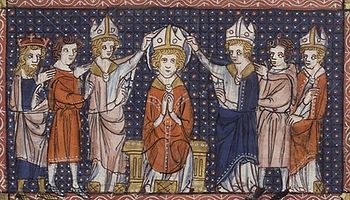
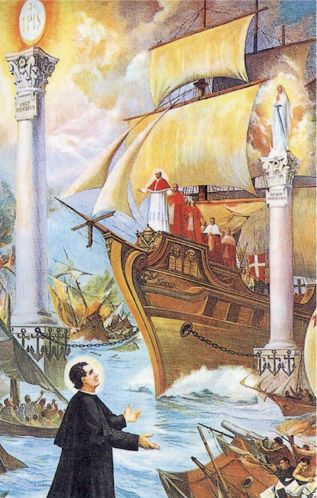
John Bosco Dream of 2 pilars.jpgSaint John Bosco, full of confidence I turn to you, asking you to intercede for me. Help me to lead a good and happy life. May I always be a help to others, avoid sin and die a happy death. Bring down the blessings of God special graces which I now ask...I trust in His love and mercy to grant what He knows is best for me.

Saint John Bosco, send us good and holy priests and religious and grant perseverance to those who are preparing to offer their lives to God. Amen.

Saint John Bosco, pray for us.

Pope Benedict XVI wrote a letter to the Archbishop of Cologne and those participating in the International Scientific Congress on the occasion of the 7th centenary of Blessed John Duns Scotus' death. What relevance does a letter was written in October 2008 by the pope have for us today? Why remember Blessed John at all? Faith and reason working together in the heart of the Church!!! They are not in opposition to each other. Catholics are known to work intimately with faith and reason and Scotus is a prime example of the tradition. But you don't need me to tell you that. Read the pope.


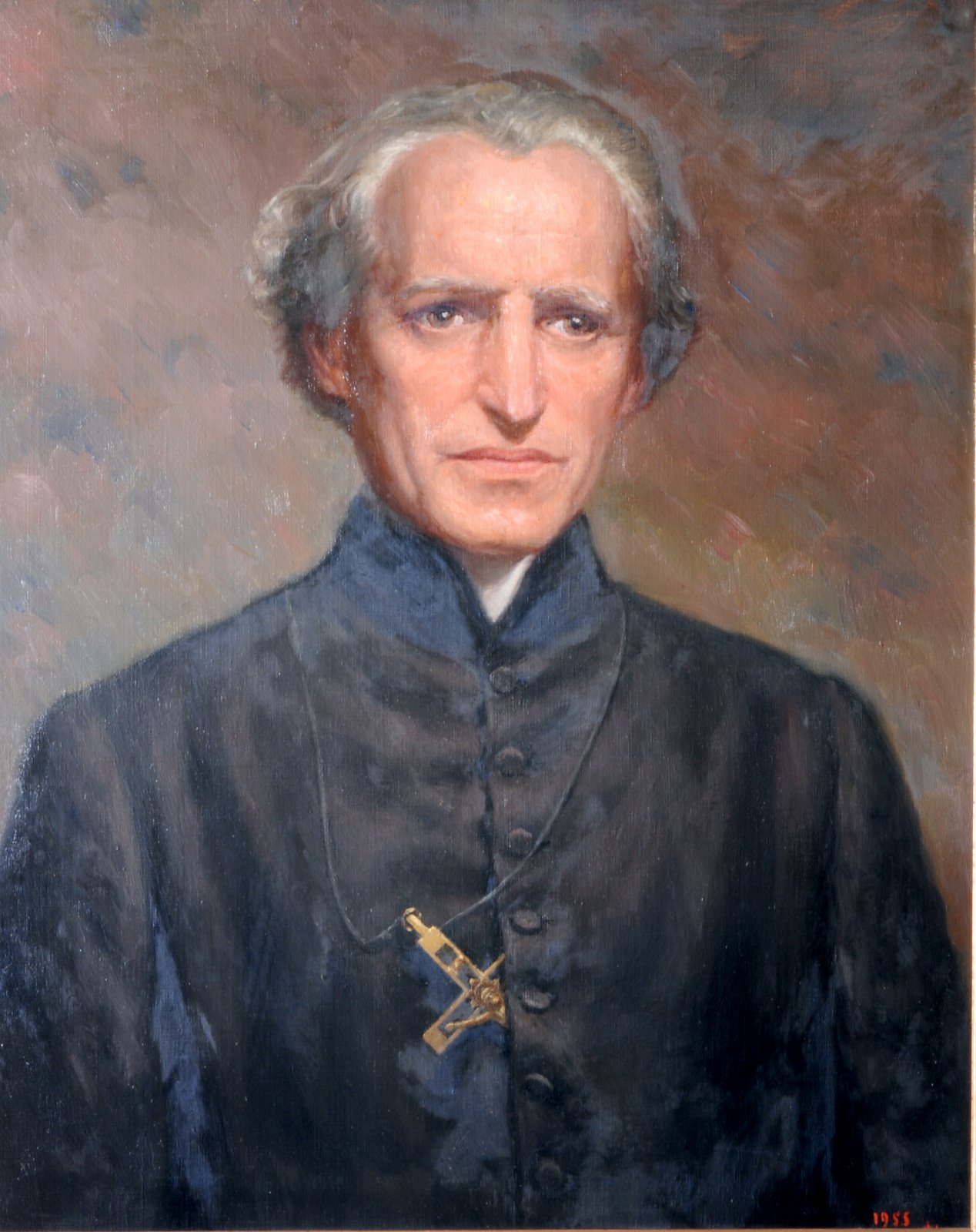
Johannes Duns Scotus.jpgRejoice, City of Cologne, which once welcomed within your walls John Duns Scotus, a most learned and devout man, who passed from this life to the heavenly Homeland on 8 November 1308; and, whose remains you preserve with great admiration and veneration.

Our Venerable Predecessors, the Servants of God Paul VI and John Paul II, exalted him with lofty praise; we too would like to surround him with the praise he deserves and invoke his protection.

Thus the seventh centenary of his pious passing is now being celebrated, as is only right. And while articles and entire works in honour of Bl. John Duns Scotus are being published in various parts of the world and congresses are being held, including the solemn Congress currently being prepared that will take place in Cologne from 5 to 9 November 2008, we consider it a duty of our service in this circumstance to say a few words about this most illustrious man who so distinguished himself by contributing to the progress of the doctrine of the Church and of human science.

Indeed, combining piety with scientific research, in accordance with his invocation: "May the First Principle of things grant me to believe, to understand and to reveal what may please his majesty and may raise our minds to contemplate him", with his refined brilliance he penetrated so deeply the secrets of natural and revealed truth, and found in them a doctrine which led him to be called Doctor Ordinis, Doctor Subtilis, and Doctor Marianus, becoming a teacher and guide of the Franciscan School, a light and example to the entire Christian People.

Thus we desire to remind scholars and everyone, believers and non-believers alike, of the path and method that Scotus followed in order to establish harmony between faith and reason, defining in this manner the nature of theology in order constantly to exalt action, influence, practice and love rather than pure speculation; in fulfilling this task he let himself be guided by the Magisterium of the Church and by a sound critical sense regarding growth in knowledge of the truth and was convinced that knowledge is valuable to the extent that it is applied in praxis.

Firmly anchored to the Catholic faith, Duns Scotus strove to understand, explain and defend the truth of the faith in the light of human reason. Thus he strove to do nothing other than show the consonance of all truths, natural and supernatural, that come from one and the same Source.

Alongside Sacred Scripture, divinely inspired, is the authority of the Church. Duns Scotus seems to follow St Augustine's words: "I would not believe the Gospel, except that I [first] believe the Catholic Church". In fact, our Doctor often gives a special emphasis to the supreme authority of the Successor of Peter. As the Blessed said: "Although the Pope cannot dispense with natural and divine law (given that his power is inferior to both), being the Successor of Peter, Prince of the Apostles, he still has the same authority as had Peter".

Therefore, the Catholic Church whose invisible Head is Christ himself, who left as his Vicars the person of Blessed Peter and his Successors guided by the Spirit of truth, is the authentic custodian of the revealed deposit and the rule of faith. The Church is the firm and permanent criterion of the canonical dimension of Sacred Scripture. Indeed, she "established which books of the biblical canon were to be held authentic".

Elsewhere he states that "the Scriptures were revealed in the same Spirit in which they were written, and in this way one must consider that the Catholic Church has presented them in that same Spirit with which the faith has been passed down, guided that is, by the Spirit of truth".

After having proven with various arguments taken from theological reason, the very fact that the Blessed Virgin Mary was preserved from original sin, he was absolutely ready also to reject this conviction should it not be in harmony with the authority of the Church, saying: "We can with probability attribute to Mary all that has the greatest perfection, provided it is not opposed to the authority of the Church or the Scriptures".

The primacy of the will sheds light on the fact that God is charity before all else. This charity, this love, Duns Scotus kept present when he sought to lead theology back to a single expression, that is to practical theology. According to his thought, since God "is formally love and formally charity", with the greatest generosity he radiates his goodness and love beyond himself. And in reality, it is for love that God "chose us in him before the foundation of the world, that we should be holy and blameless before him. He predestined us in love to be his adoptive sons through Jesus Christ" (cf. Eph 1: 4-5).

A faithful disciple of St Francis of Assisi, Bl. John contemplated and preached assiduously the Incarnation and the saving Passion of the Son of God. However, the charity or love of Christ is expressed in a special way not only on Calvary, but also in the most holy Sacrament of the Eucharist, without which "if not for being able to render supreme adoration unto God through the veneration of the same Sacrament every mercy would disappear in the Church". This Sacrament moreover is a sacrament of unity and love; through it we are led to love one another mutually and to love God as a common good and to be loved at the same time by others.

And as this love, this charity, was the origin of all things, so too our eternal happiness will be in love and charity alone: "Eternal life is simply the desire as well as the will to love, blessed and perfect".

Since at the beginning of our ministry we first of all preached love, which is God himself, we see with joy that the unique doctrine of this Blessed keeps a special place for this truth, which we consider principally worthy to be researched and taught in our time. Therefore, willingly complying with the request of our Venerable Brother Cardinal Joachim Meisner, of Holy Roman Church, Archbishop of Cologne, we are sending this Apostolic Letter with which we desire to honour Bl. John Duns Scotus and invoke his heavenly intercession upon us. Lastly, to those who are taking part in any capacity in this International Congress and in other initiatives concerning this outstanding son of St Francis, we cordially impart our Apostolic Blessing.

Given in Rome, at St Peter's on 28 October 2008, the fourth year of our Pontificate.

BENEDICTVS PP. XVI


The epitaph at Blessed John's grave is rather fun:

Scotland bore me,                      Scotia me genuit,

England received me,                 Anglia me suscepit,

France taught me,                      Gallia me docuit,

Cologne holds me.                     Colonia me tenet.


Can we think of advancing his cause for sainthood? Its taken too many years to get to "Blessed"!!!!


footnotes in the original, see vatican.va

Saint Thomas Aquinas

| | Comments (0)

The Lord led the just in the right paths. And showed him the kingdom of God.

O God, Who does enlighten Thy Church by the wonderful learning of blessed Thomas, Thy Confessor, and makes it fruitful by his holy works; we beseech Thee, grant us both to understand what he taught and to follow his example in what he practiced.


St Thomas Aquinas Gozzoli.jpg"The law of divine love is the standard for all human actions"

It is evident that not all are able to labor at learning and for that reason Christ has given a short law. Everyone can know this law and no one may be excused from observing it because of ignorance. This is the law of divine love. As scripture says, The Lord will quickly execute sentence upon the earth.

This law should be the standard for all human actions. In the case of products of human manufacture, each product is considered right and good when it conforms to a standard. So also each human act is considered right and virtuous when it conforms to the standard of divine love. But when a human act does not conform to the standard of love, then it is not right, nor good, nor perfect.

This law of divine love accomplishes in a person four things that are much to be desired. First, it is the cause of one's spiritual life. For it is evident that by the very nature of the action what is loved is in the one who loves. Therefore whoever loves God possesses God in himself; for scripture says, Whoever remains in love remains in God and God in him. It is the nature of love to transform the lover into the object loved. And so if we love God, we ourselves become divinized; for again, Whoever is joined to God becomes one spirit with him. Augustine adds, "As the soul is the life of the body, so God is the life of the soul." Thus the soul acts virtuously and perfectly when she acts through charity, and through charity God lives in her; indeed, without charity she cannot act; for scripture says, Whoever does not love, remains in death. If a person possesses all the gifts of the Holy Spirit, but lacks charity, that person has no life. For it matters not whether one has the grace of tongues, or the gift of faith, or any other gift such as prophecy; these do not bring life without charity. Even if a dead body should be adorned with gold and precious jewels, it nevertheless remains dead.

The second point about charity is that it leads to the observance of the divine commandments. Gregory the Great says that charity is not idle. For charity is present if one is occupied about great things; but if one is not so occupied, charity is not present. We see a lover do great and difficult things because of the one loved, and that is why the Lord says, Whoever loves me will keep my word. Whoever keeps this command and the law of divine love fulfills the whole law. A third point about charity is that it provides protection against adversity. For misfortune cannot harm one who has charity; rather it becomes useful to that person; as scripture says, All things work for good for those who love God. Furthermore, misfortune and difficulties seem pleasant to the lover, and our own experience verifies this.

A fourth point about charity is that it truly leads to happiness, since eternal blessedness is promised only to those who have charity. For all other things are insufficient without charity. You must note that it is only the different degrees of charity, and not those of any other virtues, which constitute the different degrees of blessedness. Many of the saints were more abstemious than the apostles, but the apostles excel all the other saints in blessedness because of their higher degree of charity.

From a conference by "St. Thomas Aquinas" (Opuscula, In duo praecenta... Ed. J.P. Torrel, in Revue des Sc. Phil. Et Théol., 69, 1985, pp. 26-29.

Saint Thomas Aquinas by Joseph Pieper

Saint Thomas Aquinas by Father Bernhard Thomas Blankenhorn, OP

Various stimulating resources on Aquinas

Saint Angela Merici

| | Comments (0)

"Whoever receives one such child in My name receives Me; and whoever receives Me, receives not Me but Him who sent Me."

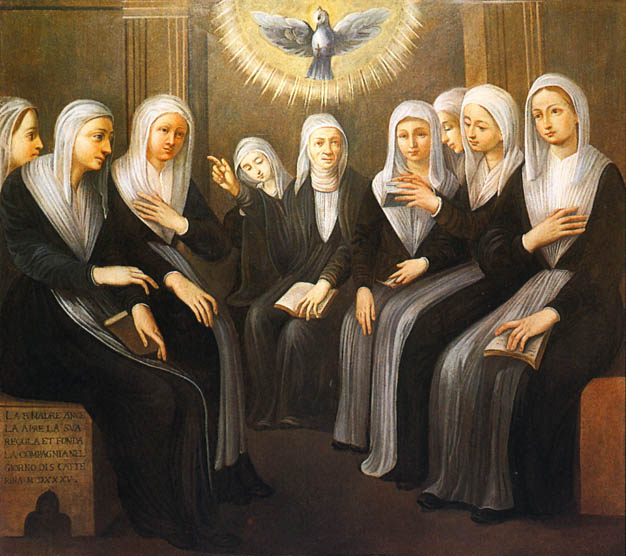
St Angela Merici and daughters.jpg

Lord, may Saint Angela commend us to Your mercy; may her charity and wisdom help us to be faithful to Your teaching and to follow it in our lives.

A brief bio and a Wiki article

The Company of Saint Ursula in the United States

Conversion of Saint Paul

| | Comments (0)

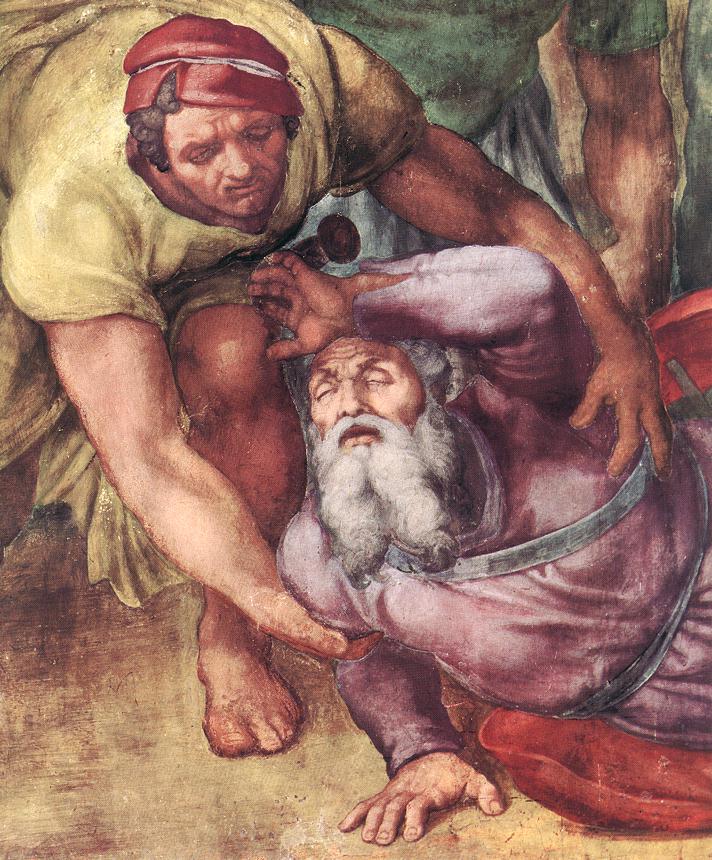
Conv of St Paul.jpgI planted, Apollo watered, but God gave the increase, Alleluia.


O thou great Doctor, Paul, we here beseech of thee Lead thou our spirits up to heavenly mystery,

Till ends the partial knowledge that to us is given, While here below, and we receive the fuller light in heaven.

May everlasting honor, power and glory be, And jubilation, to the Holy Trinity, The One God, ever ruling all things mightily, Throughout all endless ages of eternity. Amen.


O God, Who has taught the whole world by the preaching of the blessed Paul the Apostle; we beseech Thee, that we, who this day celebrate his conversion, may by his example advance unto Thee.

On this day 50 years ago (1959), Blessed Pope John XXIII, at the Basilica of St. Paul Outside-the-Walls, announced the Second Vatican Council.

Saint Francis de Sales

| | Comments (1)

Thumbnail image for St Francis de Sales.jpg O God, Who did will that blessed Francis, Thy Confessor and Bishop, should become all things unto all men for the salvation of their souls, mercifully grant that being filled with the sweetness of Thy love, we may, through the guidance of his counsels and the aid of his merits attain the aid the joys of everlasting life.


Saint Francis de Sales (1567-1622) born in Thorens, Savoy, in France, was a brilliant student and lawyer. At an early age he was nominated Bishop of Geneva and later he vigorsly fought Calvinism. Together with Saint Jane Frances de Chantal he founded the Order of the Visitation. A classic book on the spiritual life is de Sales' Introduction to the Devout Life. He died in Lyons and was canonized in 1665. In 1877, Pope Blessed Pius IX proclaimed him Doctor of the Church. Pius XI declared him patron of journalists and other writers.

Saint Agnes

| | Comments (0)

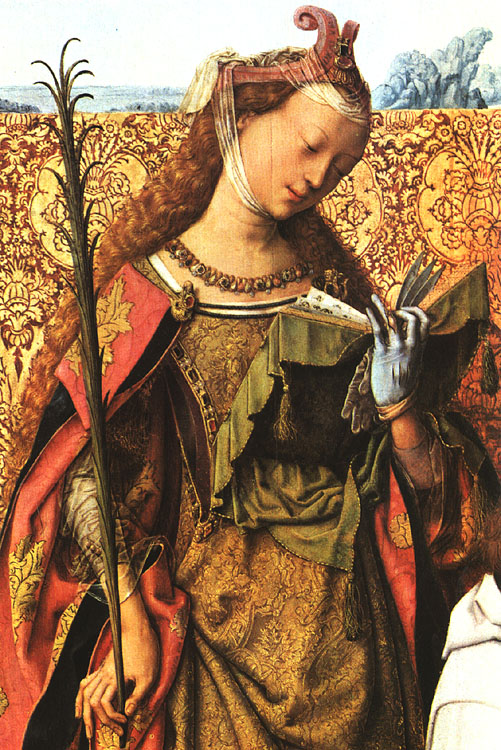
St Agnes.jpgAgnes beatæ virginis
natalis est, quo spiritum
cælo refudit debitum
pio sacrata sanguine.

Matura martyrio fuit
matura nondum nuptiis;
prodire quis nuptum putet,
sic læta vultu ducitur.

Aras nefandi numinis
adolere tædis cogitur;
respondet: «Haud tales faces
sumpsere Christi virgines.

Hic ignis exstinguit fidem,
hæc flamma lumen eripit;
hic, hic ferite, ut profluo
cruore restinguam focos».

Percussa quam pompam tulit!
Nam veste se totam tegens,
terram genu flexo petit
lapsu verecundo cadens.

Iesu, tibi sit gloria,
qui natus es de Virgine,
cum Patre et almo Spiritu,in sempiterna sæcula.

(Saint Ambrose)

Almighty and eternal God, Who did choose the weak things of the world to confound the strong, mercifully grant, that we who celebrate the solemnity of blessed Agnes, Thy Virgin and Martyr, may experience her intercession with Thee.


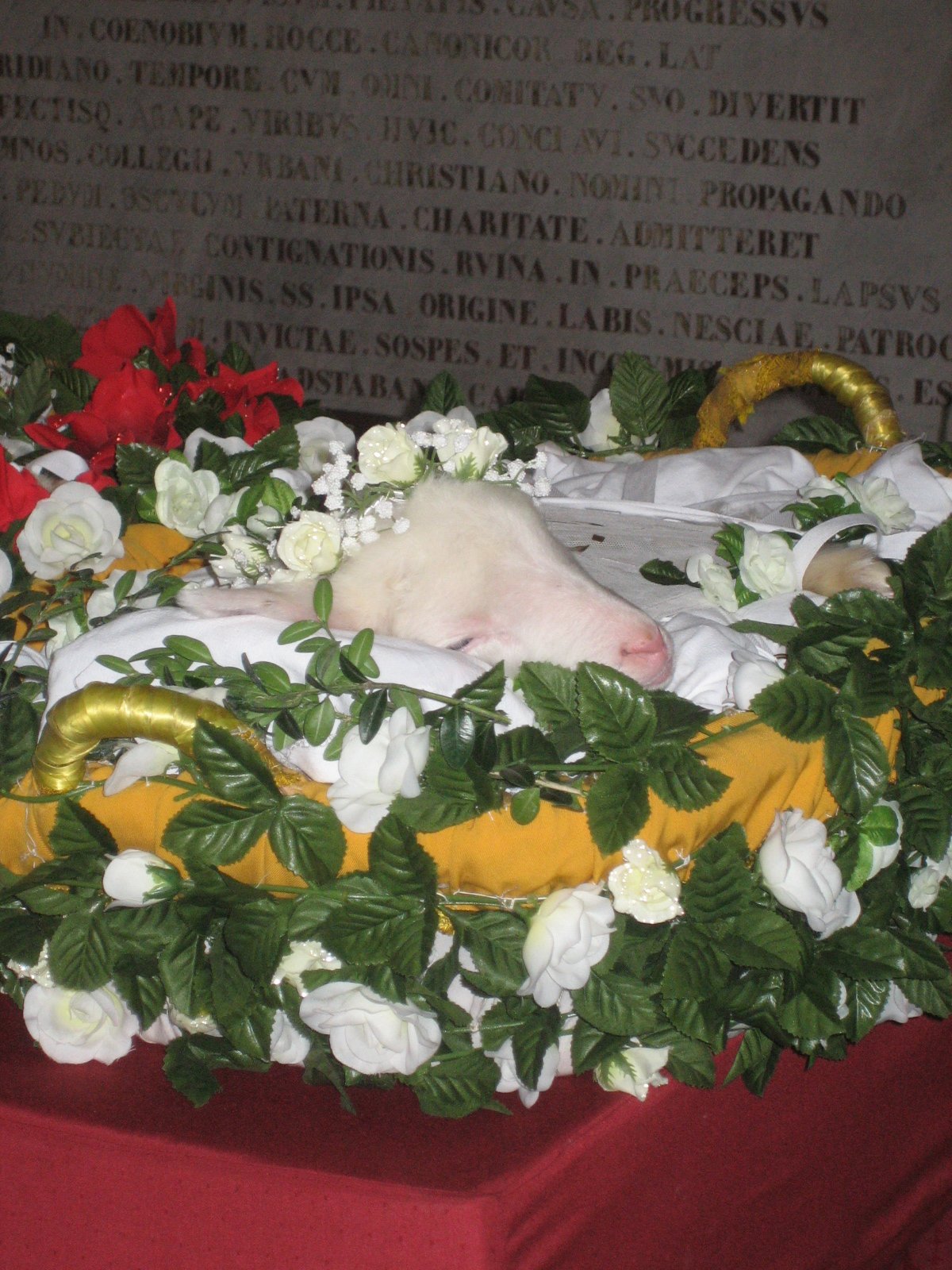
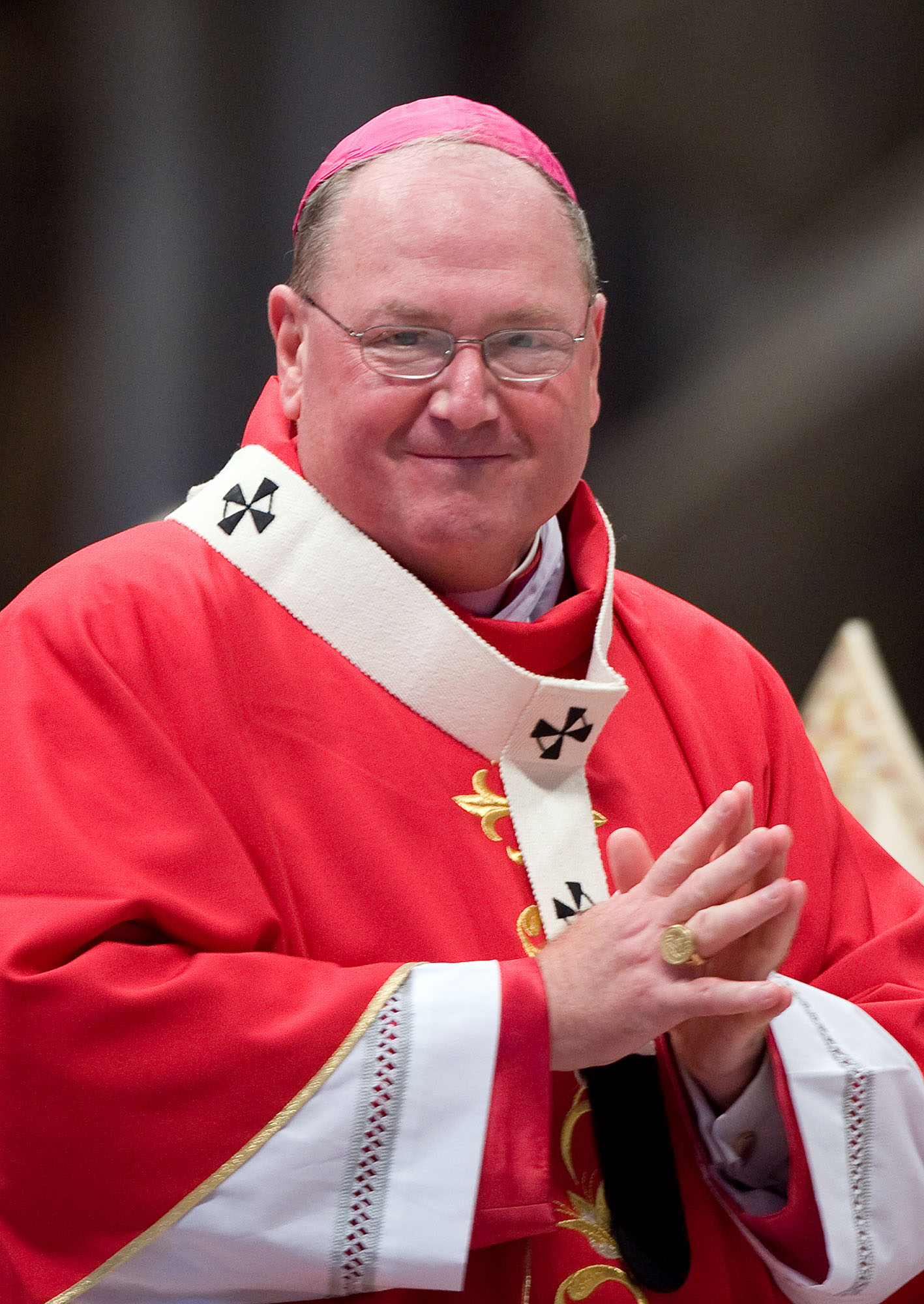
Lamb1.jpgChurch has remembered Saint Anges, who died in 305, since 354 in the sacred Liturgy, poetry and art. This ancient feast retains a custom of blessing of the wool of two lambs brought to the pope from the Trappist Abbey of Tre Fontane. The wool from the lambs is given to the nuns to weave the pallia. The pallium is a white woolen band embroidered with six black crosses worn over the shoulders and has two hanging pieces, front and back. The pallium is worn by the pope and by metropolitan archbishops symbolizing authority and which expresses the special bond of unity between the archbishop and the Roman Pontiff. Pallia are given on the Solemnity of Saint Peter and Paul to receive a pallium from the pope.


Holy Abbots of Citeaux.jpgGod of power and might, you have given us in your saints a living witness to religious perfection. Schooled in their principles and observances, may we, too, strive to show that same faith and live in our lives.


Knit together in the unity of the Holy Spirit, the blessed abbots Robert, Alberic, and Stephen chose to be poor with the poor Christ, and so went forth to a desert wilderness to abide in the place you had prepared for them.

Schooled in all things by the Rule of Saint Benedict, their father, they sought only to live in peace according to the truth of the Gospel.

Setting nothing before the love of Christ,
and zealous for the praise of your Majesty, their example drew many to take up the strong and glorious weapons of obedience.

Saint Meinrad

| | Comments (0)

 St Meinrad2.jpg


All-powerful and eternal God, your wonders shine forth in the merits of your blessed martyr Meinrad. We beg you that, as you crowned him with the glory of suffering for your name, so now we might be aided by his prayers in obtaining your mercy.


The Archabbey of Saint Meinrad in sourthern Indiana continues the tradition of their heavenly.

Blessed Basil Anthony Moreau

| | Comments (0)

Blessed Basil Moreau.jpgI have been crucified with Christ; it is no longer I who live, but Christ who lives in me. (Galatians 2:20)


Lord God, help us to imitate the virtues of Blessed Basil Moreau, especially his trust in Divine Providence, his confidence in the Cross as our only hope, and his zeal for making God known, loved, and served.


Blessed Basil Moreau is an example on how to "promot[e] hope in the Cross of Christ...[showing us]...a radical identification to Christ, and to cultivate in our own lives union of hearts and zeal for the mission."


Commemorative booklet of the beatification of Blessed Basil Anthony Moreau

A recent biography: Basil Moreau: Founder of Holy Cross

Schuster.jpgBehold a great priest, who in his days pleased Godm and was found just.


O God, Who did give Thy people blessed Idelfonso as a minister of eternal salvation, we beseech Thee; grant that we may deserve to have him as an intercessor in heaven, whom we had as a teacher of life on earth.


A brief sketch:

- Born 18 January 1880 at Rome, Italy: known in history as Alfredo Ludovico Luigi Schuster;

- Educated at Saint-Paul-Outside-the-Walls and then entered the novitiate there in 1896 taking the name Ildefonso and professing solemn vows on 13 November 1890;

- Ordained a priest in 1904; he was novice master, prior and procurator for the Cassinese Congregation of Benedictine monks before being elected Abbot-Nullius of his abbey on 6 April 1918;

- He was devoted scholarship and teaching and appointed president of the Pontifical Oriental Institute from 1919 to 1922. His Liber sacramentorum, Historical and Liturgical Notes on the Roman Missal is well known and used for liturgical history and theology studies;

- Pope Pius XI nominated Abbot Idelfonso Schuster the Archbishop of Milan on 26 July 1926 and was made a cardinal in 1929;

- Died 30 August 1954 at Venegono, Italy of natural causes;

- Beatified 12 May 1996 by Pope John Paul II and with the liturgical memorial on 30 August.

Saint Anthony, Abbot

| | Comments (0)

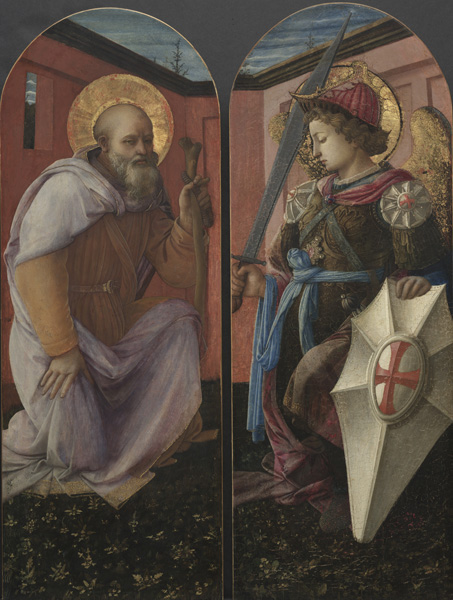
Sts Anthony Abbot & Michael Lippi.jpgGod, who allowed Blessed Anthony the Abbot to serve You with a marvelous life in the desert, grant by his intercession that, denying ourselves, we may constantly love You above all things.


More on Abbot Saint Anthony

Saints Maur and Placid

| | Comments (0)

St Placid.jpgO God, you have filled us with wonder by the example of monastic observance in the lives of your blessed confessors Maur and Placid. As we celebrate their memory and follow in their footsteps, may we come to share in their reward.


What we know of these saints we know from Saint Gregory the Great who introduces them in his Life of Saint Benedict. These early companions of Saint Benedict are what you may call the first Benedictine oblates, ones who made an offering of themselves to God's service. In time they lived their monastic life fully and without reservation.


On the life of Saint Maur.

Saint Hilary of Poitiers

| | Comments (0)

All-powerful God, as Saint Hilary defended the divinity of Christ Your Son, give us a deeper understanding of this mystery and help us to profess it in all truth.


Saint Hilary of Poitiers.jpgSaint Hilary of Poitiers (315-368) was a leading defender of the Church against the Arian heresy. He wrote twelve books about the Holy Trinity as well as commentaries on St. Matthew's Gospel and the Psalms. Known as the Doctor of the Divinity of Christ and in 1851 named a Doctor of the Church.


"Drawing confidence from God's kindness to undertake the office of a wise man, though it is an office beyond our powers, we intend so far as we can (pro nostro modulo) to set forth the truth professed by the Catholic faith, and to eliminate errors opposed to it. For, if I may use the words of Hilary, 'I am conscious that I owe it to God as the chief office or duty of my life that my every word (omnis sermo meus) and perception (sensus) should speak of Him.'"

-St. Thomas Aquinas, Summa contra Gentiles, Bk.I, ch. II, in Opera omnia s. Thomae Aquinatis (Rome, 1968), p. 6.

Saint Marguerite Bourgeoys

| | Comments (0)

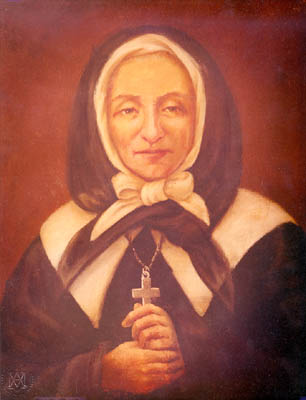
Saint Marguerite Bourgeoys.jpgO Mother Bourgeoys, you, whose compassionate power is ever increasing, show us your way of Truth, Faith and Holiness.

Make us humble enough to abandon ourselves to the Will of God, generous enough to find in the Cross the joy of the Loving Giver.

May your fidelity to Jesus in the Blessed Sacrament lead us ever nearer to this source of light and peace. May your spirit of openness help us to be concerned for our brothers and sisters throughout the world.

Finally, may Our Lady of the Trinity, Father, Son and Holy Spirit, bring us to this unity of eternal grace to which God has called you for all eternity. Amen.


A Vatican biography and another view of the Canadian saint's life.

Saint Aelred of Rievaulx

| | Comments (0)

St Aelred2.jpgThe charity of God is poured forth in our hearts by the Holy Spirit who dwells within us.
My soul, give thanks to the Lord, all my being, bless his holy name (Rom 5:5; Ps 102:1).

O God, who gave the blessed Abbot Aelred the grace of being all things to all men, grant that, following his example, we may so spend ourselves in the service of one another, as to preserve the unity of the Spirit in the bond of peace.

The New Advent bio

Saint Aelred authored several influential books on spirituality, among them The Mirror of Charity and Spiritual Friendship. He also wrote seven works of history, addressing two of them to King Henry II of England advising him how to be a good king. The twentieth century has seen a greater interest in Saint Aelred as a spiritual writer than in former times when he was known to be a historian.

This year we honor the 900th anniversary of Saint Aelred's birth, though some the anniversary in AD 2010.

Saint Gregory of Nyssa

| | Comments (0)

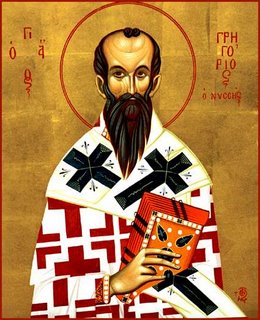
St Gregory of Nyssa.jpgGod our Father, Saint Gregory, your bishop, praised you by the splendor of his life and teaching. In your kindness, as we forget what is past and reach out to what is before us, help us to attain that vocation to which we are called.


Saint Gregory Nyssa converted to Christianity in his early twenties and at the urging of his brother, Saint Basil, he was ordained bishop of Nyssa. He is the author of many theological works but he's also known to be a mystic and a humanist. His final work, the Life of Moses, is mystical reflection on the life of Moses, Israel's great leader and prophet.

Saint Gregory understood his life --indeed all of life-- as unending progress of discovering what God is doing in us and how sin is refusal to keep on growing in this discovery, for "the one thing truly worthwhile is becoming God's friend."

Some of Saint Gregory's famous sayings are the following:

"So we say to God: Give us bread. Not delicacies or riches, nor magnificent purple robes, golden ornaments, and precious stones, or silver dishes. Nor do we ask Him for landed estates, or military commands, or political leadership. We pray neither for herds of horses and oxen or other cattle in great numbers, nor for a host of slaves. We do not say, give us a prominent position in assemblies or monuments and statues raised to us, nor silken robes and musicians at meals, nor any other thing by which the soul is estranged from the thought of God and higher things; no--but only bread! . . .

"But you go on business to the Indies and venture out upon strange seas; you go on a voyage every year only to bring back flavourings for your food, without realizing that . . . [it] is above all a good conscience which makes the bread tasty because it is eaten in justice. . .

"'Give Thou bread'--that is to say, let me have food through just labor. For, if God is justice, anyone who procures food for themselves through covetousness cannot have his bread from God. You are the master of your prayer if your abundance does not come from another's property and is not the result of somebody else's tears; if no one is hungry or distressed because you are fully satisfied. For the bread of God is, above all, the fruit of justice."

For more about Saint Gregory, a Cappadocian, read this article.

Blessed André Bessette

| | Comments (0)

Blessed Andre.jpgLord our God, friend of the lowly, You gave your servant, Brother André, a great devotion to Saint Joseph and a special commitment to the poor and afflicted. Through his intercession help us to follow his example of prayer and love and so come to share with him in Your glory.


Blessed André Bessette (1845-1937), born near Quebec, was professed brother in the Congregation of the Holy Cross. He did the humble work in his religious house for over forty years. He was known to have had a great devotion to Saint Joseph and therefore he was entrusting the intentions of the poor and sick to him. He built the shrine which grew into the great basilica known as Saint Joseph's Oratory in Montreal, Canada.


Saint John Neumann

| | Comments (0)

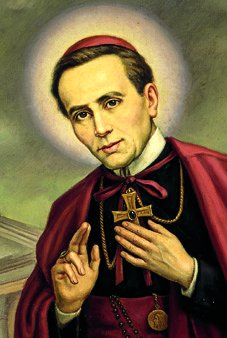
St John Neumann.jpgO God, who willed blessed John, thy confessor and bishop, to shine in pastoral works; graciously grant that, following his teachings and examples, we might obtain eternal life.


"John Nepomucene Neumann spent the whole of his adult life striving to live as a total Christian. Nevertheless, no one would have been more shocked than John Neumann at the thought that one day he would be canonized a saint. The possibility never crossed his mind. While his whole consciousness was directed toward serving God in immediate relationship with Jesus Christ, the Blessed Virgin Mary and the saints, he was constantly aware of shortcomings in saying his prayers, in faithfulness to the rule of life he had set for himself, and in the accomplishment of his daily duties.

"One of his primary objectives was to introduce the Forty Hours Devotion - a three-day ceremony in which the Blessed Sacrament was exposed in a monstrance on the altar, and priests and people encouraged to keep a constant vigil in the church, honoring Christ's bodily presence among them. Neumann drew up the diocesan-wide schedule, recognizing the fact that while this practice would be fairly easy in the large city parishes it would be most difficult in the smaller settlements. His objective was to have this devotion in progress somewhere in the diocese, all year long.  (Francis Xavier Murphy, C.SS.R.)

O Saint John Neumann, your ardent desire of bringing all souls to Christ impelled you to leave home and country; teach us to live worthily in the spirit of our Baptism which makes us all children of the one Heavenly Father and brothers and sisters of Jesus Christ, the first-born of the family of God.


Obtain for us that complete dedication in the service of the needy, the weak, the afflicted and the abandoned which so characterized your life.  Help us to walk perseveringly in the difficult and, at times, painful paths of duty, strengthened by the Body and Blood of our Redeemer and under the watchful protection of Mary our Mother.


May death still find us on the sure road to our Father's House with the light of living Faith in our hearts. Amen.


A few dates in the saint's life

  • 28 March 1811 at Prachititz, Czech Republic
  • 28 June 1836 ordained priest by Bishop John Dubois, NYC
  • January 1842 taking his vows at Baltimore, MD, the first Redemptorist in the USA
  • 28 March 1852 ordained bishop 4th bishop of Philadelphia, PA; The Episcopal motto was Passio Christi, conforta me - Passion of Christ strengthen me
  • 5 January 1860 of a stroke at 13th and Vine Streets, Philadelphia
  • 19 June 1977 canonized by Pope Paul VI

Saint Elizabeth Ann Seton

| | Comments (0)

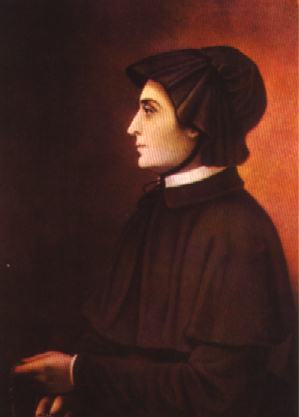
St Elizabeth Ann Seton2.jpgLord God, You blessed Elizabeth Seton with gifts of grace as wife and mother, educator and foundress, so that she might spend her life in service to Your people. Through her example and prayers may we learn to express our love for You in love for others.


At the Mass which Pope Paul VI declared Seton a saint he said:


 Saint Elizabeth Ann Seton is an American. All of us say this with spiritual joy, and with the intention of honoring the land and the nation from which she marvelously sprang forth as the first flower in the calendar of the saints. This is the title which, in his original foreword to the excellent work of Father Dirvin, the late Cardinal Spellman, Archbishop of New York, attributed to her as primary and characteristic: "Elizabeth Ann Seton was wholly American"! Rejoice, we say to the great nation of the United States of America. Rejoice for your glorious daughter. Be proud of her. And know how to preserve her fruitful heritage. This most beautiful figure of a holy woman presents to the world and to history the affirmation of new and authentic riches that are yours: that religious spirituality which your temporal prosperity seemed to obscure and almost make impossible. Your land too, America, is indeed worthy of receiving into its fertile ground the seed of evangelical holiness. And here is a splendid proof-among many others-of this fact.


May you always be able to cultivate the genuine fruitfulness of evangelical holiness, and ever experience how-far from stunting the flourishing development of your economic, cultural and civic vitality -it will be in its own way the unfailing safeguard of that vitality. Saint Elizabeth Ann Seton was born, brought up and educated in New York in the Episcopalian Communion. To this Church goes the merit of having awakened and fostered the religious sense and Christian sentiment which in the young Elizabeth were naturally predisposed to the most spontaneous and lively manifestations. We willingly recognize this merit, and, knowing well how much it cost Elizabeth to pass over to the Catholic Church, we admire her courage for adhering to the religious truth and divine reality which were manifested to her therein. And we are likewise pleased to see that from this same adherence to the Catholic Church she experienced great peace and security, and found it natural to preserve all the good things which her membership in the fervent Episcopalian community had taught her, in so many beautiful expressions, especially of religious piety, and that she was always faithful in her esteem and affection for those from whom her Catholic profession had sadly separated her.


·         Born in New York City, August 28, 1774

·         Married William Magee Seton, January 25, 1794; mother of 5 children; William died in Pisa, December 27, 1803

·         Received into the Catholic Church, Ash Wednesday, March 14, 1805, by Father Matthew O'Brien in St. Peter's Church, Barclay Street, NY

·         Formation of the new community in 1808, first Religious Congregation of women in the USA

·         Died at Emmitsburg, Maryland, January 4, 1821

·         Canonized on September 14, 1975 by Pope Paul VI
St Elizabeth Ann Seton4.jpg 

Her devotion to the Eucharist, sacred Scripture, especially the 23rd Psalm, and the Blessed Virgin Mary are hallmarks of Seton's spiritual life. Following the example of Saints Vincent de Paul and Louis de Marillac hers was an apostolic spirituality.


The Church says officially: In Emmitsburg, Maryland, USA, Saint Elizabeth Ann Seton who, after having been widowed, professed the Catholic Faith and worked competently at educating girls and feeding impoverished children as a member of the Congregation of the Sisters of Charity of Saint Joseph, which she founded. (Martyrologium Romanum, 2005)
Virgin & child botticelli.jpgLord, may we honor the Holy Name of Jesus enjoy His friendship in this life and be filled with eternal joy in His Kingdom, where He lives and reigns with You and the Holy Spirit, one God, for ever and ever.


Jesu Dulcis Memoria


Jesu, the very thought of thee
With sweetness fills my breast;
But sweeter far thy face to see,
And in thy presence rest!


Nor voice can sing, nor heart can frame,
Nor can the memory find
A sweeter sound than thy blest name,
O Savior of mankind!


O hope of every contrite heart!
O joy of all the meek!
To those who fall, how kind thou art,
How good to those who seek!


But what to those who find? Ah this
Nor tongue nor pen can show:
The love of Jesus, what it is,
None but his lovers know.


O Jesu, light of all below!
Thou Fount of life and fire!
Surpassing all the joys we know,
And all we can desire!


Thee will I seek, at home, abroad,
Who everywhere art nigh;
Thee in my bosom's cell, O Lord,
As on my bed I lie.


With Mary to thy tomb, I'll haste,
Before the dawning skies,
And all around with longing cast
My soul's inquiring eyes;


Beside thy grave will make my moan,
And sob my heart away;
Then at thy feet sink trembling down,
And there adoring stay;


Nor from my tears and sighs refrain,
Nor those dear feet release,
My Jesu, still from thee I gain
Some blessed word of peace!

A Vespers hymn by Saint Bernard of Clairvaux (12th century)


The feast of the Holy Name of Jesus  has been celebrated in various places since the fifteenth century and was extended to the whole Catholic Church 20 December 1721 by Pope Innocent XIII but it was a devotion of many holy men and women before this time. There are antecedents which indicate that the faithful's veneration of the Holy Name was encouraged Saint Bernard of Clairvaux, Saint Bernardine of Siena and Saint John Capistrano. Various religious orders had their dates for the observance of this feast. Sadly, one of the reforms of the Second Vatican Council was to excise the feast from the liturgical calendar thinking that the Holy name was honored enough in the Divine Office and that the Mass texts were reduced to a Votive Mass. When Pope John Paul II published the third edition of the Roman Missal in 2002 he restored the feast to the liturgical calendar as an optional memorial on the first free day after January 1st, that is January 3rd.


IHS2.jpgBy the time of Saint Ignatius of Loyola and his companions, the newly of priests chose the name of Jesus by which they would identify themselves. With the pope's permission the Loyola called his groups the Company of Jesus, translated into Latin to be the Societas Iesus, hence the Society of Jesus. The image adopted was Saint Bernardine's IHS monogram. The observance of the feast of the Holy Name of Jesus, with its Votive Mass, set the tone of mission of the Company of Jesus. As a side note, the Votive Mass of the Holy Name of Jesus was one the Masses offered for the repose of the soul of Avery Cardinal Dulles at the University Chapel at Fordham. The devotion still is observed in the Society of Jesus.


Does your parish have a Holy Name Society? If not, why not ask the pastor to begin one. See the US confraternity's webpage.


Saints Basil and Gregory

| | Comments (0)

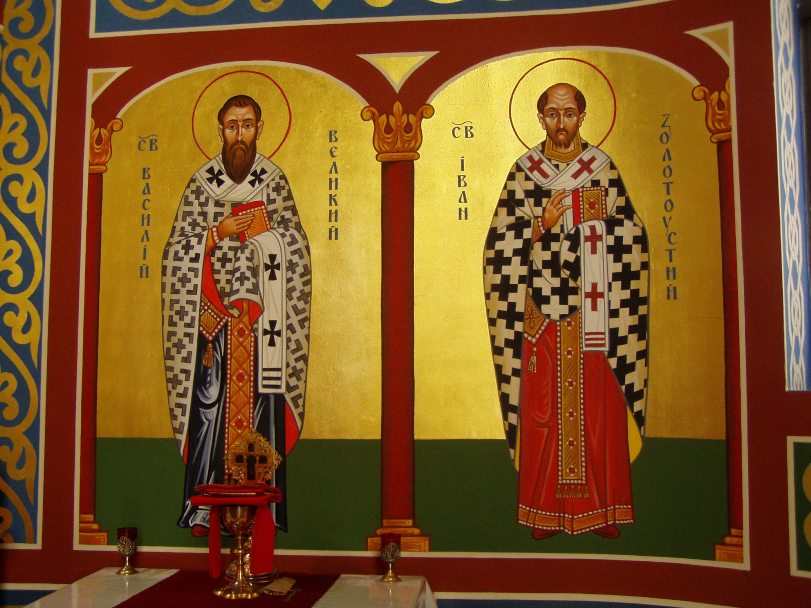
Sts Basil & Gregory.jpgGod our Father, You inspired the Church with the example and teaching of Your saints Basil and Gregory. In humility may we come to know Your truth and put it into action with faith and love.


Just three -of many-- things about being a Christian according to Saint Basil the Great:


The Christian ought to be so minded as becomes his heavenly calling, and his life and conversation ought to be worthy of the Gospel of Christ.


The Christian ought to regard all the things that are given him for his use, not as his to hold as his own or to lay up; and, giving careful heed to all things as the Lord's, not to overlook any of the things that are being thrown aside and disregarded, should this be the case.


Every one ought, as far as he is able, to conciliate one who has ground of complaint against him. No one ought to cherish a grudge against the sinner who repents, but heartily to forgive him. He who says that he has repented of a sin ought not only to be pricked with compunction for his sin, but also to bring forth fruits worthy of repentance.


Pope Benedict's 2007 catechesis on Saint Basil part I and part II.

About the author

Paul A. Zalonski is from New Haven, CT. After years of study, work and trying to find meaning in life, he still has a sense of humor. Paul is discerning God's plan and is preparing for ordination to the priesthood. Contact Paul at paulzalonski(at)yahoo.com.

Pages

Humanities Blog Directory

About this Archive

This page is a archive of entries in the Saints category from January 2009.

Saints: December 2008 is the previous archive.

Saints: February 2009 is the next archive.

Find recent content on the main index or look in the archives to find all content.