Spiritual Life: April 2009 Archives

Of all the parables this [one on the prodigal son, Matthew15:11-32] is the most popular, appealing more universally to the heart of man than any other. In fact, it contains the whole scope of the theology of God and the salvation of men. And to some extent it applies to all of us to some degree. Unless we have lived perfect lives, it is true we are called prodigal.

As Catholics, if we have done wrong, we go back to our Father. Christ is represented by a priest. We say, "Father, bless me for I have sinned." The priest gives a blessing. The penitent then says, "Father, it is so long since my last confession and I have sinned as follows." He expresses his sorrow and contrition for his sins. Then the words of absolution are pronounced over him. God sees in him one that has been redeemed by the blood of Christ.

Then he is led to the glorious Lamb of God, slain for us on Calvary, residing in the tabernacle, to be our food. The tabernacle door is opened. It contains these hosts, every one of which is the body, blood, soul and divinity of the Lamb of God, giving peace to you, and there is rejoicing among the angels.

There is told the story of an old French curate when a prodigal came to him. As he was making his confession in the sacristy, the priest smiled and the young man stopped and said, "Father, if you are going to laugh at me I won't go on with my confession." "My son,' said the priest, "You misunderstand. I was only thinking of what the Lord said, 'There is more rejoicing among the angels of heaven over one sinner that repents than over ninety-nine just persons which need no repentance.'" That is the spirit of the mercy and love of God. God understands our weaknesses, our waywardness, infirmities, like sheep going astray. His love goes out, seeks us, so glad to have us come to Him. The very angels of God sing with God the Father, that we are back home again.

I hope that everybody, in the degree in which you are a prodigal, will take home the message of the love of Christ, the Sacred Heart of Jesus, and won't keep away from it. Repent of your sins, feel his embrace, that joy of conscience after a good confession, after you have been forgiven. The Father's says, "I am well pleased with you now. You were lost and you are found." [See Luke 15:32]

(Father Paul Wattson, SA, Retreat at Hereford, Texas, June 1922)
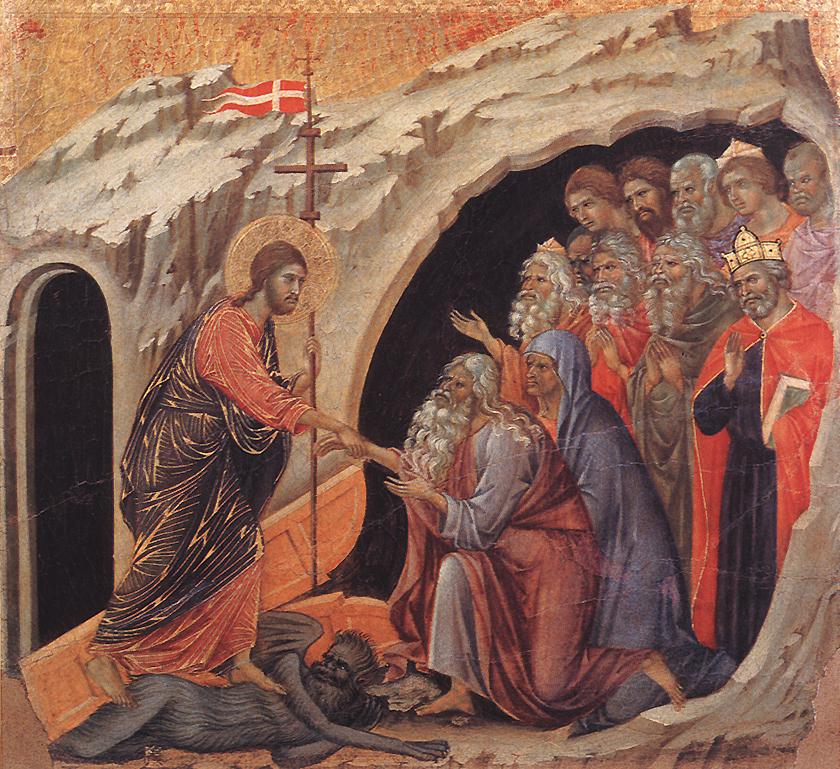
Mercy...is Jesus' way

| | Comments (0)

Only mercy challenges our hard-headedness like no other reprimand. Jesus said that he who is forgiven much, loves much. Man is sensitive to no other gesture as he is to mercy. After all, it was the method Jesus used, as Saint Paul recalls, "When we were still sinners, Christ died for us.    ~Father Julian Carron

Christ has destroyed the root of evil, he still wants the assistance of men and women in every time and place who help him to affirm his victory using his own weapons: the weapons of justice and truth, mercy, forgiveness and love. ...Christ is looking for men and women who will help him to affirm his victory using his own weapons: the weapons of justice and truth, mercy, forgiveness and love.

Pope Benedict's 2009 Urbi et Orbi address

Go in the footsteps of Christ, He is your end, your way and also your prize. Life is a journey, certainly. But it is not an uncertain journey without a fixed destiny; it leads to Christ, the end of human life and history. On this journey you will meet with him who gave his life for love, and opens to you the doors of eternal life. (Pope Benedict XVI to the Madrid youth)

The 40 days of Lent is leading to a dramatic climax in our liturgical imagination: the prayer, fasting, almsgiving is pointing us directly to what we've been promised and hoped for--salvation. These days of Lent offered us an entrée into the Divine Mystery and yet I fear that a great many people, including myself--may not have heard Jesus' prophetic rebuke of the Pharisees and others for their errors and for their self-righteousness and have missed the essential purpose of our Lord's sharp words. Certainly hearing Peter deny Christ three times indicates that same tendency in us to stand back from that which is life-giving. In the Scriptures we heard at Mass and in the Divine Office we hear the Lord not condemning the people for love of God's Law but calling them to follow him more closely and in doing so enter more deeply into the spirit of the Law. Christ makes it clear that living in the Kingdom of God requires us to be sacrificial: to turn away from sin and believe in the Gospel. Here is the certainty we have: to follow Christ entails self-denial and the acceptance of his cross as ours. No embrace of the cross, no life eternal.

Yesterday a few of the monks and I were speaking of those who come to the monastery and live the monastic life in a way that it has no bearing on them. They're miserable and they make everyone else grouchy. Our conclusion that conversatio morum (conversion of life) hasn't worked. I sometimes think that these people don't believe in the hundred-fold that the Lord spoke of in the Gospel. And then last evening I was speaking with a friend about a similar thing following Christ and sacrifice. We share the same spiritual father and so we, for different reasons, hear similar things. One such thing that we verified was that our spiritual father is big on reminding us that service in the Church requires a great deal of sacrifice for the good of the Gospel and of Tradition. There seems to be no way around this point but that's not what you experience in many places in the Church today. Sacrifice is a foreign concept and often met with disdain. Some of this conversation got me thinking about Catholics who for some strange reason who think the Second Vatican Council had ushered in an era of approval of secularity, i.e., worldliness, as if openness to the world at all costs--as such--were of any value at all.

I've got another friend who has brought to my attention that "the term 'People of God' in reference to the Church has led many to think that the Church had decided to conform to the Spirit of the Age, and that the Cross and self-denial had no place in the modern mentality."  As Dom Ambrose says, "Well, I simply don't know what Bible they were reading: the term 'People of God' originally belongs to Israel, and to say that the Church is the Pilgrim People of God recalls Israel's forty-year wanderings in the wilderness. That period in Israel's history was one of sin and punishment and privation--not of comfortable conformism.  And yet, for all that, Israel remained always a people of hope, trusting in the Lord's promise of a land and a home. That, too, is the attitude of Christ's Pilgrim Church in this world: as the Second Vatican Council said, the Church must follow the path of penance and purification in this world, until we at last enter into the promised Kingdom. This is the meaning of the term "People of God."

In other words, all of Scripture points us to the fact that following Christ and the Church means nothing if there's no conformity to the cross, repentance for sin so that entering into the communio of the Trinity is possible. Therefore, we can say there's no cheap grace. And what is cheap grace? Isn't grace, by definition, a pure gift of God, freely given and un-earned? Yes, it is. The Lutheran theologian Dietrich Bonhoeffer, who himself laid down his life for Jesus Christ, explained this idea of a life without conversion (i.e., sacrifice) means by criticizing the notion of cheap grace. Bonhoeffer described cheap grace as follows:

"Cheap grace is the preaching of forgiveness without requiring repentance, baptism without church discipline, Communion without confession, absolution without personal confession. Cheap grace is grace without discipleship, grace without the cross, grace without Jesus Christ, living and incarnate" (The Cost of Discipleship, p. 47).

In early February, I mentioned the notion, the desire, perhaps even the ministry women can do for the spiritual wellbeing of priests. It is an idea that is growing in the Church and yet its importance is not being recognized by many bishops. However, Bishop Edward Slattery, bishop of Tulsa, inaugurated a work of spiritual maternity for priests in the Tulsa diocese on March 24th. The good part of this work is the on-going formation. Father Mark Kirby writes about it on his blog.

About the author

Paul A. Zalonski is from New Haven, CT. After years of study, work and trying to find meaning in life, he still has a sense of humor. Paul is discerning God's plan and is preparing for ordination to the priesthood. Contact Paul at paulzalonski(at)yahoo.com.

Pages

Humanities Blog Directory

About this Archive

This page is a archive of entries in the Spiritual Life category from April 2009.

Spiritual Life: March 2009 is the previous archive.

Spiritual Life: May 2009 is the next archive.

Find recent content on the main index or look in the archives to find all content.