Paul Zalonski: August 2009 Archives

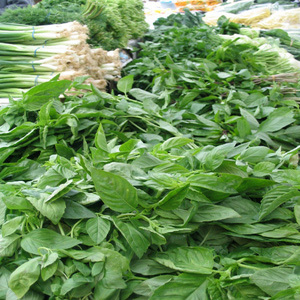
It is customary in the Western Church, since at least the 10th century, for the priest to bless herbs on the Solemnity of the Assumption. The Eastern Church likely had a similar formulary much earlier.

As a point of liturgical fact, the Church asks God to bless herbs --and thus us-- to remind all of us of the gifts God has given us for our sustenance, healing and beauty. In many places the faithful had all their flowers blessed, especially those closely associated with the Blessed Virgin Mary. Herb blessing, therefore, is another example of giving thanks, a key theological and liturgical point in our life of faith. While customary it is not likely to be used in many parishes. The collects for the herb blessing rich and savory.

The Directory on Popular Piety and the Liturgy (2001) says of herb blessing:

Thumbnail image for Herbs.jpg

For those interested in the blessing see it hereThe Assumption of the Blessed Virgin Mary (15 August) is deeply imbedded in popular piety. In many places the feast is synonymous with the person of Our Lady, and is simply referred to as "Our Lady's Day" or as the "Immacolada" in Spain and Latin America.

In the Germanic countries, the custom of blessing herbs is associated with 15 August. This custom, received into the Rituale Romanum (200), represents a clear example of the genuine evangelization of pre-Christian rites and beliefs: one must turn to God, through whose word "the earth produced vegetation: plants bearing seeds in their several kinds, and trees bearing fruit with their seed inside in their several kinds" (Gen 1, 12) in order to obtain what was formerly obtained by magic rites; to stem the damages deriving from poisonous herbs, and benefit from the efficacy of curative herbs.

This ancient use came to be associated with the Blessed Virgin Mary, in part because of the biblical images applied to her such as vine, lavender, cypress and lily, partly from seeing her in terms of a sweet smelling flower because of her virtue, and most of all because of Isaiah 11, 1, and his reference to the "shoot springing from the side of Jesse", which would bear the blessed fruit of Jesus.

The Order of Blessing of Herbs is found here.

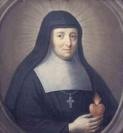
St Jane Frances Chantal.jpgLord, You chose Saint Jane Frances to serve You both in marriage and in religious life. By her prayers help us to be faithful in our vocation and always to be light to the world.


Saint Jane Frances once said: "There is no danger if our prayer is without words or reflection because the good success of prayer dependsd neither on words nor on study. It depends upon the simple raising of our minds to God, and the more simple and stripped of feeling it is, the surer it is."

Let me recommend two monasteries of the Order of the Visitation of Mary, one of the first federation and the other of the second: Georgetown Visitation Monastery and the Visitation of Tyringham.


Note: In the US this memorial is moved from August 18 to today; in other parts of the world Saint Jane's feast is December 12.

Saint Philomena

| | Comments (0)
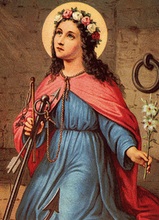
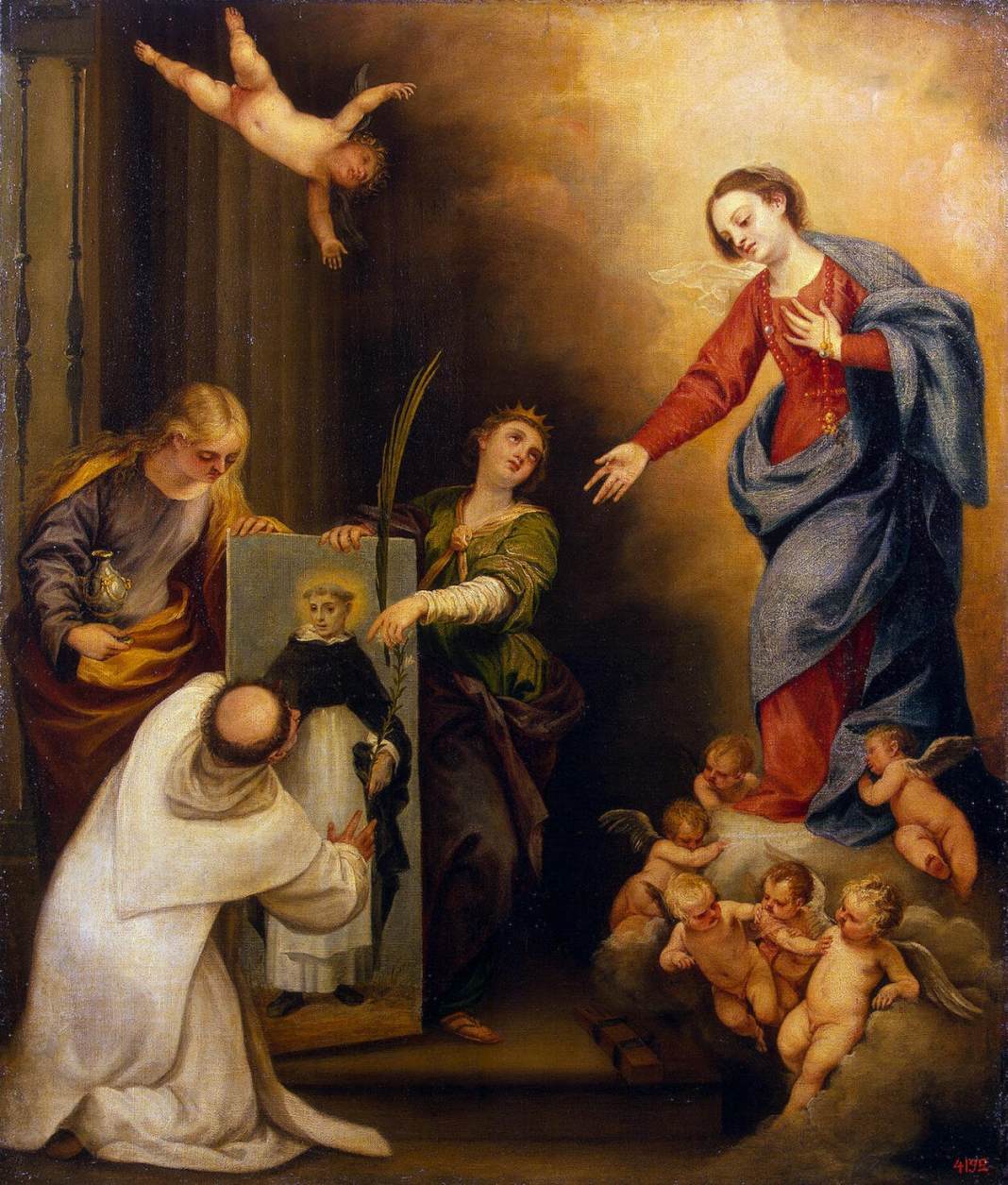
St Philomena.jpgAugust 11th is also Saint Philomena's liturgical feast day but today is also a day to honor the name of Philomena and her place in our Church. Recently, a news item appeared about her.

Growing up in New Haven, CT I knew many of Italian Catholic women named for Saint Philomena. Across the street from Portsmouth Abbey (Portsmouth, RI) there's a school that's under the patronage of this saint. The connections are many more. One has to say that some 'people' think Philomena didn't exist in the same way they think Saint Christopher didn't exist. What historical proof does one need to prove a person's existence? For someone who never existed in the scientific minds, Philomena has had some prominent people take an interest in her with a  sanctuary (Italy) and a shrine (USA).

A little known fact is that Saint John Vianney, Saint Peter Julian Eymard, Saint Bartolo Longo and Saint Damian de Vuester had a special love for Philomena; Vianney even attributes the conversion of Ars to her intercession.  He built a shrine to Saint Philomena and composing a litany in honor of her. 

Pray the Litany to Saint Philomena and the Novena Prayer to the saint.
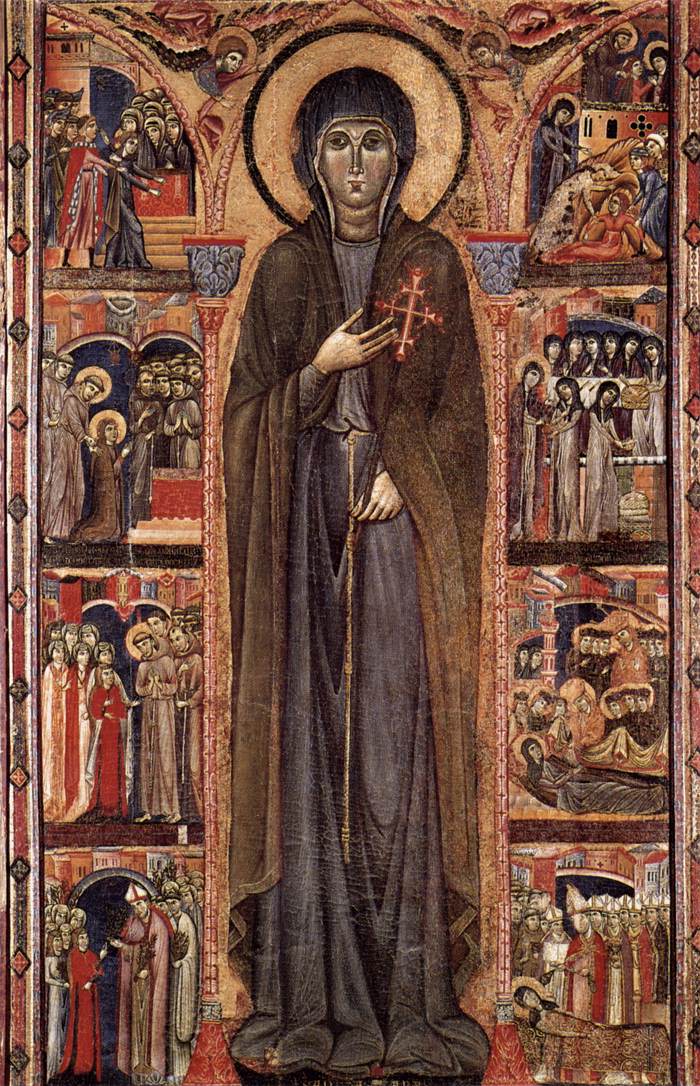
Can anyone think of Clare without Francis? Is it possible to conceive of the mendicant orders without the witness of Saint Clare? Saint Clare of Assisi is a pivotal figure in Catholic spirituality and religious life that I think she's been studied and followed by very few. James Thompson, a composer of sacred music, wrote the following piece on Clare which deserves our attention. I have posted Thompson's texts here before with the thought that they provide food for thought and prayer. He captures well the spirit and life of this companion of Francis. 

O Light from Light, all splendor's Source,
Whose clear beams shine with heaven's joy,
We give You thanks for Mother Clare
And ev'ry form of praise employ.

Enticed by Francis' preaching sweet,
St Clare.jpg
Christ Crucified became her Spouse;
She gathered sisters to her side
Where Poverty would grace the house.

She left behind all earthly gain
That riches true might be her all;
In poverty, obedience,
And chastity she heard Christ's call.

As mother to her flock, she lived
And modeled Christ to ev'ryone;
In loving service spent herself
In toil from dawn to setting sun.

As she has shown us, Lord,
Your way, So give us grace like her to be,
That we may turn from self to You
And in your Way be truly free.

Most high, omnipotent, good God,
O Father, Son and Spirit blest,
With Mother Clare and all your saints Bring us,
Your Church, to endless rest.

88 88 (LM) no suggested tune
James Michael Thompson (c) 2009 World Library Publication

The reason for prayer

| | Comments (0)

Prayer is an exercise of love and it would be incorrect to think that if there is no time for solitude, there is no prayer at all. For the very reason that prayer is based especially on love and springs from it, it is possible to prolong it beyond the time devoted exclusively to it.

Though it is not possible to be always thinking of God, partly because our mind gets tired, or because our many occupations demand full attention, still it is always possible for the heart to love and to desire God, and this can, and must, exist even in the performance of duties which absorb our intellect; in fact, such an orientation can be intensified by the desire to accomplish every action for the love of God, to please him, and give him glory.

"The reason for prayer" according to St. Thomas Aquinas, "is a desire moved by charity. . . And this desire with us must be continuous, either in act, or at least potentially. . . We can say that one prays continuously by reason of the continuity of his desire".

Divine Intimacy
Father Gabriel of Saint Mary Magdalen, OCD

Saint Clare of Assisi

| | Comments (0)
St Clare detail Giotto.jpg
The kingdom of heaven is like a merchant seeking good pearls, who, when he had found one of great price, gave all that he had and bought it.

Hear us, O God our Savior, that as we rejoice in the feast of blessed Clare, Thy Virgin, so may we also be strengthened in the love of true piety.


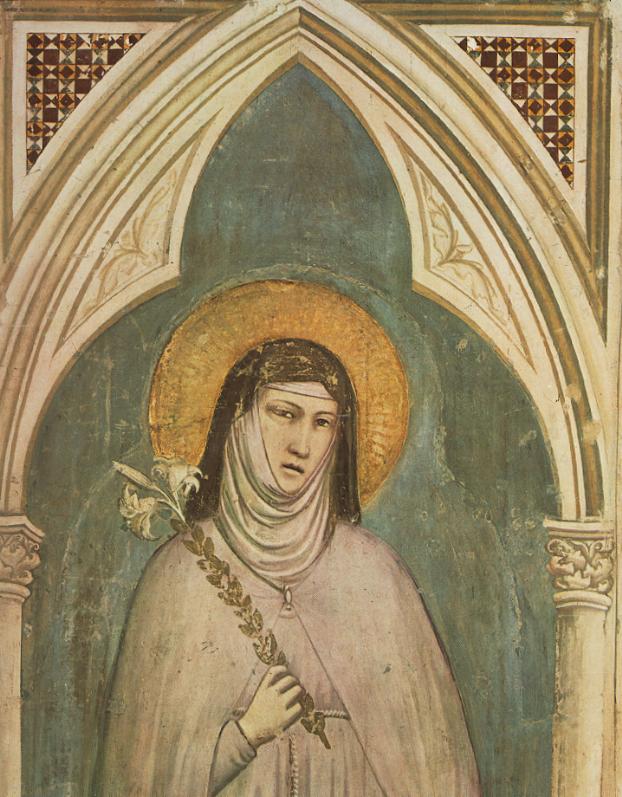
Saint Clare once said, "They say we are too poor. Can a heart which possesses God be really called poor!"

The Poor Clares nuns never ate meat. They walked without socks and shoes. The sisters wore a hair shirt and ate only bread and water during Lent.

Explore the Poor Clare vocation; there's also this new monastery of Poor Clares.
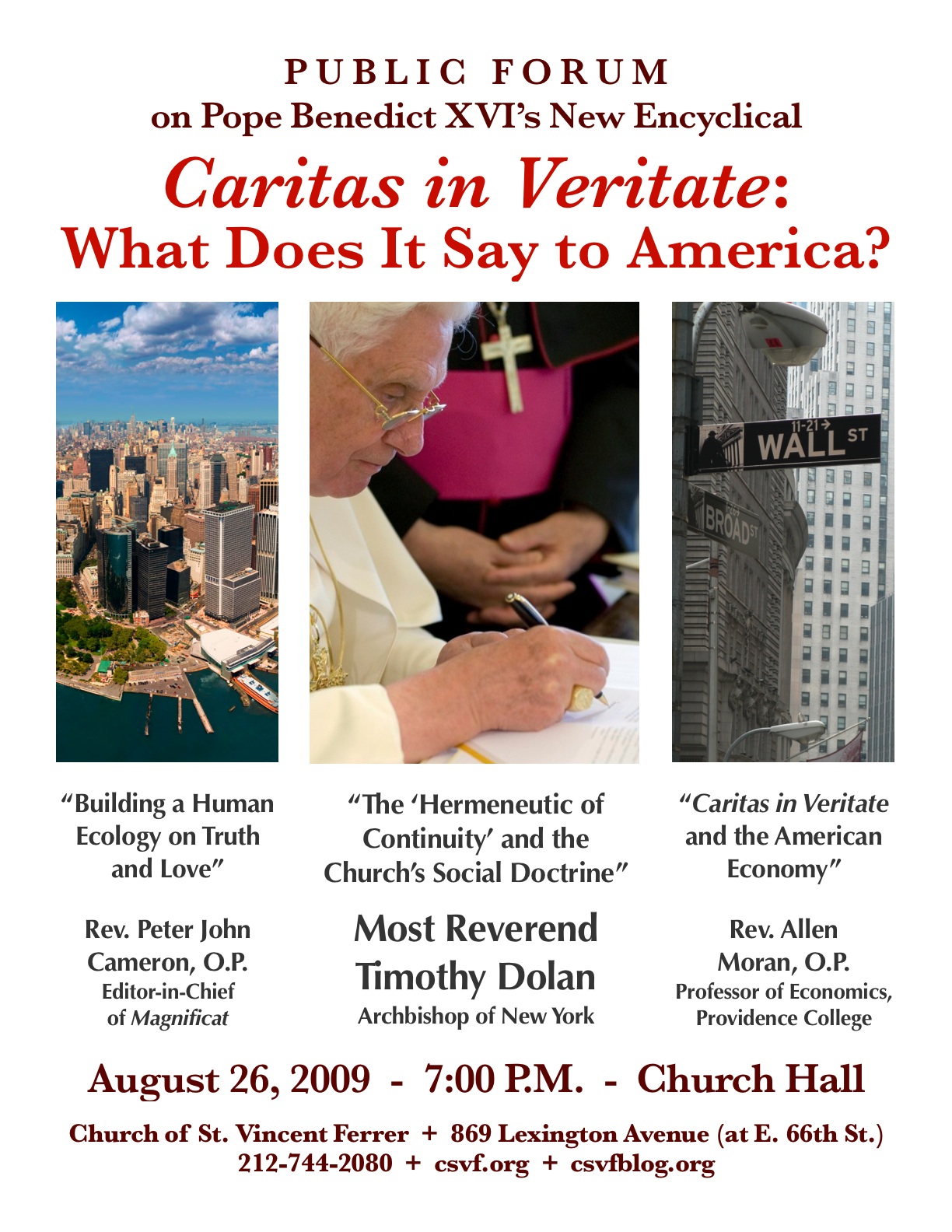
Encyclical Forum.jpg
On August 3rd, I mentioned here in this blog that after 40 years the eucharistic of perpetual adoration is returning to the Archdiocese of Boston. Cardinal O'Malley is opening the endeavor with a Mass on August 15. Visit St Clement's Shrine.

Read Boston Globe's Michael Paulson's article on the renewed interest in perpetual adoration of the Blessed Sacrament. It's picking up steam in Boston, why not in other dioceses?

There are a few places in the Bridgeport Diocese that have regular adoration: one is 24/7 (St Marguerite Bourgeois Church) and the rest have near perpetual adoration; it seems to me that we need more 24/7 adoration of the Blessed Sacrament. Seems to be nowhere in the Diocese of Norwich, CT. In the Archdiocese of Hartford I can think of the Dominican nuns in North Guilford, CT, having perpetual adoration but their chapel is not open to the public for the full 24 hours.

While I know adoration of the Blessed Sacrament is a awesome gesture of prayer, beauty, sacrifice and communion, is it wanted or needed by the people of God (& clergy)? I get the sense that it's not based on these three dioceses but I think I'd be wrong to make this conclusion. Paulson's article brings to light that people are truly changed after spending time with the Lord; and I dare say it's also vice versa --that the Lord wants to spend time with us. So why can't more dioceses restore a sensible practice of eucharistic adoration 24/7?

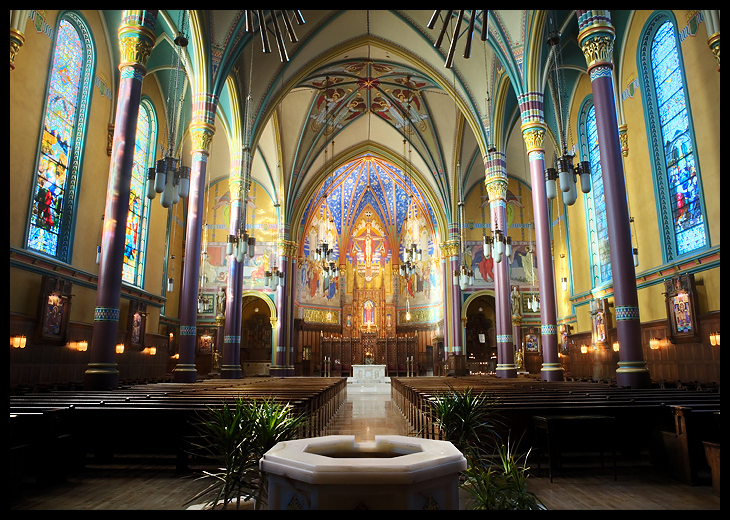
The Madeleine turns 100

| | Comments (0)
The Madeleine.jpgUtah's Catholics are celebrating a 100 years of the Catholic cathedral's presence in a state long known as a haven for Mormons. The mother church of the diocese, The Cathedral of the Madeleine, is 100 years old. While history shows us that Franciscan missionaries preached and celebrated Mass as early as 1776, this celebration concretizes a presence in a house of prayer that has celebrated the sacraments unto salvation.

Catholics on the East coast of the USA or perhaps anywhere else other than Utah will wonder why I am bringing this story more attention. Isn't the Madeleine's anniversary a local festivity? Yes and no. Certainly the Catholics of the Diocese of Salt Lake City are remembering the graces and challenges of living their Christian faith there which obviously includes a witness to Christ. Well, it is obvious to me that every claim to witnessing to Christ is not of equal importance if we don't point to Jesus as the origin of our happiness, the fact of being the Bread of Life and being THE way, the truth and the life. But all of us ought to be celebrating the fact that Christ has made Himself known to His people there. The theology and practice of the Catholic Church is know deeply that what affects Utah's Catholic community affects us; being Catholic means that we are part of a Church, therefore a companionship of people announcing the the Presence of Salvation today. The Church thinks this is so with the presence of the Cardinal Prefect of the Congregation of the Doctrine for the Faith who unites all of us with the Holy Father. That is, the beauty of the Catholic faith is its true universality.

Saint Lawrence

| | Comments (0)
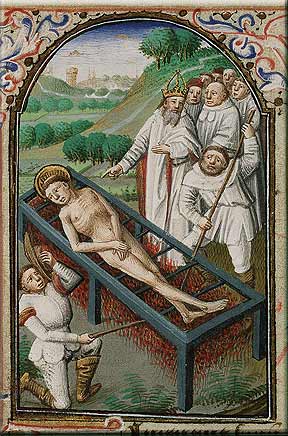
St Lawrence.jpg
Thou hast crowned him with glory and honor, O Lord. And hast set him over the works of Thy hands.

Lawrence the Deacon performed a pious  act by giving sight to the blind through the sign of the Cross, and bestowed upon the poor the riches of the Church. (Vigil Magnificat Antiphon)

We beseech Thee, almighty God, grant us to quench the flames of our vices, even as Thou gavest blessed Lawrence grace to overcome his fiery torments.

The saintly deacon was asked by the Roman Prefect to hand over the Church's wealth. needing three days to do so, he gathered  thousands of lepers, blind and sick people, the poor, the widows and orphans and the elderly and presented them to the Prefect. Angry, the Prefect killed Lawrence slowly by roasting him on a gridiron. Saying to his torturers, "I am done on that side, turn me over," died with a prayer for Rome's conversion to Christ on his lips. The has honored Lawrence with texts for Mass and the Divine Office thinking very highly of his witness to Christ and service to the Church.
In the opening collect for today's Mass, the priest asked God the Father: "Increase Your Spirit within us and bring us to our promised inheritance." Here the promised inheritance is none other than communion with the Trinity. It is heaven! Our promised inheritance is the pledge of future glory: Christ received in the Bread of Life. Taste and see the goodness of the Lord!

quo vadis.jpg
How much time in the past year have you given thought about your "promised inheritance"? When was the last time you considered your own worthiness to receive the divine gift of the promised inheritance? What criteria exists for someone to receive such a gift? With sin in the world and in our own lives, experience tells me that we want the gift but we don't really know what it is, why we are receiving a promised inheritance from God and too often we don't see how sin would prevent us from heaven. BUT do we have sin on our souls? If we didn't we'd be dead or merely presumptuous.

At last I knew, my conscience, my self-awareness, my religious sense, my own experience of who I am as a person says, I am a sinner. Sin is the falling away from God; it is a radical break in my relationship with God. More precisely, "Sin is an offense against reason, truth, and right conscience; it is failure in genuine love for God and neighbor caused by a perverse attachment to certain goods. It wounds the nature of man and injures human solidarity. it has been defined as 'an utterance, a deed, or a desire contrary to the eternal law'" (CCC 1849). I fall from grace by word and action, by thought and disordered affections. Don't you? The psalmist says that man and woman speak with a divided heart, a forked-tongue. Do you confess the truth of Jesus Christ all the time?

Does a divided heart make me a hypocrite? By definition, NO. But it doesn't if I don't pretend --at least I don't think I do-- to be anything more than what I am: a loved sinner. A man who sins, falls away from God and yet is loved unconditionally by God, redeemed by Christ. It is Christ's sacrifice on the Cross and his promise of salvation through Him as the Bread of Life that I am able to be justified. In a word, awareness of one's sin indicates that you can't fall off the floor. Were this the awareness of all Catholics who make the claim to know Jesus and receive Him in the Eucharist today!

So, why talk about sin on a Sunday in which we pray that God would bring us to our promised inheritance? For starters in our to accept this wonderful promise we have to be worthy of the gift. Stepping into heaven, being a part of God's inner, transcendent life we have to be as pure, as holy as we can possibly be give our freedom to say "yes" to God and to cooperate with grace. Accepting the promised gift means that we have to deal truthfully with reality as it is presented to us. And we know from experience, reality has never failed us but we may have failed reality. The Bread of Life offered by Jesus in today's gospel is not make believe, it is not what we want it to be, it is Himself: body and blood, soul and divinity. The Bread of Life is His real, authentic self. In order to have Christ present in our life and for our prayer to be as effective as possible, we have to consider the frequent prayer, may Your name be held holy.

Saint Cyprian of Carthage says so clearly:

We pray, 'Hallowed be Thy name,' not that we wish that God may be made holy by our prayers but that His name may be hallowed in us...It is because He commands us, 'Be holy, even as I am holy,' that we ask and entreat that we who were sanctified in baptism may continue in that which we have begun to be. And this we pray for daily, for we have need of daily sanctification, that we who daily fall away may wash our sins by continual sanctification."

We have work to do.
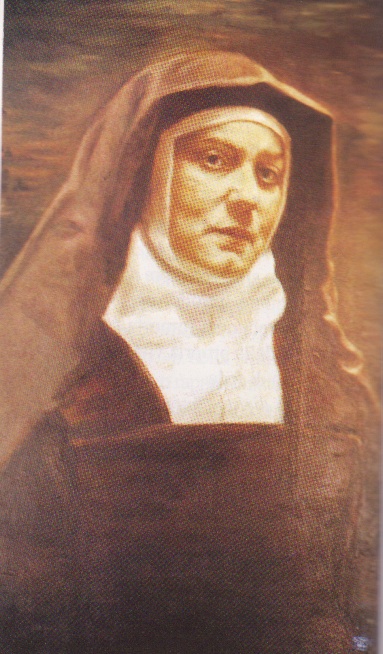
St Edith Stein.jpgGod our Father, You give us joy each year in honoring the memory of Saint Teresa Benedicta of the Cross. May her prayers be a source of help for us, and may her example of courage and chastity be our inspiration.


You can read any of the following for an understanding of this pivotal, 21st century saint:

from volume IV of the collected works

Brief biographies found here (from the Vatican) and here.

-books by the saint

Saint Dominic de Guzman

| | Comments (0)
St Dominic in Soriano PA Bocanegra.jpg
O God, Who has vouchsafed to enlighten Thy Church by the merits and teachings of blessed Dominic, Thy Confessor; grant that through his prayers she may not be left destitute of temporal help, and may continually advance in spiritual growth.


Preach we now the Word of life,
Not with show of worldly learning,
But with fervor of our faith
Open hearts to Spirit's yearning.
Christ alone be ever knowing,
And Him crucified be showing.

Dominic, called by the Lord,
Preaching, teaching, daily blessing,
Living poor and common life,
Contemplation's fruit expressing;
Thus he formed his Preachers boldly,
Showing graces manifoldly.

God the blessed Three in One,
Love beyond all human telling,
Father, Son, and Spirit blest,
Throned in heav'n and with us dwelling,
With the Word of Truth now feed us,
In Your holy ways now lead us.

78 78 88
suggested tune: Liebster Jesu
James Michael Thompson, (c) 2009, World Library Publications

Read Msgr. Ronald Knox on Saint Dominic and the Dominicans

In this context, the theme of integral human development takes on an even broader range of meanings: the correlation between its multiple elements requires a commitment to foster the interaction of the different levels of human knowledge in order to promote the authentic development of peoples. Often it is thought that development, or the socio-economic measures that go with it, merely require to be implemented through joint action. This joint action, however, needs to be given direction, because "all social action involves a doctrine". In view of the complexity of the issues, it is obvious that the various disciplines have to work together through an orderly interdisciplinary exchange. Charity does not exclude knowledge, but rather requires, promotes, and animates it from within. Knowledge is never purely the work of the intellect. It can certainly be reduced to calculation and experiment, but if it aspires to be wisdom capable of directing man in the light of his first beginnings and his final ends, it must be "seasoned" with the "salt" of charity. Deeds without knowledge are blind, and knowledge without love is sterile. Indeed, "the individual who is animated by true charity labours skilfully to discover the causes of misery, to find the means to combat it, to overcome it resolutely." Faced with the phenomena that lie before us, charity in truth requires first of all that we know and understand, acknowledging and respecting the specific competence of every level of knowledge. Charity is not an added extra, like an appendix to work already concluded in each of the various disciplines: it engages them in dialogue from the very beginning. The demands of love do not contradict those of reason. Human knowledge is insufficient and the conclusions of science cannot indicate by themselves the path towards integral human development. There is always a need to push further ahead: this is what is required by charity in truth. Going beyond, however, never means prescinding from the conclusions of reason, nor contradicting its results. Intelligence and love are not in separate compartments: love is rich in intelligence and intelligence is full of love.

This means that moral evaluation and scientific research must go hand in hand, and that charity must animate them in a harmonious interdisciplinary whole, marked by unity and distinction. The Church's social doctrine, which has "an important interdisciplinary dimension", can exercise, in this perspective, a function of extraordinary effectiveness. It allows faith, theology, metaphysics and science to come together in a collaborative effort in the service of humanity. It is here above all that the Church's social doctrine displays its dimension of wisdom. Paul VI had seen clearly that among the causes of underdevelopment there is a lack of wisdom and reflection, a lack of thinking capable of formulating a guiding synthesis for which "a clear vision of all economic, social, cultural and spiritual aspects" is required. The excessive segmentation of knowledge, the rejection of metaphysics by the human sciences, the difficulties encountered by dialogue between science and theology are damaging not only to the development of knowledge, but also to the development of peoples, because these things make it harder to see the integral good of man in its various dimensions. The "broadening [of] our concept of reason and its application" is indispensable if we are to succeed in adequately weighing all the elements involved in the question of development and in the solution of socio-economic problems.

(Caritas in veritate, 30-31; emphasis mine)

Msgr Lorenzo Albacete points to a lack of understanding of the principle of subsidiarity that's going to challenge President Obama's healthcare reform work. AND what is the principle of subsidiarity? It's principle that nothing should be done at macro level that ought to be done at the micro level. So, the state should not impose its method on a municipality because the municipality ought to find a solution. If it can't then you move up to the next reasonable level. See a sketch of the principle.

Read Albacete's article.

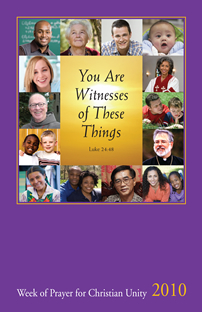
Since 1908 the Church has called upon us to join in prayer with other Christians around the world during the Week of Prayer for Christian Unity. We do this work of prayer as an education in hope for spiritual and actual Christian unity realizing that the Holy Spirit is the only one capable of bring unity among various groups of Christians. The proposal for a week of prayer was initiated in the USA by Franciscan of the Atonement Father Paul Wattson and it is held from January 18 - 25. Today the observance is international in scope.

It is generally held that the 1910 World Mission Conference in Edinburgh, Scotland, marked the beginnings of the modern ecumenical movement.

2010 WPCU.jpg

In tribute, the promoters of the Week of Prayer for Christian Unity, the Commission on Faith and Order and the Pontifical Council for Promoting Christian Unity, invited the Scottish churches to prepare this year's theme.  They suggested: "You are witnesses of these things" (Luke 24:48).

The 2010 theme is a reminder that as the community of faith those reconciled with God and in Christ, "You are witness of these things"--witness to the truth of the power of salvation in Jesus Christ who will also make real his prayer,  "That all may be one...so the world may believe." *Witness gives praise to the Presence who gives us the gift of life and resurrection; by knowing how to share the story of our faith with others; by recognizing that God is at work in our lives; by giving thanks for the faith we have received; by confessing Christ's victory over all suffering; by seeking to always be more faithful to the Word of God; by growing in faith, hope and love; and by offering hospitality and knowing how to receive it when it is offered to us.

Materials to observe the Week of Prayer for Christian Unity are available from the Graymoor Ecumenical and Interreligious Institute, a ministry of the Franciscan Friars of the Atonement.

For more information visit www.geii.org

Transfiguration of the Lord

| | Comments (0)
Christ Jesus, the brightness of the Father and the image of His substance, upholding all things by the word of His power, effecting man's purgation from sin, has deigned to appear this day in glory on a high mountain.

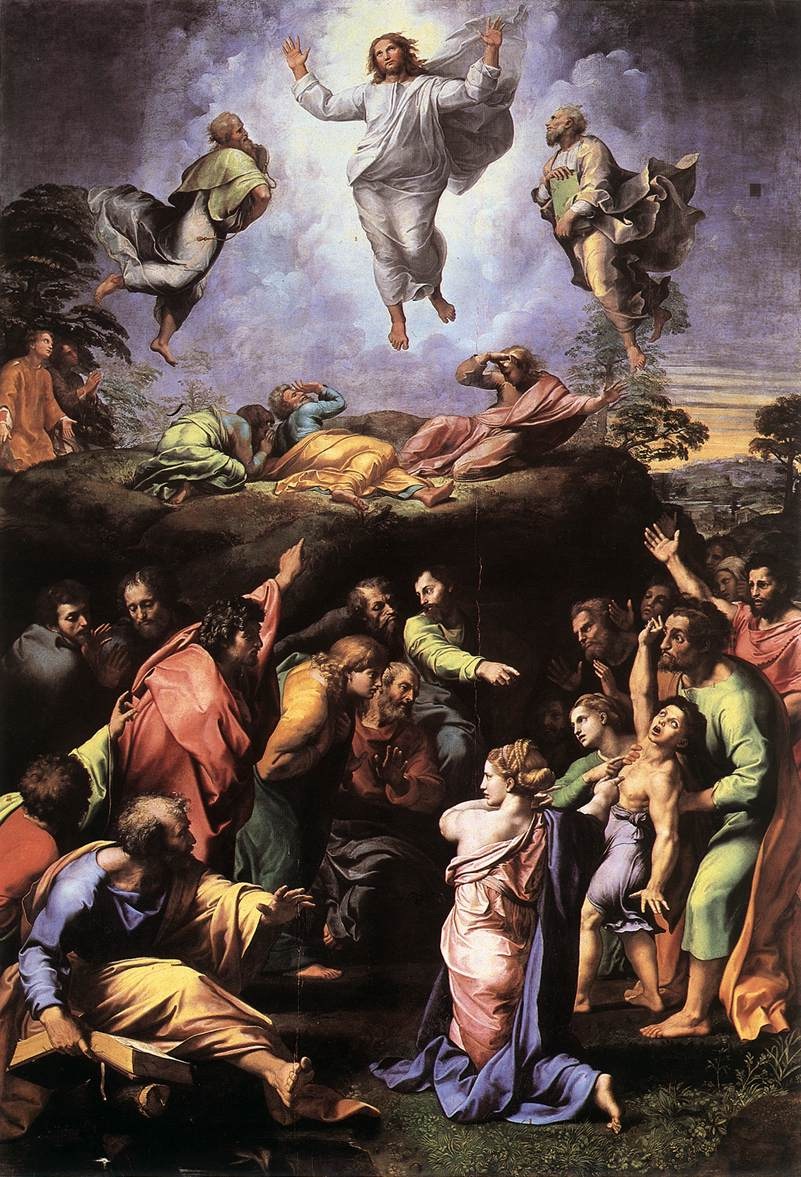
Transfiguration Raffaello.jpg
The Church celebrates the feast of the Transfiguration of the Lord. It is one of two times in the liturgical year that the gospel tells the narrative of the Lord's being transfigured. The other time we hear the narrative of the Transfiguration is in Lent. The Franciscans built a church to mark the sight of the Transfiguration and the oldest monastery in Sinai, Saint Catherine's (an Orthodox monastery), has an ancient mosaic dedicated to this feast. As point of ecclesial comparison, the Orthodox Church observes today also as a significant feast of the Lord. Hence, the commonality of liturgical observances gives witness to a Christian reality.

Today's feast is a twofold reminder of the Lord's victory over death and the promise of the resurrection. You will recall that the one of the witnesses to this vision is Peter, and this vision of the Lord's glory happens after Peter's confession of who Jesus is and his belief in Jesus' messiahship. A very bold claim to make, indeed. One might say that the vision portrayed in the gospel today is a reward for faith, hope and love in the Lord's proclamation of the Kingdom. It also foreshadows the Lord's passion and death on Calvary. This event is preparatory for that great event on what we now call Good Friday and Easter Sunday. All the synoptics record the Transfiguration.

Rafael's beautiful painting is an enduring testament of the apostolic vision on Mount Tabor. The upper part of the painting is that of Jesus with Peter, James and John. The lower section relates the Lord's curing of a possessed child. It is said that Rafael was commissioned to paint the Transfiguration to celebrate the Christian triumph over the Muslims and to state in no uncertain terms what Christians believe: Jesus as the divine physician overcomes death of the body and in doing so gives us glory in the resurrection. The addition of the child's cure demonstrates for us this fact: that the Lord restores to life a sick child, thus conquering sickness and death.

In this way the Lord's Transfiguration fulfills what was told by the prophet Elijah and Moses who spoke of future glory.

What Rafael does for us is to invite us into the Lord's promise of immortality. He shows us that the Lord is preparing us to enter into the destiny that God the Father offered to us: communion with Himself.

O God, Who in the glorious Transfiguration of Thine only-begotten Son did confirm the mysteries of the faith by the testimonies of the fathers, and Who by Thy voice from the shining cloud did in a wondrous manner foreshadow the perfect adoption of sons, make us in Thy loving-kindness, we beseech Thee, co-heirs with Him Who is the King of glory and in that very glory call us one day to share.
Archbishop Mauro Piacenza writes that holiness is our concern for today, not something we should put off until tomorrow. His letter to priests exerted below speaks of some elements that are important for those observing the Year of the Priest. Piacenza highlights the fidelity that Saint John Vianney had even when he wanted to abandon the ministry in Ars, that is, being faithful and not creating some ambiguous, heroic sensibility is not coherent to the ministry of Christ. This is what alerts us that Vianney is a model worth following: grace truly building on nature. A theological concept that I associate most with John Paul II in his theology of the body, that of "self-gift," is applied here in the context of the life of the priest and to the sacrament of the Church. In time we'll here more about the role of self-gift as it applies to priesthood because it is an essential fact in the "becoming" of a priest of Christ and the richness of giving and receiving of that particular grace. Plus, the theology of self-gift, if really lived, might eradicate some evident sacred cows that diminish the flowering of life of holiness. Finally, let me draw our attention to the archbishop's last sentence because it is worth the time reflecting on, not because he happens to be right but because he reminds us what we are made for--God.

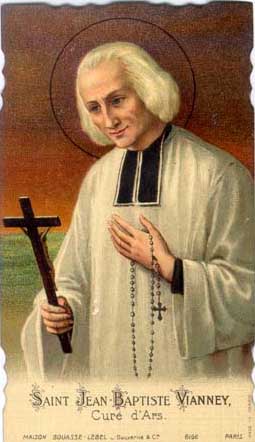
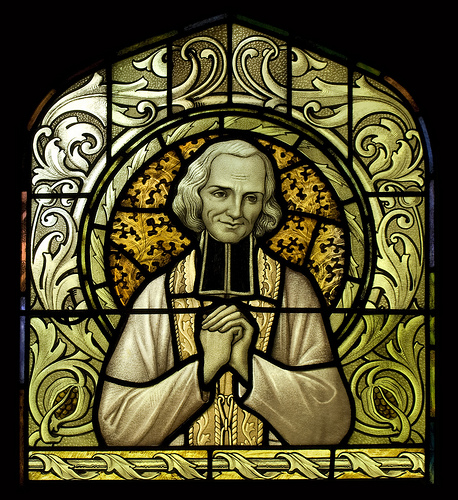
JMVianney1.jpg
The Curé of Ars stands before us as an outstanding figure of priestly holiness, demonstrated not in the extraordinary nature of his works but in his daily fidelity to the exercise of the Ministry; he became a model and a beacon for the France of the early nineteenth century, and for the whole Church, of every time and place; he is a source and consolation for each one of us, even in the midst of various "exhaustions" which can touch our priesthood.

His total dedication is a spur to our joyful self-giving to Christ and to the brethren, so that the Ministry may always be a luminous echo of that consecration from which comes the one apostolic mandate and, in it, every pastoral fecundity.

May his love for Christ, which was the bearer of his humanity and sincere affection, be for us an encouragement to love every more deeply "our Jesus": may His be the sight we seek in the morning, the consolation which accompanies us in the evening, the memory and the companionship of every breath we take by day. To live according to the example of St. John Mary Vianney, as lovers of the Lord, means to always maintain at a high level of missionary tension, becoming progressively but concretely living images of the Good Shepherd and of him who proclaims to the world, "behold the Lamb of God".

May the real spiritual enrapture of the Curé of Ars during the celebration of Holy Mass be for each one of us an explicit invitation to always have a full consciousness of the great gift which has been entrusted to us: a gift which leads us to sing with St. Ambrose: "And we can all, raised to a dignity such as to consecrate the Body and Blood of Our Lord Jesus Christ, hope in Your Mercy!"

May his heroic dedication to the confessional, nourishes by a real expiatory spirit and sustained by the consciousness of being called to participate in a "vicarious substitution" of the one High Priest, spur us on to rediscover the beauty and the necessity, even for us priests, of the Sacrament of Reconciliation. That sacrament is, as well we know, a place of real contemplation of the marvellous works of God in souls which He delicately captivates, guides and converts. To deprive ourselves of such a "marvellous manifestation" is an irreparable and unjustified privation for us, even more than for the Faithful, and for our ministry which is fed by the wonder which is born of every miracle of human liberty which says "yes!" to God!  
St John-Mary Vianney2.jpgSing the God of awesome wisdom
Who has chosen for his own
Those of ev'ry age and nation
To hold fast to God alone
Through all changing styles and customs,
Hearts that only Christ enthrone.

In a faithless time of torpor,
John Vianney loved the Lord,
Preached the truth with ceaseless fervor,
Led his flock by deed and word,
And by his example fearless
Caused our God to be adored.

Lovingly he coaxed the sinner
To submit to Jesus' way;
In humility and patience
To his Lord he knelt to pray
And, obedient to his calling,
Lived his teaching ev'ry day.

To the Trinity give glory,
Father, Son, and Paraclete:
Those on earth with those in heaven
Joining in one anthem sweet:
As the saints on earth gave witness,
Let us each our course complete!

87 87 87
PICARDY, ST. THOMAS
James Michael Thompson (c) 2009, World Library Publications
St John-Mary Vianney.jpg

"O my God, come to me, so that You may dwell in me and I may dwell in you."


Father of mercy, you made Saint John Vianney outstanding in his priestly zeal and concern for your people. By his example and prayers, enable us to win our brothers and sisters to the love of Christ and come with them to eternal glory.


Pope Benedict's letter proclaiming the Year of the Priest for the 150th year of Saint John Vianney's death

A Litany in Honor of Saint John Vianney

A brief biography of Vianney

Was in NYC today

| | Comments (0)
I was in NYC today visiting my friend Henry. Visiting friends is a good and serious thing to do because it builds a companionship for the journey of life, particularly the spiritual life. Seeing Henry is always a good thing for me. Pray for Henry as he heads to Italy for a retreat with members of the Fraternity of Saint Joseph.

Having the opportunity to go to the sacrament of Confession at Saint Agnes Church (E. 43rd Street, near to Grand Central) was a good thing. I make it to the sacrament about once a month but generally not more than every 5 weeks. It takes real courage and humility to face one's humanity and take the medicine for the healing of the soul. And my mentioning this fact here ought to be interpreted as an encouragement to seek the face of God. I am a sinner as all people and so I the weight of personal sin can weigh the soul down but the inclination of the heart to face one's humanity is by virtue of the power of the Holy Spirit beckoning to come closer to the Lord. Examen your conscience and go to Confession! An active sacramental life is necessary for salvation: give to God a worthy Confession (give God everything), receive Communion worthily and prayer is more effective (as in the prayers of the saints). God is never outdone in generosity. Working on our personal life of holiness through Confession and Holy Communion sustains our daily life.

Pauline Bks Manhattan.jpg
I stopped into the brand new Pauline Books & Media in Manhattan at 64 West 38th Street (near to 6th Ave.). Until recently the bookstore was uptown.

THE reason I am mentioning this fact is that I think Catholics need to give patronage to good bookstores and Catholic bookstores in particular. Amazon is a good service and I have to admit that I use Amazon more than visiting a real bookstore: who can pass up a discounted price and free shipping? But this is a matter of being in solidarity with small business owners and I think Pauline Books & Media is one. Consider how you spend your money!

The Daughter of Saint Paul have a superb bookstore with a chapel for private prayer. It is worth a visit!

New books added to my bookshelf:

-31 Questions and Answers on Adoration of the Blessed Sacrament
-Order for the Solemn Exposition of the Holy Eucharist
-Your Guide to Spe Salvi
-Where Is That in the Bible?
-Elizabeth of the Trinity: The Complete Works vol.1
-Francis & His Brothers
-The Reform of Renewal
-The Scapular of Our Lady of Mount Carmel: Catechesis and Ritual

Henry and I also visited the national headquarters of the Fraternity of Communion & Liberation. Seeing the new offices was fun. Seeing friends was good, too. A got a copy of the new Traces.
A Benedictine monk and priest for more than 50 years reflects on his vocation as a missionary in Africa. His call from the Lord may be spoken of as a call within a call found in a call. After all, he said he abandoned his will into the hands of the Divine Will. Father Damian Milliken is a monk of a missionary group of Benedictine monks who work around the world in local monasteries while doing proper missionary work of friendship, evangelization and projects of social concern. Read Father Milliken's story.
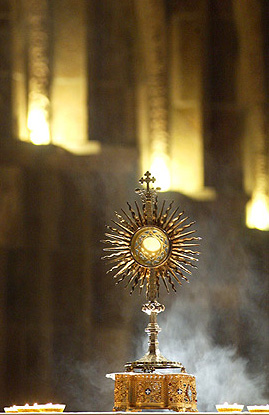
adoration.jpg

After a 40-year absence, the practice of perpetual adoration of the Blessed Sacrament has returned to the Archdiocese of Boston. This is another positive response to Pope Benedict's calling for a Year of the Priest and a desire to intimately know the Lord.

In Ecclesia de Eucharistia, Pope John Paul told us that:

It is pleasant to spend time with him [Christ], to lie close to his breast like the Beloved Disciple (cf. Jn 13:25) and to feel the infinite love present in his heart. If in our time Christians must be distinguished above all by the "art of prayer", how can we not feel a renewed need to spend time in spiritual converse, in silent adoration, in heartfelt love before Christ present in the Most Holy Sacrament? How often, dear brother and sisters, have I experienced this, and drawn from it strength, consolation and support!  This practice, repeatedly praised and recommended by the Magisterium, is supported by the example of many saints. Particularly outstanding in this regard was Saint Alphonsus Liguori, who wrote: "Of all devotions, that of adoring Jesus in the Blessed Sacrament is the greatest after the sacraments, the one dearest to God and the one most helpful to us". The Eucharist is a priceless treasure: by not only celebrating it but also by praying before it outside of Mass we are enabled to make contact with the very wellspring of grace. A Christian community desirous of contemplating the face of Christ in the spirit which I proposed in the Apostolic Letters Novo Millennio Ineunte and Rosarium Virginis Mariae cannot fail also to develop this aspect of Eucharistic worship, which prolongs and increases the fruits of our communion in the body and blood of the Lord.

In Mane Nobiscum Domine we read: "Our faith in the God who took flesh in order to become our companion along the way needs to be everywhere proclaimed, especially in our streets and homes, as an expression of our grateful love and as an inexhaustible source of blessings." So the liturgical practice of adoration of the Blessed Sacrament deepens the heart's desire "to cultivate a lively awareness of Christ's real presence" (18).

Get the point? Adoration of the Eucharistic face of the Lord awakens in us something new, something beautiful.

Officially Boston's Eucharistic adoration begins with the Sacrifice of the Mass on August 15 celebrated by Cardinal Sean O'Malley, OFM Cap.

Visit website for the Saint Clement Shrine

"O taste and see the goodness of the Lord." (Psalm 34)

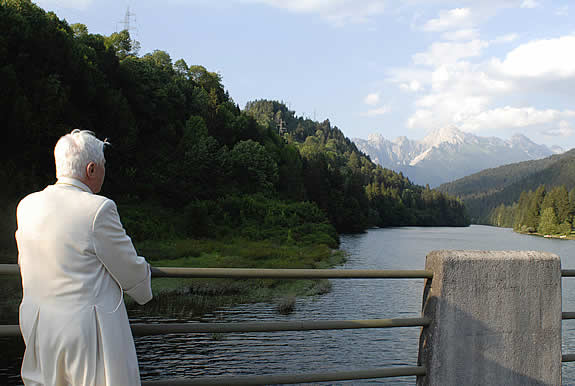
Pope Benedict XVI & nature.jpgHave you ever considered what a 21st century theology of creation would look like? What experts would you follow? Would you ever think of Pope Benedict as a green pope? Could the leader of the 1 billion plus Catholics lead the charge in standing on the side the culture of life AND the environment? As Benedict's ministry as the Supreme Pontiff unfolds so is his vision of what humanity is as gift of God and our responsibility to care for it. Pope Benedict is offering us a way of being environmentally conscious that is coherent with faith and reason. As he said in July 2007,  "Our earth speaks to us, and we must listen if we want to survive."  In his recent letter to the world, Caritas in Veritate, Pope Benedict wrote: "When nature, including the human being, is viewed as the result of mere chance or evolutionary determinism, our sense of responsibility wanes. In nature, the believer recognizes the wonderful result of God's creative activity, which we may use responsibly to satisfy our legitimate needs, material or otherwise, while respecting the intrinsic balance of creation. If this vision is lost, we end up either considering nature an untouchable taboo or, on the contrary, abusing it." Read John Allen's analysis.

By the way, he's not the only head of a Church who is acting in a green way, so is Patriarch Bartholomew I of Constantinople...he's known as the "green patriarch."
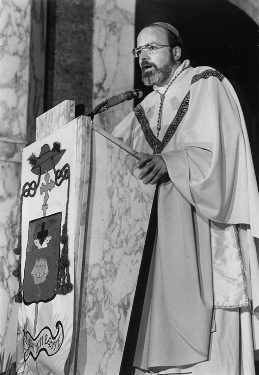
SPOM Virgin Islands.jpg25 years ago Capuchin Father Sean Patrick O'Malley was ordained a bishop. Currently he's the cardinal-archbishop of Boston but not before periods of episcopal ministry in the US Virgin Islands, Fall River, Palm Beach.

Read his blog about this anniversary and the brief narrative of his calling. Also, there is the Boston's Pilot interview

Cardinal O'Malley is an amazing man who's on fire being a Christian, Capuchin, priest and bishop.

Pray for Cardinal O'Malley especially on this feast of Our Lady of Angels of the Portiuncula. And may the saints--particularly Saints Francis, Clare and Pio, pray for him.

"The stone rejected has become the cornerstone."
Muslims burned alive 6 Christians based on false accusations. What a crime!

Read the story. And here.

Will the international Christian community raise their voice fraternal support of the Pakistani Christians and their plight? Boy, I hope so. This is a real tragedy for all concerned and human and religious failure.

Eternal rest grant unto them O Lord. And let perpetual light shed upon them.
OL of the Angels of teh Portiuncula.jpg

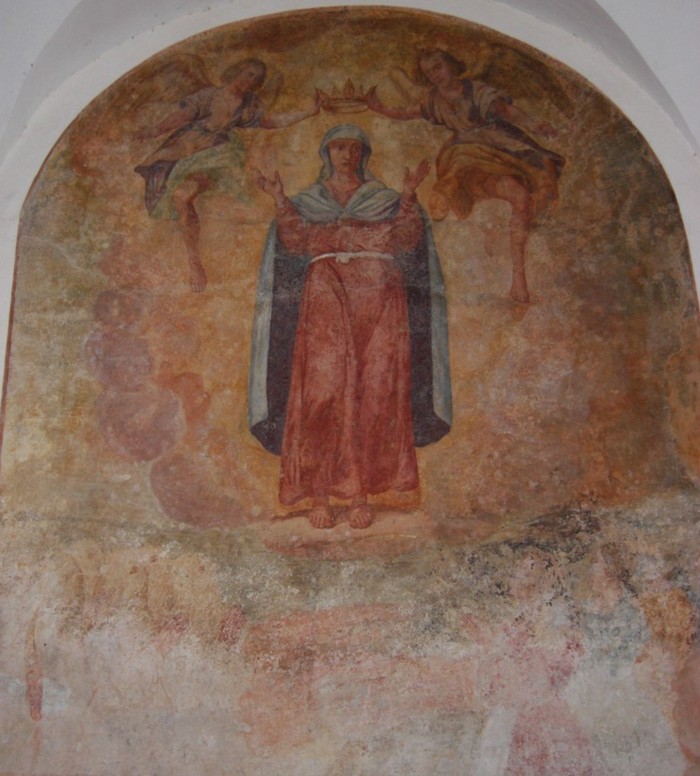
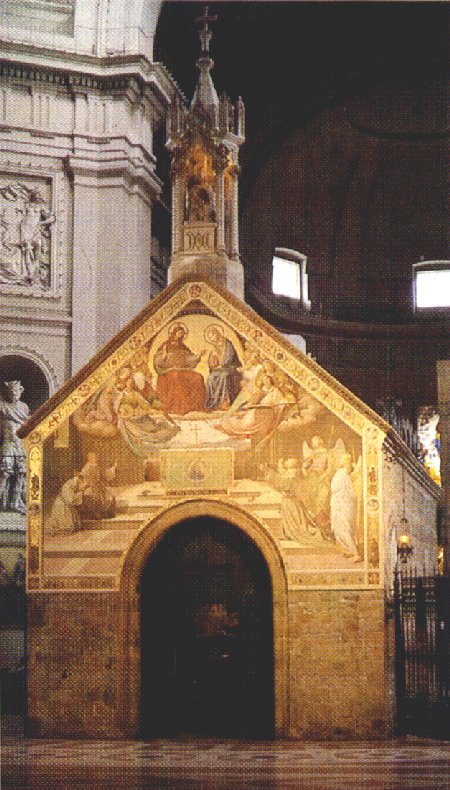
Today is the feast of Our Lady of the Angels of the Portiuncula, the Virgin under whose mantle Saint Francis of Assisi was wrapped; Mary's maternal protection made it possible for blessed Francis to experience an intentse Presence of the Lord and to receive his vocation to rebuild the Church. The Portiuncula is also the place where Francis knew first hand the experience of being sustained by the Angels. Likewise his intimate devotion to the Blessed Mother, under whose protection did he place himself to do the Lord's work did this place become holy for the members of the Franciscan family and for the Church universal. As a place of pilgrimage, the holy Portiuncula is a poignant reminder of how important the encounter with Christ was for Saint Francis and how much the encounter ought to be pivotal for us today. Without meeting Christ, little makes sense. Saint Bonaventure had this to say about this devotion:

The Portiuncula was an old church dedicated to the Virgin Mother of God which was abandoned. Francis had great devotion to the Queen of the world and when he saw that the church was deserted, he began to live there constantly in order to repair it. He heard that the Angels often visited it, so that it was called Saint Mary of the Angels, and he decided to stay there permanently out of reverence for the angels and love for the Mother of Christ. This is also the place where St Clare took her vows and where Saint Francis died.

Consider the words of an early biographer of Saint Francis of Assisi:

From there he moved to another place, which is called the "Portiuncula," where there stood a church of the Blessed Virgin Mother of God built in ancient times.  At that time it was deserted and no one was taking care of it.  When the holy man of God saw it so ruined, he was moved by piety because he had a warm devotion to the Mother of all good and he began to stay there continually. The restoration of that church took place in the third year of his conversion. At this time he wore a sort of hermit's habit with a leather belt. He carried a staff in his hand and wore shoes. One day the gospel was being read in that church about how the Lord sent out his disciples to preach. The holy man of God, who was attending there, in order to understand better the words of the gospel, humbly begged the priest after celebrating the solemnities of the Mass to explain the gospel to him. The priest explained it all to him thoroughly line by line.  When he heard that Christ's disciples should not possess gold or silver or money, or carry on their journey a wallet or a sack, nor bread nor a staff, not to have shoes nor two tunics, but that they should preach the kingdom of God and penance, the holy man, Francis immediately exulted in the spirit of God. "This is what I want," he said, "this is what I seek, this is what I desire with all my heart." The holy father, overflowing with joy, hastened to implement the words of salvation, and did not delay before he devoutly began to put into effect what he heard. (From The Life of Saint Francis by Thomas of Celano)

Read about and perhaps seek The Portiuncula Indulgence if you visit any Franciscan Church and observe the conditions for receiving the indulgence.

The Holy Father made reference to this in his Sunday Angelus address:

... today is the feast of the "Pardon of Assisi," which St. Francis obtained from Pope Honorious III in the year 1216, after having a vision while he was praying in the little church of the Portiuncula. Jesus appeared to him in his glory, with the Virgin Mary on his right and surrounded by many Angels. They asked him to express a wish and Francis implored a "full and generous pardon" for all those who would visit that church who "repented and confessed their sins". Having received papal approval, the Saint did not wait for any written document but hastened to Assisi and when he reached the Portiuncula announced the good news: "Friends, the Lord wants to have us all in Heaven!". Since then, from noon on 1 August to midnight on the second, it has been possible to obtain, on the usual conditions, a Plenary Indulgence, also for the dead, on visiting a parish church or a Franciscan one.

A note about indulgences, which are often misunderstood.  Indulgences are not forgiveness for sin but forgiveness for temporal punishment due to sin; that the residual effects of sin are forgiven.

Also, visit The Shrine website (read in 3 languages)

On this feast we pray

August Queen of Heaven, sovereign queen of Angels, you who at the beginning received from God the power and the mission to crush the head of Satan, we beseech you humbly, send your holy legions so that, on your orders and by your power, they will track down demons, fight them everywhere, curb their audacity and plunge them into the hell.

Who can be compared to God? Oh good and tender Mother, you will always be our love and our hope. Oh divine Mother, send the Holy Angels and Archangels to defend me and to keep the cruel enemy far from me. Holy Angels and Archangels defend us, protect us. Amen.
Saint Peter Julian Eymard

| | Comments (0)
St Peter Julian Eymard.jpg
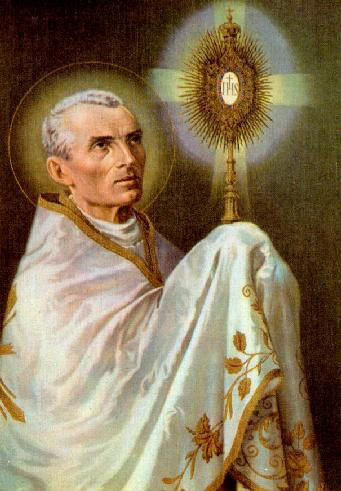
Lord God, You kept Saint Peter faithful to Christ's pattern of poverty and humility. May his prayers help us to live in fidelity to our calling and bring us to the perfection You have shown us in Your Son.

A short biography of Saint Peter Julian, the founder of the Congregation of the Blessed Sacrament


A list of resources on The Apostle of the Blessed Sacrament

The Holy Maccabees

| | Comments (0)
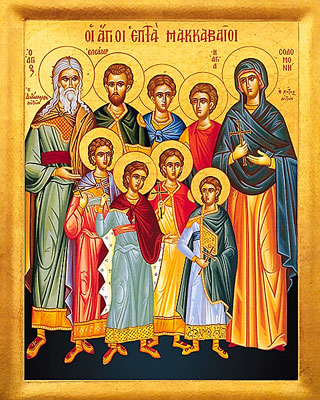
holy maccabees.jpgThe very hairs of your head are all numbered. Therefore do not be afraid; you are of more value than many sparrows.


May this fraternal crown of Thy Martyrs gladden us, O Lord, that so our faith may be strengthened and we may be comforted by the prayers of many intercessors.


The Wisdom of God's own seven pillars are all, a seven-branched lamp that shine with the Light Divine, Great Martyrs that were before the Martyrs, O all-wise Maccabees, with them pray that the God of all to whom we who now sing your praises may be saved. (Kontakion, tone 2)


(Some will be surprised to see a group of Jewish martyrs inserted in the Roman Liturgy. But it ought not be too surprising. Today a commemoration in the Roman Missal (1962) is that of these holy martyrs. The honoring of the Holy Maccabees is not a liturgical memorial that is found in the current sacramentary because the beloved Liguori is now on August 1. One can hope that the Holy Maccabees will be observed on the Novus Ordo calendar again! On the former liturgical calendar August 1 observed the Holy Maccabees as St Alphonse was celebrated on August 2. As a point of ecclesial comparison, the Orthodox Church maintains today as dedicated to these 7 Jewish Martyrs.

The Christian churches, east and west, honor the witnesses to God because of the steadfastness these people demonstrated for the revealed faith. In the face of persecution they lived and hoped according to the Law and the Fathers. That is, these 7 brothers refused to worship pagan gods and to break the kosher dietary laws; once they accepted the reality of who God was there was no turning away from Him, even at the threat of death. Therefore, the presence of the Jewish Martyrs on the Christian liturgical calendar signify recognition of the righteousness of many before the birth of Christ who are justly recognized as saints for the incredible faith. As they are models for the Jews they also are models for Catholics and Orthodox to live the faith with vigor. It's rather significant that Saint Ambrose of Milan spoke of the Maccabean martyrs in his work, On Jacob and the blessed life.)

Saint Alphonsus Liguori

| | Comments (0)
St Alphonse Liguori2.jpg

You are the salt of the earth; but if salt has lost its taste, how shall its saltness be restored? It is no longer good for anything except to be thrown out and trodden under foot by men.


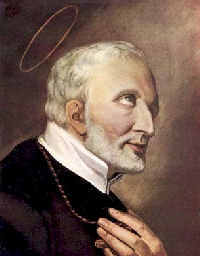
Father, you constantly build up your Church by the lives of your saints. Give us the grace to follow Saint Alphonsus in his loving concern for the salvation of men, and so come to share his reward in heaven.

Pope Benedict July 24 09.jpgThe Holy Father's prayer intentions for the month of August:

The general intention
That public opinion may be more aware of the problems of millions of displaced persons and refugees, and that concrete solutions may be found for their often tragic situation.

The mission intention
That those Christians who are discriminated against and persecuted in many countries because of the name of Christ may have their human rights, equality and religious freedom recognized, in order to be able to live and profess their own faith freely.

About the author

Paul A. Zalonski is from New Haven, CT. After years of study, work and trying to find meaning in life, he still has a sense of humor. Paul is discerning God's plan and is preparing for ordination to the priesthood. Contact Paul at paulzalonski(at)yahoo.com.

Pages

Humanities Blog Directory
Powered by Movable Type 4.12

About this Archive

This page is a archive of recent entries written by Paul Zalonski in August 2009.

Paul Zalonski: July 2009 is the previous archive.

Find recent content on the main index or look in the archives to find all content.