Pope Francis visits Camaldolese monastery

As one of the final events for the Year of Faith Pope Francis will have a “Pro Orantibus Day,” honoring the liturgical feast of of the Presentation of the Blessed Virgin Mary. Since 1953, today has been a day of prayer for those belonging to contemplative religious orders.  Pope Pius XII established this day to remind all the faithful of the indispensability of contemplative vocation for the health of the Church. It is also a day many of the Benedictine Oblates renew their oblation to their monastery.

Pope Francis called today “a good opportunity to thank the Lord for the gift of so many people who, in monasteries and hermitages, dedicate themselves to God in prayer and silent work.”

The Pope urged the faithful to give their spiritual and material support to these brothers and sisters “so that they can carry out their important mission.”

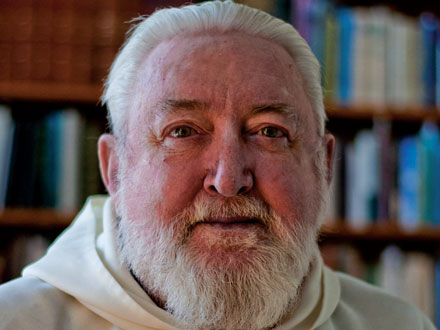
At Vespers, the Pope Francis will visit a Camaldolese monastery of cloistered nuns, Sant’Antonio abate, on the Aventine hill. Previous Roman Pontiffs have prayed at this monastery.

Here’s a VERY fascinating interview with Veronica Scarisbrick of Vatican Radio with one of the nuns (the radio link) at Sant’Antonio.

Listen to the interview, please. AND there’s another report here from Vatican Radio.

Rome Reports has a report here.

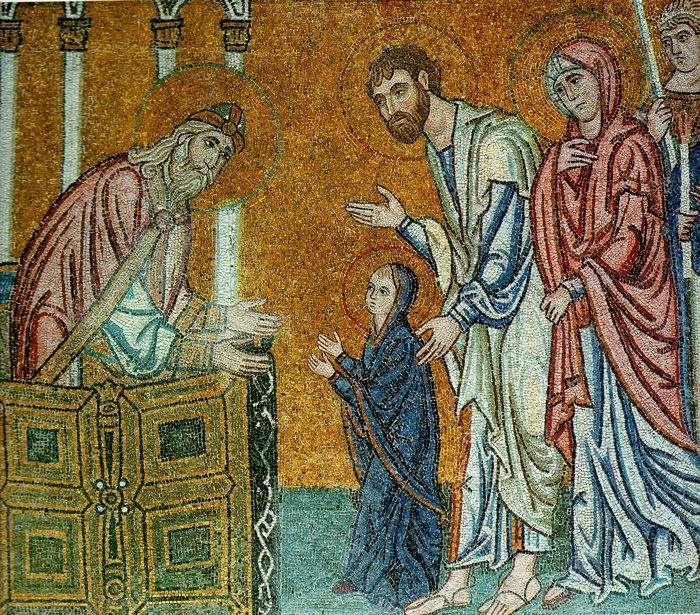
Presentation of Mary in the Temple

Feast of the Entrance of the Theotokos

The Church liturgically honors Mary in her being Presentation in the Temple. The Byzantine Church calls the memorial The Entrance of the Theotokos in the Temple. It is one of the 12 Great Feasts.

Mary, Ark of the Covenant, pray for us.

Saint Gregory Palamas orients our thoughts today:

With profound understanding she listened to the writings of Moses and the revelations of the other prophets when, every Saturday, all the people gathered outside, as the Law ordained. She learned about Adam and Eve and everything that happened to them: how they were brought out of non-being, settled in paradise and given a commandment there; about the evil one’s ruinous counsel and the resulting theft; about their expulsion from paradise on that account, the loss of immortality and the change to this way of life full of pain.

She saw that as time passed, life continued under the inherited curse and grew even worse, God’s creature made in His image was estranged from the Creator and became more and more closely associated with the one who had evilly schemed to crush him. No one was capable of putting an end to this impulse which brings destruction on all men alike, or to the uncheckable rush of humankind towards hell.

When the holy Virgin heard and understood this, she was filled with pity for humanity and, with the aim of finding a remedy to counteract this great affliction, she resolved at once to turn with her whole mind to God. She took it upon herself to represent us, to constrain Him Who is above compulsion, and quickly draw Him towards us, that He might remove the curse from among us, halt the advance of the fire burning men’s souls, weaken our enemies, answer our prayers, shine upon us with light that never sets and, having healed our sickness, unite His creatures with Himself.”

A traditional Catholic Thanksgiving hymn

Traditional Thanksgiving antiphonFor those looking for an antiphon for Thanksgiving…

The text reads:

Dominus dixit ad me: vade et interfice a Turcia operretur, et servient in fratribus meis minimis. Et abii, et percussit Turcia, et praeparavit cibos fratribus meis servierim. Alleluia.

In translation:

The Lord said to me: Go and kill a turkey, dress it, and serve to the least of my brethren. So I went and slew the turkey, dressed it and served to my brethren. Alleluia.

You can click not the image to enlarge it.

Thanks to my friend, Father Fluet…

Secular Franciscans of Bethlehem at 125

Franciscan crossed armsThe Secular Franciscan Order of Bethlehem are celebrating 125 years. Laity, according to their own context and vocation, are living the gospel and bringing the gospel message to the world. The SFO are living witnesses in imitation of Saint Francis of Assisi. The SFO provides personal formation to its members, education to youth, are present to the needs of the local church and assist in the Church Universal in a myriad of good works.

Living in Bethlehem brings a unique due to the fact it’s the place where the Lord lived, died, rose from the dead and ascended to God the Father.

The Franciscan Media Center carried the story here.

The vocation to follow in the steps of Saint Francis of Assisi and the blessers and saints of the Order is available around the world. You can check locally to see about the presence of SFO. Each fraternity is unique and one may not have the same vigor as another. Following the Lord in this way is a rewarding way to know, love and serve Jesus.

Jerome Murphy-O’Connor, OP, RIP

Jerome Murphy OConnorOn November 11 in Jerusalem one of the world’s best known scholars of the New Testament died, Dominican Father Jerome Murphy-O’Connor, 78. Father Jerry, as he was known, was certainly the best known priest in Jerusalem. He lived with poor health in recent years.

A tall man with a big personality was certainly a force to be reckoned with on all planes. He was certainly a provocative thinker, particularly on Saint Paul, was one who pushed the boundaries; but he was a man of trust in Divine Mystery. Some may say he was a modernist scholar; a keen interest was the real humanity of Jesus, especially as Jesus approached the crucifixion. Hence, you may not agree with all things that he said, but one would hope that you’d do your own research and draw your own conclusions, but you can’t dismiss out of hand professional and honest work. I certainly think history will show us that JMC was a on to something.

His last book was, Keys to Jerusalem: Collected Essays (Oxford, 2012).

I met Father Jerry at University of Notre Dame several years ago while he was there doing some teaching and lecturing in NT studies.

Several articles ought to be read:

May God be merciful to Father Jerome. May Our Lady and Saint Dominic guide Father to the Beatific Vision.

Forming ‘the intelligence of the heart’

Jean-Louis Cardinal Tauran, president of the Pontifical Council for Interreligious Dialogue, spoke Monday (November 18) at the opening general assembly of the two-day Global Forum of the King Abdullah Bin Abdulaziz International Centre for Interreligious and intercultural Dialogue, Vienna, Austria.

The senior cardinal deacon Tauran used an insightful term that needs to developed, ‘intelligence of the heart,’ which he explains that “inspires us to respect what God is accomplishing in every human being” during the opening session of an inter-religious forum in Vienna, Austria, on Monday morning.

The difficulty raised with inter-religious dialogue with Muslims is the concept of the other person; Islam does not hold that people are made in the image and likeness of God. Catholics and Jews do and do so as fundamental to all else. And there is good reason to ask why we spend so much time and money on inter-religious dialogue when there is no identifiable goal to the work done.  It seems doubtful that serious Muslims and serious Christians have one goal: conversion to the Truth: Christians ought to convert Muslims and Muslims convert Christians. Once admitted, then we can have a fruitful dialogue. But that will never happen. Nevertheless,  what Cardinal Tauran states is serious and we ought to consider seriously what it means to live in a  religiously diverse world.

The Cardinal said:

We are living in a changing world. We are living more and more in a ‘provisional’ world. But many people rediscover that we cannot live without reference to history and especially without relation to our contemporaries, their joys and hopes, their griefs and anxieties. In such a context religions are called to propose – not to impose – reasons for living.

What is at the centre of our concern is the human person, man and woman. The human person is the object of the attention of political and religious leaders. Each one of us is a citizen and a believer. All of us belong to the same human family. It means that we share the same dignity, we are confronted by the same problems, we enjoy the same rights and we are called to accomplish the same duties.

But unfortunately, we have to recognize that too often: we judge people on their appearance or on their ‘production’, even though every human person is much more than how he or she appears or is able to produce; we reduce the human person to an object (I am thinking of all the problems raised by bio-technology), while the human person transcends his/her material dimension.

Interreligious dialogue teaches us: to be careful not to present the religion of the other in a bad light in schools, universities, the mass media and, in particular, in the religious discourse; not to demean the religious convictions of the others, especially when they are not present; to consider diversity – ethnical, cultural, vision of the world – as richness, not as a threat.

Interreligious dialogue impels us: to listen and to better know each other; to think before judging; to present the content of our faith and our reasons for living with kindness and respect.”

Therefore, interreligious dialogue can contribute to: give to God again the place which He deserves; to inspire fraternity; to give the wisdom and courage to act.

To look at the theme “The Image of the Other” is also to look within ourselves in order to purify all that makes us closed to what is new and true; to look at the other means also to accept being questioned by him about our faith and to be ready to give an account of it; to look at the other is to be available to work with all persons of good will for the common good.

One of the tasks of KAICIID could be the promotion of what I dare to call, “the intelligence of the heart,” which inspires us to respect what God is accomplishing in every human being and at the same time to respect the mystery that every human person represents. What we have to avoid absolutely is that religions engender fear, attitudes of exclusion or of superiority in people.

In concluding, I express my heartfelt wishes for the success of this meeting. It will send a very significant message if KAICIID can become a place where we can take time to look at each other, to better know each other and to share all our abilities in order to make this world more secure and enlightened, with all its inhabitants living in the spirit of respect and friendship that Pope Francis has repeatedly said, “To encounter all because we all have in common our having been created in the image and likeness of God.” (To Participants in the Plenary of the Pontifical Council for Promoting the New Evangelization, 14 October 2013)
The beauty of Vinicio Riva

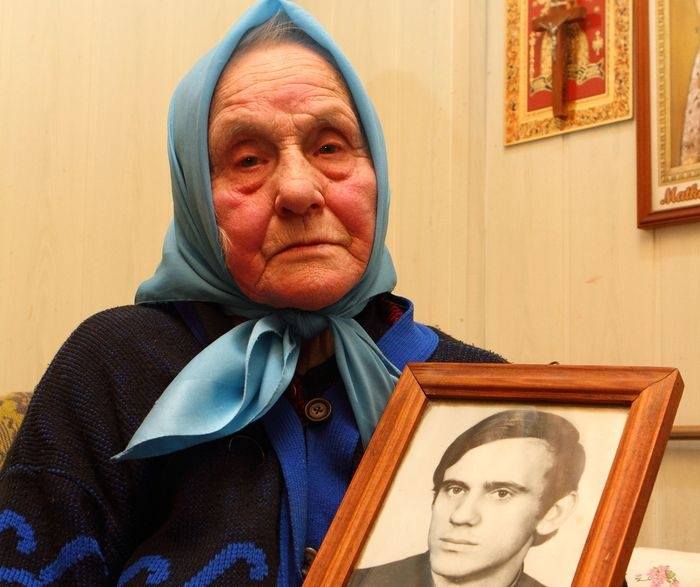
Vinicio Riva and familyMail Online carried the story of Vinicio Riva, the man embraced by Pope Francis. The full story is here. Vinicio Riva’s story is compelling.

A previous post on the pope’s gesture of love is here.

Here’s an excerpt which gives hope:

Mr Riva recollected: ‘He [Pope Francis] came down from the altar to see the sick people. He embraced me without saying a word. I felt as though my heart was leaving my body.

‘He was completely silent but sometimes you can say more when you say nothing.’  

‘First, I kissed his hand while with the other hand he caressed my head and wounds. Then he drew me to him in a strong embrace, kissing my face.

‘My head was against his chest his arms were wrapped around me. It lasted just over a minute, but to me it seemed like an eternity.’

Go, and do likewise. What more has to said?