Artistic expression is part of that “way of beauty” that leads to God

Pope Benedict gave the following teaching on beauty –a subject near to his heart– on August 31. Some of the paragraphs are here (the entire address is here). Isn’t what the Pope says true???? The beautiful expressed in food, music, art, architecture, the human body, the poerty and friendship is the extroversion of the Holy Spirit.


Today, I would like to consider briefly one of these channels that can lead us to God and also be helpful in our encounter with Him: It is the way of artistic expression, part of that “via pulchritudinis” — “way of beauty” — which I have spoken about on many occasions, and which modern man should recover in its most profound meaning. 


Perhaps it has happened to you at one time or another — before a sculpture, a painting, a few verses of poetry or a piece of music — to have experienced deep emotion, a sense of joy, to have perceived clearly, that is, that before you there stood not only matter — a piece of marble or bronze, a painted canvas, an ensemble of letters or a combination of sounds — but something far greater, something that “speaks,” something capable of touching the heart, of communicating a message, of elevating the soul


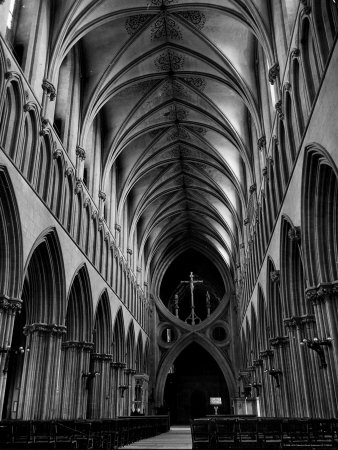
Wells cathedral.jpgA work of art is the fruit of the creative capacity of the human person who stands in wonder before the visible reality, who seeks to discover the depths of its meaning and to communicate it through the language of forms, colors and sounds. Art is capable of expressing, and of making visible, man’s need to go beyond what he sees; it reveals his thirst and his search for the infinite. Indeed, it is like a door opened to the infinite, [opened] to a beauty and a truth beyond the every day. And a work of art can open the eyes of the mind and heart, urging us upward.


Continue reading Artistic expression is part of that “way of beauty” that leads to God

Saint Gregory the Great

Gregory the Great Matthew Aldreman.jpgFor Gregory the Great, a hinge figure between the ancient world — the Senate of Rome last met while Gregory was the city’s bishop — a hinge between the ancient world and the grand experiment called Christendom, for Gregory this awareness that to look upon the face of Christ brought knowledge of God inspired an extensive exploration of Scripture to discern how God would have us live, how the Church and its leaders could best serve those seeking to know Christ Jesus and the Father. Since rightful authority comes from God, Gregory reasoned, its exercise must ever include a pastoral intent.


Father James Flint, OSB

Saint Procopius Abbey

3 September 2011


Let us pray for the Benedictine monks of Portsmouth Abbey, Portsmouth, Rhode Island, on this their abbey’s patronal feast day. May God prosper the work of their hands!


You may also be interested in the 2010 blog post that has a hymn to Saint Gregory the Great by J. Michael Thompson. 

Saint Joshua

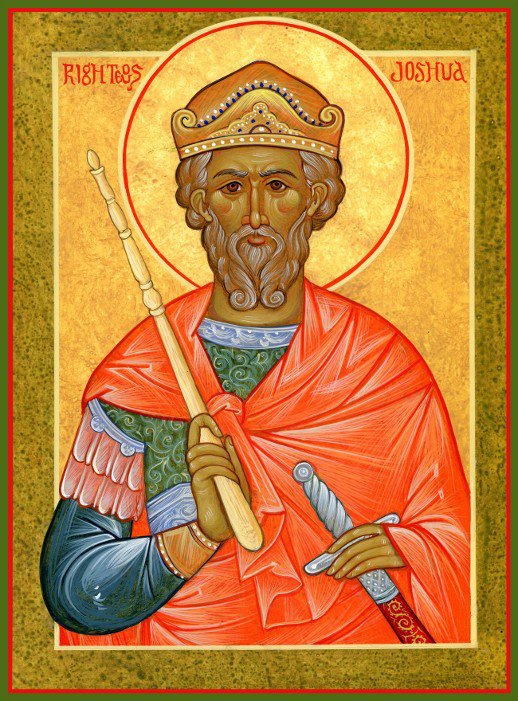
St Joshua.jpgThe Roman Martyrology notes Saint Joshua’s feast day today. You remember him, Joshua, son of Nun, servant of the Lord, who became inspired by the Holy Spirit after Moses laid hands on him and who led the Israelites into the Promised Land. The Righteous Joshua is said to have lived for a 110 years reposing c. 1440 BC.

Pope Benedict XVI’s monthly prayer intentions for September 2011


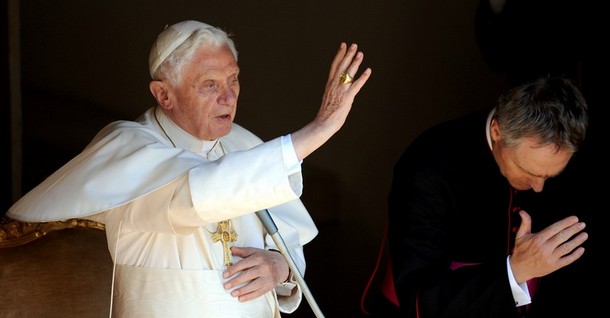
Pope blesses crowd August 31 2011.jpgThe papal prayer intentions for September bring to mind the ministry of teaching and proclaiming the Gospel in Asia. Let’s join Pope Benedict and the Church in asking God to bestow His grace on these two intentions.


The general intention

That all teachers may know how
to communicate the love of truth and instill authentic moral and spiritual
values.


The missionary intention

That the Christian communities in Asia may
proclaim the Gospel with fervor, witnessing to its beauty with the joy of
faith.

Saint Jeanne Jugan

St Jeanne Jugan life icon.jpg

Today’s feast is probably of a little known saint, Saint Jeanne Jugan (1792-1879). Her’s a remarable life of grace and heroic virtue. 

“…Jeanne Jugan was concerned with the dignity of her brothers and sisters in humanity whom age had made more vulnerable, recognizing in them the Person of Christ himself. “Look upon the poor with compassion,” she would say, “and Jesus will look kindly upon you on your last day.” Jeanne Jugan focused upon the elderly a compassionate gaze drawn from her profound communion with God in her joyful, disinterested service, which she carried out with gentleness and humility of heart, desiring herself to be poor among the poor. Jeanne lived the mystery of love, peacefully accepting obscurity and self-emptying until her death. Her charism is ever timely while so many elderly people are suffering from numerous forms of poverty and solitude and are sometimes also abandoned by their families. In the Beatitudes Jeanne Jugan found the source of the spirit of hospitality and fraternal love, founded on unlimited trust in Providence, which illuminated her whole life. This evangelical dynamism is continued today across the world in the Congregation of Little Sisters of the Poor, which she founded and which testifies, after her example, to the mercy of God and the compassionate love of the Heart of Jesus for the lowliest. May Saint Jeanne Jugan be for elderly people a living source of hope and for those who generously commit themselves to serving them, a powerful incentive to pursue and develop her work!


Pope Benedict XVI

Canonization homily

11 October 2009

A feast day slide show done by the Little Sisters of the Poor. You can read more about Saint Jeanne Jugan here.