Tonight I had a wonderful time with friends and ducks. The ducks, all 11 of them, are a few days old and are the adopted children of Knettie and Flip.


Tonight I had a wonderful time with friends and ducks. The ducks, all 11 of them, are a few days old and are the adopted children of Knettie and Flip.
 In speaking to the Benedictines at Montecassino, the Pope was speaking to all Benedictines, solemnly professed and oblates, and to the laity, in general. He proposes once again the person of Saint Benedict as a person who knew well that Christ is the answer to all things. The Pope’s homily at Vespers follows:
Almost at the end of my visit today, I am particularly pleased to pause in this sacred place, in this abbey, four times destroyed and rebuilt, the last time after the bombings of World War II, 65 years ago. “Succisa virescit” [in defeat we are strengthened; when cut down, this tree grows again]: the words of its new coat of arms represent well its history. Monte Cassino, just as the secular oak tree planted by St. Benedict, was “pruned” by the violence of war, but has risen more vigorous. More than once I also have had the opportunity to enjoy the hospitality of the monks, and in this abbey I spent many unforgettable hours of quiet and prayer. This evening we entered singing “Laudes Regiae” together to celebrate the Vespers of the Solemnity of the Ascension of Jesus. To each of you I express the joy of sharing this moment of prayer, greeting everyone with affection, grateful for the welcome that you have reserved for me and those who accompany me in this apostolic pilgrimage.

In particular, I greet Abbot Dom Pietro Vittorelli, who has made himself the spokesman of your common sentiments. I extend my greetings to
the abbots, the abbesses, and to the Benedictine communities present here.
Today the liturgy invites us to contemplate the mystery of the Ascension of the Lord. In the brief reading taken from the first letter of Peter, we were urged to fix our gaze on our Redeemer, who died “once and for all for sins” in order to lead us back to God, at whose right hand he sits “after having ascended to heaven and having obtained sovereignty over the angels and the principalities and the powers” (cf. 1 Pt 3, 18.22). “Raised on high” and made invisible to the eyes of his disciples, Jesus has not however abandoned them, but was: in fact, “put to death in the body, but made to live in the spirit” (1 Pt 3:18). He is now present in a new way, inside the believers, and in him salvation is offered to every human being without distinction of people, language, or culture. The first letter of Peter contains specific references to the fundamental Christological events of the Christian faith. The Apostle’s intention is to highlight the universal scope of salvation in Christ. A similar desire we find in St. Paul, of whom we are celebrating the two thousandth anniversary of his birth, who to the community of Corinth, writes: “He (Christ) died for all, so that those who live, live no longer for themselves but for him, who has died and is risen for them.” (2 Cor 5, 15).
To live no longer for themselves but for Christ: this is what gives full meaning to the lives of those that let themselves be conquered by him. The human and spiritual journey of St. Benedict attests to this clearly, he who, leaving all things behind, dedicated himself to the faithful following of Jesus. Embodying in his own life the reality of the Gospel, he has become the founder of a vast movement of spiritual and cultural renaissance in the West. I would now like to refer to an extraordinary event of his life, which the biographer St. Gregory the Great relates, and with which you are certainly well acquainted. One could almost say that the holy patriarch was “lifted up” in an indescribable mystical experience. On the night of October 29 of the year 540 — reads the biography — and, facing the window, “with his eyes fixed on the stars he recollected himself in divine contemplation, the saint felt that his heart was inflamed … For him, the star filled firmament was like the embroidered curtain that revealed the Holy of Holies. At one point, he felt his soul felt itself carried to the other side of the veil, to contemplate the revealed face of him who dwells in inaccessible light” (cf. AI Schuster, History of Saint Benedict and his time, Ed Abbey Viboldone, Milan, 1965, p. 11 et seq.). Of course, similar to what happened to Paul after his heavenly rapture, St. Benedict, following this extraordinary spiritual experience, also found it necessary to start a new life. If the vision was transient, the effects were lasting, his very character — the biographers say — was changed, his appearance always remained calm and his behavior angelic, and even while he was living on earth, he understood that in his heart he was already in heaven.
St. Benedict received this gift of God not to satisfy his intellectual curiosity, but rather because the charism with which God had endowed him had the ability to reproduce in the monastery the very life of heaven and reestablish the harmony of creation through contemplation and work. Rightly, therefore, the Church venerates him as an “eminent teacher of the monastic life” and “doctor of spiritual wisdom in the love of prayer and work; shining guide of people in the light of the Gospel” who,”raised to heaven by a luminous road” teaches people of all ages to seek God and the eternal riches prepared by him (cf. Preface of the Holy in the monastery to the MR, 1980, 153).
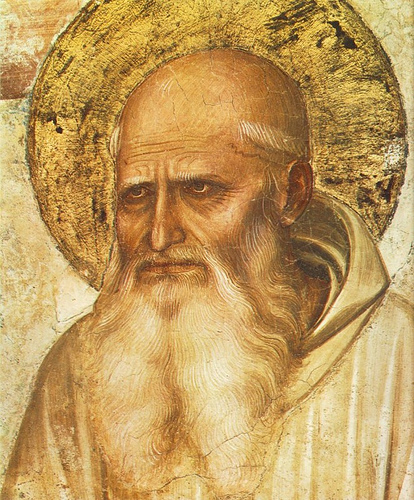
Yes, Benedict was a shining example of holiness and pointed the monks to Christ as their only great ideal; he was a master of civility, who proposed a balanced and adequate vision of the demands of God and of the final ends of man; he also always kept well in mind the needs and the reasons of the heart, in order to teach and inspire a genuine and constant brotherhood, so that in the complexity of social relationships the unity of spirit capable of always building and maintaining peace was never lost sight of. It is not by
chance that the word Pax [peace] is the word that welcomes pilgrims and visitors at the gates of the abbey, rebuilt after the terrible disaster of the Second World War, which stands as a silent reminder to reject all forms of violence in order to build peace: in families, within communities, between peoples and all of humanity. St. Benedict invites every person that climbs this mountain to seek peace and follow it: “inquire pacem et sequere eam” [seek peace and follow it.] (Ps. 33,14-15) (Rule, Prologue, 17).
By its example, monasteries have become, over the centuries, centers of fervent dialogue, encounter and beneficial union of diverse peoples, unified by the evangelical culture of peace. The monks have known how to teach by word and example the art of peace, implementing in a concrete way the three “ties” that Benedict identifies as necessary to maintain the unity of the Spirit among men: the cross, which is the very law of Christ, the book which is culture, and the plow, which indicates work, the lordship over matter and time. Thanks to the activity of the monastery, articulated in the three-fold daily commitments of prayer, study and work, entire populations of Europe have experienced a genuine redemption and a beneficial moral, spiritual and cultural development, learning in the spirit of continuity with the past, of concrete action for the common good, and of openness to God and the transcendent aspect of the world. We pray that Europe always exploit this wealth of principles and Christian ideals, which constitutes an immense cultural and spiritual wealth.

This is possible but only if the constant teaching of St.
Benedict is embraced, the “quaerere Deum,” to seek God, as the fundamental commitment of man. Human beings cannot achieve full self-realization or ever be truly happy without God. It is your special responsibility, dear monks, to be living examples of this interior and profound relationship with him, implementing without compromise the program that your founder summarized in the “nihil amori Christi praeponere” [put nothing before the love of Christ.] (Rule 4.21). In this holiness consists, a valid proposal for every Christian, more than ever in our time, in which the need to anchor life and history to solid spiritual principles is felt.
Therefore, dear brothers and sisters, your vocation is a timely as ever, and your mission as monks is indispensable.
From this place, where his mortal remains rest, the patron saint of Europe continues to urge everyone to continue his work of evangelization and human promotion. I encourage you in the first place, dear brethren, to remain faithful to the spirit of your origins and to be authentic interpreters of this program of social and spiritual rebirth. The Lord grants you this gift, through the intercession of your holy founder, of his holy sister St. Scholastica, and of the saints of your order. And may the heavenly Mother of the Lord, who today we invoke as “Help of Christians,” watch over you and protect this abbey and all your monasteries, as well as the diocesan community that lives around Monte Cassino. Amen!
Pope Benedict XVI
Homily at Vespers II
The Abbey of Monte Casino
May 24, 2009
Pope Benedict, as noted before, celebrated the Mass for the diocese of Montecassino on May 24, 2009. As previous popes had done so Benedict XVI made a pilgrimage to the place of Saints Benedict and Scholastica. His homily follows:
“You will receive power when the Holy Spirit comes upon you, and you will be my witnesses in Jerusalem, throughout Judea and Samaria, and to the ends of the earth” (Acts 1:8). With these words Jesus bids farewell to the Apostles, as we heard in the first reading. Immediately afterward the sacred author adds that “as they were looking on, he was lifted up, and a cloud took him from their sight” (Acts 1:9). Today we are solemnly celebrating the mystery of the Ascension. But what does the Bible and the liturgy intend to communicate to us in saying that Jesus “was lifted up”? We will not understand the meaning of this expression from a single text, nor from one book of the New Testament, but in carefully listening to the whole of Sacred Scripture. The use of the verb “to lift” is in effect Old Testament in origin and it referred to an installation in royalty. Christ’s ascension thus means, in the first place, the installation of the crucified and risen Son of Man in God’s royal dominion over the world.

There is a deeper meaning, however, that is not immediately graspable. The passage from the Acts of the Apostles says first that Jesus was “lifted up” (1:9), and afterward it adds that “he was assumed” (1:11). The event is not described as a voyage up above, but rather
as an action of God’s power, which introduces Jesus into the space of nearness to the divine. The presence in the clouds that “took him from their
sight” (1:9) recalls a very ancient image of Old Testament theology and
inserts the Ascension into the history of God with Israel, from the clouds of
Sinai and above the tent of the covenant, to the luminous clouds on the
mountain of the Transfiguration. Presenting the Lord wreathed in clouds
definitively evokes the same mystery expressed in the symbolism of “sitting
at the right hand of God.” In Christ ascended into heaven, man has entered in a new and unheard of way into the intimacy of God; man now finds space in God forever. “Heaven” does not indicate a place beyond the stars but something more bold and sublime: it indicates Christ himself, the divine Person that completely and forever takes on humanity, he in whom God and man are united forever. And we draw near to heaven, indeed, we enter into heaven, to the extent that we draw near to Jesus and enter into communion with him. For this reason, today’s Solemnity of the Ascension invites us to a profound communion with Jesus dead and risen, invisibly present in the life of each of us.
In this perspective we understand why the evangelist Luke says that, after the Ascension, the disciples returned to Jerusalem “full of joy” (24:52). They are joyful because what happened was not a separation: in fact now they had the certainty that the crucified and risen Christ was alive, and in him the gates of eternal life were opened forever. In other words, the Ascension did not begin Christ’s temporary absence from the world but inaugurated instead the new, definitive and insuppressible form of his presence, by virtue of his participation in the royal power of God. It will belong to them, to the disciples, emboldened by the power of the Holy Spirit, to make his presence felt with their witness, preaching and missionary commitment. The Solemnity of the Ascension of the Lord should fill us also with serenity and enthusiasm like the Apostles, who returned from the Mount of Olives “full of joy.” Like them, we too, accepting the invitation of the two men “dressed in white garments,” must not stay looking up at the sky, but, under the guidance of the Holy Spirit, we must go everywhere and proclaim the salvific message of the death and resurrection of Christ. His own words — with which the Gospel according Matthew concludes: “And behold I am with you all days until the end of the world” (Matthew 28:19) –accompany and comfort us.

Dear brothers and sisters, the historical character of the mystery of the resurrection and ascension of Christ helps us to recognize and
to understand the transcendent and eschatological condition of the Church, which was not born and does not live to take the place of the Lord who has “disappeared” but which finds its reason for being in his mission and in the invisible presence of Jesus working with the power of his Spirit. In other words, we could say that the Church does not carry out the function of preparing for the return of an “absent” Jesus, but, on the contrary, lives and works to proclaim his “glorious presence” in an historical and existential manner. Since the day of the Ascension, every Christian community advances in its earthly journey toward the fulfillment of the messianic promises, fed by the Word of God and nourished by Body and Blood of its Lord. This is the condition of the Church –the Second Vatican Council says — as she “presses forward amid the persecutions of the world and the consolations of God, announcing the cross and death of the Lord until he comes” (Lumen Gentium, 8).
Brothers and sisters of this dear diocesan community, today’s solemnity calls on us to reinvigorate our faith in the real presence of Jesus; without him we cannot do anything of value in our life or apostolate. It is he, as the Apostle Paul recalls in the second reading, who “made some apostles, others as prophets, others as evangelists, others as pastors and
teachers, to equip the holy ones for the work of ministry, for building up the body of Christ,” that is, the Church. And he does this so that “we all attain to the unity of faith and knowledge of the Son of God, to mature to manhood, to the extent of the full stature of Christ” (Ephesians 4:11-13, 14). My visit today is situated in this context. As your pastor noted, the purpose of this visit is to encourage you constantly to “build, found and rebuild” your diocesan community on Christ. How? St. Benedict himself points the way, recommending in his Rule to put nothing before Christ:”Christo nihil omnino praeponere” (LXII, 11).

This is why I thank God for the good that your community is accomplishing under the leadership of your pastor, Father Abbot Dom Pietro Vittorelli, whom I greet with affection and thank for the kind words that he spoke to me on behalf of everyone. Together with him, I greet the monastic community, the bishops, the priests and the men and women religious who are present. I greet the civil and military authorities, in the first place the mayor, to whom I am grateful for the speech with which he welcomed me in here in Piazza Miranda, which will afterwards bear my name. I greet the catechists, the pastoral workers, the young people and those who in various ways are overseeing the spreading of the Gospel in this land rich with history, which experienced moments of great suffering during the Second World War. The many cemeteries that surround your resort city are a silent witness of this. Among these, I think particularly of the Polish, German and Commonwealth cemeteries. Finally I extend my greeting to all the citizens of Cassino and the nearby towns: to each, especially to the sick and suffering, I assure my affection and my prayer.
Dear brothers and sisters, we hear St. Benedict’s call echo in this celebration of ours, to keep our hearts fixed on Christ and put nothing before him. This does not distract us but on the contrary moves us even more to commit ourselves to the building up of a society where solidarity is expressed in concrete signs. But how? Benedictine spirituality, which you know well, proposes an evangelical program synthesized in the motto: “ora et labora et lege” — “prayer, work, culture.” First of all prayer, which is the most beautiful legacy that St. Benedict left the monks, but also to your
local Church: to your clergy — most of whom were formed in the diocesan seminary, for centuries housed in the Abbey of Monte Cassino itself — to the
seminarians, to the many who were educated in the Benedictine schools and
recreation programs and in your parishes, to all of you who live in this land.
Looking up from every village and district of the diocese, you can all admire
that constant reminder of heaven that is the monastery of Monte Cassino, to
which you climb every year in the procession on the eve of Pentecost. Prayer —
to which grave peals of the bell of St. Benedict calls the monks every morning
— is the silent path that leads us directly to the heart of God; it is the
breath of the soul that gives us peace again in the storms of life.
Furthermore, in the school of St. Benedict, the monks always cultivated a
special love for the Word of God in the “lectio divina,” which has
become the common patrimony of many today. I know that your diocesan Church,
following the instructions of the Italian Bishops’ conference, takes great care
in studying the Bible, and indeed has begun a course of study of the Sacred
Scriptures, dedicating this year to the evangelist Mark and continuing over the
next four years will conclude, please God, with a diocesan pilgrimage to the
Holy Land. May attentive listening to the divine Word nourish your prayer and
make you prophets of truth and love in a joint commitment to evangelization and
human promotion.

The other hinge of Benedictine spirituality is work. Humanizing
the world of work is typical of the soul of monasticism, and this is also the
effort of your community that seeks to be at the side of the many workers in
the great industry present in Cassino and the enterprises linked to it. I know
how critical the situation of many workers is. I express my solidarity with
those who live in a troubling precariousness, with those workers who on
unemployment assistance and those who have been laid off. May the wound of unemployment that afflicts this area lead those who are responsible for the
“res publica,” the entrepreneurs and those who are able, to seek, with everyone’s help, valid solutions to the employment crisis, creating new
places of work to safeguard families. In this respect, how can we not recall
that today the family has an urgent need to be better protected, since it is
gravely threatened in its very institutional roots? I think also of the young
people who have difficulty finding a dignified job that allows them to build a
family. To them I would like to say: Do not be discouraged, dear friends, the
Church will not abandon you! I know that more than 25 young people from your diocese participated in last year’s World Youth Day in Sydney: treasuring that extraordinary spiritual experience, may you be evangelical leaven among your friends and peers; with the power of the Holy Spirit, be the new missionaries in this land of St. Benedict!
Attention to the world of culture and education also belongs to your tradition. The celebrated archive and library of Monte Cassino contain innumerable testimonies of the commitment of men and women who meditated on and researched ways of improving the spiritual and material life of man. In your abbey one can touch with one’s hands the “quaerere Deum,” the fact that European culture has been constituted by the search for God and availability to listen to him. And this is important for our time as well. I know that you are working with this very spirit at the university and in the schools, so that you become workers of knowledge, research, passion for the future of new generations. I also know that in preparation for my visit you recently held a conference on the theme of education to solicit in everyone the lively determination to transmit to the young people the values of our human and Christian patrimony that we cannot renounce. In today’s cultural effort aimed at creating a new humanism, faithful to the Benedictine tradition you rightly intend to stress attention to the fragility, weakness of man, to disabled persons and immigrants. And I am grateful that you have given me the possibility today of inaugurating the “House of Charity,” where a culture attentive to life will be built with deeds.
Dear brothers and sisters! It is not hard to see in your community, this portion of the Church that lives around Monte Cassino, is heir and repository of the mission, impregnated by the spirit of St. Benedict, to proclaim that in your life no one and nothing must take Jesus away from the first place; the mission to build, in Christ’s name, a humanity to teach hospitality and help of the weakest. May your patriarch help and accompany you, with St. Scholastica his sister; may your holy patrons, and above all Mary, Mother of the Church and Star of our hope, protect you. Amen!
O God, our Father, endless source of life and peace, welcome into Your merciful embrace the fallen of the war that raged here, the fallen on all wars that have bloodied the earth.
Grant that they may enjoy the light that does not fail, which in the reflection of Your splendor illumines the consciences of all men and women of good will.
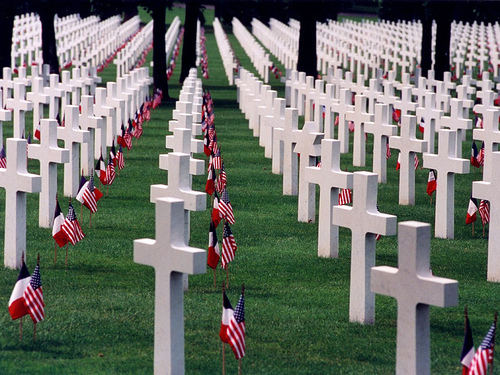
You, Who in Your Son Jesus Christ gave suffering humanity a glorious witness of Your love for us, You, Who in our Lord Christ gave us the sign of a suffering that is never in vain, but fruitful in Your redeeming power, grant those who yet suffer for the blind violence of fratricidal wars the strength of the hope that does not fade, the dream of a definitive civilization of love, the courage of a real and daily activity of peace.
Give us your Paraclete Spirit so that the men of our time may understand that the gift of peace is much more precious than any corruptible treasure, and that while awaiting the day that does not end we are all called to be builders of peace for the future of
Your children.
Make all Christians more convinced witnesses of life, the inestimable gift of Your love, You Who live and reign for ever and ever. Amen,
(Pope Benedict XVI, Polish Military Cemetery, Montecassino, May 24, 2009)
O God, Who has glorified Thy Church by the learning of
blessed Bede, Thy Confessor and Doctor; mercifully grant to Thy servants that
they may ever be enlightened by his wisdom and aided by his merits.
Catholics in America are generally unfamiliar with Saint
Bede the Venerable. The Venerable Bede as he is often called, is rightly known as the “Father of English
History” and his lasting work, History of the English Church and People,
remains the basis of modern knowledge of the early period of the Church in
England. Church has honored Bede with the titles of Confessor and Doctor of the
Church.
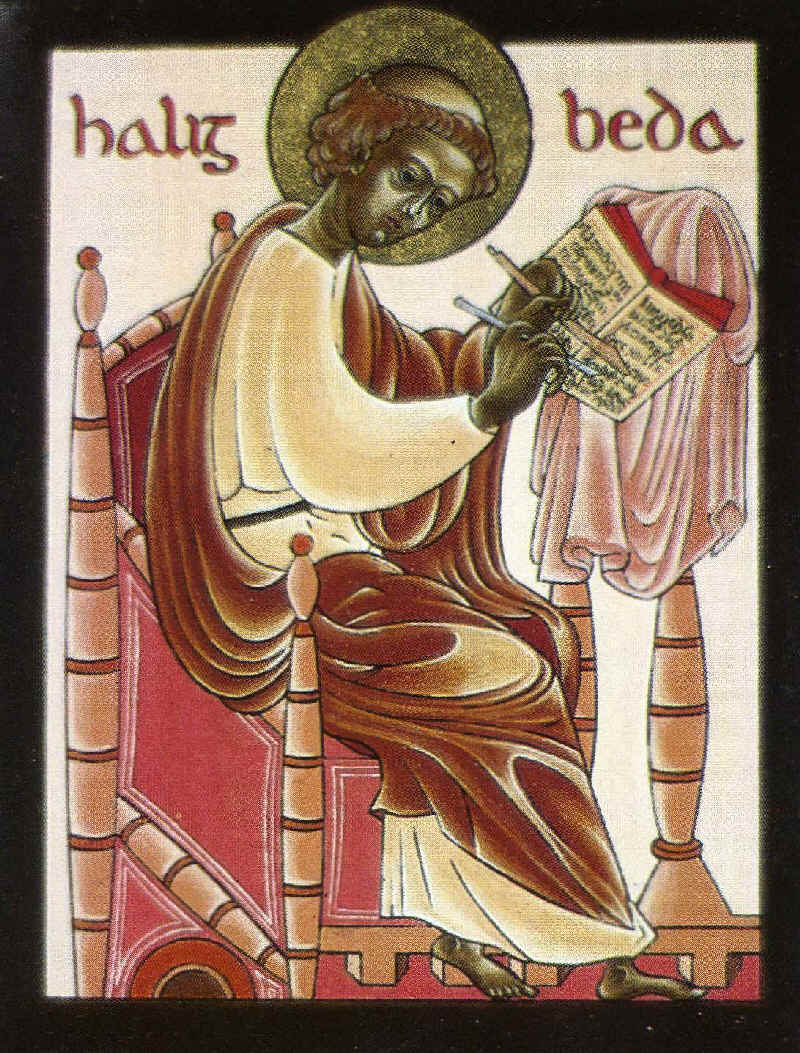
Bede’s History is a decisive synthesis of the Celtic, The medieval scholar Mary R. Price said: ‘Under Bede’s Another scholar who knows Bede’s work well says: ‘The The Church universal is grateful for Bede’s interpretative |
|
The rigorous approach to the facts of history in his |

Every time we celebrate Holy Mass, we hear echo in our heart
the words that Jesus left with his disciples at the Last Supper as a precious
gift: “Peace I leave you, my peace I give you” (John 14:27). How much
the Christian community and the whole of humanity need to taste completely the
riches and the power of Christ’s peace! St. Benedict was a great witness,
because he welcomed it in his existence and fructified it in works of authentic
cultural and spiritual renewal. “Pax” (“Peace”) is posted
as a motto at the entrance to the Abbey of Monte Cassino and every other
Benedictine monastery: the monastic community in fact is called to live
according to this peace, which is the paschal gift par excellence. As you know,
in my recent trip to the Holy Land, I went as a pilgrim of peace, and today —
in this land marked by the Benedictine charism — I have the opportunity to
emphasize, once again, that peace is in the first place a gift of God, and
therefore its power is in prayer.
It is a gift given, however, to human care. Even the energy
that is needed to actualize it is drawn from prayer. So, it is essential to
cultivate an authentic prayer life to assure the social progress of peace. Once
again the history of monasticism teaches us that a great growth in civilization
is prepared by daily listening to the Word of God, which moves believers to a
personal and communal effort in the struggle against egoism and injustice. Only
in learning, with the grace of Christ, to combat and defeat the evil within
ourselves and in relationships with others, can we become authentic builders of
peace and civil progress. May the Virgin Mary, Queen of Peace, help all
Christians, in their different vocations and situations in life, to be
witnesses of that peace that Christ gave us and left us as a demanding mission
to realize everywhere.
Today, March 24, liturgical memorial of the Blessed Virgin
Mary, Help of Christians — who is venerated with great devotion at the shrine
of Sheshan in Shanghai — we celebrate the Day of Prayer for the Church in
China. My thoughts turn to all the people of China. In particular I greet the
Catholics of China with great affection and I exhort them to renew on this day
their communion of faith in Christ and of fidelity to the Successor of Peter.
May our common prayer obtain an effusion of gifts of the Holy Spirit, so that
unity of all Christians, the catholicity and the universality of the Church
always will be deeper and more visible.
Pope Benedict XVI, Regina Caeli Address, Miranda Square, May 24, 2009
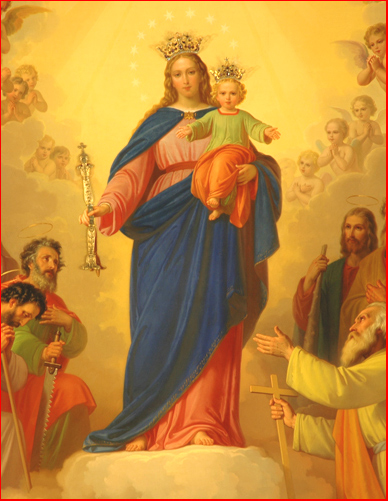
Most Holy and
Immaculate Virgin, Help of Christians, we place ourselves under your motherly
protection. Throughout the Church’s history you have helped Christians in times
of trial, temptation and danger. Time and time again, you have proven to be the
Refuge of sinners, the Hope of the hopeless, the Consoler of the afflicted, and
the Comforter of the dying. We promise to be faithful disciples of Jesus
Christ, your Son, to proclaim His Good News of God’s love for all people, and
to work for peace and justice in our world. With faith in your intercession, we
pray for the Church, for our family and friends, for the poor and abandoned,
and all the dying.
Grant, O Mary, Help of Christians, the graces of which we
stand in need. (mention your intentions. May we serve Jesus with fidelity and
love until death. Help us and our loved ones to attain the boundless joy of
being forever with our Father in heaven. Amen.
Mary, Help of
Christians, pray for us!
Mary, Help of Christians, pray for Belmont Abbey!
Mary, Help of Christians, pray for China!
Mary, Help of Christians, pray for the Salesians of Don Bosco!
Consecration of
the Home to Our Lady, Help of Christians
Most holy Virgin
Mary, appointed by God to be the Help of Christians, we choose you as the
Mother and protectress of our home. Favor us with your powerful protection.
Preserve our home from fire, flood, lightning, storm, earthquake, thieves,
vandals, and every other danger. Bless us, protect us, defend us, keep as your
own all who dwell in this home: protect them from all accidents and
misfortunes, and obtain for them the grace of avoiding sin. Mary, Help of
Christians, pray for us. Amen.
 Pope Benedict XVI with great affection for Saint Benedict of Nursia, the Rule of Saint Benedict and Benedictine spirituality made a visit to Monte Cassino, 75 miles southeast of Rome, today. The Abbey of Monte Cassino was founded by Saint Benedict in 529 and it’s the sight of great holiness and humanity.
Among the various pastoral engagements the Holy Father had, he celebrated Mass for the diocese in the heart of the city, prayed Vespers with the monks, offered prayers for the dead, and visited the House of Charity. (This house works for peace and the promotion of life.) He also visited the monks of the monastic community there and addressed visiting abbesses and abbots. The Pope was hosted by Abbot-Nullius Pietro Vittorelli, 46.
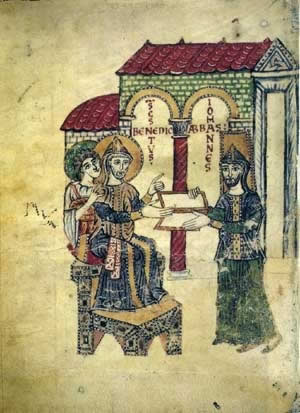
Historically Monte Cassino is a center of art, culture, learning, and faith. The monks at Cassino are quick to recall that the abbey’s culture is Neapolitan. Nevertheless, the sole purpose of life in the abbey, indeed in any Benedictine abbey, is the search for God, pressing forward announcing the Paschal Mystery, of which is the incredible fact of Christ’s presence known now, that is today. Thus we comprehend the reason for the holy Rule of Benedict: keeping our gaze fixed on Christ.
In Saint Benedict we have a genius who gave cohesion to Europe and the rest of the world through his Rule for monasteries and Lectio Divina. Some will say it is one of the centers of humanity, of Western civilization because the Benedictine life gave voice to the aspirations of men and women. The notable archive at Monte Cassino attests to the search for God and the conscience of the Christian life. A new humanism is underlined by the Rule because it is attentive to one’s real humanity seen particularly in the vulnerable of society.
A fascinating heritage of Cassino abbey is the historic presence of the Greek monks who lived there for a few hundred years prior to founding the Abbey of Grottaferrata. Without digressing the Abbey was destroyed four times (in 577, 883, 1349 & 1944) and rebuilt four times. The last time the abbey was destroyed it was bombed by the American military during the Second World War because the Allied armies feared the advance of the enemies. The destruction, however, was carried out under wrong intelligence which the cost the lives of many. However, Succisa virescit! It is the 65th anniversary of the rebuilding of the abbey and city, the icon of beauty, strength and peace all people.

This visit of Pope Benedict is in continuity with the visits of past popes. This is not a first visit of Benedict XVI since he made several visits before as cardinal (but it is the first visit as the first as pope) to Monte Cassino; significantly in 1992 made a few days of retreat with his brother and personal secretary at the abbey and then he worked with Peter Seewald on his book, Salt of the Earth (1997) there. So, as an honor, the Mayor of Cassino announced today that Miranda Square was renamed today to “Pope Benedict XVI Square.”
The Pope’s homily was incredibly striking and we wait for a proper translation in English.
Blessed is he comes in the Name of the Lord.
The Sisters of the Holy Family of Nazareth (CSFN) in the New
England region celebrated the jubilees of three sisters today: Sister Mary
Victoria (75 years), Sister Mary Barbara (50 years) and Sister Maryann (25
years). We also remembered Sister Jeanette who died in December and who was to
celebrated 50 years.

The Sacrifice of the Mass was celebrated by Father Jim
Meszaros (of NY) and the homilist was Monsignor Robert Weiss, pastor of Saint
Rose of Lima (Newtown, CT & friend of Sister Barbara); six priests concelebrated.
Sister Mary Ellen did a very nice job with the music that was selected by a
julibarian sister.
The Mass included the renewal of vows of the jubilarians.
After giving thanks for the graces of perseverance and service, the sisters
promised to continue to be faithful to Mother Foundress’ vision and spirit
cooperating with Christ and the Church as women of prayer and service. The
example of the Blessed Virgin Mary, Saint Joseph and the saints were invoked
for supernatural assistance. A striking line from Blessed Mary of Jesus the
Good Shepherd were striking: “Once again I had the unmistakable evidence that
human hearts are in the hands of God, that we depend upon Him alone, and that
His Will guides the course of our lives.”

Guests from all over New England and New York and
Pennsylvania came to pray and celebrate. The Sisters had a delicious dinner for
us. I enjoyed dinner and conversation with friends and colleagues Sisters Mary
Ellen, Thaddeus, Rose, (at right) Virginette and Mary Anthony. The company was truly
delightful and the hospitality warm!

Following our midday dinner Sister Mary Ellen (in the gray habit) gave me a
gracious tour of the beautiful grounds and the CSFN heritage room. Since I love
the history of religious life and the Sisters of this congregation, I was much
happy to see how the CSFNs have labored in the Lord’s vineyard.

Among the sisters at the Monroe convent are my second and
fifth grade teachers plus a few other sisters I’ve known since my grammar
school days. Sister Mary Constance is doing well for 86 (65 years in the
convent) and Sister Mary Estelle is living with Alzheimer’s and was peacefully
sleeping. I also saw Sister Hedwig at dinner.
But who are the Sisters of the Holy Family of Nazareth
(CSFN)? In their own words they are:
 We,
We,
the Sisters of the Holy Family of Nazareth, an international apostolic
Congregation, believe that the Holy Family of Nazareth, three persons in
communion with God and each other; obedient and faithful to the will of God,
reveals to us the profound reality that God is present in the most simple and
ordinary experiences of human life. This vision, which so captivated our
Foundress, Blessed Mary of Jesus the Good Shepherd (Frances Siedliska), is the
source and inspiration for our life and service. Sharing in Jesus’ mission of
spreading the Kingdom of God’s love, we engage in a variety of ministries with
and in the Church. Mindful that it is an environment of love that persons come
to fullness of life, we witness a family spirit among ourselves, and are
dedicated to the moral and religious renewal of family life. We are committed
to create communities of love and hope, which celebrate the oneness of the
human family.