Examination of Conscience: Praying Backwards through Your Day

The key to living the spiritual life is the awareness we have of God’s (the Blessed Trinity’s) action in our lives. The daily reckoning of what, how, when, and perhaps why God acts in such way for, with and through us is essential for us because the journey of faith is not static but dynamic. Saint Ignatius of Loyola believed that we advance in the spiritual life by asking for the grace of insight into our lived experience and to interpret that experience light of the Incarnation. Father Hamm provides me (us) with a good primer on the Examen. His emphasis is on feelings but I think Hamm stands in good company especially when you read that Saint Augustine speak of zeroing-in on one’s feelings because God is right there.

About 20 years ago, at breakfast and during the few hours that followed, I had a small revelation. This happened while I was living in a small community of five Jesuits, all graduate students in New Haven, Connecticut. I was alone in the kitchen, with my cereal and the New York Times, when another Jesuit came in and said: “I had the weirdest dream just before I woke up. It was a liturgical dream. The lector had just read the first reading and proceeded to announce, ‘The responsorial refrain today is, If at first you don’t succeed, try, try again.’ Whereupon the entire congregation soberly repeated, ‘If at first you don’t succeed, try, try again.'” We both thought this enormously funny. At first, I wasn’t sure just why this was so humorous. After all, almost everyone would assent to the courageous truth of the maxim, “If at first…” It has to be a cross-cultural truism (“Keep on truckin’!”). Why, then, would these words sound so incongruous in a liturgy?*A little later in the day, I stumbled onto a clue. Another, similar phrase popped into my mind: “If today you hear his voice, harden not your hearts” (Psalm 95). It struck me that that sentence has exactly the same rhythm and the same syntax as: “If at first you don’t succeed, try, try again.” Both begin with an if clause and end in an imperative. Both have seven beats. Maybe that was one of the unconscious sources of the humor.

The try-try-again statement sounds like the harden-not-your-hearts refrain, yet what a contrast! The latter is clearly biblical, a paraphrase of a verse from a psalm, one frequently used as a responsorial refrain at the Eucharist. The former, you know instinctively, is probably not in the Bible, not even in Proverbs. It is true enough, as far as it goes, but it does not go far enough. There is nothing of faith in it, no sense of God. The sentiment of the line from Psalm 95, however, expresses a conviction central to Hebrew and Christian faith, that we live a life in dialogue with God. The contrast between those two seven-beat lines has, ever since, been for me a paradigm illustrating that truth.

Yet how do we hear the voice of God? Our Christian tradition has at least four answers to that question. First, along with the faithful of most religions, we perceive the divine in what God has made, creation itself (that insight sits at the heart of Christian moral thinking). Second, we hear God’s voice in the Scriptures, which we even call “the word of God.” Third, we hear God in the authoritative teaching of the church, the living tradition of our believing community. Finally, we hear God by attending to our experience, and interpreting it in the light of all those other ways of hearing the divine voice-the structures of creation, the Bible, the living tradition of the community.

The phrase, “If today you hear his voice,” implies that the divine voice must somehow be accessible in our daily experience, for we are creatures who live one day at a time. If God wants to communicate with us, it has to happen in the course of a 24-hour day, for we live in no other time. And how do we go about this kind of listening? Long tradition has provided a helpful tool, which we call the “examination of consciousness” today. “Rummaging for God” is an expression that suggests going through a drawer full of stuff, feeling around, looking for something that you are sure must be in there somewhere. I think that image catches some of the feel of what is classically known in church language as the prayer of “examen.”
Spiritual Exercises St. Ignatius.jpg

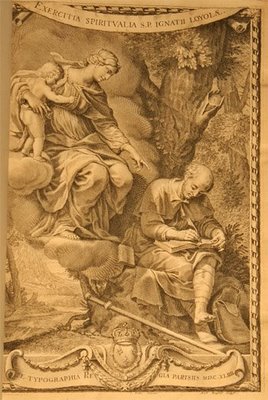
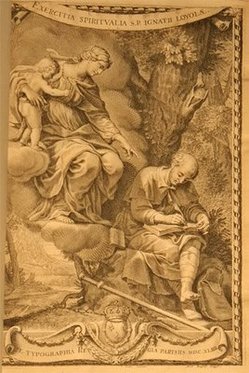
The examen, or examination, of conscience is an ancient practice in the church. In fact, even before Christianity, the Pythagoreans and the Stoics promoted a version of the practice. It is what most of us Catholics were taught to do to prepare for confession. In that form, the examen was a matter of examining one’s life in terms of the Ten Commandments to see how daily behavior stacked up against those divine criteria. St. Ignatius includes it as one of the exercises in his manual The Spiritual Exercises.

It is still a salutary thing to do but wears thin as a lifelong, daily practice. It is hard to motivate yourself to keep searching your experience for how you sinned. In recent decades, spiritual writers have worked with the implication that conscience in Romance languages like French (conscience) and Spanish (conciencia) means more than our English word conscience, in the sense of moral awareness and judgment; it also means “consciousness.”

Now prayer that deals with the full contents of your consciousness lets you cast your net much more broadly than prayer that limits itself to the contents of conscience, or moral awareness. A number of people-most famously, George Aschenbrenner, SJ, in an article in Review for Religious (1971)-have developed this idea in profoundly practical ways. Recently, the Institute of Jesuit Sources in St. Louis published a fascinating reflection by Joseph Tetlow, SJ, called The Most Postmodern Prayer: American Jesuit Identity and the Examen of Conscience, 1920-1990.

What I am proposing here is a way of doing the examen that works for me. It puts a special emphasis on feelings, for reasons that I hope will become apparent. First, I describe the format. Second, I invite you to spend a few minutes actually doing it. Third, I describe some of the consequences that I have discovered to flow from this kind of prayer.

A Method: Five Steps

1. Pray for light. Since we are not simply daydreaming or reminiscing but rather looking for some sense of how the Spirit of God is leading us, it only makes sense to pray for some illumination. The goal is not simply memory but graced understanding. That’s a gift from God devoutly to be begged. “Lord, help me understand this blooming, buzzing confusion.”

2. Review the day in thanksgiving. Note how different this is from looking immediately for your sins. Nobody likes to poke around in the memory bank to uncover smallness, weakness, lack of generosity. But everybody likes beautiful gifts, and that is precisely what the past 24 hours contain-gifts of existence, work, relationships, food, challenges. Gratitude is the foundation of our whole relationship with God. So use whatever cues help you to walk through the day from the moment of awakening-even the dreams you recall upon awakening. Walk through the past 24 hours, from hour to hour, from place to place, task to task, person to person, thanking the Lord for every gift you encounter.

3. Review the feelings that surface in the replay of the day. Our feelings, positive and negative, the painful and the pleasing, are clear signals of where the action was during the day. Simply pay attention to any and all of those feelings as they surface, the whole range: delight, boredom, fear, anticipation, resentment, anger, peace, contentment, impatience, desire, hope, regret, shame, uncertainty, compassion, disgust, gratitude, pride, rage, doubt, confidence, admiration, shyness-whatever was there. Some of us may be hesitant to focus on feelings in this over-psychologized age, but I believe that these feelings are the liveliest index to what is happening in our lives. This leads us to the fourth moment:

4. Choose one of those feelings (positive or negative) and pray from it. That is, choose the remembered feeling that most caught your attention. The feeling is a sign that something important was going on. Now simply express spontaneously the prayer that surfaces as you attend to the source of the feeling-praise, petition, contrition, cry for help or healing, whatever.

5. Look toward tomorrow. Using your appointment calendar if that helps, face your immediate future. What feelings surface as you look at the tasks, meetings, and appointments that face you? Fear? Delighted anticipation? Self-doubt? Temptation to procrastinate? Zestful planning? Regret? Weakness? Whatever it is, turn it into prayer-for help, for healing, whatever comes spontaneously. To round off the examen, say the Lord’s Prayer.*A mnemonic for recalling the five points: LT3F (light, thanks, feelings, focus, future).

Do It

Take a few minutes to pray through the past 24 hours, and toward the next 24 hours, with that five-point format.

Consequences

Here are some of the consequences flowing from this kind of prayer:

1. There is always something to pray about. For a person who does this kind of prayer at least once a day, there is never the question: What should I talk to God about? Until you die, you always have a past 24 hours, and you always have some feelings about what’s next.

2. The gratitude moment is worthwhile in itself. “Dedicate yourselves to gratitude,” Paul tells the Colossians. Even if we drift off into slumber after reviewing the gifts of the day, we have praised the Lord.

3. We learn to face the Lord where we are, as we are. There is no other way to be present to God, of course, but we often fool ourselves into thinking that we have to “put on our best face” before we address our God.

4. We learn to respect our feelings. Feelings count. They are morally neutral until we make some choice about acting upon or dealing with them. But if we don’t attend to them, we miss what they have to tell us about the quality of our lives.

5. Praying from feelings, we are liberated from them. An unattended emotion can dominate and manipulate us. Attending to and praying from and about the persons and situations that give rise to the emotions helps us to cease being unwitting slaves of our emotions.

6. We actually find something to bring to confession. That is, we stumble across our sins without making them the primary focus.

7. We can experience an inner healing. People have found that praying about (as opposed to fretting about or denying) feelings leads to a healing of mental life. We probably get a head start on our dreamwork when we do this.

8. This kind of prayer helps us get over our Deism. Deism is belief in a sort of “clock-maker” God, a God who does indeed exist but does not have much, if anything, to do with his people’s ongoing life. The God we have come to know through our Jewish and Christian experience is more present than we usually think.

9. Praying this way is an antidote to the spiritual disease of Pelagianism. Pelagianism was the heresy that approached life with God as a do-it-yourself project (“If at first you don’t succeed…”), whereas a true theology of grace and freedom sees life as response to God’s love (“If today you hear God’s voice…”).

A final thought. How can anyone dare to say that paying attention to felt experience is a listening to the voice of God? On the face of it, it does sound like a dangerous presumption. But, notice, I am not equating memory with the voice of God. I am saying that, if we are to listen for the God who creates and sustains us, we need to take seriously and prayerfully the meeting between the creatures we are and all else that God holds lovingly in existence. That “interface” is the felt experience of my day. It deserves prayerful attention. It is a big part of how we know and respond to God.
DHamm.jpg

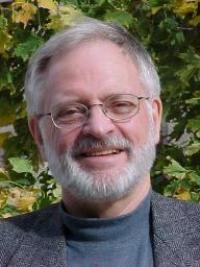
Father Dennis Hamm, SJ, a Scripture scholar, teaches in the department of theology at Creighton University, Omaha, Nebraska. Reprinted from America, May 14, 1994. www.americamagazine.org.

Newt Gingrich on his conversion: an interview


Dan Gilgoff of U.S. News & World Report’s “God & Country” blog posted an exclusive interview in which Newt Gingrich speaks on following his desire to enter into full communion with the Roman Catholic Church. 

The former Speaker of the House said in part: “The whole effort to create a ruthless, amoral,
situational ethics culture has probably driven me toward a more overt
Christianity.”

To read the interview

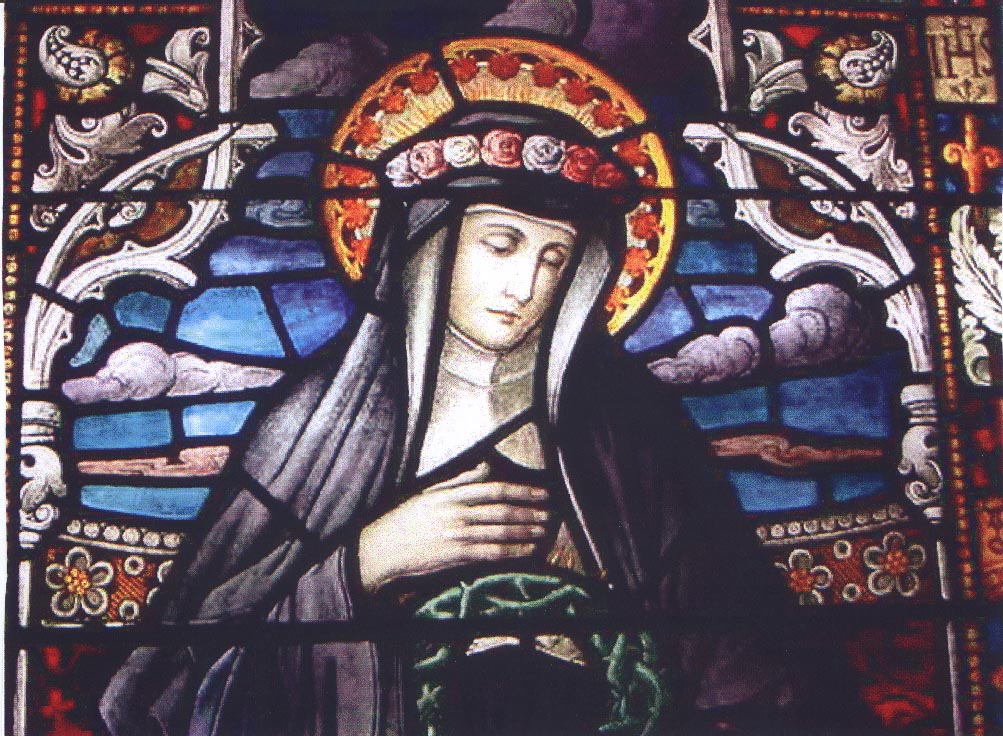
Saint Rita of Cascia

“Please let me suffer like You, Divine Savior,” was Saint Rita’s prayer.

Saint Rita of
Cascia
 (d. 1457) is the well-known saint and patron of the desperate, seemingly impossible causes
and situations. She assists Saint Jude and others before the Throne of Grace. The
reputation of Saint Rita is such because she had been involved in so many
stages of life as a – wife, mother, widow, and Augustinian nun, she buried her
family, helped bring peace to her city Unmbria in Italy, saw her dreams denied
and fulfilled – and never lost her faith in God, or her desire to be with Him. The
shrine where her relics are venerated in Cascia (Italy) is well-visited.

St Rita of Casciajpg.jpg

Holy Patroness
of those in need, Saint Rita, you were humble, pure and patient. Your pleadings
with your divine Spouse are irresistible, so please obtain for me from our
risen Jesus the request I make of you: (mention your petition). Be kind to me
for the greater glory of God, and I shall honor you and sing your praise
forever.

Glorious Saint Rita,
you miraculously participated in the sorrowful passion of our Lord Jesus
Christ. Obtain for me now the grace to suffer with resignation the troubles of
this life, and protect me in all my needs. Amen.


Visit the National Shrine of Saint Rita of Cascia

Blessed Franz Jägerstätter

Just as the man
who thinks only of this world does everything possible to make life here easier
and better, so must we, too, who believe in the eternal kingdom, risk
everything in order to receive a great reward there. (Franz Jägerstätter)

franz-jagerstatter.jpg

Franz Jägerstätter
(1907-1943) married Franziska Schwaninger in 1936 and honeymooned in Rome
receiving a blessing from Pope Pius XI after which he maintained it was a
spiritual awakening. He was a daily communicant and a Secular Franciscan.

At the time of
his death at age 36, Blessed Jägerstätter left behind a widow and 3 small
daughters. Interestingly both his priest and his bishop urged him to give up
his conscientious objection, and join the army; his sacrifice was regarded as
folly by his neighbors. The chaplain who saw Jägerstätter to his death related
that Jägerstätter said, “I am completely bound in inner union with the Lord.”

Reflecting upon
the context of his life he said:

The situation in
which we Christians of Germany find ourselves today is much more bewildering
than that faced by the Christians of the early centuries at the time of their
bloodiest persecution … We are not dealing with a small matter, but the great
(apocalyptic) life and death struggle has already begun. Y
et in the midst of it
there are many who still go on living their lives as though nothing had changed
That we Catholics must make ourselves told of the worst and most dangerous
anti-Christian power that has ever existed is something that I cannot and never
will believe
… Many actually believe quite simply that things have to be the
way they are. If this should happen to mean that they are obliged to commit
injustice, then they believe that others are responsible. … I am convinced that
it is still best that I speak the truth even though it costs me my life
. For
you will not find it written in any of the commandments of God or of the Church
that a man is obliged under pain of sin to take an oath committing him to obey
whatever might be commanded him by his secular ruler. We need no rifles or
pistols for our battle, but instead spiritual weapons, and the foremost of
these is prayer
.

The Common for Martyrs: One Martyr in Easter Time

Read William
Diono’s First Things article, “Franz Jägerstätter: Martyr and Model” 

For another essay on
Blessed Franz Jägerstätter read… 

His biography,
In Solitary Witness, can be purchased from Amazon

Erna Putz’ biography, Franz Jägerstätter-Martyr: A Shining Example in Dark Times can be read here

The Houston
Catholic Worker’s article on the witness of Blessed Franz Jägerstätter 

Franz Jägerstätter: Letters and Writings from Prison (Orbis Books, 2009).

Fordham favors secular respectability instead of the Gospel

Yet another example of Catholic higher ed making foolish distinctions in order to justify their morally wrong actions and doing an end-run around the face of Christ and His Church. It is not merely as one headline reads: contempt for the bishops BUT contempt for Christ!

Fordham honors pro-choice secular leaders. Read for your self here and here.

Is Fordham really Catholic AND Jesuit? What is Archbishop Dolan going to do about this matter? Will the Jesuits sit back and capitulate to secular mediocrity?

It wasn’t too long ago that Fordham Law honored an abortion-approving Supreme Court Justice.

Father Paul Cioffi, 5th anniv. of death today

Paul Cioffi.jpgPlease pray for the peaceful repose of the soul of the Reverend Father Paul Cioffi, S.J.

He was a friend and mentor to me, especially in the field of liturgical theology, when I was at Georgetown. Paul’s sudden death still reminds me of the fragility of life.

Eternal rest

Saint Augustine on the Ascension of the Lord

We believe in
Jesus whom we have not seen. Those who have seen and touched him with their own
hands, who have heard the word from his mouth, are the ones who have borne
witness to him. It was to teach these things to the world that they were sent
by him. They did not presume to go out on their own initiative. And where did
he send them? You heard the answer to that in the gospel reading: “Go, proclaim
the Good News to every creature under heaven.” The disciples were sent to the
ends of the earth, with signs and wonders accompanying them in confirmation of
their testimony, because they spoke of what they had actually seen.

Ascension Vanni d'Andrea.jpg

We believe in
him though we have not seen him, and we await his return. Whoever waits for him
in faith will rejoice when he comes, but those without faith will be put to
shame at the appearance of what they cannot at present see. Then let us abide
in his words, so that his coming may not put us to shame. In the gospel he
himself says to those who have believed in him: “If you persevere in my word,
you will truly be my disciples.” And to their unspoken question, “What will it
profit us?”, he adds: “You will know the truth, and the truth will set you
free.”

At present we
possess our salvation in hope, not in fact; we do not yet possess what we have
been promised, but we hope to do so in the future. The one who promised it is
faithful; he will not deceive you, so long as you wait for his promised gift
without growing weary. The truth cannot possibly deceive. Make sure then that
you yourself are not a liar, professing one thing and doing another; keep faith
with him, and he will keep his word to you. If you do not keep faith, it will
be you who deceive yourself, not he who made the promise.

“If you know
that he is righteous, you can be sure that everyone who acts rightly is born of
him.” Our righteousness in this life comes through faith. None but the angels
are perfectly righteous, and they have only a shadow of righteousness in
comparison with God. Nevertheless, if there is any perfect righteousness to be
found in the souls and spirits created by God, it is in the holy angels who are
good and just, who have not fallen away from God nor been thrust out of heaven
by their pride. They abide forever in the contemplation of God’s word and find
their happiness in nothing apart from him who made them. In these is found the
perfection of righteousness, but in us righteousness has its beginning through
faith, as the Spirit leads us.

VIVIAMO! Summer Camp: “The Drama of Love”

World Youth Alliance (WYA) Europe invites young people from
all over Europe to a 4-day summer camp (June 26- 29, 2009), “The Drama of Love” in a beautiful
mansion in Orleans, France, to learn about and experience love, fulfilment and
the goal and meaning of life. Through different lectures, workshops and movies
we will learn about love and relationships, their potential for problems but
also for fulfilment and happiness, as well as one’s own personality. We will also
explore the wisdom of great literature such as Greek and Roman mythology,
Plato, etc. We will visit Paris and the castles and sights of the Loire valley,
the very place of Renaissance romanticism and acquire journalistic and writing
skills through the composition of a Viviamo magazine.

More information will be
online soon, until then please contact us at iris@wya.net.

Saint Bernardine of Siena

St BernardineNo other name under heaven has been given to men by which we can be saved.

Father, You gave Saint Bernardine a special love for the holy name of Jesus. By the help of his prayers, may we always be alive with the spirit of your love.

Many people think the IHS symbol originated with and belongs exclusively with the Society of Jesus. The typical Jesuit use of IHS is slightly different from the one used by Bernardine in that the 3 nails are included in the Jesuit monogram. Historically the IHS is an ancient symbol and it was popularized by today’s Saint Bernardine of Siena, the Apostle of Italy or alternatively called the Apostle of the Holy Name.

As a monograph for the name of Jesus Christ it became more popular after the 12th century. We know that Saint Bernard of Clairvaux had a devotion to the Holy Name of Jesus as well as other notable other churchmen and women. Let’s remember that Bernardine suffered great opposition at the hands of the Church for his use devotion and propagation of the Name of Jesus because it was seen as idolatry. By 1530, the Church approved of the Mass text for the feast of the Triumph of the Holy Name of Jesus, celebrated today on January 3, restored to the Roman Missal by Pope John Paul II in 2002. Moreover, there is a long tradition of celebrating the second Sunday of each month as Holy Name Sunday (we did so growing up at St. Stanislaus Church, New Haven, CT).

I would like to recommend membership in The Holy Name Society

One Saint Bernardine’s famous homilies:

OLYMPUS DIGITAL CAMERAThe name of Jesus is the glory of preachers, because the shining splendor of that name causes his word to be proclaimed and heard. And how do you think such an immense, sudden and dazzling light of faith came into the world, if not because Jesus was preached? Was it not through the brilliance and sweet savor of this name that God called us into his marvelous light? When we have been enlightened, and in that same light behold the light of heaven, rightly may the apostle Paul say to us: Once you were darkness, but now you are light in the Lord; walk as children of light.

So this name must be proclaimed, that it may shine out and never be suppressed. But it must not be preached by someone with sullied mind or unclean lips, but stored up and poured out from a chosen vessel. That is why our Lord said of Saint Paul: He is a chosen instrument of mine, the vessel of my choice, to carry my name before the Gentiles and kings and the sons of Israel. In this chosen vessel there was to be a drink more pleasing than earth ever knew, offered to all mankind for a price they could pay, so that they would be drawn to taste of it. Poured into other chosen vessels, it would grow and radiate splendor. For our Lord said: He is to carry my name.

When a fire is lit to clear a field, it burns off all the dry and useless weeds and thorns. When the sun rises and darkness is dispelled, robbers, night-prowlers and burglars hide away. So when Paul’s voice was raised to preach the Gospel to the nations, like a great clap of thunder in the sky,
his preaching was a blazing fire carrying all before it. It was the sun rising in full glory. Infidelity was consumed by it, false beliefs fled away, and the truth appeared like a great candle lighting the whole world with its brilliant flame.

By word of mouth, by letters, by miracles and by the example of his own life, Saint Paul bore the name of Jesus wherever he went. He praised the name of Jesus at all times, but never more than when bearing witness to his faith. Moreover, the Apostle did indeed carry this name before the Gentiles and kings and the sons of Israel as a light to enlighten all nations. And this was his cry wherever he journeyed: The night is passing away, the day is at hand. Let us then cast off the works of darkness and put on the armor of light; let us conduct ourselves honorably as in the day. Paul himself showed forth the burning and shining light set upon a candlestick, everywhere proclaiming Jesus, and him crucified.

And so the Church, the bride of Christ strengthened by his testimony, rejoices with the psalmist, singing: “God, from my youth you have taught me, and I still proclaim your wondrous deeds. The psalmist exhorts her to do this, as he says: Sing to the Lord, and bless his name, proclaim his
salvation day after day. And this salvation is Jesus, her savior.”

From a sermon by Saint Bernardine of Siena
Sermo 49, De glorioso Nomine Iesu Christi, cap 2: Opera omnia, 4. 505-506