Meeting the Pope, Connecticut and Rhode Island bishops

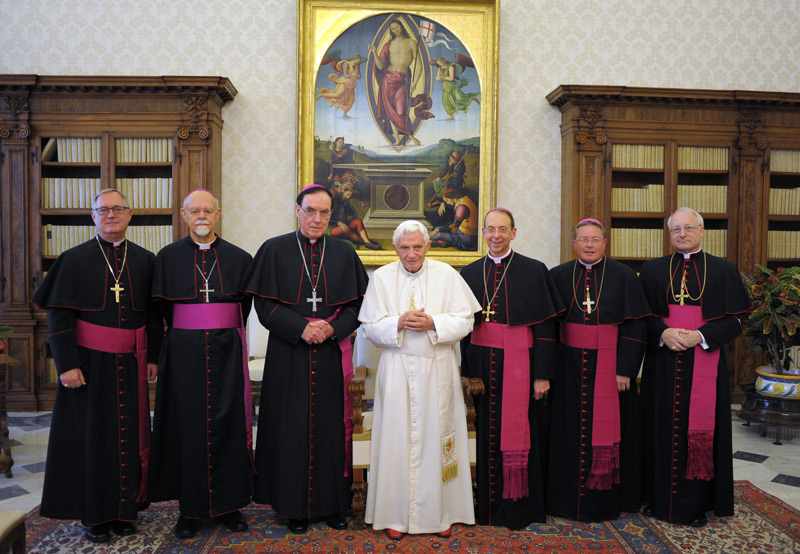
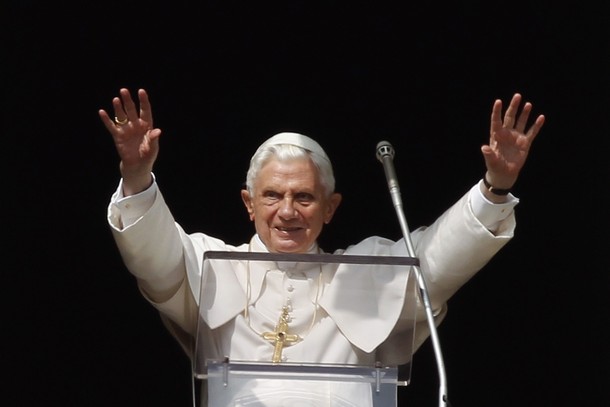
Bishops of CT and RI.jpgPope Benedict XVI met Nov. 5 with U.S. bishops from northeastern states on their “ad limina” visits to the Vatican to report on the status of their dioceses. From left are Bishop Thomas J. Tobin of Providence, R.I.; retired Auxiliary Bishop Peter A. Rosazza of Hartford.; Archbishop Henry J. Mansell of Hartford; Pope Benedict XVI; Bishop William E. Lori of Bridgeport; Bishop Michael R. Cote of Norwhich; Auxiliary Bishop Robert C. Evans of Providence, R.I. (CNS photo/L’Osservatore Romano)

Enhanced by Zemanta

Hartford Archdiocese Bishops meet with Pope

NEN Bishops Ad Limina 2011.jpgThe bishops of the United States have begun their official visit to heart of the Church by praying at the tombs of the Apostles Peter and Paul, meeting with Pope Benedict, and meeting with the various heads of the Church’s departments at the Holy See to report on the various apostolic works undertaken for the proclamation of the Gospel.

The visit is called “Ad limina apostolorum,” meaning, “to the threshold of the apostles.” The Ad limina is a gesture of communio, an act of love, between individual bishop and the Pope. Hence, this is a pilgrimage of a bishop to center of faith. The Ad limina visits typically take place every 5 years though with Pope Benedict these pilgrimages are taking place every 7 years. Pope Benedict will meet all the diocesan bishops with the auxiliaries in the coming months and into 2012; he’ll have met 190 heads of dioceses, plus…. by the time all is said and done.

John Thavis of CNS has a review of what’s expected.

Continue reading Hartford Archdiocese Bishops meet with Pope

Saint Charles Borromeo


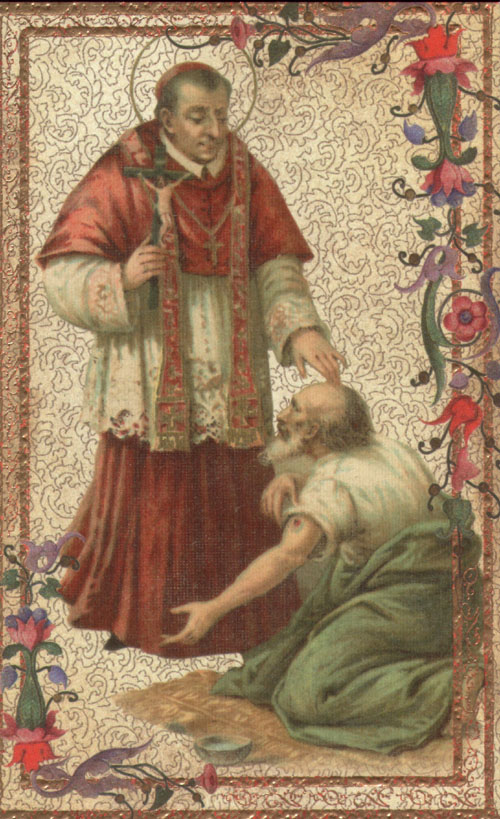
St Charles Borromeo with old man.jpgPreserve in the midst of your people, we ask, O
Lord, the spirit with which you filled the Bishop Saint Charles Borromeo, that
your Church may be constantly renewed and, by conforming herself to the
likeness of Christ, may show his face to the world.


The humanity of today’s saint is brought out in an
address celebrating 400 years since he was raised to the altars. Here are three
paragraphs of the Pope 2010 talk (the rest may be read at the link below):

The
love of St Charles Borromeo was first and foremost the love of the Good
Shepherd who is ready to give his whole life for the flock entrusted to his
care, putting the demands and duties of his ministry before any form of
personal interest, amenity or advantage. Thus the Archbishop of Milan, faithful
to the Tridentine directives, visited several times his immense Diocese even
the most remote localities, and took care of his people, nourishing them ceaselessly
with the Sacraments and with the word of God through his rich and effective
preaching; he was never afraid to face adversities and dangers to defend the
faith of the simple and the rights of the poor.

However it is impossible to
understand the charity of St Charles Borromeo without knowing his relationship
of passionate love with the Lord Jesus
. He contemplated this love in the holy
mysteries of the Eucharist and of the Cross, venerated in very close union with
the mystery of the Church. The Eucharist and the Crucified One immersed St
Charles in Christ’s love and this transfigured and kindled fervor in his entire
life, filled his nights spent in prayer, motivated his every action, inspired
the solemn Liturgies he celebrated with the people and touched his heart so
deeply that he was often moved to tears.

His contemplative gaze at the holy
Mystery of the Altar and at the Crucified one stirred within him feelings of
compassion for the miseries of humankind and kindled in his heart the apostolic
yearning to proclaim the Gospel to all
. On the other hand we know well that
there is no mission in the Church which does not stem from “abiding” in the
love of the Lord Jesus, made present within us in the Eucharistic Sacrifice.
Let us learn from this great Mystery! Let us make the Eucharist the true centre
of our communities and allow ourselves to be educated and moulded by this abyss
of love! Every apostolic and charitable deed will draw strength and fruitfulness
from this source!


Pope Benedict XVI

Saint Martin de Porres

St Martin de Porres4.jpg

Today’s the feast of the great Dominican saint, Martin de Porres (1579-1639). A native of Peru, he was the son of a slave mother and a Spanish father (who weren’t married).
Martin’s holiness and charitable work is beyond compare. For a man of no education he had the reputation for wisdom that people of civil and ecclesial government along with the common person sought his counsel. One Dominican Friar told me that he and Saint Rose of Lima are two of the most popular saints from the Order of Preachers surpassing Aquinas and others. He was what we call today, “a man of the people.” Martin was the first black person to be given the habit of the Order of Friars Preachers taking vows in 1603. Blessed John XXIII canonized Martin in 1962 who called him, “Martin of charity.”
Each day I pass Saint Martin’s altar sometimes aware of De Porres’ supreme affection for Jesus and intense love for his brother and sister; other days, not so aware. But aware or not, my love for Saint Martin has only grown in recent times because I recognize in him an authentic and recognizable model of Christian charity and the desire to seek the Face of God in prayer.
Do you desire to be Christ, to follow Christ more closely? Walk on the path that Saint Martin shows….
Saint Martin de Porres, pray for us!

All Souls

Still Life With A Skull.jpg

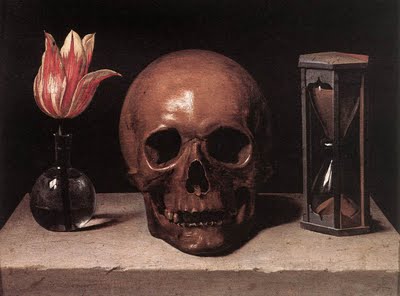
 The Church remembers before God the Father Almighty all the dead. Our Commemoration of the faithful departed –All Souls– is a poignant time remember and live life more intensely. 

In Rome, Pope Benedict XVI spoke of this gesture of remembrance:

Today, the day after the Solemnity of All Saints, the Church invites us to pray for the faithful departed. This yearly commemoration, often marked by visits to the cemetery, is an occasion to ponder the mystery of death and to renew our faith in the promise of eternal life held out to us by Christ’s resurrection. As human beings, we have a natural fear of death and we rebel against its apparent finality. Faith teaches us that the fear of death is lightened by a great hope, the hope of eternity, which gives our lives their fullest meaning. The God who is love offers us the promise of eternal life through the death and resurrection of his Son. In Christ, death no longer appears as an abyss of emptiness, but rather a path to life which will never end. Christ is the resurrection and the life; whoever believes in him will never die. Each Sunday, in reciting the Creed, we reaffirm our faith in this mystery. As we remember our dear departed ones, united with them in the communion of the saints, may our faith inspire us to follow Christ more closely and to work in this world to build a future of hope.

Recent book explores ethical dimension of human cell research


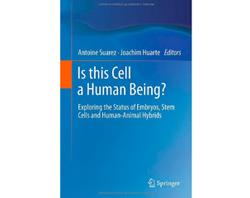
Is this Cell a Human Being Exploring the Status of Embryos Stem Cells and Human Animal Hybrids.jpg

Is this Cell a
Human Being? Exploring the Status of Embryos, Stem Cells and Human-Animal
Hybrids
(Springer, $139; slightly less expensive on Amazon). Antoine Suarez and Joachim Huarte are the editors. The book follows the 2009 meeting of international experts who worked with the ethical considerations of human
cell use and the implications and hope of the research.

The book has 10 articles and an introduction published by the Social Trends Institute of Spain and the US which explores matters of family, bioethics, culture & lifestyles and corporate governance. One of the contributors to Is this Cell is Dominican Father Nicanor Austriaco of Providence College. Father Nicanor is also the author of the popular monograph, Understanding Stem Cell Research: Controversy and Promise (www.kofc.org/un/en/resources/cis/cis326.pdf).

Of their new work STI said, “The central question of this book is whether or not particular cell entities of human origin ought to be considered human beings.”


The CNA article is here

Protestant faith community unable to replace Catholic truth

From the point of view of truth, Ed Stannard’s article in today’s New Haven Register, “New Haven Church to Fill Spiritual Void” is a bit misleading when he fails to distinguish between the Church –meaning the Catholic Church– and the various ecclesial communities such as the Protestant types. He reduces the truth of being one, holy, catholic and apostolic, i.e., being authentically Catholic– to being opportunistic. No doubt there are opportunities for evangelization that the Catholics are unable to engage in now, but the presence of the Catholic remains solidly in New Haven and can never be replaced by a denomination, which the Catholics are not.

One should note, there is no one-to-one correspondence. One church community is not as good as another. They do not believe the same things (dogma and doctrine, the nature of the priesthood, Eucharist and apostolic authority) even though there are some superficial things that are the same (some liturgical practices). Hence, Catholicism is not on par –theologically or liturgically or justice-wise– with the Episcopal Church. And, the Rev. Robert Hendrickson knows this theology and ecclesiology well. What he is doing is poaching Catholics from the truth in a period when the Archdiocese of Hartford has been unable to assign young, vibrant priests and pastoral ministers to the area and frame their work as a call and mission from God and the Church.

While it is true that the Archdiocese of Hartford has not responded as best as it could to the religious needs of the people in the Hill section of town, the Catholic Church is still very present in this area of the city with the fact of Saint Anthony’s Church and the Catholic Worker House and with the people present.
Clearly, the new evangelization proposed by Benedict XVI needs to be enacted today.