Defending Our First Freedom, Archbishop José Gomez, decries slowly losing sense of religious liberty in America

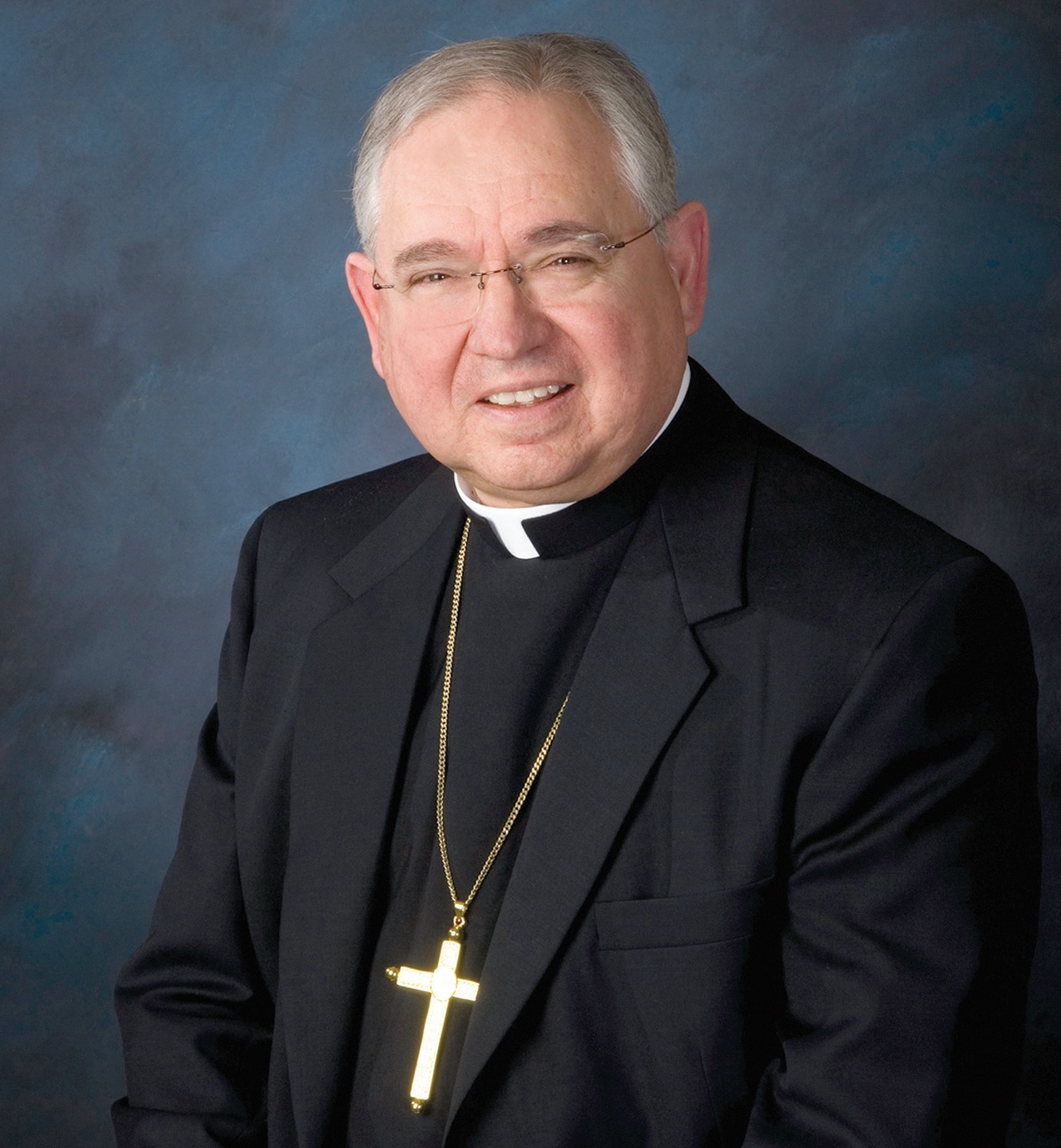
José H. Gomez.jpg

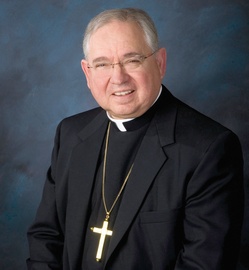
On 25 October 2011, Los Angelus Archbishop José H. Gomez, STD,  60, spoke on the slow loss of America’s first freedom. On March 1, 2011, Archbishop Gomez became the Archbishop of Los Angelus, after being the Archbishop of San Antonio; he’s been a bishop for nearly 11 years.  A stellar article follows:

There is much evidence to suggest that our society no longer values the public role of religion or recognizes the importance of religious freedom as a basic right. As scholars like Harvard’s Mary Ann Glendon and Michael Sandel have observed, our courts and government agencies increasingly treat the right to hold and express religious beliefs as only one of many private lifestyle options. And, they observe, this right is often “trumped” in the face of challenges from competing rights or interests deemed to be more important.

These are among the reasons the U.S. Catholic bishops recently established a new Ad Hoc Committee for Religious Liberty. My brother bishops and I are deeply concerned that believers’ liberties–and the Church’s freedom to carry out her mission–are threatened today, as they never have been before in our country’s history.

Catholics have always believed that we serve our country best as citizens when we are trying to be totally faithful to the teachings of Jesus Christ and his Church. And since before the founding of the American Republic, Catholics–individually and institutionally–have worked with government agencies at all levels to provide vital social services, education, and health care.

But lately, this is becoming harder and harder for us to do. Just last week, the federal government declined a grant request from the U.S. bishops’ Migration and Refugee Services agency. We are not really sure why. No reason was given. Our agency has been working well with the government since 2006 to help thousands of women and children who are victims of human trafficking.

Recently, the government had been demanding that our agency provide abortions, contraception and sterilizations for the women we serve. We hope our application was not denied because we refused to provide these services that are unnecessary and violate our moral principles and religious mission.

And this is not an isolated case. Right now, the federal government is also trying to force private employers to provide insurance coverage for sterilizations and contraception–including for medications that cause abortions. This not only violates the consciences of Catholic business owners, it also undermines the religious autonomy of Church employers.

For several years now, it seems that whenever there is a merger or expansion involving a Catholic hospital, some legislator or government agency tries to block it unless our Catholic hospitals and doctors will start providing abortions and sterilizations. So far, these efforts at coercion have failed. What’s troubling is that these efforts continue, without regard to the historic contributions of Catholic health care or to the First Amendment.

More recently, the push to legalize “same-sex marriages” has posed a new set of challenges to our freedoms. Church adoption and foster-care ministries have already been forced to shut down rather than submit to government demands that they place children with same-sex couples or provide benefits for same-sex employees.

And in an ominous development, the U.S. Justice Department went on record this summer as saying that those who defend the traditional definition of marriage as the union of one man and one woman are motivated by bias and prejudice.

Of course, that is our ancient Catholic belief, rooted in the teachings of Jesus and also the Jewish Scriptures. It is a belief held by many Protestants, the Orthodox, and also by Jews and Muslims, among others. But scholars like Princeton’s Robert P. George warn that this belief might now be labeled as a form of bigotry and lead to new challenges to our liberties.

We are also concerned about the signals the federal government is sending in a case now before the U.S. Supreme Court, Hosanna-Tabor v. EEOC. Experts say that if the government’s case prevails, it will have broad new powers to regulate the inner workings of Church institutions–even to possibly interfere in areas of Church practice and doctrine.

All of this is troubling and represents a sharp break with our history and American traditions. Religious liberty has always been “the first freedom” in our Bill of Rights and in our national identity. Our country’s founders recognized that religious freedom is a right endowed by God, not a privilege granted by government. And they respected that what God has given, no one–not a court, a legislature, or any institution–can rightly deny.

In our history, religious freedom has always included the rights of churches and religious institutions to establish hospitals, schools, charities, media outlets, and other agencies–and to staff these ministries and run them, free from government intrusion.

And religious freedom has always included the churches’ rights to engage in the public square to help shape our nation’s moral and social fabric. We see this throughout our history–from the abolitionist movement, to the civil rights movement, to the pro-life movement.

America’s founders understood that our democracy depends on Americans’ being moral and virtuous. They knew the best guarantee for this is a civil society in which individuals and religious institutions were free to live, act, and vote according to their values and principles. We need to help our leaders today rediscover the wisdom of America’s founding. And we need to help believers once more understand the vital importance of this “first freedom.” At stake are not just our liberties but also the future character of our democracy.

New Prior of St Catherine of Siena Priory NYC

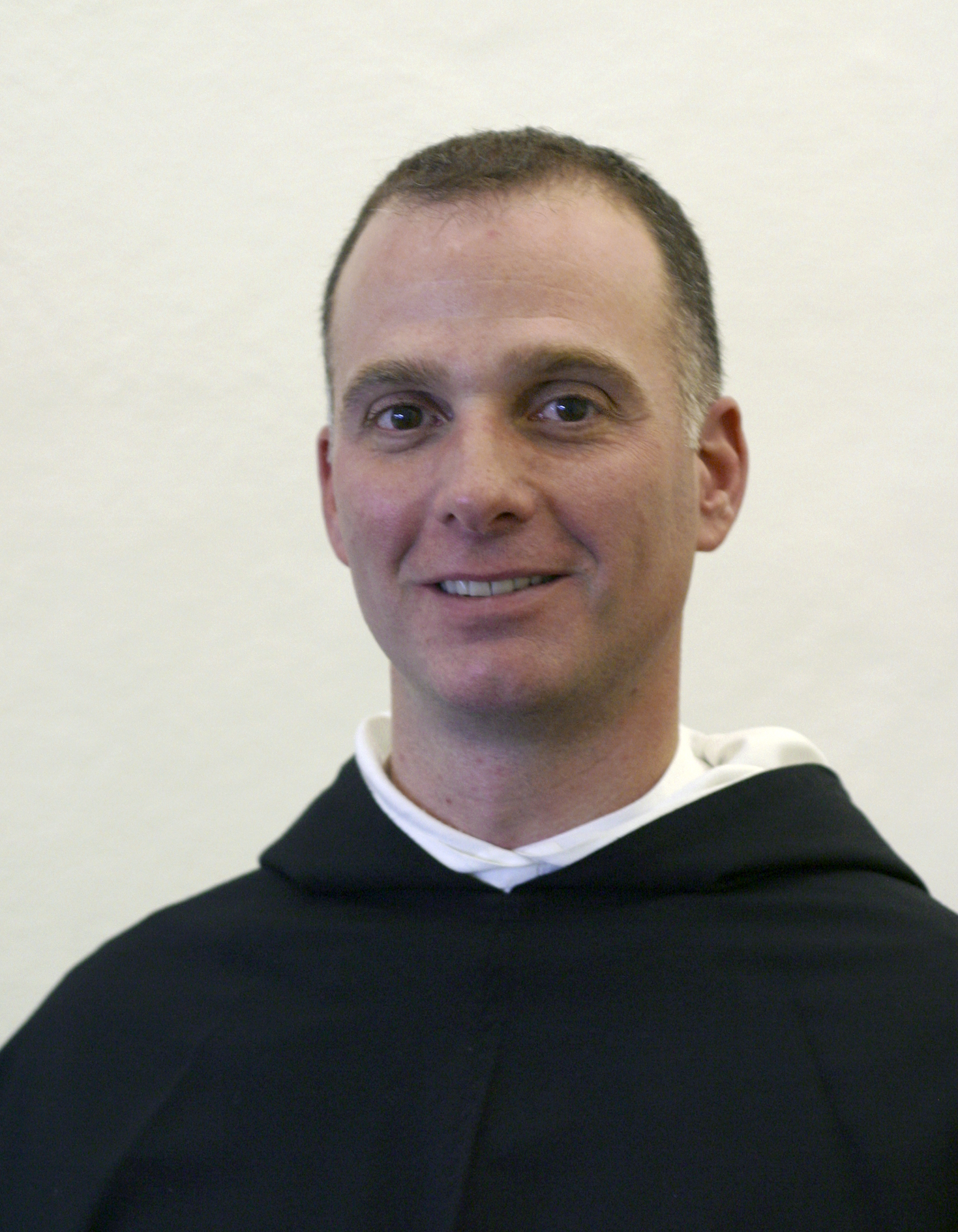
Juan-Diego Brunetta.jpgSeveral days ago the Dominican Friars of Saint Catherine of Siena Priory (NYC) elected Father Juan-Diego Brunetta, OP, as their new religious superior (their Father Prior).

Tonight at Mass, the new Conventual Prior made the Profession of Faith and took the Oath of Fidelity as is assuming an ecclesial office of the Church. 
Until recently, Father Juan-Diego was the Director of the Catholic Information Service at the Knights of Columbus (New Haven, CT). He earned the Doctorate in Canon Law at the Catholic University of America.
May the Lord and His Blessed Mother bless Father Juan-Diego’s new ministry. Besides being the Father Prior of the Dominican Friars, he’ll also assist Father Jordan in parochial ministry at Saint Catherine of Siena Church and in the Dominican Friars Healthcare Ministry.

Saints Simon and Jude


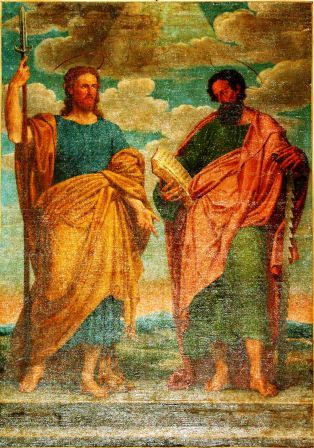
Sts Simon and Jude.jpgO God, who by the blessed Apostles have brought us to
acknowledge your Name, grant graciously, through the intercession of Saints
Simon and Jude, that the Church may constantly grow by increase of the people
who believe in you.


Today, the Dominican community and the assembled laity –about 150 people– honored Saint Jude by the Sacrifice of the Mass and the re-dedication ceremony of the Shrine to St Jude located at the Church of Saint Catherine of Siena (NYC). The Shrine of Saint Jude had been recently renovated, thus honoring the memory of this great intercessor. These last nine days the annual Novena to Saint Jude led by Dominican Fathers Walter and Bruno, pastor and curate respectively at Saint Vincent Ferrer Church.

The St Jude Shrine assists the Priory and Church of Saint Catherine of Siena by their prayers and the financial support given to the Dominican Friars Healthcare Ministry of NY (the Catholic chaplaincy and professional bioethics center for the 4 area hospitals).

The website of the Dominican Shrine of Saint Jude can be visited here.

Vespers for All Saints and a lecture “Art, Beauty and the Sacred” in NYC

The Catholic Artists Society is hosting a lecture on October 31st at 6:30pm titled “Art, Beauty and the Sacred” given by Oratorian Father Uwe Michael Lang. The evening will include the celebration of First Vespers of All Saints in the Church of Saint Vincent Ferrer (NYC). The flyer can be viewed here: Catholic Artists Society All Saints and lecture.pdf


Vespers

We will celebrate the ancient and beautiful liturgy of Solemn First Vespers for All Saints, officiated by our special guest, Father Uwe Michael Lang, C.O. Father Bruno Shah, O.P. from Saint Vincent Ferrer, and Father Michael Barone from the archdiocese of Newark, will assist in the liturgical celebration. Gregorian chant and polyphonic settings will be provided by a professional choir led by David J. Hughes, Organist & Choirmaster at Saint Mary’s Church, Norwalk, CT.
Enhanced by Zemanta

Continue reading Vespers for All Saints and a lecture “Art, Beauty and the Sacred” in NYC

Fr Aldo Trento speaks to a new life in Christ amid suffering

aldo trento.2.jpgFather Aldo Trento, 64, hails from Belluno, Italy. Father Aldo is a priest of the Missionary Fraternity of Saint Charles Borromeo and has been living in Paraguay since 1989; currently he is the pastor of San Rafaél Church, Asunción. The life of this parish generated the Clinic “Divine Providence Saint Richard Pampuri Home” for the terminally ill and for the poor. Moreover, Father Aldo has established an elementary school, a shelter for pregnant women who suffered sexual abuse, four homes for orphans affected by HIV/AIDS, a shelter for chronically-ill children, and two residences for poor and abandoned elderly people. At the present time they are building new facilities for the Clinic as well as a vocational school with several subject concentrations to facilitate the introduction of the youths who complete their primary education at Pai Alberto School into the job market. In June 2008, Father Aldo has been named a “Knight of the Star of Solidarity”, by the president of Italy, Giorgio Napolitano. In September 2008 he was also designated an illustrious citizen of the city of Asunción by the City Council.

Father Aldo’s amazing witness can be heard here on an audio file. It was recorded October 20, 2011, at the NY CL Offices.

Adalbert de Vogüé, RIP

Vogüé.jpgAnyone who knows even a little of the scholarship on the Rule of St Benedict knows the name of this famous monk who has done a tremendous amount of work in this area. Father Adalbert was indeed a force to be reckoned with, even if you disagreed with him. One could not escape Father’s orbit. Sadly, I mention his death.


“The Abbey of Pierre qui Vire announces the painful and enigmatic death of P. Adalbert de Vogüé OSB, 86. His body was found 2 km from the monastery after a search of eight days. He probably died Friday, 14 October 2011.


The publication of Community and Abbot in the Rule of Saint Benedict (1960) began a distinguished career of research and publication concerning the Rule of Saint Benedict and early monastic literature. He served frequently on the faculty of thePontifical Athanæum of Saint Anselm in Rome before taking up the hermit’s life in 1974 near his monastery. The monks will celebrate the Mass of Christian Burial, Wednesday, 26 October, 11 a.m. Donne-lui, Seigneur, le repos éternel.”


H/T Brother Richard Oliver, OSB @osb.org

Catholics can’t ignore personal piety: forming others to be religious and spiritual

How often do you think mainline Christians take the personal piety of others? How frequently do we take someone who says “I am spiritual but not religious”? “Not very often” is the best answer to offer. Saying that one is spiritual and not religious lacks a certain seriousness of belief and unbelief. Catholics in the USA number circa 65-70 million and in the world Catholics number just over a billion this notion of being spiritual and not religious gaining currency. Why? Because a personal relationship with Jesus is lacking. There is no encounter with the living Messiah, Jesus is an abstraction.

Last week someone asked me what I thought of being spiritual but not religious. I simply said, to hold that belief is to lack a certain convergence of faith and reality; while understandable from the point of view that many professed Christians lack a true conviction of faith in Jesus Christ both from the point of doctrine but also in practice.

David Briggs has an article that is to be read: “Religious but not spiritual: The high costs of ignoring personal piety.”
Instead of jumping to a negative conclusion, why not ask the question of what you are doing to work on your own education in the Faith and its practice? Adherence to Christ is a life of love, but it is also an ongoing work.

Clarifying the meaning of religious freedom


A timely piece to think seriously about daily is the notion of religious freedom not only around the globe, but also and significantly here in the USA. Today, the Most Reverend William E. Lori addressed the Judiciary Committee of the United States House of Representatives, Subcommittee on the Constitution. Here are a few paragraphs (the link to the full text is noted below):

Religious
liberty is not merely one right among others, but enjoys a certain primacy. As
the Holy Father, Pope Benedict XVI recently explained: “It is indeed the first
of human rights, not only because it was historically the first to be
recognized but also because it touches the constitutive dimension of man, his
relation with his Creator.” (Pope Benedict XVI, Address to Diplomatic Corps,
10 Jan. 2011
.) The late
Pope John Paul II taught that “the most fundamental human freedom [is] that of
practicing one’s faith openly, which for human beings is their reason for
living
.” (Pope John Paul II, Address to Diplomatic Corps, 13 Jan. 1996
, No. 9.) Not coincidentally, religious
liberty is first on the list in the Bill of Rights, the charter of our Nation’s
most cherished and fundamental freedoms. The First Amendment begins: “Congress
shall make no law respecting an establishment of religion, or prohibiting the
free exercise thereof….” It is commonly, and with justice, called our “First
Freedom.”

Continue reading Clarifying the meaning of religious freedom

US Commission on International Religious Freedom could cease in November

US Congressman Frank R. Wolf, 72, (Virginia 10th District) proposed the bill in 1998 which created The United States Commission on International Religious Freedom is a bi-partisan US Federal commission, appointed by the US President to advise him and Congress on matters pertaining to the freedom of religion. The CIRF reports to Congress and the State Department, is now in jeopardy.

It’s work is research and advocacy for freedom and human rights. It looks at the practice of religion and it’s freedom to exist.
HOWEVER, there is one senator who is blocking funding, anonymously. We need to write to our senators. We need to speak out!!!
After November 18 the Commission may go out of business.
Congressman Wolf thinks that if the bill is passed, Obama will sign the bill. But truth be told, the President is not really in favor the Commission’s work.
Enhanced by Zemanta

Blessed John Paul II Mass Collect


Bl Pope JP II.jpg

Today is the first time the Church prays the Mass for the liturgical memorial of Blessed John Paul II. To date, Blessed John Paul II’s feast is observed in the USA as an optional memorial. The US Conference of Bishops is requesting of the Holy See that this feast be an obligatory liturgical memorial. The second reading for the Office of Readings is here. Other texts for Mass and the Divine Office are taken from the “Common of Pastors: For a Pope.”

The Collect (opening prayer for Mass) is given here in English and Latin:

O God, who are
rich in mercy and who willed that the Blessed John Paul II should preside as Pope
over your universal Church, grant, we pray, that instructed by his teaching, we
may open our hearts to the saving grace of Christ, the sole Redeemer of
mankind. Who lives and reigns.

Deus, dives in
misericórdia, qui beátum Ioánnem Paulum, papam, univérsae Ecclésiae tuae
praeésse voluísti, praesta, quaésumus, ut, eius institútis edócti, corda nostra
salutíferae grátiae Christi, uníus redemptóris hóminis, fidénter aperiámus. Qui
tecum.

The Scripture would be: first
reading is Isaiah 52:7-10; the responsorial psalm is 96/95:1-2a, 2b-3, 7-8a,
10); the alleluia is John 10:14; the Gospel is John 21:15-17.


The Congregation for Divine Worship and the Discipline of the Sacraments published on April 2, 2011, the “Decree Concerning Liturgical Worship in Honour of Blessed John Paul II.”