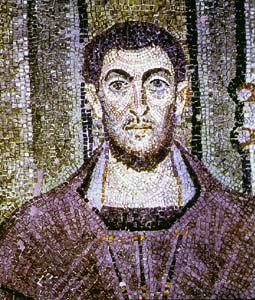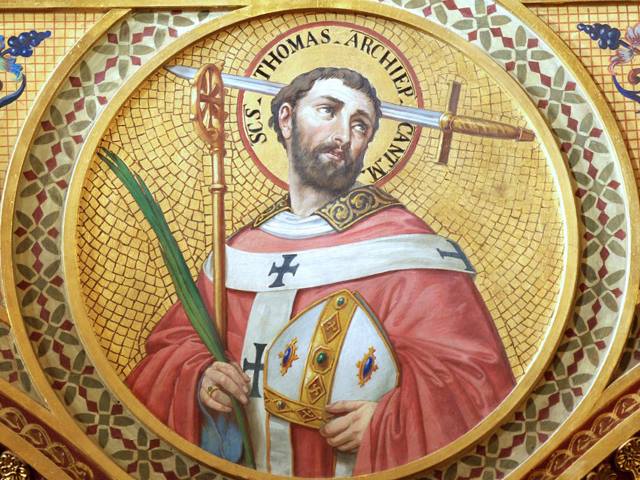
Saint Thomas Becket

St Thomas BecketSaint Thomas, son of an English nobleman, Gilbert Becket, was born on the day consecrated to the memory of Saint Thomas the Apostle, December 21, 1117, in Southwark, England. He was endowed by both nature and grace with gifts recommending him to his fellow men; and his father, certain he would one day be a great servant of Christ, confided his education to a monastery. His first employment was in the government of the London police. There he was obliged to learn the various rights of the Church and of the secular arm, but already he saw so many injustices imposed upon the clergy that he preferred to leave that employment rather than to participate in iniquity. He was perfectly chaste and truthful, and no snares could cause to waver his hatred for any form of covert action.

He was employed then by the Archbishop of Canterbury, who sent him on missions to Rome and permitted him to study civil law at the University of Bologna (Italy) for an entire year. After a few years, witnessing his perfect service, he made him his Archdeacon and endowed him with several benefices. The young cleric’s virtue and force soon recommended him also to the king, who made of him his Lord Chancellor. In that high office, while inflexible in the rendition of justice, he was generous and solicitous for the relief of misery. He was severe towards himself, spending the better part of every night in prayer. He often employed a discipline, to be less subject to the revolts of the flesh against the spirit. In a war with France he won the respect of his enemies, including that of the young king Louis VII. To Saint Thomas, his own sovereign, Henry II, confided the education of the crown prince. Of the formation of the future king and the young lords who composed his suite, the Chancellor took extreme care, knowing well that the strength of a State depends largely on the early impressions received by the elite of its youth.

When Archbishop Theobald of Canterbury died, the king insisted on the consecration of Saint Thomas in his stead. Saint Thomas at first declined, warning the king that from that hour their friendship would be threatened by his own obligations to uphold the rights of the Church against infringement by the sovereign, whose tendencies were not different from those of his predecessors. In the end he was obliged by obedience to yield. The inevitable conflict was not long in coming. Saint Thomas resisted when the king’s courtiers drew up a list of royal customs at Clarendon, where the parliament of the king was assembled, and Henry obliged all the bishops as well as the lords to sign a promise to uphold these without permitting any restrictions whatsoever. Many of these pretended customs violated the liberties of the Church, and some were even invented for the occasion. Saint Thomas, obliged in conscience to resist, was soon the object of persecution, not only from the irritated king but by all who had sworn loyalty to his nefarious doings.

Saint Thomas took refuge in France under the protection of the generous Louis VII, who resisted successfully the repeated efforts of Henry to turn away his favor from the Archbishop. The Pope at that time was in France, and he, too, was besieged by Henry’s emissaries, but knew well how to pacify minds and protect the defender of the Church. Thomas retired to a Benedictine monastery for two years, and when Henry wrote a threatening letter to its abbot, moved to another. After six years, his office restored as the Pope’s apostolic legate, a title which Henry had wrested from him for a time, he returned to England, to preach again and enforce order in his see. He knew well that it was to martyrdom that he was destined; it is related that the Mother of God appeared to him in France to foretell it to him, and that She presented him for that intention with a red chasuble. By this time the persecuted Archbishop’s case was known to all of Christian Europe, which sympathized with him and elicited from king Henry an appearance of conciliation.

A few words which the capricious Henry spoke to certain courtiers who hated Thomas, sufficed for the latter to decide to do away with the prelate who contravened all their unchristian doings. They violated a monastic cloister and chapel to enter there while he was assisting at Vespers; the Saint himself prevented the monks from resisting the assassins at the door. Refusing to flee the church as the assassins summoned him to do, he was slain before the altar, by cruel and murderous repeated blows on the head. He died, saying: I die willingly, for the name of Jesus and for the defense of the Church.

The actions of the Pope in this conflict make clear what all of history teaches: the lives of the Church’s Saints themselves comprise the history of the world. The humility of Thomas had prompted him, after a moment of weakness he had manifested in a difficult situation, to judge himself unfit for his office and offer his resignation as Archbishop. The Pope did not hesitate a moment in refusing his resignation. He judged with apostolic wisdom that if Thomas should be deprived of his rank for having opposed the unjust pretensions of the English royalty, no bishop would ever dare oppose the impingements of iniquity on the Church’s rights, and the Spouse of Christ would be no longer sustained by marble columns, but by reeds bending in the wind.

The martyred Archbishop was canonized by Pope Alexander III on Ash Wednesday, 1173, not yet three years after his death on December 29, 1170, to the edification of the entire Church.

Les Petits Bollandistes: Vies des Saints, by Msgr. Paul Guérin (Bloud et Barral: Paris, 1882), Vol. 14
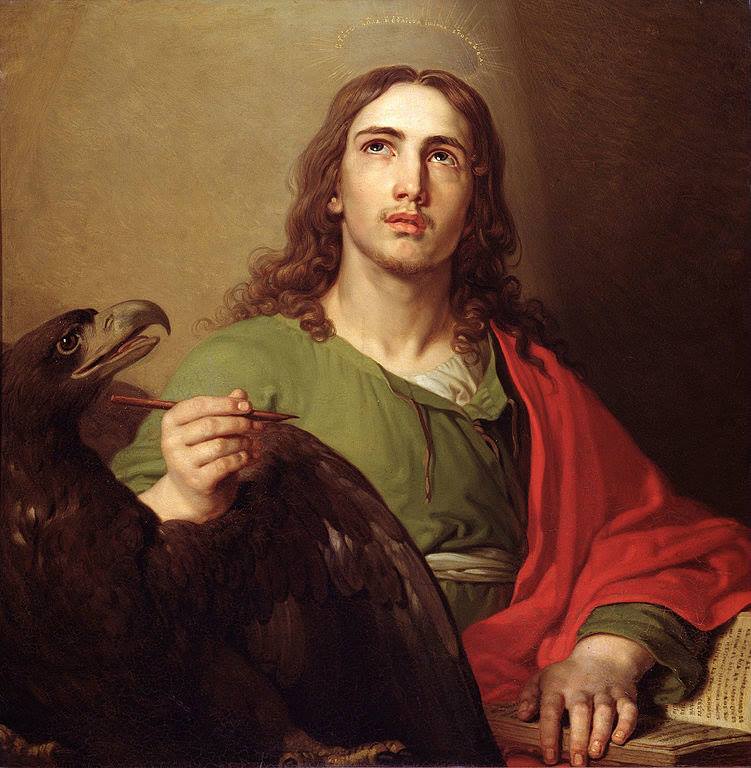
Saint John the Evangelist

the Evangelist JohnThe Beloved Disciple and Evangelist, Saint John, is honored by the Church in her Liturgy today. He’s known as “the Divine” and historically known as one of the sons of Zebedee, and his mother’s name was Salome [Matthew 4:21, 27:56; Mark 15:40, 16:1]. John’s date of death cannot be fixed with any precision, but we know he lived to an advanced age and he’s known not to have been martyred as the other Apostles were. Some have claimed he made his residence in Ephesus in 97.

Saint John is represented holding a chalice from which a dragon comes out,  as he is supposed to have been given poison, which was, however, neutralized. Today is a day on which we typically bless wine. The eagle also represents John and his gospel (look closely to the image here).

Who is the Beloved Disciple, John the Divine?

From biblical study we know that John and family lived on the shores of Galilee. The brother of Saint John, considerably older, was Saint James. The mention of the “hired men” [Mark 1:20], and of Saint John’s “home” [John 19:27], implies that Salome and her children were not impoverished

Saints John and James followed the Baptist when he preached repentance in the wilderness of Jordan. There can be little doubt that the two disciples, whom Gospel does not name (John 1:35), who followed when the Baptist exclaimed with prophetic utterance, “Behold the Lamb of God!” were Andrew and John. They followed and asked the Lord where he abided. “Come and see” is the famous line. From here they entered into a profound friendship with the Eternal Word of God.

When Jesus appeared on the shore early in the morning, John was the first to recognize him. The last words of the Gospel reveal the attachment which existed between the two apostles. Peter came to know his destiny and that of his friend –the Acts of the Apostles gives evidence that they are still connected as entered together as worshippers into the Temple [Acts 3:1], and later protesting the threats of the Sanhedrin [Acts 4:13].

It’s very likely that Saint John remained at Jerusalem until the death of Mary, though tradition of no great antiquity or weight asserts that he took her to Ephesus. The exact date when he went to Ephesus is uncertain; we know that he was at Jerusalem fifteen years after Saint Paul’s first visit there [Acts 15:6]. There is no trace of his presence there when Saint Paul was at Jerusalem for the last time.

Early Christian writers such as Saint Irenaeus write that Saint John did not settle at Ephesus until after the death the Apostles Peter and Paul. He certainly was not there when Timothy was appointed bishop of that place. Moreover, Jerome thinks he governed all the Churches of Asia.. During the persecution of Domitian John was taken to Rome, and was placed in a cauldron of boiling oil, outside the Latin gate, without the boiling fluid doing him any injury. [Eusebius makes no mention of this. The legend of the boiling oil occurs in Tertullian and in Jerome]. There are some biblical experts who say that John was sent to labor at the mines in Patmos. When Nerva became the political leader John  was set free, returned to Ephesus, and there it is thought that he wrote his gospel and had a hand in the composition of other letters. Of his zeal and love combined we have examples in Eusebius, based on the authority of Irenaeus, that  John once fled out of a bath on hearing that Cerinthus was in it, lest, as he asserted, the roof should fall in, ending his reign.

Saint Juan Diego

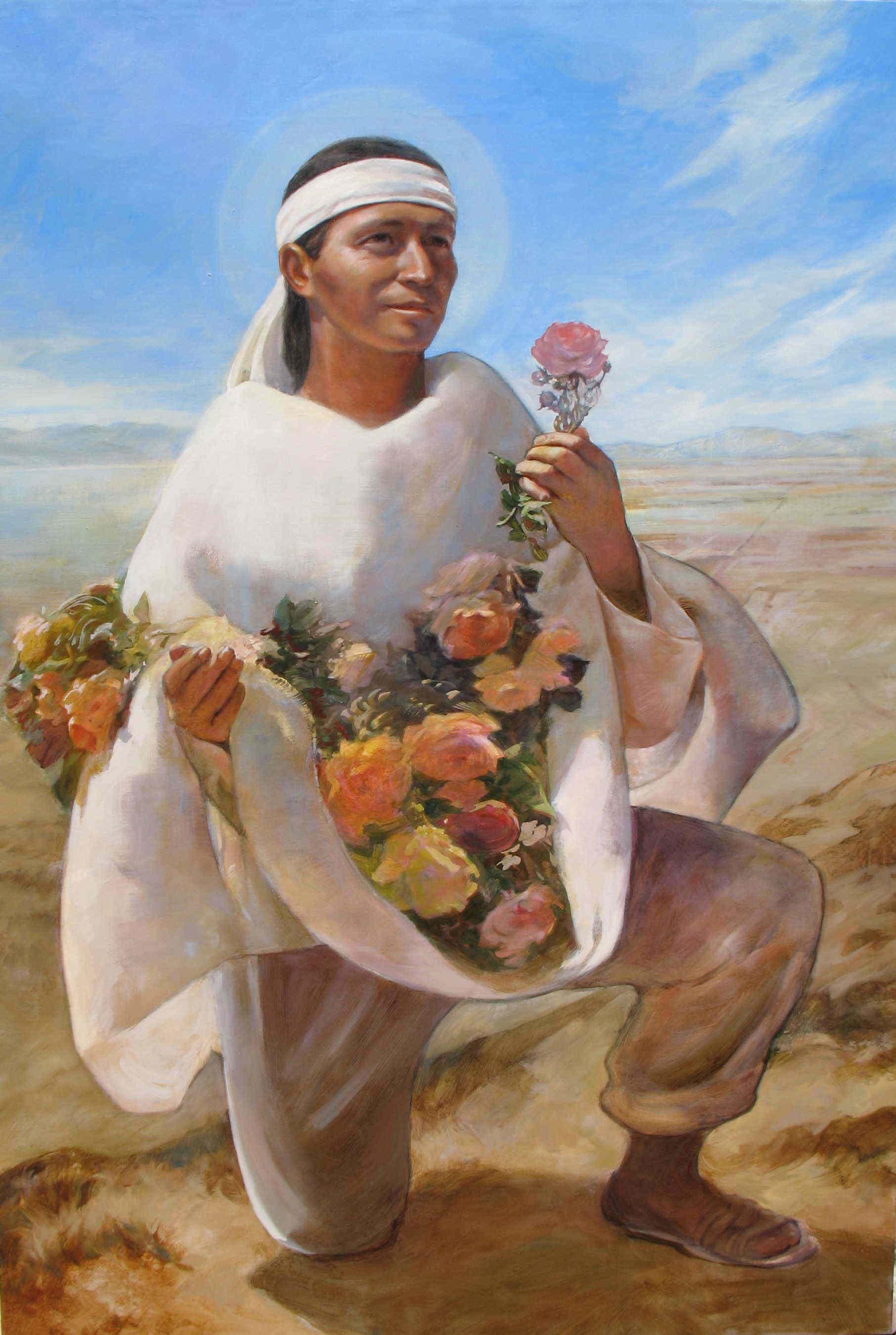
St Juan Diego Martha Orozco

The Church prays:

O God, Who, through Saint Juan Diego, did show forth the special love of the Most Holy Virgin Mary toward Your people, grant us, at his intercession, so to obey the admonitions given by our Mother of Guadalupe, that we may ever be able to carry out Your will.

Today’s liturgical memorial connects with the one for Our Lady of Guadalupe (Dec 12) because it is Saint Juan Diego who recognizes and advocates for the appearance of the Blessed Virgin Mary when others doubted. Saint Juan Diego was the messenger of the Mother of God to the rest of humanity.

The tradition holds that on 9 December 1531, Juan Diego Cuauhtlatoatzin, an indigenous peasant, received a vision of a young woman while he was on a hill in the Tepeyac desert, near Mexico City. The beautiful lady told him to build a church exactly on the spot where they were standing. Wondering what this message meant, Juan Diego told the local bishop who asked for some proof. The vision happened a second time. But this time Juan Diego asked the lady to answer the bishop’s requirement of proof. The Lady told him to  “Bring the roses behind you.” When he opened his poncho, instead of roses, there was an image of the young lady in the vision. The tilma is now a relic of the experience in Mexico.

Is the gospel and teachings of the Church an integral part of your Christian life? Do you carry the message and manner of living commanded by God to others? Is there joy in the message? Is God’s will an important factor in life?

Patriarch Abraham

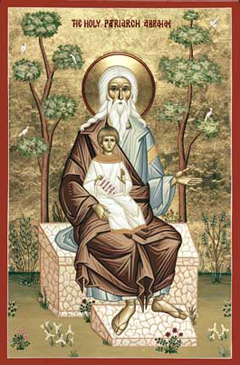
Holy Patriarch AbrahamThe feast of Abraham recalls the person, our father in monotheistic Judaism who opened the door to human faithfulness before the holiness of a God who revealed Himself to humanity in a new way. The holy Patriarch’s liturgical memorial is not celebrated in the Latin Church but in the Byzantine Church does so today. He is, however, recalled in the Roman Canon of the Mass and in several of the prayers used during the year. What we believe, and why we pray is expressed in the hymn texts of the Divine Liturgy. By looking at the liturgy we know what we believe and how to live. Here, the holy Patriarch Abraham is extolled a light to follow and a man of God who mediates for humanity before the Throne of Grace.

In the night universal of ignorance towards God, and in that starless, profound gloom bereft of heavenly light, you, O Abraham, were kindled in the firmament, burning with bright far-shining faith in the Everlasting light. Who shines forth to us from your seed, entreat Him with fervor, that He enlighten us and save our souls. (Troparion, Tone 1)

You were a servant, a mortal fashioned from the earth, your master was God, Lord and Fashioner of creation, yet, well-pleased to glorify your celestial greatness, the Lord of all called Himself the God of Abraham Procure for us mercies from your merciful God. (Kondak, Tone 2)

Saint Bruno

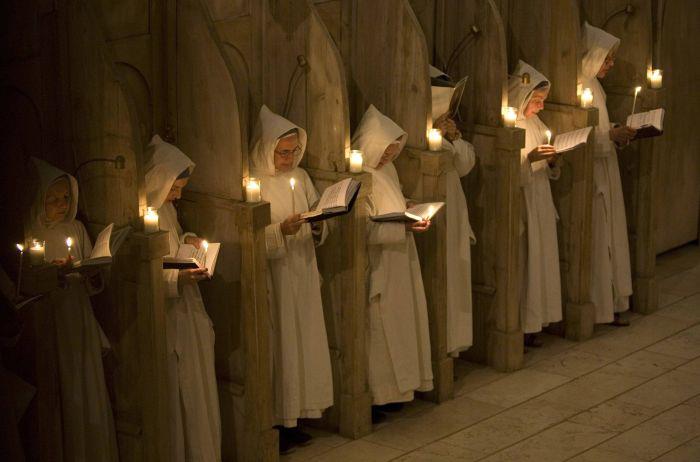
Monastic Family of BethlehemThe Statutes of the Carthusian Order begin with, “Blessed is the glory of the Lord, The Christ, Word of the Father, for all times men were chosen by the Holy Spirit to lead a life of solitude and to unite them in an intimate love. Answering this calling, Master Bruno, year of our Lord 1084, entered the desert of Chartreuse with six companions and began life there.” The life is wholly devoted to the Lord in solitude from the world, rarely having interaction with others.

But the person of Bruno is one that we are keen to know. Very briefly, the Liturgy tells us that he was man who was intent on rejecting the distractions of the world that would take him away from his only love, God. A witness from one of Bruno’s brothers in Calabria :

“Bruno deserves to be praised for many a thing, but especially in this matter: he was always a man of even temper, that was his specialty. His face was always joyful, and he was modest of tongue; he led with the authority of a father and the tenderness of a mother. No one found him too proud, but gentle like a lamb.”

930 years later, people still follow Saint Bruno into the solitude of the cloister. In the USA, there is one monastery of monks in Vermont, and there is a group of nuns who follow the spirituality of Bruno in a relatively new order founded called the Monastic Family of Bethlehem in Livingston Manor, NY.

May Saint Bruno teach how to love God alone.

Blessed Bartolo Longo

Bartolo LongoThere is a marvelous figure of holiness inscribed on the calendar today: Blessed Bartolo Longo, the great Apostle of the Rosary and the founder of the shrine of the Madonna of the Rosary at Pompei in Italy. Born in 1841, Blessed Longo died in 1926. He was a contemporary of Saint Faustina. Pope John Paul II beatified him in 1980. Several times in his pontificate, Saint John Paul II called our attention to the example of this holy layman, calling him “l’uomo della Madonna,” Our Lady’s man.

Divine Mercy Displayed

Blessed Bartolo Longo’s story is a dramatic illustration of Divine Mercy. The mystery of Mercy announced by Saint Faustina played itself out in the life of Blessed Longo. As a young man, following studies in Law, Bartolo Longo abandoned his faith and allowed himself to be drawn into paths of great spiritual darkness. He practiced spiritism, found himself entrenched in the occult, and became a practicing Satanist. Longo went so far as to have himself ordained a priest of Satan. He very nearly lost his sanity, becoming a mere shadow of himself.

Spiritually Sick

In one particular séance Longo was distressed to see the face of the deceased king of Naples and the Two Sicilies: Ferdinand II. That same night he saw the soul of his mother circling his bed, begging him to return to the Catholic faith. His practice of the occult had so affected him that he was barely recognizable to those who once knew him as a handsome young man, full of vitality and promise. A Catholic friend, seeing him in such a pitiful spiritual, psychological, and physical state, begged him to at least meet with Father Radente, a wise Dominican priest. After some time, Longo made a thorough confession and, under the direction of this priest, began the reform of his life. He entered the Third Order of Saint Dominic, receiving the name, Brother Rosario.

Conversion and Healing

Bartolo’s Dominican spiritual father told him that the Mother of God promised that anyone who promoted her Rosary would assuredly be saved. The rest of Blessed Barolo’s life was dedicated to the Most Holy Rosary. The Rosary was his lifeline. The Rosary was the anchor of his salvation. The Rosary was the means by which the Holy Mother of God brought him back from hell. It was through the prayer of the Rosary that the Blessed Virgin healed his soul, restored him to health, and entrusted him with a mission. Later Blessed Bartolo wrote, “What is my vocation? To write about Mary, to have Mary praised, to have Mary loved.

Rosary Apostolate

Blessed Longo reached out to the desperately poor, ignorant, and needy people of the town of Pompei. He taught them to pray the Rosary. The Rosary did for that entire town what it had done for him in his personal life; it brought healing, refreshment, holiness, joy, and peace. With the help of the Countess Mariana de Fusco whom he later married on the advice of Pope Leo XIII, while preserving with her his vow of chastity, Bartolo Longo undertook the construction of the church of the Madonna of the Rosary of Pompei. The city that grew up around it became the City of the Rosary.

He founded a congregation of Dominican Sisters to care for the poor. He established a school for boys. He wrote tirelessly in the service of Madonna and of her Rosary. His beautiful supplication to the Madonna of the Rosary has been translated into countless languages. Pope John Paul II prayed it when, on October 7, 2003, he visited Pompei to conclude the Year of the Rosary. In Italy, every year on the first Sunday of October, everything comes to a halt at noon while people, young and old, poor and rich, healthy and sick, pause to pray Blessed Longo’s supplication to the Virgin of the Rosary.

Divine Mercy Available to All

Saint Faustina made known the mystery of Divine Mercy. Blessed Bartolo Longo experienced Divine Mercy in a dramatic and deeply personal way. The same Divine Mercy is available to us: the mercy that brings back from hell, the mercy that raises the soul from spiritual death, the mercy that heals, restores, forgives, and repairs the past.

The Divine Mercy comes to us through the intercession of the Mother of God and, most efficaciously, through the humble prayer of the Rosary. It comes to us in the Sacrament of Penance: the mystery of the blood and the water from the side of Christ washing over the soul. And the Divine Mercy comes to us in the mystery of the Eucharist. The Mass is the real presence of Crucified Love. The Holy Sacrifice of the Mass is Divine Mercy flowing from the Heart of the Lamb, making saints out of sinners.

Father Mark Daniel Kirby, OSB
Silverstream Priory

Miriam Teresa Demjanovich –an American blessed

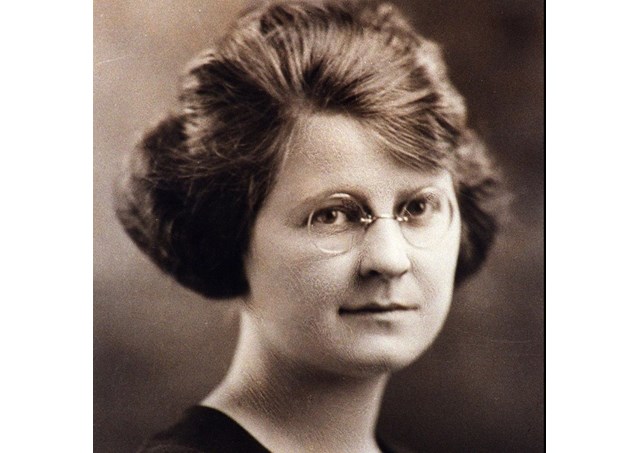
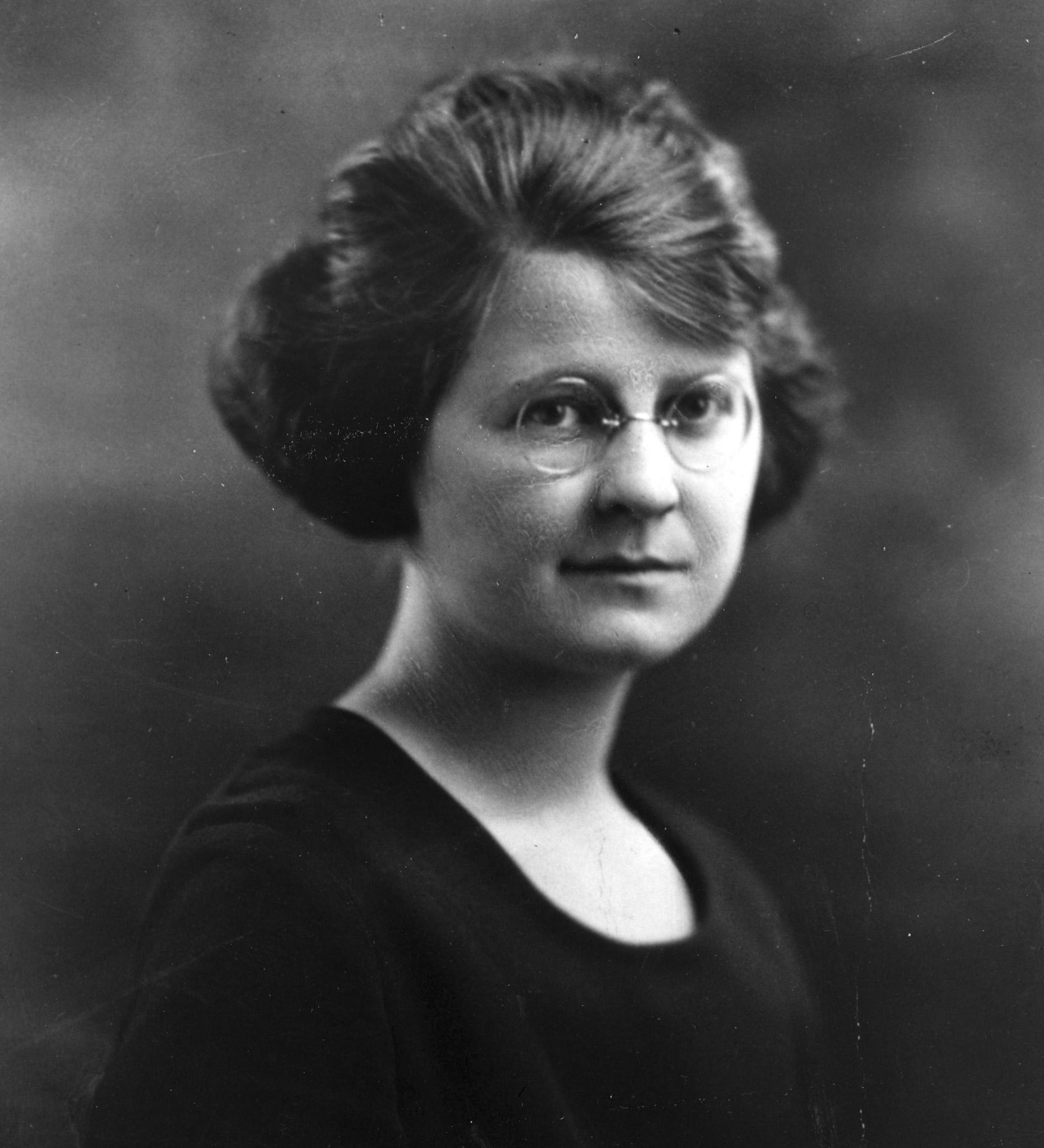
Miriam TeresaToday, the Catholic Church in America witnessed the beatification of a woman Sr. Miriam Teresa –the fourth American-born woman to be beatified. This is the first time a beatification ceremony happened in the USA. The Mass and rite was offered by Cardinal Angelo Amato in the Cathedral Basilica of the Sacred Heart in Newark, NJ.

Interesting, our new blessed was a member of the Eastern Catholic Church in the United States. She was a member, however, of a religious order of the Latin Church, the Sisters of Charity of St. Elizabeth. Her feast day is May 8. The Blessed’s book, Greater Perfection, published after her death remains germane to those interested in the spiritual life.

The Vatican Radio interview with Bishop Kurt Burnette (eparchial bishop of the Byzantine Ruthenian Catholic Eparchy of Passaic) notes very well the importance of Blessed Miriam Teresa for us: her understanding of the sacrament of Baptism, her teaching on prayer, her desire to be of complete service to the Triune God. As the bishop says, Americans are known for their activism; and the other American blesseds and saints are known for their activity in building up the Mystical Body of Christ –the Church, but her God has chosen to raise up for us a model of holiness who is a contemplative.

“Bishop Burnette reflected on the impact of her legacy on Eastern and Western spirituality.

“One of the remarkable things about her writings, I believe, is that she brings an Eastern Christian spirit of unity into the Western analysis. The Western theology tends to be analytical. For example, when she talks about prayer, in the West they had divided prayer up into three stages. What they called the purgative, the illuminative and the unitive. But Sr. Miriam Teresa claims that prayer always includes all three parts.”

Pope Francis approved a miracle attributed to Sr. Miriam Therese when a young boy who lost his eyesight due to macular degeneration was cured after prayers through her intercession. For Bishop Burnette, this miracle along with her profound humility, spirituality and insight are clear signs of God’s confirmation of her sanctity. “I don’t believe we really choose who is going to be canonized, God does,” he concluded.

Miriam Teresa Demjanovic –first citizen to be beatified in the USA

MTDThis Saturday, October 4, Miriam Teresa Demjanovich, a Byzantine Greek Catholic woman, born in New Jersey of Slovak immigrant parents, will be the first person beatified in the USA. The beatification will be transmitted live on EWTN and online.

This Saturday, the fourth native-born American woman will be beatified. From the Cathedral Basilica of the Sacred Heart in Newark, N.J, EWTN is pleased to bring you “The Beatification of Sister Miriam Teresa Demjanovic”.

The Most Reverend Kurt Burnette of the Byzantine Ruthenian Catholic Eparchy of Passaic, Archbishop John J. Myers of Newark, and Bishop Arthur J. Serratelli of Paterson will concelebrate. “The Beatification of Sister Miriam Teresa Demjanovic” airs 9:40 a.m. ET, Saturday, Oct. 4 — exclusively on EWTN.

Saint Ananias

ananiasThe Holy Apostle Ananias of the Seventy, baptizer of Saint Paul and the first bishop of Damascus. Saint Ananias is not a name Christians have on their lips. But they should. He is key in teaching what true faith in Jesus Christ meant. Today is the Byzantine Church’s observance for the saint yet the Latins celebrate him on January 25 –the same day as Saint Paul’s conversion, according to the 2004 edition of the Roman Martyrology.
The Lord ordered him to restore the sight of Saul, the former persecutor of Christians, then baptize him (Acts 9:10-19, 22:12). Saul became the great preacher and Apostle Paul –our first theologian. It is said that Saint Ananias boldly and openly confessed Christianity before the Jews and the pagans, despite the danger to his life and to the nascent community of Christian faith.
From Damascus Ananias went to preach at Eleutheropolis where he healed many people of their infirmities. Lucian, the prefect of the city, tried to persuade Ananias to offer sacrifice to idols. Because of Ananias’ staunch and solid confession of Jesus Christ, Lucian ordered that he be tortured. Harsh torments did not sway the witness of Truth. Then the torturers led him out beyond the city, where they stoned him. The saint prayed for those who put him to death. The relics first rested in Damascus before being transferred to Constantinople.

Saint Michael the Archangel

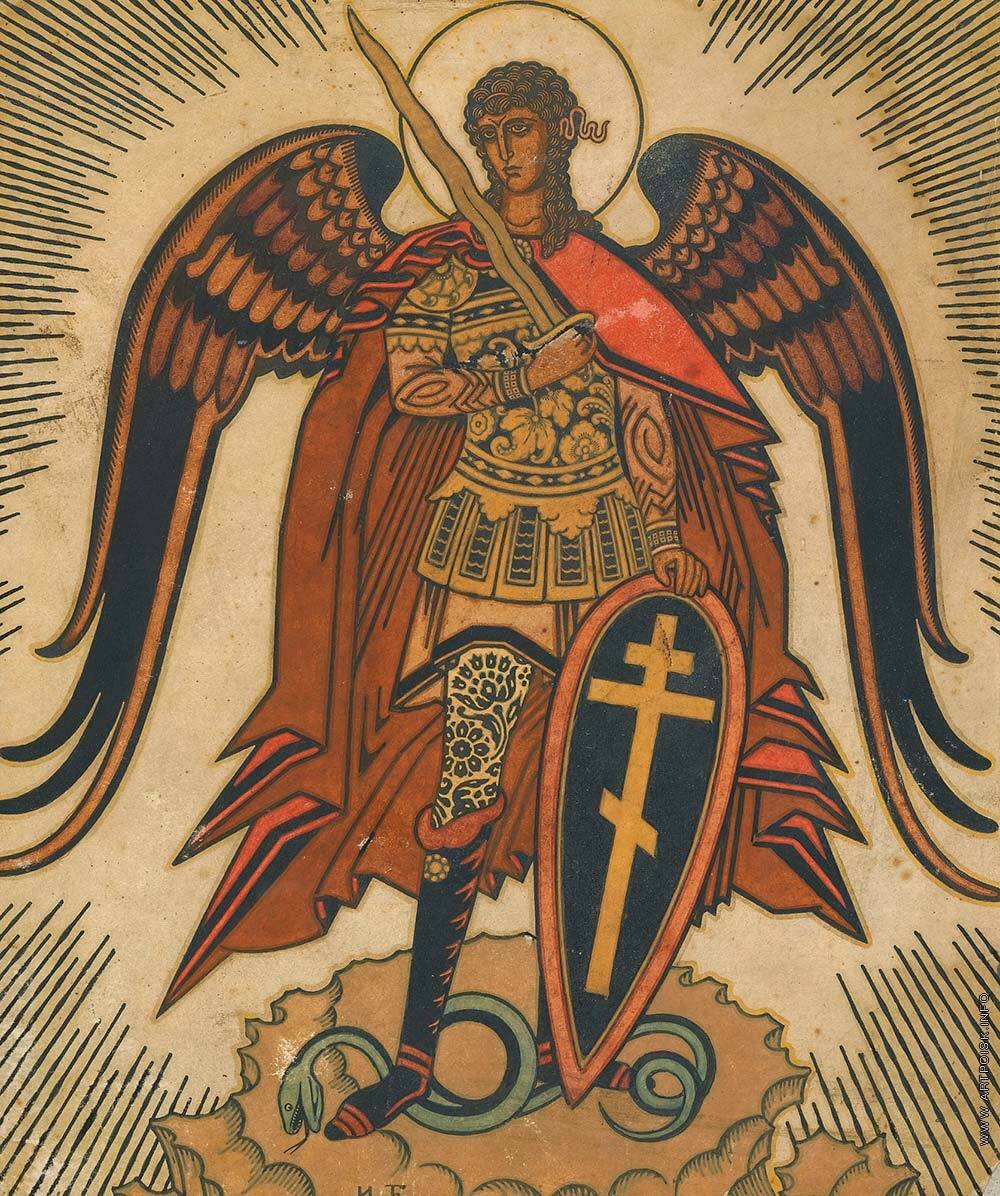
Archangel Michael Ivan BilibinThe feast of the Archangel Michael brings to table a certain wrinkle in the spiritual life that we don’t frequently acknowledge, or truly address as real. Recognizing the place evil has in the lives of many people due to the lure of sin and division, and noting that the true desire of man’s heart is really for God, Saint John Paul II in his ministry as a priest asked the faithful pray to Saint Michael the Archangel for divine assistance in the long and difficult work of spiritual warfare. He wanted us to make room in our devotional life for the intention when he said,

May prayer strengthen us for the spiritual battle we are told about in the Letter to the Ephesians, “Draw strength from the Lord and from his mighty power” (Eph 6 10). The Book of Revelation refers to this same battle recalling before our eyes the image of St. Michael the Archangel (Rev. 12:7). Pope Leo XIII certainly had a very vivid recollection of this scene when, at the end of the last century, he introduced a special prayer to St Michael throughout the Church.”

“St Michael the Archangel defend us in battle, be our safeguard against the wickedness and snares of the devil.” Although today this prayer is no longer recited at the end of Mass, I ask everyone not to forget it, and to recite it to obtain help in the battle against the forces of darkness and against the spirit of this world. (Pope John Paul II, Regina Caeli, 24 April 1994)”

Michael, whose name means “who is like unto God” (Quis ut Deus?), does indeed protect us.

Will you take up the challenge and call to holiness of John Paul?