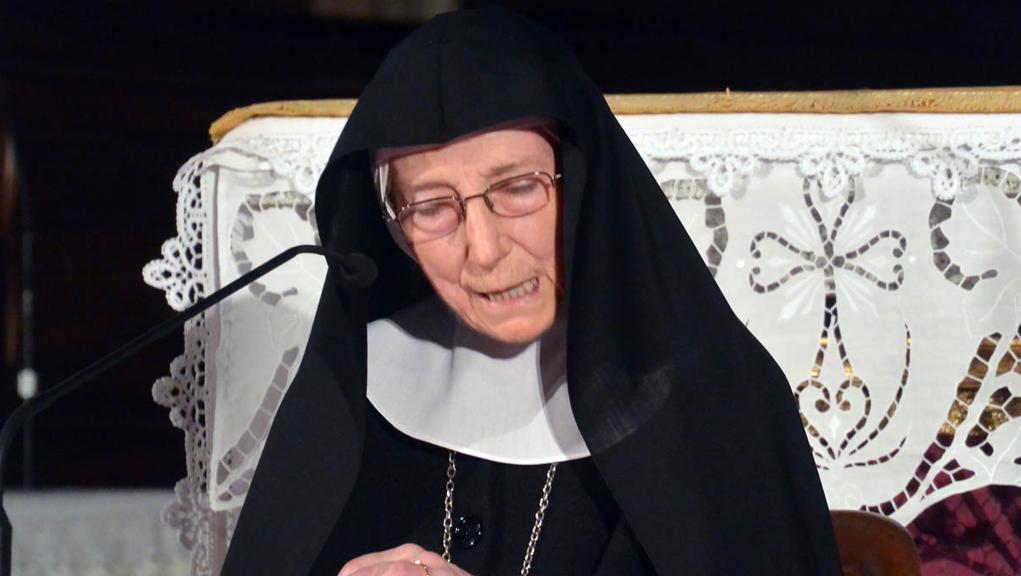
Mother Anna Maria Cànopi, RIP

The Abbey of Mater Ecclesiae announced that Mother Anna Maria Cànopi died this morning, the first full day of spring and the Transitus of Our Holy Father Saint Benedict.

Mother Anna Maria, 87, abbess emeritus of the cloistered monastery of the island of San Giulio, a community she had founded 46 years ago and led until last autumn

In 1973, together with some nuns, she settled on the island of San Giulio to begin the Benedictine community of Mater Ecclesiae. A stellar abbess who gave great witness to the heart of St Benedict and the Benedictine charism, Mother was able to discern many vocations to Mater Ecclesiae.

Mother Anna Maria was respected within Benedictine circles and in the Catholic Church. Commentators will note that Mother Anna Maria was woman of profound spirituality and great culture had a remarkable literary activity. She is the author of many works, particularly on Lectio Divina, but she is often remembered for her 1993 reflections for the Via Crucis at Rome’s Colosseum, written at the request of St. John Paul II.

Why do we need to know about the transitus of the Italian abbess? Mother Anna Maria is an example to the Oblate and professed nun and monk to be faithful to one’s humanity, to attend to good culture and to practice Lectio Divina: to really know and love the Lord of Life.

May Our Lady with the angels and saints intercede for Mother Anna Maria.

Eternal memory.

Ite ad Joseph

Today is the Feast of St. Joseph. We know him to be the earthly father of Jesus, chaste spouse of the Blessed Virgin, a just and wise man, a man of obedience to the Divine Will, the patron of good and holy death, and the patron of the Universal Church. He is the patron saint of fathers. One priest said, St Joseph “provides the example of caring for God’s people on earth – that with a quiet patience and devoted obedience of service and love to those under his care.”

When it comes may we, too, die in the arms of Jesus and Mary with Joseph holding our hand. By example we strive to follow St Joseph to our Savior.

Let us recall what St. Alphonsus Liguori taught:
“We should, indeed, honor St. Joseph, since the Son of God himself was graciously pleased to honor him by calling him father. The Holy Scriptures speak of him as the father of Jesus. ‘His father and mother were marveling at the things spoken concerning Him’. Mary also used this name: ‘in sorrow your father and I have been seeking you’. If, then, the King of Kings was pleased to raise Joseph to so high a dignity, it is right on our part to endeavor to honor him as much as we can.”

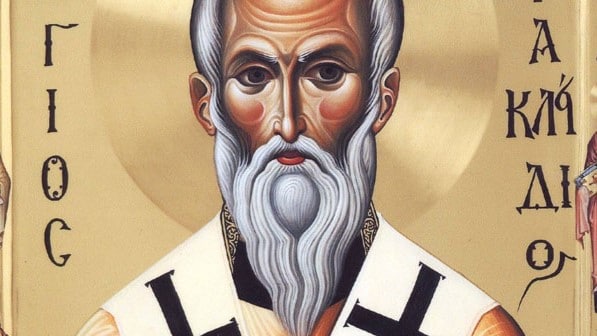
St Cyril of Jerusalem

Today, we liturgically honor our father among the saints, Cyril, patriarch of Jerusalem. Cyril was listed as one of the fathers at the Second Ecumenical Council in 381 in Constantinople. He was pastor of the Holy City for nearly half a century, and twice suffered exile. He left a rich legacy in his Catechetical Lectures. He delivered these to those preparing for baptism at Easter and they gave form to the period we now call Lent. They contain a wealth of information about the rite of Baptism and the Eucharistic Liturgy where we find the earliest mention of the invocation of the Holy Spirit. The annual commemoration of Holy Week and Pascha formalized during his rule, thru the natural popularity of pilgrimages to Jerusalem, spread the basic structure of these sacred feasts throughout the entire Church. This is amply evident in the journal of Egeria whose visit occurred soon after Cyril’s death on this day in 386. (t:NS) St Cyril is a Doctor of the Church.

Those who are serious students of the Liturgy, Eastern or Western, have always loved the St Cyril’s work on the sacraments of initiation, among many other things. “Make your fold with the sheep; flee from the wolves: depart not from the Church”. I am grateful for St Cyril of Jerusalem!

St Gertrude of Nivelles

Today is the feast day of St Gertrude of Nivelles, a 7th century Benedictine Abbess who lived in present day Belgium; she is not to be confused with another Gertrude who has the title of “the Great.”

St Gertrude is the patron saint of cats.

Given that in the USA the Irish celebrate St Patrick with great fanfare, one forgets that some other saints exist.

Coming to God?

An enduring question in the spiritual life is knowing God. In fact, many, many people, even the “professional” Christians struggle with this question and more startling how to answer it that is reasonable, truthful and otherwise satisfying. Who is God to you? How do you know God exists? What is the source of your certainty? Or, alternately, what is your God?

For me, I think we need to attend to the basics and ask how do these basics impact life in a concrete way. For too long Christians have been avoiding answering the question of God’s existence and God’s work in life in a personal way. Recently, I came across the following idea that I find helpful. In Romano Guardini’s The Inner Life of Jesus, we read:

If someone should ask, how do I come to God? What kind of being is God? This would be the answer: God is just as He manifested Himself in Jesus. Whoever looks upon Jesus, whoever takes into account who Jesus is, how He speaks, how He conducts Himself, what His attitudes are – such a one is perceiving God Himself.

And he will get to God by going in Jesus’ company, allowing himself to be instructed by Him, and allowing himself to become centered in that identity with which he makes his approach to Jesus. Then he is indeed on the way, in truth, and he partakes of life.

What do you think? Is Guardini correct that in seeing and knowing Jesus we see and know God?

Beginning of the Season of Lent

The Latin Church begins the holy season of Lent with joy and sobriety today. Eastern Christians who follow the Gregorian calendar began their lenten observance on Monday past. The priest prays at the prayer after communion: “Pour out a spirit of compunction, O God, on those who bow before your majesty, and by your mercy may they merit the rewards you promise to those who do penance.” Thus, the season of repentance is for our purification of sin by God’s grace and specific acts of piety: prayer, fasting and almsgiving. This letter of Pope St Clement I to the Corinthians may be helpful to you.

“Let us fix our attention on the blood of Christ and recognize how precious it is to God his Father, since it was shed for our salvation and brought the grace of repentance to all the world.

If we review the various ages of history, we will see that in every generation the Lord has offered the opportunity of repentance to any who were willing to turn to him. When Noah preached God’s message of repentance, all who listened to him were saved. Jonah told the Ninevites they were going to be destroyed, but when they repented, their prayers gained God’s forgiveness for their sins, and they were saved, even though they were not of God’s people.

Under the inspiration of the Holy Spirit, the ministers of God’s grace have spoken of repentance; indeed, the Master of the whole universe himself spoke of repentance with an oath: “As I live”, says the Lord, “I do not wish the death of the sinner but his repentance.” He added this evidence of his goodness: “House of Israel, repent of your wickedness. Tell the sons of my people: If their sins should reach from earth to heaven, if they are brighter than scarlet and blacker than sackcloth, you need only turn to me with your whole heart and say, “Father, and I will listen to you as a holy people.”

In other words, God wanted all his beloved ones to have the opportunity to repent and he confirmed this desire by his own almighty will. That is why we should obey his sovereign and glorious will and prayerfully entreat his mercy and kindness. We should be suppliant before him and tum to his compassion, rejecting empty works and quarreling and jealousy which only lead to death.

Brothers, we should be humble in mind, putting aside all arrogance, pride and foolish anger. Rather, we should act in accordance with the Scriptures, as the Holy Spirit says: “The wise man must not glory in his wisdom nor the strong man in his strength nor the rich man in his riches. Rather, let him who glories glory in the Lord by seeking him and doing what is tight and just.” Recall especially what the Lord Jesus said when he taught gentleness and forbearance. “Be merciful,” he said, “so that you may have mercy shown to you. Forgive, so that you may be forgiven. As you treat others, so you will be treated. As you give, so you will receive. As you judge, so you will be judged. As you are kind to others, so you will be treated kindly. The measure of your giving will be the measure of your receiving.”

Let these commandments and precepts strengthen us to live in humble obedience to his sacred words. As Scripture asks: “Whom shall I look upon with favor except the humble, peaceful man who trembles at my words?”

Sharing then in the heritage of so many vast and glorious achievements, let us hasten toward the goal of peace, set before us from the beginning. Let us keep our eyes firmly fixed on the Father and Creator of the whole universe, and hold fast to his splendid and transcendent gifts of peace and all his blessings.”

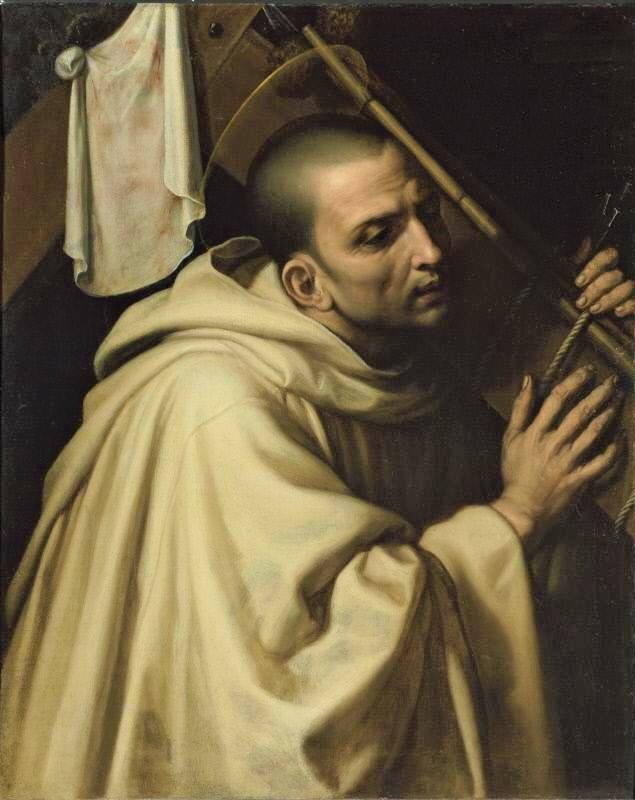
Image: St Bernard of Clairvaux by Jerónimo Jacinto Espinosa
Sofia Millican elected new abbess of Mt St Mary’s Abbey

On Monday, February 11, 2019, the Trappistines of Mount Saint Mary’s Abbey (Wrentham, MA) elected Sister Sofia Millican (formerly Frances Elizabeth) as their next abbess. Mother Sofia is elected for a for a six year term. Due to her few years in the Community as a solemnly professed nun she was postulated by the Community and it was accepted by the Holy See.

The Mount Saint Mary’s Abbey is situated in the Archdiocese of Boston. It is one five abbeys of nuns who live the Strict Observance Cistercian. There are 10 abbeys of monks.

Mother Sofia was born in 1982 in Beckenham, Kent and raised in South Wales; she is a 2005 Harvard grad. In 2007, Sister Sofia earned a degree masters degree from Weston Jesuit School of Theology, now Boston College School of Theology and Ministry.

Sister Sofia entered the Abbey on October 15, 2007 and made solemn profession on April 27, 2014. Also in 2014 Sister Sofia made two contributions to Cistercian Studies, “Spiritual Encouragement in the Conferences of John Cassian.” At the time of her election, Mother Sofia was Subprioress of the Community as well as the webmaster and production manager of Trappistine Quality Candy.

Mother Sofia will be installed as Abbess soon.

The newly elected abbess succeeds Mother Maureen McCabe who served the community since 2008 having reached the age of retirement according to the OCSO Constitutions, presented her resignation to the Abbot General which became effective on January 26, 2019.

St. Josephine Bakhita

Blessed Feast Day of St. Josephine Bakhita.

May she always intercede for us, especially those caught in the web of human trafficking!

The matter of human trafficking is finally getting to attention by those outside of law enforcement officials. The Church has know about this crime and sin but has not made too many in-roads to change the system. Together, the state and Church ought to work for those involved with human trafficking.