Mary in the theology of St Ephrem

In another place, I posted the following on Mary’s place in the theology of St Ephrem.

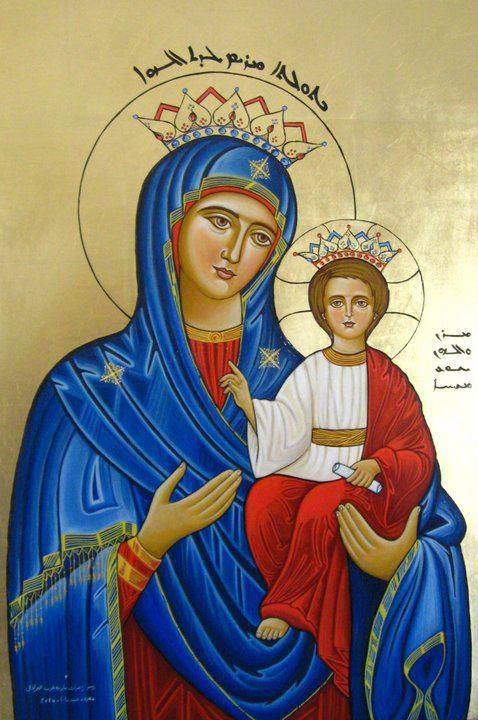
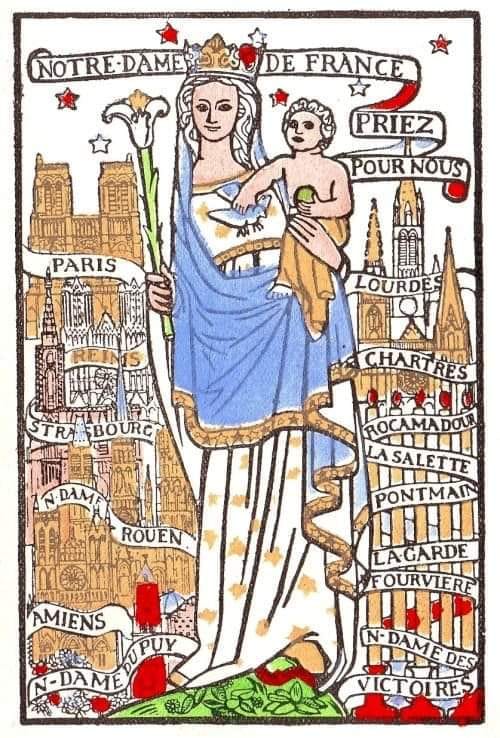
The month of May is traditionally known on as the Month of Mary. The Church holds Mary in the highest esteem; she is venerated but not worshipped by Catholics and Orthodox. A Syrian Father, St Ephrem, –the Harp of the Holy Spirit– the fourth century hymnographer, theologian and deacon as something to offer about the Mother of God.

“As lightning illu­mi­na­tes what is hid­den, so also Christ puri­fies what is hid­den in the nature of things. He puri­fied the Vir­gin also and then was born, so as to show that where Christ is, there is mani­fest purity in all its power. He puri­fied the Vir­gin, having pre­pa­red Her by the Holy Spi­rit… having been born, He left Her vir­gin. I do not say that Mary became immor­tal, but that being illu­mi­na­ted by grace, She was not dis­tur­bed by sin­ful desi­res”

“Most holy Lady, Mother of God, alone most pure in soul and body, alone exceeding all perfection of purity… alone made in thy entirety the home of all the graces of the Most Holy Spirit, and hence exceeding beyond all compare even the angelic virtues in purity and sanctity of soul and body… my Lady most holy, all-pure, all-immaculate, all-stainless, all-undefiled, all-incorrupt, all inviolate spotless robe of Him Who clothes Himself with light as with a garment… flower unfading, purple woven by God, alone most immaculate.”

“There is in you, Lord, no stain, nor any spot in your mother.”

“You Jesus and your mother are the only ones who are beautiful in all aspects. Because in you, O Lord, there is no deformation, and in your mother, there is no stain.”

“The two women were pure and simple, Mary and Eve. One of them, however, became the cause of our death and the other, the cause of our life.”

St. Ephrem the Syrian

May is the Month of the Blessed Mother

We begin the month of May and therefore the month of Mary.

“The correct Marian devotion guarantees to faith the coexistence of indispensable ‘reason’ with the equally indispensable ‘reasons of the heart,’ as Pascal would say. For the Church, man is neither mere reason nor mere feeling, he is the unity of these two dimensions. The head must reflect with lucidity, but the heart must be able to feel warmth: devotion to Mary (which ‘avoids every false exaggeration on the one hand, and excessive narrow-mindedness in the contemplation of the surpassing dignity of the Mother of God on the other,’ as the Council urges) thus assures the faith its full human dimension.” (Vittorio Messori, The Ratzinger Report, Ignatius Press, 1985)

What Marian devotions will you take part in this month?

May Crowning 2019 at Monastery

On May 4, at 3pm, join the Dominican Nuns and many others as they pray the holy rosary, sing Vespers and crown the Blessed Mother with flowers. Benediction of the Most Blessed Sacrament, too.

Father Isaac Morales, OP, celebrant and preacher

Our Lady of Grace Monastery
11 Race Hill Road, North Guilford, CT

Why crown Mary?

“The queen symbol was attributed to Mary because she was a perfect follower of Christ, who is the absolute ‘crown’ of creation. She is the Mother of the Son of God, who is the messianic King. Mary is the Mother of Christ, the Word Incarnate … ‘He will be great and will be called Son of the Most High; the Lord will give Him the throne of His father David; and He will reign over the house of Jacob forever; and of His kingdom there will be no end.’ Elizabeth greeted the Blessed Virgin, pregnant with Jesus, as ‘the mother of my Lord.’ Mary is the perfect follower of Christ. The maid of Nazareth consented to God’s plan; she journeyed on the pilgrimage of faith; she listened to God’s Word and kept it in her heart; she remained steadfastly in close union with her Son, all the way to the foot of the Cross; she persevered in prayer with the Church. Thus, in an eminent way, she won the ‘crown of righteousness,’ ‘the crown of life,’ ‘the crown of glory’ that is promised to those who follow Christ.”

(St. John Paul II, Order of Crowning an Image of the Blessed Virgin Mary, 1987)

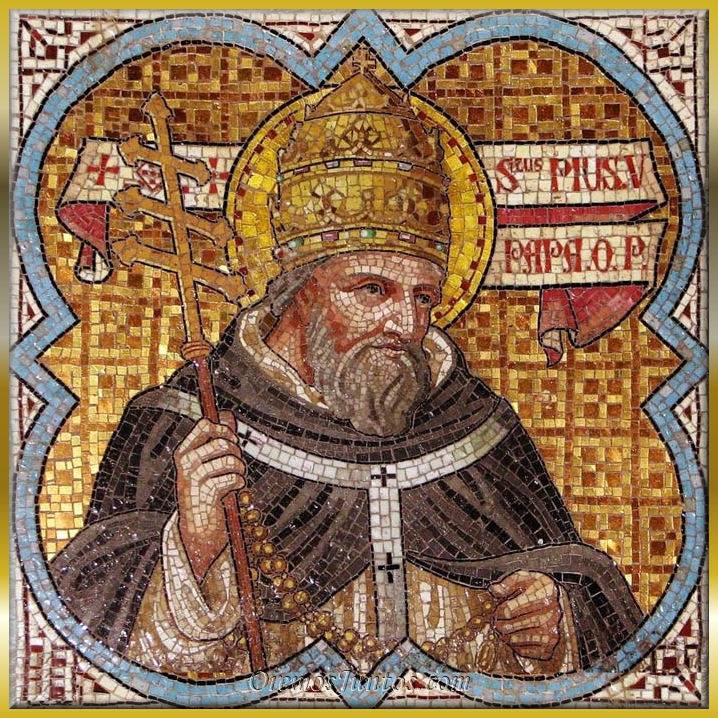
St Pius V

Today, we have the liturgical memorial of Pius V, pope and friar in the Order of Preachers.

Elected to the Chair of Saint Peter he renewed with great mercy and apostolic vigor, according to the decrees of the Council of Trent, the divine worship of the Latin Church plus gave new life to Christian morality and the ecclesiastical discipline and promoted the propagation of faith.

May St. Pius V intercede for us today and always.

Easter Sunday answers our questions

Friends, As we approach the great feast of Easter –joy, hope, promise, salvation– let us consider the words from the 2019 Easter message of the Norbertine Abbot General, Jos Wouters. Let us keep each other in prayer and friendship.
 
The Abbot writes:
 
Some years ago, I preached the retreat during Holy Week at the abbey: an introduction to the mysteries celebrated in the liturgy of these holy days. To one of our confreres I admitted that it was far easier to speak about Jesus’ Passion, suffering and anguish preceding the resurrection, than about Easter itself.
 
He understood. He said that we all understand physical suffering, fear of death, betrayal and utter loneliness. But Easter points at something different and altogether new. All of us are familiar with the power of death and its forbidding presence in our daily life and in the world. Hope, faith and trust belong to the realm of grace. They are Gods’ gift. It is evident that we question ourselves about the sense of our attempts to love, to strive for fraternity and solidarity, our longing to be really good and caring in this world. We seem powerless against the doom of destruction and decay, violence and injustice.
 
But illuminated by his encounter with the living Christ, Saint Paul said: “What is foolish in the eyes of the world has been chosen by God to shame the wise; what is weak in the eyes of the world has been chosen by God to shame the strong; what is insignificant and despised in the eyes of the world, what is nothing, God has chosen to destroy what is something (1 Corinthians 1: 27-29).”
 
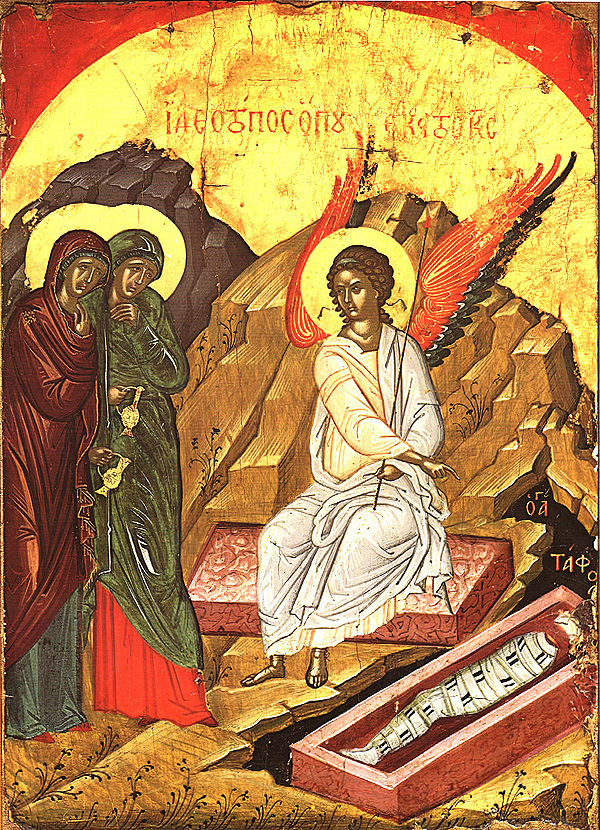
The gospel of Easter Sunday (John 20: 1-9) leads us every year again to the bud, the first gleam of the faith that has grown into the robust tree, the bright light that lives and shines forth in the proclamation of the gospel in the Apostolic Church and in the life and teaching of the saints. The scene is a garden: a place of cherished life, life that is taken care of. In this garden stands the empty tomb where the dead body of Jesus had been laid down with respect and care. Slowly it would become clear that what seemed the end was in reality a new beginning.
 
The confusion of Mary of Magdala, the silence of Peter and the faith of the disciple who ran faster than Peter, but entered the tomb after him, are all signs of an encounter with new life, with hope that takes root in our own life when we meditate on this “nothing” that destroys evil and death, which seem so all-overpowering. The peaceful and silent garden in the morning brims with life. Together with Mary Magdalene, Peter and the nameless disciple, we need to attune our hearts to the unexpected newness, to this seed of hope that buds in the garden. The mute lips of the empty tomb inarticulately speak of the victory of the crucified Christ. God proclaims unambiguously that He recognizes himself in this powerless Messiah who loved to the end.
 
The liturgy of Easter-tide will lead us into the fullness of the Pascal creed. We will need, however, to return often to this hesitant beginning. It is so tempting to give in to world-wise cynicism which is nothing but civilly disguised despair. Violence, decay, corruption, abuse – all forms of evil seem so imposing and powerful. In the words of psalm 11, 3 (11:3) we could ask “When the foundations are being destroyed, what can the righteous do?” The gospel of Easter Sunday answers this question. All genuine love and care are stronger than life-destroying evil. Death does not have the last word. The Father of Jesus does. And He is love.
May we find ways to live up to this faith in our communities as they are. May God’s Spirit be your breath.
 
Easter 2019,
Jos Wouters, o.praem., abbot-general
 
#Norbertine
#OPraem

Our Lady of Paris 2019

On Christmas Day in 1886 Paul Claudel attended High Mass at the cathedral of Notre Dame in Paris. He was not particularly moved by the ceremony, which probably was presided over by the newly appointed archbishop. Claudel left and then returned for vespers. “It was the gloomiest winter day and the darkest rainy afternoon over Paris,” he wrote. He listened to the psalms and the Magnificat.

For the rest of his life he recalled that he “stood near the second pillar at the entrance to the chancel, to the right, on the side of the sacristy.” There one finds a fourteenth-century statue of the Virgin and Child. “Then occurred the event which dominates my entire life,” he wrote.

“In an instant, my heart was touched and I believed. I believed with such a strength of adherence, with such an uplifting of my entire being, with such powerful conviction, with such a certainty leaving no room for any kind of doubt, that since then all the books, all the arguments, all the incidents and accidents of a busy life have been unable to shake my faith, nor indeed to affect it in any way.”

UPDATE:

THE VAULT HELD!!! the fire stayed ABOVE it!! Only a small part of the vault collapsed. The interior seems to be relatively untouched.

Apparently the great rose window is intact, though the two smaller ones (the north and south windows) are probably gone.

French reporter who was allowed into Notre Dame de Paris with President Macron on a brief 5-7 minute tour is saying the inside is largely preserved, with the Altar and the walls intact, even the rows of chairs still in place. There is a massive hole in the roof obviously. The Crown of Thorns and the Cloak of Saint Louis had been removed previously safe.