Welcoming the Nashville Sisters in Scotland: love conquers everything

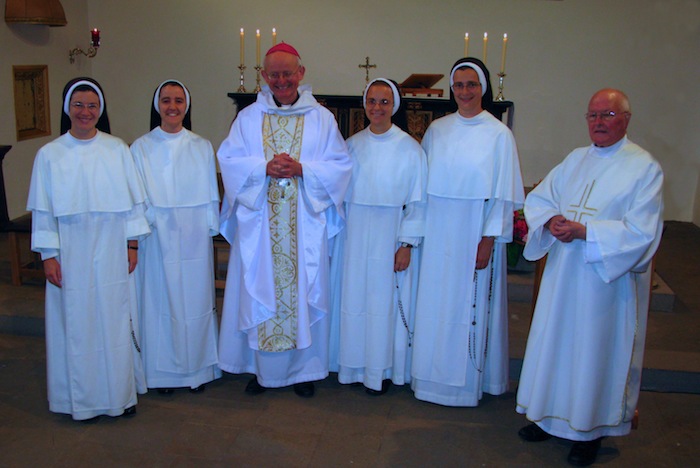
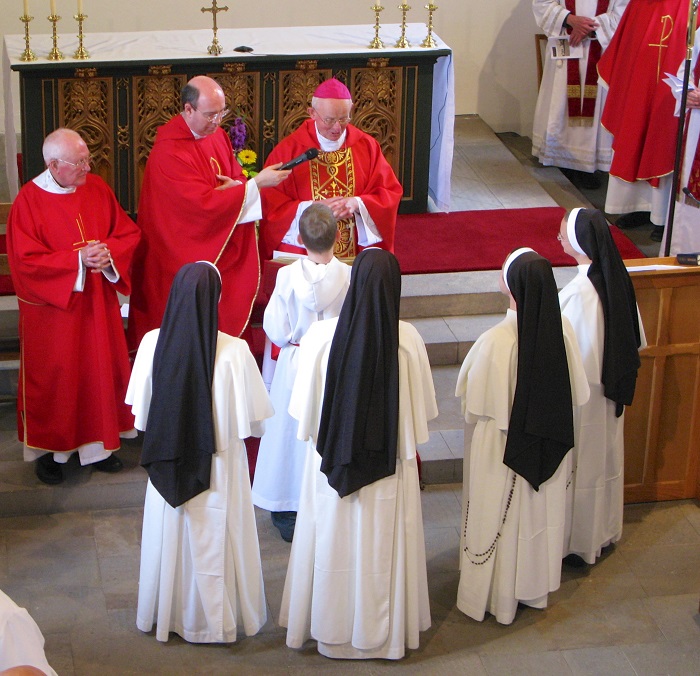
You may seen the story in the Catholic press the other day that four Nashville Dominican sisters began a band new mission in the Diocese of Aberdeen Scotland.

Benedictine Bishop Hugh Gilbert preached the following brilliant  homily. He touches on the great humanity of the current situation and also on the theological underpinnings of what’s going on today. His homily is touch on the Pentecost experience (the coming of the Holy Spirit), what the nature of vocation, church, sacrament, Christian witness, hope, evangelization is, and how these facets are life-giving.

The Dominicans will be living at Greyfriars Convent in Elgin, a place found by the Franciscans in 1479. This latest Nashville Dominican venture adds to their mission in 19 US dioceses, plus Italy, Canada, Australia and now Scotland. At this point in their history, the Nashvilles boldly and yet humbly say that their numbers tally about 300 women.

Herewith is Bishop Hugh’s August 24th homily for your reflection today:

What is happening today?

I’m old enough to remember Westerns. And here we are, wagons drawn close, feeling our last days have come and our scalps about to be removed, when – lo and behold – the US 7th Cavalry appears over the hill. Here they are, armed not with carbines but rosaries. And we can breathe again.

What is happening today?

Well, first of all, a building, this place, Greyfriars, is coming to life again. It was founded thirteen years before Columbus touched land in the Americas and is now coming back to life thanks to Americans. It has been most thoughtfully readied by Deacon Vincent, Fr James and others. And now it is resuming its original purpose. This is something that always lifts the spirits. It has been the experience at Pluscarden, and twice now it has been the experience here – once in the 1890s thanks to the Marquis of Bute and the Sisters of Mercy, and now once more, after a few years of silence, thanks to the Dominican Sisters of St Cecilia. In a booklet about the parish of St Sylvester’s Elgin and St Columba’s, Lossiemouth, Fr Colin writes, ‘God is not in the business of letting people down.’ These revivals, resumptions, resurrections of holy places are a sign of that. ‘Yours is an everlasting kingdom’, said the Psalm, ‘your rule lasts from age to age’. Here let me tell a story. Last September I was at a course in Rome for new bishops. A new bishop from the States approached me. We have met before, he said. So it was. Before becoming bishop, he and another priest had visited Pluscarden, and I had met him then. He seemed to know the North of Scotland very well. It transpired he had friends among the Sisters of Mercy, in Dundee and here. I told him that the Sisters had now gone (as he knew) and (as he didn’t) that I had approached the Nashville Dominicans. Then he astonished me, ‘Do you know, ever since I heard that convent was empty I’ve been praying the Nashville Dominicans would fill it.’ And he went on, ‘If you want to re-evangelise Scotland, they’re the people who’ll do it. I’ll write to the Prioress General, tell her she must accept your invitation, and I’ll pay the fare over for one of the sisters.’ All of which he did. God seems to be in the business of answering prayers as well. So, at the back of today, there are the prayers of Edward Rice, Auxiliary Bishop of St Louis, Missouri. God bless him! And so on the feast of the Holy Rosary last year, the Prioress General, Mother Anne Marie Carlovic, and her Council flew in for a first visit. On the feast of St John Ogilvie this year, she and others flew in for a second. And on the feast of St Bernard, our US cavalry galloped over the hill, or more precisely descended from aeroplanes.

Yes, today this place of prayer is coming alive again – alive with God’s People, God’s Word, with the Body and Blood of the risen Christ, with the Divine Office, private prayer. And what happens when that happens? It means we ‘see heaven opened and above the Son of Man, the angels of God ascending and descending.’ It means that Jacob’s ladder, with its busy angels, after lying on the ground gathering dust, is being set up again. Surely the angels are delighted. Surely the stones are glad. Surely those buried here are pleased. ‘You will see heaven open’, Jesus tells that first little group, the beloved disciple and Andrew, Peter, Philip and Nathaniel (Bartholomew). You will see what Jacob really saw in his vision, without realising it. You will see the Son of Man lifted up, lifted up on the Cross, as on the Cross of San Damiano above the rood screen. You will see the union of man and God remade, the house of God rebuilt. You will see ‘Jerusalem the holy city, coming down from God out of heaven.’ In a living house of prayer, under signs and symbols, in the humility of faith, all this is verified. Here Christ can gather up what’s in our hearts and lift it up to the Father. Here God’s blessing comes down into our lives. I think the sisters still await their internet connection. There’s a far more effective connection already in place.

That is one thing happening today, from today.

And here is another. Sisters, thanks to you the religious life in this diocese is being enriched. And so we are all being enriched. By religious life, I mean the consecrated life, the life of those who profess the Gospel counsels of chastity, poverty and obedience, usually lived in community. In the Middle Ages, Elgin was full of such – Dominicans, Franciscans, the Cistercians at Kinloss, the Benedictines at Urquhart, the Valliscaulians at Pluscarden. It would be interesting to tell the history in the diocese since the 19th c. And certainly, we’re blessed for what we have now: the Sisters of the Sacred Heart and the Franciscan Missionaries of Mary, individual representatives of several congregations, the hermits, the Sons of the most Holy Redeemer and the brethren of Pluscarden. But would that there were more, may more! And it’s a very happy thing that now there are more. Four more, and not just four more. With you come your some 300 fellow-sisters, supporting you in thought and prayer. With you, Sisters, comes a whole tradition of holiness and spirituality. With you come St Dominic and Thomas Aquinas and Catherine of Siena and Meister Eckhart and John Tauler, and all the rest, a whole inspiration. We already have the monks, with antiquity on their side. We have disciples of the saints and founders of the 18th and 19th cc. But we have lacked the mendicants of medieval origin. And why is this coming a happy thing? Not just for those of us who are religious, but for all of us. The religious life, as history ancient and recent shows, is not all glory. Corruptio optimi pessima. But when it is good, it is very good. Every renewal of the Church has had a renewal of religious life at its heart. It is a barometer of the general state of the Church at any given time or place. I think a Church in which the consecrated life is weak or absent is like a Holy Trinity where the Holy Spirit is asleep. The Holy Spirit is the life and joy and generosity of God in person. He is the flowing love of the Father and the Son poured into one divine person. And so, as a created echo, is the consecrated life within the Church. It is all this in many human persons. There is a vision to suggest here. Through faith and baptism, all of us become sons and daughters of God in Christ, in the Son, the Second Person of the Trinity. We all become filial, Second Person-persons as it were. Then those who are ordained are given a share in the fatherhood of the First Person, the Father. And those who are consecrated somehow find themselves under the sign of the Third, the Holy Spirit. And the Holy Spirit is the Giver of Life, the Inspirer, the Comforter. He is from the Father and the Son and the Bond between them. And when the consecrated life is being lived by women or men with freshness and zeal, everyone – laity and clergy – is inspired and comforted, bonded and united. The Trinity is one, and the Church is one, and the different states of life flow in and out of one another, enhancing and enriching. Don’t we all feel this here and today? Isn’t it striking that such a small beginning can already have such an uplifting effect? That we already feel re-charged?
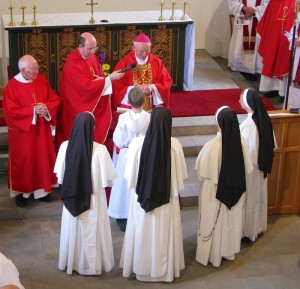
Scottish welcome of OP 2013I was wondering where in Dominican history there was a precedent for today. I have found one. One of St Dominic’s early foundations for nuns was in Rome, at San Sisto. Meanwhile, well to the north, in Bologna, a Lady Diana and some friends wanted to become Dominicans. We are in the 1220s. So Bl. Jordan of Saxony, St Dominic’s successor, pressed for four of the sisters in Rome to come north and help form this new community. Eventually Pope Honorius was persuaded to second the petition. He went to the convent in Rome to speak with the sisters. To quote the Chronicle: ‘the Pope said that he found it painful to drag any of them away from their monastery, but all the same it would be unfitting and improper to refuse to grant [such] a petition… So he commanded them, in virtue of the Holy Spirit and their vow of obedience, to choose four sisters who would be the most suitable to undertake this task, not forgetting that the eyes of God’s majesty were upon them. So four sisters, who had made profession in the hands of St Dominic and received the habit from him, came to the monastery of St Agnes [in Bologna] and remained in the community there until they died, mighty in the vigour of their holiness’.

So Sisters, your four predecessors from Rome to Bologna, and you, another Dominican quartet, from Nashville and New Orleans and Baltimore, to Elgin.

Coming ‘in virtue of the Holy Spirit and their vow of obedience’ – the Holy Spirit again.

‘Not forgetting that the eyes of God’s majesty were upon them’ – the God who loves you so much that he cannot keep his eyes off you.

‘Mighty in the vigour of their holiness’ – surely so!

And those hands of St Dominic… Benedictines make profession before the altar (super altare), Dominicans in the hands of their superior (in manibus), and ultimately ‘in the hands of St Dominic.’ The eyes of God’s majesty and the hands of St Dominic – may they keep you! And as so often in Dominican iconography, may Mary wrap you in her cloak!

What is happening today – thirdly and lastly? There’s a clue in today’s Collect for St Bartholomew / Nathaniel: ‘Grant that through the help of his prayers your Church may become for all the nations the sacrament of salvation.’

A ‘sacrament of salvation’. It’s a very Vatican II phrase, found in the Council four times, I think. ‘Christ founded his Church as the sacrament of salvation’ (AG 5). She was ‘solemnly manifested as such’ at Pentecost (LG 59). ‘Lifted up from the earth, Christ has drawn all to himself; rising from the dead he has sent his life-giving Spirit on the disciples and through that Spirit has established his Body the Church as the universal sacrament of salvation; sitting at the Father’s right hand he is continually at work in the world, so as to lead human beings to the Church, joining them more closely with himself through her and nourishing then with his own Body and Blood making them sharers in his glorified life’ (LG 48).  She is, then, ‘the universal sacrament of salvation’, ‘at once showing forth and putting into effect the mystery of God’s love for human beings’ (GS 45).

It’s this, this reality that, however discreetly, is being rekindled here today. It is, of course, always there, always true, always so. The Church is the sacrament of salvation. But we know, we’ve been reminded most bitterly recently, how that can be tarnished or obscured, how people’s experience of the Church – or at least of her representatives – can be of anything but salvation. That’s why today on the feast of an apostle, one of those twelve foundation stones, we pray that the Church ‘may become the sacrament of salvation’, may become more radiantly in our experience what she really is, what Christ established her and the Spirit anointed her as. And this not just for some, but ‘for all the nations’. I’m not saying this, Sisters, to lay an impossible burden on you. I’m simply trying to capture what your coming and presence is evoking in me, and not just me, I think. It’s a great hope. It’s a new evangelisation. It is a resurrection of the Church’s mission. It is everything implied in the ‘apostolic life’ that you as Dominicans strive to embody. ‘The Dominican Order exists to be useful to others’, a Dominican has written. Sisters, we are sure that you will be useful to us: with your faith, your youth, your healthy orthodox doctrine, your freedom of spirit, your initiative, your prayer, your love of Christ. It’s not going to get easier in Scotland being Christian and Catholic. And we are tired, very tired, of bad news. But love conquers everything. You, of the Order of Preachers, bring us Good News! Help us fall in love again with the Church. Help us and many others experience her as the sacrament of salvation ‘for all the nations’. Help us ‘see greater things’. Help us ‘see heaven laid open, and above the Son of Man, the angels of God ascending and descending.’
No need for a Protestant Giussani today: a brief response to Archie Spencer

Worshipping, preaching and witnessing Jesus Christ as the unique and only Savior of the world is a complicated issue for some Christians today.

A good refresher course in the study of Christ as Savior and Redeemer would be situated in the CDF document Dominus Iesus (2000), or something more substantive as Jesuit Father Edward Oakes’ recent book, Infinity Dwindled to Infancy: A Catholic and Evangelical Christology (Eerdmans, 2011). There are other books to recommend but I am not writing to make those suggestions.

Archie Spencer,ThD, an Evangelical Christian theologian wrote a piece titled: “We stand in need of Protestant Giussani today.” Dr Spencer is a competent theologian with interests in a wide variety of reformed and evangelical matters including Christology. He teaches Systematic Theology at Northwest Baptist Seminary (Canada). In fact, he’s interested in the Christological controversies Christianity faced in the first three centuries of salvation history, particularly the Alexandrian type. Spencer is also versed in the method of Communion and Liberation and its founder, Father Luigi Giussani.  In my opinion, Spencer wrote a well thought-out essay (noted above); Catholics and mainline Protestants ought to read Spencer’s article (and then re-read it) for he clarifies the key point of what it means to be saved by Jesus Christ. He, however, opens a can worms that many in the Protestant world find difficult to preach today: Truth is objective, personal, merciful and exclusive.

It can be argued that orthodox Catholics converge with the Evangelicals in ways (e.g., Christology) many mainline Protestants do not today. I appreciate much of what he proposes: Jesus Christ is either the center of my life, or He’s not; either Christ is my only Savior, or He’s not. Right-believing, right-worshipping and right-living Christians can’t utilize other methods for Christian life. BUT Dr Spencer doesn’t complete the case.

Respectfully, I note two glaringly missing points in Spencer’s article: (1) Christians can’t be satisfied with the separation of the Body of Christ (the Church) with various ecclesial communities; the divisions among Christians is a scandal for those baptized in Jesus Christ. The other matter missing (2) is the issue of right-worship –the sacred Liturgy and sacraments administered by a valid priesthood is the only realistic way to make Christ known, lived and proposed to the world. Protestant worship is missing some very essential matters of right belief. The lex orandi tradition is very limited in Evangelical, Lutheran and Anglican (Protestant) worship.

Hence, I would never be able to support the idea that Christians in other ecclesial communities need a “new” Giussani without wrestling in a more direct way with the fact that unity among Christians and a proper, that is, faithful worship are non-negotiables and that we can’t be satisfied with the religious status quo. To love Luigi Giussani and his Christocentricism is to be catholic and to live the Catholic faith. Christians, including Catholics and Orthodox have Luigi Giussani pointing the way, and exhorting us to live under the banner of Jesus Christ in a Church that lives properly the faith handed down to us from Apostolic times. I doubt that Giussani would say that it is a good thing to keep the divisions in Christianity alive and to worship without the Eucharist and the other sacraments as a reasonable proposal. Giussani always points in an uncompromising way to the fullness of truth as lived in the Roman Church (even to the point of accepting the Church of the millennium).

It is theologically and humanly incoherent to believe otherwise.

Queenship of Mary

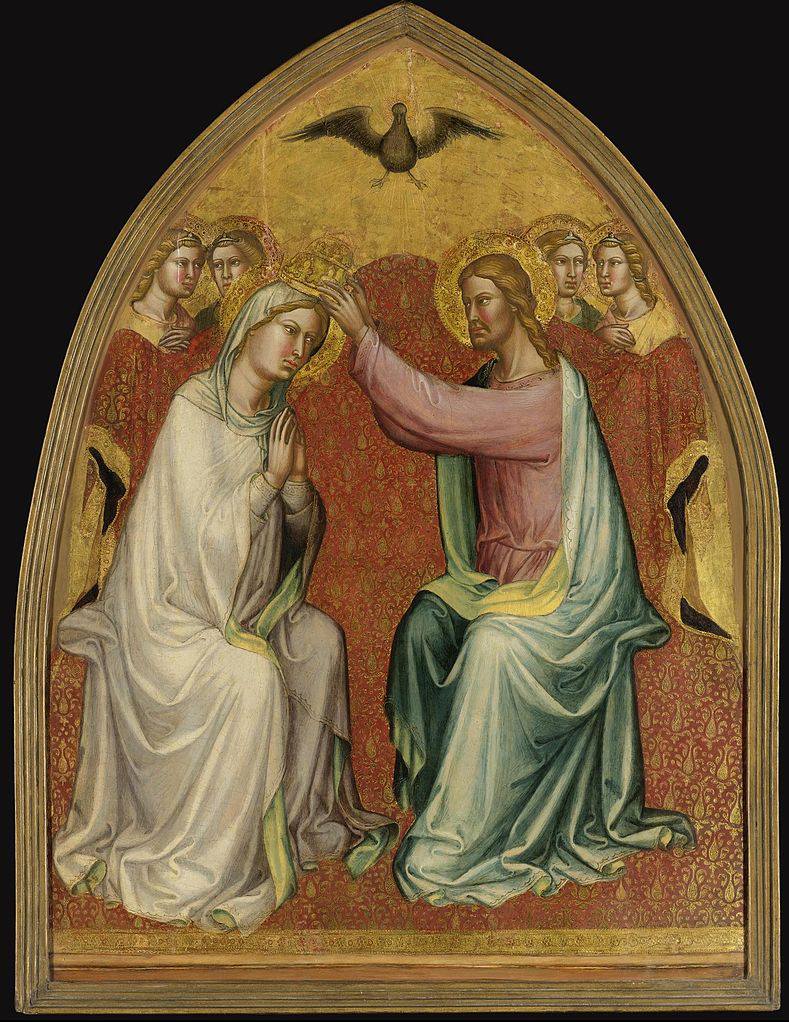
Today we celebrate the Feast of the Queenship of Mary, established by Pope Pius XII in 1954:

Whoever, therefore, reverences the Queen of heaven and earth – and let no one consider himself exempt from this tribute of a grateful and loving soul – let him invoke the most effective of Queens, the Mediatrix of peace; let him respect and preserve peace, which is not wickedness unpunished nor freedom without restraint, but a well-ordered harmony under the rule of the will of God; to its safeguarding and growth the gentle urgings and commands of the Virgin Mary impel us.

Ad Caeli Reginam, 51


On this Feast of the Queenship of Mary, let us for the Church and society:

Holy Mary, Queen of heaven, Mother of our Lord Jesus Christ and of his Church, who forsakes no one and despises no one, look upon me with an eye of pity, and entreat for me of your beloved Son the forgiveness of all my sins; that, as I now celebrate with affection your holy and immaculate conception, so hereafter, I may receive the prize of eternal blessedness, by the grace of him whom you, in virginity, brought forth, Jesus Christ our Lord: who, with the Father and the Holy Spirit, lives and reigns, in perfect Trinity, God for ever and ever. Amen.

(A prayer from the book, Maiden and Mother)

Baptismal rite changes

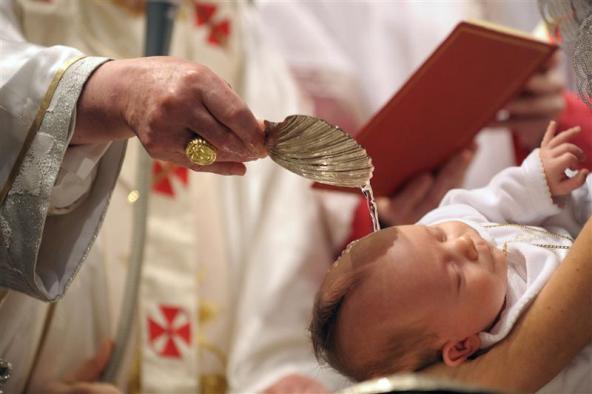
One of the last significant changes made in our Rite of Baptism was made shortly before the abdication of Pope Benedict XVI. This is the news that Sandro Magister speaks of in his article today, “Pope Benedict’s Parting Shot.”

The official vernacular texts are not yet available, but you can read all of what is expected in Magister’s article. Antonius Cardinal Cañizares, the Prefect of the Congregation For Divine Worship and the Discipline of the Sacraments signed the decree on 22 February 2013. The decreed was effective on 31 March 2013.

What Pope Benedict does is to tighten up our sacramental and ecclesiological theology by changing those phrases that have vague or merely generic language. I am not a generic Christian: I am a member of the Catholic Church in all the fullness that it implies. The sacrament of Baptism as lived in the Catholic Church is clear: the baptized person is made a member of the Body of Christ –the Catholic Church, he is an adopted child of God, his is washed of Original Sin and he is given a pledge of eternal life.

The decree’s opening paragraph reads:

“The gate of life and of the kingdom, baptism is a sacrament of faith, by which men are incorporated into the one Church of Christ, which subsists in the Catholic Church, governed by the successor of Peter and by the bishops in communion with him.”

The push back from some may come down to saying that the Pope emeritus was being overly fussy or causing more ecumenical controversy or exerting more ecclesiastical power. All of which, in my opinion, criticism that is not well-placed.

I am curious, as Sandro Magister is, why the Holy See has been quiet about this change. While it is not appropriate to second guess the Holy See but it seems like there is something of goof here by not letting the rest of the world know about the change in the rite of Baptism. Remember: Baptism is the gateway sacrament to all else in our personal and ecclesial history of salvation in Jesus Christ.

Strong Catholic Families: Strong Catholic Youth

We don’t keep the faith for ourselves (cf Lumen Fidei, ch 3): faith is meant to be contagious, it is meant to be lived full time, it is meant for others. As the metaphor of light indicates, light allows us to see, to encounter, to meet someone anew. That someone is Jesus Christ, and those who faithfully follow Christ. Faith is passed on in a personal way.

A new initiative I heard about today is “Strong Catholic Families: Strong Catholic Youth” is a great light, a wonderful meeting of others. Watch the video presentation.

Strong Catholic Families: Strong Catholic Youth is present in 60 dioceses as it connects parishes, schools, and families to develop a chain of solid links of faith. Catholic faith is not a private relationship of the “I” and “Thou” but a communio, a “We”, a reflection of an openness that exists among the members of the Holy Trinity: Father, Son, and Holy Spirit. We are never alone; faith is an invitation to others first given to each person that love, mercy, hope and salvation is possible; that happiness is possible today in this world.

I would hope that Benedictine monasteries can be centers for this good work of Strong Catholic Families: Strong Catholic Youth!!!  I am thinking this program would greatly assist the work of the new evangelization and faith formation programs.

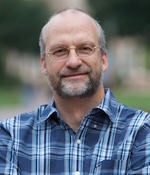
The origins of this new work is based on the work of a University of Notre Dame sociologist, Christian Smith. In addition to his teaching and research Smith also directs UNDs Center For the Study of Religion and Society.

Though I am an alum of UND, I don’t know Smith personally, but I am familiar with his works, especially his book Lost in Transition: The Dark Side of Emerging Adulthood (Oxford University Press, 2011). Professor Smith earned his doctorate at Harvard.

More info on Strong Catholic Families: Strong Catholic Youth is found at this link.

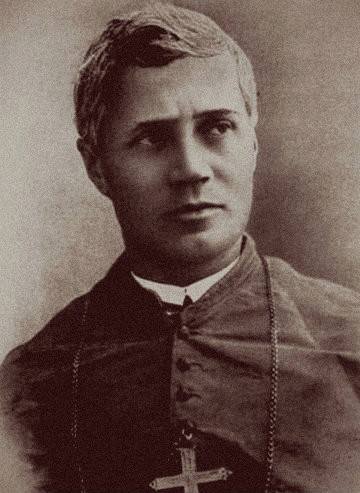
Saint Pius X


My hope is in Christ, who strengthens the weakest by His Divine help. I can do all in Him who strengthens me. His Power is infinite, and if I lean on him, it will be mine. His Wisdom is infinite, and if I look to Him for counsel, I shall not be deceived. His Goodness is infinite, and if my trust is stayed in Him, I shall not be abandoned.

Pope Saint Pius X

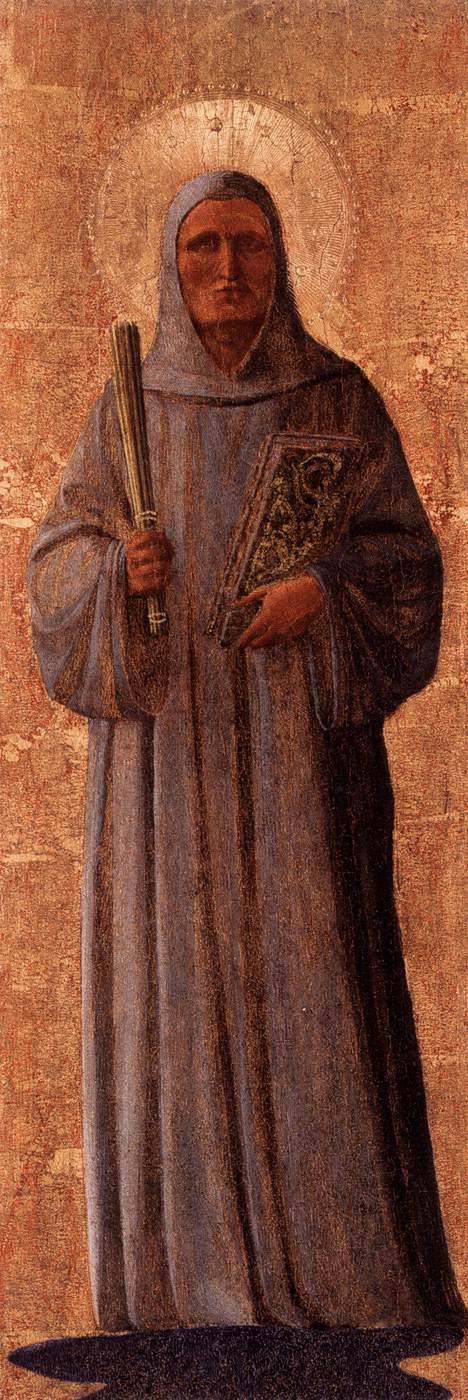
The freshness of Saint Bernard

Saint Bernard was the brother of Saint Humbeline. At 22, he and four of his blood brothers with 25 friends, entered the new form of monastic life at Citeaux; at some point later, another brother and his father joined him. The monks at the Abbey of Citeaux were reformed Benedictines. In a short time Bernard became the abbot of Clairvaux with a constituency of nearly 700. One of his spiritual sons became Blessed Eugene III, pope.

Bernard (+1153), Cistercian abbot, saint, and Doctor of the Church, is no easy thinker to face alone. You really do need God’s grace to help you get through his works. Challenging is a good word when thinking of Saint Bernard.

History credits Bernard with the foundation of no fewer than 163 monasteries in his lifetime. When Bernard died, historians labeled the Cistercians as the first true Order in the Church with nearly 343 communities. He singularly did more than any other for the Cistercian order than any.

As one Benedictine nun said of Saint Bernard, he was angry a lot of the time, a brilliant writer even when he nothing to say, at odds with Abelard, condemned for preaching the Second Crusade, and kind to Jews at a time when no one was kind to Jews (we know of a German rabbi saying his community received help and protection from the holy abbot).

Bernard’s love of family, affection for others, and capabilities are well-known, but so are his limitations. One of the power-broker churchmen of the time, Cardinal Haimeric, thought that Bernard was meddling in matters above above his competence. The Cardinal cleverly said, “It is not fitting that noisy and troublesome frogs should come out of their marshes to trouble the Holy See and the cardinals.”

And Bernard’s response, “”Forbid those noisy troublesome frogs to come out of their holes, to leave their marshes . . . Then your friend will no longer be exposed to the accusations of pride and presumption.”

One of the theological positions Bernard held was not holding to the doctrine of the Immaculate Conception of Mary. This doesn’t make Bernard a questionable man of the Church because the doctrine of the Immaculate Conception was not defined until the 19th century. And yet, he sang eloquently of the Virgin Mary.

Questions of the parameters of justification John Calvin to quote Bernard in his heretical teaching. Bernard was a solid theologian that led Pope Pius VIII to name him a Doctor of the Church and the “last of the Fathers.”

Saint Bernard of Clairvaux

A poetic text for this great liturgical memorial …

The Father’s light of glory has drawn in to itself
The holy Doctor Bernard,
Come, praise with him the Lord!

On earth he spoke of Jesus,
His birth in human flesh,
And found therein a meekness
Which turns our hearts to God.

The mysteries of the Virgin concealed in
Scripture’s word, He opened as a fountain
Of God’s abounding love.

His speech flowed deep with wisdom
As though a mountain lake
Containing saving waters ran down in streams of light.

We ask today assistance to truly
know ourselves, and in our hearts to savor
The presence of the Word.

To Father, Son and Spirit
All praise and honor be,
In truth and love coequal
For all eternity.

Blessed Guerric of Igny

I am reminded by my own heart that the the early morning is a particularly good time of the day to be clothed in a special silence, but there are time at dusk that the discipline of silence is helpful. This is an essential part of spiritual maturity, an adult faith in Divine Providence. Listening and speaking to the Trinity is done when the heart and mind are slowed, even word-less. Knowing and following God’s will is only possible if we give a certain amount of day to quiet, that is, silence. Not a punishing silence, not a hopeless silence, but a manner of being that helps us to see ourselves in action: the manifestation of the virtues of faith, hope, charity, justice, peace, perseverance, etc.

Blessed Guerric in his 28th sermon says,

“As the Christ-child in the womb advanced toward birth in a long, deep silence, so does the discipline of silence nourish, form and strengthen a person’s spirit, and produce growth which is the safer and more wholesome for being the more hidden.”

Silence, therefore, is a gift that allows us to enter more deeply into the revealed Word of God, the biblical narrative through the practice of lectio divina, the practice of prayerfully reading the sacred Scripture. It is, I am convinced, the new springtime of the Church as Benedict XVI said, proposing once again the ancient Christian practice. Most often we when we hear the words lectio divina we think of monastic reading where the person is immersed in God’s holy word with the distinct desire to seek the face of God, thus making a home for that Word in his heart.

The famous Cistercian father Blessed Guerric of Igny (c. 1070/80-1157) was influenced by Origen and whose formation was under Saint Bernard was quite insightful on many things when it came to liturgical theology and the monasteric life.

If you are inclined to read more about what this Cistercian father taught, you may want to pick up a copy of John Morson’s Christ the Way: the Christology of Guerric of Igny (Liturgical Press). But his liturgical sermons are worth every effort; they are published by Liturgical Press, too.

Blessed Guerric taught the following to his brothers lectio divina:

Search the Scripture.  For you are not mistaken in thinking that you find life in them, you who seek nothing else in them but Christ, to whom the Scriptures bear witness.  Blessed indeed are they who search his testimonies, seek them out with all their heart.  Therefore you who walk about in the gardens of the Scriptures do not pass by heedlessly and idly, but searching each and every word like busy bees gathering homey from flowers, reap the Spirit from the words. (Sermon 54)

Saint John Eudes

John Eudes (1601-80) who, as a child, made a vow of chastity.  He was educated by the Jesuits at the College of Caen, where it is said that he was conspicuous for piety; and, committed to the protection of the Virgin Mary. Eudes apparently would sign a covenant with the Blessed Mother in his own blood.

Following his education, Eudes joined the Fathers of the Congregation of the Oratory de Bérulle, and was ordained priest at Paris. His natural capacities were perfected by grace: he had an intense love of neighbor and the education of the young for service in the priesthood Jesus Christ. In the 20 years of Oratorian life Eudes was elected Rector of the Oratorian house at Caen, but instead left the fraternity and set on his own drawing together priests under the inspiration of the holy names of Jesus and Mary for to do what his heart desire, a new seminary.

Formed by the Jesuits and Oratorians, John Eudes was zealous for the Kingdom. He promoted devotion to the Hearts of Jesus and Mary which it seems he was singular in doing. Today’s devotion to the Immaculate Heart of Mary is closely linked to Eudes.

Historians tells us that John Eudes courageously resisted the heretical doctrines of the Jansenists, he preserved unalterable obedience towards the Chair of Peter.

Pope Pius X beatified John Eudes and Pope Pius XI canonized him while making Saint John Eudes a saint to be honored on the universal calendar of the Church with an Office and Mass.