The Mendicant witness of Christ and the Church is urgent & irresistible

The renewal of religious life is also one of Pope Benedict’s priorities. AND boy does it need it. The general state of religious life in this country at least, is circling the drain. Religious life’s sad state is not merely about gaining new recruits, or wearing habits or working with the marginalized, but being faithful to Christ and the Church today, not some fantasy of what one “guru” hopes the Church to be. There are notable exceptions to this evaluation, but even those orders getting vocations there are concerns with the institutional rot in the ranks, and therefore they are fragile. Benedict’s general audience address yesterday shows us the breadth and depth of the work needed to be done AND the desire to see the mendicant life thrive and contribute to the upbuilding of the Kingdom. Being faithful to the charism of the order and to the Magisterium of the Church are essential components to any hope of renewal. The Pope said:


At the beginning of the new year, we look at the history of Christianity, to see how a history develops and how it can be renewed. In it we can see that it is the saints, guided by the light of God, who are the genuine reformers of the life of the Church and of society. Teachers by their word and witnesses with their example, they know how to promote a stable and profound ecclesial renewal, because they themselves are profoundly renewed, they are in contact with the true novelty: the presence of God in the world.


Such a consoling reality — that in every generation saints are born and bear the creativity of renewal — constantly accompanies the history of the Church in the midst of the sorrows and the negative aspects of her journey. We also see come forth, century by century, the forces of reform and of renewal, because the novelty of God is inexorable and always gives new strength to go forward.
 

St Francis detail3.jpg

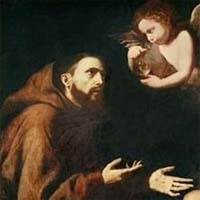
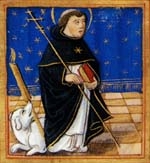
This was what happened in the 13th century, with the birth and the extraordinary development of the Mendicant Orders: a model of great renewal in a new historic period. They were called thus because of their characteristic of “begging,” namely, of going to the people humbly for economic support to live the vow of poverty and to carry out their evangelizing mission. Of the Mendicant Orders that arose in that period, the most notable and most important are the Friars Minor and the Preaching Friars, known as Franciscans and Dominicans. They have these names because of their founders, Francis of Assisi and Dominic de Guzmán, respectively. These two great saints had the capacity to wisely read “the signs of the times,” intuiting the challenges that the Church of their time had to face.


A first challenge was represented by the spread of several groups and movements of faithful that, although inspired in a legitimate desire for authentic Christian life, often placed themselves outside of ecclesial communion. They were in profound opposition to the rich and beautiful Church that developed precisely with the flourishing of monasticism. In recent catecheses I reflected on the monastic community of Cluny, which had always attracted young men and, therefore, vital forces, as well as goods and riches. Thus logically developed, initially, a Church rich in property and also immobile. Opposed to this Church was the idea that Christ came on earth poor and that the true Church should be, in fact, the Church of the poor; a desire for true Christian authenticity was thus opposed to the reality of the empirical Church.
 

St Dominic and his dog.JPG

This brought about the so-called pauper movements of the Medieval Age. They harshly contested the lifestyles of priests and monks of the time, accused of having betrayed the Gospel and of not practicing poverty as the first Christians, and these movements counterpoised to the ministry of the bishops their own “parallel hierarchy.” Moreover, to justify their choices, they spread doctrines that were incompatible with the Catholic faith. For example, the movement of the Cathars or Albigensians proposed again old heresies, such as depreciation and contempt of the material world — opposition to wealth quickly became opposition to material reality as such — the negation of free will, and then dualism, the existence of a second principle of evil equated with God. These movements had success, especially in France and Italy, not only because of their solid organization, but also because they denounced a real disorder in the Church, caused by the less than exemplary behavior of several representatives of the clergyOn the other hand, the Franciscans and Dominicans, in the footsteps of their founders, showed that it was possible to live evangelical poverty, the truth of the Gospel, without separating from the Church; they showed that the Church continued to be the true, authentic place of the Gospel and Scripture. Thus, Dominic and Francis drew, precisely from profound communion with the Church and the papacy, the strength of their witness.


With an altogether original choice in the history of consecrated life, the members of these orders not only gave up possession of personal goods, as monks had since antiquity, but even wanted real estate and goods put in the name of the community. In this way they intended to give witness of an extremely sober life, to be in solidarity with the poor and trust only in Providence, to live every day by Providence, in trust, putting themselves in God’s hands. This personal and community style of the Mendicant Orders, joined to total adherence to the teaching of the Church and her authority, was greatly appreciated by the Pontiffs of the time, such as Innocent III and Honorius III, who gave their full support to these new ecclesial experiences, recognizing in them the voice of the Spirit.


And fruits were not lacking: The poor groups that had separated from the Church returned to ecclesial communion or, gradually, were re-dimensioned until they disappeared. Also today, though living in a society in which “having” often prevails over “being,” there is great sensitivity to examples of poverty and solidarity, which believers give with courageous choices. Also today, similar initiatives are not lacking: movements, which really begin from the novelty of the Gospel and live it radically today, putting themselves in God’s hands, to serve their neighbor. The world, as Paul VI recalled in Evangelii Nuntiandi, willingly listens to teachers when they are also witnesses. This is a lesson that must never be forgotten in the endeavor of spreading the Gospel: to live first of all what is proclaimed, to be a mirror of divine charity.
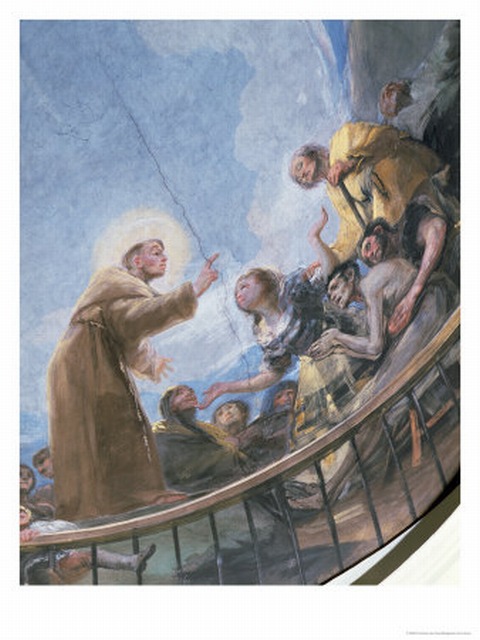
 

St Anthony Preaching  Detail from the Miracle of St Anthony of Padua  from the Cupola 1798.jpg

Franciscans and Dominicans were witnesses, but also teachers. In fact, another widespread need in their time was that of religious instruction. Not a few lay faithful, who lived in greatly expanding cities, wished to practice a spiritually intense Christian life. Hence they sought to deepen their knowledge of the faith and to be guided in the arduous but exciting path of holiness. Happily, the Mendicant Orders were also able to meet this need: the proclamation of the Gospel in simplicity and in its depth and greatness was one objective, perhaps the main objective of this movement. In fact, with great zeal they dedicated themselves to preaching. The faithful were very numerous, often real and veritable crowds, which gathered to hear the preachers in the churches and in places outdoors — let us think of St. Anthony, for example. They dealt with themes close to the life of the people, especially the practice of the theological and moral virtues, with concrete examples, easily understood. Moreover, they taught ways to nourish the life of prayer and piety. For example, the Franciscans greatly spread devotion to the humanity of Christ, with the commitment of imitating the Lord. Hence it is not surprising that the faithful were numerous, women and men, who chose to be supported in their Christian journey by the Franciscan and Dominican friars, sought after and appreciated spiritual directors and confessors. 


Thus were born associations of lay faithful that were inspired by the spirituality of Sts. Francis and Dominic, adapted to their state of life. It was the Third Order, whether Franciscan or Dominican. In other words, the proposal of a “lay sanctity” won many people. As the Second Vatican Council recalled, the call to holiness is not reserved to some, but is universal (cf. Lumen Gentium, 40). In every state of life, according to the needs of each, there is the possibility of living the Gospel. Also today every Christian must tend to the “lofty measure of Christian life,” no matter what state of life he belongs to!


The importance of the Mendicant Orders grew so much in the Middle Ages that lay institutions, such as labor organizations, ancient corporations and even civil authorities, often took recourse to the spiritual consultation of members of such orders for the writing of their regulations and, at times, for the solution of internal and external opposition. The Franciscans and Dominicans became the spiritual leaders of the Medieval city. With great intuition, they put into practice a pastoral strategy adapted to the transformation of society. Because many people were moving from the countryside to the cities, they placed their monasteries no longer in rural but in urban areas. Moreover, to carry out their activity for the benefit of souls, it was necessary to move in keeping with pastoral needs


With another altogether innovative choice, the Mendicant Orders abandoned the principle of stability, a classic of ancient monasticism, to choose another way. Friars and Preachers traveled from one place to another, with missionary zeal. As a consequence, they gave themselves an organization that was different from that of the majority of monastic orders. In place of the traditional autonomy that every monastery enjoyed, they gave greater importance to the order as such and to the superior-general, as well as to the structure of the provinces. Thus the mendicants were in general available for the needs of the universal Church. This flexibility made it possible to send friars more adapted to specific missions and the Mendicant Orders reached North Africa, the Middle East and Northern Europe. With this flexibility, missionary dynamism was renewed.


Another great challenge was represented by the cultural transformations taking place at that time. New questions made for lively discussions in the universities, which arose at the end of the 12th century. Friars and Preachers did not hesitate to assume this commitment as well and, as students and professors, they entered the most famous universities of the time, founded centers of study, produced texts of great value, gave life to true and proper schools of thought, were protagonists of scholastic theology in its greatest period, and significantly influenced the development of thought. 
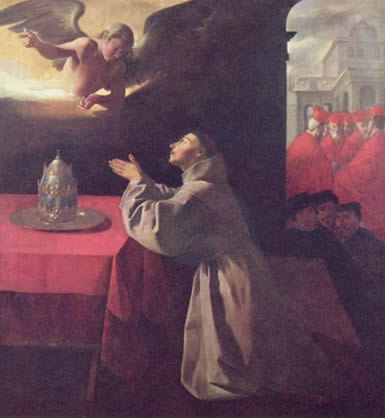
 

St.Bonaventure.jpg

The greatest thinkers, Sts. Thomas Aquinas and Bonaventure, were mendicants, operating in fact with this dynamism of the new evangelization, which also renewed the courage of thought, of dialogue between reason and faith. Today also there is a “charity of and in truth,” an “intellectual charity” to exercise, to enlighten intelligences and combine faith with culture. The widespread commitment of the Franciscans and Dominicans in the Medieval universities is an invitation, dear faithful, to make oneself present in places of the elaboration of learning, to propose, with respect and conviction, the light of the Gospel on the fundamental questions that concern man, his dignity, and his eternal destiny. Thinking of the role of the Franciscans and Dominicans in the Middle Ages, of the spiritual renewal they aroused, of the breath of new life that they communicated in the world, a monk says: “At that time the world was growing old. Two orders arose in the Church, from which it renewed its youth, like that of an eagle” (Burchard d’Ursperg, Chronicon).


Dear brothers and sisters, let us indeed invoke at the beginning of this year the Holy Spirit, eternal youth of the Church: May he make each one of us feel the urgency of giving a consistent and courageous witness of the Gospel, so that saints will never be lacking, who make the Church shine as a Bride always pure and beautiful, without stain and without wrinkle, able to attract the world irresistibly to Christ, to his salvation.

Blessed Odoric Matiussi of Pordenone

Bl Odoryk Pordenone.jpgHow beautiful on the mountains are the feet of the man who bring tidings of peace, joy and salvation.

God our Father, through the apostolic ministry of blessed Odoric You made Your Church grow, shedding the light of the Gospel on many oriental peoples. Grant us through his prayers to stand fast in the faith and to remain constant in the hope of the gospel which he preached.
This Franciscan Friar is remembered for his preaching the Gospel in the far reaches of Asia. History also tells us that he traveled on diplomatic missions in China, India and Mongolia. He was well-known and appreciated by the laity. Blessed Odoric ranks just behind Marco Polo for his travel in foreign lands and understanding other cultures. He wrote of his explorations which are preserved in as many as 73 manuscripts.

Benedict meets an admirer, Susanna Maiolo

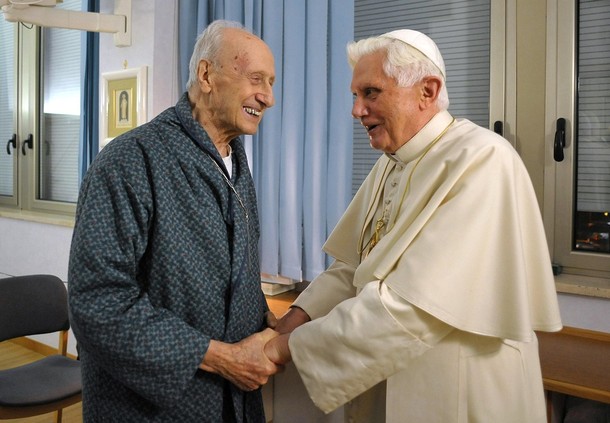
At the end of the general audience today, Pope Benedict met privately, for a brief time, with Susanna Maiolo and 2 members of her family. You’ll recall the unpleasant incident of Ms Maiolo taking down the pope and a cardinal. Ms. Maiolo expressed her regret for what happened at the celebration of the night Mass for Christmas at St Peter’s Basilica, and for his part, the Holy Father gave her his forgiveness and expressed good wishes.

ER & B16.jpg
In the confusion of the event, French Cardinal Roger Etchegaray, 87, who lives with frail health, fell to the basilica floor breaking a femur. He’s recovering at the Gemelli Hospital where he and the pope enjoyed a visit on January 9th.

Saint Hilary of Poitiers


St Hilaire Poitiers.jpg

Saint Hilary worked tirelessly to defend the faith from wrong-thinking Christians, typically called heretics. What follows is Hilary’s teaching on God the Father.

It is the Father from whom everything that exists has been
formed. He is in Christ and through Christ the source of all things. Moreover,
His being is in Himself and He does not derive what He is from anywhere else,
but possesses what He is from Himself and in Himself. He is infinite because He
Himself is not in anything and all things are within Him; He is always outside
of space because He is not restricted; He is always before time because time
comes from Him…. But, God is also present everywhere and is present in His
entirety wherever He is. Thus, He transcends the realm of understanding,
outside of whom nothing exists and of whom eternal being is always
characteristic. This is the true nature of the mystery of God; this is the name
of the impenetrable nature in the Father.

(On the Trinity, Bk. 2, Ch.6; ML 10,
54; FC XXV, 39-40) 

The Liturgical prayer for Saint Hilary may be prayed here.

What a difference a Motu Proprio makes

… sing to the tune of “What a difference a day makes


What a difference a Motu Proprio makes 
Twenty-four little hours 
Brought the sun and the flowers 
Where there used to be rain 

My yesterday was blue, dear 
Today I’m part of you, dear 
My lonely nights are through, dear 
Since you said you were mine 


What a difference a Motu Proprio makes 
There’s a rainbow before me 
Skies above can’t be stormy 
Since that moment of bliss, that thrilling kiss 

It’s heaven when you find Latin on your menu

What a difference a Motu Proprio makes
And the difference is you 


What a difference a Motu Proprio makes 
There’s a rainbow before me 
Skies above can’t be stormy 
Since that moment of bliss, that thrilling kiss 

It’s heaven when you find Latin on your menu 


What a difference a Motu Proprio makes
And the difference is you 


Thanks to MEL for making this available.

Our Lady of Banneux: The Blessed Virgin of the Poor

OL Banneux.jpg

Mary, the Mother of God, introduced herself as “I am the Blessed Virgin of the Poor” to an 11 year old girl in 1933. I am not all that familiar with this devotion to Our Lady of Banneux, but it is very appealing to me because of the gentleness of the vision and connection with the poor and the sick.

Read an account of this Marian apparition.

A Litany to Our Lady of Banneux

This video clip gives a good introduction into this new (relatively speaking) title of Our Lady.
Bob & Penny Lord did a video on Banneux
The Congregation for the Doctrine of the Faith outlines what makes for a legitimate Marian apparition; an unofficial translation of the 1978 French document may be read here.

Saint Meinrad receives grant for youth program


Saint Meinrad Seminary and School of Theology, St.
Meinrad, IN, has been awarded an $895,000 grant from Lilly Endowment Inc. of
Indianapolis. The grant will be used as supplemental support for the “One
Bread, One Cup
” youth liturgical leadership program.


The funds will underwrite
a portion of the operating expenses of the program for five years. During that
time, Saint Meinrad will continue to build an endowment to replace the grant as
a source of operating revenue. Other costs of the program are covered by
participant fees.


“Lilly Endowment has played a crucial role in supporting our
program over the years,” said Fr. Godfrey Mullen, OSB, interim manager for the
“One Bread, One Cup” program. “Their support empowers Saint Meinrad to pass on
the Benedictine heritage of community and liturgy to another generation of
Catholics. Catholic youth and those who serve them will benefit greatly from
‘One Bread, One Cup’ because of the generosity of the Lilly Endowment.”

Continue reading Saint Meinrad receives grant for youth program

Understanding Atheism

Dominican Father Brian Davies is delivering the St Thomas Day Lecture entitled, “The New Atheism: Its Virtues and Its Vices,” on Thursday, January 28, 2010 at 7 p.m. at the Church of St Vincent Ferrer (Lexington & 66th Street, NYC).

Father Davies is a Dominican of the English Province but of Welsh heritage and a professor of philosophy at Fordham University

Baptism

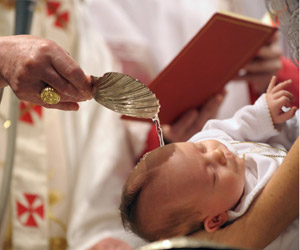
A substantial part of the Pope’s Sunday Angelus address is worth thinking about: the reality of Baptism. Why? Because I think many of us have yet to grasp some of the essential points of what the Catholic Church believes and teaches. What I notice, as you may have, that even the clergy have a faulty understanding of what the sacrament of Baptism is meant to do for the person. It is not a social event for the family. It is not an opportunity to quiet the screams of family members (grandma) regarding “the way it is done in this family”, etc. Baptism is about a life in Christ. Period.

BUT what is the sacrament of Baptism all about? At the time of baptizing children or baptizing adults we are given a supreme gift by God: love. Let me briefly explain what baptism is and what it gives to us. These points don’t exhaust the teaching and the conversation of what happens when one is baptized:

A. there’s a forgiveness of sins –the baptized person “dies to sin” (Romans 6); for the adult person there is repentance and deliberate renunciation of personal sin, AKA, conversion;

B. there’s a configuration to Christ, that is, a person comes to a close union with Jesus: baptism unties the Christian with Christ–it is a union of mind and will; the person is made new; the the baptized person is a sharer in Christ’s own paschal mystery (life, death, resurrection and ascension, Romans 6:1-11); the soul is changed permanently, which we call sacramental character;

baptizing.jpg

C. the baptized person is given the gift of the Holy Spirit–he or she is “re-generated” in the Holy Spirit (1 Cor. 12:13); the gift of the Holy Spirit is personally present and dwelling in each person; the Holy Spirit gives eache person the grace of becoming sons and daughters of God the Father, also the Spirit gives each person the power to say, “Abba, Father” (Romans 8:15; Galatians 4:6): St Paul is clear, by the Holy Spirit we can utter the holy name, Jesus Christ and call Him “Lord”;

D. as baptized persons we have a new relationship with God the Father as adopted children of God; this new relationship speaks of our destiny–God wants us to be saved–He offers each person salvation through Jesus Christ AND His Church;

E. baptism gives each person membership in the Church, not like a membership at a gym or a country club or Sam’s Club; we are brought into, incorporated in the Church as a communion of faith and a communion of saints; in the Church we receive grace AND we work out our salvation through the worshipping community and together as a community in mission to realize the Gospel.
And now the Pope’s address:

The Baptism of the Lord [the feast celebrated this past Sunday, Jan 10] suggests quite well the general sense of the Christmas festivity in which the theme of “becoming sons of God” thanks to the only-begotten Son’s taking on of our humanity constitutes a dominant element. He became man so that we could become sons of God. God is born so that we could be re-born.


These concepts continually return in the liturgical texts of Christmas and constitute a powerful motive for reflection and hope. We think of what St. Paul writes to the Galatians: “God sent his Son, born of a woman, born under the law, to ransom those under the law, so that we might receive adoption” (Galatians 4:4-5); or again, of St. John in the prologue to his Gospel: “To those who received him he gave the power to become sons of God” (John 1:12). This stupendous mystery that is our “second birth” — the re-birth of a human being from “above,” from God (cf. John 3:1-8) — is realized and summarized in the sacramental sign of baptism.


With this sacrament man really becomes son — son of God. From that point the goal of his life consists in arriving at, in a free and conscious way, that which from the very beginning was his destination as man. “Become what you are” — represents the basic educational principle of the human person redeemed by grace. Such a principle has many analogies with human growth, where the relationship between parents and children passes, through separation and crisis, from total dependence to the awareness of being children, to recognition through the gift of life received and to the maturity and capacity to give one’s life. Born to new life through baptism, the Christian too begins his journey of growth in the faith, which will carry him to consciously invoke God as “Abba — Father,” turning to him with gratitude and living in the joy of being his son.


A model of society is also derived from baptism: that of being brothers. Fraternity cannot be established through an ideology, much less through the decree of just any power that has been set up. We recognize ourselves as brothers through a humble but profound awareness of being sons of the one heavenly Father. As Christians, thanks to the gift of the Holy Spirit received in baptism, we have the gift and task of living as sons of God and brothers, to be like “leaven” in a new humanity, united and rich in peace and hope. We are helped in this by the consciousness of having, besides a Father in heaven, a mother too, the Church, of whom the Virgin Mary is the perennial model. To her we entrust the newly baptized children and their families, and we ask for all the joy to be re-born every dayfrom above,” from the love of God, that makes us his children and brothers among ourselves.