Archimandrite Manuel Nin, rector of the Pontifical Greek College, Rome, Italy, published the following article in L’Osservatore Romano English Edition on February 24, 2010. The Church is more than a western experience and Nin’s article brings a richness here for reflection and appreciation.
Lent in the Western Syriac tradition is preceded by a tradition that begins with the Fast of the Ninevites, which has as its reference and model the people of Niniveh who converted after hearing the Prophet Jonah’s preaching.
In these days of fasting the deceased -priests, foreigners and faithful– are commemorated and this means that the Church and Western Syriac liturgical tradition are closely bound to pilgrimages to the holy places and the tombs of martyrs.
The Lenten Liturgy begins with what is called the “Monday of oil” and one of the hymns of St Ephrem gives us the key to its interpretation: “stained bodies are anointed with sanctifying oil with a view to expiation. They are purified but not destroyed. They descend marked by sin and arise as a child.”
This was originally a rite of anointing for catechumens that was later extended to all the faithful: the Liturgy also links it to the anointing at Bethany: “How gentle is the voice of the sinful woman when she says to the perfumer: “Give me the oil and tell me the price; give me the best quality oil and with it I shall mingle the sorrow of my tears, the better to anoint the first-born of the Most High; I trust in the Lord that through this oil he will forgive me my sins. The Lord see her faith and forgives her.”
The six Sundays of Lent take the name of the Gospel passage that is read: the miracle of Cana, the healing of the leper, the healing of the paralytic; the healing of the Centurian’s servant, the raising of the son of the widow Nain; the healing of the blind Bartimaeus. The Syriac Liturgy is intended to shed light light on the thaumaturgical and judicial aspects of Christ.
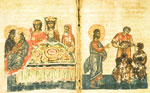 The miracle of Cana of Galilee begins the series of miracles contemplated in Lent to indicate mercy, forgiveness, salvation and life, which are given to us by Christ, the physician of humankind.
At Vespers of the First Sunday of Lent this aspect is developed at length: “Good Physician who heals all through repentance, Lord, sovereignly good and the First Physician, source of life and fount of healing, who heals our souls through our physical illness. You who have been called our true Samaritan and who, to deliver us from the wounds of our sins, have poured upon them mysterious oil and wine. You, Doctor of hearts and Healer of suffering, have marked us with the sign of the Cross, sealed with the seal of the holy oil, nourished with your Body and your Blood; embellish our souls with the splendor of your holiness; protect us from every fall and every blemish and bring us to the blessed inheritance reserved for those who have done acts of penance.”
Furthermore, the Syriac tradition sees in the miracle of Cana the spousal union of Christ with his Church, and with the whole of humanity; at Cana the true Spouse is Christ himself who invites suffering and sinful humanity to be united with him in order to bring it to the true nuptial chamber which is the Garden of Eden.
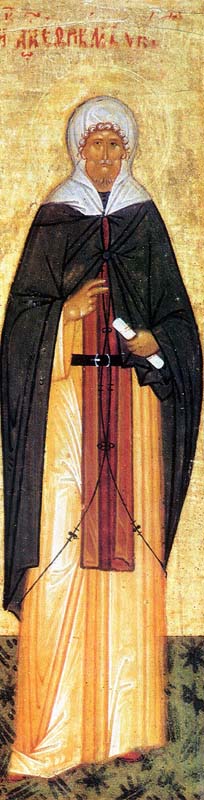 St Ephrem sings: “Blessed are your guests, beautiful city of Cana! They enjoy your blessing and the jars filled with your word proclaim that in you are found the heavenly gifts that gladden the heavenly banquet.”
The new wine that unites the fellow guests at the banquet is a symbol of the precious Blood that unites us with Christ himself: “You who, as the promised Spouse redeem the Church with your Blood, you who gladden the wedding guests of Cana, may you make your Church rejoice with your Body.” The Syriac Liturgy still sees the jars as a model of the soul that becomes the place of a wonderful transformation in which Christ himself renews all that is old.
On all the Sundays in Lent prior to the celebration of the Lord’s Passion, death and Resurrection, the Western Syriac tradition wishes to celebrate the miracles with which the Savior desired to manifest his divine mission among human beings. The Morning Office of all the Sundays in Lent contains this prayer:
“Merciful Lord, who came down to earth, in your compassion for human nature, you who purified the leper, opened the eyes of the blind and raised the dead, obtain that our souls may be purified and bodies sanctified; that the eyes of our hearts may be opened to understand your teachings so that, with repentant sinners, we may raise our praise.”
The miracles recounted and celebrated on these Sundays lead us to contemplate the wonders of divine grace in human souls; thus many of the liturgical texts of Lent always end with the same conclusive refrain:
“We, too, Lord pray to you: touch our spirit and purify it from every stain, from every impurity of sin, and have mercy on us.”
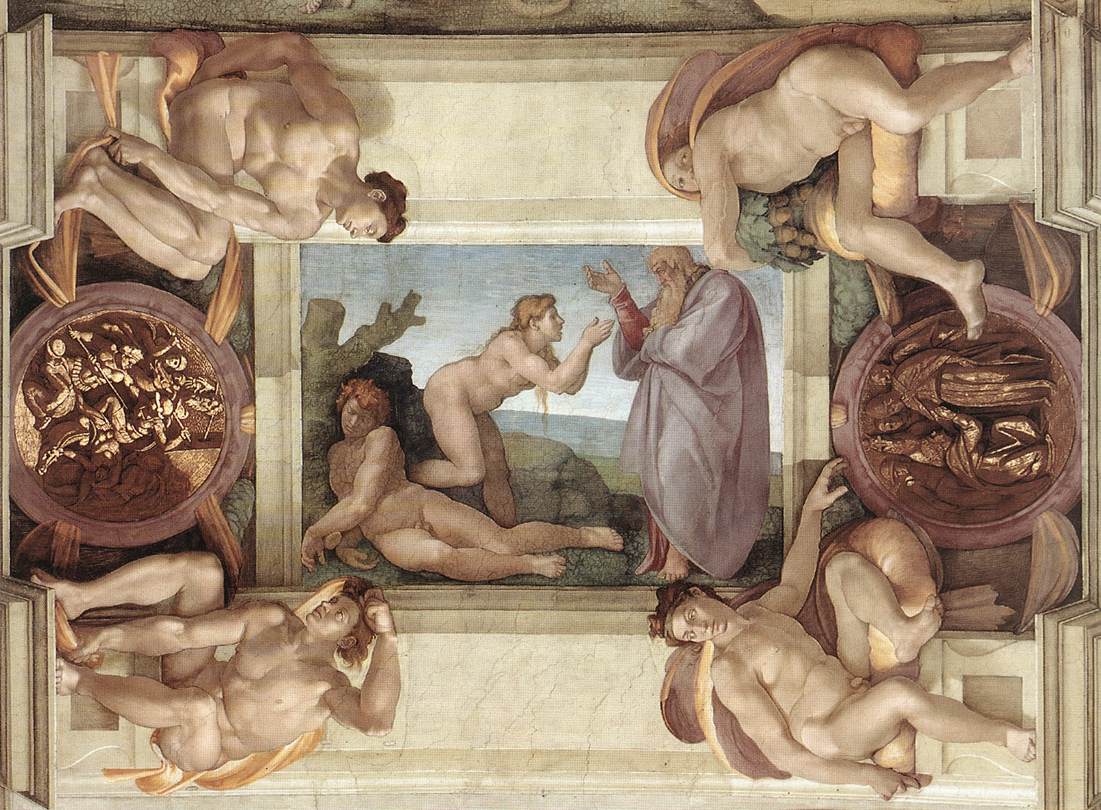 Sexuality is a beautiful part of being human and it is a gift from God that needs to be known, understood, appreciated and embraced (no pun intended). Sexuality is a holy part of being a man or a woman. Unfortunately, that’s not the message we receive in secular society and it is infrequently heard from the pulpit in Catholic churches and very likely not in other Christian communities. Unheard of from the pulpit, that is, until Pope John Paul II introduced his monumental work, Theology of the Body. But that’s a topic for another time. Sexuality is not just a religious issue, it is a human issue and everything human is of our interest.