Luigi Giussani, led by Christ –recalls Archbishop Prendergast for Communion & Liberation-Canada

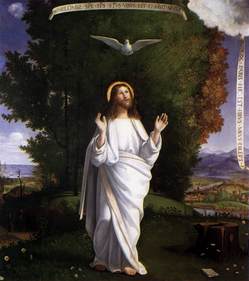
Around the world in past 2 weeks Communion and Liberation’s Schools of Community have been praying for the good of Communion and Liberation while remembering the fifth anniversary of death of Monsignor Luigi Giussani. In the Archdiocese of Ottawa last Monday (February 22) Archbishop Terrence Prendergast, SJ celebrated Mass for CL-Ottawa and here is a portion of his homily. One of the touching points in His Grace’s homily is the phrase, “to follow Christ.” The same phrase I used for my coat of arms; see above.

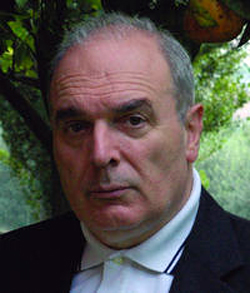
Five years ago today, Don Luigi Giussani, the founder of a movement that came to be known as Communion and Liberation was called home to God by the Lord Jesus Christ. Cardinal Ratzinger, our present pope was sent by Pope John Paul II as his legate to the funeral ceremony in Milan. On that occasion, he testified to the way in which Don Giussani had allowed himself to be led by Christ in a loving relationship from his earliest years, just as Peter had from the moment of his first encounter with Jesus: “This love affair with Christ, this love story which is the whole of his life, was however far from every superficial enthusiasm, from every vague romanticism. Really seeing Christ, he knew that to encounter Christ means to follow Christ. This encounter is a road, a journey, a journey that passes also-as we heard in the psalm-through the ‘valley of darkness.’ In the Gospel, we heard of the last darkness of Christ’s suffering, of the apparent absence of God, when the world’s Sun was eclipsed. He knew that to follow is to pass through a ‘valley of darkness,’ to take the way of the cross, and to live all
the same in true joy.”

St. Francis Xavier expressed this in a lovely poem, “O Deus, Ego Amo Te,” translated touchingly by his brother Jesuit, the poet Gerard Manley Hopkins:

O GOD, I love thee, I love thee-
Not out of hope of heaven for me
Nor fearing not to love and be
In the everlasting burning.

Thou, thou, my Jesus, after me
Didst reach thine arms out dying,
For my sake sufferedst nails, and lance,
Mocked and marred countenance,

Sorrows passing number,
Sweat and care and cumber,
Yea and death, and this for me,
And thou couldst see me sinning:

Then I, why should not I love thee,
Jesu, so much in love with me?
Not for heaven’s sake;
not to be out of hell by loving thee;

Not for any gains I see;
But just the way that thou didst me
I do love and I will love thee:
What must I love thee, Lord, for then?

For being my king and God. Amen.

Blessed Agnes of Prague

Bl Agnes of Prague detail.jpgLet us rejoice and shout for joy, because the Lord of all things has favored this holy and glorious virgin with his love.

Heavenly Father, You drew blessed Agnes away from the pleasures of royalty, and through the lowly way of the cross led her on the path of perfection. Grant that in imitation of her we may depreciate transitory things and always strive after those of heaven.
Blessed Agnes is known for her poverty and humility. She was an obedient daughter of the Franciscan charism. 
A portion of Blessed Agnes’ life and deeds can be read here.

Friars of the Renewal profess vows today

May the Lord grant you His peace!

Great news echoes in the heavenly courts: 16 Franciscan Friars of the Renewal novices professed temporary vows (poverty, chastity and obedience) today at Saint Antoninus Church (Newark, NJ). Newly elected Community Servant (Fr. Provincial) Father Mariusz Koch received the vows. A reception followed at the novitiate of the Most Blessed Sacrament Friary also in Newark, NJ. Bishop Emmanuel Cruz, auxiliary bishop of the Archdiocese of Newark was present. Here are some pics of the community.

CFR novices 2010.jpg

The Friars also invested 10 new men as novices on Saturday. Names are always fun, especially when you think, “where did they get that name from?” Read the new names:
Br Frantisek Marie Chloupek, Br Vittorio Maria Pesce, Br Jude Thaddeus Boyden, Br. Tobias Marie Redfield, Br Simeon Mary Lewis, Fr. Maximillian Mary McGoldrick, Br Seamus Mary Laracy, Br Mark-Mary Maximilian Ames, Br Angelus Immaculata Montgomery, Fr Felipe Immaculee Casadia.
May Saints Francis and Clare bless the new friars abundantly!

Teen suicide: how do we cope?

The tragic death of Michael Blosil, 18, son of Marie Osmond, the other day brings light to the sad reality of teen suicide. Noted by friends and family of the Osmonds, Michael had been battling the demons of depression.

The seriousness of the problem is seen in the statistics by the National Conference of State Legislatures:
19.3 percent of high school students have seriously considered killing themselves.
14.5 percent of high school students made actual plans for committing suicide.
900,000 youth planed their suicides during a major depression episode.
The Center for Disease Control said that suicide is the third leading cause of teen deaths between the ages of 15 and 24 behind accidents and homicide. And it is the fourth leading cause of children age 10-14.

For those interested in the subject, the Catholic Information Service published a booklet on suicide, Coping with a Suicide: Catholic Teaching and Pastoral Practice. You can also listen to the booklet as a download.
This booklet provides a helpful look into defining suicide and it helps the reader to identify the signs while giving some helpful resources.
 
May the saints lead Michael into paradise.

What is penance?

Penance,
essentially, always requires a change of life: from sin to virtue, luke
warmness to fervor, fervor to sanctity. This interior change cannot be effected
without divine help
, but the Lord is not stingy in this regard, and even as he
is calling a man to penitence, he is offering the grace necessary for this
conversion.

For the Christian, to heed the call to do penance and to open his
heart to the grace of conversion, means living his baptism, the sacrament
through which men are plunged into the paschal mystery of Christ
; they die with
him, are buried with him, and rise with him. It is for this reason that during
Lent the Liturgy often dwells on baptismal themes.

Death and resurrection in
Christ, which are operative from baptism, are not a static fact which happened
once for all, but a vital dynamic fact which should involve the Christian in
the Lord’s death and resurrection every day.

Divine Intimacy

Father Gabriel of
St. Mary Magdalen, OCD

Pope Benedict’s monthly prayer intentions: March 2010

March 2010.jpgUnited in prayer to God the Father, we ask Him to hear the pope’s prayers for this month, especially,


The general intention


That the world economy may be managed according to the principles of justice and equity, taking account of the real needs of peoples, especially the poorest.


The missionary intention


That the Churches in Africa may be signs and instruments of reconciliation and justice in every part of that continent.

Dolan reviews the year with Diana Williams

“Up Close” with Diana Williams’ of ABC 7 in NYC interviewed Archbishop Tim Dolan on his first year as chief shepherd of the NY Archdiocese, the second largest in the USA. All of his joy on being a priest and a bishop comes through in the interview. Thanks be to God because we need Archbishop Dolan’s pastoral leadership and theological connection with Pope Benedict XVI. Watch the three-part interview: Parts 1, 2, and 3.

Transfiguration Sunday: Listen to Jesus!

My heart has prompted me to seek your face; I seek it, Lord; do not hide from me.


The Church observes the Second Sunday of Lent. The following hymn incorporates the texts from sacred Scripture.

Thumbnail image for Transfiguration APrevitale.jpg

Gone forth from home with God to guide him,

Abram looked up and saw the sky:

“Even as stars you cannot number,

So shall your offspring multiply.”

God there with Abram cov’nant made,

Promise that shall not change or fade.


Jesus went up upon the mountain,

And there, transfigured ‘fore their eyes,

Saw  the disciples “law” and “prophets,”

Standing there next to Jesus’ side.

“This is My Son, ” they heard the voice;

“Listen to Him, He is My choice!”


Each of us, baptized in Christ Jesus,

Is launched on journey hard and long

Where we are daily called to cov’nant,

Following Christ with joyful song.

Do not give way!  Now faithful bide,

Clinging to Cross as boast and guide!

Is a Strong Priesthood In the World’s Future? asks Massimo Camisasca

Massimo Camisasca.jpgOn February 26th Zenit published an article by Father Massimo Camisasca looking at what he considers to be the pillars (prayer & Liturgy) of priestly reform in the Catholic Church. Reading a bit of Church history recently there’s been a lot to consider when thinking about the state of the Catholic Church viz. the rise of Portestantism and then the decline of the Christian religion in some parts of the US and the world. Father Massimo Camisasca is the founder and superior general of the Priestly Fraternity of the Missionaries of St. Charles Borromeo. The Fraternity was founded in 1985 and recognized as a Society of Apostolic Life in 1999.


Statistical data of the past 30 years reveals an increase of 5% more diocesan priests worldwide, compared with an increase of 48% more baptized persons.
 
This alone could explain the question in the title of my latest book, “Padre ci saranno ancora sacerdoti nel futuro della Chiesa?” (Father, Will There Still Be Priests in the Future of the Church?) — a theme that underlies the entire text.
 
However, even more than the number of priests, the Church is interested in the truth of their experience. For reasons connected with my work as superior of a fraternity of missionaries, I travel throughout the world and am in contact with the most diverse realities. And, meeting with priests of different regions, I note that many of them experience difficulties not so much of an ideological type as of an emotional order.
 
Why is it that today the priestly life — which has made thousands of men happy and contributed enormously to the spiritual growth of humanity — is going through such a profound qualitative crisis?
 
My [Italian-language] book stems from this question. It is an attempt to rethink the life of a priest from its roots.

Rebirth
 
The regeneration of priestly life is one of the conditions for the new flowering of Christianity in Europe, and more generally, in our jaded West (Asia and Africa merit separate treatment).
 
I have attempted to trace the path for a rebirth returning to the fundamentals of the priesthood. I find one of those fundamentals in prayer.
 
Today many priests lose themselves in action, in the infinite number of activities and preoccupations that entrap them. For the action of each one of us to always be a source of nourishment, it must be constantly redirected to our relationship with Christ. And the place of our relationship with Christ is prayer, inseparable from silence.
 
Silence, prayer, reflection and study are the answer to one of the evils that afflict the figure of the priest: activism, which remains on the surface of things and absorbs the time of our energies and our feelings. Instead, action that stems from charity introduces us in the work of God, who precedes and exceeds us.

Liturgy
 
Another pillar of the renewal of priestly life is the liturgy. I say this following the teaching of the Pope. I am not ruled by the desire to accommodate myself to a current, but by a profound conviction that is born from experience.
 
If the priest does not rediscover the true meaning of the liturgy in his life, he cannot find himself.
 
Surmounting the process of trivialization, which we have witnesses in the last 30 years, it is necessary to return to that “fons et origo” that the Second Vatican Council identifies in the liturgy.
 
When it is faithful to the one who instituted it, when it is lived in all its rigorous totality and is attentive to the tradition of the Church, the liturgy is the place of education to communion.
 
The protagonist of the liturgy is Christ. By living the liturgy, we can enter into the life of God, and only thus can we priests be an effective company of men.
 
In the third place, the emotional question is central in the life of a priest. Loneliness is the other great evil that today afflicts thousands of priests.
 
Only by discovering himself a son can the priest be a father.

Friendship is a positive experience in a person’s emotional life. In the Church there is still much fear of friendship. Pathologies are not channeled if one is not helped to develop a healthy life.
 
Unhealthy and negative friendships, which because of this are not proper friendships, must not close us off from the essential value of these bonds of preference that open us to the love of others and help us to understand who God is.

Spiritual Ecumenism and dialogue, Pope Benedict addresses the ELCA

Keeping up with Pope Benedict can be a difficult task, even for the strong; the pope does so much work in given week that most people would wilt. However, because he has such an excellent staff, much is possible. Key to understanding Benedict’s ecumenical work is his openess to collaborating with the Spirit and with others Chrisians for full visible communion desired by Christ and the Church, particularly since Vatican II. Additionally, his insistence on spiritual ecumenism is always noteworthy because without prayer none of ecumenical diagolue work makes a bit of sense. Plus, the pope raises the all-important matter of harvesting the fruit already done by the churches. So often we work hard on some document or event but fail to assess the fruit of the document or event to see what fruit there is and how it’s maturing. The lack of critical and honest engagement with the issues and the prudential enactment of the dialogue is fraustrating to lots of people. It is likely that many people have missed the news of of the Pope’s recent meeting with a delegation from the Evangelical Luthern Church in America (ELCA) on Wednesday, 10 February 2010, where he said (emphasis added):


“Since the beginning of my Pontificate, I have been encouraged that relations between Catholics and Lutherans have continued to grow, especially at the level of practical collaboration in the service of the Gospel. In his Encyclical Letter Ut Unuum Sint, my beloved Predecessor Pope John Paul II described our relationship as “brotherhood rediscovered” (n. 41). I deeply hope that the continuing Lutheran-Catholic dialogue both in the United States of America and at the international level will help to build upon the agreements reached so far. An important remaining task will be to harvest the results of the Lutheran-Catholic dialogue that so promisingly started after the Second Vatican Council. To build on what has been achieved together since that time, a spiritual ecumenism should be grounded in ardent prayer and in conversion to Christ, the source of grace and truth. May the Lord help us to treasure what has been accomplished so far, to guard it with care, and to foster its development.


I conclude by renewing the wish expressed by my Predecessor, during whose Pontificate so much was accomplished on the road to full visible unity among Christians, when he said to a similar delegation from the Lutheran Church in America: “You are most welcome here. Let us rejoice that an encounter such as this can take place. Let us resolve to be open to the Lord so that he can use this meeting for his purposes, to bring about the unity that he desires. Thank you for the efforts you are making for full unity in faith and charity” (Address to the Bishops of the Lutheran Church in America, 26 September 1985; L’Osservatore Romano English Edition, 7 October 1985, p. 6).


Upon you and all those entrusted to your pastoral care, I cordially invoke the abundant blessings of Almighty God.