Supreme Court, Faith and Culture

Every time we get a new Supreme Court Justice nominee, I cringe because of the craziness that goes on at the confirmation hearings: it’s not only about philosophical attachments but political mud-raking gets too personal at times. Nonetheless, I’m interested to see how the various ideologies of left and right are daily worked out and the interplay of the culture wars, which haven’t changed all that much over the years: same ideas, different clothing. As always religion plays a role in our life: some commentators are too worried about the religious configuration of the US Supreme Court, and some seem not worried enough. Is there a middle ground? With the US President’s choice of Elena Kagan as a Supreme Court candidate we realize that there’s no Protestant on the bench but there are 6 Catholics of some type and 3 Jews, who also seem not to be too interested in practicing their faith. Exactly, what role does religion play today and are we approaching religion (the practice of faith) on its own terms, or are we reducing it to fit our image and likeness, our own warped standards? Have no fear, Monsignor Lorenzo Albacete helps to define our terms in this week’s Il Sussidiario.

President Obama’s nomination of Elena Kagan to be the next
Supreme Court Justice has opened up a new front in the cultural battle that
characterizes politics in the United States at the present time. Any observer
can write the script of what the response to her nomination will be like. In
fact, on this first day since the nomination the media has already defined the
different ideological positions involved in the struggle, and unless something
entirely unforeseen takes place, nothing new will be said between now and
sometime in July when the Senate votes for or against the nomination.

If the
nomination is approved, it will be the first time that there are no Protestants
in the Supreme Court. There will be six Catholic Judges and three Jewish,
including Kagan. It is difficult to imagine that many of the Catholic Senators
will be influenced in their vote by their Catholic faith, and the Jewish
Senators will almost be sure to insist that their judgment on the nomination
has nothing to do with faith.

But what exactly is the Catholic view on how
faith influences culture? The Christian claim is that faith is a way of knowing
reality. Faith and knowledge of what is real cannot be separated.

This view of
the relation between faith and knowledge has important consequences for our
understanding of the relation between faith and culture, because the culture in
which we live is built precisely on the separation between faith and knowledge
of reality.

In his magnificent book Beyond Consolation, John Waters puts it
this way:

“Our cultures, therefore, no longer affords us a way, in the
conventional public arena in which we spend so much of our time, of seeing
ourselves as we really are. Religion, the means by which we once achieved a
semantic accommodation with total reality, has been discredited by a pincer
movement between the reductions and abuses perpetuated in the name of religion,
and the opposing reaction from outside. One side claims the franchise for
redemption, the other victory over unreason… Stripped of their language of
absolute reality, our cultures begin to squeeze and oppress us in ways we are
incapable even of perceiving. What we have lost has been a loss to ourselves,
to our essential humanity, and yet we have been persuaded to read it as
liberation. We respond to invitations to celebrate our victory over traditions,
as though oblivious that we have half-sawn through the branch we are sitting
on…we have created for ourselves a culture that in many ways denies our
humanity.”
Blessed Jane of Portugal

O God, in the midst of the royal court you
strengthened Blessed Jane with purity
of heart. By her
prayers may your faithful turn from the things of earth and seek
after
the things of heaven.


Blessed Jane (1452-1490) was the daughter of King
Alphonse of Portugal who entered a Dominican convent who lived with openness to
God’s invitation to a life of purity of heart. She was a capable rule of her
father’s kingdom; because the continuation of her family’s rule of Portugal was
questionable because of her brother’s poor health, Jane didn’t take vows as a
Dominican nun until a prudent decision could be made to secure the dynasty.
Until her profession of vows she lived at a convent of nuns according to their
rule and doing works of charity with her money.

Saint Leopold Mandic of Herceg Novi

St Leopold Mandic.jpgThe Spirit of the Lord has been given to me, for he has anointed me. He has sent me to bring good news to the poor, to proclaim liberty to captives and to the blind new sight, to free the downtrodden, and to proclaim the Lord’s year of favor.


O God, perfect unity and highest good, You filled Saint Leopold, Your priest, with kindness and mercy for sinners, and an ardent desire for unity among all Christians; through his intercession, may we be renewed in spirit and heart and confidently work for the unity of all Christians in the bond of peace.


Read a brief biography of Saint Leopold Mandic

Saint Vincent’s Archabbot re-elected


Douglas R Nowicki.jpg

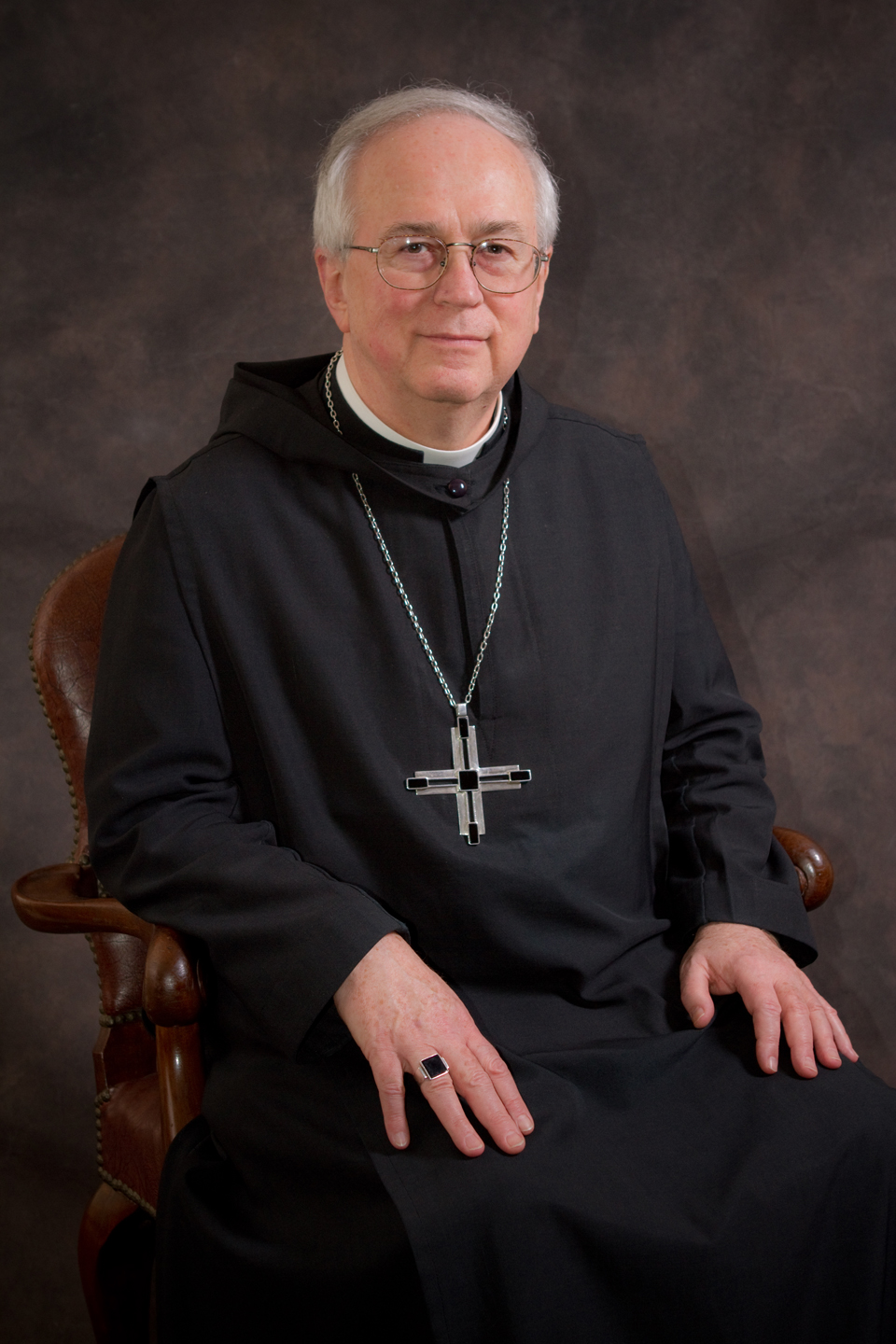
Archabbot Douglas R. Nowicki, O.S.B., 65, the eleventh Archabbot
of Saint Vincent Archabbey, was re-elected as the major superior of the
Benedictine community in Latrobe Pennsylvania on Tuesday, May 11.

In his role as
the Archabbot of Saint Vincent Archabbey, Archabbot Douglas serves as the spiritual
leader of the first monastery established in the United States and one of the
largest monasteries in the world with nearly 175 monks. As archabbot, he is the chancellor of Saint Vincent
College
and Saint Vincent Seminary.

The Benedictines operate the Benedictine
Military School in Savannah, Georgia, and the Penn State Campus Ministry
Program at State College, Pennsylvania.

In addition to his responsibilities in
this country, the Archabbot is also the spiritual leader of monasteries in
Brazil and Taiwan.

May God grant Archabbot Douglas abundant blessings today and in the years ahead.

Saint Benedict, pray for us.

Saint Vincent de Paul, pray for us.

NB: Beg the Holy Spirit for graces upon the Benedictine abbeys of Saint Procopius and Marmion (both in the greater Chicago area) who will be electing new abbots this summer.

Vincent de Paul: Charity’s Saint

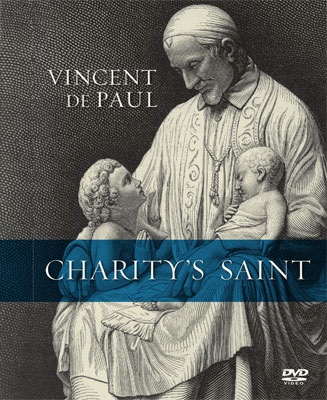
Vincent de Paul Charitys Saint.jpgMy primary education was with Vincentian Fathers in New Haven, CT. They were great men, hardworking, faithful and interesting. But the one thing missing was that they never spoke of Saint Vincent de Paul, their order’s founder. More than 25 years later I lament this fact because I am now seeing a terrific richness and beauty of the man and saint, Vincent de Paul. A new video has been produced, “Vincent de Paul: Charity’s Saint.” It gives us a wonderful introduction into the heart of a man who has touched many facets of our life in the Church and in the US.

The trailer is very appetizing, I recommend it because it seems like it will stir the spiritual and apostolic life in you. Plus, it will be an education.

The press release is here.
It is for sale at the DePaul University’s Vincentian Institute.

Rocco’s honorary doctorate from Aquinas Institute perplexes

I must be dreaming! Reading Gary Sterns’ blog today, Blogging Religiously, I learned that Aquinas Institute in Saint Louis gave Rocco Palmo, the Whispers in the Loggia blogger, an honorary doctorate while also giving him the privilege of being the commencement speaker on May 7

Admittedly, I am not terribly enthralled with Palmo’s perspective church-matters, nor his speculation on some things, nor his disrespect for the Holy Father, hence I wonder by what criteria did Aquinas Institute use to decide on giving Rocco Plamo these honors. But may these are the criteria by which the Dominicans of the Central Province judge excellence, getting in touch with those on the margins and theological thinking. Rocco is hardly a journalist, at least not by industry standards in the way John Allen or or Cindy Wooden or John Thavis are journalists; but he can be informative humorous but much too gossipy (the later not being a Catholic virtue and certainly unbecoming of the new evangelization). What was Aquinas Institute President Father Richard Peddicord thinking?
Could  Rocco Palmo be now the new type of preaching we can expect from the Order of Preachers? Even the St Louis Post Dispatch’s article is trite. It is a free world, after all, but give me a break. So much living the Dominican motto: to praise, to bless, to preach.

Saint Ignatius of Laconi

St Ignatius of Laconi.jpgI will bless you and make your name great, so that you will be a blessing. I will bless those who bless you. And in you men shall find a blessing, Alleluia.


Lord God, You led Saint Ignatius along the way of humility, innocence, and fraternal charity to the heights of sanctity. Help us to imitate his virtues and to practice charity on earth in word and deed.


Read a brief biography on Saint Ignatius of Laconi

Saint Damien de Veuster (of Molokai)

St Damien-of-Molokai iconjpg.jpgFather of mercy, in Saint Damien You have given us a
shining witness of love for the poorest and most abandoned. Grant that, by his
intercession, as a faithful witnesses of the Heart of Your Son Jesus, we too
may be servants of the most needy and rejected.


Pope Benedict XVI canonized Damien de Veuster on October 11, 2009. Saint Damien is counted among the North American Martyrs and six other saints for a total of 15 saints of the USA. A wiki-article has a brief outline of Saint Damien’s life.

A number of resources have been pulled together for Saint Damien here.

The Congregation of the Sacred Hearts of Jesus and Mary have published the texts for the Divine Office and the Mass for the liturgical memorial of Saint Damien found here.

Saint Antoninus of Florence


St Antoninus.jpg

The fear of the
Lord is holy, abiding for ever. The decrees of the Lord are truth and all of
them just. 


Eternal God, you blessed Saint Antoninus with a marvelous gift of
counsel. By the help of his prayers while we walk in the darkness of this life,
may we learn from a light of Christ all that we ought to do.


Saint Antoninus (1389-1459) was a Dominican friar was known for his evangelical zeal, holiness, the desire to live the Dominican life with integrity, the desire to attend to the poor, the reconciliation of sinners, and harmonious workings of society, both political and economic. He is the author of several books, including his own Summa theologica. His liturgical memorial is observed today even though on the Roman Maryrology the observance is noted for May 2.

From the Vita

He
required of himself the most unflinching observance of the Rule of his Order,
and never ate meat unless he were grievously ill. He slept upon the ground or
upon bare boards. He always wore haircloth, and sometimes an iron girdle which
bit into his naked skin. His virginity he kept ever undimmed by the last breath
or shadow. He was so skillful in giving advice that he gained the common
nickname of Antoninus the Counselor. At the same time so beautifully brilliant
was his lowliness, that even when he was at the head of houses and provinces of
his Order, he most cheerfully underook all the meanest services of the house
where he was. Eugenius IV appointed him Archbishop of Florence, and he took it
so ill, that it was only when awed by the threats of the Apostolic See that he
obeyed, and accepted the dignity.