80 years of monastic profession: the witness of a lifetime

Permanent commitment is an awesome gesture. It is, however, becoming a thing of the past these days. I remember a few years ago
when my parents were celebrating their 40th wedding anniversary and one of my
mother’s clients said to her: “I can’t believe you’ve been married to the same
man for this long.” I was taken aback by the statement. In my mind what else would you do but be faithful to your vows. Of course this woman is on her second marriage and from all
reports pretty self-absorbed. There was a time when you entered into a “life
commitment” by vows and you did what they indicated: live them forever, unto death is there parting. Times have changed: prenuptials are “in” and convenience has replaced permanency. Have we become too fickle? Just
recently an event in Rome gave me hope: Father Angelo’s 80 years as a Trappist
monk of the Abbey of Tre Fontane. Imagine 80 years do anything! Imagine living your monastic profession in the place where Saint Paul was martyred! Saint Paul’s head bounced three times. Hence three fountains of water sprung up.


Tre fontane di S. Paolo.jpg

Father Angelo (Archangelo Buccitti in
history), just celebrated his 94th birthday on March 3. Bishop Paolo
Schiavon, a long-time friend of the community offered Mass for Father Angelo’s
intentions. 

Father Angelo’s monastic journey included entry at Frattochie abbey at 14 years of age, his journey to solemn profession, ordination to the
priesthood, time as chaplain for the Trappistine nuns at Vitorchiano, his election
as abbot of Tre Fontane and his ten years in that capacity. All of Father
Angelo’s life can be seen as a homage, a testament to grace and grace’s living through his deep humanity known through fraternal
charity, humility and faithfulness to God’s call. 

Father Angelo said: “The
Lord does not count the number of one’s years, but weighs their quality” and “A
man is never taller than when he is on his knees before his Lord.”

Is the Pope’s Irish proposal reasonable?

Haven’t been thinking of the Pope’s letter to the Church in Ireland regarding the sexual abuse problems in a while? Let’s start thinking anew: the year of prayer that the Pope asked for is coming to an with Easter. I’d like to know what’s different.


No one I know takes issue with what the Pope has been doing with the sexual abuse matters. That may be a point of criticism of me and my friends, but I don’t have all the answers to such a complex issue such as pedodphilia and ephebophilia and I tend to lean toward diagnosing the problem not merely from psychological and sociological criteria but most importantly from spiritual criteria. What does one do with sin in one’s spiritual life? My experience with secular and religious clergy, religious sisters and brothers, and of course the laity, is that there is lots of mediocre spiritual lives in the Catholic; I might even argue for an acceptance that there are a lot of spiritually dead men of the cloth pastoring souls today. Since the Pope’s March letter to Ireland of a year ago I have been thinking and praying about the matter, as you have you some concrete initiatives to address the situation, in addition to a special investigation into the way certain dioceses took responsibility for the crimes.


Continue reading Is the Pope’s Irish proposal reasonable?

Reaching Muslims: A one-stop guide for Christians

Reaching Muslims.jpg

A recent book on Muslim Christian relations is Reaching Muslims: A one-step guide for Christians gives a perspective, albeit from a Protestant perspective, is worth noting. Much of what is said therein would recall for interested readers the kinds of things Pope Benedict XVI has already said. The author is reasonably positive when he speaks about Muslim culture being “culturally rich and often wonderfully passionate
about life and faith.” There is a lot of useful information given here: he covers lots of ground: politics, sociology, belief, justice matters, history and demographics.

This book attempts to help the read to bridge the gap of divisions, real or fictional, between Christians and Muslims. Fear of the other keeps us from speaking the truth in love and in peace with someone who does not think or act like we do. Chatrath holds up the role of friendship in knowing the other. Friendship bears the heat of the day!

Continue reading Reaching Muslims: A one-stop guide for Christians

Saint Stephen Harding

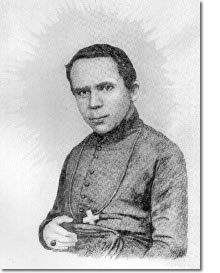
St Stephen Harding.jpg

Today the Church –though localized to the Cistercian Order– celebrates the liturgical memorial of Saint Stephen Harding, one of the 3 founders of the Cistercian reform of Benedictine monastic life. Most of the faithful would not know of Saint Stephen unless they had contact with the Cistercians or remember their church history class.

Several things distinguish Saint Stephen Harding: he was English, he was the third abbot of Cîteaux, he was a man of great pragmatism, he was the author of the Charter of Charity (the foundational document of the Cistercian life), and was responsible for the liturgical formulations for this way of life, cleaning up the corruptions inserted into the Divine Office over the years.

On Saint Stephen’s deathbed he said, I assure you that I go to God in fear and trembling. If my baseness should be found to have ever done any good, even in this I fear, lest I should not have preserved that grace with the humility and care I ought.

For more on Saint Stephen Harding read this entry and this one.


Give beauty back to God, beauty’s self and beauty’s giver


A striking line
in Gerard Manley Hopkins’ poem “The Leaden Echo and the Golden Echo,” “Give
beauty back, beauty, beauty, beauty, back to God, beauty’s self and beauty’s
giver.”  English Jesuit priest Gerard Manley Hopkins
(1844-1889) was renowned for his use of Blessed John Duns Scotus’ theology
and his creative use of language and rhythm (notice Hopkins’ characteristic
stresses on certain words).

The Leaden Echo and the Golden Echo

(Maiden’s song
from St. Winefred’s Well)

The Leaden Echo

How to kéep–is there ány any, is
there none such, nowhere known some, bow or 

brooch or braid or brace, láce,
latch or catch or key to keep


Back beauty, keep it, beauty, beauty, beauty, …
from vanishing away?

Ó is there no frowning of these wrinkles, rankéd wrinkles
deep,

Dówn? no waving off of these most mournful messengers, still 

messengers,
sad and stealing messengers of grey?


No there ‘s none, there ‘s none, O no
there ‘s none,

Nor can you long be, what you now are, called fair,


Do what you
may do, what, do what you may,


And wisdom is early to despair:

Be beginning;
since, no, nothing can be done

To keep at bay

Age and age’s evils, hoar
hair,

Ruck and wrinkle, drooping, dying, death’s worst, winding sheets, tombs
and worms and

tumbling to decay;

So be beginning, be beginning to despair.

O
there ‘s none; no no no there ‘s none:

Be beginning to despair, to
despair,

Despair, despair, despair, despair.


Continue reading Give beauty back to God, beauty’s self and beauty’s giver

We remain images of Christ, no matter what happens…

A perplexing issue of one’s faith is accepting that no matter what we do, no matter who we become, we remain a son or daughter of God. There is no unforgivable sin except the sin of presumption against the Holy Spirit. We can do the most heinous of things, even deny God’s existence, we remain in Christ’s reach for mercy in His washing us with His own Precious Blood. History has several good examples of people doing terrible things to others and destabilizing society, but is it impossible to have mercy on these people? The question eventually becomes: Can a person who does evil things be forgiven and saved? Is forgiveness outside the realm of possibility for God, for us? If not for God, why is it that we find so difficult to be merciful toward others?


As scripture say, all have sinned and fallen short of
God’s glory (Rom 3:23) so that all of us are at some time in our lives
potentially (and unfortunately all too actually) capable of real evil. Yet no
matter how depraved people may become, they remain always images of Christ the
true Image of God. That image-quality may be soiled, tarnished, obscured and
disfigured, but is never wholly lost, never totally destroyed.


The more we
commit sin the more we weave a web around ourselves, voluntarily blocking out
his light. That is why in the incarnation God punched a hole in our self-woven
cocoon and thrust in a hand to drag us out: that is why Christ descended into
our hell of God-forsakeness – so that we could not go on pretending to
ourselves – and in that way justifying our own ghastliness to ourselves and
others.


Meeting Christ in His Mysteries
Father Gregory Collins, OSB

Sviatoslav Shevchuck: TODAY put the honest & True Cross in the center of life


Sviasolav Shevchuk preaching March 27 2011.jpg

His Beatitude, Archbishop Sviatoslav’s first homily as head of the Ukrainian Greek Catholic Church is noted below. It is a very good homily focusing on the Cross and our acceptance of that life-giving Cross today. We have no other option as Christians. Pay close attention to what the new archbishop says: live, witness, strive for holiness, move closer to Christ today.


Beloved in
Christ, brothers and sisters!

Glory to Jesus Christ!

“We praise your Cross,
Lord, and glorify Your holy resurrection!”

With these words today, the Church
of Christ focuses on the Honest and True Cross. Today, as we pass the halfway
point of our Lenten journey, the Life-Giving Tree is given to us, that we might
find in it a source of strength and courage to go on to the Resurrection, to
put the Sign of the Cross at the center of our lives.

In his Epistle to the
Philippians, St Paul has left us a unique early Christian hymn that a young
Church, newly enlivened by the Holy Spirit, solemnly sang in its Liturgy.

The
Apostle calls to us this way:

Have among yourselves the same attitude that is
also yours in Christ Jesus, Who, though he was in the form of God, did not
regard equality with God, something to be grasped. Rather, he emptied himself,
taking the form of a slave, coming in human likeness; and found human in
appearance, he humbled himself, becoming obedient to death, even death on a
cross. Because of this, God greatly exalted him and bestowed on him the name
that is above every name, that at the name of Jesus every knee should bend, of
those in heaven and on earth and under the earth, and every tongue confess that
Jesus Christ is Lord, to the glory of God the Father (2:6-11).

Continue reading Sviatoslav Shevchuck: TODAY put the honest & True Cross in the center of life

You, Lord, have shown every mercy

Jesus & Samaritan Woman Guercino .jpg

O God, author of every mercy and of all goodness, who in fasting, prayer and almsgiving have shown us a remedy for sin, look graciously on this confession of our lowliness, that we who are bowed down by our conscience may always be lifted by your mercy.