A new bishop for Oakland: Jesuit Michael Barber

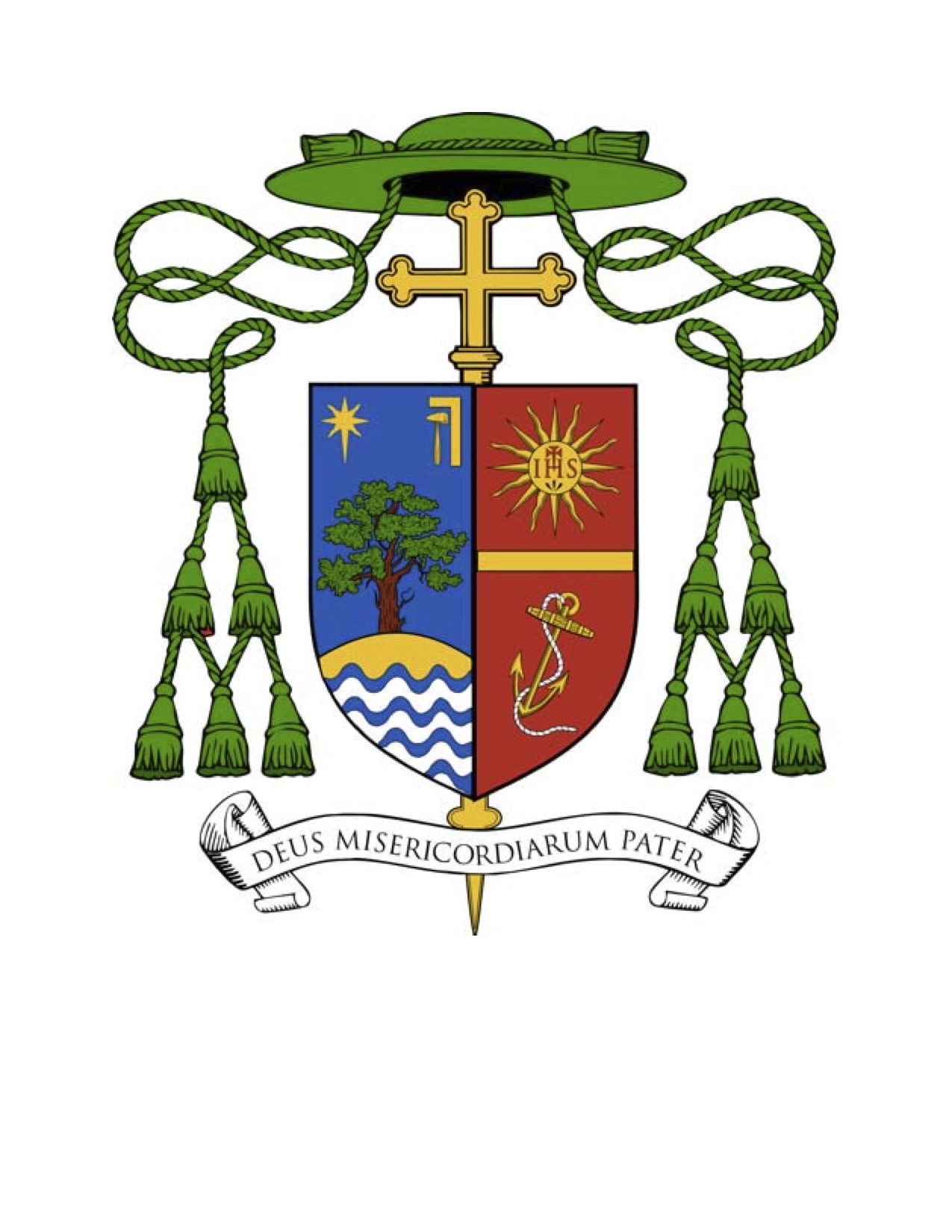
Michael C. Barber arms.jpgFather Michael Charles Barber, SJ, was ordained a bishop today for service in the Diocese of Oakland. Last eve he professed his Catholic faith and took the oath of fidelity. The Sacrifice of the Mass with the Rites of Episcopal Ordination were offered at 11am pacific time.

With prayer to the Holy Spirit and the laying on of hands by Metropolitan Archbishop Salvatore Cordileone, Jesuit Bishop Carlos Sevilla (emeritus bishop of Yakima) and Bishop Thomas Daly. Sevilla is also a member of the California Province of Jesuits. For trivial purposes only, Bishop Gordan Bennett, SJ, bishop emeritus of Mandeville, former auxiliary bishop of Baltimore, is also a California Jesuit.

Father Barber is the first member of the Society of Jesus to be elected a bishop by his fellow Jesuit and Pope, Francis. The appointment was made on May 3. Barber is the first Jesuit to be a bishop who will serve in the USA since Bishop George Vance Murry (Youngstown, OH). 

Continue reading A new bishop for Oakland: Jesuit Michael Barber
Saint Bede the Venerable

St Bede the Venerable.jpg

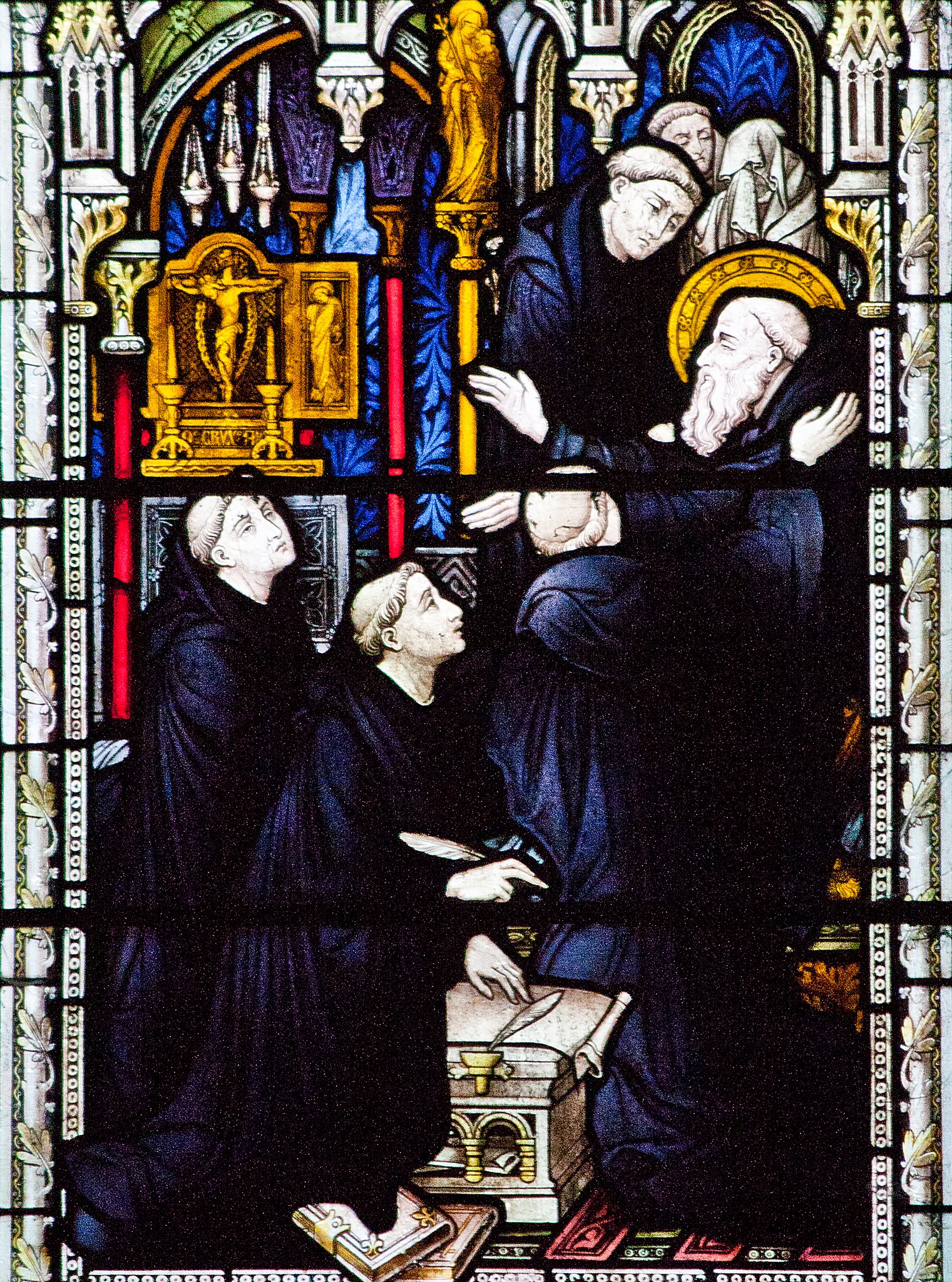
Today in 725, Saint Bede the Venerable, the sole English Doctor of the Church died, at his monastery in Jarrow. His liturgical memorial is kept today. Here is the account of his death.

“On Tuesday 24th May 735 Bede took grievously ill but continued to teach, he cheerfully suggested to his pupils that they learn quickly as he may not be with them long. The next day Bede taught until nine in the morning. He then dictated part of his book to Wilbert. That evening Wilbert said to Bede “Dear master, there is still one sentence that we have not written down.” Bede said “Quick, write it down.” Wilbert then said “There; now it is written down.” Bede replied “Good. You have spoken the truth; it is finished. Hold my head in your hands, for I really enjoy sitting opposite the holy place where I used to pray; I can call upon my Father as I sit there.” 

“And Bede then as he lay upon the floor of his cell sang the Gloria and as he named the Holy Spirit he breathed his last breath. His only possessions – some handkerchiefs, a few peppercorns and a small quantity of incense were shared amongst his brother monks as he had wished.

Enhanced by Zemanta

Learning Latin is still possible, and encouraged

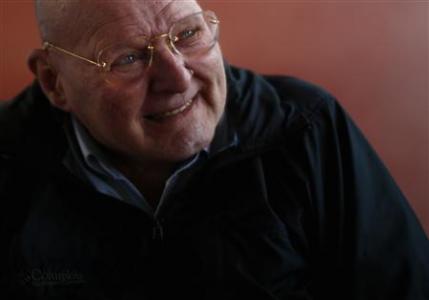
Reg Foster.jpegThe Latin language is far from being extinct even though you only hear it at times in Church. Our common experience today at Mass prayed in the Ordinary Forum is often in the language of the people. The official language of the Catholic Church, however, remains Latin: the texts of the church, the texts of the pope, and importantly, in the prayer of the Church. Fear not. The “house” language today, the daily work of the curia is Italian. It is possible that at some point English will replace Italian.

The Carmelite friar Father Reginald Foster is the renown contemporary father of the Latin language. He spent several decades in Rome working, teaching and writing in Latin. Now he’s retired from active teaching but he keeps his hands in the field by consulting, developing teaching materials, writing and attending some initiatives. One of his works is Corpus Latinitatis.
A recent Reuters article brings to life in a brief fashion the influence of Father Reg in “Spreading the word that Latin lives…”
Enhanced by Zemanta

Our Lady Help of Christians, Our Lady of Sheshan: a prayer for Chinese Catholics

Our Lady of Sheshan.jpg

Today is the day that Benedict XVI designated to be a World Day of Prayer for China, particularly our Chinese Christian brothers and sisters. The Catholics in China, indeed, all Christians in China have not been respected for the their belief in Jesus Christ and His sacrament, the Church. Pope Francis has reminded us of this act of charity. 


At Wednesday’s General Audience in Rome, Francis recalled that under the patroness of Our Lady, Help of Christians, we go to God. 


The Chinese Catholics venerate under the title of Our Lady of Sheshan, Shanghai.


Pope Francis said:


I urge all Catholics around the world to join in prayer with our brothers and sisters who are in China, to implore from God the grace to proclaim with humility and joy Christ, who died and rose again; to be faithful to His Church and the Successor of Peter and to live everyday life in service to their country and their fellow citizens in a way that is consistent with the faith they profess.


Making our own a few words of prayer to Our Lady of Sheshan, together with you I would like to invoke Mary: Our Lady of Sheshan, sustain all those in China, who, amid their daily trials, continue to believe, to hope, to love. May they never be afraid to speak of Jesus to the world, and of the world to Jesus.


Mary, Virgin most faithful, support Chinese Catholics, render their commitments, which are not easy, more and more precious in the eyes of the Lord, and nurture the affection and the participation of the Church in China in the journey of the Universal Church.”


Benedict XVIs prayer for today, inaugurated in 2008 for the Feast of Our Lady Help of Christians; 
Our Lady of Sheshan, states:

Enhanced by Zemanta

Continue reading Our Lady Help of Christians, Our Lady of Sheshan: a prayer for Chinese Catholics

Christians face being insipid

salt.jpg

One of the things I like about Pope Francis is the common imagery used in his homilies. No long ago he warned of becoming a babysitter church. Today’s Mass at the Domus Sanctae Marthae with members of the Congregation for the Oriental Churches the Holy Father used the biblical –and common– metaphor of salt to speak about faith, hope and charity. Mark’s gospel for Mass today provides a good amount of grist for the mill. Salt helps to savor the faith as much as it opens taste buds to share this faith with others.


I think one of the reasons the Holy Father latched onto the use of the image of salt is basic encouragement of Eastern Christians to resist becoming “Museum-piece Christians.” So often the Eastern Christians are treated pretty poorly by Western Christians that it is too shameful to speak about; however, Eastern Christians also love the ghetto mentality. Isolation is a value for them, it seems. Frequently, you hear them complain and criticize the Roman Church for negligence when in reality they seem to prefer being someone’s door mat. If you read between the lines the Pope is giving a personal witness to Eastern Christians in living differently. Later in his homily, the Pope talks about Christianity’s originality. For me, I think the pope is criticizing those who want a uniform theological and liturgical tradition, which is not what it means to be Catholic. Francis, said,


Salt makes sense when you [use] it in order to make things more tasty. I also consider that salt stored in the bottle, with moisture, loses strength and is rendered useless. The salt that we have received is to be given out, to be given away, [in order] to spice things up: otherwise, it becomes bland and useless. We must ask the Lord not to [let us] become Christians with flavor-less salt, with salt that stays closed in the bottle. Salt also has another special feature: when salt is used well, one does not notice the taste of salt. The savor of salt – it cannot be perceived! What one tastes is the flavor of the food: salt helps improve the flavor of the meal.

Enhanced by Zemanta

Continue reading Christians face being insipid

Vice and good works: where’s the salt of true life?

St John Chrysostom, St Patrick's cathedral, Ne...

St John Chrysostom, St Patrick’s Cathedral, NYC

Let me be presumptuous for a minute: I think few people spend much time considering a life of vice, sin, evil in their own lives. Personal darkness, “dead” salt as Pope Francis mentioned today in homily, is not high on people’s list of things. Many are quick –and I can be accused of this, too– point out the sin in another ignoring the fat elephant of in the living room in need of a wash or a diet. Do you think this is reasonable to say? My friend Henry told me once that people don’t like going to confession because they like their sins. True enough. I agree. But I also like reconciliation. Something new, something happens to my soul after a good confession of sins that no other experience is capable of imparting.


The point of conversion is to develop the better self, not to remain entrenched in a bitter way of seeing things. Lent was supposed to help me seeing things differently; now, perhaps Ordinary Time will lead me in the right direction.


I am across this paragraph from the Prologue from Ochrid that I found interesting and thought I would share. Chrysostom’s insight about vice and good works is correct from my own experience and from what I observe in others. Chrysostom is a heavy hitter.


We see that vice is something shameful and sinful in that it always hides and always takes upon itself the appearance of good works. St. John Chrysostom beautifully says: “Vice does not have its own particular face, but borrows the face of good works.” This is why the Savior said: “they come to you in sheep’s clothing, but inwardly they are ravening wolves” (St. Matthew 7:15). Call a liar, a liar; a thief, a thief; a murderer, a murderer; an adulterer, an adulterer; a slanderer, a slanderer and you will infuriate them. However, call a man whatever you want: honest, honorable, unselfish, truthful, just, conscientious and you will make him light up with joy and please him. Again, according to Chrysostom, I quote: “good works are something natural in man while vice is something unnatural and false.” If a man is even caught in a vice, he quickly justifies his vice by some good works; he clothes it in the garments of good works. Indeed, vice does not posses its own particular face. The same is true of the devil, the father of vices!

Enhanced by Zemanta

Saint Rita

St Rita of Cascia.jpg

Saint Rita of Cascia is the patroness of impossible causes. Most have in their minds Saint Jude, patron of difficult cases. I think I need all the help I can get, and Saint Rita does “heavenly” work for me. I was privileged to visit her shrine in Italy a few years back.

Her story is an interesting one, often well forgotten if you don’t known her. At twelve her parents engaged her marry Paolo Mancini, a man with anger issues, really, an abusive person. At 18 she married and gave birth to twin sons. Rita, though, had her eyes on the convent.

Rita’s sanity, indeed, her sanctity, is demonstrated by the fact that somehow she mustered the strength to suffer Paolo’s abuses for eighteen years before he was stabbed to death. Their sons wanted vengeance on their father’s killers, but realizing that they’d lose the beauty of heaven, Rita prayed that they receive from God the grace to forgive the killers. The twins died before they could lose their souls.

Enhanced by Zemanta

Continue reading Saint Rita

The Modern Cross that Brings Us to our Knees

John Waters.jpg

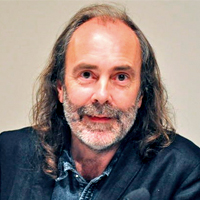
John Waters, an Irish journalist  who follows Communion and Liberation, gave this personal witness to the gathering of ecclesial movements with Pope Francis, “The Modern Cross that Brings Us to our Knees” (May 18, 2013). 


John is known to many of us in the USA because of his presence at the annual New York Encounter and because of his reflections in Traces magazine, or just because his writing finds a place on the online journal, Il Susidiario. John knows the reality of sin, evil , despair, and isolation. He knows what it means to be at bottom as a result of alcohol abuse. John is a very good man who knows what it means to be a fragile human being sustained by the grace of God and by friendship. Whatever way you come to know John Waters, you ought to know that he lives his life one-day-at-a time in God’s grace. Some days the cross is heavy, and yet there are people good people who help to carry the burden of the cross.

We live, my friends, in deceptive times. In the past, man strove for perfection, knowing it was unattainable in this reality. Guided by certain faith in a loving Creator, on whom he remained dependent, man reached for the stars, not expecting to touch them, but understanding that the act of reaching allowed him to become fully himself.


Today, mankind strives for omnipotence, believing this obtainable. Consequently, man feels overwhelmingly alone – that everything depends on his own efforts.


The delusion thus fostered afflicts us all. It invades our minds and changes how we think and feel. And sometimes we feel -in spite of ourselves – that we ought not to need God. Not, I stress, that we don’t need Him, but that we OUGHT NOT to need Him.

Continue reading The Modern Cross that Brings Us to our Knees