Blessing material goods

I am asked all sorts of questions about the Catholic Church, her practices and beliefs. Recently asked: “Can I ask rightly ask for material things from God? I  do not want to be self-centered.” What do Christians mean when they say they are blessed?

Divine revelation will speak about the superiority of the spiritual over material. Our poverty is one dependence on God for everything recognizing that we do not make ourselves nor do we sustain ourselves. Everything is a gift. In the Old Testament we read that “The LORD has blessed my master [Abraham] so abundantly that he has become wealthy; he has given him flocks and herds, silver and gold, male and female slaves, and camels and donkeys” (Genesis 24:35). We know that Jesus teaches: “Do not store up for yourselves treasures on earth, where moth and decay destroy, and thieves break in and steal. But store up treasures in heaven, where neither moth nor decay destroys, nor thieves break in and steal” (Matthew 6: 19-20)

If I understand what Our Lord is saying, I can have material things but I should not make an idol of these things. Long has Judaism and Christianity taught that material goods as blessings from God AND a proper use of these goods is required to remain in right-relationship with God. But the question of being blessed by God is understood at a far greater level –that of the beatitudes. Recently, I have been thinking of meaning of my person in relationship to the beatitudes. Saint Matthew pulls out the blessings: the kingdom of heaven, righteousness, peace, physical and spiritual sustenance and so forth. All these blessings are for the Kingdom of God, that is, for the good of the Church. We the know etymology of happiness, from Latin, is beatitudo, hence we have “Beatitudes.” Yet the question of what is means for my person necessarily surfaces. For my “I” to be true, that is, to be fully alive in Christ Jesus, I need to live in a proper relationship with the other, with God and with creation.

Jesus has a key desire for us: our happiness in this world lived in holy freedom. What comes to mind is the Principle and Foundation of the Spiritual Exercises of Loyola where we are reminded that we have to develop a discerned indifference to the material world leaving all things in the hands of God: life, death, sickness, health, wealth and poverty –all is in Providence. Loyola wants us to keep in mind that being free is to rely on God. As creatures we have reasonable concerns for a material well-being that is also the concern for the Lord. The material world is part of the make-up of the Incarnation. In all things we need to adopt an absolute priority for Christ, as Blessed John Duns Scotus calls it.

Jesus is against the excessive, idolization of the material world. For a fuller picture read Matthew 6.

From what is revealed in Scripture we need to move to Aquinas who teaches that while it is not correct to desire material things principally because they are not about ultimate destiny, we can ask God to grant us material things “as helps whereby we are assisted in tending towards beatitude,” since they are “means of supporting the life of the body, and are of service to us as instruments in performing acts of virtue” (STh. I-II q. 83a.6).

Catholics, then, can in good conscience ask for the material blessings if they indeed the right use of them for the upbuilding of the Kingdom. Any other reason needs to be atoned for in the confessional.

70th Anniversary of the Destruction and Reconstruction of Abbey of Montecassino

MontecassinoToday, the Holy Father was represented by Ennio Cardinal Antonelli, President Emeritus of the Pontifical Council for the Family to be his Special Envoy at remembrance celebrations at the Abbey of Montecassino on March 21. As papal envoy, the Cardinal will attend the 70th Anniversary of the Destruction and Reconstruction of Abbey of Montecassino. The date is the anniversary of the death of Saint Benedict of Norcia.

Montecassino as a community of Benedictine monks founded in 529 by the saint, suffered several destructions and reconstructions of the centuries, the last one being 15 February 1944 bombing by the Allied troops in the Second World War. In four months, the Battle of Montecassino there was about 200,000 causalities (on both sides).

The monks oversaw an immediate and exact reconstruction at the war’s end between 1948 to 1956. Joseph Breccia Fratadocchi led the reconstruction.

The Benedictines still live at Montecassino.

Saint Joseph…a contemplative of pure love

St Joseph“… the apparent tension between the active and the contemplative life finds an ideal harmony that is only possible for those who possess the perfection of charity. Following St. Augustine’s well-known distinction between the love of the truth and the practical demands of love, we can say that Joseph experienced both love of the truth-that pure contemplative love of the divine Truth which radiated from the humanity of Christ-and the demands of love-that equally pure and selfless love required for his vocation to safeguard and develop the humanity of Jesus, which was inseparably linked to his divinity.”

Blessed John Paul II
Guardian of the Redeemer

Saint Joseph: participator in Mary’s dignity

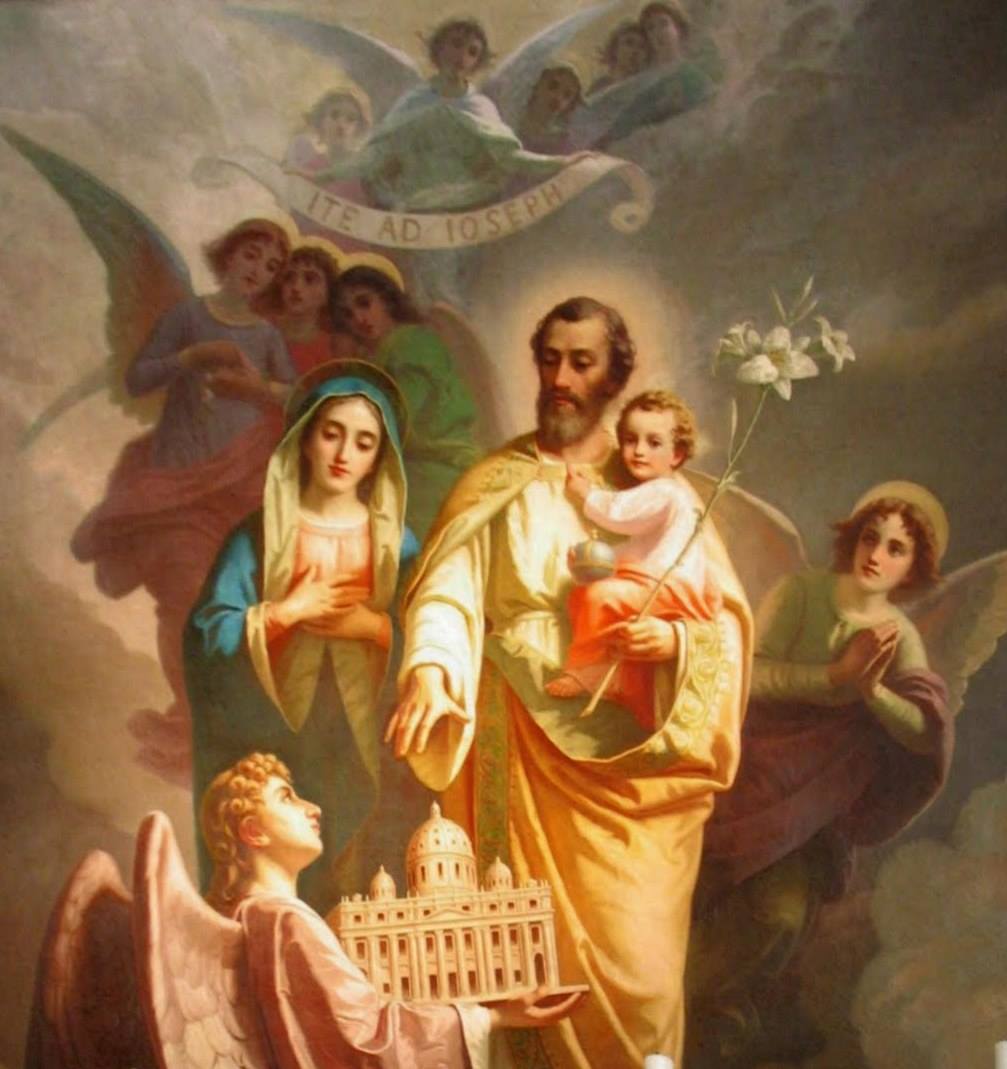
Go to JosephThe Catholic devotion to Saint Joseph is strong and vital, and it is has been for centuries. You will see the phrase, “Ite ad Joseph” at the Saint Joseph shrine or altar. In fact, over the head of Joseph in this image you see the scroll with just that: Ite ad Joseph. The beloved spouse of Mary, since 1870, has been the Patron of the Church, named so by Pope Pius IX. In biblical typology of the OT Saint Joseph is prefigured by an earlier Joseph who is the protector of Israel.

Pope Leo XIII in his 1889 encyclical, Quamquam pluries, speaks of Saint Joseph an “exemplary model of kindness and humility.” Such are the virtues that we expect all Christians to possess and develop: this is especially true for fathers, parents, priests, educators, and the like. As the spouse of Mary and earthly father of Jesus we come to understand Joseph as a “participator in her [Mary’s] sublime dignity.” Leo develops in a new way a theology of Joseph in looking at his chaste spousal relationship to Mary by describing him for us when he says that Joseph was “closer than any” other person.

Leo also designated Saint Joseph to be the universal patron of the Church.

One aspect of Saint Joseph that’s not well spoken of but was raised by Pope Leo is Joseph as protector, guide, patron of the priesthood of Jesus Christ. Considering biblical typology with regard to Joseph we see the Spouse of Mary as connected with, that is, echoing, Joseph of Egypt found earlier in the OT and as the earthly father of Jesus he is custodian of holiness. This man of righteousness we say exercised significant overseeing of Jesus is the “true bread come down from heaven.” Hence, Joseph’s role as guardian of the Holy Child, it is not unrealistic to consider as crucial to the life of both the ministerial AND lay priesthood. What is seen in Joseph is now seen in the our priestly life. Catholics distinguish the two priesthoods, one serving the other in a unique manner all oriented to salvation in Christ Jesus.

Just as Joseph attended to his family and daily work, he also was attentive to life of prayer and sacrifice given to him through the Torah (the Law of Moses). It is fitting to see these things held in creative tension but likely with an accent on prayer. All the things we say that Joseph could have done that would be opposite to having concern for Mary and Jesus were actually fulfilled because the Holy Spirit was such a powerful presence in Joseph. Without this Divine Presence Joseph would have collapsed under the weight of self-absorption. The intense friendship (that is, obedience) with the Divine Majesty allowed for his earthly love to taken on a new dynamism for all of history. One might say, like we ascribe to Mary, that Joseph was the second disciple of Jesus. Yet, he is the first to experience this discipleship in an unrepeatable way as being that close to the dignity of Mother and Son.

One last point of salvation history, Joseph is a fitting patron of the priesthood because he was the spouse of Mary, and that the report of Fatima is that he was with Mary then, leading up to these last days in the Lord.

Lectio Divina likened to a mirror

I was reading something the other day and came across an author’s quote of an old spiritual classic in which he said fittingly describes lectio divina. From the fourteenth century Cloud of Unknowing we read:

“God’s word…can be likened to a mirror. Spiritually, the ‘eye’ of your soul is your reason: your conscience is your spiritual ‘face’. Just as you cannot see or know that there is a dirty mark on your actual face without the aid of a mirror, or somebody telling you, so spiritually, it is impossible for a soul blinded by his frequent sins to see the dirty mark in his conscience, without reading or hearing God’s word.” (Penguin edition, p. 102)

Saint Joseph, husband of Mary

Saint Joseph, guardian of Jesus and chaste husband of Mary, you passed your life in loving fulfillment of duty. You supported the holy family of Nazareth with the work of your hands. Kindly protect those who trustingly come to you. You know their aspirations, their hardships, their hopes. They look to you because they know you will understand and protect them. You too knew trial, labor and weariness. But amid the worries of material life, your soul was full of deep peace and sang out in true joy through intimacy with God’s Son entrusted to you and with Mary, his tender Mother. Assure those you protect that they do not labor alone. Teach them to find Jesus near them and to watch over Him faithfully as you have done. Amen.

Blessed John XXIII


Theme for Pope’s visit to Holy Land set as Ut unum sint

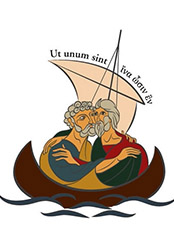
The Holy Father is making a pilgrimage this May 24-26. The Assembly of Catholic Ordinaries of the Holy Land held a planning meeting in Tiberias where they settled on a theme and logo for Francis and the ecumenical as Ut unum sint. The logo (seen here) shows the embrace of Saints and Apostles Peter and Andrew. The two are known as the first-called by Jesus in Galilee, patrons respectively of the Church of Rome and the Church of Constantinople.

The news was announced by Terra Sancta.

This is not merely a “trip” but a pilgrimage. The distinction focuses attention to the spiritual and fraternal aspects of being present in a particular place for a particular reason.

Pope Francis and Patriarch Bartholomew will meet in the Basilica of the Holy Sepulchre in order to commemorate and renew the yearning for unity among Christians. The meeting recalls a similar meeting 50 years ago of Pope Paul VI and Patriarch Athenagoras in Jerusalem.

Pope Francis goes undercover to reform Curia

Pope Francis in DisguiseThe news from the Holy See is so secretive that a year ago Pope Francis thought he needed to find out for himself to what extent the Roman Curia needed reform. Only now are we able to reveal the pontifical secret. The bishop of Rome did the unusual: he went undercover. Apparently, Francis has caught the eye of the acclaimed show whose executives at CBS confirmed “that Chief Executive Officer of The One, Holy, Catholic, and Apostolic Church Pope Francis would be appearing in … the hit television show Undercover Boss.”

We know he prefers an alias, so anything is possible for the CEO of the Catholic Church to do his own investigation of the workings –or, not– of the Roman Curia. Watch the show to see who Bishop of Rome sends on vacation.

Deprecatory Blessing Against Pests

There are times we need help from God to get rid of mice and rats, locusts, worms, rats, etc. A deprecatory prayer expresses to God –the Creator of all things– our negative or disapproval of one His guests. The prayer speaks for itself.

The priest vests in surplice and purple stole, and coming to the field or place infested with these creatures, says:

Antiphon: Arise, Lord, help us; and deliver us for your kindness’ sake.

Psalm 43.1: O God, our ears have heard, our fathers have declared to us.

All: Glory be to the Father.
Priest: As it was in the beginning.

All say the Antiphon: Arise, Lord, help us; and deliver us for your kindness’ sake.

P: Our help is in the name of the Lord.
All: Who made heaven and earth.

P: Lord, heed my prayer.

All: And let my cry be heard by you.
P: The Lord be with you.

All: May He also be with you.

Let us pray.

We entreat you, Lord, be pleased to hear our prayers; and even though we rightly deserve, on account of our sins, this plague of mice (or locusts, worms, etc.), yet mercifully deliver us for your kindness’ sake. Let this plague be expelled by your power, and our land and fields be left fertile, so that all it produces redound to your glory and serve our necessities; through Christ our Lord.

All: Amen.

Let us pray.

Almighty everlasting God, the donor of all good things, and the most merciful pardoner of our sins; before whom all creatures bow down in adoration, those in heaven, on earth, and below the earth; preserve us sinners by your might, that whatever we undertake with trust in your protection may meet with success by your grace. And now as we utter a curse on these noxious pests, may they be cursed by you; as we seek to destroy them, may they be destroyed by you; as we seek to exterminate them, may they be exterminated by you; so that delivered from this plague by your goodness, we may freely offer thanks to your majesty; through Christ our Lord.

All: Amen.

The Exorcism

I cast out you noxious vermin, by God the Father almighty, by Jesus Christ, His only-begotten Son, and by the Holy Spirit. May you speedily be banished from our land and fields, lingering here no longer, but passing on to places where you can do no harm. In the name of the almighty God and the entire heavenly court, as well as in the name of the holy Church of God, we pronounce a curse on you, that wherever you go you may be cursed, decreasing from day to day until you are obliterated. Let no remnant of you remain anywhere, except what might be necessary for the welfare and use of mankind. Be pleased to grant our request, you who are coming to judge both the living and the dead and the world by fire.

All: Amen.

The places infested are sprinkled with holy water.

Chiara Lubich, anniversary of death

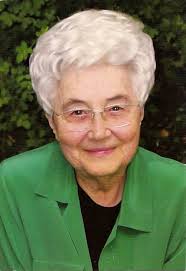
Chiara LubichPrayers for the repose of the soul of Chiara Lubich who died on this date in 2008. Chiara was the founder of the Focolare Movement.
Chiara Lubich’s the formal request to open a cause for sainthood was made on 7 December 2013. When the announcement was made Maria Voce said, “This act invites us all to a life of greater holiness, lived day by day to contribute towards collective sanctity, that sanctity of the people so dear to Chiara’s heart.”
Maria Voce requested the opening of the cause of canonization of Chiara of Bishop Raffaello Martinelli, Bishop of Frascati. December 7th was also a significant date for the Focolare members as it was the  70th anniversary since the beginning of the Movement.

The Church’s tradition is to present to its faithful role models, persons who have distinguished themselves by a particular witness of faith and love for God. The current period of waiting following the death of a person is five years. Thereafter, if the opening is approved, a canonical process to verify the facts of a holy life, of heroic virtues,  and other signs needs to be studied.

12 members of the Focolare Movement are being studied for sainthood.