What does the Catholic priesthood mean to you?

There are those who are very admirable ministers in the priesthood of Jesus Christ. Men who attend to a life in the Spirit. I would say that some of the newly ordained ministers are beautiful people: their heart, mind and soul clearly have the heart of the Good Shepherd. Our role, as Pope Francis has indicated below, is to call the ministers of God to truly live their vocation to fullest extent, to be united in prayer and friendship while together seeking the face of Christ.

Conversely, you and I have met deacons, priests and bishops who, after the meeting would say, “that man should never have been ordained.” Some of the newly ordained are know it alls and more interested in keeping the faithful accountable to some abstract authority. Then there are priests who protect the truth so rigidly that they kill the heart and dull the mind. A priest who uses his pastoral authority badly for the “sake of the Church” ought to enter into serious discernment, like that of the Prophet Samuel, before acting. How many have lost the propriety of the vocation. Scandalous behavior of the ordained is rather troubling for words.

I have to say, too many of the ordained, as a whole, are a mixed bag. We still have men ordained who don’t take their vows seriously, rarely pick up a good book of history, poetry, art, or theology, are more concerned with their day off than the zeal for the gospel, and the list goes on and on.

Sad to say, when I read Pope Francis’ catechesis today, as when I read Pope Benedict’s homilies and various addresses on the priesthood, I walked away distressed at the current state of the ministerial priesthood.

We are all sinners. We all need forgiveness. We all need to love, be loved, and to live in mercy. This Lent I am more conscious of this fact for my own conversion which is why I am hoping that the priesthood in Connecticut, indeed, the USA, will work daily on their conversion: grace only lives in Truth.

One of the many interesting points the Holy Father speaks of today is the buying and selling of the priesthood. Now, it may not be exchange of cash, but the priesthood is too often sold on the level of one’s integrity, one’s coherence, one’s sense of self, of one’s “I am” before Christ and the Church. 

Are we all concerned for the sanctification of the priesthood? How passionately do you love the ordained of the Catholic Church? Are you a spiritual mother, a spiritual father for your deacons, priests and bishops? Do you intercede for them? Are you attentive to their humanity? This is our work, this is our prayer, our sacrifice, our confidence before the Eucharistic Lord and His All-Holy Mother.

Pope Francis teaches:

We have already pointed out that the three Sacraments of Baptism, Confirmation and the Eucharist constitute together the mystery of “Christian initiation,” a unique great event of grace that regenerates us in Christ. This is the fundamental vocation that unites all in the Church as disciples of the Lord Jesus. Then there are two Sacraments which correspond to two specific vocations: Holy Orders and Matrimony. They constitute two great ways through which a Christian can make of his life a gift of love, on the example and in the name of Christ, and thus cooperate in the building of the Church.
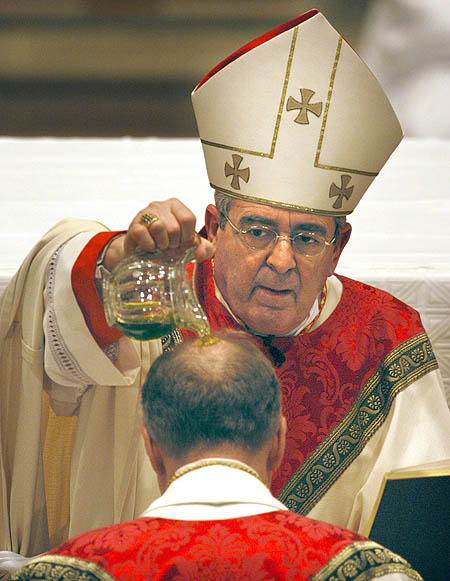
Bishop Brandt OrdinationHoly Orders, articulated in the three ranks of episcopate, presbyterate and diaconate, is the Sacrament which enables the exercise of the ministry, entrusted by the Lord Jesus to the Apostles, to feed his flock, in the power of his Spirit and according to his heart. To feed Jesus’ flock not with the power of human strength or with one’s own strength, but with that of the Spirit and according to his heart, that heart of Jesus which is a heart of love. The priest, the Bishop, the deacon must feed the Lord’s flock with love. If he does not do it with love, it is useless. And in this sense, the ministers that are chosen and consecrated for this service prolong Jesus’ presence in time, if they do so with the power of the Holy Spirit in the name of God and with love.

A first aspect. Those who are ordained are placed at the head of the community. They are “at the head” yes, but for Jesus it means to put one’s authority at the service of, as He himself showed and taught the disciples with these words: “You know that the rulers of the Gentiles lord it over them, and their great men exercise authority over them. It shall not be so among you; but whoever would be great among you must be your servant, and whoever would be first among you must be your slave; even as the Son of man came not to be served but to serve, and to give his life as a ransom for many” (Matthew 20:25-28; Mark 10:42-45). A Bishop who is not at the service of the community does no good’, a priest who is not at the service of the community does no good, he errs.

Another characteristic that always derives from this sacramental union with Christ is “passionate love for the Church. We think of that passage in the Letter to the Ephesians in which Saint Paul says that Christ “loved the Church and gave himself up for her, that he might sanctify her, having cleansed her by the washing of water with the word, that he might present the Church to himself in splendor, without spot or wrinkle or any such thing” (5:25-27). In virtue of Holy Orders the minister dedicates his whole self to his community and loves it with all his heart: it is his family. The Bishop and the priest love the Church in their community, they love her intensely. How? As Christ loves the Church. Saint Paul says the same about matrimony: the husband loves his wife as Christ loves the Church. It is a great mystery of love: this priestly ministry and that of matrimony, two Sacraments that are the way by which persons usually go to the Lord.

A last aspect. The Apostle Paul recommends to his disciple Timothy not to neglect, but rather to revive always the gift that is in him. The gift that was given to him for the imposition of hands (cf. 1 Timothy 4:14; 2 Timothy 1:6). When the ministry is not nourished — the ministry of the Bishop, the ministry of the priest –, with prayer, with listening to the Word of God, and with the daily celebration of the Eucharist and also with the frequentation of the Sacrament of Penance, one ends inevitably by losing sight of the authentic meaning of one’s service and the joy that stems from profound communion with Jesus.

The Bishop who does not pray, the Bishop who does not listen to the Word of God, who does not celebrate Mass every day, who does not go regularly to Confession, and the same for a priest who does not do these things, in the long run lose their union with Jesus and become a mediocrity which does no good to the Church. Therefore, we must help Bishops and priests to pray; to listen to the Word of God, which is the daily meal; to celebrate the Eucharist every day and to go to Confession regularly. This is so important because it concerns in fact the sanctification of the Bishops and priests.

I would like to end with something that comes to mind: but what must one do to become a priest? Where is access to the priesthood sold? No. It is not sold. This is an initiative that the Lord takes. The Lord calls. He calls each one that He wishes to become a priest. Perhaps there are here some young men who have felt this call in their heart, the wish to become a priest, the wish to serve others in the things that come from God, the wish to spend their whole life in service to catechize, baptize, forgive, celebrate the Eucharist, take care of the sick … and spend their whole life in this way. If one of you has felt this thing in his heart it is Jesus who has put it there. Take care of this invitation and pray that it will grow and bear fruit in the whole Church.

A synopsis:

In our catechesis on the sacraments, we now turn to the sacrament of Holy Orders. Building on the vocation received in the sacraments of Christian initiation – Baptism, Confirmation and the Eucharist – the sacraments of Holy Orders and Matrimony correspond to two specific vocations and are two ways of following Christ and building up his Church. Holy Orders, in its three grades of bishop, priest and deacon, is the sacrament of pastoral ministry. Jesus entrusted his Apostles with the care of his flock and in every age the ordained make present in the Christian community the one Shepherd who is Christ. Following the Lord’s own example, they lead the community as its servants. Theirs must be lives of passionate love for the Church for whose purification and holiness the Lord gave himself completely, and they must constantly renew the grace and joy of their ordination through prayer, penance, and daily celebration of the Eucharist. Today, let us pray for all the Church’s ministers, especially those most in need of our prayers, and ask the Lord always to grant his Church holy, generous and merciful pastors after his own heart.
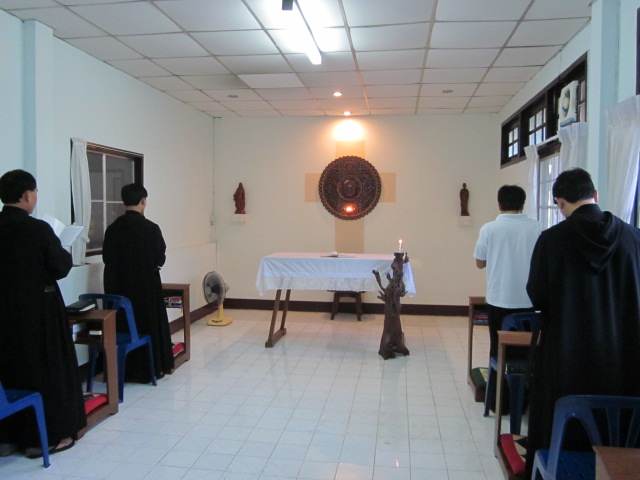
Thailand’s first Benedictine monastery

Thailand BenedictinesBenedictine monasticism as it is lived by men has now expanded to Thailand. The Monastery of Saint Benedict is a work that has been in process for a few years, at least since 2010.

Asianews.it ran a story the other day about the new foundation made by Benedictine monks from Vietnam where there is already a sufficient monastic presence (for now) and gladly supported a move to their neighbors in Thailand. Five monks populate the Monastery of Saint Benedict with ten cells, eight guest rooms and a chapel located outside the city of Chiang Mai in northern Thailand. The monastery is located in the diocese by the same name. According to 2006 statistics, Catholics make up .8% of the population with more than 46,000 faithful.

The new monastery was instigated by the Archbishop Antonio Mattiazzo of Padua. Gratitude to Archbishop Mattiazzo is well deserved for his desire to be generative.

Claudio Corti’s article is here.

Saint Benedict and Saint Scholastica, pray for this endeavor of the new evangelization.

New papal saints

J23 and JP2What do you know about papal saints? How many of them are you able to name?

The Holy Father is canonizing two of predecessors on April 27, 2014. At that time there will be 83 saints who served the Church as the Roman Pontiff. That’s roughly a third of 266 bishops of Rome.

The last of the canonized Pontiffs are: Saint Celestine V (r. 1294), Saint Pius V (1566-1572), and Saint Pius X (r. 1903-1914). We also await the Church’s discernment on 9 other popes who have been beatified, plus several who are at the beginning stages of the sainthood study process.

Christopher M. Bellitto has an article online over at St Anthony Messenger: “John XXIII and John Paul II: Our Newest Saints.” As a quick overview you ought to read. Some interpretative elements pertain more to Bellitto than to me but expand your knowledge.

Ukrainian Catholics flee Crimea

Archbishop Shevchuk speaks during news conference in RomeThe politics regarding the Crimea are not that complex to comprehend; the history is muddled because there is a severe allergy to facts. There is only so long you can lie about your history. Just as there is a rise in the Muslim world of the notion of a caliphate, so is there a push in many sectors of the Putin government for a “new Tzar.” The mentality of extending and exerting political control supposed Russian lands. There is a not so subtle push by some members of the Russian Orthodox Church to act as the Third Rome (with all the negative aspects of this notion). In recent days the reality of Christian-on-Christian persecution has surfaced in Crimea. What a scandal to the beauty of the Good News of Jesus Christ!

Jonathan Luxmoore of Catholic Herald UK posted his article, “Priest: Ukrainian Catholics flee Crimea to escape threats of arrest.

The Major Archbishop of the Ukrainian Byzantine Church Shevchuk has asked priests to dedicate Ukraine to Mary’s protection on April 6, to help calm “hearts filled with anxiety for the future.”

There is a service of prayer scheduled here in CT for Peace and Democracy in Ukraine

Principal Celebrants:
The Most Reverend Leonard P. Blair
His Excellency Bishop Paul Chomnycky

Church of the Sacred Heart
158 Broad Street
New Britain, Connecticut

SUNDAY, APRIL 6, 2014 
6 p.m.

Please join clergy and laity from the Ukrainian, Polish, Greek, Armenian, Lithuanian
and other communities in solidarity and prayer for the future of Ukraine.

Co-sponsored by
The Archdiocese of Hartford
The Ukrainian Catholic Diocese of Stamford
Sacred Heart Roman Catholic Church and
The Ukrainian Catholic Education Foundation

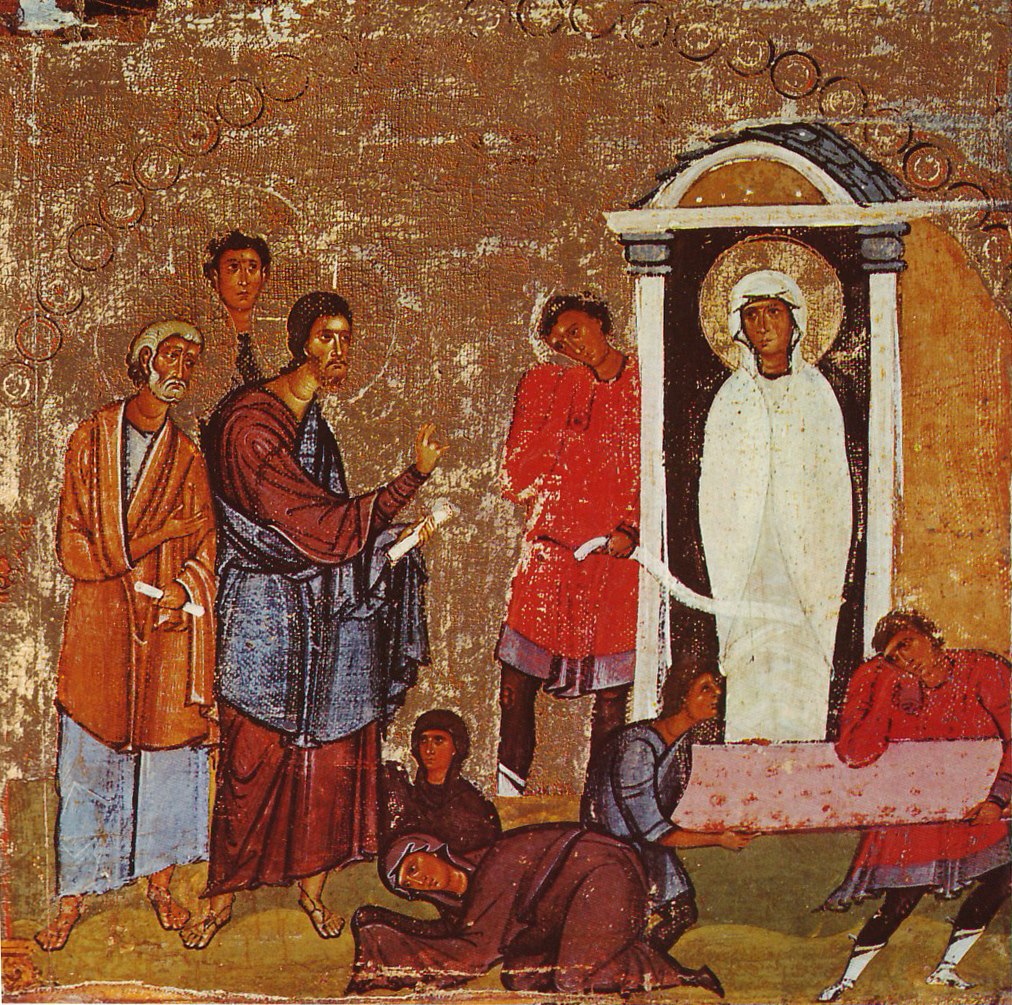
Getting a glimpse of Pascha: Lazarus being untied

untieing of Lazarus.jpg

Walking through Lent the Church gives us key glimpses, that is, tastes through the liturgical narrative leading to Pascha (Easter).


The icon shows Lazarus being untied of his burial shroud. In fact, this metaphor of being untied is key: the crucified and risen Lord unties us of our sin to live in freedom.


A hymn at Lenten Vespers is revealing:

“O Lord, while dwelling in the flesh on the other side of Jordan, Thou hast foretold that the sickness of Lazarus would not end in death, but that it had come to pass for Thy glory, O our God. Glory to Thy mighty acts and Thine all-sovereign power, for Thou hast destroyed death in Thy great mercy and Thy love for mankind.”

Nine Month Novena in Honor of the Virgin of the Incarnation

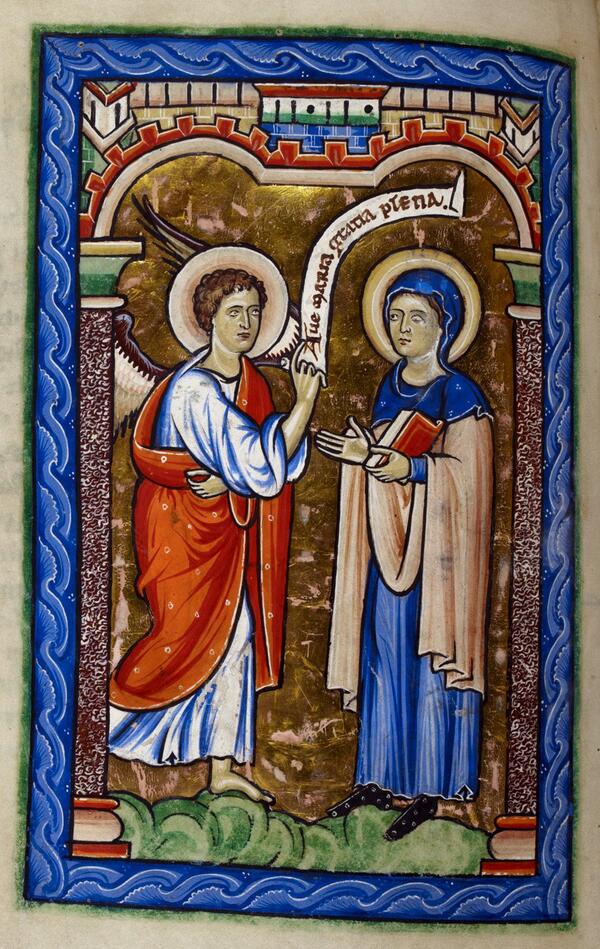
Annunciation AAllori 1603A friend of mine sent me an invitation to join her and others in praying this novena. It was given to her by a mutual friend a decade ago. Julie reports “each year, I am overwhelmed by the reports of the novenas prayed and the amazing prayers answered. Please seriously consider praying this quick prayer with me for the next nine months. I promise you: it will revolutionize your relationship with Our Lady, and your prayers will be heard and answered.”

Julie has confidence in the regular prayers of the novena when she says:

If you do take it on, I further promise you: you will likely fail.  You’ll forget a day; you might forget several days.  Do what you must to remind yourself—stick the prayer to your bathroom mirror, and pray it while you’re brushing your teeth! Place it by your bed, inside or on top of something that you will look at every night. If (WHEN) you fail, then simply double up, or say it five extra times, if it makes you feel better. Whatever! Just do NOT give up.  Run to your Mother, confide in her, and be certain that she won’t disown you when you fall down. God bless you and thank  you for praying with me!

I am doing the same here: please join me in this sacrifice of prayer.

Nine Month Novena in Honor of the Virgin of the Incarnation

Prayed each day from the Solemnity of the Annunciation the Solemnity of the Nativity, March 25 – December 25. In this novena offer to Our Lady three intentions.

  • Salve Regina (the Hail, Holy Queen…)

O Virgin of the Incarnation, a thousand times we praise thee, a thousand times we greet thee, for the joy thou didst know when the Son of God became flesh in thy womb. Because thou art most powerful, O Virgin Mother of God, grant what we beseech thee for the love of God:  (here name the three intentions).

  • Memorare (Remember, O most gracious Virgin Mary…)
  • Hail Mary

May the heart of Jesus in the Most Blessed Sacrament, be praised, adored and loved with grateful affection at every moment in all the tabernacles of the world and in the hearts of all men, even until the end of time.  Amen.

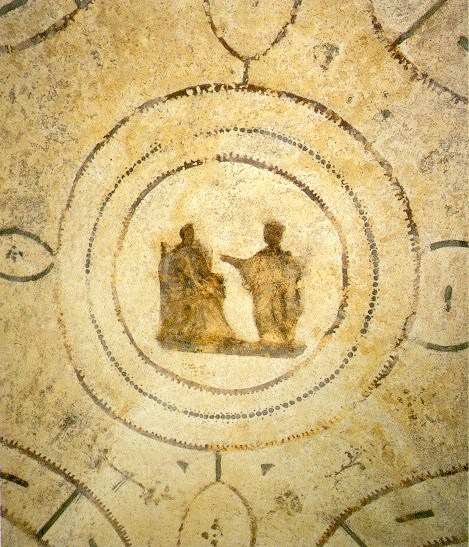
Earliest icon of the Annunciation

I love early Christian history. Don’t you? In fact, I have enjoyed time spent in the various musea, locally and notably here in New Haven, Connecticut at the Yale Art Museum where there is a marvelous exposition of Dura Europus, one of the earliest house churches. But there are marvelous early collections at the world’s musea. I’d suggest going on a study tour. The study of our early Christian roots is about our common Christian memory.

I saw this icon today in cyberspace making the historic claim of being the oldest surviving icon of the Annunciation. A terrific find! The icon is located in the Catacomb of Priscilla on theVia Salaria in Rome. This icon dates from the second century AD.

Several years ago I had the privilege of walking and praying in one of the catacombs but not this one. Historians of Christian archeology say that the Roman catacombs are treasuries of early iconography.

For more info on this early icon of the Annunciation is located here.

One of the interesting comments made is “One difference between this depiction of the Annunciation and later icons is that the Mother of God is shown with her head uncovered. In Rome, young virginal maidens would always have their heads uncovered, and so the imagery is in keeping with the Christian beliefs regarding Mary, the Mother of Jesus Christ. The veil worn in the East would come to dominate iconography of the Mother of God in later centuries.”

Annunciation to Mary

Today is the beginning of our salvation. Indeed, we rejoice in Mary’s “yes” to being the Mother of the Redeemer, and respond with our own “yes” today to God’s will in our lives.

In the Servant of God Father Luigi Giussani’s Meditations on the Holy Rosary, he writes about the Annunciation:

The Angel’s words could have astounded with wonder and humility the young woman to whom they were addressed. But they were not so astounding as to be totally unintelligible; they contained something that made them intelligible to the heart of that young girl who was living her religious duties. The Virgin embraced them to herself: “I am the handmaiden of the Lord. Let it be done to me according to Your word.” Not because she understood but, in the confusion that had become boundless because of the Mystery that announced itself by vibrating in her flesh, the Virgin opened her arms wide, the arms of her freedom, and said, “Yes.” And she stayed alert every day, every hour, every minute of her life. The Virgin Mary’s state of mind, that state of mind which determines an attitude and decides for it in the face of the occasion and the moment, how can we better describe the Virgin’s state of mind than with the word “silence”? Silence as memory filled to overflowing. Two things contributed to this memory, two things determined this silence. The first was remembering what had happened. What had happened preserved its marvelousness, its true mystery, its mystery of truth intact because — and this is the second thing — it had something that was present: that Child, that present young Man, that Son who was present.

Going to the Church Fathers is always a good thing: Saint Ireneus of Lyons teaches us that “For as Eve was seduced by an angel’s voice to turn from God betraying His word, so Mary was given the good news by an angel’s voice that she would bear God, and the latter was persuaded to obey God, so that Mary should become the advocate of Eve. And as the human race was bound to death by a virgin, by a virgin it was delivered.”

Servant of God Oscar Romero

RomeroFriends, on this day in 1980, Archbishop Oscar Romero was martyred while celebrating Mass in San Salvador. He was a great voice for human dignity and social justice.

Let’s pray for our Salvadoran brothers and sisters today — and for all those who are persecuted for their Christian faith.

Nuestra Señora de la Paz, Pray for us!

Archbishop José Gomez
Archbishop of Los Angelus

Theology of the Body, briefly visited with St Gregory Palamas

St Gregory PalamasThe Eastern Christian Saint Gregory Palamas (1296-1359) whose feast day is observed twice a year by Orthodox Christians –once on November 14 and then on the Third Sunday of Lent. For Catholics Saint Gregory Palamas is a great guide for our spiritual training in Lent.

John Paul II was very keen on the theology of the body for some very good reasons. One of which is that he thought that the recovery of certain biblical principles as they are related to the human body were essential for the truthfulness, goodness and beauty Christian life life to thrive. His massive tome on the subject takes times to digest. But he’s not the only one to use the theme of “theology of the body.”

Some tend to reject the idea that the human body has anything to do with spiritual life. Nothing can be further from the truth. Christians, especially liturgically oriented Christians like Catholics and the Orthodox, believe that the body  Saint Gregory, the archbishop of Thessalonki taught a great deal about the importance of the body in the prayer life. Gregory was a proponent of hesychasm, a Greek work meaning stillness, quite. As it is related to a form of prayer it attends to the inner prayer life. It is mental prayer. The Jesus Prayer is prayed.

The point is to prayer unceasing no matter what we are doing. We know this from Saint Paul the Apostle. Saint Gregory helps us to focus on the essentiality of inner prayer amidst the noise of life. No activity is outside of God’s grace because the material world is not contrary to the things of God. However, if the material world becomes an idol, then sin creeps in, which is not good.

Incessant prayer and the worthy reception of the sacraments lead to communion with God. Nothing, particularly, the body-ethic, is outside communion with God, through the energy, not the substance, of the Holy Spirit. This is called thesois. The uncreated energy is defined as grace. It is the uncreated energy of God which transfigures and illuminates us drawing us in communion with the Divine Majesty.

Don’t get grumpy as the mid-Lent blues set in… but keep focus on your mental prayer as it will lead to a deeper relationship with Jesus. Pray to the Holy Spirit for guidance.