Saints Mary, Martha, and Lazarus of Bethany

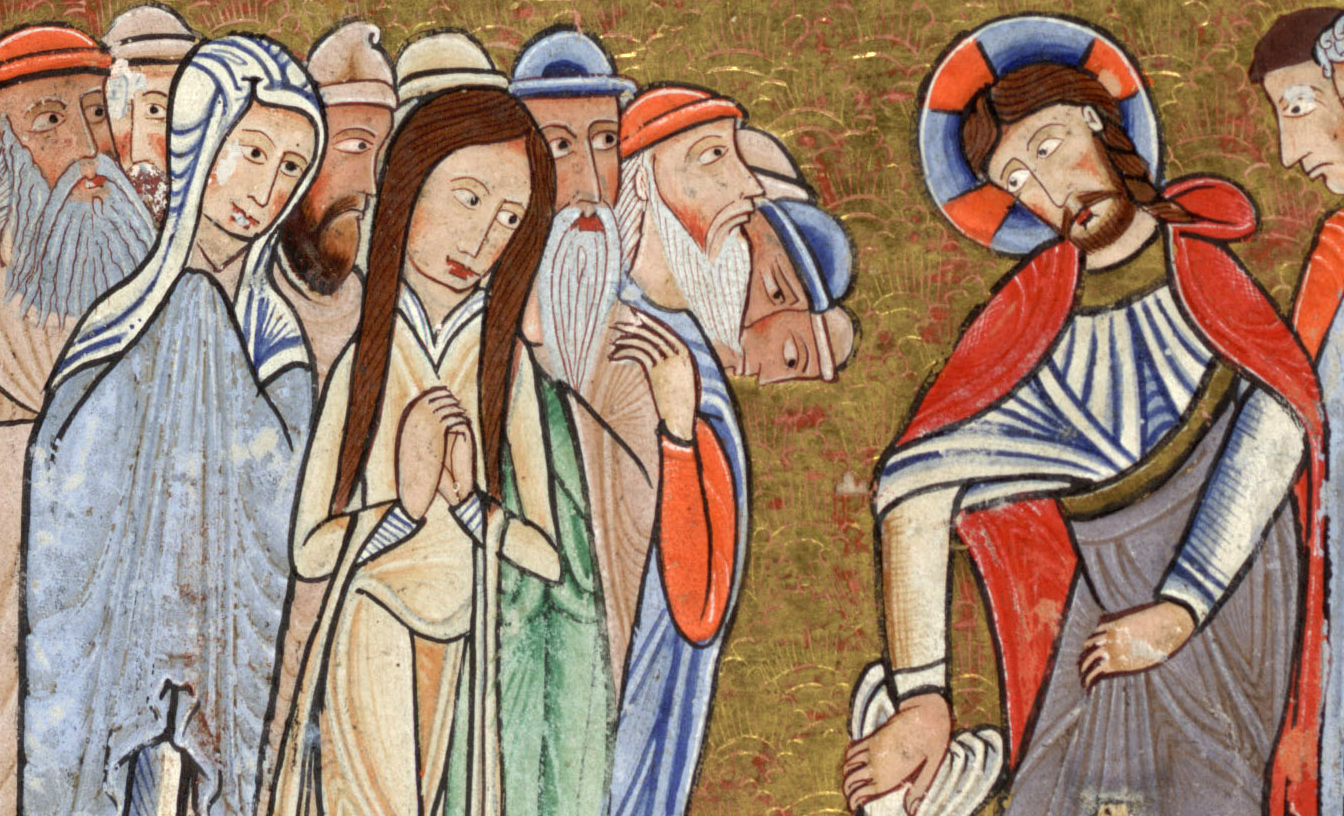
Raising Lazarus Martha and Mary Hunterian PsalterOn the Universal liturgical calendar of the Church today’s feast is for Saint Martha of Bethany. Yet, on the Benedictine liturgical calendar the Church honors the three of Bethany: Mary, Martha, and Lazarus  described in the Gospels as saints. Revealed in sacred Scripture, these people are acclaimed as the much-loved friends of Jesus (according to Luke and John). In the Gospel of Luke ewe read the well-known story of hospitality noting Martha as a symbol of the active life and Mary of the contemplative. The Lord holds both women in tension of what the disciple is to be: a contemplative in action.

The Lord’s raising of Lazarus from the dead is an anticipation of resurrection and a sign of eternal life for the rest of us who are baptized into the Mystical Body of Christ. Resurrection from the dead becomes, with this pericopy a powerful “game-changer” in the life of every human being. The death and subsequent raising of Lazarus evokes in each of us the acknowledge that we do not make ourselves, that God is the only Creator of who we are and what we are about as persons (not as individuals). This gesture of the Lord’s invites each of us to a deeper faith in the Messiah.

So, why is honoring all three characters crucial in our Christian life? Each person: Mary, Martha and Lazarus are convicted in the friendship with Jesus. If friendship, then fidelity, and perseverance, gratitude and hospitality.

Why is this a true feast for Benedictine monks, nuns, sisters and Oblates (laity)?

Saint Benedict sees all persons as a gift of God. The greatest gift was the person of Jesus who received as the giftedness of each person when he said: “I was a stranger, and you welcomed me.” Our Holy Father Saint Benedict is quite direct in how we treat the stranger, how welcome the person who presents himself at the door, we definitive statements. In Chapter 53 of Rule of Saint Benedict we read:

All guests who present themselves are to be welcomed as Christ, for he himself will say: I was a stranger and you welcomed me (Matt 25:35). Proper honor must be shown to all, especially to those who share our faith (Gal 6:10) and to pilgrims. Once a guest has been announced, the superior and the brothers are to meet him with all the courtesy of love. First of all, they are to pray together and thus be united in peace, but prayer must always precede the kiss of peace because of the delusions of the devil. All humility should be shown in addressing a guest on arrival or departure. By a bow of the head or by a complete prostration of the body, Christ is to be adored because he is indeed welcomed in them. After the guests have been received, they should be invited to pray; then the superior or an appointed brother will sit with them. The divine law is read to the guest for his instruction, and after that every kindness is shown to him. The superior may break his fast for the sake of a guest, unless it is a day of special fast which cannot be broken. The brothers, however, observe the usual fast. The abbot shall pour water on the hands of the guests, and the abbot with the entire community shall wash their feet. After the washing they will recite this verse: God, we have received your mercy in the midst of your temple (Ps 47 [48]:10). Great care and concern are to be shown in receiving poor people and pilgrims, because in them more particularly Christ is received; our very awe of the rich guarantees them special respect.

The hospitality shown by the the Holy Three is what we come to know as their personal mission given by God, their personal “I Am” and not mere kindness to the other. In the person of Jesus we meet his enjoyment of their company because it show us how the beauty of human friendship and love is at the core of our DNA. The Church’s honoring Saints Mary, Martha and Lazarus is a sign of hope and promise for all who are in Christ Jesus.

Can we live as the Saints of Bethany? Can we live as Saint Benedict shows us?

Saint James the Apostle

St James the ApostleWe honor Saint James, the Apostle. Scripture reveals that James was the first Apostle to be martyred according to the book of Acts of the Apostles. This James carries with him the title of “the Greater,”  who is not to be confused with James the Lesser (May 3) or with the author of the Letter of James and the leader of the Jerusalem community.

The Church prays,

Almighty everliving God, who consecrated the first fruits of your apostles by the blood of Saint James: Grant, we pray, that your Church may be strengthened by his confession of faith and constantly sustained by his protection.

Some things to remember about Saint James from Scripture:

“My chalice you will indeed drink, but to sit at my right and at my left, this is not mine to give but is for those for whom it has been prepared by my Father.” (Jesus to James and John, Mt. 20:23)

Jesus questioned their ambition, saying, “Whoever wishes to be great among you shall be your servant; whoever wishes to be first among you shall be your slave.”

At the time of James’ death, we learn that Peter was imprisoned, and then miraculously freed. Why did James die and not Peter?

The Gospel shows us the face of  James and his brother wanting a privileged place with Jesus in his Kingdom. James  got his wish of being first in the Church: he gave his life for the salvation of others.

Saint Mary Magdalen

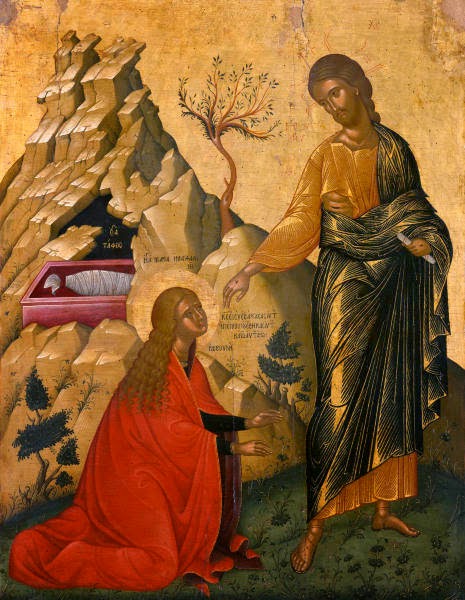
noli me tangereWe love Mary Magdalen because of the way in which the boldness of her love for Jesus made her stare death down beyond all human logic or hope.  For her there is no question that the Messiah of Israel, sent to redeem all humankind, and the Beloved of her most intimate heart are one and the same person.  She perseveres in weeping at the entrance to the tomb because she perseveres in her love: the presence and actions of Jesus in her own life had taught her that love is indeed stronger than death.  Against all odds and logic, in a sort of sublime madness, she clings to her Jesus dead or alive; and she does not reason about a her relative physical strength when she says ironically to the man she thought was the gardener, “Tell me where you laid him, and I will take him away.” Because she loves Jesus so much, she is prepared to carry his body away single-handed.
Such passionate intensity surely was born from her gratitude at having had no less than seven demons driven out of her by Jesus.  As one transformed by the healing power of Jesus’ love, she becomes “the apostle to the Apostles,” since more than any of them she can easily believe in Christ’s Resurrection. For all time St. Mary Magdalen stands as the foremost embodiment of the soul thirsting for God, the soul passionately seeking God.  And in the end she does find him.  “He whom her heart loves” is also the Beloved of the Father who had first come seeking her.  Mary could find him because he first chose, in utter love, to put himself within her reach.

Reflection by Father Simeon, OCSO (h/t Spencer Abbey blog)

Saint Mary Magdalen

St Mary MagdalenThe Church remembers liturgically the woman called the Apostles to the Apostles, the penitent woman who loved the Lord with a totality of being (Luke 8:2-3); from Bethany to the tomb to new life Mary give witness to something and to someone amazing! It is said that seven devils had been cast out of Mary (Mark 16:9). She is named as standing at the foot of the cross with the Blessed Mother and St John (Mark 15:40; Matthew 27:56; John 19:25; Luke 23:49). She saw Christ laid in the tomb, and she was the first recorded witness of the Resurrection. She met the Divine Presence, received forgiveness, and followed the Him to the Cross and was the first to witness the resurrection. The meeting of Jesus is the crucial point here. Tradition holds that Mary died in AD 68. The Greek Church says that she retired to Ephesus with the Mary, the Mother of God. Some of her relics are in Constantinople and others in France.

The Magdalen is the patron saint of those in process (journey) of conversion, of monks and nuns, of Dominicans, those who struggle with sexuality, southern France, and the Diocese of Salt Lake City.

Of St. Mary Magdalen, Bishop Alfred A. Curtis had this to say:

“We find in this Saint all that is noble, precious, beautiful and admirable; her creatures and contempt of self – and the root of all, her supreme and ultimate confidence in God was founded on the knowledge of her misery and nothingness, which made her despise self. She knew our Lord, He had reproved her for her crimes, but she turned to Him with her whole heart, and sought Him at a time and place that men might call unseemly. Oh, what a gift to know and loathe one’s self, and at the same time to believe that God does not loathe us! Let us ask St. Magdalen to get for us that confidence which she possessed in such a supreme degree.” (The Sisters of the Visitation of Wilmington (1913). The Life and Characteristics of Right Reverend Alfred A. Curtis, D.D. New York: P.J. Kenedy & Sons.)

Saint Elijah, holy prophet

Elijah saintPraises to the great Elijah!
Let our songs to heaven rise.
His the grace to hear God’s whisper
Where all earthly music dies.

Clad in skins he made his dwelling
On Mount Carmel, finding there
That austere and lonely wisdom
Hidden in a life of prayer.

Yet he went forth at God’s bidding,
Flashed God’s word and law abroad
Till the idols fell around him
And his people turned to God.

May we, too, make war on falsehood,
Burn with zeal for God’s command
Till we follow our true Master
In whose sight we always stand.

Now we pray our Prophet-father
That our lives obtain this grace:
An outpouring of God’s Spirit
Over every time and place.

Praise and honor to the Father,
To the Son and Spirit praise.
Theirs be all our love and worship
Now and through eternal days.

Saint Apollinare

Saint ApollenareSaint Apollinare of  Ravenna was a third century saint from Antioch who was the first bishop and saint of Ravenna. It is recorded that his martyrdom happened on 23 July but the Church’s liturgical memorial is July 20.

Saint Apollinare was originally from Antioch (where the followers of Jesus Christ were first called Christians according to the Acts), was ordained bishop by Saint Peter and believed to be a disciple of his since AD 44. The tradition holds that Apollinare travelled with Peter from Antioch to Rome. Recall that Peter was the bishop of Antioch before this move.

One of the historic martyrologies records a brief historical note on saints indicates that Apollinare was first mentioned in the 5th century Gerominiano Martyrology listing him as a “confessor” and “priest.” In the Roman martyrology the record notes him as “a Bishop who, by knowing the Gentiles the unfathomable riches of Christ, preceded as a good Shepherd his flock, honoring the Church at Ravenna in Romagna with his glorious martyrdom.”

Saint Peter Chrysologus (425-451), a renown doctor of the Church, cites Saint Apollinare in his sermon 128, giving some historical information on Apollinare: he was the first bishop of Ravenna; because of his faith, he suffered many torments and shed his blood, dying from wounds received.

Saint Camillus de Lellis

DeLillisToday is the Feast of Saint Camillus de Lellis (1550-1614), spiritual son of Saint Philip Neri, who under his guidance founded a new order in the Church, the Camillans, who are dedicated to the care of the sick. He had the charism of honoring the sick as living images of Christ. This captures our Christian life in a clear way.

Please keep the sons of Camillus in prayer who recently elected a new general superior.

Pope Leo XIII made Saint Camillus, with Saint John of God, a patron of the sick.

Feast of the Dispersion of the Apostles

On any number of occasions I’ve spoken about the various local commemorations of saints; not all liturgical calendars are the same due to the presence of locally venerated saints and blesseds. Saint Kateri Tekawitha is not on the liturgical calendar of Hong Kong, for example. A friend of mine brought to my attention an unusual feast, that of the Dispersion of the Apostles. It’s an Irish feast with no analogue in the USA. This is a clear example of the richness of local church. Moreover, one can say that the Catholic Church is not monolithic or hegemonic. Here’s the note of my friend:

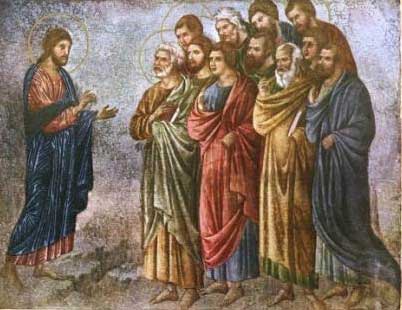
Jesus-ApostlesOn July 15, Canon O’Hanlon notes the recording, in the Martyrology of Aengus, of The Feast of the Dispersion of the Apostles. This feast marks the dispersal of the Holy Apostles to their various missionary destinations, but in some of the copies of Saint Aengus’s calendar, a list of not only the biblical Twelve Apostles is appended, but also a list of the ‘Twelve Apostles of Ireland’. This was a name given to a group of early saints, students of Saint Finnian of Clonard, who themselves dispersed to various parts of Ireland to evangelise this country, some of them are also credited with founding missions outside of Ireland. In the account below I have transferred the actual quotations from the Martyrology out of the footnotes and into the main body of Canon O’Hanlon’s text. I have also added some notes on the identities of the Irish Twelve:

Festival of the Twelve Apostles

In the ancient Irish Church, on the 15th day of July, was celebrated the Festival of the Twelve Apostles, as we read in the “Feilire” of St. Aengus. In the “Leabhar Breac” copy is the following Irish rann, translated into English, by Whitley Stokes, LL.D.

“The twelve Apostles who excel every number, before a countless host Jesus distributed them among Adam’s seed.”

There is an Irish stanza annexed, in which those Twelve Apostles are severally named. Thus translated into English.

“Simon, Matthaeus and Matthew, Bartholomew, Thomas, Thaddaeus, Peter, Andrew, Philip, Paul, John and the two Jameses.”

And succeeding it, there is another, enumerating the Twelve Apostles of Ireland. This is headed “XII. Apostoli Hiberniae,” and then follow these lines, thus translated into English:

“The Twelve Apostles of Ireland”:

“Two Finnens, two chaste Colombs, Ciaran, Caindech, fair Comgall, Two Brenainns, Ruadan with splendour, Nindid, Mobii, son of Natfraech.”

This ancient Festival, styled the Separation of the Apostles of Christ for their Missions in various parts of the old world, has been often alluded to by the early Greek and Latin Fathers. The Bollandists, who place it at the 15th of July, have a learned disquisition on its origin and history, to which the reader is referred.

Notes on the Twelve Apostles of Ireland:

Two Finnens – the two great Saint Finnians – Finnian of Clonard, ‘tutor of the saints of Ireland’ and Finnian of Moville.

Two Chaste Colombs – Saint Columba of Iona and Saint Columba of Terryglass.

Ciaran – Some lists include two Ciarans, both Saint Ciaran the Elder (of Saighir) and Ciaran the Younger (of Clonmacnoise).

Caindech – Saint Canice or Kenneth of Kilkenny.

Fair Comgall – Saint Comgall of Bangor.

Two Brenainns – Saints Brendan the Elder (of Birr) and Brendan the Younger (the Navigator) of Clonfert.

Ruadan with splendour – Saint Ruadhan of Lorrha.

Nindid – Saint Ninnidh of Inismacsaint.

Mobii – Saint Mobhí of Glasnevin.

Son of Natfraech – Molaise of Devenish

Finally, it may be noted that the list of the Twelve Apostles of Ireland is preserved in various manuscripts which do not always tally. Some of the saints, not present on this list, can include Saints Senan and Sinell.

Saint Thomas

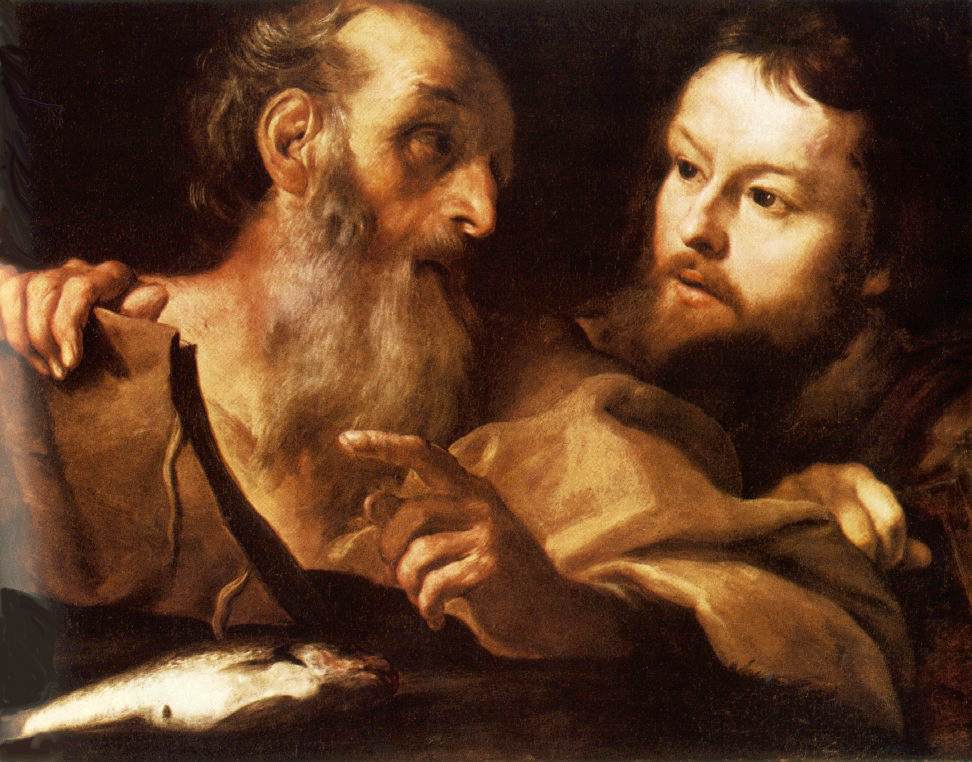
Sts Andrew and Thomas Bernini 1627Although the doors were closed,
Jesus appeared to his disciples.
He took away their fear and granted them peace.
Then He called Thomas and said to him:
“Why did you doubt My resurrection from the dead?
Place your hand in My side;
see My hands and My feet.
Through your lack of faith,
everyone will come to know of My passion and My resurrection,
and they will cry out with you:
My Lord and My God, glory to You!

Through the Apostles we come to know and love the Savior of humanity in ways unimaginable. Thomas, as the text from the Byzantine Liturgy for “Thomas Sunday” suggests, is a keen witness to the resurrection of Jesus from the dead. The miracle of trampling death by death itself requires of man and woman the openness to follow a witness who points, who interrogates, who gives voice to, a wonder never seen and experienced for now. The so-called doubts of Thomas can really be understood from the viewpoint of faith and reason: is it reason that a man be raised from the dead? Is it reasonable to speak about this fact from the eyes of faith? Thomas stands before the Lord and gives the answer in the affirmative. Faith is the capacity to see all of life, the small and the great, the seen and unseen, the common and the miraculous as a way of knowing. Thomas knows because of evidence; he has faith in the Lord Jesus because what the Lord taught is reasonable and recognizable. Blessed are those who believe.

Here is the post from last year.

Apostles as earth’s pillars

St Peter & PaulYou can see from the three posts on this feast of Saints Peter and Paul that these blessed witnesses mean something to me, besides the obvious. One of the things to consider is to remember that we all need good formation in the Christian faith. How else to appreciate the roots of the faith but to know how the Church sees the pillars. Here is the Cistercian Father and Saint Aelred of Rielvaux’s (1110-1167), sermon (18; PL 195, 298), for the feast:

“upon this rock I will build my church” The earth moves with all its inhabitants, I even signed his columns” (Sl 75.4). All the Apostles are pillars of the Earth, but first the two whose feast we celebrate. They are the two columns which support the Church through his teaching, his prayer and example of their constancy. It was the Lord himself that strengthened these columns; because initially they were weak, unable to stand and support the other. And here pops up the grand plan of the Lord: they were always strong, one might think that his strength came from themselves. So before they build, the Lord wanted to show what they were capable of, to let everyone know that your strength comes from God. […] Pedro was released on Earth by a simple voice created […]; another column was also very weak: ‘ even though I have been a blasphemer, persecutor and insolent” (1 Tim 1.13). […]

That’s why we praise wholeheartedly these saints, our parents, who have suffered a lot for the Lord and who persevered with so much fortitude. It costs nothing to persevere in joy, happiness and peace; be great is to be stoned, scourged, flogged for Christ (2 Cor 11.25), and persevere with Christ. It’s great to be cursed and blessed as Paul, being chased and endure, be maligned and comfort, be like the garbage in the world and that take glory (1 Cor -13 4.12). […] And what about Peter? Even if he hadn’t endured anything for Christ, we would be happy to celebrate today, having been crucified for Him. […] He knew where he was the one whom she loved, one who wanted […]: its cross was your way to heaven.