Preparing for Advent: the wreath as a sign that Salvation is at hand


Prophet Isaiah GPiamonte.jpgThe new liturgical year begins tonight at First Vespers for Advent (as a point of comparison, the Church in Milan which follows its own liturgical calendar and set of customs began Advent on November 14th this year [2010]). A new liturgical year refreshes our understanding of good Catholic customs and practices, a renews the emphasis of ongoing conversion and encourages a lively following of God Incarnate — all these things are essential hallmarks of Advent.

The newness the Advent gives to us is seen as a feast for the senses (Catholics are sensual people) known through investment of our best resources and energies: the Church’s vesture changes to purple, silence is observed a little more in the Liturgy, the sacred Scriptures draws out attention to waiting and preparing the way of the Lord (think of the Prophet Isaiah pictured right), the season’s music focuses our hopes and loves on the Kingdom already present but not fully realized and our homes, the “domestic church,” reinforces our seeking God together. As Father U. Michael Lang, CO, said in a recent essay on vestments, “Divine beauty manifests itself in an altogether particular way in the sacred liturgy, also through material things of which man, made of soul and body, has need to come to spiritual realities: the buildings of worship, the furnishings, the vestments, the images, the music, the dignity of ceremonies themselves.”

As one small sign for the daily and weekly journey, our movement in this season of preparation is the Advent wreath — a tangible sign of movement to recognizing more deeply that our Salvation is at hand. The Advent wreath is, however, not a parish church custom as much as it is custom for one’s home (but you can’t persuade too many priests to move the Advent wreath out of the sanctuary these days).

A favorite historian of liturgical customs is Jesuit Father Francis X. Weiser’s 1958 Handbook of Christian Feasts and Customs: The Year of the Lord in Liturgy and Folklore, but I also look to Pius Parsch, Dom Gueranger and the Directory of Popular Piety and the Liturgy (2001) to recall the Advent sensibility given to us by the Church. These authors are particularly helpful in preparing the faithful and especially the children in the Catechesis of the Good Shepherd and other CCD programs about the sacred Liturgy. About the Advent wreath Weiser writes:

The Advent wreath originated a few hundred years ago among the Lutherans of eastern Germany. It probably was suggested by one of the many light symbols which were used in folklore at the end of November and beginning of December… The Christians in medieval times kept many of these lights and fire symbols alive as popular traditions and ancient folklore. In the sixteenth century the custom started of using such lights as a religious symbol of Advent in the houses of the faithful. This practice quickly spread among the Protestants of eastern Germany and was soon accepted by Protestants and Catholics in other parts of the country. Recently it has not only found its way to America, but has been spreading so rapidly that it is already a cherished custom in many homes.

Advent wreath ex.jpg

The Advent wreath is exactly what the word implies, a wreath of evergreens (yew or fir or laurel), made in various sizes. It is either suspended from the ceiling or placed on a table, usually in front of the family shrine. Fastened to the wreath are four candles standing upright, at equal distances. These candles represent the four weeks of Advent.


Daily at a certain time (usually in the evening), the family gathers for a short religious exercise. Every Sunday of Advent one more candle is lit, until all four candles shed their cheerful light to announce the approaching birthday of the Lord. All other lights are extinguished in the room, and only the gentle glow of the live candles illuminates the darkness. After some prayers, which are recited for the grace of a good and holy preparation for Christmas, the family sings one of the traditional Advent hymns or a song in honor of Mary.


The traditional symbolism of the Advent wreath reminds the faithful of the Old Testament, when humanity was “sitting in the darkness and in the shadow of death” (Luke 2:79); when the prophets, illumined by God, announced the Redeemer; and when the hearts of men glowed with the desire for the Messiah. The wreath — an ancient symbol of victory and glory — symbolizes the “fulfillment of time” in the coming of Christ and the glory of His birth.


In some sections of Europe it is customary for persons with the name of John or Joan to have the first right to light the candles on the Advent wreath and Christmas tree, because John the Evangelist starts his Gospel by calling Christ the “Light of the World” and John the Baptist was the first one to see the light of divinity shining about the Lord at His baptism in the Jordan. (pp. 54-55)

Clementina Valentina, RIP

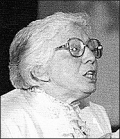
Clementina Valentna.jpgThe Christian community of faith in New Haven, Connecticut mourns the loss of Clementina Valentina, 85, Third Order Laity of the Order of Preachers. Our friend and fellow companion has been called home by the Lord.

The Mass of Christian Burial was celebrated today at The Church of Saint Mary (New Haven, CT) by Father Albino Barrerra, OP and concelebrated by several Dominican friars and a secular priest, the Rev’d Father Donald A. Guglielmi. The Dominican laity were present as well as several Knights of Columbus. As a fitting tribute to such a beautiful woman was the presence of about 100 people gathered in prayer for the Clem.

Clem’s life only makes sense for many of us, as Father Albino said, through the lens of faith. In theological terms, in Clem’s life there was a hermeneutic of faith and continuity formed in the heart of the Church. Like the many narratives in the gospels where faith in Jesus led to conversion, healing and new life, Clem’s life of faith first given to her by her parents at Baptism sustained not only her but also her friends and acquaintances. God gives us the friends we need in order to know Him. In fact, the three gifts of Clem given to us these many years and that have built up the Kingdom of God on earth, I am convinced, were Clem’s capacity for loyal friendship, her deep and abiding faith in and witness to Jesus Christ through the Church and profession in the Third Order of the Dominicans (the Dominican laity) and her quiet, unassuming way of doing things in love. I will miss her warm embrace, her stellar proclamation of the Scriptures at Mass and her good example.
May the Mantle of Our Lady of Grace wrap Clem today and for eternity. Saint Dominic and Saint Catherine of Siena, pray for us.

Orazio Soricelli visits New Haven, honors St Andrew the Apostle

St Andrew relic2 New Haven.jpgNew Haven has many residents whose family hails from Amalfi, Italy. The Italian heritage society, The Saint Andrew Society of New Haven (Società di Sant’Andrea Apostolo), draws the old time Italians, most by now have only an affection of Amalfi but neither speak the Italian language nor have been to the beautiful sea-side town.

The enchanted and beautiful lush area not far from Naples. Amalfi, as you know, over the years has been the resting place of the relics of the brother of Peter, fisherman and first-called by the Lord, Saint Andrew the Apostle. His relics have been in Amalfi since the 13th century (brought to the Italian city by crusaders coming back from Constantinople). A small relic of Saint Andrew is venerated here in New Haven at The Church of St Michael. This parish is recognized as the first spiritual home of the Italian community for more than 150 years. And gratefully so for us to have one of the closest connections to Our Savior and to the Prince of the Apostles!

Continue reading Orazio Soricelli visits New Haven, honors St Andrew the Apostle

The Proclamation of Thanksgiving according to Abraham Lincoln


Abraham Lincoln.jpg

The year that is
drawing towards its close, has been filled with the blessings of fruitful
fields and healthful skies. To these bounties, which are so constantly enjoyed
that we are prone to forget the source from which they come, others have been
added, which are of so extraordinary a nature, that they cannot fail to
penetrate and soften even the heart which is habitually insensible to the ever
watchful providence of Almighty God.

In the midst of a civil war of unequaled
magnitude and severity, which has sometimes seemed to foreign States to invite
and to provoke their aggression, peace has been preserved with all nations,
order has been maintained, the laws have been respected and obeyed, and harmony
has prevailed everywhere except in the theatre of military conflict; while that
theatre has been greatly contracted by the advancing armies and navies of the
Union.


Continue reading The Proclamation of Thanksgiving according to Abraham Lincoln

Saint Catherine of Siena: ambassador, woman of holiness & spiritual mother

Pope Benedict spoke in his General Audience today of the great 14th century Dominican sister, Saint Catherine of Siena, holy woman, ambassador, truth-speaker, Doctor of the Church and spiritual mother. His choice of saint could not have been better since the presence of many of the new cardinals were in attendance. Rome Reports provides a brief video clip on the papal address.

St Catherine of Siena PGiovanni.jpg

Today I would
like to speak to you about a woman who has had an eminent role in the history
of the Church. She is St. Catherine of Siena. The century in which she lived —
the 14th — was a troubled time for the life of the Church and for the
whole social fabric in Italy and Europe.

However, even in
the moments of greatest difficulty, the Lord does not cease to bless his
People, raising men and women saints who stir minds and hearts, bringing about
conversion and renewal. Catherine is one of these and still today she speaks to
us and pushes us to walk courageously toward sanctity to be disciples of
the Lord in an ever fuller sense.

Born in Siena in 1347 to a very numerous
family, she died in her native city in 1380. At 16, moved by a vision of St.
Dominic, she entered the Dominican Third Order, in the feminine branch called
the Mantellate. She stayed with her family and confirmed the vow of virginity
she made privately when she was still an adolescent; she dedicated herself to
prayer, penance, and works of charity, above all for the benefit of the sick
.

When
her fame for sanctity spread, she became the protagonist in an intense activity
of spiritual counsel, dealing with all categories of persons: nobles and
politicians, artists and ordinary people, consecrated persons, ecclesiastics,
and including Pope Gregory XI, who at that time resided in Avignon and whom
Catherine exhorted energetically and effectively to return to Rome. She
traveled a lot to solicit the interior reform of the Church and to foster peace
between states. For this reason also the Venerable John Paul II declared her
co-patroness of Europe: so that the Old World would never forget its Christian
roots that are at the base of its journey and continue to draw from the Gospel
the fundamental values that ensure justice and concord.

Continue reading Saint Catherine of Siena: ambassador, woman of holiness & spiritual mother

Caring for friends

Let us, who have a spiritual as well as natural affection for friends who are deed according to the flesh, though not according to the spirit, have far greater solicitude and care and zeal in offering up for them those things which will help the spirits of the departed –alms, and prayers and supplications.  ~Saint Augustine of Hippo

Everyone “owes something to the world” –Chesterton reminds us: give thanks!

The news that
some Europeans have been wrecked on a desert island is gratifying, in so far as
it shows that there are still some desert islands for us to be wrecked on.
Moreover, it is also interesting because these, the latest facts, actually
support the oldest stories. For instance, superior critics have often sniffed
at the labours of Robinson Crusoe, specifically upon the ground that he
depended so much upon stores from the sunken wreck. But these actual people
shipwrecked a few weeks ago depended entirely upon them; and yet the critics
might not have cared for the billet. A few years ago, when physical science was
still taken seriously, a very clever boys’ book was written, called
“Perseverance Island.” It was written in order to show how “Robinson Crusoe”
ought to have been written. In this story, the wrecked man gained practically
nothing from the wreck. He made everything out of the brute materials of the
island. He was, I think, allowed the advantage of some broken barrels washed up
from the wreck with a few metal hoops round them. It would have been rather
hard on the poor man to force him to make a copper-mine or a tin-mine. After
all, the process of making everything that one wants cannot be carried too far
in this world. We have all saved something from the ship. At the very least,
there was something that Crusoe could not make on the island; there was
something Crusoe was forced to steal from the wreck; I mean Crusoe. That
precious bale, in any case, he brought ashore; that special cargo called “R.
C.,” at least, did not originate in the island. It was a free import, and not a
native manufacture. Crusoe might be driven to make his own trousers on the
island. But he was not driven to make his own legs on the island; if that had
been his first technical job he might have approached it with a hesitation not
unconnected with despair. Even the pessimist when he thinks, if he ever does,
must realise that he has something to be thankful for
: he owes something to the
world
, as Crusoe did to the ship. You may regard the universe as a wreck: but
at least you have saved something from the wreck.


Not only does the Christian encounter the great act of thanksgiving at every Mass, at moment of prayer, at the very realization that every point of life is given –and not taken– but also that everything is total grace given by God for our happiness in this life and in the next. Happy Thanksgiving, friends!

Manuela Camagni, an aid to the Pope mourned

Pieta GBellini.jpgManuela Camagni, 56, a member of the Memores Domini (the lay consecrated group of Communion and Liberation), died earlier today as a result of injuries sustained in a car accident Tuesday evening in Rome. She was taken to Rome’s Umberto I Polyclinic for treatment and latter died. Manuela served in the Apostolic Household helping to care for the temporal needs of Pope Benedict XVI. She worked closely with Monsignors Georg Gaenswain and Alfred Xuereb, the two personal secretaries of the Pope. Manuela, with the three other Memores Domini, are among the closest collaborators, “the family” of His Holiness.

The Holy Father is very personally moved by the death of Manuela and offer Mass for her soul this morning.

Manuela Camagni.jpg

I bid you to pray for Manuela Camagni, her family and the Memores Domini.

May the Lord grant mercy, peace, light and rest to Manuela. May her memory be eternal.

Saint Andrew Dung Lac and companions


St Andrew Dung Lac.jpg

O God, source and origin of all fatherhood, who kept the
Martyrs Saint Andrew Dung-Lac and his companions faithful to the Cross of your
Son, even to the shedding of their blood, grant, through their intercession
that, spreading your love among our brothers and sisters, we may be your
children both in name and in truth.

Saint Andrew and his 117 companions are known as the Martyrs of Vietnam, killed for their faith in Christ between 1745 and 1862, but these people are few in number compared with the vast number of people thought to have been persecuted. Saint Andrew was a secular priest who was killed in 1839. Among the companions there were 8 bishops, 50 priests, 59 lay faithful of Vietnamese, Spanish and French nationalities. Pope John Paul II canonized these saints in 1988.