Mary, Mother of God

The sacred Liturgy of the Church fittingly calls to mind three aspects of worship and gives us the essential qualities of Christian life and praise of God. We can note from the Liturgy the (1) humility of all the characters in today’s Gospel, (2) the adoration of the Holy Name of Jesus, (3) and closeness to the Virgin Mary, Mother of God.

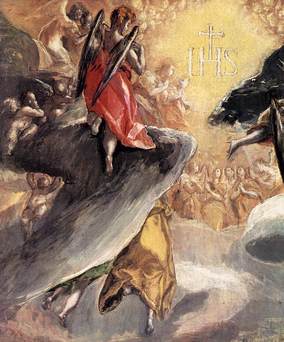
Humility proclaims the greatness of GodAdoration of the Name of Jesus El Greco detail.jpg
Approaching to the divine is done only in humility; only in recognizing that we don’t make ourselves; only in knowing who we are in front of God, creator of heaven and earth. The gospel tells how to approach God: like the humble people of history:
  • Jesus, the Second Person of the Blessed Trinity, was made flesh, who fulfilled the Law with the rite of circumcision and accepted the name given by the angel
  • Mary, the teenage virgin who stands in wonder and awe before the Spirit
  • Joseph, the righteous carpenter, who protected the Gift
  • shepherds, the rustic men who were amazed and glorified and praise God.
Adoration of the Name of Jesus

The last line in today’s reading from the Book of Numbers says: “So shall they invoke my name upon the Israelites, and I will bless them.” This OT prefiguring of the centrality of the name of Jesus having power is startling and it helps us to keep in mind that Jesus himself said that if you ask anything in his name he will give it to you.
In the Missal of Blessed John XXIII (1962) has the Church celebrate the feast of the circumcision of Jesus, which, besides dedicating a male to God, it is also giving of the name of  to the baby. A separate feast day is given for the Holy Name of Jesus in this missal prayed on the first Sunday of teh year, or if Sunday’s dates are 1, 6 or 7, the feast falls to January 2.
But connected here we recall that Mary’s son was given the name “Jesus,” meaning God saves. Paul’s letter to the Philippians tells us that God the Father gave us Jesus’ name so that at hearing his name we would recognize and adore the name of Jesus above all others (2:9). In another place in the NT we hear Saint Peter saying that “there is no other name under heaven , given to men, whereby we must be saved,” and that at the name of Jesus “every knee shall bend, in heaven, on earth and under the earth.”
The spiritual teaching of many saints includes a profound reverence for the divine name of Jesus. One can think of Saint Bernard, Saint Bernardine of Siena, Saint John Capistrano, Saint Ignatius of Loyola, the orders such as the Cistercians and Dominicans who promoted the devotion to the Holy Name of Jesus. Pope John Paul II restored the feast of the Holy Name in the 2002 Roman Missal as an optional memorial giving it another day, that of January 3
Catholic custom is at the hearing of the name of Jesus one bends the neck in a slight bow as a sign of respect. Ultimately, the feast takes seriously the dominical saying, “hallowed be Thy name.”

Closeness to Mary, the Mother of God

Hodigitria Mother of God.jpg

The feast we observe on this the first day of January is an old Marian feast. We recognize that woman gave birth to the Son of God. It is through Mary that we know the face of God, who had a heartbeat. Indeed, through her ‘yes’ to God’s invitation the Eternal Word of God became man, in fact, God-man. Theologically, through Mary the activity of the Holy Spirit is made known to the world. That is why we say, “Come Holy Spirit, come through Mary” as a pious aspiration. In the Year of Grace Pius Parsch says that “she is the priestess who joyfully and solemnly offers on high the Lord’s fruitfruits of sacrifice in redemption” (vol 1, p. 246).
For a man schooled in Jewish theology and the Law, Saint Paul acknowledges and preaches that in the divine plan we personally meet God. In his letter to the Galatians, Paul states: “When the fullness of time had come, God sent his Son, born of a woman, born under the law, to ransom those under the law, so that we might receive adoption as sons.” Further on Paul says that we are “no longer a slave but a son, and if a son then also an heir, through God.” How did this happen? It happened through a woman allowing herself to be disponable to God. That Mary was close to her son Jesus, who is our brother and Savior, Mary our Mother advocates our cause with her Son. Mary is the mediatrix of graces. That is, she intercedes on our behalf with Jesus. And as some preachers will say, “a Jewish mother always gets what she wants from her son.” Mary, the Mother of God, pleads our cause if we go to her with our heart open and supple for grace to be received.
In looking at what the Liturgy gives to us we can put the words of the Pope on our lips: “In giving ourselves to Christ, our Hope, you, O Mother of God, are always present.”

Benedict XVI to mark 25th anniv of the World Day of Prayer for Peace in October 2011, Assisi

JP II Day of Prayer, Assisi 1986.jpg“The year 2011 marks the twenty-fifth anniversary of the World Day
of Prayer for Peace convened in Assisi in 1986 by Pope John Paul II
.
On that occasion the leaders of the great world religions testified to the fact
that religion is a factor of union and peace, and not of division and conflict.
The memory of that experience gives reason to hope for a future in which all
believers will see themselves, and will actually be, agents of justice and
peace.”


Pope Benedict XVI
2011 World Day of Peace message

World Day of Peace: Religious Freedom, The Path to Peace

Pope reads speech.jpg

A key theme in Pope Benedict’s thinking and pastoral program is the place of religious freedom in our thinking and our actions. He devoted this year’s message for the XLIV World Day of Peace. He’s also set a similar theme for 2011’s World Youth Day in Madrid. Several other events through the next year, like the gathering of religions in Assisi in October, aim in the Pope’s mind to help the human family grow in authentic and lasting peace. 
The whole text of Pope Benedict XVI’s 2011 message for the World Day of Peace

Continue reading World Day of Peace: Religious Freedom, The Path to Peace

Pope Benedict XVI’s monthly prayer intentions for January 2011

B16 on June 28 2010.jpg

The prayer intentions of the Pope posted here on the first day of each month are a means to keep ourselves attentive to what the Pope mentions above: on our own true humanity, on God and on brothers and sisters around the world. Let us daily keep each other in prayer, especially when we pray the Sacrifice of the Mass, the Divine Office and/or the Rosary. No greater service can we offer for another and for the whole world than to offer a sacrifice of prayer to God, particularly at the altar.

The general intention

That young people may learn to use modern means of social communication for their personal growth and to better prepare themselves to serve society.

The mission intention

That every believer in Christ may be conscious that unity among all Christians is a condition for more effective proclamation of the Gospel.

Beginning a new year brings me to reflect more poignantly on the reason for prayer in my life and what it’s all about. These words are helpful to me and perhaps to you:

Our praying can and should arise above all from our heart, from our needs, our hopes, our joys, our sufferings, from our shame over sin, and from our gratitude for the good. It can and should be wholly personal prayer. But we also constantly need to make use of those prayers that express in words the encounter with God experienced both by the Church as a whole and by individual members of the Church. For without these aids to prayer, our own praying and our image of God becomes subjective and end up reflecting ourselves more than the living God.
Pope Benedict XVI
Jesus of Nazareth

Happy New Year –2011!!!!!!!!

happy new year rome.jpg

Happy New Year!

¡Prospero Año Nuevo!
Felice Anno Nouvo!
Guten Rutsch! 
नवीन वर्षच्या हार्दिक शुभेच्छा! 
!ושנה טובה 
з Новим Роком! 
С наступающим Новым Годом!
இனிய புத்தாண்டு வாழ்த்துக்கள்! 
नये साल की हार्दिक शुभकामनायें! 
!حلول السنة الجديدة સાલ મુબારક! 
Ath bhliain faoi mhaise! 
!نايا سال مبارک هو 
Feliz Ano Novo! 
Manigong bagong taon! 
Gelukkig Nieuwjaar! 
Boldog új évet! 
Ευτυχισμένο το Νέο Έτος! 
Voorspoedige Nuwe Jaar!

Saint Sylvester, pope

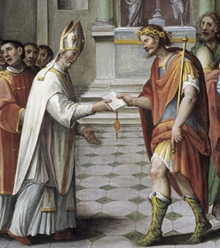
St Sylvester.jpgThe feast day of Saint Sylvester, located so close to the Christmas liturgical cycle was an early decision of the Fathers of the Church, but it has no relation to the Mystery of the Incarnation. Today’s feast Saint Sylveser, according to Pius Parsch is among the oldest in the Church’s liturgical life because his memory was among the first to receive public recognition by the laity due to his exemplary holiness and concern for the welfare of the faithful, especially the poor. He’s considered to be a confessor of the faith but also acknowledged as a martyr. Sylvester’s feast day was for a long time a holy day of obligation.

Sylvester was elected bishop of Rome in AD 314. He succeeded Saint Miltiades who was pope for 2 years (July 2, 311 – 10 January 314) and was succeed by Saint Mark who only served for 263 days. One of the first things he did as pope was to teach the virtue of peace and to live by example.
Notable about Pope Sylvester was that he lived in Rome as its bishop when the Council of Nicea I was held; recall that the Council of Nicea called to order not by the pope by the emperor, who by the way was a friend of Sylvester’s. During his papacy the great churches of St John Lateran, Santa Croce in Gerusalemme, St Paul’s, St Lawrence’s and the first St Peter’s were built, among others.
Several things are attributed to Sylvester:
  • taught the orthodox Catholic faith in the face of heresy and schism
  • taught that the sign of the Cross was given to him by the Lord
  • cared for the poor and expected the clergy to do the same
  • cared for those in the Order of Virgins and Widows
  • determined that bishops had the exclusive right to consecrate chrism
  • instructed priests, when baptizing, also were to anoint with chrism
  • determined that deacons were to wear the dalmatic with a linen maniple
  • determined that bread was to be consecrated as Eucharist only a linen corporal
  • determined those ordained should be stable in that order before taking a higher order
  • instructed the laity should not sue the clergy
  • instructed the clergy should not sue another in civil court
  • called the 1st and 7th days of the week the “Lord’s Day” and the “Sabbath”
  • among the first use the word “feria” (a free day) for weekdays of the liturgical calendar without a commemoration.
Some of these things perdure today.
When Pope Sylvester died in AD 335 he served the Church as bishop of Rome for 21 years, 11 months, 1 day. He was first lair to rest in the catacomb of Saint Priscilla and later moved to the church of Saint Symmachus.

Towards a ‘Cybertheology’ — Antonio Spadaro asks the right question

Jesuit Father Antonio Spadaro, the literature editor
the Italian bi-weekly journal
La Civiltà Cattolica published an article
“Towards a ‘Cybertheology’?” which will appear in the January 1st issue.
Father Spadaro’s summary: 


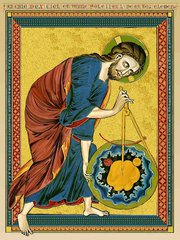
Lord of the universe.jpg

The intelligence of faith in the era of the Net – The
Internet has become part of everyday life for many people, and for this reason
it increasingly contributes to the construction of a religious identity of the
people of our time, affecting their ability to understand reality, and
therefore also to understand faith and their way of living it. The Net and the
culture of cyberspace pose new challenges to our ability to formulate and
listen to a symbolic language that speaks of possibility and of signs of
transcendence in our lives.  Perhaps the time has arrived to consider the
possibility of a cybertheology also understood as the intelligence of faith in
the era of the Net. It would be the fruit of faith that releases from itself a
cognitive boost at a time in which the logic of the Net influences the way we
think, learn, communicate and live.

Pope issues new laws to conform Vatican to European financial controls

B16arms.jpg

Pope Benedict XVI issued sweeping financial reforms for the Vatican City State and the Holy See in the aftermath of great confusion over perceived financial irregularities between the Italian State and the Institute of Religious Works (IOR). For the last six months the Pope has been dogged by accusations of another Vatican coverup of bad money deals causing unnecessary distractions. Recent mega-problems with financial and real estate matters at the Congregation for the Evangelization of Peoples, especially under the leadership of Cardinal Crescenzio Sepe, now the cardinal-archbishop of Naples, heightened papal awareness.
Clearly and consistently Benedict is interested in reform and renewal of the Church in all sectors and he sees this restructuring as part of the change needed. The Pope is cleaning a very dusty house. The new Laws conform to the Laws and principles in force in the European Union. A monetary agreement between the European Union and Vatican City State was signed on December 17, 2009. What’s at issue are the questions on how the various Vatican agencies use money. Particularly, “self-money-laundering, the controls on cash entering or leaving Vatican City State, the obligations regarding the transfer of funds, and the heavy administrative sanctions that are applicable not only to legal persons and entities but also to the physical persons who act on their behalf, by means of the binding recourse action.” Several other issues at hand are dealt with here: fraud and counterfeiting, protection of copyrights of money and circulation. None of the offices of the Vatican or the Holy See are going to exempt from financial oversight. Civil penalties will be imposed for violators. The Pope’s new laws take effect April 1, 2011.
Benedict created a new governing agency for money matters: the Financial Information Authority (FIA) –which will look to prevent and combat money laundering. Essentially, the Authority is a Vatican watch dog for money and other tangible assets.
The mindset of the Pope and his assistants is: “The Holy See welcomes this new commitment and will make these material resources that are necessary to the mission and duties of Vatican City State.” This is a moral and pastoral overhaul for the whole Vatican system.
For His Holiness, as the Communiqué says, “These new Laws are part of the Apostolic See’s efforts to build a just and honest social order. At no time may the great principles of social ethics like transparency, honesty and responsibility be neglected or weakened (cf. Benedict XVI, Caritas in Veritate, 36)
The Apostolic Letter in the Form of a Motu Proprio for the Prevention and Countering of Illegal Activities in the Financial and Monetary Sectors

You can read the Communiqué of the Secretariat of State regarding the new legislation for the prevention and countering of illegal activities in the financial and monetary sectors

The Director of the Vatican Press Office, Father Lombardi comments
A video clip from Rome Reports on the revision of the laws.

Legion of Christ ordains 61 priests

Legion of Christ ordination 2010.jpgOn Christmas eve morning, Cardinal Valasio De Paolis, CS, the pontifical delegate for the Legion of Christ, ordained 61 new priests on Christmas eve at Saint Paul outside the Walls. The Most Reverends Brian Farrell, LC and Paolo Schiavon, respectively from the Pontifical Council for the Promotion of Christian Unity and auxiliary bishop of the Diocese of Rome, concelebrated. 

Among the 61 ordained 7 from the USA, 3 from Canada and 28 from Mexico.
Priestly ordinations in the Legion of Christ typically happen on Christmas eve so that on Christmas day the newly ordained priest celebrates his first Mass of Thanksgiving on the great feast of the Incarnation.

The Legion of Christ’s news on the ordinations is here.
Here’s the story on Rome Reports