Author: Paul Zalonski
Paul Quenon: man, Trappist, semi-hermit, poet
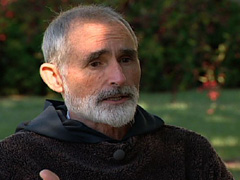 Brother Paul Quenon, OCSO, has been a monk for 52 years. That is, he’s been trying to live in God and by learning to deepen one’s capacity to love in community; that’s how he describes life as a Trappist monk. A one-time spiritual son of Father Louis (Thomas Merton), Brother Paul lives a contemplative life –that is, on the margins of society but at the center of the Church. His witness is a life of proclaiming the beauty of Christ from an abbey of the Strict Observance of Cistercians. Religion and Ethics Newsweekly‘s Judy Valente interviewed Brother Paul recently at his home, the Abbey of Gethsemani.
The interview can be viewed here.
Brother Paul continues his conversation with some extra questions and answers noted here. Here he talks about Father M. Louis — Thomas Merton: his personality and life, his call, the spirituality he lived and taught, and the mystery of what he sought.
Vatican seeks Guidelines in dealing with cases of sexual abuse of minors by clerics
The Congregation for the Doctrine of the Faith delivered a circular letter to the world’s bishops asking for help in working for the common good of the faithful –protecting children from abusive priests. The CDF wants each of the bishops’ conferences around the globe to develop the appropriate processes assist the diocesan bishops in helping victim, educating the ecclesial community, forming priests, and being clear agents of charity and justice.
Cardinal Levada’s letter to bishops.
The Circular Letter can be read here.
The explanatory letter from the Press Office
Good Shepherd Sunday: which are the authoritative voices that guide you?
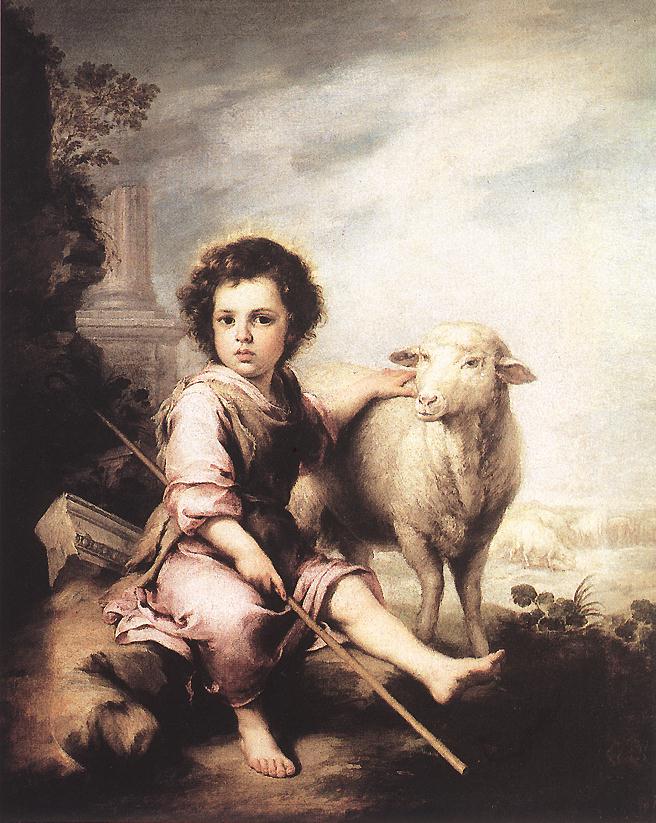 Good Shepherd Sunday, the Fourth Sunday following the great feast of Easter, is celebrated today by the Church. Today is a day in we all focus on the tenderness of the Lord and smoothing quality of his voice gently calling us to deeper and fuller communio with him. The Fourth Sunday of Easter is the day in which the Holy Father draws our attention to vocations in the Church (priest, brother, sister, nun, deacon, perhaps consecrated lay person) for one’s salvation but also for the glory of God in the proclamation of the Gospel and in the iconic life of a Catholic in the sacraments. As Blessed John Paul said in Pastor Bonus, “the task of its [the Church’s] shepherd of pastors was indeed to be that service ‘which is called very expressly in Sacred Scripture a diaconia or ministry'” (1). Benedict’s message for the 48th World Day of Prayer for Vocations can be read here.
Continue reading Good Shepherd Sunday: which are the authoritative voices that guide you?
Mike Aquilina speaks on the Mass: From the Old Covenant to the New
Mike Aquilina is visiting us at the Siena Forum of Faith and Culture here at the Church of Catherine of Siena. In fact, it is a delight to have him, his brother and nephew here among the people of the Siena Forum. Here’s a key point: “With desire I [Christ] have desired to eat this meal with you.” We eat the big Passover –the Eucharist– in order to become partakers of the Divine Nature, it is a Communio: unity of hearts and minds with the Lord. No other form of communio can substitute for the communio we have with Christ in the Eucharist.
Mike explored with us the relevant themes of the Old Testament offering of sacrifice as foreshadowed in the New. That what is seen in the Old Testament is fullfilled in Christ.
“The Eucharist is not offered for faceless of multitudes.”

Continue reading Mike Aquilina speaks on the Mass: From the Old Covenant to the New
Mike Aquilina speaks on Family and its Mission
The Siena Forum for Faith and Culture welcomed Mike Aquilina, an accomplished author, faithful Catholic, a solid husband for 25 years and father of 6. He’s the executive VP of the Saint Paul Center for Biblical Theology and a TV host of several programs on EWTN with Scott Hahn.
Aquilina’s work this morning was to explore with us the theme of Family and Its Mission, looking at the early Christians because they are instructive because their stories are similar to ours, the story is about people and families; the human heart had been capture by faith in Christ.
The early period of Christianity was made up of a robust group of 33 million Christians in a 60 million person empire. Mike cited one scholar, Rodney Stark, says that the growth rate of Christianity at a 40% per decade due to Christ. Mutual affection and openness to fertility; respectful of marriage, popular to pagan women who needed and wanted dignity; the pagan men noticed. It was the single women who prime evangelizers (apostles for the Gospel and virtue). They truly lived grace does not destroy nature, grace perfects it.
Christianity was nurtured in the homes. A theme, Aquilina, reminded us that hagiography typically notes the great saints; they were mostly of men and women in the clergy and religious communities but few stories of families and “normal people.” Citing Saint Augustine, Mike related that he said the faith was passed on by “one heart setting another heart on fire.” The Christian experience is not a static experience. No massive conversions like you’d likely see with a Billy Graham Crusade. The acceptance of Christ was nurtured subtly in the family, “in the smallest of increments.”
The care of the person in a time a persecution and epidemic was a hallmark. The care given by early Christians was based on faith, hope and charity: it changed EVERYTHING.
Pagans noticed the Christians for the charity: as the Emperor Julian noted, the Christians supported their own Christian poor and the pagan poor. Philanthropy was for show; charity addressed the human body and the soul. It was a work of the family. Charity transformed an empire. It wasn’t until later in 4th century that it became institutionalized.
Early Christians were not nominal followers of Christ. AD 293-305 saw the church suffering from a ruthless persecution, a true holocaust. To accept Christ as your Savior meant that you always faced social stigma, subject to violence; one’s life was continuously in jeopardy. Christians lived asceticism: trained by rigorous fasting at least twice a week.
Mike Aquilina’s lessons — practices that move mind and heart.
1. Acknowledge the home as a domestic Church (in the Catechism 1655-1658): “the Church is nothing other than ‘the family of God.'” The Kingdom of God ought to be lived in homes as being truly schools of virtue, places of communio (companionship, fellowship). For example, the meal at home is a mirror of the Eucharist: Christ takes our family meals and transforms them through the Liturgy; meals are echoes of what happens at Mass.
“My dear fellow bishops” Saint Augustine called his people. Bishops, by words and deeds, by teaching, sanctifying (praying) and govern.
2. Make the domestic Church a school of charity. Tertullian in AD 190 said: it is our care of the helpless that is our hallmark; see how those Christians love one another. It is not the art on the wall that identifies us as disciples of Christ but the way we live. We Christians are to live differently.
Happiness in suffering. It is possible to face difficulties; include grandparents and singles in the work of passing the faith on to others. Don’t raise kids by your dysfunction and TV.
3. Make the domestic Church a place of prayer. Conversions happen through simple acts of prayer, of making the Sign of the Cross, grace before meals. The family rosary could be a burden at first but it can become “normal.”
4. Make the Sunday Mass the family’s center of life. Being over scheduled is a problem for many things on contemporary family life. The Mass makes Christians and Christians make the Mass. We can’t live without the Mass.
5. Know that as a domestic Church you are on mission. You are sent out (you are apostles) to speak of Christ and his grace of salvation. We don’t have to be Bible-thumpers; we have to be friends to others so that they will see how we live our lives and want what we have: joy. Others will encounter Christ through our love, not through a TV program or an I-Phone app.
The current day illnesses: rejection, abandonment, loneliness. We need to expand our ideas of epidemic and to see how we interact with others, especially with strangers.
From Saint Jerome, we learn, “the eyes of all are turned on you, your house is set on the watch tower; your life sets for others their self-control.” It is by our own good and virtuous lives others take good example and in turn will live differently. You let others see that happiness is possible. Open your lives to others.
7. Live by the teachings of the Church. The bar is set high but do-able. Early Christians didn’t compromise on their faith and the practice thereof. Hate the sin, love the sinner, help others to live rightly, to live according to wisdom of the Church.
Saint Lucy Filippini
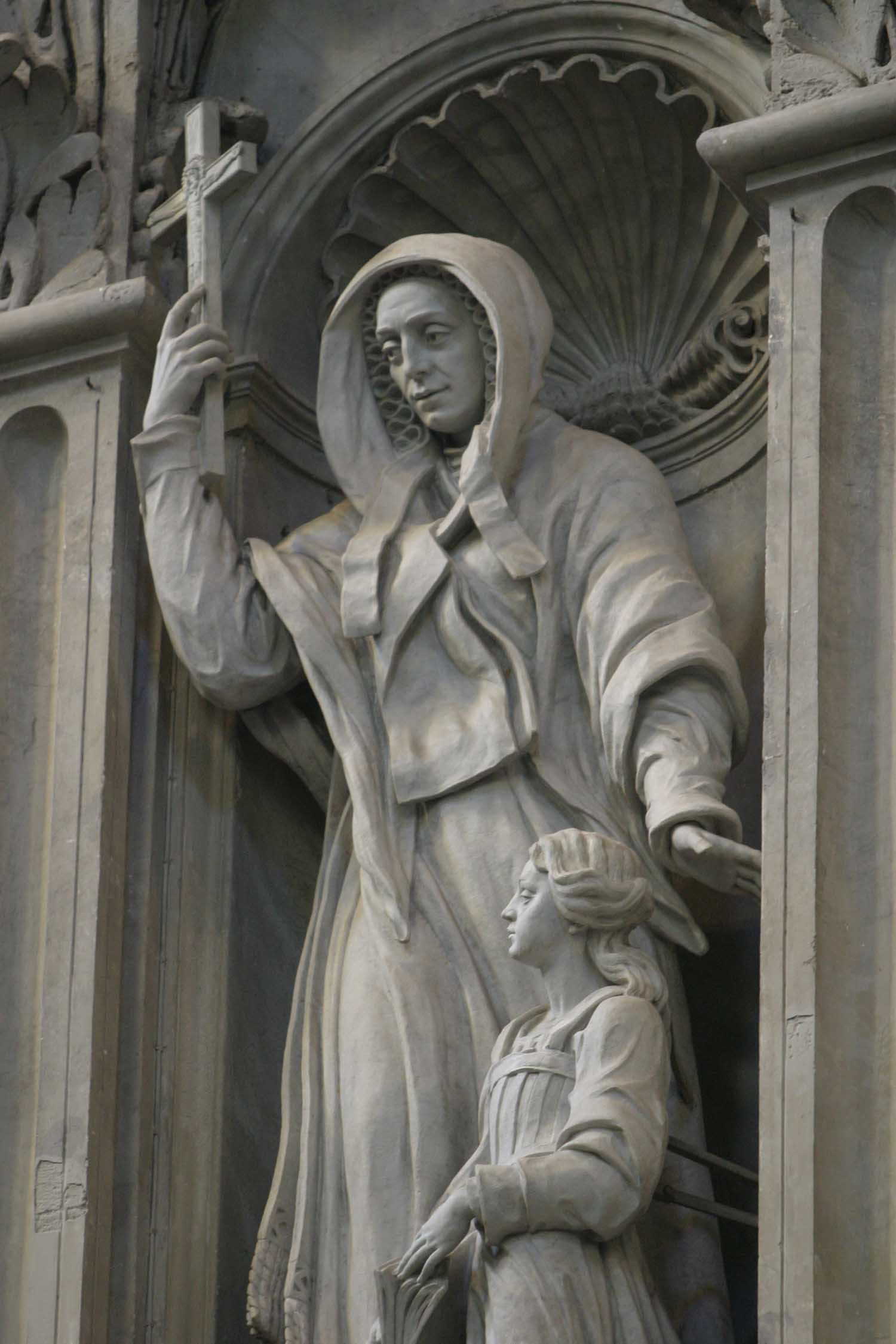 This is the wise virgin who has chosen the better part; she listened to the word of the Lord and treasured it in her heart.
O God, giver of every gift, You kept Saint Lucy Filippini faithful in proclaiming Christ and witnessing to Him, the one Teacher and light of the world. Grant that, illumined by divine grace, we may persevere in listening to Your word and preach it by good works, and so be living signs of holiness and apostolic zeal.
Saint Lucy Filippini, born in Corneto Tarquinia, Viterbo in 1672 was formed in the spiritual life at the Monastery of Saint Clare at the behest of her bishop, Mark Anthony Cardinal Barbarigo. After finishing her spiritual formation the cardinal put Lucy, in collaboration with Rose Venerini, in charge of the Schools of Christian Doctrine that he founded in 1692. By 1707, Lucy went to Rome at the request of Pope Clement XI to direct his schools. Lucy died on March 25, 1732. She was beatified in 1926 and canonized in 1930 by Pope Pius XI.
Saint Lucy Filippini’s legacy as lived with the Filippini Sisters is “the mission of serving the Church with especially dedication to youth, in the manner of Jesus the Teacher and in the radicalness of the following of Christ.”
Pope tells Christians, and Jews, of the guidance of Providence: work together for common good
A delegation of B’nai B’rth International met with Pope Benedict today in Rome. They had done the same 5 years ago (here is the Pope 18 December 2006 address). This meeting is a follow-up meeting of a February meeting held in Paris marking the 40th anniversary of official dialogue between the Holy See and the Jews. As in 2006 so today, the Pope has called Chrsitians and Jews to work more closely together on common projects of healing, spiritual and more values grounded in faith and works of charity for the good of the other. A portion of what the Pope said may be of some interest here:
The Paris meeting affirmed the desire of Catholics and Jews to stand together in meeting the immense challenges facing our communities in a rapidly changing world and, significantly, our shared religious duty to combat poverty, injustice, discrimination and the denial of universal human rights. There are many ways in which Jews and Christians can cooperate for the betterment of the world in accordance with the will of the Almighty for the good of mankind. Our thoughts turn immediately to practical works of charity and service to the poor and those in need; yet one of the most important things that we can do together is bear common witness to our deeply-held belief that every man and woman is created in the divine image (cf. Gen 1:26-27) and thus possessed of inviolable dignity. This conviction remains the most secure basis for every effort to defend and promote the inalienable rights of each human being.
In a recent conversation between delegations of the Chief Rabbinate of Israel and the Holy See’s Commission for Religious Relations with the Jews, held in Jerusalem at the end of March, stress was laid on the need to promote a sound understanding of the role of religion in the life of our present-day societies as a corrective to a purely horizontal, and consequently truncated, vision of the human person and social coexistence. The life and work of all believers should bear constant witness to the transcendent, point to the invisible realities which lie beyond us, and embody the conviction that a loving, compassionate Providence guides the final outcome of history, no matter how difficult and threatening the journey along the way may sometimes appear. Through the prophet we have this assurance: “For I know the plans I have for you, says the Lord, plans for welfare and not for evil, to give you a future and a hope” (Jer 29:11).
Mike Aquilina presents at Siena Forum for Faith and Culture, May 14

Archbishop Shevchuk interviewed by Vatican Radio
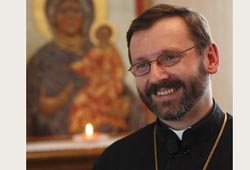 Archbishop Sviatoslav Shevchuk was recently interviewed by Philippa Hitchens of Vatican Radio.
The newly elected Major Archbishop talks about his election, the grace of the Holy Spirit for the Church today, ecclesial unity, the Russian Orthodox Church, Pope John Paul and some other things. He’s clear and polished.
Listen to the interview here.
