Pope speaks with new British Ambassador to the Holy See

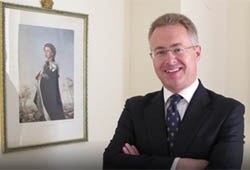
Nigel Marcus Baker.jpg

This morning Pope Benedict XVI received the new Ambassador of Great Britain to the Holy See, Nigel Marcus Baker in an audeince where the new ambassador presented his credentials to the Pope.


Ambassador Nigel Marcus Baker, 45, succeeds Francis Campbell who moved after a term of service to the Holy See to another post. The new ambassador has worked with his country’s diplomatic service in Central Europe and in South America; recently he was in Bolivia. Baker has worked in the Private Office of Prince Charles and for two years lived and studied in Italy. He’s married  and has one son.


Today’s address is basically diplo-speak, but there are a few points made by Benedict which are worth thinking about today. I am especially focussing on the Pope’s mention of charity, values, relativism, ecomony, and education. In part, the Pope spoke of the UK stituation of government but what he said has implications in the US:

Enhanced by Zemanta

Continue reading Pope speaks with new British Ambassador to the Holy See

“Ecumenism Is To Be Revived and Promoted” says Mansueto Bianchi

Luca Rolandi ppublished an article on the Vatican Insider “Ecumenism Is To Be Revived and Promomoted” taking his cue from the Italian bishop and president of the CEI commission on Ecumenism and Interreligious Dialogue who spoke at a recent ecumenical event on Spirituality at the Monastery of Bose.

The Bishop of Pistoia said that “In the Italian church there is a wealth of initiatives, aggregates, experiences who action is not flashy but is of great value… a sensitivity to be revived and promoted.” 
Bishop Manseuto Bianchi noted that the Monastery of Bose, founded by Brother Enzo Bianchi, a charismatic man who is not related to the bishop but shares the surname, is setting the pace of what it means to do the necessary and hard work of ecumenism. The programs of Bose affect and effect a “greater coordination and a renewed promotion in parishes, particularly among young people.” 
Why is this important? Because the unity of the Church is a stake. Christian unity is not an option, it is not ideology of the liberals: the unity of Christians is what and who Christians are by Baptism, and it is what we ought to work harder at. Pope Benedict is called by some “the Pope of Christian Unity.” Can you say the same of yourself, your pastor, your bishop?
We are a month away from Pope Benedict’s meeting in Assisi with delegates from the world’s religions; the Assisi path is not just for the Pope, it is a journey that all of us have to walk.

Forgiveness Has Implications in This Life, the Next

Last Sunday’s Mass readings centered our attention on fraternal charity, fraternal correction. We have to heal the person who causes harm because he or she needs the healing more. The Rule of St Benedict and Pope Benedict had something to say about it. This coming Sunday’s reading continues the theme of forgiveness. The Church in her wisdom keeps on reminding us of the facts that make up the Christian journey and how to live within these “facts” so that we thrive. 


Basilian Father Thomas Rosica’s reflections on this coming Sunday’s readings on forgiveness are appropos.


What does it mean, “to forgive”? First of all forgiveness implies that there is something to forgive. Whether it’s something big or small, the need for forgiveness means somebody has done something wrong. The Greek word used for “forgiveness” in today’s parable means “to send away” or “to make apart.” Forgiveness “sends away” whatever has been keeping people apart. Anger or feelings of vengeance are “sent away.” By forgiving, one is no longer under the control of that past sinful act he suffered. We know that Jesus demands boundless forgiveness of his disciples. Forgiving and showing mercy, however are not always simple matters.

Forgiveness doesn’t mean that the people will be reconciled immediately. Nevertheless, it begins the healing process and helps to remove feelings of revenge. To ignore Jesus’ teaching on forgiveness has serious implications in this life and in the next. Do we really believe that our eternal destiny and salvation are harmed or hindered by our inability to forgive while we are on this earth? How do we do justice and show mercy? These are certainly not easy questions for us to answer and they surface in us a myriad of emotions that are also present in this parable.

The Church is called to break down the barriers that divide peoples, to build up relationships of trust and to foster forgiveness and reconciliation among peoples who have become estranged. As followers of Jesus we must be prophets of justice and peace, and always passionate about the suffering of humanity in our times.

Father Thomas Rosica, CSB  

“Forgiveness Has Implications in This Life, the Next

Biblical Reflection for 24th Sunday in Ordinary Time A”

Saint Peter Claver

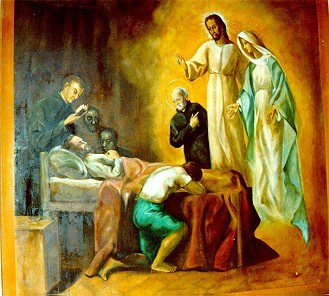
St Peter Claver sees Jesus Christ and the Virgin before death.jpgToday the Church liturgically remembers one of her missionary saints, Saint Peter Claver, (1580-1654) a Spainard who came from a very modest but known family heritage. Claver was influenced by what he heard and what he read in Jesuit houses of the missionaries. The brother porter-saint of Claver’s Jesuit house of studies, Alphonsus Rodriquez, frequently spoke of the need great work he could do in sharing the Gospel in mission lands. So moved to serve the Divine Majesty in a distant land, he requested of his superiors to be sent on mission to the New World. In what is known today as Columbia, South America, Claver worked with the negro-slaves teaching them the faith, and attending to their human and spiritual needs. In Claver’s eyes he took Saint Paul’s teaching that there are no distinctions in the Kingdom between Jew and Greek, slave or free, man or woman: all are the adopted children of God. As one person put it, for 33 years Father Peter Claver lavished love on the slaves that transcended the natural order. It was a love that confounded his religious superiors and the leaders in civil society of his day. It is reported that the saint brought to Christ 300K souls.

Let us remember in prayer the missionaries and those who work to evangelize.

Firefighters’ Names Endure in St. Patrick’s Towers

Graffiti at St Pat's.jpgDavid W. Dunlap of the NY Times wrote a piece earlier today, “Firefighters’ Names Endure in St. Patrick’s Towers,” talking about the legacy of the firefighters in the iconic St Patrick’s Cathedral. The article is a nice remembrance of those who inscribed their names following the 9/11 tradegy. Thanks to Msgr. Robert Ritchie and others who are committed to keeping the graffiti intact.

The slide show is worth looking at.

Nativity of Mary

Nativity of Mary Giotto.jpg

The feast of the nativity of the blessed Virgin Mary, born from the tribe of Judah, from the seed of Abraham and the race of King David, from whom the Son of God was born, made man through the Holy Spirit, that men might be freed from the ancient servitude of sin.

“…this feast of Mary’s birth should remind us of God’s loving plan” (Abp. Charles J. Chaput, Installation homily).


Fraternal love and correction essential, Pope reminds

Christ washing the feet Tintoretto.jpgOne of the themes from Oblate retreat this past weekend was humility. And from within the Gospel and Saint Benedict’s vision of humility Brother John Mark spoke about love and fraternal relations, particularly rubbing elbows in true charity with your brother and sister in community. A stone is only polished when it meets other stones.

Pope Benedict brings up the human desire to be in community with other other people: how good it is for brothers and sisters to live in unity, St Paul says. But this unity and love have one condition: “You will love your neighbor as yourself” (Romans 13:8-10). Some take this point as an easy thing to do. I assure you, it is not. This past Sunday’s Scripture readings teach this point.
In his Rule, Saint Benedict places a strong emphasis on mutual responsibility (“a reciporcal responsibility” the Pope calls it) and charity toward the other person is lived only in a personal way. Benedict XVI argues as Saint Benedict did before him, “that there is a co-responsibility in the journey of the Christian life: everyone, conscious of his own limits and defects, is called to welcome fraternal correction and to help others with this particular service [of forgiveness and healing injuries].

Continue reading Fraternal love and correction essential, Pope reminds