Pope speaks to New York Bishops: we ourselves are the first to need re-evangelization,

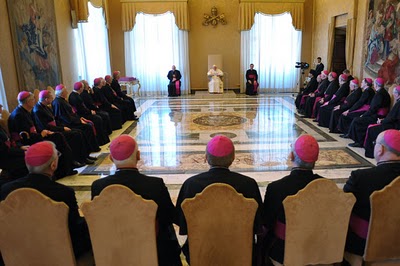
As you know, the Pope is meeting for next several months with all the bishops of the United States. Two weeks ago I noted the Ad Limina Apostolorum of the New England bishops; this week the Pope meets with the New York bishops and next week he’ll be meeting with the New Jersey and Pennsylvania bishops. His reflections and leadership on key areas are crucial for all of us to pay attention to right now for the good of the Church. The text of his address to the bishops of these three regions is given below.


Pope with NY bishops.jpg

I greet you all with affection in the Lord and, through you, the Bishops from the United States who in the course of the coming year will make their visits ad limina Apostolorum.

Our meetings are the first since my 2008 Pastoral Visit to your country, which was intended to encourage the Catholics of America in the wake of the scandal and disorientation caused by the sexual abuse crisis of recent decades. I wished to acknowledge personally the suffering inflicted on the victims and the honest efforts made both to ensure the safety of our children and to deal appropriately and transparently with allegations as they arise. It is my hope that the Church’s conscientious efforts to confront this reality will help the broader community to recognize the causes, true extent and devastating consequences of sexual abuse, and to respond effectively to this scourge which affects every level of society. By the same token, just as the Church is rightly held to exacting standards in this regard, all other institutions, without exception, should be held to the same standards.

Continue reading Pope speaks to New York Bishops: we ourselves are the first to need re-evangelization,

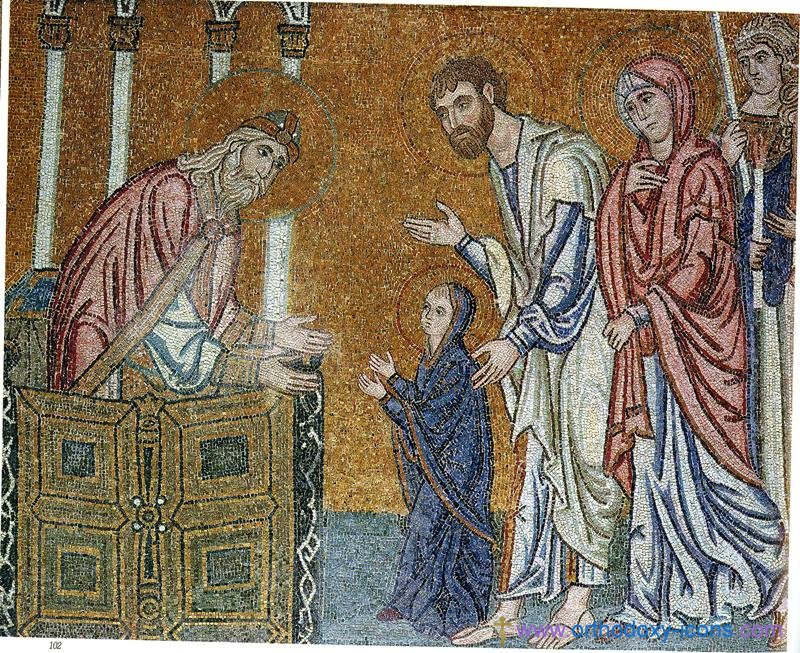
Presentation of the Blessed Virgin Mary and Benedictine Oblation

Presentation of the Blessed Virign Mary3.jpgAs we Venerate the glorious memory of the most holy Virgin Mary, grant, we pray, O Lord, through her intercession, that we, too, may merit to receive from the fullness of your grace.

PAX
In the Name of Our Lord Jesus Christ. Amen.
On this Feast of the Presentation in the Temple of the Blessed Virgin Mary, I, too, offer myself to God through this renewal of my oblation. I commit myself anew to Stability of Heart, Fidelity to the Spirit of the Monastic Life, and Obedience to the Will of God as a Benedictine Oblate of the venerable monastery of Saint Meinrad.

New subcommittee for Health Care Issues formed by Catholic Bishops

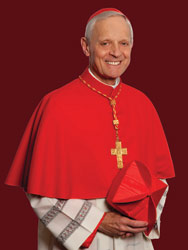
On 14 November the US Catholic bishops established a permanent Subcommittee on Health Care Issues to deal with the highly contentious subject. The subcommittee will be under the supervision of the Bishops’ Committee on Doctrine which is now chaired by Donald William Cardinal Wuerl, Archbishop of Washington, DC. Wuerl will appoint members of this new subcommittee. The bishops have followed through on their own recommendation from the June 2011 meeting to make this project a reality.

Hartford Archbishop Henry J. Mansell strongly supported the new subcommittee of the relation of health care to “the Gospel mission of the Church” and because the bishops need to have a handle on the “billions and billions of dollars in funding.” Mansell also said, “We run the risk of losing a major ministry of the Church if we don’t keep a close eye on health care issues.” 
Cardinal Donald Wuerl will be succeeded by the Archbishop of St Paul and Minneapolis John C. Nienstedt.
The list of the bishops and consultants to the Doctrine committee is noted here.
Enhanced by Zemanta

Adult Stem Cell research, ethics –has support of the Catholic Church

His Holiness, Pope Benedict XVI met recently with the participants in the conference, “Adult Stem Cells: Science and the Future of Man and Culture,” meeting 9-11 November, in Rome. The Pope’s November 12th address can be read here where he underscores the unique opportunity to discover the beauty of human life in all its complexities through the work of science. He points out that there are possibilities for the healing of chronic degenerative illnesses. He advocates for an ethic that respects the integral good of human life and the common good of society, especially citing Dignitas Personae.

He’s lending his voice to scientific research which gives the best outcome to regenerative medicine. Dr Robin L. Smith and her company, NeoStem, organized the symposium with key Vatican offices.
Listen to a Rome Reports clip on the meeting.
Here’s a previous post about this meeting.
Enhanced by Zemanta

Cardinal Wuerl’s report on the Implementation of the Apostolic Constitution Anglicanorum coetibus

Report


on the Implementation of the Apostolic
Constitution Anglicanorum coetibus
November 15, 2011
by
His Eminence Cardinal Donald Wuerl
Archbishop of
Washington

Donald Wuerl, cardinal.jpg

Thank you Archbishop Dolan.  With me for this presentation are
Bishop Robert McManus and Bishop Kevin Vann, the other members of the
Conference’s ad hoc Committee on the Implementation of Anglicanorum coetibus.

With
us, as well, are Father Jeffrey Steenson and Father Scott Hurd, who have worked
with the committee.

At our June General Assembly meeting in Seattle, I provided
a brief report and update on the progress being made in the implementation of
the Apostolic Constitution Anglicanorum coetibus. At that time, I asked
for and received a show of support for the material I presented by way of a
consultation with the bishops.
Enhanced by Zemanta

Continue reading Cardinal Wuerl’s report on the Implementation of the Apostolic Constitution Anglicanorum coetibus

Anglican Ordinariate For U.S, To Be Established January 1; Bishop Kevin Vann, Delegate

Kevin W. Vann.jpgAt the general assembly of the US Bishops today, Cardinal Donald Wuerl, Archbishop of Washington, DC, announced the Vatican appointment of Bishop Kevin W. Vann, Bishop of Fort Worth Texas, to be the Ecclesiastical Delegate for the Pastoral Provision (in effect since 1981). Vann succeeds Archbishop John J. Myers of Newark. Vann will oversee the  the formation and admittance of former Anglican clergy to the Roman Church. He will work closely with Cardinal Wuerl who has oversight of the temporary church structure of the Anglican Ordinariate in the USA.

Bishop Vann writes about the work on his blog.

January 1, 2012 is the date slated for the establishment of the new American, Personal Ordinariate for former Anglican Clergy and people coming into full communion with the Rome Church. The official name of the Ordinariate has not been announced.

You may be interested in “Anglicanorum Coetibus: Questions and Answers.” It is quite helpful in terms of defining meaning, significance and timeline of events.
I’ve known Bishop Vann for some time and he’s an excellent choice for the good shepherd who will help the former Anglican clergy.

Saint Albert the Great


S. Albertus Magnus.jpgSt Albert the Great reminds us that there is
friendship between science and faith and that through their vocation to the
study of nature, scientists can take an authentic and fascinating path of
holiness.


His extraordinary openmindedness is also revealed in a cultural feat
which he carried out successfully, that is, the acceptance and appreciation of
Aristotle’s thought. In St Albert’s time, in fact, knowledge was spreading of
numerous works by this great Greek philosopher, who lived a quarter of a
century before Christ, especially in the sphere of ethics and metaphysics. They
showed the power of reason, explained lucidly and clearly the meaning and
structure of reality, its intelligibility and the value and purpose of human
actions. St Albert the Great opened the door to the complete acceptance in
medieval philosophy and theology of Aristotle’s philosophy, which was
subsequently given a definitive form by St Thomas. This reception of a pagan
pre-Christian philosophy, let us say, was an authentic cultural revolution in
that epoch. Yet many Christian thinkers feared Aristotle’s philosophy, a
non-Christian philosophy, especially because, presented by his Arab
commentators, it had been interpreted in such a way, at least in certain
points, as to appear completely irreconcilable with the Christian faith. Hence
a dilemma arose: are faith and reason in conflict with each other or not? 


This
is one of the great merits of St Albert: with scientific rigour he studied
Aristotle’s works, convinced that all that is truly rational is compatible with
the faith revealed in the Sacred Scriptures. In other words, St Albert the
Great thus contributed to the formation of an autonomous philosophy, distinct
from theology and united with it only by the unity of the truth. So it was that
in the 13th century a clear distinction came into being between these two
branches of knowledge, philosophy and theology, which, in conversing with each
other, cooperate harmoniously in the discovery of the authentic vocation of
man, thirsting for truth and happiness: and it is above all theology, that St
Albert defined as “emotional knowledge”, which points out to human
beings their vocation to eternal joy, a joy that flows from full adherence to
the truth.

Pope Benedict XVI
March 2010

2 new Blesseds added US liturgical calendar


Blessed Marianne Cope.jpg

At their annual
meeting, the US bishops voted to have add to the US liturgical calendar Blessed
John Paul II and Blessed Marianne Cope, both are optional liturgical memorials
in the proper of saints. October 22 is designated to honor Blessed John Paul and January 23
for Mother Marianne.

The Church sets dates for liturgical “memorials are typically set for the
date of the person’s death, which in Mother Marianne’s case was Aug. 9, 1918.
However, that date is the feast of St. Teresa Benedicta of the Cross (Edith
Stein), who died Aug. 9, 1942. Jan. 23 is the optional memorial in the United
States for St. Vincent de Paul. That date was transferred from Jan. 22 so that
the U.S. church can observe the Day of Prayer for the Legal Protection of
Unborn Children — which itself shifts to Jan. 23 when Jan. 22 falls on a
Sunday.”
Enhanced by Zemanta

USCCB Religious Liberty committee and consultants finalized

The USCCB Ad Hoc Committee on Religious Liberty headed up by Bishop William Edward Lori announces the bishops and consultants:

Ten bishops and 10 consultants were named to the committee in early November.

New members are Bishop John O. Barres of Allentown, Pa.; Archbishop Charles J. Chaput of Philadelphia; Bishop Daniel E. Flores of Brownsville, Texas; Archbishop Wilton D. Gregory of Atlanta; Archbishop John C. Nienstedt of St. Paul and
Minneapolis; Bishop Thomas J. Olmsted of Phoenix; Bishop Thomas J. Paprocki of Springfield, Ill.; Archbishop Thomas J. Rodi of Mobile, Ala.; Archbishop J. Peter Sartain of Seattle; and Cardinal Donald W. Wuerl of Washington.

Consultants include Carl Anderson, supreme knight of the Knights of Columbus; attorneys Kevin Baine, Philip Lacovara and L. Martin Nussbaum; Father Raymond J. de Souza, a columnist and priest of the Archdiocese of Kingston, Ontario;
Richard Garnett, associate dean and professor of law and political science at the University of Notre Dame; John Garvey, president of The Catholic University of America; Mary Ann Glendon, Harvard Law School professor; Judge Michael
McConnell, Stanford University Law School professor; and Mary Ellen Russell, executive director of the Maryland Catholic Conference.

Lori said we need to have “a new appreciation for religious liberty and a renewed determination to defend it.”

As mere commentary, the lay members of this committee are impressive.