Candlemas

St John Henry Newman’s 1849 poem “Candlemas”:

THE Angel-lights of Christmas morn,
Which shot across the sky,
Away they pass at Candlemas,
They sparkle and they die.

Comfort of earth is brief at best,
Although it be divine;
Like funeral lights for Christmas gone,
Old Simeon’s tapers shine.

And then for eight long weeks and more,
We wait in twilight grey,
Till the high candle sheds a beam
On Holy Saturday.

We wait along the penance-tide
Of solemn fast and prayer;
While song is hush’d, and lights grow dim
In the sin-laden air.

And while the sword in Mary’s soul
Is driven home, we hide
In our own hearts, and count the wounds
Of passion and of pride.

And still, though Candlemas be spent
And Alleluias o’er,
Mary is music in our need,
And Jesus light in store.

World Day of Grandparents and the Elderly

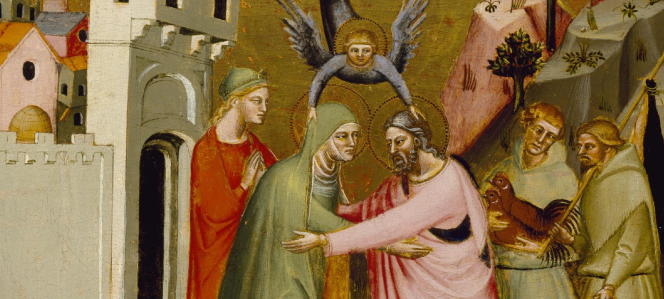
Earlier today at the Sunday Angelus in Rome, Pope Francis announced World Day of Grandparents and the Elderly to be held on 4th Sunday of July, the Sunday closest to July 26th feast of Sts. Joachim and Anne, parents of Blessed Virgin Mary, grandparents of Jesus.

The first world day will be July 25, 2021. Eastern Christians, for example the Melkites liturgically recall St Anne’s memory on July 25th.

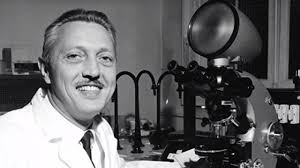
Jérôme Lejeune advanced in sainthood cause

Good news!

This morning Pope Francis recognized heroic virtue of the Servant of God Jérôme Lejeune, born on 13 June 1926 at Montrouge (Francia) and died in Paris (France) on 3 April 1994.

This advancement in the cause in the canonization process carries the title for Lejeune, Venerable Servant of God. Now we wait for the certification of a miracle to be beatified. God willing this will be coming soon.

By God’s grace we have in the life and heroism of Doctor Lejeune a terrific example for all Catholics, indeed all people of good will, today. As one person said Lejeune is an “outstanding symbol for the defense of God’s rights in science and legislation.”

A brief biography of the Venerable Servant of God Jérôme Lejeune:

Dr. Jerôme Lejeune was both a brilliant scientist and a dedicated Catholic. His groundbreaking work on the genetic causes of syndromic intellectual disabilities won him international acclaim from academics and world leaders alike: not only did he establish conclusively that Down syndrome is caused by an anomaly in the 21st chromosome, but he also discovered the causes of cri-du-chat and Fragile X. Tragically, Dr. Lejeune’s research was used to develop prenatal screening techniques to detect these syndromes in unborn children, effectively promoting their abortion.

Always a devout Catholic, this turn of events led Dr. Lejeune to become an outspoken defender of unborn infants and children with Down syndrome and other genetic conditions. In 1969, he was presented with the William Allan Award, the highest prize in the field of genetics, by the American Society of Human Genetics. He took the opportunity to denounce abortion publicly before his fellow scientists. That day, as he later told his wife, “I lost my Nobel Prize for Medicine.”

He established in Paris the world’s first clinic dedicated solely to the care of infants and children with Down syndrome. In 1981 he addressed a US Senate subcommittee on the overwhelming scientific evidence showing that human life begins at conception. In 1992, once again in the U.S., he testified in the Davis v. Davis “frozen embryo case” that human embryos are indeed human beings and not commodities.

Both the academic world and the press retaliated. His career ground to a halt; his funding was discontinued; and his former colleagues shunned him. He was appointed head of the Pontifical Academy for Life by John Paul II in 1994, but suffering as he was from cancer, he did not hold the post for more than a few weeks. He died on Easter Sunday of the same year. His medical legacy is carried on by the Fondation Jerome Lejeune, which finances and carries out research on genetic intellectual disabilities, supports patients and their families, and remains staunchly pro-life.

The Foundation: https://www.institutlejeune.org

A walk with friends today

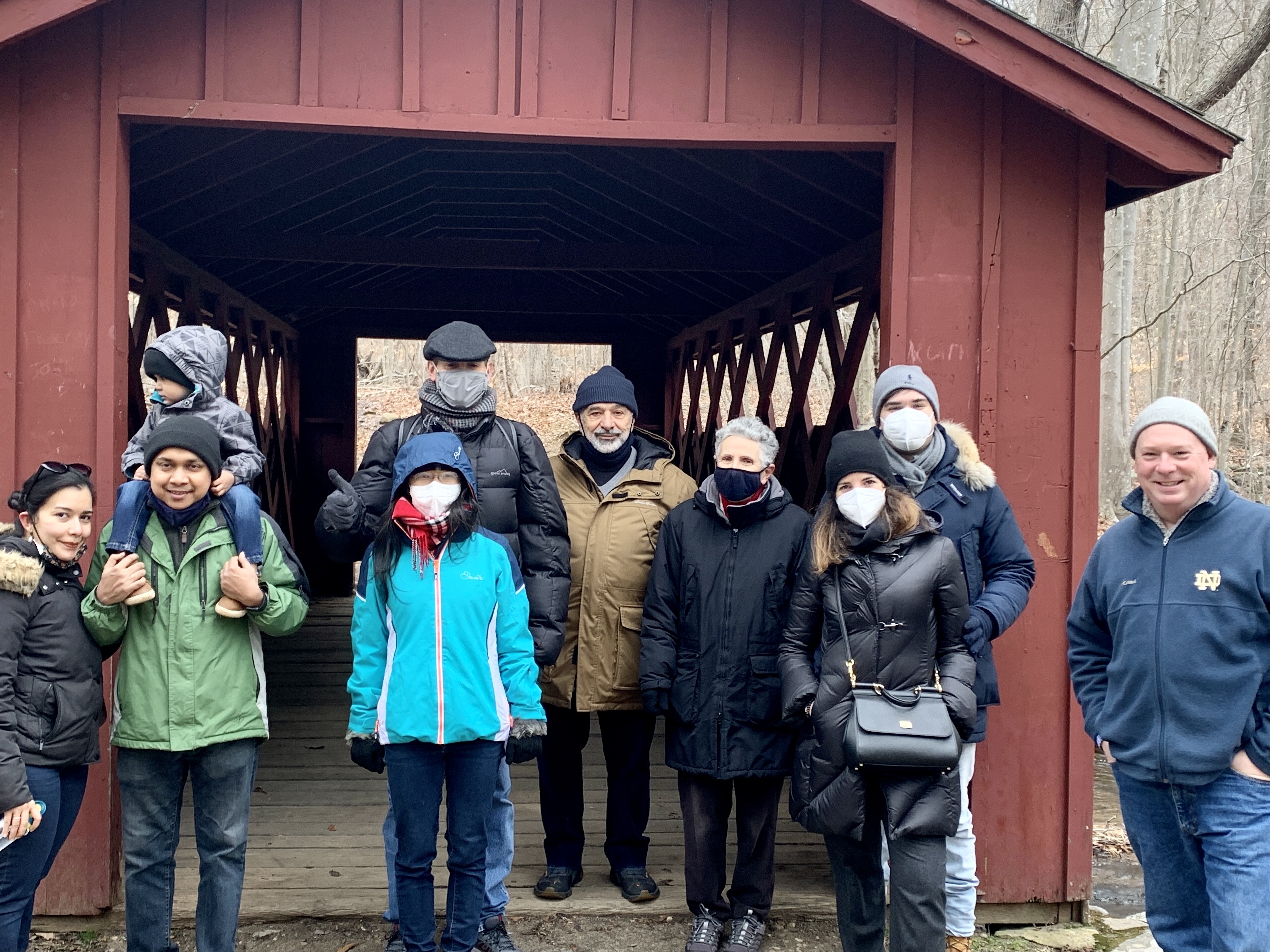
Today was a beautiful January day in Connecticut. It was a most pleasant day to take a walk in Chatfield Hollow State Park (Killingworth, CT) with fellow friends who follow together in Communion and Liberation –an ecclesial movement in the Church. It’s been years since I’ve been in Chatfield Hollow. It was a  melancholy day since we were together with our friends Razib and Nur and their son who are moving to California taking up a new mission in life in academic research and Evelyn who is headed back to work in Germany.

Our walk together reminded me of the feast day this past week of the Cistercian abbot Saint Aelred of Rievaulx who wrote extensively of friendship, particularly spiritual friendship. In fact, I had received a week ago a scientific biography of Aelred. Friendship is what binds us together in and for life. I am thinking of the classic definition by Cicero (De Amicitia 6.20): “Friendship is agreement in things human and divine, with good will (benevolentia) and charity (caritas).”

I am grateful for the friendship I share with so many, very particularly the friendship I share in Communion and Liberation.

2021 Week of Prayer for Christian Unity

The 2021 Week of Prayer for Christian Unity theme is “Abide in My Love…You Shall Bear Much Fruit.” It was discerned by the Monastic Community of Grandchamp in Switzerland and finds its origins in the Gospel of John (cf. John 15:5-9).

The Week of Prayer is January 18-25.

“Jesus gave his life for all out of his love for all,” said Fr. James Loughran, SA, Director of Graymoor Ecumenical & Interreligious Institute (GEII). “To abide in his love reminds us that we live in a community celebrating our gift of unity.”

Several years ago now, Pope Benedict XVI reminded the Melkite Synod of Bishops that part of their work and education is to work for Christian Unity. This was also a theme of Benedict’s papacy and one that we ought to keep going in a substantial way by personal and ecclesial prayer, working for reconciliation and unity in the church, the human family and the whole of creation.

The committee who formed the theme said they “desired to share the experience and wisdom of their contemplative life abiding in the love of God and keeping his commandment of ‘loving one another as He has loved us.’ They remind Christians worldwide about the importance of praying for the fruits of closer communion with our brothers and sisters in Christ and greater solidarity with the whole of creation.”

More information can be found at the Graymoor Ecumenical and Inter-religious Institute.

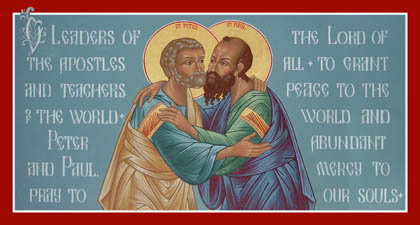
The traditional period for the Week of Prayer for Christian Unity is January 18-25. It was the Servant of God Father Paul Wattson, SA, founder of the Society of the Atonement, who initiated observance of the first “Church Unity Octave” in 1908, to cover the original days of the feasts of the Chair of St. Peter (Jan. 18) and the Conversion of St. Paul (Jan. 25).

God’s design is being interconnected

Science teaches us at once both the immense vastness of the universe at a macroscopic level — galaxies whose expanse in space generates awe in even the most cynical — as well as the inverse: the billions of cells that make up each individual organism. Together they reveal the vast web of interconnectedness, the foundation of God’s design for a world whose destiny is a living communion held together in love. Each human being, uniquely and through his or her own gifts, becomes part of the story of how this mystery is revealing itself over the steady flow of history. (NS)

St Theodosius of the common life (cenobite)

Today we liturgically recall our venerable father, Theodosius, called a leader of the common life.

At the end of the 5th century, Theodosius founded a cenobium near Bethlehem. In his day many had come from as far away as Georgia and Armenia to enter monastic life in Palestine. He accommodated his multi-ethnic community by having the Liturgy of the Word served in separate chapels in Syriac, Armenian and Georgian, after which all the monks came together for the Eucharistic Liturgy in Greek in the main church. His monastery was large enough to staff a hospice for the elderly, and for the poor and sick as well as one for the mentally ill.

His organizational skills were recognized in Jerusalem, where the Patriarch made him cenobiarch, the leader of all the monasteries of the common life under his protection. Theodosius along with Sabbas upheld the decisions of the Council of Chalcedon in the midst of the strife this council engendered, even in the monastic settlements.

He died in 529 at the age of 105. His monastery was sacked twice in the 9th century, and was completely destroyed in the 15th. (NS)

The Holy Theophany of Our Lord

This feast began as a thematic, rather than an historical, commemoration, as is implied by its name which means “the manifestation of God”. It celebrated the birth of Christ, his manifestation to the Gentiles, the Magi, and to Hebrew society at his baptism. It remains thus for the non-Calcedonian Churches. When Byzantine Churches eventually accepted the Roman date for the incarnation feast, this feast concentrated on Christ’s baptism and the revelation of the Trinity that accompanied it.

The themes of Light and Water, well-grounded in biblical expression, figure prominently in the texts of this feast.

Just as in the story of Noah, the flood was the sign of death and rebirth, so Christ’s descent into the river as both servant and creator points to renewal of all creation, prompting, perhaps, the evangelist to describe the descent of the Spirit as a dove, token of the world’s rebirth in the ancient myth when it returned with an olive branch.

The Great Blessing of Water at the Sunday following this feast is a perpetuation of Christ’s sanctification of the Jordan. Like all the Mysteries of the Church, it is not we, but Christ himself who blesses the water. As we drink it and use it to bless our surroundings, we recall our own immersion in Christ at Baptism and of the potential for everything around us to be a vehicle of God’s grace. (NS)