When Fig Leaves Sprout

Fig Tree by mumacas.jpgMy neighbor has several fig trees. His children are now in the process of wrapping them up for the winter –New England is not an agreeable place to raise fig trees all year.

The opening prayer for Mass today speaks of “the constant gladness of being devoted to you [that is, God]” because God is “the author of all that is good.” This gladness, this happiness, and good is always lived in posture of hope. Symbolically, in many ways the fig is a tangible sign of happiness and goodness. In the Bible the fig tree is posited as figure of these virtues. Variously the fig is interpreted as symbolic of the good, of peace, personal and national prosperity, safety, concern for the other, personal and national fulfillment, and probably the most important, the Promised Land.

Likely to be the most spoken of tree is the fig. Our first parents cover themselves with fig leaves (Genesis 3:7), as a sweet and satisfying fruit is the fig (1 Kings 4:25) and if you need shade when you study the Word of God outside you would sit under a fig tree (John 1:48) or if you need a spring fruit for the table you would have figs (Hosea 9:10). So, it’s no surprise that the Lord uses the fig to illustrate a point in the synoptic gospels about being a disciple and of the Church.

Based on today’s Scripture readings, the poem “When Fig Leaves Sprout” by Minnesota composer William Beckstrand captures the sense of what we are about in the Christian life.


When fig leaves sprout, the summer’s near;
Just so, when sun and moon grow dim,
This earth and heav’n will pass and Christ
Will come and raise the dead with him.

This coming Christ, who
once for all
A sacrifice for sin’s dark stain
Has offered, will bring back to
life
All those who sleep, for doom or gain.

Secure with Jesus, Advocate
Who
pleads for us at God’s right hand,
We daily work to do God’s will,
And wait His
coming stern and grand.

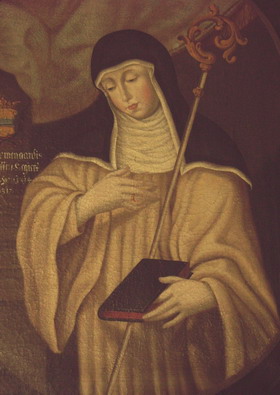
Saint Gertrude the Great

S Gertrude helfta.jpg

One a few saints with the title “the Great” Saint Gertrude (1256-1301/2) is clearly a woman with a mission. Given by her parents to the Benedictine monastery at Hefta (some say it was a Cistercian house), a monastery known for its learning and saint-making, Gertrude excelled in her studies. One day, around the age 24, she realized that the excellence she had in secular learning was not what she needed, in fact, she considered this way of living vain, and therefore she was called to do by the Lord: to live singularly for Him. Was it earthy wisdom that saved, or heavenly wisdom? She began to change her modus operandi and followed the advice of the Apostle to be totally concerned with heavenly wisdom. 
Before it was a popular devotion, Saint Gertrude was known for her devotion to the Sacred Heart of Jesus and the Eucharist.
Saint Gertrude’s extant writing includes “The Herald of Divine Love,” The Life and Revelations,” and the “Spiritual Exercises.”
May Saint Gertrude’s greatness inspire us to live more intensely for a deeper communion with the Lord, in this life so as to be with Him in the next.
“My heart has said of you, I have sought your presence Lord. 
It is your face, O Lord, that I seek.”

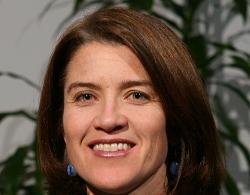
Alexia Kelley, Obama consultor to head FADICA

Alexia Kelley.jpgAlexia Kelly is the new president of a prominent Catholic fundraising office in  Dupont Circle, Washington, DC. 

Ms Kelley holds a Masters degree in theology from Harvard Divinity School is reportedly committed to dialogue with others for the sake of advancing the common good, and interested in Catholic charitable works. Her resume includes being a former employee of the Catholic Campaign for Human Development; the executive director of Catholics in Alliance for the Common Good; the Deputy Director and Senior Policy Advisor for the Whites Office for Faith-Based and Neighborhood Partnerships; and the First Lady’s Office, for whom she launched Let’s Move Faith and Communities. Most recently Kelley’s been the director of the Faith-Based and Neighborhood Partnerships at the HHS.

Continue reading Alexia Kelley, Obama consultor to head FADICA

Sant’Anselmo unveils strategic plan

anselmo2.jpg

The Benedictine monks of Sant’Anselmo unveiled an impressive strategic plan for its work as an international university in Rome. 
Historically, the Pontifical Athenaeum Sant’Anselmo (Rome) was founded in 1687 by Pope Innocent XI and renewed and re-established by Pope Leo XIII in 1887 and given as a work to the worldwide Benedictines.
Read the first section of the Strategic Plan:
And, a most important part of the Plan,
The vital parts of the Strategic Plan are noted here.
Looking good and abundant blessings….

Congress of Abbots 2012 statistics

anselmo arms.jpglYou’re likely going to say big deal… there’s already been too much info on the 2012 Congress of Abbots on the Communio blog. Well, you’re correct. But a few statistics set a context.

Meeting at the Primatial Abbey of Saint Anselm in Rome for the September 2012 Congress of Abbots, there were:
  • 250 abbots
  • 380 monasteries represented: 205 abbeys, 45 independent priories, 130 dependent priories
  • 21 Benedictine Congregations of monks
  • 7,358 monks represented
  • 62 Benedictine Congregations of women
  • 13,650 Benedictine nuns and sisters represented.
Father Luke MacNamara OSB, a monk of Glenstal Abbey (Ireland) oversaw the simultaneous translation work of 5 languages.

Dorothy Day’s cause for canonization gets US bishops approval


Day Time mag.jpgThe canonization process of the Servant of God Dorothy Day (1897-1980) the US Conference of Catholic Bishops (USCCB) by an unanimous voice vote on November 13, 2012 at the annual meeting of the bishops.

Sanctorum Mater (2007), requires of the diocesan bishop promoting a sainthood cause to consult at least with the regional bishops’ conference on the work of the cause.

Regarding Dorothy Day, she is a very well-known figure who is often connected with her stances on the economics and politics; the Catholic Worker movement that she co-founded is seen as a socialist and not too Catholic today. Day was based in New York City and her cause of canonization is being promoted by Timothy Cardinal Dolan, archbishop of New York and current president of the USCCB.

We know that in 1933 Dorothy Day co-founded the Catholic Worker movement with Peter Maurin, as a Catholic, personal response to those who lived on the margins. Sadly, Day is most remembered for the incidental things of work with the poor and a direct critique of the systems that kept them poor and peace. But do we know and appreciate, even follow Day as a 1927 convert to Jesus Christ and her intense love for the Church? As the late Father Richard John Neuhaus once said Day was “deeply grounded in fidelity to Catholic faith.”

Of the places Dorothy Day prayed, Saint Michael’s Russian Catholic Center was one of them. She apparently loved to pray the Divine Liturgy.

Yesterday Cardinal Dolan called Day “Augustinian,” in that “that “she was the first to admit it: sexual immorality, there was a religious search, there was a pregnancy out of wedlock, and an abortion. Like Saul on the way to Damascus, she was radically changed” and has become “a saint for our time.”  In fact, Dorothy Day was a Benedictine for these same reasons. Not that being an Augustinian is a bad thing, but her heart was rooted in the charism of Saint Benedict even before her 1955 Oblation as a lay Benedictine.

History tells us that “Dorothy Day met [Saint Procopius] monks at parish in NYC in the fifties. She became an oblate in 1955 primarily due to Father Rembert Sorg’s writings on the theology of manual labor. Father Brendan McGrath, scripture scholar of the community, received her oblation. She befriended Benedictine Father Chrysostom Tarasevich whom she met at the NYC Byzantine Catholic Russian Center.

Benedictine All Souls

May the memory of the deceased monks, nuns, sisters, and oblates be eternal.

AK abbot.JPG

Historically [supposing that your view of history goes back before 1900], today is the traditional date for the liturgical memorial of All Benedictine Souls. You are not going to find many American Benedictine monasteries observing this commemoration. Sad, I think. They will offer the argument that the Church’s November 2nd commemoration of All Souls (and for that matter, All Saints) to include the monks and nuns of the Order.
 
As a monk noted, monasteries who hold this idea are employing “the same argument that was used at the time of the Reformation to eliminate the Commemoration of the Faithful Departed, since we are all ‘saints.’ Whatever the theological merits of this position, even the Episcopal Church has recognized its psychological deficit and has restored All Souls on November 2.”
 
Old fashioned or not, there is a good value in retaining the observances of All Saints and All Souls of Monks and Nuns. Informed opinion indicates that when monasteries remember the nuns and monks who have gone before us in faith and perseverance, remembers not only persons but also puts eschatological hope that eternal life is possible and indeed ought to be sought.
 
We pray for graces of light, peace and mercy for our departed monks and nuns, sisters and oblates ask for their prayers for us.

Saint Frances Xavier Cabrini


Frances Cabrini first US citizen canonized.jpgMother Frances Cabrini, the first US citizen to be canonized by the Church spent a night with the
Benedictine sisters at Mount Saint Scholastica in Atchison, Kansas. 


Recorded: “In the
winter of 1902 the new convent and the new chapel had a special visitor. Mother
Frances Xavier Cabrini, traveling west, stopped over night. Sister Barbara
loved to recall: ‘She was a very nice ordinary Sister. She liked coffee.'” 

from The Meaning of the Mountain, by Sr. M. Faith Schuster, O.S.B.

(Mother Cabrini was on
her way to Denver to care for the Italian immigrants.)


Saint Frances Xavier Cabrini once said, “We must pray
without tiring, for the salvation of mankind does not depend on material
success; nor on sciences that cloud the intellect. Neither does it depend on
arms and human industries, but on Jesus alone.”

Connecticut lawmakers to consider physician assisted suicide


The front page
of today’s New Haven Register carried an article by Jordan Fenster,
Right-to-die bill may be discussed by legislature” by which the citizens of
Connecticut were alerted to the possibility that in the next session of the
legislature the question of assisted suicide will be on the table. Following
the defeat of Massachusetts ballot on the same subject last week, the contagion is now again flowing south. Already three US states, Oregon, Montana and Washington, allow for
physician assisted suicide. 34 states prohibit lethal doses of medication that
would end human life.

Let me say from the outset, this is not a Catholic issue. Persons of belief and unbelief ought to be concerned about the potential passing of a law that legalizes medically induced suicide. Hence, this is not a conservative issue. This is not a an anti-human dignity issue. It
is just the opposite: this is a human issue. Who we are a human beings, and how
we teach each other is a human issue that is informed by what we believe and
how we behave. Committing this legislative error is a problem of education.
Recall that in the past when a similar bill was brought to the CT voters it failed only 51-49%.

Several weeks ago there appeared in the New York Times an
intriguing OP-ED article that I believe we need to seriously consider in the
discussion of physician assisted suicide. Considering voices that differ from ours need to be thoughtfully taken into account because we are people use who reason to frame our moral lives. We can’t simply dismiss the other and therefore I appeal to people of belief and unbelief to reasonably discuss what’s at stake. When we rush the discuss without fact we always get burned.

In my opinion not enough attention has been devoted
to considering how this legislation has been lived out in this country and in
others, nor have we considered the philosophical, theological, sociological and
human consequences of such an act. Most often our heart-strings are pulled, even stretched leading us to decide weighty matters without due attention to the reality in front of us –to the person and people and intimately connected with life and death issues. We also don’t always adequately consider the eternal consequences of killing someone before natural death happens. 

Who’s life are we “making dignified” by engaging death before it’s naturally
presented? What really is human dignity? What does it mean to be truly a man or
a woman in relationship with other men and women here-and-now, and following
death? To what extent does fear, anxiety and perceived suffering dictate how we
think and act toward others? Are we sufficiently aware of and sensitive to the difference between ideology and being a person, no matter how debilitated?

Here is Ben Mattlin’s October 31, 2012 New York
Times
article published online.

Suicide by Choice? Not So Fast

Continue reading Connecticut lawmakers to consider physician assisted suicide