Saint Maximilian Kolbe

KolbeToday is the feast day of one of the great saints of the 20th Century, the Conventual Franciscan Maximilian Kolbe. I can remember hearing his name for the first time and his canonization by Saint John Paul. Years later I visited the cell in which he lived his last days at the concentration camp. A rather moving and unforgettable experience.

Saint Maximilian is known for his great devotion to our Blessed Mother in devotion to her Immaculate Heart. There is no coincidence that Kolbe’s feast day comes before Mary’s Assumption (Dormition) -the glorification of her body and soul, assumed into heaven. We know that “Hail Mary!” were the last words on the lips of Saint Maximilian, as he offered his arm to the executioner for the injection. He has taught us what is meant by the words we pray to  Immaculate Mary when we say “now and at the hour of our death.”

Kolbe and others were accused by the powers of Nazi Germany of promoting anti-Nazi causes and housing Jews; he was severely mistreated for being a Catholic priest and remaining steadfast to the Faith: Christ was everything, not just some abstract priority. Kolbe regularly celebrated the Holy Sacrifice in secret and heard confessions of fellow prisoners. In 1941, the time came for him to make a sacrifice of his own life, in place of a married prisoner who was father to young children. Kolbe was executed by lethal injection after three weeks of starvation and dehydration. A horrible death.

Saint Maximilian Kolbe, pray for us.

Gregory of Narek’s brief narrative

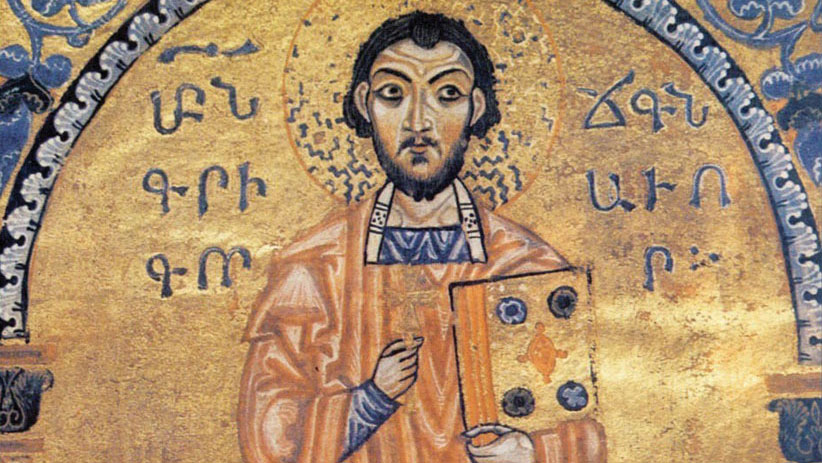
NarekYou may recall that Pope Francis, in February 2015, declared as a Doctor of the Church the sainted Armenian monk and poet, Gregory of Narek (950-c. 1005). He is only one of 36 by the Roman Church.

Many wondered about the person of Gregory and his importance in the Church today. Being declared a Doctor of the Church is one of the most singular distinctions that the Supreme Pontiff could give to one of the saints, but way this monk and poet of the Armenian Church, and why now? Why is this gesture of Pope Francis a key event?

In Michael LaCivita’s article, “Cries from the Heart: Armenia’s Poet of the Soul” gives a fine introduction to this Doctor of the Church.

Saint Jane Frances de Chantal

Jane Frances and Francis de SalesSaint Jane Frances de Chantal (1572 – 1641), wife, mother, and foundress of the Order of the Visitation. She had the assistance of Saint Francis de Sales with the Visitation. Saint Jane Frances is among the few saints that we know who is wife, mother and foundress. Many vocations in one person.

Holy Mother Saint Jane Frances said: “Give God a free hand to do as He likes, while you look on in loving simplicity.”

Saints beget saints. Here is a good example. Saint Vincent de Paul, a friend and spiritual director of the saint’s, said this about her:

“She was full of faith, yet all her life had been tormented by thoughts against it. While apparently enjoying the peace and easiness of mind of souls who have reached a high state of virtue, she suffered such interior trials that she often told me her mind was so filled with all sorts of temptations and abominations that she had to strive not to look within herself…But for all that suffering her face never lost its serenity, nor did she once relax in the fidelity God asked of her. And so I regard her as one of the holiest souls I have ever met on this earth.”

Saint Clare of Assisi

St ClareToday, August 11, the Church liturgically honors the memory of Saint Clare of Assisi (1194-1253).

As you know from Church history, Clare was born of a noble family of Assisi, and a serious disciple of Jesus by the time she met the famous Francis. The Franciscan tradition indicates that she had already decided as a young woman to embark on a life of penance when she spoke with Francis in 1212; she joined Francis’s new movement at the Portiuncula.

A witness that attracts

Clare was followed by other women who joined her at the Church of San Damiano. There Clare and her sisters lived simply and prayerfully for over 40 years, supporting themselves by the work of their hands. Religious life was bursting forth with new forms when Clare and Francis founded the Friars and Sisters Minor. It is noted in the tradition that Clare had to fight to maintain her distinctive vision of religious life waiting for her Rule to be approved by the Pope shortly before her death in 1253.

Let’s recall an excerpt of a letter Saint Clare sent to Saint Agnes of Prague: “As you know, i am sure, that the kingdom of heaven is promised by the Lord only to the poor, for the one who loves temporal things loses the fruit of love. . . What a great and laudable exchange: to leave the things of time for those of eternity, to choose the things of heaven for the goods of earth, to receive the hundred-fold in place of one, and to possess a blessed and eternal life!”

Let us pray for the women who follow the Rule of Saint Clare.

Saint Teresa Benedicta

In his homily at the canonization Mass of St. Teresa Benedicta of the Cross, Pope John Paul II said:

“Because she was Jewish, Edith Stein was taken with her sister Rosa and many other Catholics and Jews to the concentration camp in Auschwitz, where she died with them in the gas chambers. Today we remember them all with deep respect. A few days before her deportation, the woman religious had dismissed the question about a possible rescue: ‘Do not do it! Why should I be spared? Is it not right that I should gain no advantage from my Baptism? If I cannot share the lot of my brothers and sisters, my life, in a certain sense, is destroyed.’”

The witness of this woman is poignant.

Jesus: I am the bread of life

Last Supper San MarcoI love the gospel readings for the month of August because they give us the eucharistic theology of Divine Presence and the Divine Pledge for Eternal Life. These readings are known as the Bread of Life discourse taken from the Gospel of Saint John (chapter 6). You might say that the readings from Saint John’s gospel offers a timely reflection and orientation for eucharistic coherence. They indeed do, and this is no small gift these days when you hear more disagreement of what the Holy Eucharist is and why we receive Him. Faith informs me that sacramental Communion is Jesus Himself.

Whom do we receive in Holy Communion?


The question of what it means to be fed by the Bread of Life is not only a question for Holy Thursday, Corpus Christi or on the feast days of “eucharistic saints” like Saint Peter Julian Eymard. Today, the 19th Sunday Through the Church Year gives us the pericope that records the words of Jesus, and it is quite clear of who Jesus is and what the point is: “I am the bread that came down from heaven.” He also tells us: “I say to you, whoever believes has eternal life.”

Here is a paragraph from a Sermon by Eutychius of Constantinople:

No one, then, after the sacramental sacrifice and the holy resurrection, should have any doubt regarding the incorruptible, immortal, holy, and life-giving body and blood of the Lord. Once infused into the sacred elements through the liturgical rites, they communicate their own properties no less than do the aforementioned examples. They are wholly present in every part, for then the Lord’s body dwells corporally, that is to say, substantially, all the fullness of the divine nature of the Word of God. The breaking of this precious bread signifies his sacrificial death, and so he spoke of the passover as something to be longed for because it was to bring us salvation, immortality, and perfect knowledge.”

St. Teresa Benedicta of the Cross

Benedicta of the Cross“Tell my Sisters, I am en route to the East.”

These last recorded words of Saint Teresa Benedicta on 6 August 1942. One of Edith Stein’s former students recognized her at the train station in Schifferstadt, as she stood at the window of a locked compartment.

The Discalced Carmelite Father General shared these words with the Order as he concluded his circular letter:

“Ad orientem. Yes, the last phase of her sacrificial ascent, toward the light, had begun. We do not know when, where, and how she reached her destination. Many rumors, including that of her murder by gas in Auschwitz, have reached us, but not one confirmed reliable report.

“We no longer seek her in this world, but with God, who has accepted her sacrifice and who gives its fruit to the people for whom he prayed, suffered, and died, in the fullest sense of the word.

Saint Dominic

The 8Dominic on the horseth day of August finds us honoring the person of Saint Dominic de Guzman, the Spanish founder of the Order of Preachers of the 13th century. We are at 800 years since the founding of the Order. One of the most intriguing stories of Dominic is his commitment to teaching the truth to a man in need of knowing the Truth. The Church rejoices in this great son whose only desire was to sharing the fruits of his contemplation.

Here in Connecticut there are several Dominican locations: Saint Mary’s Priory & Church (New Haven), Our Lady of Grace Monastery (N. Guilford), the Sisters of Peace (New Haven), Dominican Sisters of Our Lady of the Holy Rosary of Fatima (Hartford) and the Vietnamese Dominican Sisters (Hartford). AND the Fraternity of Saint Dominic (the Laity)! May Dominic lead all to Christ.

Benedict XVI tells us:

St Dominic reminds us that prayer, personal contact with God is at the root of the witness to faith which every Christian must bear at home, at work, in social commitments and even in moments of relaxation; only this real relationship with God gives us the strength to live through every event with intensity, especially the moments of greatest anguish. This Saint also reminds us of the importance of physical positions in our prayer. Kneeling, standing before the Lord, fixing our gaze on the Crucifix, silent recollection — these are not of secondary importance but help us to put our whole selves inwardly in touch with God. I would like to recall once again the need, for our spiritual life, to find time everyday for quiet prayer; we must make this time for ourselves, especially during the holidays, to have a little time to talk with God. It will also be a way to help those who are close to us enter into the radiant light of God’s presence which brings the peace and love we all need.