Tag: Dormition
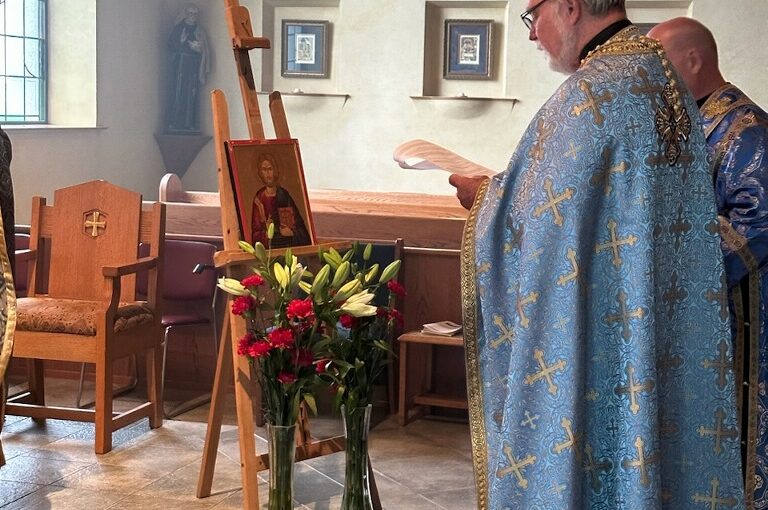
Blessing of Flowers
Melkite Blessing of Flowers
Dormition of the Holy Theotokos, August 15
At the conclusion of the Divine Liturgy
Deacon: Let us pray to the Lord.
All: Lord have mercy.
Priest:
Lord Jesus Christ, our God, you admired the lilies of the fields and asked us to imitate them by putting aside worldly care and depending on your Divine Providence. We ask you to bless these flowers which were offered in honor of your all-holy Mother, the Ever-virgin Mary, on the occasion of her passing to heavenly glory.
Accept, O Lord, these flowers as a sweet fragrance. Fill the hearts of those who offered them and those who will receive them with love for You and your Holy Mother who is also the heavenly mother of us all. And through her intercession, make us worthy to cast off the old man and put on the new man created in your likeness.
For You are the source of all holiness, and to You we render glory and to your Eternal Father and your All-Holy, Good and Living-giving Spirit, now and always and forever and ever.
Amen.
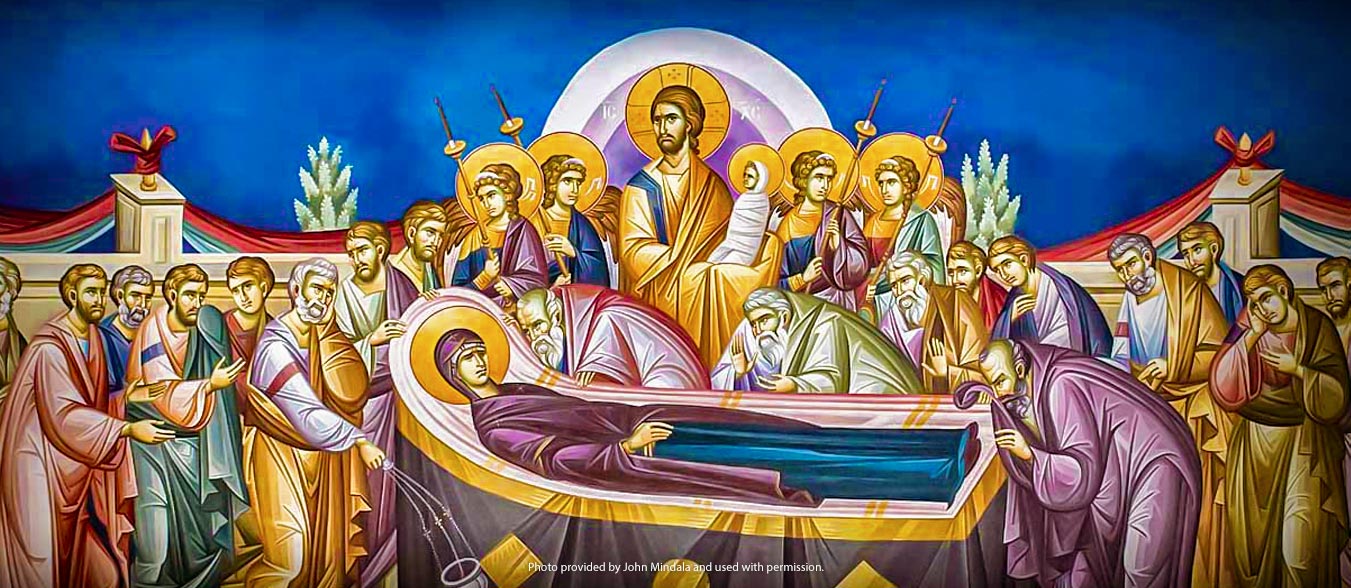
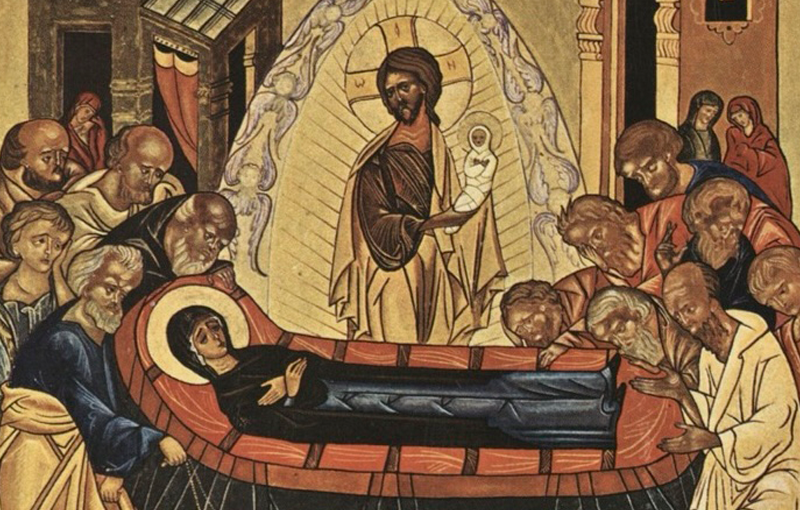
The Dormition of the Holy Mother of God, the Theotokos
The hagiographers for this feast write:
This feast originated in the fourth century at the dedication of a temple in honor of the Mother of God. This church was located between Jerusalem and Bethlehem, which tradition hallowed as the place where Mary and Joseph stopped on their journey to the city of David.
By the fifth century in the Byzantine East, and by the sixth century in the Roman Church, this day celebrated the death of Mary, her dormition or “falling asleep” as it is called in liturgical poetry.
Apocryphal accounts, iconography, and texts of the feast are embellished with a persistent pious tradition that all the apostles returned to her deathbed from their missionary journeys.
Through the feast of the Dormition, the Church regards Mary as the first to participate in the final deification of all creation. This is only fitting for the Mother of Life, through whom God became one of us, to die and, by his rising, make the passage from death to life an eternal reality. (NS)
The Dormition of the Mother of God
𝗛𝗼𝗺𝗶𝗹𝘆 𝗜𝗜 𝗼𝗻 𝘁𝗵𝗲 𝗗𝗼𝗿𝗺𝗶𝘁𝗶𝗼𝗻 𝗯𝘆 𝗦𝘁. 𝗝𝗼𝗵𝗻 𝗼𝗳 𝗗𝗮𝗺𝗮𝘀𝗰𝘂𝘀
“𝑇𝑜𝑑𝑎𝑦 𝑡ℎ𝑒 𝐸𝑑𝑒𝑛 𝑜𝑓 𝑡ℎ𝑒 𝑁𝑒𝑤 𝐴𝑑𝑎𝑚 𝑤𝑒𝑙𝑐𝑜𝑚𝑒𝑠 𝑡ℎ𝑒 𝑠𝑝𝑖𝑟𝑖𝑡𝑢𝑎𝑙 𝑃𝑎𝑟𝑎𝑑𝑖𝑠𝑒 𝑤ℎ𝑒𝑟𝑒 𝑜𝑢𝑟 𝑐𝑜𝑛𝑑𝑒𝑚𝑛𝑎𝑡𝑖𝑜𝑛 ℎ𝑎𝑠 𝑏𝑒𝑒𝑛 𝑐𝑎𝑛𝑐𝑒𝑙𝑙𝑒𝑑, 𝑤ℎ𝑒𝑟𝑒 𝑡ℎ𝑒 𝑇𝑟𝑒𝑒 𝑜𝑓 𝐿𝑖𝑓𝑒 𝑖𝑠 𝑝𝑙𝑎𝑛𝑡𝑒𝑑, 𝑤ℎ𝑒𝑟𝑒 𝑜𝑢𝑟 𝑛𝑎𝑘𝑒𝑑𝑛𝑒𝑠𝑠 𝑖𝑠 𝑐𝑙𝑜𝑡ℎ𝑒𝑑 𝑎𝑔𝑎𝑖𝑛. 𝐹𝑜𝑟 𝑤𝑒 𝑎𝑟𝑒 𝑛𝑜 𝑙𝑜𝑛𝑔𝑒𝑟 𝑛𝑎𝑘𝑒𝑑 𝑎𝑛𝑑 𝑒𝑥𝑝𝑜𝑠𝑒𝑑, 𝑙𝑎𝑐𝑘𝑖𝑛𝑔 𝑡ℎ𝑒 𝑟𝑎𝑑𝑖𝑎𝑛𝑐𝑒 𝑜𝑓 𝑡ℎ𝑒 𝐷𝑖𝑣𝑖𝑛𝑒 𝐼𝑚𝑎𝑔𝑒 𝑎𝑛𝑑 𝑠𝑡𝑟𝑖𝑝𝑝𝑒𝑑 𝑜𝑓 𝑡ℎ𝑒 𝑎𝑏𝑢𝑛𝑑𝑎𝑛𝑡 𝑔𝑟𝑎𝑐𝑒 𝑜𝑓 𝑡ℎ𝑒 𝑆𝑝𝑖𝑟𝑖𝑡; 𝑤𝑒 𝑛𝑒𝑒𝑑 𝑛𝑜 𝑙𝑜𝑛𝑔𝑒𝑟 𝑡𝑒𝑙𝑙 𝑡ℎ𝑒 𝑠𝑡𝑜𝑟𝑦 𝑜𝑓 𝑡ℎ𝑎𝑡 𝑡𝑟𝑎𝑔𝑖𝑐, 𝑎𝑛𝑐𝑖𝑒𝑛𝑡 𝑛𝑎𝑘𝑒𝑑𝑛𝑒𝑠𝑠, 𝑠𝑎𝑦𝑖𝑛𝑔, “𝐼 ℎ𝑎𝑣𝑒 𝑡𝑎𝑘𝑒𝑛 𝑜𝑓𝑓 𝑚𝑦 𝑡𝑢𝑛𝑖𝑐, 𝑎𝑛𝑑 ℎ𝑜𝑤 𝑠ℎ𝑎𝑙𝑙 𝐼 𝑝𝑢𝑡 𝑖𝑡 𝑜𝑛 𝑎𝑔𝑎𝑖𝑛?” (𝑆𝑜𝑛𝑔𝑠 5:3) 𝐹𝑜𝑟 𝑖𝑛 𝑡ℎ𝑖𝑠 𝑃𝑎𝑟𝑎𝑑𝑖𝑠𝑒, 𝑡ℎ𝑒 𝑠𝑒𝑟𝑝𝑒𝑛𝑡 ℎ𝑎𝑠 𝑛𝑜 𝑚𝑒𝑎𝑛𝑠 𝑜𝑓 𝑒𝑛𝑡𝑟𝑦 – 𝑡ℎ𝑎𝑡 𝑠𝑒𝑟𝑝𝑒𝑛𝑡 𝑤ℎ𝑜𝑠𝑒 𝑓𝑎𝑙𝑠𝑒 𝑝𝑟𝑜𝑚𝑖𝑠𝑒 𝑜𝑓 𝑑𝑖𝑣𝑖𝑛𝑖𝑠𝑎𝑡𝑖𝑜𝑛 𝑙𝑒𝑑 𝑢𝑠 𝑡𝑜 𝑎 𝑐𝑜𝑣𝑒𝑡𝑜𝑢𝑠𝑛𝑒𝑠𝑠 𝑡ℎ𝑎𝑡 𝑚𝑎𝑑𝑒 𝑢𝑠 𝑡ℎ𝑒 𝑒𝑞𝑢𝑎𝑙 𝑜𝑛𝑙𝑦 𝑜𝑓 𝑖𝑟𝑟𝑎𝑡𝑖𝑜𝑛𝑎𝑙 𝑏𝑒𝑎𝑠𝑡𝑠. 𝑇ℎ𝑒 𝑜𝑛𝑙𝑦 𝑆𝑜𝑛 𝑜𝑓 𝐺𝑜𝑑, 𝑤ℎ𝑜 𝑖𝑠 𝐺𝑜𝑑 𝑎𝑛𝑑 𝑜𝑓 𝑡ℎ𝑒 𝑠𝑎𝑚𝑒 𝑠𝑢𝑏𝑠𝑡𝑎𝑛𝑐𝑒 𝑎𝑠 𝑡ℎ𝑒 𝐹𝑎𝑡ℎ𝑒𝑟, 𝑓𝑜𝑟𝑚𝑒𝑑 𝐻𝑖𝑚𝑠𝑒𝑙𝑓 𝑖𝑛𝑡𝑜 𝑎 ℎ𝑢𝑚𝑎𝑛 𝑏𝑒𝑖𝑛𝑔 𝑓𝑟𝑜𝑚 𝑡ℎ𝑖𝑠 𝑉𝑖𝑟𝑔𝑖𝑛, 𝑓𝑟𝑜𝑚 𝑡ℎ𝑖𝑠 𝑝𝑢𝑟𝑒 𝑠𝑜𝑖𝑙; 𝑎𝑛𝑑 𝑠𝑜 𝐼, 𝑤ℎ𝑜 𝑎𝑚 ℎ𝑢𝑚𝑎𝑛, 𝑎𝑚 𝑚𝑎𝑑𝑒 𝑑𝑖𝑣𝑖𝑛𝑒 – 𝐼, 𝑤ℎ𝑜 𝑎𝑚 𝑚𝑜𝑟𝑡𝑎𝑙, ℎ𝑎𝑣𝑒 𝑛𝑜𝑤 𝑏𝑒𝑐𝑜𝑚𝑒 𝑖𝑚𝑚𝑜𝑟𝑡𝑎𝑙, 𝑎𝑛𝑑 ℎ𝑎𝑣𝑒 𝑠𝑡𝑟𝑖𝑝𝑝𝑒𝑑 𝑜𝑓𝑓 𝑚𝑦 𝑡𝑢𝑛𝑖𝑐 𝑜𝑓 𝑠𝑘𝑖𝑛. 𝐹𝑜𝑟 𝐼 ℎ𝑎𝑣𝑒 𝑡𝑎𝑘𝑒𝑛 𝑜𝑓𝑓 𝑐𝑜𝑟𝑟𝑢𝑝𝑡𝑖𝑜𝑛, 𝑎𝑛𝑑 𝑝𝑢𝑡 𝑜𝑛 𝑡ℎ𝑒 𝑟𝑜𝑏𝑒 𝑜𝑓 𝑑𝑖𝑣𝑖𝑛𝑖𝑡𝑦.”
Dormition of the Blessed Virgin

As the destiny for the Mother of God, so for us.
Today the universe, rejoicing mystically in thy glorious memorial, O Theotokos, doth go before crying and shouting with joy: Rejoice, O Virgin, pride of Christians! (Kontakion)
Mary’s transitus to heaven
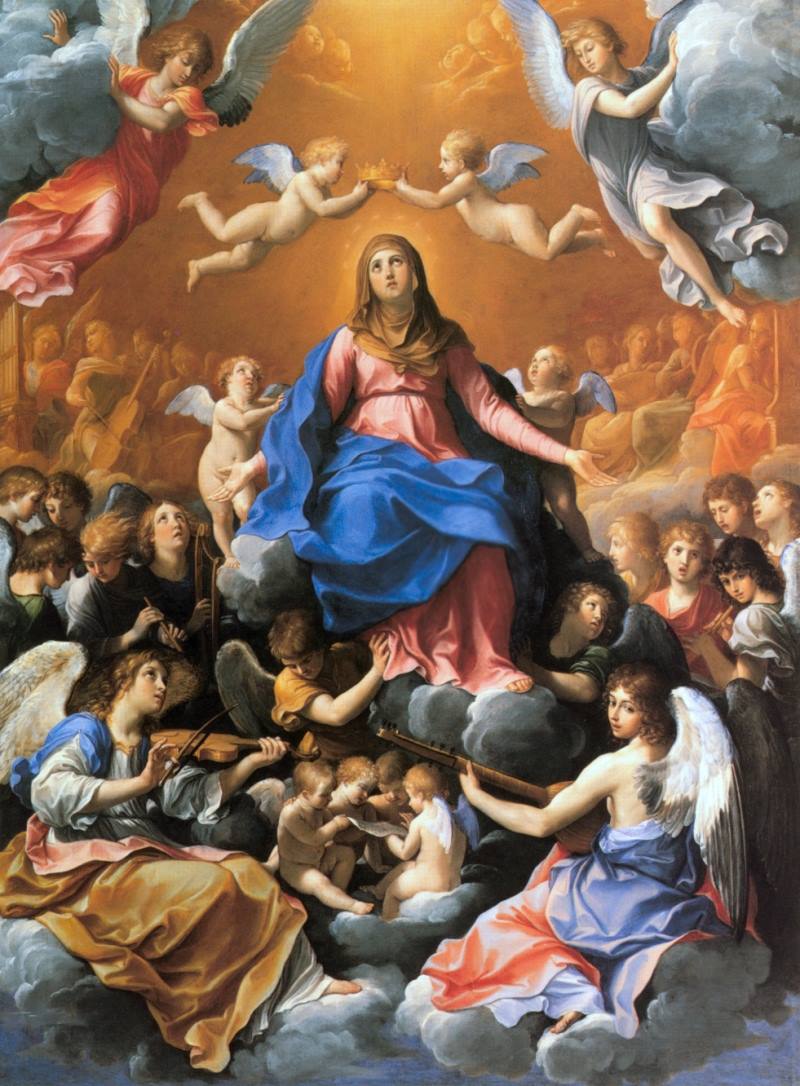 The perfect union of the Blessed Virgin Mary with God
Mid-August finds a good many of the Eastern and Western churches commemorating the move of Mary to heaven. In the East the feast is called the Dormition (koímesis); in the West it is called the Assumption (assumptio). This is a favorite feast for me.
St. Germanus of Constantinople preached: “You, O Mother, are close to all and protect all, and though our eyes cannot see you, we know, O Most Holy One, that you dwell among us and make yourself present in the most varied ways… Your virginal body is entirely holy, entirely chaste, entirely God’s dwelling place so for this reason it is absolutely incorruptible. It is unchangeable since what was human in it has been taken up in incorruptibility, remaining alive and absolutely glorious, undamaged, and sharing in perfect life. Indeed, it was impossible that the one who had become the vase of God and the living temple of the most holy divinity of the Only Begotten One be enclosed in a tomb of the dead. Rather, we certainly believe you continue to walk with us.”
The observance of the feast dates back to the first millennium and defined in the 20th century. Mary is a figure of the heavenly Jerusalem!
We know from liturgical historical scholarship that Several Armenian lectionaries found in Jerusalem witness to a celebration of Mary as Theotókos on August 15; the documents tell us this feast arose in the fifth century, probably after the Council of Ephesus in 431. The Eastern feast was imposed on the entire Byzantine Empire by the Emperor Mauritius at the end of the sixth century. It spread to the West and since the eighth century it has been known as the “assumption” of the Blessed Virgin Mary. In comparison, the Coptic Church liturgically commemorates the Virgin’s death and assumption on two different days. You will recall that the Catholic official teaching –definitely defined– happened not in the early centuries of Church history, but on November 1, 1950. Pope Pius XII taught that according to the tradition Mary was raised body and soul to the glory of heaven was proclaimed a dogma.
The 4 canonical Gospels do not speak of Mary’s later years. But it’s the apocryphal Gospels which speak of Mary dying with the apostles gathered around her, and of her later appearing to them as they celebrate the Eucharistic sacrifice. What do we have about Mary’s ultimate existence on earth? The Church uses the apocryphal Gospels together with the fact that no certain relic of Mary’s body exists thus giving the Church room to contemplate the last moments of Mary’s life on earth in the light of Christ’s victory over death. Hence, we bless flowers and herbs on this feast (indicating no mortal remains was left in the tomb carved for Mary) and we teach that what was gifted to Mary is gifted by the Savior to us who believe in Him.
The Assumption (Dormition) of the Blessed Virgin Mary – a period of fast
 August 1 through 14 is a period of fasting in the
Byzantine churches in preparation for the feast of the Dormition of the
Theotokos (Assumption) on August 15.
Unfortunately, we in the Roman Church have lost the Assumption fast, but we continue to bless herbs and flowers on this solemnity.
It is truly right to bless you, O
Theotokos, as the ever-blessed and immaculate Mother of our God. More honorable
than the cherubim, and by far more glorious than the seraphim, ever a virgin, you
gave birth to God the Word; O true Theotokos, we magnify you!
Theotokos, as the ever-blessed and immaculate Mother of our God. More honorable
than the cherubim, and by far more glorious than the seraphim, ever a virgin, you
gave birth to God the Word; O true Theotokos, we magnify you!
“Dostojno je.”
Assumption/Dormition fast
 Those Christians who are not Orthodox –as in, Orthodox Christians or Eastern Orthodox or some version of this– are likely not to be aware that today begins the traditional time of fasting in preparation for the great feast of the of the Assumption (if you are Catholic) or Dormition (if you are Orthodox) of the Blessed Virgin Mary (Theotokos), the all-holy Mother of God. In fact, the Churches of East and West are called upon to prepare for the yearly festival of our Lady by prayer, fasting and almsgiving. Sound familiar? Indeed, the 3-point spiritual discipline is identical with Lent and Advent.
The period of fast I am speaking of today is a period of time that ought to be understood as training ourselves to be spiritually vigilant. That all of us, no matter of Church membership, should be attentive to and practice fasting so that our hearts and mind and bodies are opened up to the workings of the Holy Spirit. Put another way, by fasting what could the Lord be offering us to know and love and live? Our prayerful vigilance for the feast of the Assumption/Dormition ought to be rekindled by Catholics because the practice opens us up to God’s grace. Whether a Catholic takes on 14 days of fasting or something more modest it is a personal choice. But do something! And while I can’t guarantee much, I can say that if we are faithful to the spiritual practices of the Church they will give us new eyes of faith, the eyes of the beatitudes, a new mentality with which to assess the world in which we live today. That is, to look with the same mercy and openness that God has for us due to the Incarnation.
The Catholic and Orthodox Churches celebrate the same event, Mary’s departure from earth, but each call the event by a different name. The Orthodox say that Mary died a natural death as any human being would, that her soul was received by her Son, Jesus, and on the third day her body was resurrected but didn’t suffer bodily corruption. Catholicism says Mary was assumed by God’s own power like that of Elias, into heaven body and soul at the moment of death. Catholic dogma defined by the Church leaves it an open question as to whether Mary died (see Pope Pius XII, Munificentissimus Deus, 1950).
At any rate the Christian Churches of East and West up until today celebrates this significant feast of the Mother of God liturgically and has done so since the early years following the Council of Ephesus (431). Some point to the Jerusalem liturgical practices of the burial services of the Virgin as imitating those done on Good Friday for Jesus. The point is that the Assumption/Dormition feast is prepared for by a period of fasting, preparing the whole person to receive anew the Paschal Mystery wrought by Mary.
The period of fast lasts until August 14th. Remember, the Assumption/Dormition feast is the same solemn feast observed by both the Eastern and Western Churches but with different emphases depending on the Church that you belong to. But one should note that this fast has a stricter sense than even that of the Nativity and Apostles’ fasts.
The Orthodox Church’s rules for fasting can be found here and if you are Catholic it might be a good idea to consider some time in prayer and fasting as a path to celebrate the Marian feast of the Assumption or Dormition on August 15th.
PS: The Assumption is my most favorite of Marian feasts!
Herbs Blessing, Byzantine style
In an age old tradition of the Church, the faithful experience a blessing of herbs and flowers on the Solemnity of the Assumption. Here is a blessing taken from the Byzantine ritual and so we ought to say the “Dormition”, this is the proper term in the East for what the Latins call the Assumption of Mary.
O almighty, eternal God, by your word alone You created out of nothing the heavens, earth, sea, and all things visible and invisible. You commanded that the earth give forth plants and trees for the needs of man and animal, each according to its need. In your infinite goodness You ordained that these plants serve not only as food for the animals but also as medicine for the sick body. We beseech you, bless these different plants and fruits and bestow upon them your blessing, and endow them with your power, so that they may serve man and animal like as a defense against all sickness and all that is impure: for You are our God and we give glory to You, Father, Son, and Holy Spirit, now and ever, and forever. Amen.
These flowers (or: plants) are blessed and sanctified by the sprinkling of this holy water in the name of the Father, and of the Son, and of the Holy Spirit. Amen.
Herbs Blessing on the Assumption Solemnity, August 15
It is customary in the Western Church, since at least the 10th century, for the priest to bless herbs on the Solemnity of the Assumption. The Eastern Church likely had a similar formulary much earlier.
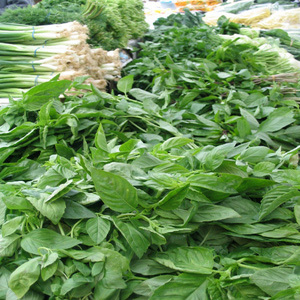
As a point of liturgical fact, the Church asks God to bless herbs and flowers –and thus us– to remind all of us of the gifts God has given us for our sustenance, healing and beauty. In many places the faithful had all their flowers blessed, especially those closely associated with the Blessed Virgin Mary. Herbs blessing, therefore, is another example of giving thanks, a key theological and liturgical point in our life of faith. While customary it is not likely to be used in many parishes. The collects for the herbs blessing rich and savory.
The Directory on Popular Piety and the Liturgy (2001) says of herbs blessing:
The Assumption of the Blessed Virgin Mary (15 August) is deeply imbedded in popular piety. In many places the feast is synonymous with the person of Our Lady, and is simply referred to as “Our Lady’s Day” or as the “Immacolada” in Spain and Latin America.
In the Germanic countries, the custom of blessing herbs is associated with 15 August. This custom, received into the Rituale Romanum (200), represents a clear example of the genuine evangelization of pre-Christian rites and beliefs: one must turn to God, through whose word “the earth produced vegetation: plants bearing seeds in their several kinds, and trees bearing fruit with their seed inside in their several kinds” (Gen 1, 12) in order to obtain what was formerly obtained by magic rites; to stem the damages deriving from poisonous herbs, and benefit from the efficacy of curative herbs.
This ancient use came to be associated with the Blessed Virgin Mary, in part because of the biblical images applied to her such as vine, lavender, cypress and lily, partly from seeing her in terms of a sweet smelling flower because of her virtue, and most of all because of Isaiah 11, 1, and his reference to the “shoot springing
from the side of Jesse”, which would bear the blessed fruit of Jesus.
The Order of Blessing of Herbs is found here.