Spiritual Ecumenism and dialogue, Pope Benedict addresses the ELCA

Keeping up with Pope Benedict can be a difficult task, even for the strong; the pope does so much work in given week that most people would wilt. However, because he has such an excellent staff, much is possible. Key to understanding Benedict’s ecumenical work is his openess to collaborating with the Spirit and with others Chrisians for full visible communion desired by Christ and the Church, particularly since Vatican II. Additionally, his insistence on spiritual ecumenism is always noteworthy because without prayer none of ecumenical diagolue work makes a bit of sense. Plus, the pope raises the all-important matter of harvesting the fruit already done by the churches. So often we work hard on some document or event but fail to assess the fruit of the document or event to see what fruit there is and how it’s maturing. The lack of critical and honest engagement with the issues and the prudential enactment of the dialogue is fraustrating to lots of people. It is likely that many people have missed the news of of the Pope’s recent meeting with a delegation from the Evangelical Luthern Church in America (ELCA) on Wednesday, 10 February 2010, where he said (emphasis added):


“Since the beginning of my Pontificate, I have been encouraged that relations between Catholics and Lutherans have continued to grow, especially at the level of practical collaboration in the service of the Gospel. In his Encyclical Letter Ut Unuum Sint, my beloved Predecessor Pope John Paul II described our relationship as “brotherhood rediscovered” (n. 41). I deeply hope that the continuing Lutheran-Catholic dialogue both in the United States of America and at the international level will help to build upon the agreements reached so far. An important remaining task will be to harvest the results of the Lutheran-Catholic dialogue that so promisingly started after the Second Vatican Council. To build on what has been achieved together since that time, a spiritual ecumenism should be grounded in ardent prayer and in conversion to Christ, the source of grace and truth. May the Lord help us to treasure what has been accomplished so far, to guard it with care, and to foster its development.


I conclude by renewing the wish expressed by my Predecessor, during whose Pontificate so much was accomplished on the road to full visible unity among Christians, when he said to a similar delegation from the Lutheran Church in America: “You are most welcome here. Let us rejoice that an encounter such as this can take place. Let us resolve to be open to the Lord so that he can use this meeting for his purposes, to bring about the unity that he desires. Thank you for the efforts you are making for full unity in faith and charity” (Address to the Bishops of the Lutheran Church in America, 26 September 1985; L’Osservatore Romano English Edition, 7 October 1985, p. 6).


Upon you and all those entrusted to your pastoral care, I cordially invoke the abundant blessings of Almighty God.

Bishop Declares Humanitarian Emergency in Mosul

As a follow-up to a request for prayers for the Dominican sisters in Mosul the other, I am republishing Edward Pentin’s article for Terrasanta.net here to give further background to the situation in Iraq, especially since the Western press and politics have virtually ignored the plight of Iraqui Christians.


The news has escaped much of the mass media, but Christian families are leaving Mosul, Iraq, in their droves to escape a concerted campaign of violence and intimidation.


Chaldean Bishop Emil Shimoun Nona has said that Mosul is experiencing a “humanitarian emergency” and that “hundreds of Christian families” left the city Feb. 24 in search of shelter, leaving behind their homes, property, commercial activities, according to Asia News. The situation “is dramatic”, he said.


The families have chosen to flee after a spate of violent attacks which left five Christians dead last week, and members of a whole family murdered on Tuesday. “In one house all the family members were killed — five people,” said an Iraqi member of Open Doors, a non-denominational charity helping persecuted Christians, Christian News Wire reported. “First the attackers drove by and shot from their car. Then they forced themselves into the house and gunned down the entire family. They even threw two bodies outside the house as a cruel warning for others.”


Archbishop Louis Sako of Kirkuk has launched “a demonstration and a fast” to sensitize the international community to the “massacre of Iraqi Christians” and stop the violence in the country. Pope Benedict XVI has expressed his deep concern and sorrow over the continuing wave of violence. Vatican Radio and the Vatican newspaper, L’Osservatore Romano, reported Feb. 24 that although the Pope is on retreat and not speaking publicly, he expressed his sorrow that “in the area of Mosul, the killing of Christians continues.”

Cardinal Tarcisio Bertone, Vatican Secretary of State, told Iraq‘s prime minister, Nouri al-Maliki, that the Pope expresses his “sincere solidarity” with him and other leaders after a series of attacks on government buildings and on places of worship, both Muslim and Christian. “He prays with fervor for an end to the violence and asks the government to do everything possible to increase security around all places of worship throughout the country,” Cardinal Bertone wrote. Bishop Emil Nona fears that “Mosul will be emptied completely of Christians” and will visit Baghdad to plead for help from the national government in establishing some minimal security for the city’s religious minority. The attacks have taken place in the run-up to elections in Iraq on March 7th. Basile Georges Casmoussa, Syrian Archbishop of Mosul, said elections always bring troubles, “but not to the point of killing people, particularly Christians. The Christians were killed not because of their politics, but because they are Christians.”


Speaking to Terrasanta.net Feb. 22nd, Archbishop Sako said the elections are prompting struggle between political groups made up of Arabs and Kurds. “They are fighting to have authority, power and also the economy and there’s a big tension,” he said, adding that in Mosul they are “pushing the Christians to get out of the city – that is their main purpose.” He warned that lack of security is due to a political vacuum in Mosul, with Arabs running the city without sharing power with the Kurds, although he said he remains hopeful that peace could return after the elections.


In a speech given Monday to the Sant’Egidio community in Rome, Archbishop Sako warned that in the coming years more Iraqi Christians are likely to flee the country due to violence by Islamic extremists and fears over the introduction of Sharia law. “They think of the Jews who were once in Iraq but are not there anymore and they are thinking it’s their turn to leave,” he said. “This is what people are thinking about.”


He also said Iraqi Christians feel neglected by the West. “[They] have the impression of being forgotten by the West that is secular,” he said. “In the past, some might have wanted to protect Christians but now we have the impression of being isolated and forgotten by all.” The Vatican nuncio to Iraq, Archbishop Francis Chullikatt, warned in an interview with Vatican Radio Feb. 25 that Christians have been in Iraq for 2,000 years, so “any attempt to decrease the Christian presence or, worse, to destroy the Christian presence in Iraq would mean destroying the history of the Iraqi nation.”
Documents between 1939-45 on Pius XII papacy

The Vatican Publishing House is making available, free of charge on the internet, more than 8,000 pages of the Actes et Documents du Sainte-Siège relatifs à la Seconde Guerre Mondiale (1965-1981) edited by Jesuit Fathers Pierre Blet, Angelo Martini, Robert A. Graham and Burkhart Schneider.


vatican secret archive.jpgThe release of these documents are the result of a request of the Pave the Way  Foundation (PTWF) made to the Holy See to digitalize and publish 5,125 documents of the Vatican Secret Archives dated from March 1939 to May 1945. PTWF president Gary Krupp said his Foundation aims to remove the barriers between Catholic and Judaism. He told Jesús Colina of Zenit, “In the futherance of our mission we have recognized the papacy of the war time Pope Pius XII as a source of friction impacting over one billion people.”


More information on the Vatican Secret Archives may be found here.

From athlete to religious life

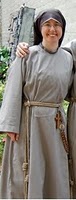
Holum3.jpgA few weeks ago Yahoo sports posted a story that caught my attention (but I am only now getting around to posting it, sorry) about a former world-class speedskater now on a journey to the vowed life as a Franciscan Sister of the Renewal.

Holum2.jpg

Kirstin Holum, now Sister Catherine, stands out because she was once a high-profile athlete with promise now (she was at the 1998 Olympics in Japan) she’s devoting her life to Christ and the Church in a new race outlined by Jesus, Saint Paul, Saint Francis and the Church.
Prayers for Sister Catherine’s perseverance and for the Sisters of the Renewal.

Saint Gabriel of the Sorrowful Mother

St Gabriel of the Sorrowful mother with St Gemma.jpg

My servant continued with all his heart doing what is just before my eyes.
O God, Who in the design of Your love called Saint Gabriel of Our Lady of Sorrows to live in the mystery of the Cross with Mary, the Mother of Jesus, guide our spirit towards Your Crucified Son so that by participating in His Passion we may achieve the glory of the Resurrection.

Among the young saints of the Church are those who followed the Passionist charism, that is, those who made the paschal offering of Christ on the cross and His sorrowful mother so very central to their. The oblation of Christ crucified is THE Christian spirituality of our day, especially given the suffering many of us endure for the faith and for Saint Gabriel of the Sorrowful Mother is one such figure that we would do well to spend time learning. As the Mass collect above suggests, we are to ask for the grace to participate in the Lord’s Passion with the hope of his glory. This is the destiny of all Christians.

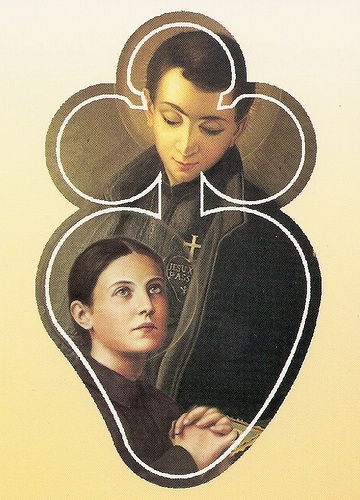
At 24 he was stricken with TB and died prior to his ordination. As grace is operative I feel close to Gabriel and ask his intercession for young seminarians even for me not being so young having just turned 41 a few weeks ago. Saint Gabriel’s youthful witness to Christ led him to being named a patron for the youth and seminarians by Pope Benedict XV in 1920 when he was canonized. The image given here is that of Saint Gabriel healing Saint Gemma, whom she was devoted.

Read up on Saint Gabriel here.
A rather helpful blog is maintained on our friend, called “Saint Gabriel Our Lady of Sorrows,” you can explore of Gabriel’s life and legacy for today.
May the Passion of Jesus and the Sorrows of Mary be ever in our hearts!
motto of Saint Paul of the Cross

Archbishop Dolan notes a need for coherence in faith & public order

In a NY1 Exclusive interview with NY’s Archbishop Timothy M. Dolan the other day, the Archbishop spoke about many things including NY politics, culture and he distinguishes between being welcome to attend events and being honored at publicly sponsored Catholic events. A topic many Catholics are familiar with in recent years, especially at university graduation time. This is question is also on the plate since the St Patrick’s Day Parade is fast approaching at which the gay and lesbian activists normally cause a stir because of perceived anti-Catholic bias toward their lifestyle and then in fall there’s the Al Smith dinner where Catholics and politicos rub shoulders at a high profile dinner. People want to know what and how the Church is going to handle such situations; the Catholics need solid guidance and reasons for belief and hope. The Archbishop is clear that when it comes to faith and the public order people we need (want!) good leadership who live lives with honesty and that the public have an expectation that civil and religious leadership be questioned about their lives. Good governance depends on coherent life. Politically people are asking these questions in light of the recent troubles of NY governor David Paterson, a Catholic and yet pro-abortion, not to mention pro-liberal on all topics.

Iragi Christian community & the Dominican sisters in danger: Urgent prayers needed

This afternoon, I received a request for prayers, which I now recommend to you, for the Christians in Iraq. The following note was sent by Sister Donna Markham, the Prioress of the Adrian Dominicans:

This evening I have received very tragic news about the situation in Iraq . I have just returned from being with the 5 Iraqi sisters who are with us in Adrian . Today, all the Christians have fled from Mosul. There have been murders and rapes of Christians there and for now they are fleeing to the Christian villages. Sister Maria is very frightened about the safety of the sisters and the Christian people. As of now, the five elderly sisters who have been holding down the Motherhouse are choosing to remain there because they do not want to lose their Motherhouse to the terrorists. She said most Christians are making plans to evacuate from Iraq and, as a consequence, she does not know what will happen with her Congregation. She said they will follow the Christian people where they go, but where that will be is uncertain. The sisters’ families remain in grave danger and, as you can imagine, the young ones with us and with Springfield are terrified. As of now, nothing is being reported in the US press. She asks if any of us know people in Washington whom we could contact and tell the story, to please do so. Most importantly, she asks for our prayers.
Join the Facebook page “Save Christians in Iraq
May Our Lady of Peace, pray for us.
Saint Dominic and Dominican saints and blesseds, pray for us.

Saint Walburga

St Walburga3.jpg

Prayer to Saint Walburga
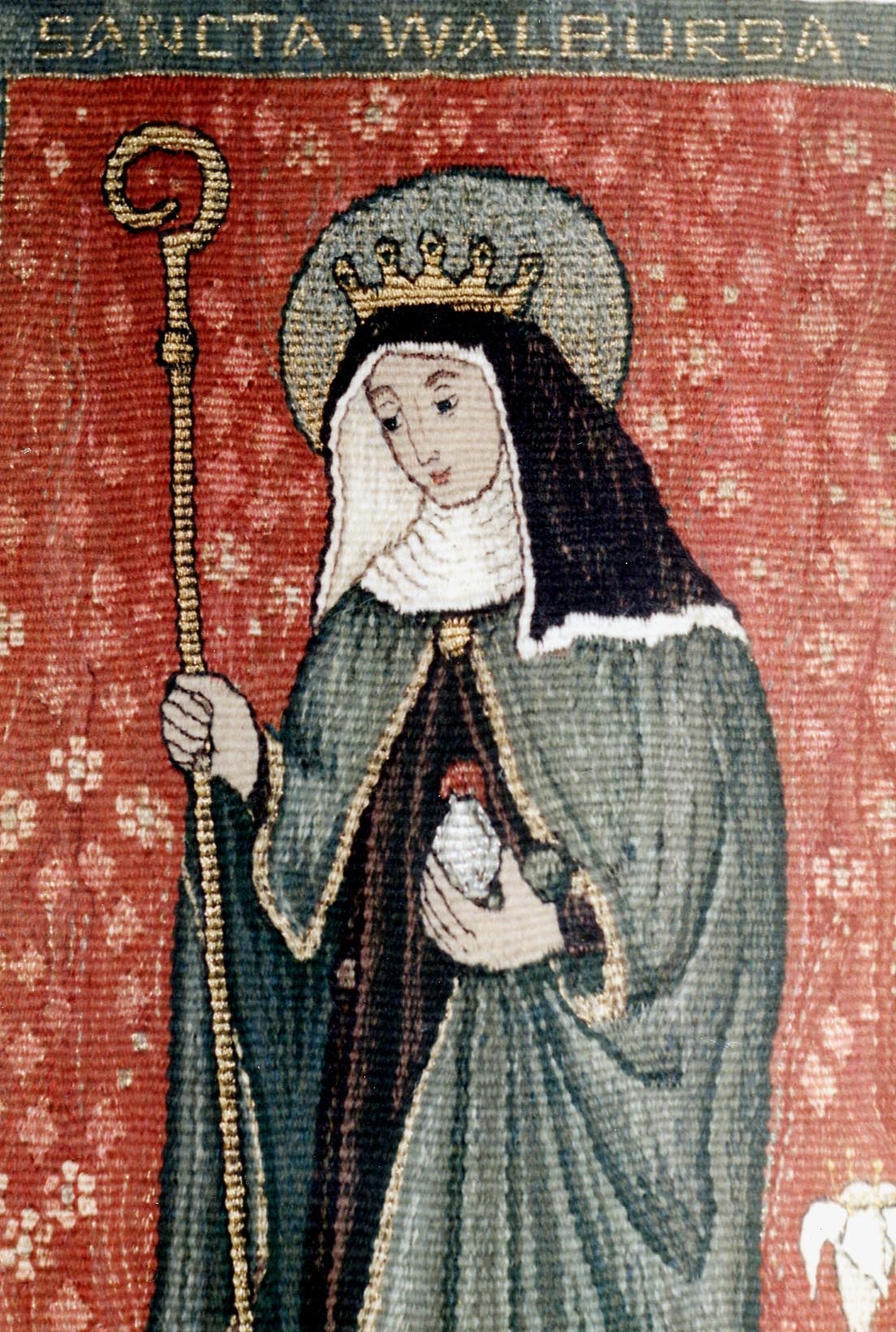
Saint Walburga, by your blessed life of love, God blessed you with the power to heal, to make whole the soul as well as the body. Beg for us what we cannot obtain for ourselves, and heal our world of sickness and sorrow. May God hear you, who lived so graciously for His glory, and send us the healing grace we need through your powerful intercession. Amen.
More on Saint Wlaburga, read this blog post.

Is Lent a time of healing for you?

In the Syriac Christian tradition the healing power of
Christ is presented to the faithful, by the Church, by knowing that the believing community of faith, is the Lord’s bride and our
mother. We know this experientially through the sacramental ministries of the priesthood. Saint Ephrem prays to Christ crucified and risen:

With three medicines

You have cured our sickness;

Humanity was weak, suffering and failing;

You have strengthened it by you blessed bread,

You have consoled it with your sober wine,

And You have given it joy with your anointing.


Lent is the springtime of our healing in mind, body and soul. Lent is a time to have the
great reversal happen: from weakness to strength, from sickness to health, from sinfulness to a
life of grace. This is all possible in the confession of sins, the worthy
reception of the Holy Eucharist, and the luscious anointing of the Holy Spirit
pour out over us.

Purifying our love

Let’s face it: many Christians find Lent meaningless. There are some among us who get their ashes, make some crazy resolution –give up the daily consumption of 5 beers, are nice to a sibling, do homework– to make “penance” and the season of Lent more “holy.”  Silly things at Lent beget shallow experiences of conversion, perhaps even lend to a falsification of the Christian witness at during the time of Lent. Read the Pope’s lenten addresses an see what he has to say about the nature of this season we call purposeful, holy, penitential, even great. He would agree with me (wow that could be dangerous!) that unless you take Christ seriously who is standing in front of you in the person of your neighbor, Lent is going to be boring and miserable. How pure is your love for Jesus? How does your love for Jesus made real, concrete, fruitful? The following 3 paragraphs may begin to help answer these questions. Emphasis mine.

Christ attracts me primarily through things and people. My wounded, tired soul could stop at that. Idolatry is nothing other than to confuse the creature with the Creator, which is why there is a continual need for the purification of love.

My comments here come directly from a saying of Fr. Giussani that I have referred to many, many times and that, in the book I wrote about him, I cited as one of the loftiest, most impressive and truly innovative points in the Church’s recent
history: the definition of virginity as distance in possession, or possession that includes distance in it. We must take this expression in its entirety. In it is the exaltation of the human in Christ, which so characterized Fr. Giussani’s entire life, and the inevitability of sacrifice, which he always cited as the condition of the road. No one wants to do away with or repress friendship and sentiments, or to put them “in parentheses”, but we must be very clear and ask ourselves: what does God want of me? And what does that mean for the other, in light of the road that God has assigned to him?

Christ is not paradoxicalChrist gives us an abundance of human affections to help us to understand what it means to love him. It doesn’t scandalize me when someone says: “It seems that I love that person more than I love Jesus”, because our path towards the Infinite is without end, and, before you love the God that you don’t see, you love the neighbor that you see. But love the neighbor that you see so as to walk toward God, to walk toward the fullness of yourself.

An excerpt from an address tilted, “Our Fulfillment” by Father Massimo Camisasca, founder of the Fraternity of Saint Charles

The Fraternity is an international missionary congregation of priests begun in 1985 as a response to the work of Monsignor Luigi Giussani. The Fraternity has about 100 priests in 20 countries and 30 in formation to be ordained priests. To read the rest of the address, click here.