” . . . the glory of God is assumed fully, without limits and determinations . . . For us, the glory of God, being our end in all its breadth, is the measure of the quest for our own salvation and perfection,
as well as for that of others.” ~Achille Gagliardi, S.J.
Seminary and Sex
Sexuality is a beautiful part of being human and it is a gift from God that needs to be known, understood, appreciated and embraced (no pun intended). Sexuality is a holy part of being a man or a woman. Unfortunately, that’s not the message we receive in secular society and it is infrequently heard from the pulpit in Catholic churches and very likely not in other Christian communities. Unheard of from the pulpit, that is, until Pope John Paul II introduced his monumental work, Theology of the Body. But that’s a topic for another time. Sexuality is not just a religious issue, it is a human issue and everything human is of our interest.
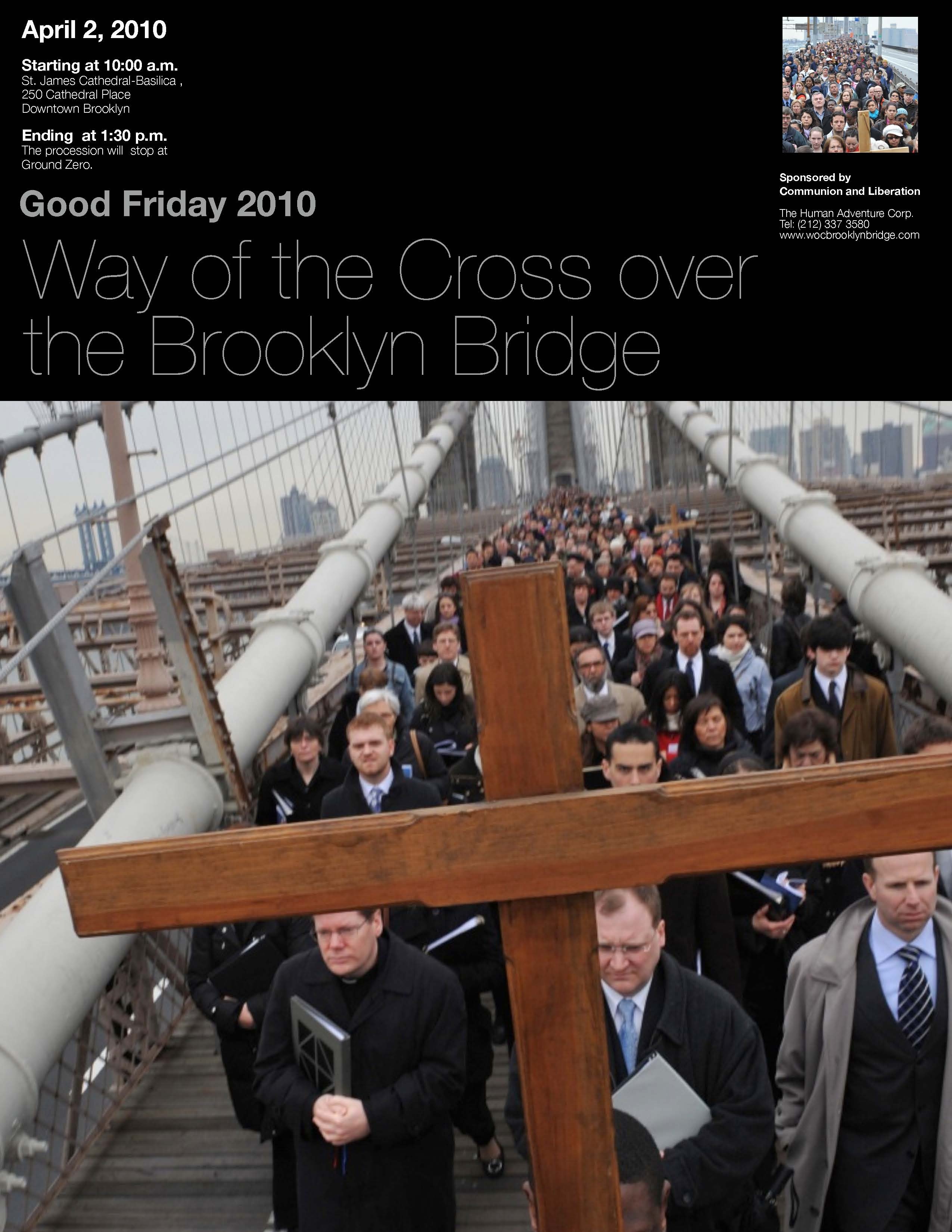
Good Friday Way of the Cross over the Brooklyn Bridge connected with closeness & prayers of Pope Benedict
The Secretariat of State of the Holy See has asked me
to convey the following message:
and the assurance of closeness in prayer to all attending the Good Friday
Stations of the Cross organized by Communion and Liberation in New York City
and in the other cities throughout the United States. It is his hope that by
accompanying the Redeemer along the path leading to calvary they will draw ever
closer to Him in His loving obedience to the Father’s Will and His redemptive
solidarity with suffering humanity, and be led to deeper conversion, more fervent
faith and generous commitment to the spread of God’s kingdom of reconciliation,
justice and peace. Commending all present to the intercession of Our Lady of
Sorrows, the Holy Father cordially imparts his apostolic blessing as a pledge
of Easter joy and hope.
good wishes, I remain
Nuncio
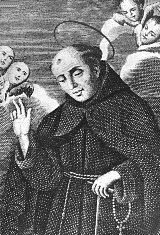
Saint John Joseph of the Cross
He was in prayer and even spent the night praying and giving
thanks.
Father, You raised Your servant Saint John Joseph of the Cross through
the rugged way of poverty, humility and patience to heavenly glory. Grant us
the grace to follow his example so as to share in eternal joy.
Saint John
Joseph comes from the island of Ischia, off the coast of Naples. Some might say
it is better than Capri. Virtuous from his earliest days he followed the path
set by Saint Peter of Alcantara -the same person who was a spiritual father to
Saint Teresa of Jesus– who developed a strict observant Franciscan fraternity
which emphasized contemplation and penance. John Joseph was such an exemplary friar
that he was asked to be ordained a priest and to make Franciscan foundations.
In time he was appointed both master of novices and provincial superior. His
humility endeared him to others; he insisted on menial tasks even though he had noble birth and positions of influence. John Joseph was zealous for souls and it is
reported that he had the gift of prophecy and healing. As an insightful
confessor John Joseph would encourage people to pray, live simply and be
devoted to the Blessed Virgin Mary.
More on Saint John Joseph can be read here.
Pope takes new job…things at Vatican rough
What is fasting? What Catholics teach…
In the famous Sermon on the Mount Jesus speaks of the three important spiritual exercises: fasting, prayer and almsgiving. Here I want to write about fasting. And over the many centuries that the Catholic Church has existed, there has been development in the teaching based on experience.
Jesus’ teaching on fasting is this:
*Fasting is an extremely important means –not an ends– of resisting sin and the threat of hell.
*Fasting is practiced as a memorial of Christ’s death on Good Friday; it ought to be practiced each Friday but the Church only requires fasting on Ash Wednesday and Good Friday.
*Fasting is intimately linked to prayer and almsgiving as spiritual exercises.
In paragraph of 2043 of the Catechism of the Catholic Church, quoting the Code of Canon Law, states, “The fourth precept (“You shall observe the days of fasting and abstinence established by the Church”) ensures the times of ascesis and penance which prepare us for the liturgical feasts and help us acquire mastery over our instincts and freedom of heart.”
Our Church still believes that fasting is not only helpful, but is required because it forms and reforms a sense of faith, hope and charity. Serious Christians will not abandon the practice of fasting, especially before significant events in life like baptism, confirmation, marriage, ordination, etc. So what does the Church believe about fasting? Fasting means…
*There are two fast-days on which we are allowed but one full meal but person can have one full meal, take two other meatless meals, to maintain strength, according to one’s needs. Taken together these two meatless meals should not equal another full meal.
*All people over 18 and under 59 years of age, and whose health and occupation will permit them to fast. (Abstinence begins for those who are 14.) The Church, showing mercy, does excuse certain persons from the obligation of fasting on account of age, health, work, or the circumstances in which they live. Children, from the age of seven years, and persons who are unable to fast are bound to abstain on days of abstinence, unless they are excused for sufficient reason. If questions persist, please find a parish priest for consultation.
*Fast-days occur during Advent and Lent, on the Ember days and on the vigils or eves of some great feasts. A vigil falling on a Sunday is not observed.
Fasting is often seen by some people as antiquated, harmful, or a waste of time. To think that fasting is only about the legal requirements of the faith, is a serious reduction of the practice of religion to ideology. Moralism is shallow and gets us no where. I will say, fasting is an essential part of being formed in the Catholic faith, adhering closely to Christ. No one who takes seriously their faith can dispense themselves without good reason from fasting as Christ fasted. Yes, it is hard and yes it is annoying but the pay-off is profound because it opens the body, the heart and the mind to grace. Fasting allows us to see more deeply and clearly the conversion we are called to work on, and to be less satisfied with the status quo. Fasting assists our restlessness in tending towards God by stripping away sin (and a little weight comes off, all the better).
I have to say there is a beauty in fasting because it is a method in emptying myself of that which weighs me down either with food –which makes me sluggish and at time incapable of listening to the movements of the Holy Spirit in my life– or fasting from sinful tendencies which can also make me sluggish but there is a significant risk in not fasting from sin because sin leads away from God and from the heart of the Church, the sacrament of Christ on earth.
Saint Katharine Drexel
Saint Aelred of Rievaulx
2010 marks the ninth centenary of the birth of Saint
Aelred of Rievaulx, an extraordinary English monk of the twelfth-century. At Ampleforth Abbey, a noted English Benedictine abbey, today marks the saint’s birthday; and since I like Aelred and have a friend at Ampleforth, I am mentioning the saint again this year to mark his anniversary. (As an aside, his year of birth is variously noted as 1109 or 1110.) In Saint Aelred’s time and location priestly was not universal, even if some scholars try to
posit such a thought. Aelred’s father and grandfather were both proprietary
priests of Hexham in Northumberland. Aelred joined the newly founded abbey of
Rievaulx, and because of his many gifts and influential friends (St Bernard of
Clairvaulx and King David of Scotland and England whose mother was St Margaret, starters), he became the
abbey’s third abbot in 1147 after serving as abbot of Revesby Abbey. He was abbot for twenty years. Rievaulx became the mother
house of other Cistercian monastic houses which fostered the Benedictine reform
in England and Scotland. As abbot, Aelred was responsible for vast holdings of
property and an abbey with 600 lay brothers and choir monks. In the Cistercian system
of governance, abbots are required to be the Father-Immediate (an official
visitor) to other communities in order to maintain the monastic way of life as established in the Charter of Charity (their constitution). The amazing
part of Aelred’s life became even more amazing when you consider that he was an
author many works, most notably Christian Friendship (also called On Spiritual Friendship, which some say is a Christianized version of Cicero’s De Amicita) and The Mirror of Charity
written at the command of St Bernard and in-print today. Father David Knowles, OSB, called Aelred the “St Bernard of the North.” Rievaulx Abbey no
longer exists except in magnificent ruins located not far from Ampleforth
Abbey.
Archbishop Chaput speaks at Houston Baptist University
Yesterday, Archbishop Charles Chaput, OFM, Cap, Archbishop of Denver, spoke to Houston Baptist University. His talk, “The Vocation of Christians in American Public Life,” is read and/or watch it here.
Cardinal George’s address to BYU
Cardinal Francis E. George, OMI, Archbishop of Chicago and President of the US Conference of Catholic Bishops, spoke to more than 12,000 people at BYU in Salt Lake City on February 23, 2010. His full address, “Catholics and Latter-Day Saints: Partners in the Defense of Religious Freedom,” is found here: Cardinal George to BYU 2010.pdf.