Saint Monica

Remembering Saint Monica, mother of the great Saint Augustine of Hippo today, I re-read the account Augustine gave of his mother’s death and his tribute to her in the Confessions (9.12). The intimacy Augustine portrays between he and God and he and his mother is beautiful and very striking. Truly, grace at work. 

 St Monica Andrea Verrocchio[1].jpg

Augustine writes of his mother:

I closed her eyes; and there flowed in a great sadness on my heart and it was passing into tears, when at the strong behest of my mind my eyes sucked back the fountain dry, and sorrow was in me like a convulsion. As soon as she breathed her last, the boy Adeodatus burst out wailing; but he was checked by us all, and became quiet. Likewise, my own childish feeling which was, through the youthful voice of my heart, seeking escape in tears, was held back and silenced. For we did not consider it fitting to celebrate that death with tearful wails and groanings. This is the way those who die unhappy or are altogether dead are usually mourned. But she neither died unhappy nor did she altogether die. For of this we were assured by the witness of her good life, her “faith unfeigned,” and other manifest evidence.

What was it, then, that hurt me so grievously in my heart except the newly made wound, caused from having the sweet and dear habit of living together with her suddenly broken? I was full of joy because of her testimony in her last illness, when she praised my dutiful attention and called me kind, and recalled with great affection of love that she had never heard any harsh or reproachful sound from my mouth against her. But yet, O my God who made us, how can that honor I paid her be compared with her service to me? I was then left destitute of a great comfort in her, and my soul was stricken; and that life was torn apart, as it were, which had been made but one out of hers and mine together.

When the boy was restrained from weeping, Evodius took up the Psalter and began to sing, with the whole household responding, the psalm, “I will sing of mercy and judgment unto thee, O Lord.” And when they heard what we were doing, many of the brethren and religious women came together. And while those whose office it was to prepare for the funeral went about their task according to custom, I discoursed in another part of the house, with those who thought I should not be left alone, on what was appropriate to the occasion. By this balm of truth, I softened the anguish known to thee. They were unconscious of it and listened intently and thought me free of any sense of sorrow. But in thy ears, where none of them heard, I reproached myself for the mildness of my feelings, and restrained the flow of my grief which bowed a little to my will. The paroxysm returned again, and I knew what I repressed in my heart, even though it did not make me burst forth into tears or even change my countenance; and I was greatly annoyed that these human things had such power over me, which in the due order and destiny of our natural condition must of necessity happen. And so with a new sorrow I sorrowed for my sorrow and was wasted with a twofold sadness.

So, when the body was carried forth, we both went and returned without tears. For neither in those prayers which we poured forth to thee, when the sacrifice of our redemption was offered up to thee for her — with the body placed by the side of the grave as the custom is there, before it is lowered down into it — neither in those prayers did I weep. But I was most grievously sad in secret all the day, and with a troubled mind entreated thee, as I could, to heal my sorrow; but thou didst not. I now believe that thou wast fixing in my memory, by this one lesson, the power of the bonds of all habit, even on a mind which now no longer feeds upon deception. It then occurred to me that it would be a good thing to go and bathe, for I had heard that the word for bath [balneum] took its name from the Greek balaneion, because it washes anxiety from the mind. Now see, this also I confess to thy mercy, “O Father of the fatherless”: I bathed and felt the same as I had done before. For the bitterness of my grief was not sweated from my heart.

Then I slept, and when I awoke I found my grief not a little assuaged. And as I lay there on my bed, those true verses of Ambrose came to my mind, for thou art truly,

“Deus, creator omnium,
Polique rector, vestiens
Diem decoro lumine,
Noctem sopora gratia;
Artus solutos ut quies
Reddat laboris usui
Mentesque fessas allevet,
Luctusque solvat anxios.”

“O God, Creator of us all, 
Guiding the orbs celestial,
Clothing the day with lovely light,
Appointing gracious sleep by night:
Thy grace our wearied limbs restore
To strengthened labor, as before,
And ease the grief of tired minds
From that deep torment which it finds.”

And then, little by little, there came back to me my former memories of thy handmaid: her devout life toward thee, her holy tenderness and attentiveness toward us, which had suddenly been taken away from me — and it was a solace for me to weep in thy sight, for her and for myself, about her and about myself. Thus I set free the tears which before I repressed, that they might flow at will, spreading them out as a pillow beneath my heart. And it rested on them, for thy ears were near me — not those of a man, who would have made a scornful comment about my weeping. But now in writing I confess it to thee, O Lord! Read it who will, and comment how he will, and if he finds me to have sinned in weeping for my mother for part of an hour — that mother who was for a while dead to my eyes, who had for many years wept for me that I might live in thy eyes — let him not laugh at me; but if he be a man of generous love, let him weep for my sins against thee, the Father of all the brethren of thy Christ.

Crossroads Cultural Center

Crossroads Cultural Center logo.jpgThere are a few good opportunities to take our lives seriously. One such opportunity is the Crossroads Cultural Center that looks “to offer opportunities for education, making it possible to look with openness, curiosity and critical judgment at every aspect of reality.” Crossroads takes Saint Paul’s exhortation to “test everything; retain what is good” with 

The Crossroads Cultural Center was founded in 2004 and is a project of The Human Adventure Corporation, the New York based center of Communion and Liberation USA. It is a not-for-profit organization interfacing with education, culture, faith, politics, science viz. with reality and Ultimate Reality, God.
The Paper Clippings on the Crossroads website collects valuable reading material in one place. A very helpful aspect of the work done by the people at Crossroads. Recent articles placed on Paper Clippings are: What is Paganism?, Eternal adolescence, People matter, etc. See for yourself, Paper Clippings.
There are regular Crossroads events in New York, Washington, DC, Houston, Chicago, Boston and New Bedford, MA. And, I am happy to say there are some Crossroads events in New Haven, CT periodically.

Melchizedek, the righteous King of Salem


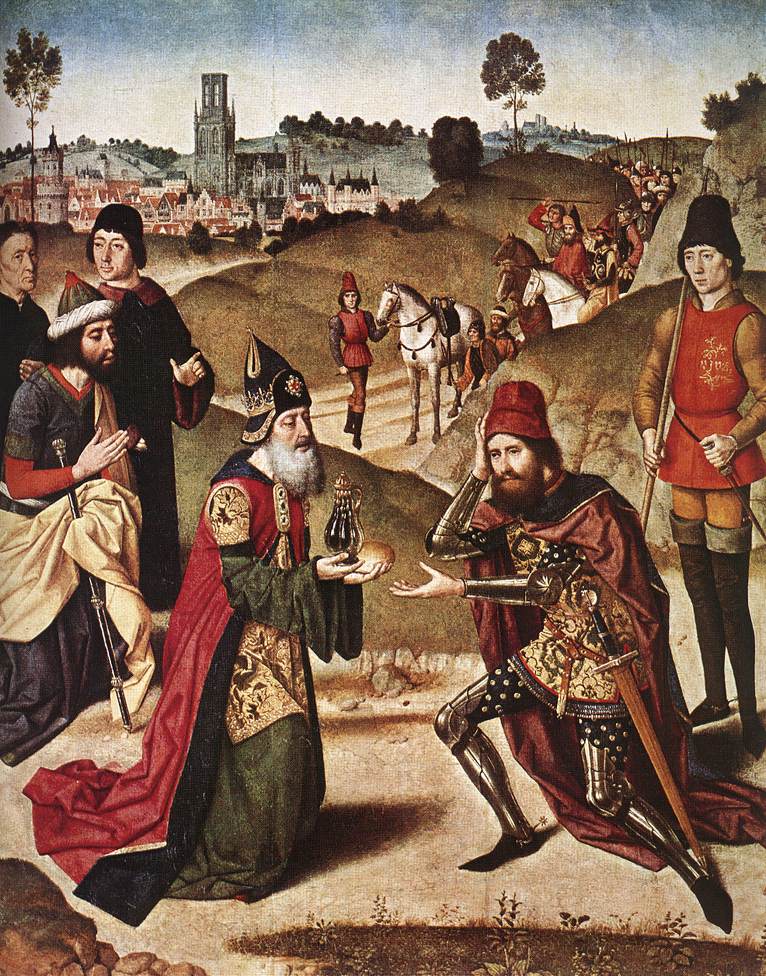
Abraham & Melchizadek.jpeg

The Roman Martyrology lists one of the saints for today as Melchizedek, the righteous King of Salem who offered bread and wine to God in worship. Melchizedek means the King of Justice or King of Peace; “Salem” is the root word for Jerusalem. Melchizedek is also remembered in the Roman Canon of the Mass when the priest prays, “…according to the order of Melchizedek.” The Church’s commemoration of this mysterious King of Salem reminds us that Melchizedek is a bridge between the Old and New Testaments; he is the first priest of the Old Testament mentioned in sacred Scripture and St. John Chrysostom even speaks of the King as “the perfect image of the Savior,” that is, he’s an Old Testament type, a foreshadowing of Jesus Christ as priest and king.

In a homily Bishop Photius of Lyons in part says of Melchizedek:

St. John Chrysostom says:
“Melchizedek was righteous and the faithful image of Christ.  Moved
by a prophetic spirit, he discerned the oblation which must one day be offered
for the Gentiles, and, in the example of the future Christ, he offered bread
and wine as sacrifice to God.  But, the Judaic synagogue, which honored
God according to the order of Aaron, offered Him a sacrifice, not of bread and
wine, but of bulls and lambs and glorified the Lord by bloody sacrifices. 
That is why God, addressing Himself to the One Who was to be born of the Virgin
Mary, Jesus Christ, His Son, says to Him, `You are Priest forever according to
the order of Melchizedek’ and not according to the order of Aaron, who honors
his God while offering Him bulls and heifers” (Op.  cit.,
p.482-483).  St. Ambrose draws the conclusion that the Christian worship
is more ancient than that of the Law since it is Melchizedek, the image of
Christ, who brings the bread and the wine, not Abraham (Cf “Dictionnaire
de Spiritualite”, col. 971.  St. Ambrose, “De Sacramentis”,
IV, 8, 10-11; “De Mysteriis”, 8, 44-45).

That the figure of
Melchizedek is fulfilled in the Lord Jesus Christ, the Fathers all hold to the
fact that He alone is truly `without genealogy’: “The Son of God,”
says St. John Chrysostom, “is without father and without mother; without father
as to His earthly genesis; without mother as to His heavenly genesis”
(“Homelie sur Melchizedek”, op. cit., p.479.  Cf. also
“Expication des Psaumes”, Ps. CIX, ibid., p.332).  If then the
Scriptures say of Melchizedek that he was `without genealogy’, it is not at all
that in reality he did not have parents, “because”, says St. John
Chrysostom, “we maintain that Melchizedek is not only a man like us . .
.  but as Melchizedek was the type of Christ, Whose image he bore, in the
same way was Jonas.  The Scriptures had not spoken of his father, so that
he might offer us a perfect image of the Saviour Who alone, in truth, has
neither father nor genealogy” (Ibid., p.482).  Likewise, in his
homily on the Psalm of David, he says: “That which Melchizedek was in figure,
Jesus Christ was in reality, and the name of Melchizedek was like the names of
Jesus and of Christ, which long in advance announced and prefigured the mission
of the Saviour.  When we read that Melchizedek had neither beginning nor
end of his life, it is not that in reality he had had neither beginning nor
end, but because no trace is found of his genealogy.  Jesus, on the
contrary, had in truth no beginning of His days, nor end of His life.  His
existence had no time, no beginning, no end.  One was the figure, the other
the truth” (Id.,”Oeuvres Completes”, t.IX, p.332).

Blessed John Henry Newman was enchanted by the mysteriousness of the priest and king Melchizedek who composed a poem, “Melchizedek”:

Without father, without mother, without descent; having neither beginning of days, nor end of life.

Thrice bless’d are they, who fell their lonliness;

To whom nor voice of friends nor pleasant scene

Brings that on which the sadden’d heart can lean;

Yea, the rich earth, garb’d in her daintiest dress

Of light and joy, doth but the more oppress,

Claiming responsive smiles and rapture high;

Till, sick at heart, beyond the veil they fly,

Seeking His Presence, who alone can bless.

Such, in strange days, the weapons of Heaven’s grace;

When, passing o’er the high-born Hebrew line,

He forms the vessel of His vast design;

Fatherless, homeless, reft of age and place,

Sever’d from earth, and careless of its wreck,

Born through long woe His rare Melchizedek.

Nicholson & Lee, eds. The Oxford Book of English Mystical Verse, 1917.

From whom do you take counsel?

The reading at Lauds this morning was from Sirach 8. You’ll recall that the Book of Sirach is also called the Liber Ecclesiasticus (that is, the “church book”) because of its wide use in catechetics and in the sacred Liturgy. There is nothing in Sirach that is not applicable to us today! Monks, nuns, priests and laity who do the Office of Readings will read the entire book in the course of 2-3 weeks. As a point of comparison, Sirach is one of those books that Protestants do not include in their version of the Bible; Catholics consider Sirach to be both inspired and canonical and worthy of prayer and meditation.


In general one may say that the author Sirach is concerned with interfacing of all parts of our lives: family, friendship, economy, politics, worship, good public order, etc. The Catholic term here would be communio, while the Protestants are inclined to use the concept of fellowship, but to be fair at today’s writing, Catholics use the word “fellowship” in the Liturgy and that is mistaken. For the Catholic, communio is not merely the horizontal relationship with sisters and brothers –mere humanitarianism– but first communion (relationship) with the Blessed Trinity and then communion with sister and brother. Communion with the Trinity and with neighbor leads to one’s greater freedom (think of Msgr Giussani’s work in Communion & Liberation movement). To take this idea one step further, there is no hard separation between communion with the Trinity and neighbor. Catholics hold fast to the both/and of reality: we are to live in communion with the Trinity, basing our life analogously on the inner life of the Trinity and serving our sister and brother. Saint Benedict in his Rule shows us this is the way to God. What struck me today was the question: To whom do we go for counsel? How do I live in a more perfect freedom with the Trinity and my neighbor? In what ways do I serve the Lord well? How have I looked with tenderness on my humanity, and that of others?


Certainly, I have not always been served well by the advice offered by those placed over me. Superiors, whether secular or religious, have not always been too attuned to the Divine Will through prayer, fasting and lectio that their own issues have been the source of counsel rather than the Will of God; I am amazed that I’ve survived as well as I have. In profound ways, I have to say, the people I was told to have confidence in turned out be frauds when it came to working with one’s humanity, discernment of Spirits, the spiritual life, interpersonal relationships, ecclesial politics, etc. After praying on what Sirach has to say today, I wonder if we as members of the Body of Christ have paid too little attention to the Wisdom literature of the Bible.

Jesus, son of Eleazar, son of Sirach writes:

Contend not with an influential man, lest you fall into his power. Quarrel not with a rich man, lest he pay out the price of your downfall; For gold has dazzled many, and perverts the character of princes. Dispute not with a man of railing speech, heap no wood upon his fire. Be not too familiar with an unruly man, lest he speak ill of your forebears. Shame not a repentant sinner; remember, we all are guilty. Insult no man when he is old, for some of us, too, will grow old. Rejoice not when a man dies; remember, we are all to die. Spurn not the discourse of the wise, but acquaint yourself with their proverbs; From them you will acquire the training to serve in the presence of princes. Reject not the tradition of old men which they have learned from their fathers; From it you will obtain the knowledge how to answer in time of need. Kindle not the coals of a sinner, lest you be consumed in his flaming fire. Let not the impious man intimidate you; it will set him in ambush against you. Lend not to one more powerful than yourself; and whatever you lend, count it as lost. Go not surety beyond your means; think any pledge a debt you must pay. Contend not at law with a judge, for he will settle it according to his whim. Travel not with a ruthless man, lest he weigh you down with calamity; For he will go his own way straight, and through his folly you will perish with him. Provoke no quarrel with a quick-tempered man, nor ride with him through the desert, For bloodshed is nothing to him; when there is no one to help you, he will destroy you. Take no counsel with a fool, for he can keep nothing to himself. Before a stranger do nothing that should be kept secret, for you know not what it will engender. Open your heart to no man, and banish not your happiness (Sirach 8).

Saint Rose of Lima

St Rose of Lima.JPGCome, bride of Christ, and receive the crown, which the Lord has prepared for you for ever.

O God, for love of You our sister Rose gave up everything to devote herself to a life of penance. By the help of her prayers may we imitate her selfless way of life on earth and enjoy the fullness of Your blessings in heaven.
The amazing things happen through the saints. A case in point, Rose, after reading of St Catherine began a deeper life of penance and of faith. She cut her hair, began wearing penitential clothing and more time in a period of prayer and fasting. Rose took a vow of virginity in an effort to unite herself more closely to the Lord.
At 20 Rose took the Dominican habit and lived a more intense life of penance in reparation for offenses against God, especially in matters of idolatry that was found in Peru, he home and for the souls in purgatory.
Rose was born 20 April 1586 and died on August 30, 1617. Clement IX beatified Rose in 1667 and Pope Clement X canonized Rose in 1671. Rose is the first American saint, that is, she is the first saint of the Americas.

Saint Pius X, pope

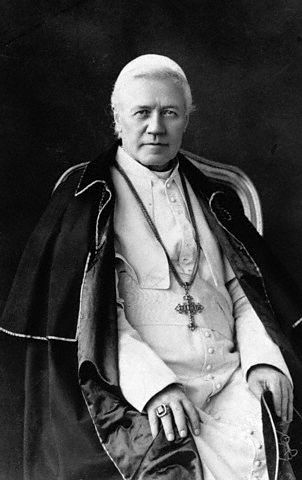
Pius X.jpg

In Pope Saint Pius X we have an ardent supporter and leader in devotion to the Christ Lord known to us in the adoration of the Blessed Sacrament. Today, take the opportunity to spend some time, even if it is 5 minutes, in front of the Blessed Sacrament saying nothing to the Lord; just being there in friendship and humble adoration is enough. And ask Saint Pius X to beg the Holy Spirit once again to place in our hearts a fervent love for the Lord in the Eucharist and the grace to live in communio with the Trinity and our neighbor.

Saint Pius wrote of the place Eucharistic worship in our Catholic lives:

Wherefore, works of this kind which have been already set on foot must be ever more zealously promoted; old undertakings must be revived wherever perchance they may have fallen into decay; for instance,

Confraternities of the holy Eucharist, intercessory prayers before the blessed Sacrament exposed for the veneration of the faithful, solemn processions, devout visits to God’s tabernacle, and other holy and salutary practices of some kind; nothing must be omitted which a prudent piety may suggest as suitable.

But the chief aim of our efforts must be that the frequent reception of the Eucharist may be everywhere revived among Catholic peoples. For this is the lesson which is taught us by the example, already referred to, of the primitive Church, by the decrees of Councils, by the authority of the Fathers and of the holy men in all ages. For the soul, like the body, needs frequent nourishment; and the holy Eucharist provides that food which is best adapted to the support of its life.

Accordingly all hostile prejudices, those vain fears to which so many yield, and their specious excuses from abstaining from the Eucharist, must be resolutely put aside; for there is question here of a gift than which none other can be more serviceable to the faithful people, either for the redeeming of time from the tyranny of anxious cares concerning perishable things, or for the renewal of the Christian spirit and perseverance therein. To this end the exhortations and example of all those who occupy a prominent position will powerfully contribute, but most especially the resourceful and diligent zeal of the clergy.

Pope Saint Pius X, Mirae Caritatis (1902)

Saint Bernard of Clairvaux

Bernard of Clairvaux.jpg

‘What shall I render unto the Lord for all His benefits towards me?’ (Ps. 116:12). Reason and natural justice alike move me to give up myself wholly to loving Him to whom I owe all that I have and am. But faith shows me that I should love Him far more than I love myself, as I come to realize that He hath given me not my own life only, but even Himself. Yet, before the time of full revelation had come, before the Word was made flesh, died on the Cross, came forth from the grave, and returned to His Father; before God had shown us how much He loved us by all this plenitude of grace, the commandment had been uttered, ‘Thou shalt love the Lord thy God with all thine heart, and with all thy soul and with all thy might’ (Deut. 6:5), that is, with all thy being, all thy knowledge, all thy powers. And it was not unjust for God to claim this from His own work and gifts. Why should not the creature love his Creator, who gave him the power to love? Why should he not love Him with all his being, since it is by His gift alone that he can do anything that is good? It was God’s creative grace that out of nothingness raised us to the dignity of manhood; and from this appears our duty to love Him, and the justice of His claim to that love. But how infinitely is the benefit increased when we bethink ourselves of His fulfillment of the promise, ‘thou, Lord, shalt save both man and beast: how excellent is Thy mercy, O Lord!’ (Ps. 36:6f). For we, who ‘turned our glory into the similitude of a calf that eateth hay’ (Ps. 106:20), by our evil deeds debased ourselves so that we might be compared unto the beasts that perish. I owe all that I am to Him who made me: but how can I pay my debt to Him who redeemed me, and in such wondrous wise? Creation was not so vast a work as redemption; for it is written of man and of all things that were made, ‘He spake the word, and they were made’ (Ps. 148:5). But to redeem that creation which sprang into being at His word, how much He spake, what wonders He wrought, what hardships He endured, what shames He suffered! Therefore what reward shall I give unto the Lord for all the benefits which He hath done unto me? In the first creation He gave me myself; but in His new creation He gave me Himself, and by that gift restored to me the self that I had lost. Created first and then restored, I owe Him myself twice over in return for myself. But what have I to offer Him for the gift of Himself? Could I multiply myself a thousand-fold and then give Him all, what would that be in comparison with God?

Blessed Mannes de Guzman

Blessed Mannes.jpgPriests of God, bless the Lord; praise God, all you that are holy and humble of heart.

Loving God, You chose to associate Blessed Mannes with his brother Dominic in the work of preaching. May we follow their example and remain ever fervent in proclaiming the gospel of salvation.

Blessed Mannes is an older brother of Saint Dominic, founder of the Order of Preachers. Mannes was known as a humble man who lived his life in self-sacrifice for the preaching of the gospel and salvation of souls. He was sent by his brother to start a Dominincan Priory in Paris and then to Madrid. He worked with the contemplative nuns and was a famous preacher. Mannes was beatified by Pope Gregory XVI who also instructed that a set of proper texts for a Mass and Divine Office be written in Mannes’ honor. His feast day was listed as July 30th but it is celebrated today in the Dominican Order.
A biography of Blessed Mannes can be read here.

Saint Hyacinth of Poland

St Hyacinth.jpgProclaim the glory of the Lord among the nations, God’s marvelous deeds to all the peoples; great is the Lord and worthy of all praise.

Loving God, You gave Saint Hyacinth the grace to preach, the he might draw the peoples of many nations to the light of truth. By Your power bring forth good works in our lives, that all may be moved to give You glory.
The Dominican friar and priest honored today is known in Poland as the Apostle to Poland (or “to the North”). Hyacinth was born in 1185, joined the Order of Preachers in 1219 after meeting Saint Dominic becoming the first to receive the habit; he died on the Assumption feast in 1257. Prior to meeting the Order Hyacinth took earned the Doctor of Law and Divinity degree from the University of Bologna. His vocation was preaching as an itinerant missionary who had a special devotion to the Blessed Virgin Mary. Hyacinth was canonized by Clement VIII in 1594.
Culturally, the name Hyacinth is translated as Jacek (in Polish) and Jacinto (in Spanish and Portugese).