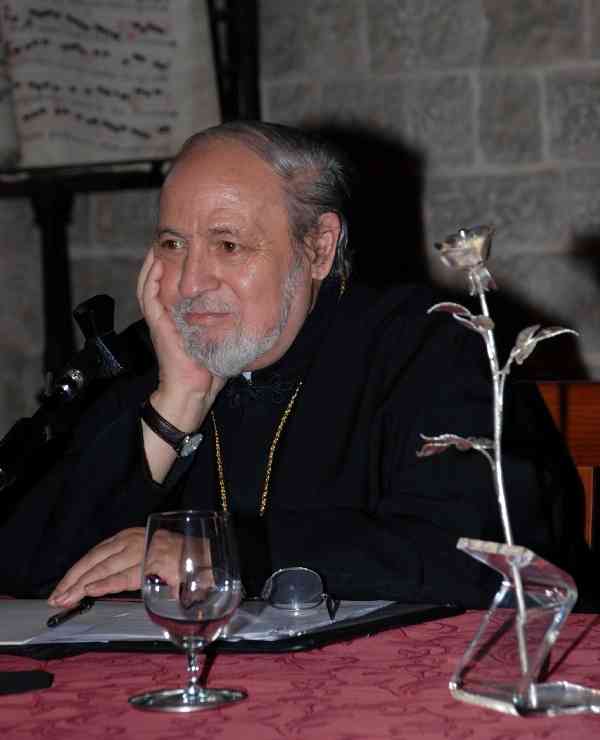
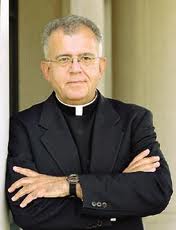
 The annual Red Mass celebrated by Archbishop Donald Wuerl at Saint Matthew’s Cathedral (Washington, DC) was preached by Archbishop J. Augustine DiNoia, OP, Secretary of the Congregation for Divine Worship (Rome). Today’s Red Mass is the 57th and was sponsored by the John Carroll Society. Present was the Vice President, the Chief Justice and four other justices. Archbishop DiNoia’s homily follows.
In anticipation of the official opening of the Supreme Court term tomorrow, we unite in prayer today in this solemn liturgy in order to invoke the Holy Spirit upon the distinguished justices, the judges, attorneys, and lawmakers, professors and students of the law, the law clerks and paralegals, and upon all others who serve us in the various sectors of the legal profession. We give thanks to God for their precious service, and we humbly pray, “Holy Spirit, Lord of light / From the clear celestial height / Thy pure beaming radiance give”(Veni Sancte Spiritus, Pentecost Sequence, trans. Nat. Lit. Conf. England and Wales, 1967).
The annual invocation of the Holy Spirit at the start of the judicial year in Washington reflects a 700 year old tradition honoring the sacred character of the law and the vital civic role of its guardians. Indeed, the practice of celebrating a Red Mass–“red” because of the color of both the liturgical vesture and the traditional judicial robes–at the opening of the judicial term is as old as the legal profession itself. According to historian James Brundage (cf. The Medieval Origins of the Legal Profession, University of Chicago Press, 2008), the emergence of a distinctive legal profession in the West dates roughly to the thirteenth century–precisely when the first recorded celebrations of the Red Mass occurred in Paris in 1245 and in Westminster in 1301. It may well be that the widespread practice of celebrating a votive Mass of the Holy Spirit at other similar occasions–like the start of the academic year–originated with the tradition of the Red Mass.
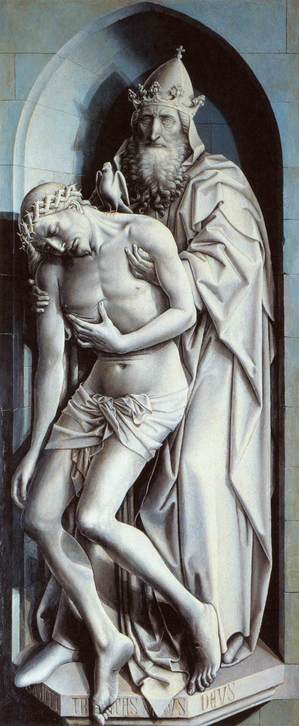 The celebration of the annual Red Mass signals the profound esteem which the Church has for the Supreme Court and the legal and judicial institutions of this nation, for the invocation of the Holy Spirit on this occasion springs from nothing other than the trinitarian faith which is at the very center of her faith. “Whoever loves me will keep my word, and my Father will love him, and we will come and make our dwelling with him.” Christ teaches and the Church proclaims that God, the Father, Son and Holy Spirit, desires to share the communion of trinitarian life with creaturely persons, that–in the famous formulation of St. Irenaeus–God who is without need of anyone gives communion with himself to those who need him. Christ teaches us, moreover, that it is the Holy Spirit who plays a critical role in fitting individual persons and the Church herself for this high destiny. “The Advocate, the Holy Spirit, that the Father will send in my name…will teach you everything and remind you of all that I told you.” Thus we can pray: Veni Sancte Spiritus! Come Holy Spirit! “Thou, on us who evermore / Thee confess and thee adore, / With thy sevenfold gifts descend. / Give us comfort when we die; / Give us life with thee on high; / Give us joys that never end.”
What should we be praying for as we invoke the Holy Spirit on the justices and on all the rest of us during this Red Mass? As St. Paul reminds us, the Holy Spirit himself helps us to ask for the right things: “The Spirit comes to the aid of our weakness; for we do not know how to pray as we ought, but the Spirit himself intercedes with inexpressible groaning.” We have already heard some verses from the ancient “Golden Sequence” for Pentecost Sunday, the Veni Sancte Spiritus; let us turn to it again to learn more of what we can expect when the Church invokes the Holy Spirit in this solemn setting.
Veni Sancte Spiritus! Come Holy Spirit! “Thou, of all consolers best, / Thou the soul’s delightful guest, / Dost refreshing peace bestow; / Thou in toil art comfort sweet; / Pleasant coolness in the heat; / Solace in the midst of woe.” In praying to the Holy Spirit, for, among other blessings, consolation, peace, and solace, the Church understands the nearly overwhelming complexity of the climate which envelops the practice of law and the administration of justice today.
And perhaps not just today. It was precisely such complexity that gave rise to the legal profession in the 13th century as popes, kings and bishops found it impossible to carry out their duties without expert legal advice. You will be amused to learn that, during this period, there was lively debate about whether popes should be elected from the ranks of theologians or of canon lawyers: as a theologian, it pains me to report that learned opinion favored the election of qualified lawyers to the See of Peter.
In all seriousness, no informed observer can fail to acknowledge that the social and cultural pluralism of our times–not to mention the relentless and sometimes pitiless public scrutiny to which you are subjected–makes the work of judges and lawyers today very hard indeed. The Church prays that, amidst the clamor of contending interests and seemingly intractable moral disagreements, the Holy Spirit will help you to maintain your personal integrity and professional equilibrium. Not for nothing, then, do we invoke the Holy Spirit today with these poignant words. Veni Sancte Spiritus! Come Holy Spirit! “Heal our wounds, our strength renew; / On our dryness pour thy dew; / Wash the stains of guilt away. / Bend the stubborn heart and will; / Melt the frozen, warm the chill; / Guide the steps that go astray.”
The words of the prophet Ezechiel recall another important element in our invocation of the Holy Spirit today. “I will put my Spirit within you,” he says, “and make you live by my statutes, careful to observe my decrees.” Positive law rests on certain principles the knowledge of which constitutes nothing less than a participation in the divine law itself: the pursuit of the common good through respect for the natural law, the dignity of the human person, the inviolability of innocent life from conception to natural death, the sanctity of marriage, justice for the poor, protection of minors, and so on. The legal profession is entrusted with the discernment and administration of justice and the rule of law according to an objective measure–in effect, according to principles–not of our own making. A consensus about these principles inspired the founders of modern democracies, and although it was profoundly influenced by Judaism, Islam, and Christianity (think of Averroes, Maimonides and Aquinas), this consensus was understood to transcend religious and cultural differences. Thus, it follows that the invocation of the Holy Spirit in the Red Mass is a prayer for light and guidance. Among the things for which we ardently pray is the wisdom to affirm and maintain those profound truths about human nature that are at the foundation of the common life we treasure in this great nation. “Holy Spirit, Lord of Light … / Come thou light of all that live … / Light immortal, light divine.”
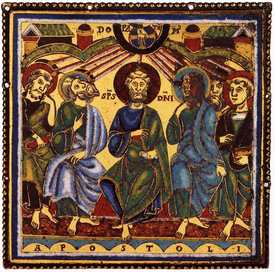 At the deepest level, our invocation of the Holy Spirit here today manifests the conviction that the democratic state does not so much confer the most fundamental human rights and the duties of citizenship as acknowledge their existence and source in a power beyond the state, namely in God himself. Your presence here today bears eloquent witness to the enduring power of this conviction.
Yet, as she invokes the guidance and consolation of the Holy Spirit today, the erosion of this conviction is a source of deep concern for the Church. The alternative view–until recently more or less successfully resisted by dem
ocratic societies like ours–is the idea that man can find happiness and freedom only apart from God. This exclusive humanism has been exposed as an anti-humanism of the most radical kind. Man without God is not more free but surely in greater danger. The tragic history of the last century–as John Paul II and Benedict XVI have unceasingly reminded us–demonstrates that the eclipse of God leads not to greater human liberation but to the most dire human peril. That innocent human life is now so broadly under threat has seemed to many of us one of the many signs of this growing peril. Gabriel Marcel said somewhere that in our time “human flesh has undergone such intolerable outrage that it must receive some kind of reparation in glory…The world today can be endured only if one’s spirit is riveted on [the] hope of the resurrection… If this hope were shared by a greater number, perhaps, respect for the flesh and for the body, so terribly lacking in our time, would be restored.” Thus, along with wisdom and light, today we must also beg the Holy Spirit for the gift of hope in the resurrection.
Our enactment of this ancient ritual of the Red Mass joins us to the generations of judges and lawyers who pursued their professions conscious of their need for divine grace and guidance, for enlightenment, for consolation, for refreshment, for solace, for healing, for comfort, for hope. May these wonderful blessings of the Holy Spirit be yours today!
Veni Sancte Spritus! Come Holy Spirit!
“Come, thou Father of the poor,
Come with treasures which endure…
Light immortal, light divine,
Visit thou these hearts of thine,
And our inmost being fill.” Amen.
 Saint Francis seems to be a model of holiness for many, many people. Protestants of all flavors, the Muslims and Jews honor dear Francis for a variety of reasons. They’ve met Francis in as many ways as I have.