Mass of Thanksgiving for the Beatification of Pope John Paul II set for St Catherine of Siena Church, NYC on May 1

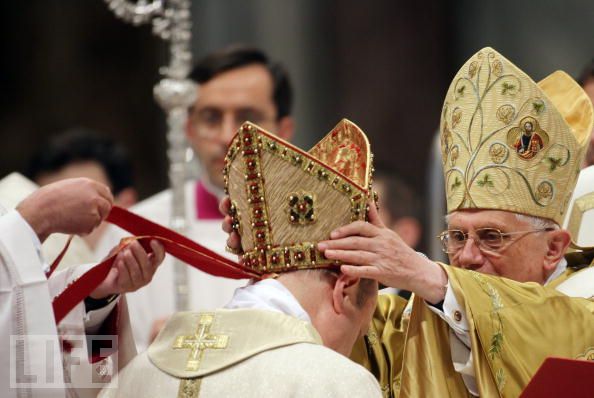
The NY Community Communion and Liberation has been invited by Dominican Father Jordan Kelly to attend a Mass of Thanksgiving for the Beatification of Pope John Paul II which will be celebrated at The Church of Saint Catherine of Siena (411 East 68th Street, NYCon Sunday, May 1, at 12 Noon. Father Jordan will be the main celebrant and homilest.

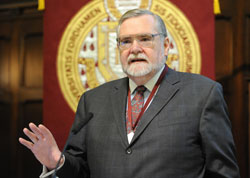
Monsignor Lorenzo Alabacete will be concelebrating and giving his personal recollections of Pope John Paul II and what the beatification means for us following the Mass.

If you already read the recent letter by Father Carrón, you would know that on the same day the entire Movement in Italy will be present for the beatification ceremony in Rome. If you have not read the letter yet, I strongly encourage you to do so. Father Carrón’s letter to the Movement can be read here

Please save the date for this moment of gratitude and unity.

Giussani’s “The Religious Sense”: a variety of points of view

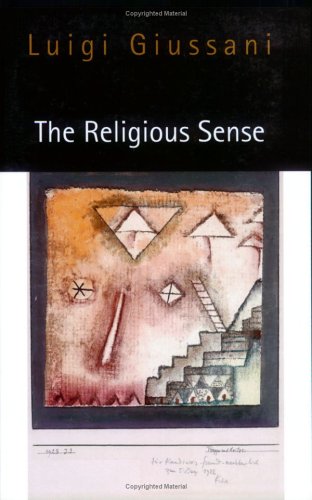
The Religious Sense.jpgThis coming year the Schools of Community throughout the world will be working on Monsignor Luigi Giussani’s seminal text, The Religious Sense (in English in 1997).

In The Religious Sense, Monsignor Giussani explores man’s search for meaning in the given-ness of life. He demonstrates that reason is known in understanding and recognition of truth, goodness and beauty. Regardless of faith tradition, all people are in search for these elements and we can know the meaning of truth, goodness and beauty by the criteria of the heart, that is, discovery of these element is found in the person himself by an openness to existence which has the capacity to affirm reality as it is –from experience– (reason) and not from what the lack of self-aware world says reason is, that is, from outside factors.
Several essays open up Giussani’s work:
Father Julián Carrón’s Milan presentation of “The Religious Sense, Verification of the Faith”, a version of which was given at the 2011 NY Encounter: The Religious Sense, Verification of the Faith.pdf
Father Luigi Giussani’s “The Religious Sense and Faith”: The Religious Sense and Faith.pdf
John Waters’ “The Religious Sense and myself”

Focolare saved a vocation and formed a man of God

Carol Glatz of CNS wrote a fascinating article –at least fascinating to me because I can identify with what the new Prefect of the Congregation of Religious said of his own experience with Liberation Theology. To say that liberation theology terrorized vocations is likely an understatement. I believe the Archbishop is correct in saying that elements of liberation theology are credible, Pope Benedict has said as much, too, but the Marxist methodology is not fitting for the salvation of souls, at least how the Church conceives of salvation of souls. Liberation theology deconstructed religious and priestly life to social work, reduced essential theological concepts to ideology and rejected the authority as non-essential, among many things. Why would anyone devote their lives to a religious vocation under the rubric of liberation theology? Clearly this method of theological reflection needs to be scrutinized even more.

A very telling line in Glatz’s article is the Archbishop saying: “‘The lack of a theological and mystical experience of the Holy Trinity as the source of communion has brought negative statements about community life,’ such as when some religious say the biggest penance they face is communal living.” His other statements on one’s experience of God viz. autonomy and obedience and love are interesting, too.

Archbishop Joāo Bráz de Aviz credits his relationship with the lay movement Focolare in saving his vocation from being aborted. Focolare, like other lay ecclesial movement focused on vertical and horizontal communion with the Trinity and others, and stressed the virtue of unity built on the Trinitarian life. I follow Communion and Liberation and I say that CL has kept me together in ways that other things did not or could not. Focolare is also a very worthy vocation to follow.
Enhanced by Zemanta

Saint Rabanus Maurus

St Rabanus Maurus.jpgSaint Rabanus (c. 780-4 Feb. 856), a Benedictine monk, theologian, exegete, poet, abbot and archbishop of Mainz, called the “teacher of Germany.” Rabanus studied under Alcuin who gave him the name of “Maurus.” He authored De rerurm naturis (On the Nature of Things), De laudibus sanctae Crucis but he’s most known for his composition of “Veni Creator Spiritus,” the beautiful hymn we sing at Pentecost and any time we pray to the Holy Spirit.

As Pope Benedict XVI reminded us when thinking about Saint Rabanus, he is “an extraordinary awareness of the need to involve not only the mind and heart in the experience of faith, but also the senses.” Rabanus was instructive in showing us how to use the “aesthetic taste and human sensitivity which bring man to benefit from the truth with all of himself: spirit, soul and body.”
For Benedict said, “I believe that Rabanus Maurus also speaks to us today. Whether immersed in the frenetic rhythms of work or on holiday, we must reserve time for God. We must not forget Sunday as the day of the Lord and the day of the liturgy, in order to see –in the beauty of our churches, of sacred music, and of the Word of God– the beauty of God Himself, and allow it to enter own being. Thus our lives become great, they become true life.
Ultimately from Saint Rabanus we learn that “We must search for God in all the dimensions of our being.”
The 2001 Roman Martyrology lists Rabanus as a saint while other sources list him as a blessed. Saint Rabanus is recognized as a holy bishop and scholar, and a confessor of the faith.
Pope Benedict XVI’s General Audience of 3 June 2009 was dedicated to Saint Rabanus.

St Agatha’s Mass and Anointing of the Sick for those living with breast cancer, East Haven

agatha.jpg


We will be gathering to pray the Holy Mass for those living with breast cancer in honor of Saint Agatha, the patron saint of those living with breast cancer.

Saint Agatha’s feast day is February 5 but for pastoral reasons, the liturgical observance will be held on the day before and the after the feast.

No one is without a family member or a friend who has breast cancer.
This is an opportunity to join together in prayer and friendship with those living with ongoing trial –you could say cross– of breast
cancer.

On Friday, February 4, 2011, at the 5:30 pm Mass at Our Lady of Pompeii Church (355 Foxon Road, Route 80, East Haven, CT), Father John Lavorgna will administer the Sacrament of the Anointing of the Sick invoking the intercession of Saint Agatha.

Let your friends know of this special Mass and anointing service. All are invited and most welcome.

Four Chaplains Day


Four Chaplains.jpg

Besides being Saint Blase Day, today is also known as “Four
Chaplains Day.” The US Congress designated today to honor the 4 US Army chaplains who
were serving on the USAT Dorchester during World War II. 

Father John P. Washington
(Roman Catholic priest), Rev. Clark V. Poling (Dutch reformed), Rev. George L. Fox
(Methodist), and Rabbi Alexander D. Goode sacrificed their lives as their ship
went down. 672 of 902 men died.

All of the chaplains held the rank of lieutenant.

The Episcopal Church has designated February 3 a liturgical memorial for these chaplains.

Nancy Davis killed by drug smugglers for her truck

Nancy Davis detail.jpgLast week Nancy Davis, 59, drug smugglers wanted her pickup truck and killed her for it in Mexico. What Nancy and her husband, Sam, did was to build churches and orphanages but they found themselves trying to out-run drug runners with assault rifles. Nancy and Sam Davis have been missionaries in Mexico for the last 38 years.

Sam said he trusts that Nancy is with God and that he’s confident that she never suffered after being shot in the head. Ms Davis’ funeral was held in McAllen, Texas. May Nancy rest in peace!

Prayer, Doctrine, Life and Evangelization: are we coherent?

In weekly classes on the Catholic I’ve been stressing a few (of many) points:

  • lex orandi, lex credendi, lex vivendi (prayer, doctrine, life): all have to cohere
  • the Incarnation is a fact: in faith we encounter this fact, this Person, experience the exceptionality and the wonder
  • the contemporaneousness of Jesus Christ
  • the witness of the Catholic faith is true and it is true for all people

Turkson.jpg

In November the president of the Pontifical Council for Justice and Peace Peter Cardinal Turkson, 63, gave an interview to Zenit on his new work as the head of a Roman office after being a pastor of a diocese in Ghana. Cardinal Turkson is a trained biblical scholar.
My point of bringing this matter up is that those of us who make the claim to be faithful Catholics need to live the faith as though Jesus Christ truly mattered and that what we profess at Mass and in prayer is lived according to correct doctrine while sharing the Good News of Salvation coherently. Cardinal Turkson is not the first to say that we don’t always understand social justice, but we need to put a greater effort in doing so. How do we imitate the love of God for other?