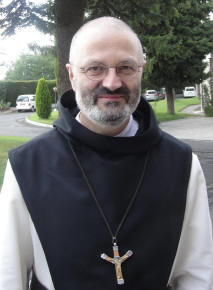
Pope tells Biblical Commission –and Church– not to reduce Bible to mere human genius

The Pontifical Biblical Commission is a group of theologians and scriptural scholars who help the Pope and the teaching mission of the Church exploring particular questions and concerns about the nature and reality of divine revelation and Christian life. The PBC is meeting this week in Rome led by Cardinal William J. Levada, Prefect of the Congregation for the Doctrine of the Faith; the theme is “Inspiration and Truth of the Bible.” Interesting. Did we forget that the sacred Scriptures were inspired by the Holy Spirit? One way of figuring out why something is important to the Pope or to sacred Magisterium is to be aware of the work done by these commissions. So, yes, there seems to be skepticism among the faithful that the Scriptures are revealed by God through the agency of human language. Recall, however, this is not the first time in salvation history that the Church has had to deal with this question: think of the various heresies from the early Church, the Renaissance, Reformation, and Enlightenment periods and even with the extreme use of the historical critical method of Scripture study. His Holiness reminds not only the professionally trained scholars but all of us that there can be in no way a reduction in how we interpret the Bible.


Here are the key points of what Benedict said to the PBC:

Continue reading Pope tells Biblical Commission –and Church– not to reduce Bible to mere human genius

Pope addresses the Pontifical Academy of Social Sciences: true freedom of religion permits human fulfillment & the common good

The regular cycle of the Pope’s work is addressing those groups that advise him on a variety of subjects like theology, law, science, politics, life issues, etc. Benedict’s address to Professor Mary
Ann Glendon, President of the Pontifical Academy of Social Sciences, talks about the theme of “Universal
Rights in a World of Diversity: the Case of Religious Freedom.” He reminds not only the head of this academy about the deep roots of Western culture being Christian, but it was Christianity that gave humanity the awareness of the various freedoms we know and love, that contribute to human flourishing and many time even take for granted. It was the Christian gospel that upheld and promoted the dignity of the human person, protected women and children, that organized labor freedom of worship, and other social systems. Most notably, the Pope reminds us, that the freedoms spoken of in
the United Nations’ Universal Declaration of Human
Rights have their roots in our belief and life in Christ. However, we can’t become smug –too satisfied– with what we’ve been given, even freedom. The Pope’s talk is not long but here are some germaine points for us to consider:

Deeply inscribed
in our human nature are a yearning for truth and meaning and an openness to the
transcendent; we are prompted by our nature to pursue questions of the greatest
importance to our existence. Many centuries ago, Tertullian coined the term libertas
religionis
(cf. Apologeticum, 24:6). He emphasized that God must be worshipped
freely
, and that it is in the nature of religion not to admit coercion, “nec
religionis est cogere religionem” (Ad Scapulam, 2:2). Since man enjoys the
capacity for a free personal choice in truth, and since God expects of man a
free response to his call, the right to religious freedom should be viewed as
innate to the fundamental dignity of every human person, in keeping with the
innate openness of the human heart to God. In fact, authentic freedom of
religion will permit
the human person to attain fulfilment and will thus
contribute to the common good of society
.

Continue reading Pope addresses the Pontifical Academy of Social Sciences: true freedom of religion permits human fulfillment & the common good

Blessed John Paul II’s body placed in final burial spot

Bllessed John Paul final burial spot.jpg

This evening –Rome time– Blessed John Paul II’s body was given its final resting place in the Vatican Basilica. He rests near to the famous Pietá of Michelangelo.
The video clip of the John Paul’s newest move can viewed here.

Bl John Paul II's new resting place.jpg
Blessed John Paul II, pray for us.

Divine Mercy: known in peaceful embrace of sacramental forgiveness

Continuing for just a moment on the reality of Divine Mercy –given yesterday’s feast on the Second Sunday of Easter– there are few thoughts of Blessed John Paul II’s that I think are worth reflecting on when, in the canonization homily he delivered for Padre Pio’s canonization (16 June 2002), he stated:

“I am the Lord who acts with mercy” (Jeremiah 9,23)
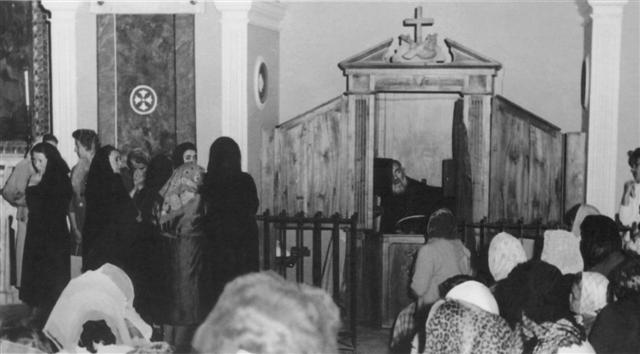

Padre Pio hearing confessions.jpg

Padre
Pio was a generous dispenser of divine mercy, making himself available to all
by welcoming them, by spiritual direction and, especially, by the
administration of the sacrament of Penance
. I also had the privilege, during my
young years, of benefiting from his availability for penitents. The ministry of
the confessional
, which is one of the distinctive traits of his apostolate,
attracted great crowds of the faithful to the monastery of San Giovanni Rotondo.
Even when that unusual confessor treated pilgrims with apparent severity, the
latter, becoming conscious of the gravity of sins and sincerely repentant,
almost always came back for the peaceful embrace of sacramental forgiveness
.
May his example encourage priests to carry out with joy and zeal this ministry
which is so important today, as I wished to confirm this year in the Letter to
Priests on the occasion of Holy Thursday.

Perhaps priests –indeed, all of the faithful– ought to review the Holy Father’s Holy Thursday 2002 letter to priests. I once made a statement: Don’t trust a priest who doesn’t regularly sit in the confession box. I think it is reasonable advice. 

Mauro Lepori: “…Only by re-proposing the fascination of the Mystery of Christ” does one overcome difficulties

Lepori 2010.jpgThe newly elected Abbot General of the Order of Cistercians, Abbot Mauro-Giuseppi Lepori, OCist, has been a part of the lay ecclesial Movement, Communion and Liberation for many years.

In the February issue of Traces, Abbot Mauro was interviewed by Davide Perillo in an article titled, “Called to Live for Him.” Here Abbot Mauro talks about his election as Abbot General of the Order of Cistercians, his vocation, Jesus Christ, community life, individualism life within the Movement of Communion and Liberation, St Benedict, and more. I recommend the article.
A previous post on Abbot Mauro-Giuseppi can be read here.

Vatican Press Office Director speaks on bin Laden

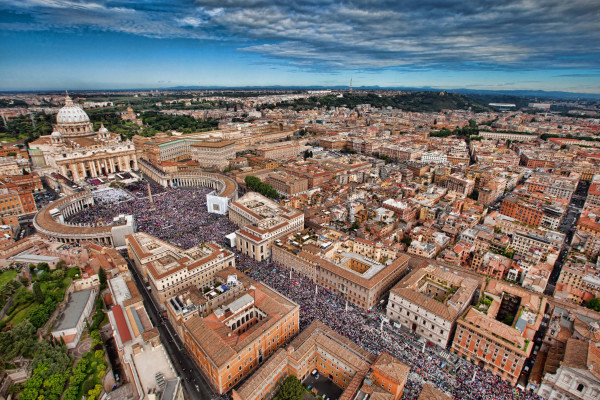
The Vatican Press Office Director Jesuit Father Federico Lombardi’s
responded to journalists’ questions on yesterday’s killing of Osama bin Laden, the mastermind of the 9/11 attacks. Father Lombardi stated:
Osama bin
Laden – as we all know – was gravely responsible for promoting division and
hatred between peoples, causing the death of countless innocent lives, and of
exploiting religions to this end.

Faced with the death of a man, a Christian
never rejoices, but reflects on the serious responsibility of each and every
one of us before God and before man, and hopes and commits himself so that no
event be an opportunity for further growth of hatred, but for peace.

Let us remember before the Throne of Grace all those who have died on 9/11 and those who continue to suffer from the effects of this attack.

Divine Mercy: God’s love, God’s presence, God’s compassion

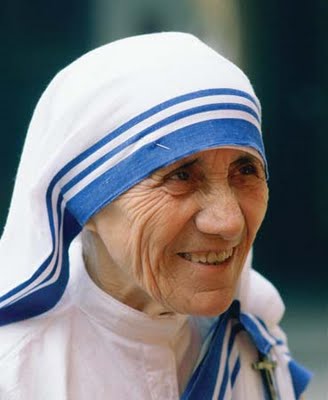
When John Paul beatified Mother Teresa of Calcutta in 2003, he said of her, in part:

Blessed Mother Teresa of Calcutta.jpg“As you did to one of the least of these my brethren,
you did it to me” (Mt 25: 40). This Gospel passage, so crucial in
understanding Mother Teresa’s service to the poor, was the basis of her
faith-filled conviction that in touching the broken bodies of the poor she was
touching the body of Christ. It was to Jesus himself, hidden under the
distressing disguise of the poorest of the poor, that her service was directed.
Mother Teresa highlights the deepest meaning of service – an act of love done
to the hungry, thirsty, strangers, naked, sick, prisoners (cf. Mt 25: 34-36)
is done to Jesus himself
.


Recognizing him, she ministered to him with
wholehearted devotion, expressing the delicacy of her spousal love. Thus, in
total gift of herself to God and neighbor, Mother Teresa found her greatest
fulfillment and lived the noblest qualities of her femininity. She wanted to be
a sign of “God’s love, God’s presence and God’s compassion,” and so remind all
of the value and dignity of each of God’s children, “created to love and be
loved.” Thus was Mother Teresa “bringing souls to God and God to souls” and
satiating Christ’s thirst, especially for those most in need, those whose
vision of God had been dimmed by suffering and pain.

Divine Mercy: Jesus bending over our humanity

Divine Mercy is a not a mere theological datum. It is another way of calling God, of meeting and loving God and living in relation to others. But is Divine Mercy? Blessed  John Paul II spoke of Divine Mercy in his canonization homily for Sister Maria Faustina Kowalska. She became a modern mirror for God’s tremendous love for all humanity. Saint Faustina reminds us that Mercy is crucial for everyone, just ask for the grace of Mercy. An excerpt:

St Faustina Kowalska.jpgWhat will the years ahead bring us? What will man’s
future on earth be like? We are not given to know. However, it is certain that
in addition to new progress there will unfortunately be no lack of painful
experiences. But the light of divine mercy, which the Lord in a way wished to
return to the world through Sr Faustina’s charism, will illumine the way for
the men and women of the third millennium.


However, as the Apostles once did,
today too humanity must welcome into the upper room of history the risen
Christ, who shows the wounds of his Crucifixion and repeats:  Peace be
with you! Humanity must let itself be touched and pervaded by the Spirit given
to it by the risen Christ
. It is the Spirit who heals the wounds of the heart,
pulls down the barriers that separate us from God and divide us from one
another, and at the same time, restores the joy of the Father’s love and of
fraternal unity.

Continue reading Divine Mercy: Jesus bending over our humanity

May, the month of the Blessed Virgin Mary

faithful at the Lourdes grotto.jpgHail Mary, poor and humble Woman,
Blessed by the Most High!
Virgin of hope, dawn of a new era,
We join in your song of praise,
to celebrate the Lord’s mercy,
to proclaim the coming of the Kingdom
and the full liberation of humanity.


Hail Mary, lowly handmaid of the Lord,

Glorious Mother of Christ!

Faithful Virgin, holy dwelling-place of the Word,

Teach us to persevere in listening to the Word,

and to be docile to the voice of the Spirit,

attentive to his promptings in the depths of our conscience

and to his manifestations in the events of history.


Hail Mary, Woman of sorrows,

Mother of the living!

Virgin spouse beneath the Cross, the new Eve,

Be our guide along the paths of the world.

Teach us to experience and to spread the love of Christ,

to stand with you before the innumerable crosses

on which your Son is still crucified.


Hail Mary, woman of faith,

First of the disciples!

Virgin Mother of the Church, help us always

to account for the hope that is in us,

with trust in human goodness and the Father’s love.

Teach us to build up the world beginning from within:

in the depths of silence and prayer,
in the joy of fraternal love,

in the unique fruitfulness of the Cross.


Holy Mary, Mother of believers, pray for us. Amen.

a prayer written to Mary, the Mother of God by Blessed John Paul II, Lourdes, 2004