A recently published book of a parish priest, Mercies Remembered: Reflections and Reminiscences of a Parish Priest, is being presented at Waterbury’s Silas Bronson Library (267 Grand Street) December 6 at 6:30pm.
Saint Francis Xavier
Today, we take inspiration from the life and work of a great missionary of the Church in the person of Saint Francis Xavier. He got of the classroom and did something for Christ and the Church. Let’s take time today to pray for missionaries and a rejuvenation of the missionary work of the Church.
that you may be filled with the knowledge of the will of God, in all wisdom and
spiritual understanding; that you may walk worthy of God, in all things
pleasing, being fruitful in every good work, and increasing in the knowledge of
God; strengthened with all might according to the power of His glory, in all
patience and long suffering with joy; giving thanks to God the Father, who hath
made us worthy to be partakers of the lot of the saints in light:
who hath delivered us from the power of darkness,
and hath translated us into the kingdom of the Son of His love, in whom we have
redemption through the His Blood, the remission of sins.
Dolan inaugurates Project on Human Dignity at Notre Dame
Timothy Michael Dolan, PhD, Archbishop of New York and President of the US Bishops’ Conference will deliver a lecture entitled, “Modern Questions, Ancient Answers: Defining and Defending Human Dignity in Our Time” on Tuesday, December 6, @ 7:30pm inaugurating a new venture of the University of Notre Dame called “Project on Human Dignity.” There will be Protestant and Catholic responses by Ann Astell and Gerald McKenny.
Joseph Ratzinger’s “The pastoral approach to marriage should be founded on truth”
From a little known text by Cardinal Joseph Ratzinger published in 1998
The pastoral approach to marriage should be founded on truth
Concerning some objections to the Church’s teaching on the reception of Holy Communion by divorced and remarried members of the faithful
In 1998 Cardinal Joseph Ratzinger, Prefect of the Congregation for the Doctrine of the Faith, introduced the volume entitled “On the Pastoral Care of the Divorced and Remarried,” published by the Libreria in the CDF’s series (“Documenti e Studi”, 17). Because of its current interest and breadth of perspective, we reproduce below the third part along with the addition of three notes. The text was published today by L’Osservatore Romano.
The Letter of the Congregation for the Doctrine of the Faith of 14 September 1994 concerning the reception of Holy Communion by divorced and remarried members of the faithful was met with a very lively response across wide sections of the Church. Along with many positive reactions, more than a few critical voices were also heard. The fundamental objections against the teaching and practice of the Church are outlined below in simplified form.
Several of the more significant objections – principally, the reference to the supposedly more flexible practice of the Church Fathers which would be the inspiration for the practice of the Eastern Churches separated from Rome, as well as the allusion to the traditional principles of epicheia and of aequitas canonica – were studied in-depth by the Congregation for the Doctrine of the Faith. Articles by Professors Pelland, Marcuzzi and Rodriguez Luño 2, among others, were developed in the course of this study. The main conclusions of the research, which suggest the direction of an answer to the objections, will be briefly summarized here.
Continue reading Joseph Ratzinger’s “The pastoral approach to marriage should be founded on truth”
On adhesion to the Second Vatican Council
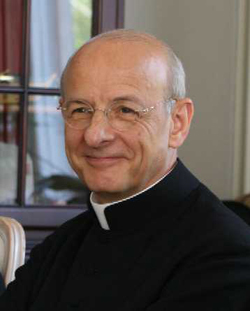
Fernando Ocáriz, 67, is the Vicar General of Opus Dei. He’s a trained theologian in area of Dogmatics but he’s also trained in physics. In 1986 he was appointed a consultor to the Congregation for the Doctrine of the Faith and later (1989) made a member of the Pontifical Theological Academy. Msgr. Ocáriz is the author of many books and refereed articles. He’s one of the primary authors of Dominus Iesus. Of late Msgr. Ocáriz has been a theological consultant in the dialogue with the Society of St Pius X.
The following article is published in several languages by L’Osservatore Romano (2 December 2011).
On adhesion to the Second Vatican Council
The forthcoming 50th anniversary of the convocation of the Second Vatican Council (25 December 1961) is a cause for celebration, but also for renewed reflection on the reception and application of the Conciliar Documents.
Over and above the more directly practical aspects of this reception and application, both positive and negative, it seems appropriate also to recall the nature of the intellectual assent that is owed to the teachings of the Council. Although we are dealing here with a well-known doctrine, about which there is an extensive bibliography, it is nevertheless useful to review it in its essential points, given the persistence – also in public opinion – of misunderstandings regarding the continuity of some Conciliar teachings with previous teachings of the Church’s Magisterium.
Meeting Santa and his helpers….
The new evangelization depends largely on the family
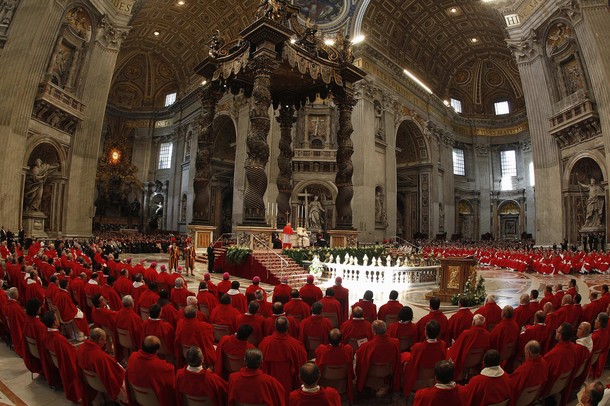
Generally once a year the Pope calls together all those involved in the work of each of the Pontifical councils for a plenary session, usually addressing some key item. Today was the Plenary Assembly of the Pontifical Council for the Family
I am pleased to welcome you on the occasion of the Plenary Assembly of the Pontifical Council for the Family, on the occasion of a double XXX anniversary: that of the Apostolic Exhortation Familiaris Consortio, published November 22, 1981 by Blessed John Paul II and the Congregation itself, which he established on May 9 with the Motu Proprio Familia a Deo instituta, as a sign of the importance to be attributed to family ministry in the world and at the same time, as an effective tool to help promote it at every level (cf. John Paul II, Familiaris Consortio, 73). I cordially greet Cardinal Ennio Antonelli, thanking him for the words with which he introduced our meeting, as well as the Bishop Secretary, other employees and all of you gathered here.
The new evangelization depends largely on the domestic Church (cf. ibid., 65). In our time, as in times past, the eclipse of God, the spread of ideologies contrary to the family and the degradation of sexual ethics are intertwined. And just as the eclipse of God and the crisis of the family are linked, so the new evangelization is inseparable from the Christian family. The family is indeed the way of the Church because it is the “human space” of our encounter with Christ. Spouses, ” not only receive the love of Christ and become a saved community, but they are also called upon to communicate Christ’s love to their brethren, thus becoming a saving community ” (ibid., 49). The family founded on the Sacrament of Matrimony is a particular realization of the Church, saved and saving, evangelized and evangelizing community. Just like the Church, it is called to welcome, radiate and show the world the love and the presence of Christ. The reception and transmission of divine love are realized in the mutual commitment of spouses, generous and responsible procreation, in the care and education of children, work and social relationships, with attention to the needy, in participation in church activities, in commitment to civil society. The Christian Family to the extent it succeeds in living love as communion and service as a reciprocal gift open to all, through a process of ongoing conversion supported by the grace of God, reflects the splendor of Christ in the world and the beauty of the divine Trinity. Saint Augustine has a famous quote: “immo vero vides Trinitatem, si caritatem vides “, “If you see charity, yes indeed you see the Trinity ” (De Trinitate, VIII, 8). And the family is one of the fundamental places where you live and are educated to love and charity.
In the wake of my predecessors, I too have repeatedly urged Christians spouses to evangelize both with the witness of life and with involvement in the pastoral activities. I did so recently at Ancona, at the end of the Italian National Eucharistic Congress. There I wanted to meet with couples and priests. In fact, the two sacraments, “at the service of communion” (CCC, n. 1534), Holy Orders and Matrimony, are traced to the sole source of the Eucharist. ” both these states of life share the same root in the love of Christ who gives himself for humanity’s salvation. They are called to a common mission: to witness to and make present this love at the service of the community in order to build up the People of God. This perspective makes it possible to overcome a reductive vision of the family, which sees it merely as the object of pastoral action. […] The family is a source of wealth for married couples, an irreplaceable good for children, an indispensable foundation of society and a vital community for the journey of the Church“. (Homily at Ancona, September 11, 2011). By virtue of this ” family is the privileged place of human and Christian education and remains, for this end, as the closest ally of the priestly ministry. […] No vocation is a private matter, and even less so is the vocation to marriage”(ibid.).
There are some areas where the prominence of Christian families in collaboration with priests, and under the guidance of Bishops is particularly urgent: the education of children, adolescents and young people to love, understood as self-giving and communion, and the preparation of engaged couples to married life with a journey of faith, and the formation of married couples, especially young couples, the experiences associated with charitable purposes, education and civic engagement, and the pastoral care of families for families, towards life-long commitment, giving due value to time dedicated to work and that of rest.
Dear friends, we are preparing for the VII World Meeting of Families to be held in Milan from May 30 to June 3, 2012. It will be a great joy for me and for us all to come together, to pray and to celebrate with families who come from around the world, accompanied by their pastors. I thank the Ambrosian Church for the great efforts made thus far and for those of the coming months. I invite the families of Milan and Lombardy to open the doors of their houses to accommodate the pilgrims who come from all over the world. In hospitality we experience joy and enthusiasm: it’s nice to make acquaintances and friendships, recounting the experience of family life and the faith experience associated with it. In my letter convoking the Meeting in Milan I asked for “an adequate process of ecclesial and cultural preparation“, so the event will be successful and able to actively involve the Christian communities around the world. I thank those who have already taken steps in that direction and call on those who have not yet done so to take advantage of the next few months. Your Council has already provided valuable help in drawing up a catechism with the theme “The Family: Work and Rest“; it has also proposed a “family week” for the parishes, associations and movements, and other laudable initiatives.
Vatican archbishop speaks to issues regarding HIV/AIDS on World AIDS Day 2011
We honor with fraternal solidarity and spiritual closeness those who faithfully and sensitively observe World AIDS Day 2011. Not many have been unaffected by HIV/AIDS: we know someone directly or have been acquainted with someone who has had the devastating disease of HIV/AIDS. I’ve known several people who died due to complications of AIDS or know people who live with the disease today. There’s 33 million people affected by the disease. How can a heart centered on the Lord be unmoved by our brothers and sisters who struggle to live with uncertainty?
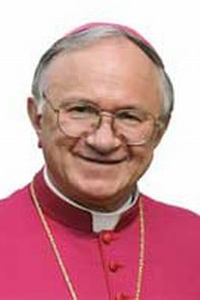
Archbishop Zygmunt Zimowski, 62, the President of the Pontifical Council for Health Care Workers, wrote a letter on today’s observance. He notes some good stuff; challenging stuff for some, but things we need to grapple with if we are sincere in our pursuit of truth, goodness and beauty. His thinking in other places has asked for the international community to come together and work on diseases that are pandemic in nature because it is a matter of global security and solidarity. The Archbishop’s letter follows:
Pontifical Council for Health Care Workers
on the Occasion of the World AIDS Day 2011
The World AIDS Day of 2011 must constitute a new opportunity to promote universal access to therapies for those who are infected, the prevention of transmission from mother child, and education in lifestyles that involve, as well, an approach that is truly correct and responsible as regards sexuality. In addition, this is a privileged moment to relaunch the fight against social prejudice and to reaffirm the need for moral, spiritual and – as far as this is possible – material proximity to those who have contracted the infection and to their family relatives.
Continue reading Vatican archbishop speaks to issues regarding HIV/AIDS on World AIDS Day 2011
World AIDS Day and Pope Benedict
Today’s known as World AIDS Day. The focus of the day is “an opportunity for people worldwide to unite in the fight against HIV, show their support for people living with HIV and to commemorate people who have died. World AIDS Day was the first ever global health day and the first one was held in 1988.” This dreadful disease has claimed many millions of people world-wide –and sex is not always to blame. AND condom use is the answer.
With all the advances in medicine, there are still gaping holes in education and prevention in the fields of medicine, pharmacology, spirituality and society. The recent trip of Pope Benedict to Benin highlighted yet again the need before us. Specifically Benedict called for a holistic response to the AIDS pandemic.
Pope Benedict stated:
The problem of AIDS,in particular,clearly calls for a medical and pharmaceutical response. This is not enough, however: the problem goes deeper. Above all, it is an ethical problem. The change of behavior that it requires -for example, sexual abstinence, rejection of sexual promiscuity, fidelity within marriage- ultimately involves the question of integral development,which demands a global approach and a global response from the Church. For if it is to be effective, the prevention of AIDS must be based on a sex education that is itself grounded in an anthropology anchored in the natural law and enlightened by the word of God and the Church’s teaching.
Pope Benedict’s prayer intentions for December 2011
“In our prayer also, we must learn increasingly to enter into this history of salvation whose summit is Jesus; [we must learn] to renew before God our personal decision to open ourselves to His Will, and to ask Him for the strength to conform our will to His — in every aspect of our lives — in obedience to His plan of love for us” (Benedict XVI, November 30, 2011)
The general intention
That all peoples may grow in harmony and peace through mutual understanding and respect.
The missionary intention
That children and young people may be messengers of the Gospel and that they may be respected and preserved from all violence and exploitation.