The Holy See Press Office Director Jesuit Father Federico
Lombardi said this morning in Rome that “The fact that the Cuban authorities
have immediately accepted the request made by the Holy Father to President Raul
Castro, declaring next Good Friday a holiday, is certainly a very positive
sign. The Holy See hopes that this will facilitate participation in religious
celebrations and favor a happy Easter holiday. It also hopes that the Holy
Father’s visit may continue to produce fruits for the good of the Church and of
all Cubans.”
Palm Sunday, the donkey and the Christian
Those of you who attended the Palm Sunday Mass today heard the Passion according to Saint Mark. It is the briefest of the synoptic passions; even in the economy of the gospel it is incredibly rich for lectio divina. Saint Mark, for me, is a true delight to listen to and to meditate on but not because of its brevity but because of compact unity; it’s stress on evangelization. Do you remember Alec McCowen’s one-man performance in the black box of the Gospel of Mark? You should see if you have not.
From today’s proclamation of Mark’s gospel you heard mention of the donkey; an uncommon beast, or at least a beast that doesn’t garner too much respect. Seemingly it is more tolerated than truly appreciated. But you may recall, that the donkey even protects the infant Divine Babe, Jesus. Later in the Passion the donkey bears the Lord into Jerusalem that leads to the Cross, to glory.

We know from others that donkeys are used to protect cattle, but they also are recognized as being docile and friendly and they don’t eat like horses; but donkeys are instinctively hostile to wolves and coyotes. Archbishop Chaput told his evening congregation that Christians ought to be like donkeys in the daily living of the Christian life: we are to be docile (being humble, and open enough to learn from others), friendly to other Christians and to the good things of the world and yet instinctively hostile, that is, protective of those who are vulnerable toward the weak of heart, mind or body, and to protect the Truth and dignity of man and woman from being trampled. Moreover, we are to bear the Lord in every aspect of our lives.
I don’t know about you, I like donkeys; they are quite likable creatures.
GK Chesterton’s poem, The Donkey, is a fine reminder of what we celebrate today:
Cardinal Edward Egan preaches Palm Sunday Vespers at St Catherine of Siena Church, NYC
 This afternoon, Palm Sunday 2012, His Eminence, Edward
Cardinal Egan, JCD, preached Solemn Vespers and Benediction. He was the final preacher for our Sunday Vespers highlighting Great Preachers.
His Eminence’s presence among
us, along with his priest secretary Father Brendan Fitzgerald, was a very delightful
experience; it was a joy to hear about things historical and present. Time spent with the Cardinal and Father Brendan a perfect ending to the day and perfect beginning to Holy Week.
us, along with his priest secretary Father Brendan Fitzgerald, was a very delightful
experience; it was a joy to hear about things historical and present. Time spent with the Cardinal and Father Brendan a perfect ending to the day and perfect beginning to Holy Week.

Cardinal Egan celebrates his 80th birthday. Canonically, he loses his right, responsibility and duty to enter a conclave to elect a pope. He will likely be attending to fewer things in Rome as travel is getting more and more difficult.
The Cardinal’s preaching was a fine opening to Holy Week. Domine, quo vadis? He focussed our
attention on 1 Peter 1:18-21:
attention on 1 Peter 1:18-21:
Realizing that you were ransomed from your futile
conduct, handed on by your ancestors, not with perishable things like silver or
gold but with the precious blood of Christ as of a spotless
unblemished lamb. He was known before the foundation of the world but revealed
in the final time for you, who through him believe in God who raised him from
the dead and gave him glory, so that your faith and hope are in God.
Pope Benedict XVI’s monthly prayer intentions for April 2012
 General intention
That many young people may hear the call of Christ and
follow him in the priesthood and religious life.
Missionary intention
That the risen Christ may be a
sign of certain hope for the men and women of the African continent.
sign of certain hope for the men and women of the African continent.
Palm Sunday of the Passion of the Lord

Almighty ever-living God, who as an example of humility for the human race to follow caused our Savior to take flesh and submit to the Cross, graciously grant that we may heed his lesson of patient suffering and so merit a share in his Resurrection.
Lazarus Saturday
 Before Your own death, O Christ, You raised from death
Lazarus, who was four days dead, and You have shaken the dominion of death. Through
the one man whom You loved, You have foretold the deliverance of all from
corruption. We therefore worship You and cry: Blessed are You, O Savior!
Have mercy on us!
The observance of Lazarus Saturday is really more a Byzantine Church observance on the Saturday before Palm Sunday, but you will find it in the West, too. As the antiphon above notes, Jesus shows us what is come for us who believe in Him: triumph over death by death itself. As Jesus approaches His own death on the Cross, and then the Resurrection, we who believe in the Lord encounter the same fact.
Knights of Columbus Founder’s Day
 In 1882, Father Michael J. McGivney, a priest of the Diocese of Hartford, founded the Knights of Columbus. On this day, the Knights observe “Founder’s Day”, the on which the Connecticut Legislature recognizes the KofC as a fraternal benefit Society.
The Venerable Servant of God Father Michael J. McGiveny‘s cause for canonization continues.
Let us pray for a deepening of the virtues of charity, unity and fraternity among the Knights and the world.

Father Kevin O’Rourke, OP RIP
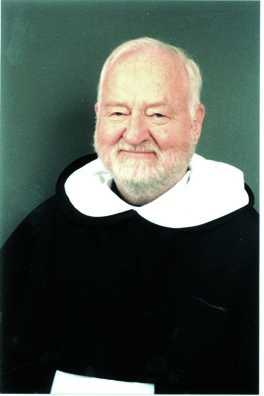 Earlier today Dominican Father Kevin O’Rourke, 84, died following being stricken by a stroke.
Father Kevin was a member of the Dominican Province of Saint Albert the Great and a well-known professor and author on healthcare ethics.
Most recently Father Kevin was a member of the Saint Pius V Priory in Chicago.
May God be merciful to Father Kevin.
Saints Dominic, Thomas Aquinas and Catherine of Siena, pray for us.
The Golden Rose given to Our Lady of Charity of Cobre, Cuba
 A rose among thorns. Well, almost. Man and woman
always want to give an expression of love and affection to another. In the
course of history you will notice the gifts of love’s sentiment and reality
given to God, the Blessed Virgin Mary and the saints. Visit a shrine where
healings are reported and you’ll notice tokens of gratitude: lockets, flowers, chalices, artwork, and the like. One beautiful gift of
love was given by Pope Benedict Monday evening to the Virgen de la Caridad de
Cobre in Cuba: a golden rose. The papal gift of a golden rose dates back to the
middle ages when a pope held a golden rose in a procession on Laetare Sunday,
the fourth Sunday of Lent. It was Pope Eugene III who called the rose a sign of
Christ’s passion: the gold symbolizing the resurrection and the thorns the
suffering.
Over time the golden rose was given to Church dignitaries thus
expanding the meaning: a personal honor and a reminder: do not forget the
responsibilities and duties that come with being a Christian. Beyond the human
honor given to royalty, the rose was given to abbeys and sanctuaries of the
Virgin Mary. Pope John Paul II gave a few these roses to shrines and Pope
Benedict XVI is fond of the custom and so he’s given roses to Altötting, Mariazell,
Fatima, Aparecida, USA and now to Cuba.
expanding the meaning: a personal honor and a reminder: do not forget the
responsibilities and duties that come with being a Christian. Beyond the human
honor given to royalty, the rose was given to abbeys and sanctuaries of the
Virgin Mary. Pope John Paul II gave a few these roses to shrines and Pope
Benedict XVI is fond of the custom and so he’s given roses to Altötting, Mariazell,
Fatima, Aparecida, USA and now to Cuba.
Happiness and fullness of being in communion, not suffering, did God make us
God did not create us for suffering and renunciation,
but for happiness, for life; not for an ephemeral happiness during life in this
world, but for an eternal and unfailing life, which can be found in God alone.
However, God passes by unnoticed by our senses, whereas the things of this
world press upon us and entice us from all sides, leading us to seek our
happiness in them.
From this arises the necessity of controlling and mortifying
their immoderate tendency toward pleasure, their looking for satisfaction in
creatures. For those who desire to attain to the fullness of life in God, St.
John of the Cross, in full accord with the gospel, suggests that they gradually
accustom themselves to gving up any sensory satisfaction that is not
purely for the honor and glory of God. . .out of love for Jesus Christ. In his
life, he had no other gratification, nor desired any other, than the
fulfillment of his Father’s will which he called his meat and food (Ascent of
Mount Carmel I 13-4).
their immoderate tendency toward pleasure, their looking for satisfaction in
creatures. For those who desire to attain to the fullness of life in God, St.
John of the Cross, in full accord with the gospel, suggests that they gradually
accustom themselves to gving up any sensory satisfaction that is not
purely for the honor and glory of God. . .out of love for Jesus Christ. In his
life, he had no other gratification, nor desired any other, than the
fulfillment of his Father’s will which he called his meat and food (Ascent of
Mount Carmel I 13-4).
Again it is a question of not seeking our joy and delight
in pleasures of sense, which satisfy selfishness, self-love, and attachment to
creatures, but in the will of God, in what pleases him. If we would be
spiritual persons, we must force ourselves to change the direction of our inclination
toward pleasure by detaching it from the goods of earth and turning it
decisively toward God, until we can repeat with Jesus: I always do what is
pleasing to him (John 8:29).
in pleasures of sense, which satisfy selfishness, self-love, and attachment to
creatures, but in the will of God, in what pleases him. If we would be
spiritual persons, we must force ourselves to change the direction of our inclination
toward pleasure by detaching it from the goods of earth and turning it
decisively toward God, until we can repeat with Jesus: I always do what is
pleasing to him (John 8:29).
Father Gabriel of St. Mary Magdalen,
OCD
OCD
Divine Intimacy