Saint Irenaeus of Lyons


Irenaeus of Lyons.jpgO God, who called the Bishop Saint Irenaeus to confirm
true doctrine and the peace of the Church, grant, we pray, through his
intercession, that, being renewed in faith and charity, we may always be intent
on fostering unity and concord.


A fascinating thing is to chart the influence
of one on another. To whom do you owe a deep sense of gratitude for showing you
the way to follow? With Irenaeus, his beloved master was Saint Polycarp (d. 155), from whom he learned about Christ, himself the disciple of Saint John the Apostle. From here we set out to revere
the person of a martyr who met his end in AD 202 after serving the Lord and the
Church for nearly 80 years. 

Irenaeus is honored by the Catholic Church as a
Doctor of the Church from the Apostolic age. Being a doctor of the Church is given to few (most recently the Doctor’s honor was given to Saint Hildegard) because of his learning and publications, but much has been lost. What remains are significant fragments of the original text. His works are mainly in Greek, a few in Armenian but there are several texts that were given to us in Latin; He’s likely to
be most known for his famous Adversus Haereses (Against the Heresies), in which
he gives reasons for his hope, that is, an explanation of the Faith. This text is renown because he combated gnosticism, that is, false knowledge. Only truth triumphs.

In the field Scripture and dogma studies Saint Irenaeus indicated that an orthodox Christian uses the canon sacred Scripture in the explanation of the faith. He asserted the rightful use of the four gospels and not merely one as was popular at that time. You may recall that Irenaeus contradicted the heretic Marcion with the doctrine of canonocity of scripture, apostolic authority, and began to develop a theology of Mary viz. salvation history and the Incarnation. A significant and lasting contribution the Saint made to Christian life is the dating of Easter: the Latin Church celebrated the Lord’s resurrection on adhering to what Saint Peter did; the Eastern Church celebrated the feast with respect to Passover. Both traditions are respected today, even if a little more nuanced.

That said, Irenaeus’ preaching was brilliant which contributed to conversion to Christ
almost the all of France to the Faith. One writer speaks of the Christians of
Lyons as models in Christian living because of their candor, rejection of
ambition, poverty, chastity and temperance.

Fulton J. Sheen, Mother Angeline Teresa advances another step toward sainthood

Fulton Sheen in prayer.jpg

Two “New Yorkers” advance in the study of their sanctity: Fulton J. Sheen and Mother Angelina Teresa.


Today, Pope Benedict XVI gave his permission for the promulgation of the decree concerning the “heroic virtues” of now Venerable Servant of God Fulton J. Sheen (1895-1979). Sheen was a great communicator of the faith in the 20th century. His winning personality and sincerity drew people to Christ.

A wonderful development is the recognition that Brigida Teresa McCrory (1893-1984) known as Mother Angelina Teresa, foundress of the Carmelite Sisters of the Aged and Infirmed, lived a life of heroic virtue. This is good news because it highlights the good work these Carmelite sisters continue to do, notably around the corner from St Catherine of Siena Church (NYC).


 Moreover, he did the same for the former Prelate of Opus Dei, the Servant of God Alvaro del Portillo y Diez de Sollano, Spanish prelate of the Personal Prelature of the Holy Cross and Opus Dei (1914-1994). He was the immediate successor to Saint Josemaria.


Angelo Cardinal Amato SDB, prefect of the Congregation for the Causes of Saints, presented these and other causes for sainthood.


UPDATE: Cardinal Dolan writes about the 2 New Yorkers

How nice are you?

“Our Lord was crucified by the nice people who held that religion was all right in its place, so long as its place was not here, where it might demand of them a change of heart. The gravest error of the nice people in all ages is the denial of sin.”

The Servant of God Archbishop Fulton Sheen


h/t Fr Z

Gunnar, the U.S. Navy seal, dies at age 38

Gunnar the Seal.jpg

Yahoo News reports:


“He was a U.S. Navy seal best known for learning to use a screwdriver. And now Cold War veteran Gunnar has passed away on Monday. He was 38-years-old at the time of his death and enjoying some quiet living in Washington DC’s National Zoo.”


More here because you’re interested in the service of this seal.

What is a theologian? What purpose does the work of a theologian have? To be “In the Communion of the Church”

The public has been bombarded with the media’s assessment of nuns, church, the sexual abuse crisis, fidelity to the Lord, and the like. In some ways the media looks at the life of the Church and picks out the obvious problems of coherence. No doubt we have matters of concern that we have to work to correct; the adage: “the Church always needs renewal” is very true today. We rely on the Holy Spirit and the good work of Pope Benedict. The other day I found this review of a document written by members of the International Theological Commission (ITC), a group of theologians organized by the Pope to advise him on certain questions of theological questions of importance. Even the Pope needs advice! The ITC group is made up of a diversity of peoples from around the world. The ones I know personally are fine men and women, credible witnesses of the Lord. The review of Theology Today that follows is written by Father Paul McPartlan in which he synthesizes the document giving us the broad view of the work of Catholic theologian. What he highlights sits in contradistinction to what we’ve heard about the recent work of Sr Margaret Farley and other theologians who see themselves in a different light. I prefer to put my money the ITC and not on “envelop pushing, agenda driven” theologians. You?


Following its examination, in Chapter One, of the fundamental nature of theology, as the rational exploration of that faith which is a response to the proclamation of the Word of God, and prior to its extended reflection, in Chapter Three, on significant aspects of the rationality of theology, the new International Theological Commission (ITC) text, Theology Today: Perspectives, Principles and Criteria, carefully considers the ecclesial context of theology in Chapter Two. “The ecclesiality of theology is a constitutive aspect of the theological task, because theology is based on faith, and faith itself is both personal and ecclesial”, it says, emphasising that “it is through the Church that theologians receive the object of their enquiry” (n.20). Theological enquiry is therefore properly conducted within the living and life-giving milieu of the leiturgia, martyria and diakonia of the Church (cf. n.7). In short, as the chapter’s title indicates, it is necessary for theologians to abide in the communion of the Church.

Continue reading What is a theologian? What purpose does the work of a theologian have? To be “In the Communion of the Church”

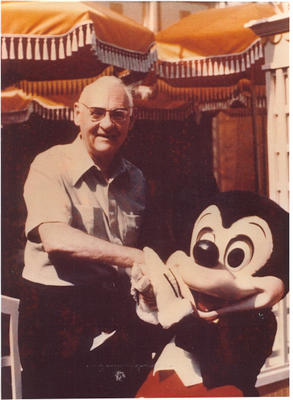
Hans Urs von Balthasar

balthasar with mickey.jpg

Today marks the 24th anniversary of the great Swiss theologian [and cardinal-elect] Hans Urs von Balthsar. 
Von Balthasar was a brilliant theologian who served the Church well. His theological legacy continues in the publication of his books and articles and through the international Communio journal.
He was nominated by Blessed John Paul II to be a cardinal three times, declining the dignity twice; the third time he accepted it but he died the night before receiving the cardinal’s hat.

Eternal memory!

Do Catholics believe in the use of indulgences today?

A person who attends a bible study I organize asked if indulgences are still possible, in vogue, as it were. “Weren’t they done away with at Vatican II?”, I was asked. I assured this person that indeed indulgences were still a common practice in the Catholic Church and that they have received a renewed sensibility with Benedict XVI. THE thing that catapulted the Church into the protestant revolution is now being talked about with seriousness and sincerity because it is realized that the practice of giving indulgences does help us to know ourselves and the mercy of God better.

In brief, the Catechism teaches that “The doctrine and practice of indulgences in the Church are closely linked to the effects of the sacrament of Penance” (1471ff).

So, what is an indulgence? Why would a Catholic be interested in knowing more about indulgences?

“An indulgence is a remission before God of the temporal punishment due to sins whose guilt has already been forgiven, which the faithful Christian who is duly disposed gains under certain prescribed conditions through the action of the Church which, as the minister of redemption, dispenses and applies with authority the treasury of the satisfactions of Christ and the saints.”

Continue reading Do Catholics believe in the use of indulgences today?